Wall Treatments Guide: 14 Wall Finishes & Covering Ideas
Interior wall treatments fall into five families: paint, plaster, paneling, wallpaper and hard cladding such as tile and stone. Installed costs run from $1 per sq ft for paint to $25+ for plaster and stone; this guide compares 14 finishes by cost, difficulty and room.
Key takeaways
- Every interior wall finish belongs to one of five families: paint, plaster, paneling, wallpaper or hard cladding, and the family decides the budget before the style does
- Installed costs run from about $1–3 per sq ft for paint to $12–25 per sq ft for venetian plaster and $15–40 per sq ft for stone or large-format tile
- Paneling at 32–36 in (81–91 cm) high protects the zone that gets kicked and scuffed; full-height paneling is a style decision, not a protective one
- Pick the finish by what the wall has to survive: splash and grease in kitchens, humidity in baths, chair backs in dining rooms, nothing much in bedrooms
- Limewash, textured plaster and wood paneling are the three wall treatments gaining the most ground in 2027, while heavy orange-peel texture and glossy laminate panels are fading
Wall treatments are any finish applied to an interior wall beyond flat drywall: paint, plaster, paneling, wallpaper and hard claddings like tile, brick and stone. There are 14 common types of interior wall finishes, with installed costs from about $1 per sq ft for paint to $25 or more for lime plaster and stone. This guide compares every one by cost, durability, difficulty and the room it suits best.
The right wall finish is a budget and durability decision first and a style decision second. A kitchen wall behind a range has to shrug off grease; a hallway at hip height gets kicked; a bedroom wall does almost nothing but look good. Match the family of finish to the job the wall has to do, then choose the look within that family. Below, the five families and the 14 finishes inside them, followed by room-by-room recommendations and a decision section at the end.
- Five families: paint, plaster, paneling, wallpaper and hard cladding (tile, brick, stone, microcement).
- Cheapest per sq ft: paint at $1–3 installed, peel-and-stick panels at $2–5, MDF board-and-batten at $4–10.
- Most expensive: hand-troweled venetian plaster at $12–25 and natural stone veneer at $20–40 installed.
- Most durable in wet rooms: glazed tile, microcement and sealed lime plaster; avoid raw MDF and paper wallpaper.
- Trend direction for 2027: matte mineral surfaces (limewash, tadelakt, clay), slatted wood and tall fluted panels are up; glossy laminates and heavy sprayed textures are out.
What are the different types of interior wall finishes?
Interior wall finishes divide into five families, and every stylish wall treatment you have seen fits one of them: paint (flat, eggshell, limewash, specialty), plaster (venetian, lime, clay, tadelakt, textured), paneling (board-and-batten, wainscoting, shiplap, slats, fluted and 3D panels), wallpaper and fabric (paper, vinyl, grasscloth, peel-and-stick, upholstered walls) and hard cladding (ceramic and porcelain tile, brick, stone veneer, microcement, concrete). The table below puts the 14 types people actually install side by side.
| Wall finish | Family | Installed cost per sq ft | DIY difficulty | Best rooms | Weak point |
|---|---|---|---|---|---|
| Flat or eggshell paint | Paint | $1–3 | Easy | Everywhere | Shows drywall flaws |
| Limewash paint | Paint | $2–5 | Easy–moderate | Bedrooms, living rooms, halls | Marks if scrubbed; needs mineral primer |
| Textured drywall (orange peel, knockdown, skip trowel) | Plaster | $1.50–4 | Moderate | Whole-house builder spec | Dated look; hard to remove |
| Smooth skim coat (Level 5) | Plaster | $2–5 | Hard | Any room with raking light | Labor-heavy |
| Venetian plaster | Plaster | $12–25 | Hard | Living rooms, entries, powder rooms | Cost; chips on corners |
| Lime, clay or tadelakt plaster | Plaster | $8–20 | Hard | Bedrooms, baths (tadelakt) | Needs a specialist |
| Board-and-batten / wainscoting (MDF) | Paneling | $4–12 | Moderate | Dining, hall, mudroom, bedroom | MDF swells if wet |
| Shiplap / tongue-and-groove | Paneling | $5–15 | Moderate | Bedrooms, living rooms, ceilings | Dust collects in gaps |
| Wood slat / acoustic panels | Paneling | $8–30 | Easy–moderate | Media rooms, offices, bed walls | Cost of solid timber |
| Fluted, 3D or PVC panels | Paneling | $3–20 | Easy | Accent walls, bathrooms (PVC) | Can look flat and plastic |
| Wallpaper (paper, vinyl, non-woven) | Wallpaper | $3–12 | Moderate | Bedrooms, dining, powder rooms | Seams; removal |
| Grasscloth or textile wallcovering | Wallpaper | $8–25 | Hard | Living rooms, bedrooms, offices | Stains; visible seams |
| Tile (ceramic, porcelain, zellige) | Cladding | $10–40 | Moderate–hard | Kitchens, baths, fireplaces | Grout upkeep |
| Brick, stone veneer or microcement | Cladding | $12–40 | Hard | Fireplaces, entries, feature walls | Weight, cost, permanence |
Costs are typical mid-range US figures for a professional install on existing drywall; a DIY install of paint, peel-and-stick panels or basic board-and-batten cuts the number by half to two-thirds, since labor is 50–70 percent of most wall finish quotes.
Which wall finish is cheapest and which costs the most?
Paint is the cheapest wall finish at $1–3 per sq ft installed, and venetian plaster or natural stone are the most expensive at $12–40 per sq ft. Between those ends, cost tracks three things: material, labor hours per sq ft and how much prep the existing wall needs. A 12 × 12 ft (3.7 × 3.7 m) room with 8 ft (2.4 m) ceilings has about 384 sq ft (36 m²) of wall before deducting doors and windows, which turns the per-foot ranges into real budgets quickly: roughly $400–1,100 to paint, $1,500–4,500 to panel in MDF, $4,500–9,500 for venetian plaster on all four walls.
Cheap wall panel ideas that still look designed
The cheap wall panel ideas that hold up are the ones that use inexpensive material in a disciplined pattern. Primed MDF strips at 1 × 3 in (19 × 64 mm) laid as board-and-batten over smooth drywall cost $2–4 per sq ft in material and read as millwork once painted the same color as the wall. Hardboard beadboard sheets at 4 × 8 ft (1.2 × 2.4 m) cost $20–35 a sheet and cover a 36 in (91 cm) wainscot run for under $1.50 per sq ft. Peel-and-stick wood planks cost $2–5 per sq ft and go up in an afternoon on a smooth, primed wall. We cover the full range, including PVC, polystyrene and reclaimed pallet options, in cheap wall panels that don't look cheap and the stick-on timber route in peel-and-stick wood walls.
Is paint still the best wall treatment for most rooms?
Yes: paint remains the default interior wall finish for about 80 percent of wall area in a typical home because it is the cheapest, the most reversible and the easiest to repair. The questions worth asking are which sheen and which kind of paint. Flat and matte hide drywall flaws and are standard for ceilings and bedrooms; eggshell is the living-room workhorse; satin or semi-gloss belongs on trim, doors, kitchens and baths where walls get wiped. Our paint sheen guide walks through the full ladder.
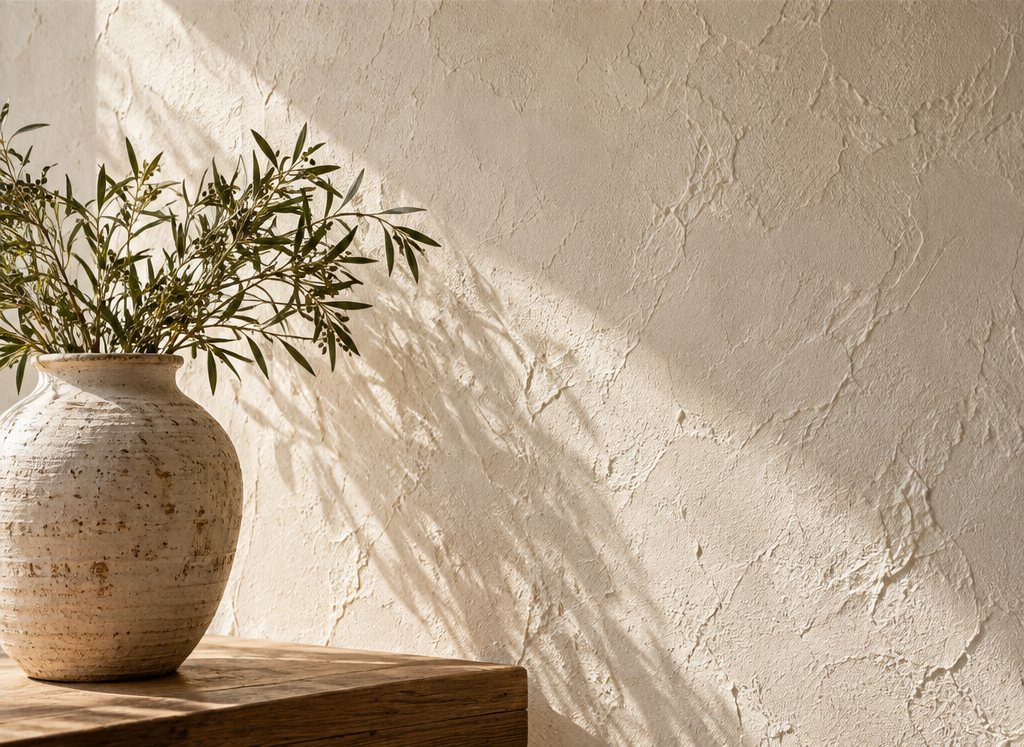
Two paint-family treatments count as finishes in their own right. Limewash is a mineral paint, slaked lime and pigment, brushed on in crossing strokes to leave a soft, cloudy, chalky surface; it is the most searched "textured paint" of the moment and costs $2–5 per sq ft installed over a mineral primer. Color drenching, painting walls, trim, ceiling and doors one color, is a treatment of strategy rather than material, and it makes small or awkward rooms feel intentional at no extra cost; see how to color drench a room. Use the paint calculator to turn wall area into gallons before pricing any of this.
Where paint falls short
Paint cannot hide a bad wall, cannot absorb sound and cannot take a knock in a hallway. If the wall is wavy or patched, a skim coat or a paneling system is cheaper in the long run than repeated repainting; if the wall gets kicked, scuffed or hit by chair backs, a wainscot at 32–36 in (81–91 cm) protects exactly the zone that fails.
What is the difference between plaster finishes and textured walls?
Plaster finishes are troweled mineral coatings applied by hand in thin layers, while textured walls are sprayed or rolled joint compound patterns that were designed to hide drywall seams quickly. The first is a premium finish gaining popularity; the second is a 1980s–2000s builder shortcut most homeowners now want to remove. Both are "plaster" in the loosest sense, so it helps to separate them.
Textured drywall: orange peel, knockdown, skip trowel and popcorn
Sprayed orange peel and knockdown texture cost $1.50–4 per sq ft and remain the spec in many new tract homes because a textured wall hides tape joints that a smooth wall would show. The look reads dated in a 2027 interior, and a growing share of our readers are asking how to get rid of it. The answer is a skim coat: two to three coats of joint compound over the texture, sanded to a Level 5 smooth finish, at $2–5 per sq ft, or 2–4 days of work for a DIYer per room. The types and how they are made are in wall texture types, the DIY compound patterns in joint compound wall texture, the most common builder spec in orange peel wall texture, and the fix in how to smooth textured walls.
Venetian, lime, clay and tadelakt plaster
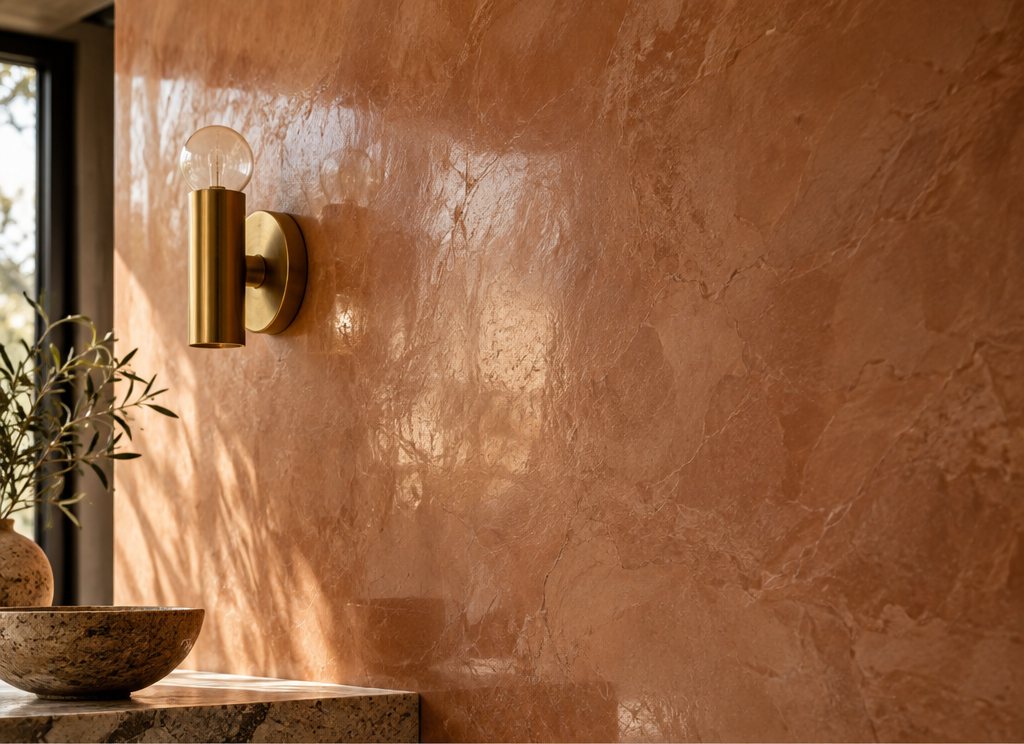
Troweled plasters are the opposite end of the market. Venetian plaster, lime putty with marble dust, burnished to a soft sheen, costs $12–25 per sq ft installed and is the finish behind most of the glowing living rooms and powder rooms in current trend coverage. Lime plaster left matte costs $8–15; clay plaster, which is breathable and comes in natural earth tones, $8–18; tadelakt, the waterproof Moroccan lime finish polished with stone and soap, $15–30 and the only plaster that goes inside a shower. All of these need a skilled applicator; the material is $1–4 per sq ft and the rest is labor. Read venetian plaster explained, plaster walls for the structural and historic side, and plaster wall texture for the finish options within the family.
What types of wall paneling are there?
Wall paneling comes in six main types: board-and-batten, wainscoting (raised, flat and beadboard), shiplap and tongue-and-groove, wood slats, fluted and 3D panels, and sheet paneling in wood veneer, laminate or PVC. Paneling is the fastest-growing family of wall treatments because it does three jobs at once: it protects the wall, it adds shadow and line to a flat room, and most versions can be installed by a competent DIYer over a weekend. The full comparison, with costs, heights and installation, is in wall paneling ideas; the short version follows.
Board-and-batten and wainscoting
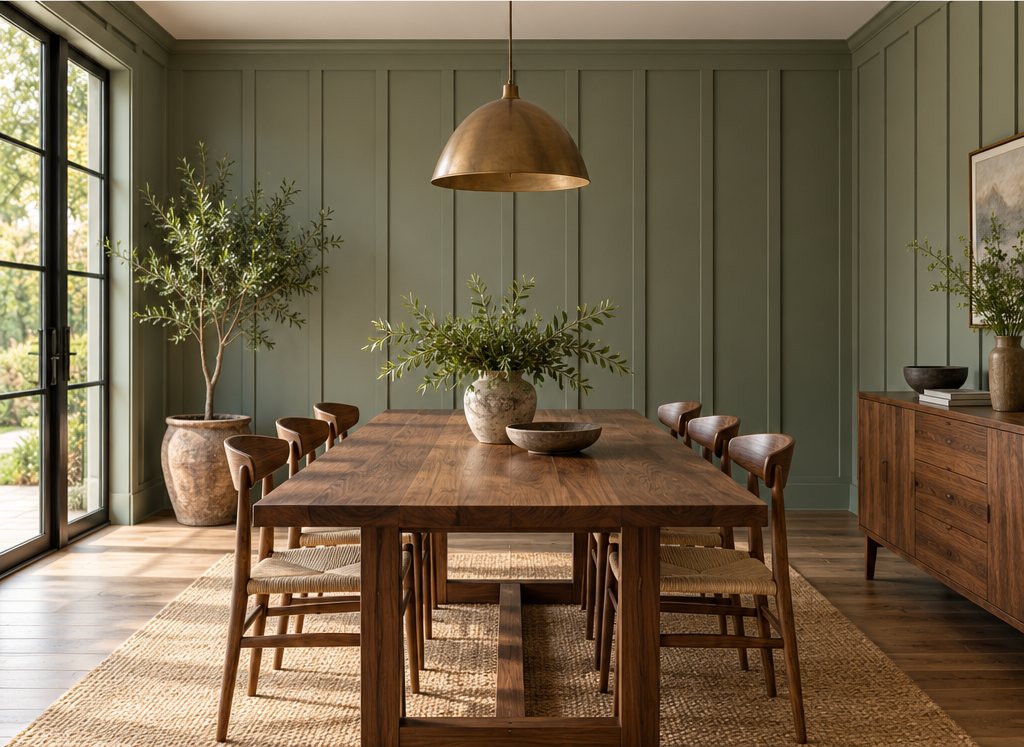
Board-and-batten is vertical battens at 12–24 in (30–61 cm) spacing over a flat panel or over the drywall itself, capped with a rail; it suits halls, mudrooms, dining rooms and bedrooms at 36–60 in (91–152 cm) high. Wainscoting is the older cabinetmaker's version, with raised, flat or beadboard panels inside stiles and rails, run at 32–36 in (81–91 cm) in a dining room or 48–54 in (122–137 cm) in a hallway. Both cost $4–12 per sq ft installed in MDF, $10–25 in solid wood. Heights, proportions and styles are covered in wainscoting ideas.
Shiplap, slats and fluted panels
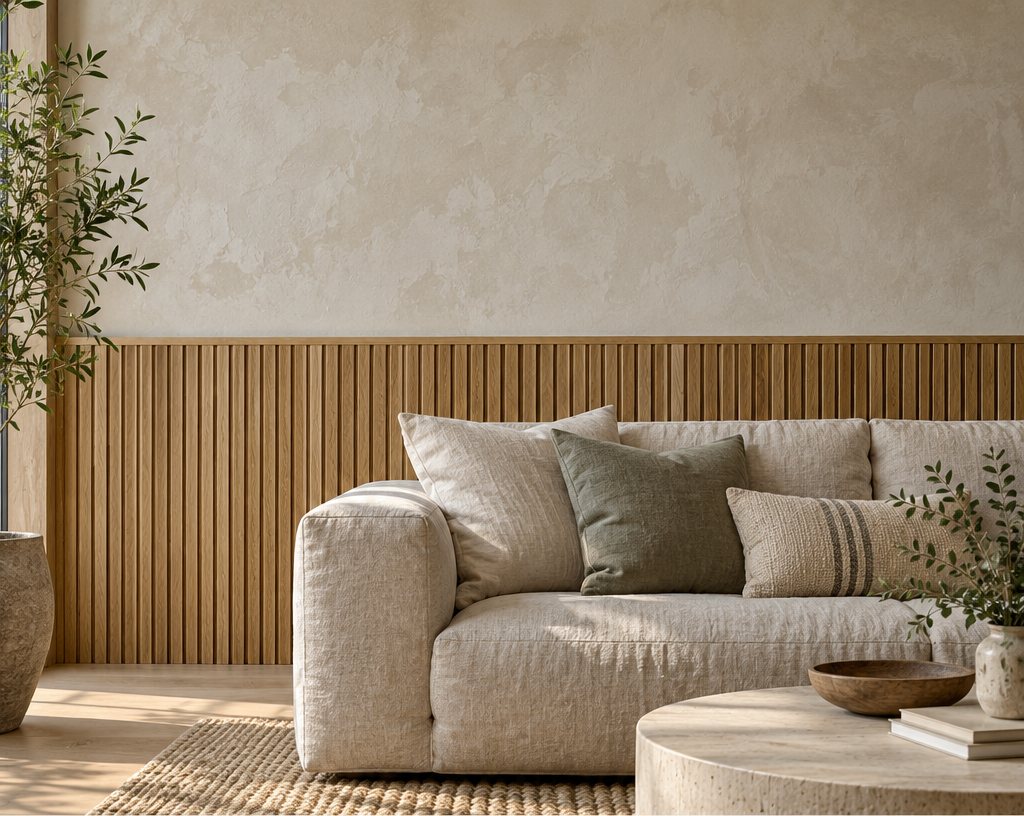
Shiplap is horizontal boards with a small reveal; it has moved from farmhouse cliché to a quieter, painted-out treatment on bedroom and ceiling surfaces. Slat walls, vertical timber battens at 0.5–1 in (13–25 mm) spacing on a felt backer, are the defining modern wall paneling of the last three years and double as acoustic treatment; see wood slat wall panels and acoustic panels. Fluted and 3D panels in MDF, gypsum or PVC cost $3–20 per sq ft and give the same rhythm with less depth; the current designs are in modern wall panels.
Wood accent walls
A single wood accent wall, whether reclaimed boards, white oak planks or a veneered panel system, is the most common way people bring timber into a room without paneling the whole thing. Behind a bed or a sofa, 80–120 sq ft (7–11 m²) of wood at $8–25 per sq ft is a $1,000–3,000 feature. Species, direction, finish and the classic mistakes are in wood accent wall ideas, and if the room already has floors and furniture in timber, check how to mix wood tones before adding a third one.
Is wallpaper a good wall covering idea again?
Wallpaper is firmly back as a wall covering idea, but the material has changed: non-woven papers that hang with a pasted wall and strip dry, peel-and-stick vinyls for renters, and textural grasscloth and textile wallcoverings have replaced the fussy printed papers of two decades ago. Installed costs run $3–12 per sq ft for standard papers and $8–25 for grasscloth, cork, silk or linen-backed cloth, where the material alone is often $4–12 per sq ft.
A standard double roll covers about 56 sq ft (5.2 m²) of wall after pattern-match waste, so a 10 × 12 ft (3 × 3.7 m) feature wall with 9 ft (2.7 m) ceilings takes two double rolls with a small repeat and three with a 24 in (61 cm) drop match. The wallpaper calculator does the math including the repeat. Three rules of thumb: use vinyl or washable non-woven in kitchens and baths, never paper; hang grasscloth only on a Level 4 or 5 smooth wall because every bump telegraphs; and remember that peel-and-stick is reversible only on a surface that was painted in eggshell or satin at least 30 days before.
Upholstered and fabric walls
Upholstered walls, batting under a stretched fabric fixed to tracks or battens, are the quietest wall treatment in the list and the one hotel designers reach for in bedrooms. Expect $15–40 per sq ft installed, a 25,000+ Martindale fabric, and a measurable drop in reverberation in a room that echoes.
When should you use tile, brick, stone or microcement on a wall?
Hard claddings belong on walls that get wet, hot or hit: kitchen backsplashes, shower walls, fireplace surrounds, entry walls and the occasional feature wall where a mineral surface is the whole point. They cost the most per sq ft, $10–40 installed, and are the hardest to change later, which is why they are usually confined to one wall or one zone rather than a whole room.
| Cladding | Installed cost per sq ft | Weight per sq ft | Wet-room safe | Typical use |
|---|---|---|---|---|
| Ceramic or porcelain tile | $10–30 | 3–5 lb (1.4–2.3 kg) | Yes | Backsplash, shower, bath walls |
| Zellige or handmade tile | $20–45 | 4–6 lb (1.8–2.7 kg) | Yes | Backsplash, fireplace, powder room |
| Thin brick veneer | $12–25 | 5–7 lb (2.3–3.2 kg) | Sealed only | Kitchen wall, loft feature, fireplace |
| Stone veneer (natural or cast) | $15–40 | 8–15 lb (3.6–6.8 kg) | Sealed only | Fireplace, entry, exterior-to-interior walls |
| Microcement | $12–25 | under 1 lb (0.5 kg) | Yes | Shower, bath, kitchen, seamless feature walls |
| Large-format porcelain slab | $25–60 | 3–4 lb (1.4–1.8 kg) | Yes | Shower walls, fireplace, kitchen full-height |
Zellige, the hand-glazed Moroccan tile with uneven faces and color variation, is the single most requested tile wall treatment in current kitchens; see zellige tile. Microcement, a 2–3 mm cementitious skin troweled over almost any substrate, is the seamless alternative for bathrooms where grout is unwanted; what is microcement and microcement cost cover it. Price any tiled wall with the tile calculator, and check the wider material direction in tile trends 2027.
What are the best wall treatments for bedrooms?
The best wall treatments for bedrooms are the soft, matte, sound-absorbing ones: limewash or matte paint in a warm mid-tone, an upholstered or slatted headboard wall, grasscloth or textile wallcovering behind the bed, or a paneled wall at 48–60 in (122–152 cm) that frames the headboard. Bedrooms need no durability beyond ordinary paint, so this is the room to spend on texture rather than toughness.
The move that works in almost every bedroom is to treat only the headboard wall, which is usually 10–14 ft (3–4.3 m) wide and 80–120 sq ft (7–11 m²), and keep the other three walls in a matching matte paint. On a $1,000–3,000 budget that single wall can take venetian plaster, white oak slats, a full-height fluted panel or a hand-blocked paper. Bedroom-specific color and sizing rules are in bedroom trends 2027, and if you are deciding where the bed goes first, bedroom layout ideas comes before the wall.
Kitchen paneling ideas and other kitchen wall finishes
Kitchen wall paneling ideas have to survive steam, grease and wiping, which rules out raw MDF near the sink and range and favors three options: painted tongue-and-groove or beadboard in a scrubbable satin on walls away from the cooktop, slatted panels in a sealed hardwood or PVC on an island front or a dining wall, and tile, microcement or a glazed-finish plaster in the splash zone. The kitchen trends 2027 report shows fluted island fronts and plaster hoods doing most of the paneling work; keep anything porous at least 24 in (61 cm) from the cooktop and sink.
Wall covering ideas for living rooms
Living rooms take the widest range of wall treatments because they combine display, seating and often a fireplace. The current formula is one mineral or textured surface (limewash, lime plaster, grasscloth) on the main wall, a hard surface at the fireplace (stone, zellige, microcement) and plain matte paint elsewhere. Full-height fluted or slat panels behind the sofa or the media wall are the modern wall treatment that photographs best; a 36 in (91 cm) wainscot with picture rail is the traditional one. Both pair with the sofa and layout rules in living room layout ideas and the palette direction in living room trends 2027.
What are the modern wall treatments trending for 2027?
Five modern wall treatments define 2027: matte mineral paints and plasters (limewash, clay, tadelakt), full-height vertical slat and fluted panels, color-drenched rooms where walls, trim and ceiling match, textural wallcoverings in grasscloth, cork and linen, and seamless microcement in bathrooms. The common thread is touch: surfaces people want to run a hand along, in matte rather than gloss, in warm earth, cocoa and stone tones rather than cool gray.
- Rising: limewash and clay plaster, tadelakt showers, oak slats, fluted MDF painted out, tall wainscot to 60 in (152 cm), grasscloth, color drenching, thin-brick kitchen walls.
- Holding: painted board-and-batten, beadboard baths, zellige backsplashes, venetian plaster in entries and powder rooms.
- Fading: heavy sprayed textures, glossy laminate and PVC "marble" panels, shiplap in every room, accent walls in a strongly contrasting color, metallic wallpaper.
Palette matters as much as material. The year's wall colors cluster around warm whites, clay, cocoa, butter, olive and ink; browse the palettes or the 2027 color palettes report before committing a textured finish to a hue you cannot repaint easily.
How do you install a basic wall treatment yourself?
The three wall treatments most people install themselves are paint, board-and-batten and peel-and-stick panels, and all three succeed or fail on the same step: wall preparation. Here is the sequence for a painted board-and-batten wainscot, the most popular DIY wall treatment and the one that teaches the method for the others.
- Decide the height. 36 in (91 cm) for a dining room or hall, 48–60 in (122–152 cm) for a bedroom or entry; never exactly half the wall height. Mark a level line around the room with a laser.
- Prepare the wall. Fill holes, sand gloss paint, and if the wall is textured, either skim it smooth or fit a 1/4 in (6 mm) MDF panel behind the battens so the fields are flat.
- Set the spacing. Measure the wall width, choose a batten spacing of 12–24 in (30–61 cm), and divide so the end bays are equal; avoid a batten landing on an outlet.
- Fix the rails and battens. Use 1 × 3 or 1 × 4 in (19 × 64 or 19 × 89 mm) primed MDF, construction adhesive plus 18-gauge brad nails into studs where possible, and a top rail with a small cap molding.
- Caulk and fill. Caulk every joint between batten and wall with paintable acrylic caulk, fill nail holes with lightweight filler, and sand once dry.
- Prime and paint. One coat of bonding primer on raw MDF edges, then two coats of satin or semi-gloss, ideally in the same color as the wall above for the current look.
Budget 2–3 days for a 12 × 14 ft (3.7 × 4.3 m) room and $300–600 in materials. The same preparation sequence, with the adhesive step swapped for the panel's own system, applies to peel-and-stick planks, fluted MDF and slat panels.
How do you choose the right wall treatment?
Choose a wall treatment by answering four questions in order: what the wall has to survive, how long you will live with it, what the budget per sq ft is, and only then which look you want. Run every wall in the project through this sequence and the choice usually makes itself.
- Exposure. Wet or greasy walls (showers, backsplashes) take tile, microcement, tadelakt or PVC panels only. Walls that get hit (halls, mudrooms, dining chair backs, kids' rooms) take paneling or a scrubbable satin paint to at least 36 in (91 cm). Everything else is open.
- Permanence. Renting or likely to redecorate inside five years: paint, peel-and-stick panels, removable wallpaper, freestanding slat panels. Staying ten years or more: plaster, grasscloth, solid wood, tile and stone earn their cost.
- Budget per sq ft. Under $5: paint, limewash, textured drywall, peel-and-stick, hardboard beadboard. $5–15: MDF paneling, non-woven wallpaper, shiplap, fluted panels, thin brick. Over $15: venetian and lime plaster, grasscloth, hardwood slats, zellige, stone, upholstered walls.
- Look and quantity. Spend the texture budget on one or two walls per room, keep the rest in matte paint from the same palette, and limit the whole house to three or four wall treatment families so rooms feel related.
| Room | First choice | Second choice | Avoid |
|---|---|---|---|
| Living room | Limewash or lime plaster on the main wall | Slat or fluted media wall; grasscloth | Glossy laminate panels |
| Bedroom | Paneled or upholstered headboard wall | Matte paint in a warm mid-tone; textile paper | High-gloss paint; cold gray texture |
| Kitchen | Tile or microcement splash; painted T&G elsewhere | Thin brick; sealed slat island front | Paper wallpaper; raw MDF near water |
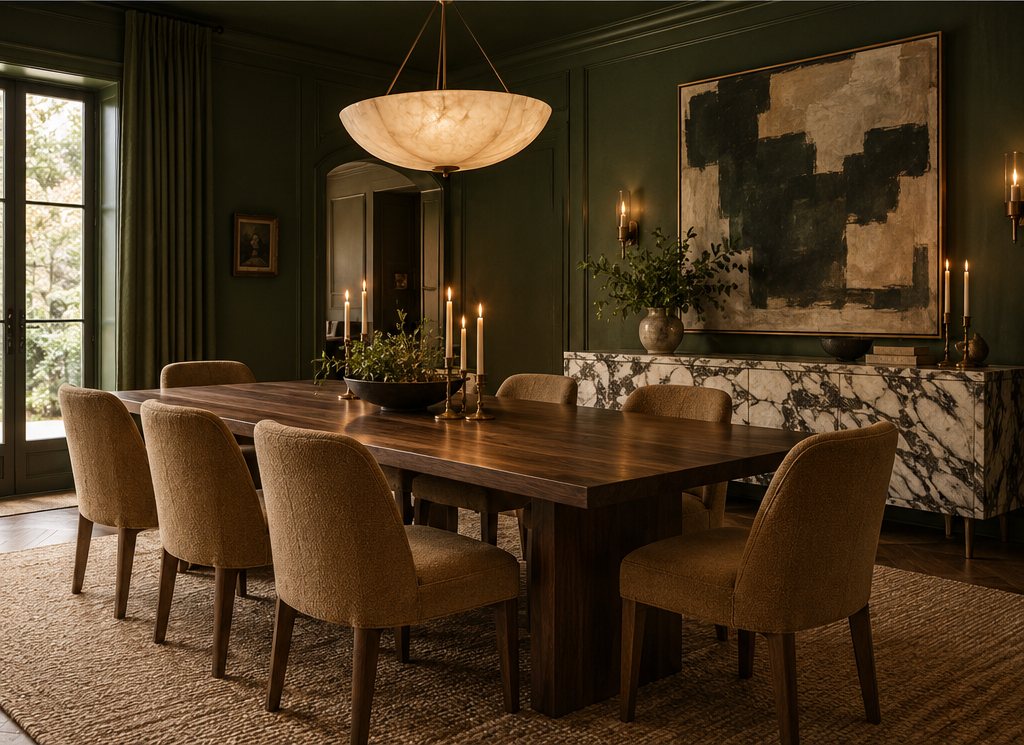
| Dining room | Wainscot at 32–36 in (81–91 cm) with paint above | Full-height board-and-batten; venetian plaster | Textured spray finishes |
| Bathroom | Tile to 48 in (122 cm) or full height in shower | Tadelakt or microcement; PVC panels on a budget | MDF, grasscloth, paper |
| Hall and entry | Board-and-batten to 48–60 in (122–152 cm) | Satin paint; venetian plaster if budget allows | Flat paint at hip height |
| Home office / media | Acoustic slat panels | Upholstered wall; cork wallcovering | Hard, bare, parallel surfaces |
If you are still undecided between a traditional paneled scheme and a modern mineral one, the style quiz narrows the direction, and the interior design trends 2027 overview shows where each wall treatment sits in the wider picture.
Free toolTile CalculatorWork out tiles, boxes, grout and adhesive with the right wastage.In this guide
- Wall Paneling Ideas: Types, Costs & Wood Panel WallsWall paneling comes in eight main types, from board-and-batten and wainscoting to slats, fluted and raised panels, at $4–30 per sq ft instal…
- Venetian Plaster Walls: Finishes, Cost per Sq Ft & ApplicationVenetian plaster is a lime-and-marble-dust wall finish applied in 2–4 thin trowel coats and burnished to a polished or matte sheen. Professi…
- Wall Texture Types: 12 Drywall & Plaster Textures ComparedThere are 12 common wall texture types, from sprayed orange peel and knockdown to hand-troweled skip trowel, slap brush, lime wash and plast…
- How to Smooth Textured Walls: Skim Coat, Cost & 4 Removal MethodsSmooth textured walls with a skim coat: 2–3 thin layers of joint compound troweled over the texture, sanded and primed, at $1–5 per sq ft pr…
- Plaster Walls: Types, Decorative Finishes & Cost per Sq FtPlaster walls are either traditional three-coat plaster over lath (pre-1950s homes) or modern decorative plaster finishes troweled over dryw…
- Wood Accent Wall Ideas: 10 Designs, Costs & How to Install OneA wood accent wall covers one wall in slats, planks, shiplap or panels to add warmth and texture. Materials cost $4–30 per sq ft; a typical …
- Joint Compound Wall Texture: How to Texture Walls With MudTo texture walls with joint compound, thin all-purpose drywall mud to a pancake-batter consistency, roll or trowel it on, and shape it with …
- Orange Peel Wall Texture: How to Spray, Match, Paint & Remove ItOrange peel wall texture is a fine, dimpled finish sprayed with thinned joint compound at 25–40 psi. It costs $0.50–$2.50 per sq ft to apply…
- Wainscoting Wall Ideas: Heights, Styles & Half Wall CostsWainscoting is paneling or moulding on the lower third of a wall, typically 32–36 in (81–91 cm) high, capped with a rail. The six main style…
- Plaster Wall Texture: Types, Costs & How to Apply It YourselfPlaster wall texture is any finish whose relief comes from how plaster or compound is troweled, from a 1/32 in skip trowel to a 1/4 in rough…
- Cheap Wall Panels: Cheapest Options & Sheetrock AlternativesThe cheapest wall panels are hardboard and OSB at $0.60–$1.20 per sq ft, then plywood, MDF beadboard and PVC at $1.50–$4. Plywood is the bes…
- Peel and Stick Wood Paneling: Types, Costs & How to InstallPeel and stick wood paneling comes in four types: real reclaimed planks at $6–12 per sq ft, veneer at $4–8, vinyl planks at $2–4 and foam 3D…
- Modern Wall Panels: Contemporary Paneling Ideas, Types & CostsModern wall panels are slatted, fluted, flat-reveal or 3D panels in MDF, veneer, PVC or stone-look sheet, installed on one wall in one color…
Frequently asked questions
What are the different types of interior wall finishes?
Interior wall finishes fall into five families: paint (flat, eggshell, limewash), plaster (venetian, lime, clay, tadelakt, textured drywall), paneling (board-and-batten, wainscoting, shiplap, slats, fluted and 3D panels), wallpaper and fabric (paper, vinyl, grasscloth, upholstered walls) and hard cladding (tile, brick, stone veneer, microcement). About 14 distinct finishes are common in homes.
What is the cheapest wall treatment?
Paint is the cheapest wall treatment at about $1–3 per sq ft installed, or under $1 per sq ft DIY. Next are peel-and-stick panels and hardboard beadboard at $1.50–5 per sq ft, then MDF board-and-batten at $4–12 per sq ft installed, which drops to $2–4 in materials if you install it yourself.
What wall finishes are in style for 2027?
Matte mineral finishes lead: limewash, clay and lime plaster, tadelakt in bathrooms, and microcement. Vertical oak slat panels, fluted MDF painted to match the wall, tall wainscot to 60 in (152 cm) and grasscloth or linen wallcoverings are the other 2027 wall treatments. Heavy sprayed textures and glossy laminate panels are fading.
What are the best wall treatments for bedrooms?
Bedrooms suit soft, matte, sound-absorbing wall treatments: limewash or matte paint in a warm mid-tone, an upholstered, slatted or paneled headboard wall at 48–60 in (122–152 cm), or grasscloth behind the bed. Treat only the headboard wall, typically 80–120 sq ft, and keep the other three walls in matching paint.
Which wall treatment is best for a kitchen?
Use tile, microcement or a glazed plaster within 24 in (61 cm) of the cooktop and sink, and painted tongue-and-groove, beadboard or sealed slat panels in satin elsewhere. Thin brick works on a feature wall if sealed. Avoid raw MDF, paper wallpaper and grasscloth anywhere steam or grease reaches.
How much does it cost to add wall paneling?
Wall paneling costs $4–12 per sq ft installed in MDF board-and-batten or wainscoting, $5–15 for shiplap, $8–30 for solid wood slats and $3–20 for fluted or 3D panels. A 12 × 12 ft room paneled to 36 in on all walls is roughly 150 sq ft of paneling, or $600–1,800 installed and $300–600 in DIY materials.
Can you put wall treatments over textured walls?
Yes, but prepare first. Paint and limewash go directly over texture but show it; paneling, peel-and-stick panels and wallpaper need a flat surface, so either skim-coat the texture smooth at $2–5 per sq ft or fit a 1/4 in (6 mm) MDF backer behind battens. Tile and microcement need a sound, flat substrate as well.
Some links may be affiliate links. Regulations and specifications change — always confirm with suppliers and qualified professionals.