Mid-Century Modern Interior Design: A Complete Style Guide
Clean lines, warm wood and optimistic color. The history, principles and furniture forms of mid-century modern, and how to use it today without turning your home into a period set.
Key takeaways
- Mid-century modern pairs warm wood with low, light, leggy furniture.
- Use one or two period colors boldly; let wood carry the rest.
- Limit hero pieces and mix eras to avoid a themed look.
- Buy case goods vintage, upholstery new for comfort and compliance.
Mid-century modern is the rare style that has never really left. Its low sofas, tapered legs, teak sideboards and sculptural lamps appear in new homes, boutique hotels and offices decades after they were first designed, because the underlying ideas — honest materials, good proportion, furniture that is light on its feet — still make rooms work. The challenge today is using it with confidence without producing a themed interior. This guide covers the history in brief, the principles, the key furniture forms, and how to buy well, whether vintage or new.
A brief history
The term describes design produced roughly from the mid-1940s to the late 1960s. After the Second World War, new manufacturing techniques developed for wartime use — molded plywood, bent and welded steel rod, fiberglass and later plastics — became available for domestic furniture. At the same time, a generation of architects and designers influenced by the Bauhaus and by Scandinavian modernism wanted furniture that was affordable, practical and suited to smaller, open-plan postwar homes.
In the United States, designers such as Charles and Ray Eames, George Nelson, Eero Saarinen and Florence Knoll explored new materials and modular systems. In Denmark, Hans Wegner, Finn Juhl, Børge Mogensen and Arne Jacobsen refined solid-wood craftsmanship, particularly in teak. Italian designers brought more sculptural, glamorous forms and brass detailing. Houses of the period, with large windows, flat or low-pitched roofs and a strong connection between inside and outside, shaped the furniture as much as the furniture shaped them.
The phrase "mid-century modern" itself was popularized much later, as collectors and writers revived interest in the period. That matters for how you design today: you are not recreating a 1958 house, you are using a set of forms and principles that have proved remarkably durable.
Design principles
- Form follows function. Shapes come from use and from how a material wants to behave. A molded seat follows the body; a bent-plywood leg follows the grain.
- Visual lightness. Furniture is raised on slim, often tapered or splayed legs, so floors stay visible and rooms feel open.
- Low, horizontal proportions. Sofas, sideboards and beds sit lower than traditional pieces, emphasizing the horizon line of the room.
- Organic geometry. Clean straight lines are balanced by soft curves: boomerang and kidney-shaped tables, rounded shell chairs, globe lights.
- Indoor-outdoor connection. Big windows, plants and natural materials link the room to the landscape.
- Mixing materials. Wood with metal, molded plastic with upholstery, glass with stone. Contrast is part of the language.
The mid-century palette and materials
Original interiors mixed warm wood with surprisingly strong color: mustard, orange, avocado, teal and turquoise, often against white or pale walls. Today the most successful rooms use one or two of those colors confidently and let the wood carry the rest.
#F1EADF#C98B3E#B5552E#6B7A45#2E6B6B#5C3A24How to use it: start with a warm off-white or a soft putty on walls, bring the teak or walnut tone in through furniture, then choose a single hero color for upholstery or a rug and a second color only for small accents such as cushions, ceramics or a painted door. A mustard lounge chair against a teal wall is a period cliché for a reason — it works — but it is stronger when the rest of the room is quiet.
Materials
Wood: teak, walnut, rosewood-look veneers (genuine rosewood is heavily restricted under CITES and should not be specified new), oak and birch plywood. Finishes are oiled or low-sheen lacquer with visible grain. Metal: brass details, chrome and black-painted steel rod, often in hairpin or tapered forms. Upholstery: tweeds, wool bouclé, textured wovens and leather. Other surfaces: terrazzo, cork, glass tops, stone veneers on fireplaces and ceramic tile with small mosaic or geometric patterns.
When specifying new wood furniture, ask the supplier for the species of both the veneer and the solid edges and legs; a walnut-veneered top on stained rubberwood legs will drift apart in color over time. Oiled teak and walnut need occasional re-oiling but can be spot-repaired, while lacquered finishes resist rings and stains better in dining rooms and hotels. For upholstery, a tight, textured weave in wool or a wool blend with a rub count suitable for the use — domestic or contract — will wear far better than a loose novelty bouclé. Brass hardware should be solid or thick-plated, and lacquered if you want it to stay bright.
Key furniture forms
You do not need licensed reproductions or famous names to create a mid-century room. What matters is the form. Look for these generic types:
- The low credenza. A long sideboard of 160–220 cm (63–87 in), on tapered legs or a recessed plinth, with sliding or tambour doors and simple recessed pulls. The single most useful mid-century piece in a living or dining room.
- The track-arm sofa. Tight back, thin square arms, button-tufted cushions and tapered wooden legs. Seat height 40–43 cm (16–17 in).
- The molded shell chair. A one-piece seat in plywood, fiberglass or plastic on wire, wood or metal legs; ideal for dining and desks.
- The upholstered lounge chair. A generous reclining lounge chair with a curved shell and ottoman, or a smaller wingback shell on a swivel base.
- The pedestal table. A round or oval top on a single flared base — a practical space saver in small dining rooms.
- The sculptural coffee table. Kidney, surfboard or free-form glass tops on wooden bases.
- Statement lighting. Sputnik-style multi-arm chandeliers, arc floor lamps, bubble pendants and ceramic table lamps with drum shades.
Room by room
Living room
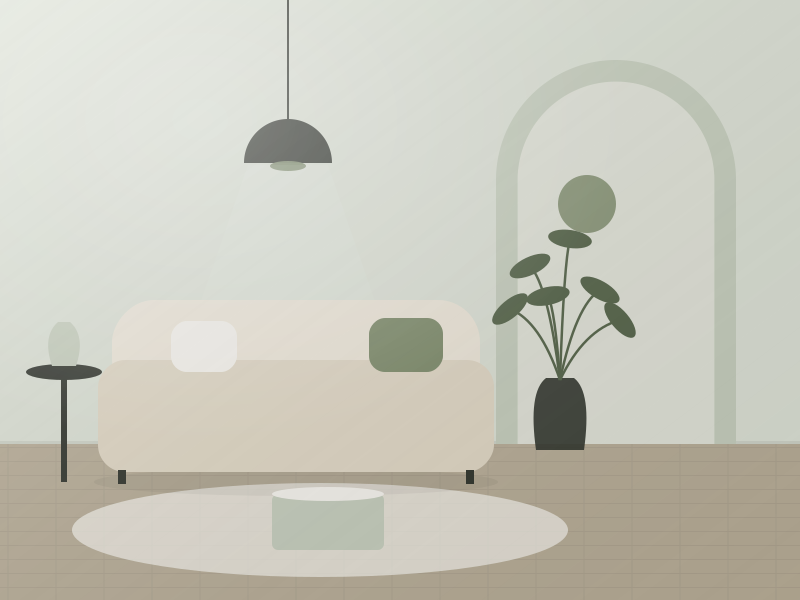
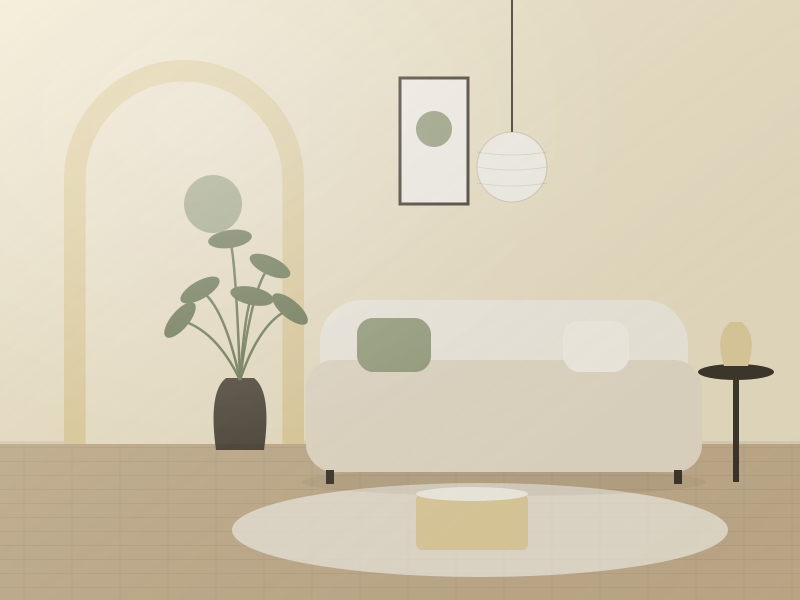
Pair a low sofa with a credenza or media unit at a similar height so the eye travels horizontally. Add one sculptural chair, a coffee table with a curved or free-form top, and an arc floor lamp over the reading corner. Keep 45 cm (18 in) between sofa and coffee table and 90 cm (36 in) for the main walkway.
Dining room
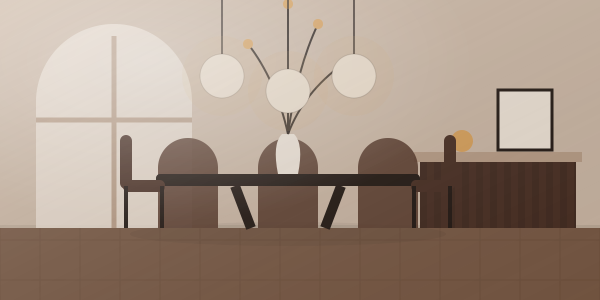
A pedestal or round teak table with shell or spindle-back chairs, a credenza for storage and a statement pendant hung 75–85 cm (30–34 in) above the table. A starburst mirror or a large abstract print over the credenza finishes the wall.
Bedroom
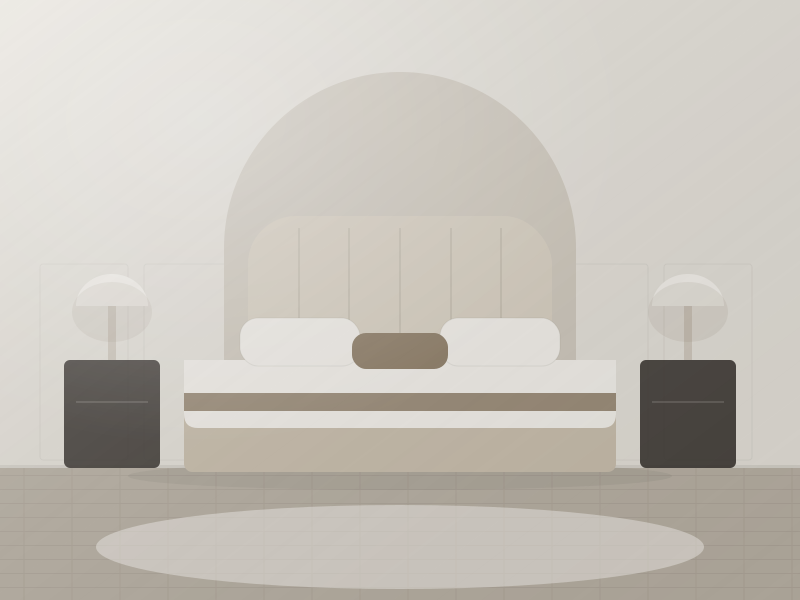
A low platform bed in walnut or teak with an integrated headboard, floating nightstands with drawers, a tall dresser on legs and ceramic lamps. Use a textured wool throw and one bold cushion color.
Kitchen
Flat-slab walnut or oak-veneer doors with integrated pulls, a white or terrazzo worktop and a colored backsplash tile in a small format. Globe or cone pendants over the island.
How to avoid the theme-park look
The fastest way to spoil the style is to use every period signal at once: sunburst clock, boomerang table, atomic-print curtains, orange sofa, mustard chair, sputnik chandelier. A few practical rules keep rooms current:
- Limit hero pieces. One statement light and one statement chair per room is enough.
- Mix eras. Combine mid-century pieces with a contemporary sofa, a modern rug or a new artwork. Roughly one strong period piece to two or three quieter contemporary ones reads curated rather than costume.
- Update the envelope. Use today's wall colors and lighting quality — warm 2700K LEDs, dimmers, good task lighting — rather than period wallpaper throughout.
- Hold back on pattern. Choose one geometric pattern (a rug or a cushion set) and keep other textiles plain and textured.
- Add softness. Linen curtains, a deep-pile rug and plenty of plants soften the hard lines.
Buying vintage vs new
| Factor | Vintage | New (reproduction or inspired) |
|---|---|---|
| Character | Genuine patina and solid construction in good pieces | Consistent finish; can look flat if poorly made |
| Condition | Check for veneer lifting, loose joints, water rings and worn upholstery foam | New, with warranty |
| Sizing | Often smaller seats and lower dining heights | Can be specified to current comfort and sizes |
| Compliance | Older foam and finishes may not meet current fire rules for contract use | Can be specified to current flammability standards such as TB 117-2013 or BS 5852 |
| Best for | Case goods, sideboards, dining chairs, lighting | Sofas, beds and hospitality projects |
A good rule: buy case goods and chairs vintage, where build quality shows, and upholstery new, where comfort and fire compliance matter. When buying vintage wood, open drawers and look for dovetail joints, check that veneer edges are intact, and ask whether the piece has been refinished. For new pieces, avoid anything marketed with a designer's name that is not an authorized edition; choose furniture that interprets the form under its own name instead. For hospitality and multi-unit work, our hotel FF&E sourcing guide explains how to specify mid-century-inspired pieces at volume.
Common mistakes
- Choosing sofas too shallow to be comfortable because they look authentic.
- Putting a teak credenza next to a teak table next to teak chairs — mix walnut, oak, lacquer and metal (see how to mix wood tones).
- Undersized rugs that leave slim-legged furniture floating on bare floor.
- Cool white lighting that makes warm wood look orange and flat.
Shopping list
- Low credenza in walnut or teak, 160–200 cm.
- Track-arm sofa on tapered legs in a textured wool or tweed.
- One upholstered lounge chair or swivel chair in a hero color.
- Round pedestal dining table with four molded shell or spindle chairs.
- Multi-arm or globe pendant and an arc floor lamp.
- Geometric or solid wool rug sized with the rug size calculator.
- Ceramic table lamps, a starburst or round mirror and abstract art.
- Large-leaf plants in simple ceramic or tapered planters.
For a lighter Nordic take on the same era, read our Scandinavian style guide. Want to see how the style compares with your taste? Take the style quiz, or ask our sourcing desk for factory quotes on walnut case goods and lighting.
Free toolTile CalculatorWork out tiles, boxes, grout and adhesive with the right wastage.Shop & source the look
Buy it today — or have it made
Retail links are affiliate links: we may earn a commission at no extra cost to you (disclosure). “Get it made” sends the item to our sourcing desk for factory quotes in custom sizes and finishes.
Frequently asked questions
What defines mid-century modern design?
Clean lines, organic curves, low proportions, furniture raised on slim tapered legs, warm woods such as teak and walnut, and a mix of materials including molded plywood, metal and glass.
What years are considered mid-century modern?
Roughly the mid-1940s to the late 1960s, the postwar period when new materials and manufacturing methods changed furniture design.
Can you mix mid-century modern with other styles?
Yes, and it usually looks better. Combining a few period pieces with contemporary upholstery, art and lighting avoids a themed interior.
Is vintage mid-century furniture worth buying?
Good vintage case goods and chairs are often well built and hold value, but check joints, veneer and finish, and consider new upholstery for comfort and fire compliance.
Some links may be affiliate links. Regulations and specifications change — always confirm with suppliers and qualified professionals.