Interior Design Styles: 24 Decorating Styles Explained for 2027
Interior design styles fall into four families: modern, traditional, regional and expressive. Here are 24 decorating styles explained, with palettes, materials and furniture shapes, plus a 5-step way to find yours.
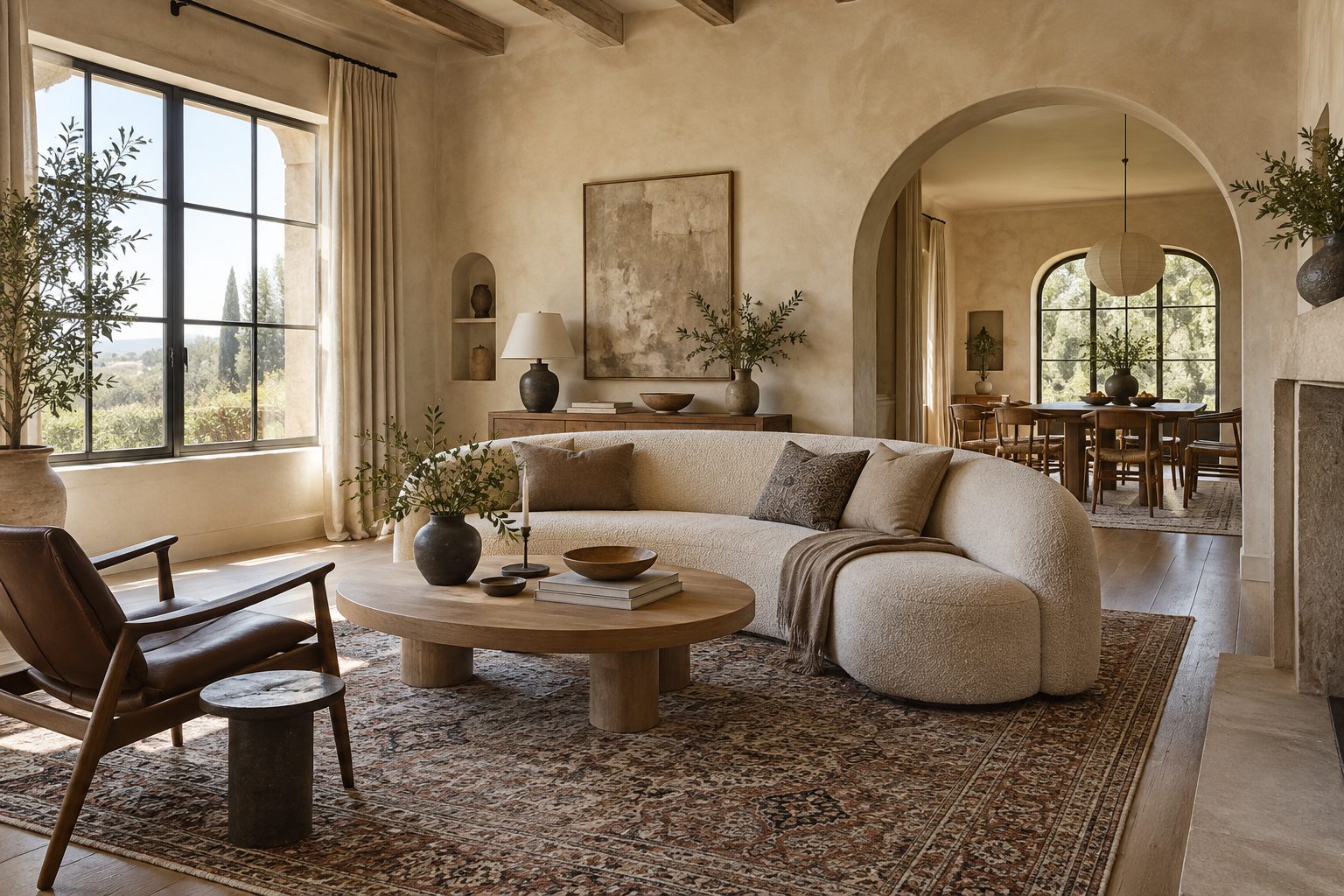
Key takeaways
- Most interior design styles belong to one of four families: modern, traditional, regional and nature-led, or expressive
- There is no official number of styles; designers work with roughly 20–25 named styles, and 24 are covered here
- Transitional is the most common style in American homes, while organic modern and warm minimalism carry the most momentum into 2027
- Find your style from what you already own and love, then check it against your architecture, not against a trend list
Interior design styles are named sets of shapes, materials and colors that make a room read as one idea. There is no official list, but designers work with about 20–25 styles, and nearly all fall into four families: modern, traditional, regional and nature-led, and expressive. Below are 24 decorating styles explained in plain terms, a comparison table and a 5-step method to find yours.
Style names get used loosely, which is why two rooms both labeled "modern" can look nothing alike. This guide is the hub for every style we cover in depth: each entry gives a short definition, three signature elements and a link to the full guide where we have one. If you would rather start from pictures than words, browse our style library or take the interior design style quiz, which takes about four minutes.
- Families: 4 (modern, traditional, regional and nature-led, expressive).
- Styles covered: 24, from mid-century modern to boho.
- Most common in US homes: transitional, followed by modern farmhouse and contemporary.
- Strongest momentum for 2027: organic modern, warm minimalism, Japandi and quiet luxury.
- Rule of thumb: one main style plus one accent style, roughly 80/20, is the mix that holds together.
What are the main interior design styles?
The main interior design styles are modern, contemporary, transitional, traditional, Scandinavian, mid-century modern, farmhouse, coastal, boho and minimalist; almost every other style is a variation or blend of these ten. When people search for interior design decorating styles they usually want to know which of these core styles they lean toward, then which sub-style fits their house and budget.
It helps to think in families rather than in a flat list of decor style names. A family shares a philosophy: modern styles strip ornament and favor clean lines; traditional styles keep ornament, symmetry and historic furniture forms; regional and nature-led styles take their cues from a place or from natural materials; expressive styles put personality, pattern and collecting first. Once you know your family, choosing between, say, Japandi and Scandinavian becomes a decision about warmth and wood tone rather than a leap in the dark.
How many interior design styles are there?
There is no fixed number of interior design styles; most designers recognize 20–25 named styles, and new labels appear every year as trends get names. Some of those labels are genuine styles with a history, a material language and recognizable furniture, such as art deco or mid-century modern. Others are moods or marketing names that describe a palette more than a style. We count a style as real when it has identifiable furniture shapes, a consistent material palette and at least a decade of use. By that test, the 24 below qualify, and passing trends such as single-color "core" aesthetics do not.
Modern family: clean lines and less ornament
Modern-family styles share flat or gently curved surfaces, little or no ornament, and a focus on light, proportion and material over decoration. They differ mainly in warmth: from cool, hard-edged industrial to soft, wood-rich Japandi.
Modern
Modern design is a fixed historical style rooted in the early-to-mid 20th century, built on function, geometry and honest materials. It is not the same as contemporary, which means whatever is current; our contemporary vs modern interior design guide untangles the two.
- Flat planes, right angles and exposed structure
- Steel, glass, leather and walnut
- Neutral base with primary-color accents
Contemporary
Contemporary design is the style of the present moment, so it changes every decade. In 2026 it means soft curves, warm neutrals, matte surfaces and sculptural lighting.
- Rounded sofas and low profiles
- Plaster, stone and pale oak
- Statement pendant or floor lamp
Mid-century modern
Mid-century modern covers furniture and interiors from roughly 1945–1970: organic shapes, tapered legs and teak or walnut. It remains one of the best interior design styles for small homes because its pieces sit low and look light. Read the full mid-century modern guide.
- Tapered splayed legs and molded seats
- Teak, walnut and molded plywood
- Mustard, olive and burnt orange accents
Minimalist and warm minimalism
Minimalism reduces a room to essential pieces and empty space. Its 2027 version, warm minimalism, keeps the restraint but adds texture, warm whites and natural wood so the room feels calm rather than cold.
- Hidden storage and clear surfaces
- Limewash, oak and linen
- One object per surface, at most
Scandinavian
Scandinavian style is light, functional and cozy, developed for long northern winters. It pairs pale woods and white walls with soft textiles and plenty of lamps; see our Scandinavian style guide.
- Pale ash, birch and white oak
- Wool throws and sheepskin
- Several low lamps instead of one bright light
Japandi
Japandi blends Japanese restraint with Scandinavian comfort: low furniture, darker woods than pure Scandi, and a muted earthy palette. Our Japandi style guide covers proportions and sourcing.
- Low platform beds and floor-level seating
- Smoked oak, paper and stoneware
- Muted clay, charcoal and sand tones
Industrial
Industrial style borrows from converted warehouses: exposed brick, ductwork and concrete, with metal-framed furniture. It works best in lofts with high ceilings and large windows.
- Black steel frames and factory pendants
- Brick, concrete and reclaimed timber
- Leather sofas and open shelving
Quiet luxury
Quiet luxury is understated high-end design: few pieces, exceptional materials and no visible logos or glitz. It overlaps with what we describe in luxury interior design homes; the full style breakdown is in quiet luxury interiors.
- Cashmere, bouclé and fine wool
- Honed stone and plaster
- Tonal palettes of taupe, ivory and camel
Traditional family: symmetry, ornament and heritage
Traditional-family styles keep moldings, symmetry and historic furniture forms, and they range from formal and ornate to relaxed and lived-in. They suit older houses with original detailing, and they age slowly because they never chased a trend to begin with.
Traditional
Traditional style draws on 18th- and 19th-century European furniture: rolled arms, carved wood, pattern and balanced arrangements. Our traditional interior design guide covers the modern take.
- Paired lamps and symmetrical seating
- Mahogany, chintz and damask
- Crown molding and paneled walls
Transitional
Transitional style sits between traditional and contemporary: classic silhouettes with cleaner lines and a neutral palette. It is the safest choice for resale and mixed households; see transitional interior design.
- Track-arm sofas and simple turned legs
- Greige, ivory and soft gray
- Mixed metals, kept to two finishes
Colonial
Colonial interiors follow American houses built from the 1600s to the early 1800s and their later revivals: center halls, symmetry and wide-plank floors. Read colonial style interiors.
- Windsor chairs and four-poster beds
- Wide pine or oak floorboards
- Historic blues, reds and creams
French country
French country is the relaxed farmhouse style of rural France: painted wood, curvy legs, toile and linen, all slightly worn. Our French country style guide shows how to keep it fresh.
- Cabriole legs and distressed paint
- Toile, linen and stone floors
- Lavender, butter yellow and soft blue
Art deco
Art deco is the glamorous geometric style of the 1920s and 1930s, built on symmetry, fan and chevron motifs and polished materials. Its revival is covered in our art deco revival guide.
- Fluted and stepped forms
- Brass, lacquer, velvet and marble
- Emerald, navy and black with gold
Regional and nature-led styles
Regional and nature-led styles take their identity from a landscape, a climate or a natural material, which is why they feel grounded and age well in the right setting. Many of the home decor styles gaining ground for 2027 sit in this family.
Mediterranean
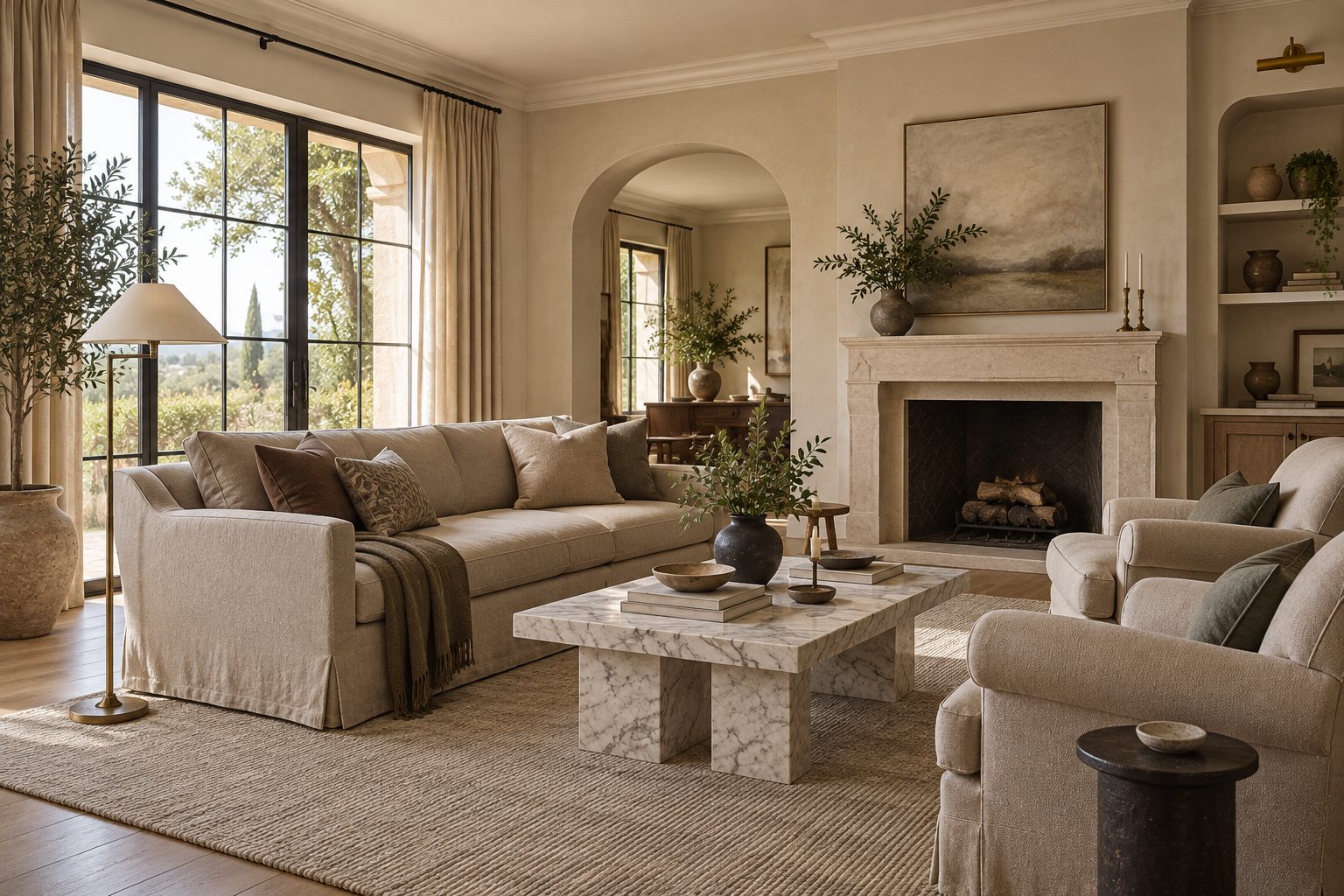
Mediterranean style draws on coastal Spain, Italy and Greece: lime-plastered walls, terracotta floors, arches and sun-bleached wood. See the Mediterranean style guide.
- Arched openings and niches
- Terracotta, limewash and travertine
- Olive, ochre and sea blue
Coastal
Coastal design is airy and light-filled, built around natural textures and a sand-and-water palette. Done well it avoids anchors and slogans; read coastal interior design.
- Slipcovered sofas and rattan
- Whitewashed wood and linen
- White, sand and soft blue
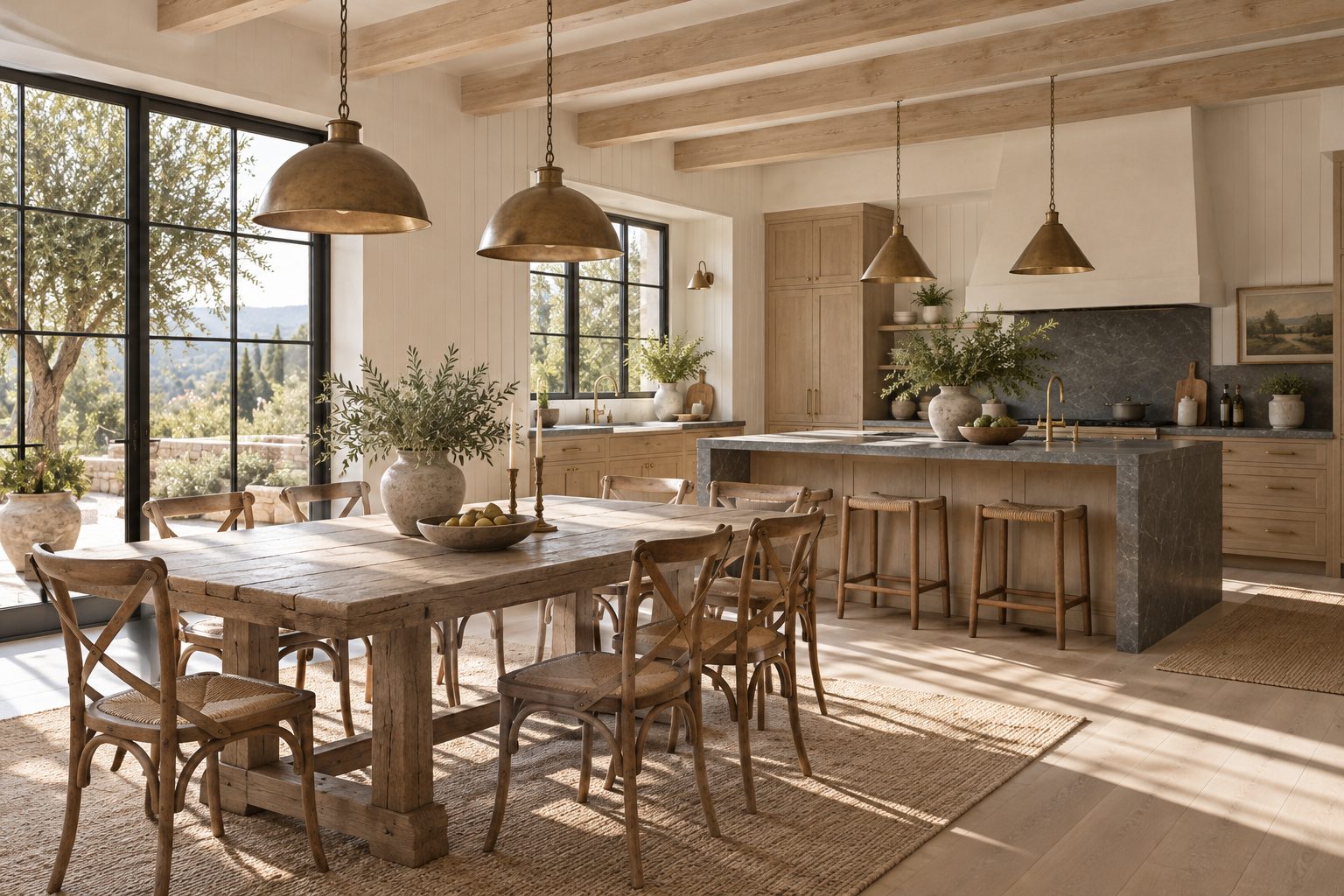
Modern farmhouse
Modern farmhouse combines rustic farmhouse warmth with clean modern lines and a light palette. Its 2027 update is warmer and less shiplap-heavy; see modern farmhouse decor.
- Board-and-batten or plank walls
- Black metal hardware and lighting
- Warm wood against white
Modern cottage
Modern cottage keeps the charm of a country cottage, florals, painted wood and cozy nooks, but edits the clutter and updates the palette. Read modern cottage style.
- Small-scale florals and checks
- Painted beadboard and pine
- Sage, cream and dusty pink
Wabi-sabi
Wabi-sabi is a Japanese aesthetic that values imperfection, age and handmade surfaces. Rooms feel quiet and raw rather than polished; see wabi-sabi interiors.
- Handmade ceramics and rough plaster
- Unfinished wood and linen
- Earth, stone and ash tones
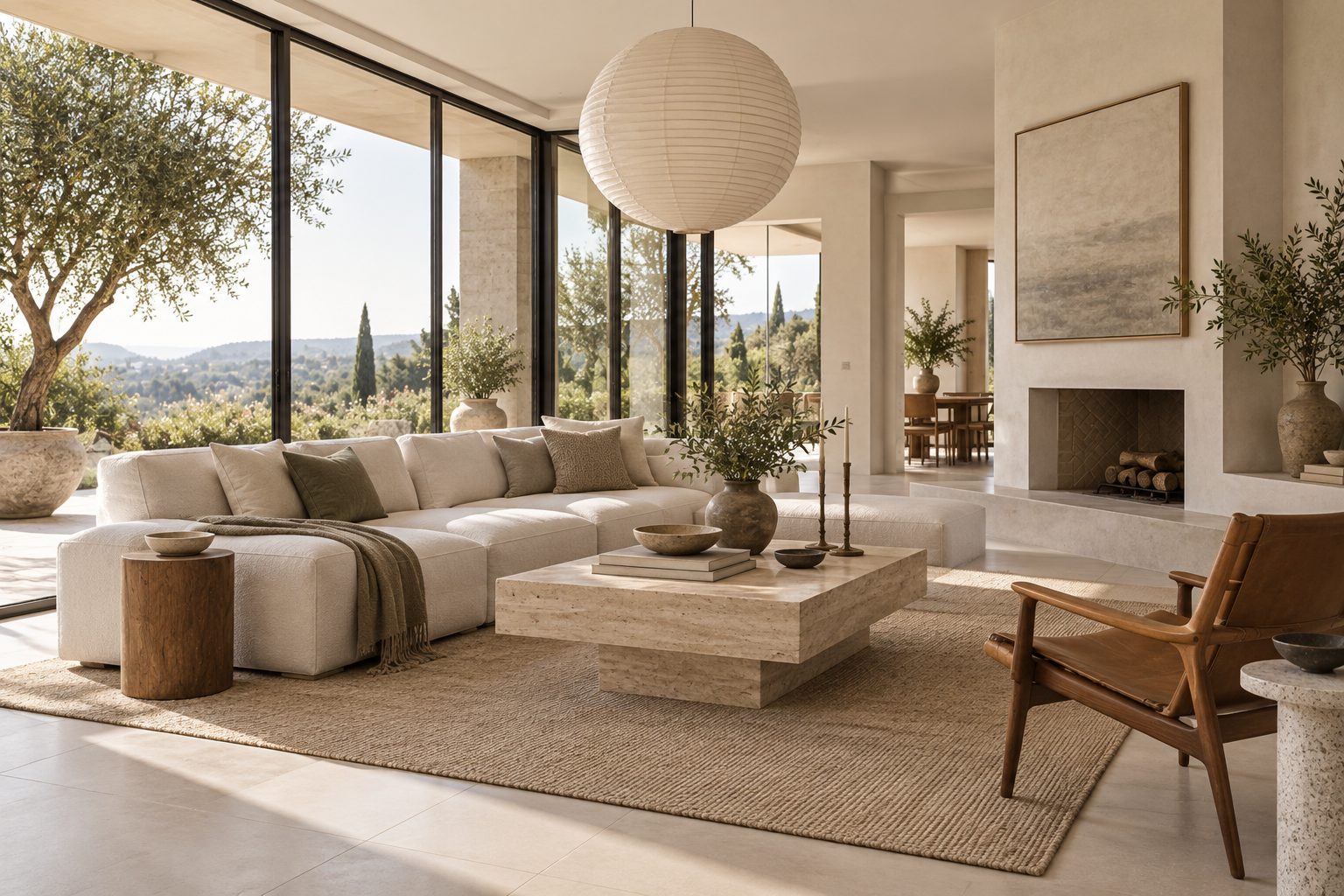
Organic modern
Organic modern is contemporary design softened with natural materials, curves and earthy neutrals. It is the defining look heading into 2027; read the organic modern style guide.
- Curved sofas and rounded tables
- Travertine, oak and bouclé
- Oat, clay and warm white
Biophilic
Biophilic design is less a look than a method: it brings daylight, plants, views and natural materials into every room. It layers onto any other style; see the biophilic design guide.
- Large plants and planted shelving
- Natural fibers and timber
- Daylight-led layouts
Expressive styles: personality first
Expressive styles put collecting, pattern and personal history ahead of rules, so they are the hardest to do well and the most memorable when they work. Each needs one unifying element, a palette, a material or a repeated shape, to stop it tipping into clutter.
Boho
Boho, short for bohemian, layers global textiles, plants, rattan and vintage finds in a relaxed, collected way. Our boho interior design guide shows how to keep it uncluttered.
- Layered rugs and floor cushions
- Rattan, jute and macramé
- Terracotta, rust and ochre
Maximalist
Maximalism is "more is more" done deliberately: saturated color, pattern on pattern and dense collections. The discipline is in repeating colors so the room still reads as one composition.
- Patterned wallpaper on walls and ceiling
- Velvet, chintz and lacquer
- Gallery walls hung edge to edge
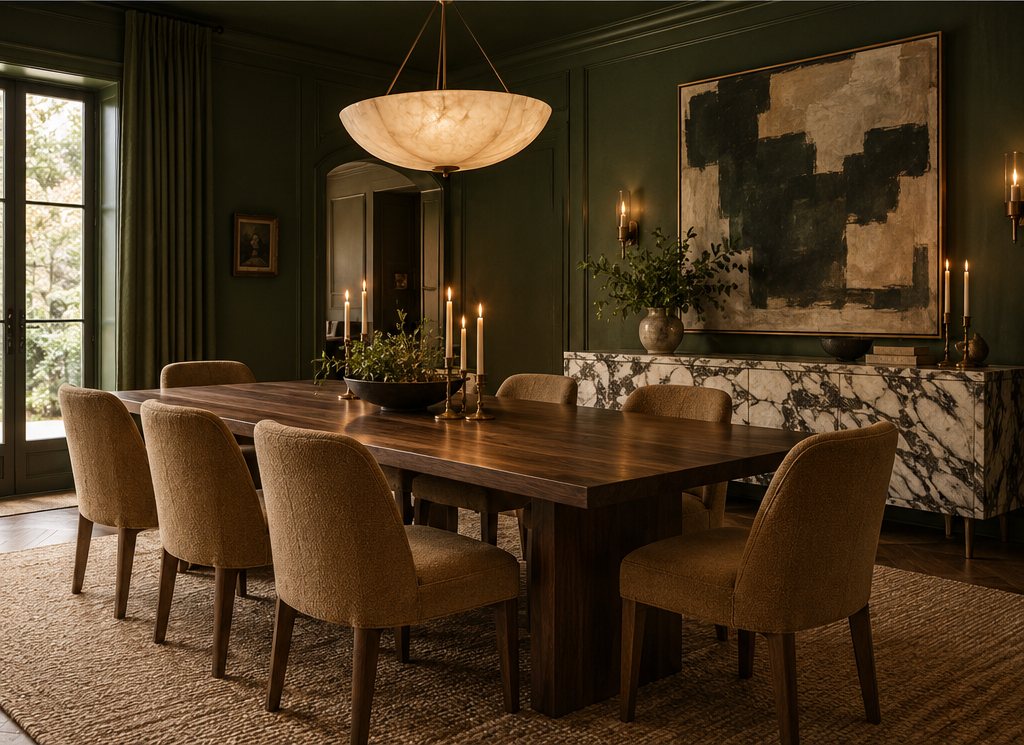
Masculine and moody
Masculine interior design is a vocabulary rather than a rule: dark woods, leather, tailored lines and deep saturated colors. Read masculine interior design.
- Leather club chairs and tailored sofas
- Walnut, wool flannel and blackened steel
- Charcoal, oxblood and forest green
Eclectic
Eclectic style mixes periods and origins on purpose, an antique table with modern chairs, a vintage rug with a contemporary sofa. Unlike maximalism, it can be quiet; the link is a consistent palette.
- Pieces from at least three eras
- One repeated color across the room
- A mix of high and low pieces
Interior design styles compared side by side
The fastest way to separate similar interior decorating styles is to compare their palettes, materials and furniture shapes in one place. The table below covers the 16 styles readers ask about most.
| Style | Era / origin | Palette | Key materials | Furniture shapes | Best for |
|---|---|---|---|---|---|
| Modern | 1920s–1960s, Europe | White, black, primaries | Steel, glass, leather | Rectilinear, cantilevered | Open plans, modernist houses |
| Contemporary | Now, changes each decade | Warm neutrals, one accent | Plaster, stone, pale oak | Curved, low, sculptural | New builds, condos |
| Mid-century modern | 1945–1970, US and Scandinavia | Teak, mustard, olive | Walnut, teak, plywood | Tapered legs, molded seats | Small homes, ranch houses |
| Warm minimalism | 2020s, global | Warm whites, sand | Limewash, oak, linen | Low, simple, built-in | Calm bedrooms, apartments |
| Scandinavian | 1930s on, Nordic | White, pale gray, wood | Ash, birch, wool | Light, slim, functional | Low-light climates |
| Japandi | 2010s, Japan and Nordic | Clay, charcoal, sand | Smoked oak, paper, stoneware | Low, horizontal | Bedrooms, small spaces |
| Industrial | 1970s lofts, US | Black, rust, gray | Brick, steel, concrete | Chunky, metal-framed | Lofts, high ceilings |
| Traditional | 18th–19th century, Europe | Rich reds, blues, creams | Mahogany, damask, brass | Rolled arms, carved legs | Period homes, formal rooms |
| Transitional | 1990s on, US | Greige, ivory, soft gray | Linen, painted wood, nickel | Classic but simplified | Resale, family homes |
| French country | 18th century on, rural France | Butter, lavender, blue | Painted oak, toile, stone | Cabriole legs, curved backs | Kitchens, older houses |
| Art deco | 1920s–1930s, France and US | Emerald, navy, gold | Brass, lacquer, velvet | Fluted, stepped, geometric | Dining rooms, apartments |
| Mediterranean | Coastal Southern Europe | Ochre, olive, sea blue | Terracotta, limewash, travertine | Chunky timber, arches | Warm climates |
| Coastal | Seaside homes, US | White, sand, soft blue | Linen, rattan, whitewash | Slipcovered, relaxed | Bright rooms, holiday homes |
| Modern farmhouse | 2010s, US | White, black, warm wood | Reclaimed wood, iron, shiplap | Chunky, simple | Suburban family homes |
| Organic modern | 2020s, global | Oat, clay, warm white | Travertine, oak, bouclé | Curved, rounded | Any home, 2027-forward |
| Boho | 1960s–70s, global | Terracotta, rust, ochre | Rattan, jute, kilims | Low, layered, vintage | Rentals, creative homes |
Palette is the first thing most people notice and the easiest thing to change. These six tones show how the 2027-leaning styles overlap: warm white and oat for organic modern and warm minimalism, clay and olive for Japandi and Mediterranean, deep ink for art deco and moody rooms.
#EFE8DC#D8C7AC#B5603E#6E7155#7A5A3F#2E3842For full room palettes by style, see our palette library.
What is the most popular interior design style?
Transitional is the most popular interior design style in American homes, because it blends classic comfort with clean lines and suits almost any house and buyer. Modern farmhouse and contemporary follow closely, and in apartments, Scandinavian and mid-century modern remain the default. Popularity and momentum are different measures, though. The styles growing fastest heading into 2027 are organic modern, warm minimalism, Japandi and quiet luxury, all of which share warm neutrals, natural materials and soft curves. Our interior design trends 2027 report tracks that direction in detail. The best interior design styles for you, of course, are the ones that fit your house and the way you live, not the ones topping a chart.
What is my interior design style? Find it in 5 steps
Your interior design style is the one that matches what you already own and love, your architecture and how you use your rooms, and you can identify it in about an hour. Quizzes help, but the most reliable evidence is in your own home and camera roll. This is the method we use with design clients:
- Collect 20–30 images of rooms you love, without filtering. Then look for repeats: the same wood tone, the same sofa shape, the same color temperature. Three repeats is a pattern.
- Audit what you own. List the five pieces you would save in a move. Their era, material and shape point to your family: modern, traditional, regional or expressive.
- Name your palette. Decide warm or cool, light or dark, and whether you want color or tone-on-tone. Warm and light points to organic modern or Scandinavian; warm and dark to Japandi, traditional or moody.
- Check your architecture. A 1960s ranch suits mid-century modern; a Georgian center-hall house suits traditional or transitional. Working with the building saves money and looks more convincing.
- Choose one main style and one accent. Write both down, for example "warm minimalism with Japandi," and test every purchase against them. Our style quiz gives you a main and secondary style if you want a second opinion.
What style is my home?
Your home's style is set first by its architecture, its era, ceiling height, windows and trim, and only second by the furniture in it. A house with deep crown molding, six-panel doors and double-hung windows is traditional or colonial in bones, even if it is filled with modern furniture. A 1950s ranch with low ceilings and big glass is mid-century. A new build with open plan, 9 ft (2.7 m) ceilings and flat-panel doors is a neutral, contemporary shell that can take almost any style.
- Trim tells you most: deep, layered moldings point to traditional or colonial; flat or no casing points to modern or contemporary.
- Windows come second: divided-light windows suggest traditional, farmhouse or cottage; large single panes suggest modern.
- Floors confirm it: wide-plank pine or oak suits colonial and farmhouse; terrazzo or polished concrete suits modern and industrial.
When the shell and the furniture disagree, transitional is usually the bridge.
How to mix two interior design styles
Two interior design styles mix successfully when they share at least one element, a palette, a wood tone or a line quality, and one clearly leads. The 80/20 rule works: 80 percent of the room in your main style, 20 percent in the accent. Japandi and Scandinavian share pale wood; mid-century and organic modern share curves; traditional and contemporary meet in transitional. Style pairs that share nothing, such as industrial and French country, need a strong unifying palette to work.
Our verdict: how we would choose
Start with your building and your daily habits, then pick the style, never the other way round. In our experience the rooms that hold up longest use a calm base style from the modern or transitional family, with personality added through one accent style in textiles, art and a few vintage pieces. If you are furnishing from scratch in 2026, we would lean toward organic modern or warm minimalism as the base: both use warm woods, natural fibers and soft shapes that will still look right in 2030, and both take a traditional or boho accent without strain. The styles we would treat as accents rather than whole-house schemes are industrial, maximalist and art deco, which are strongest in one room at a time.
Not sure where you land? Take the free style quiz for your main and secondary style, or book our design services to get a room plan, palette and sourcing list built around the style you already love.
Free toolWallpaper CalculatorHow many rolls you need, allowing for the pattern repeat.Shop & source the look
Buy it today — or have it made
Retail links are affiliate links: we may earn a commission at no extra cost to you (disclosure). “Get it made” sends the item to our sourcing desk for factory quotes in custom sizes and finishes.
In this guide
- Transitional Interior Design: Classic Comfort With Clean LinesTransitional interior design blends traditional silhouettes with contemporary restraint: neutral walls, 2 metal finishes at most, and furnit…
- Contemporary vs Modern Interior Design: The Real DifferenceContemporary vs modern interior design comes down to time: modern is a fixed style from roughly 1920–1970, while contemporary means the desi…
- Modern Farmhouse Decor: How to Update the Style for 2027Modern farmhouse decor mixes rustic wood and iron with clean lines and a light palette. It is not dead, but the 2027 version is warmer: far …
- Colonial Style House Interiors: Types, Features and Modern IdeasA colonial style house is a symmetrical, usually two-story home with a central front door and a center hall. Here are the 7 main types of co…
- French Country Interior Design: Colors, Furniture and Modern IdeasFrench country interior design pairs rustic materials such as limestone, plaster and oak beams with curved, painted furniture and soft faded…
- Modern Cottage Style: Colors, Decor Ideas and How to Get the LookModern cottage style keeps the cozy materials of a country cottage, painted wood, linen, small florals and soft color, but adds clean lines …
- Boho Interior Design: Colors, Decor Ideas and How to Keep It ModernBoho interior design layers natural fibers, handmade textiles, plants and warm earth colors into relaxed, personal rooms. Here are 6 boho co…
- Coastal Interior Design: How to Get the Modern Coastal Look RightCoastal interior design builds a room from soft whites, washed blues, pale oak, linen and natural fiber, so it feels like a beach house with…
- Masculine Interior Design: Bedroom Ideas, Colors and MaterialsMasculine interior design is a vocabulary of dark woods, leather, wool, tailored lines and saturated dark colors under low, warm light. A ma…
- Organic Modern Interior Design: Style Guide, Palette and MaterialsSoft curves, natural materials and a warm, earthy palette on a clean modern frame. How to design organic modern rooms that feel calm and tac…
- Biophilic Interior Design Guide: Light, Plants, Materials & AirBiophilic interior design builds our need for nature into rooms through five measurable moves: daylight and a view within 6 m of a window, l…
- Warm Minimalism 2027: A Guide to Soft Minimalist Interior DesignWarm minimalism is minimalist interior design executed in soft natural materials: limewash, oak, linen and stone in a cream-to-clay palette …
- Japandi Style Guide: Principles, Palette and Shopping ListWhere Japanese restraint meets Scandinavian comfort — how to design a Japandi room that feels calm rather than empty.
- Wabi-Sabi Interiors: Finding Beauty in ImperfectionRaw plaster, aged wood, handmade ceramics and a quiet palette — a practical guide to the Japanese philosophy that shaped modern minimalism.
- Quiet Luxury: Modern Decor That Feels Expensive Without LogosQuiet luxury is modern decor built on five rules — tonal palettes, material over ornament, tailoring, texture instead of pattern and edited …
- Scandinavian Interior Design: A Modern Guide to Nordic StyleLight, honest materials and furniture built for daily life. How to design a Scandinavian interior that feels warm and current rather than ba…
- Modern Mediterranean: Sun-Baked Colour, Arches and TerracottaHow to capture the relaxed warmth of coastal Spain, Italy and Greece — without a single cliché.
- Mid-Century Modern Decor & Interior Design: A Complete GuideMid century modern decor means low, leggy furniture in teak and walnut, one or two bold period colors such as mustard or teal against pale w…
- Art Deco Revival: How to Use Deco Style in Modern InteriorsGeometry, glamour and rich materials are back. How to bring Art Deco into a contemporary home or hotel — palette, materials, furniture forms…
Frequently asked questions
What is my interior design style?
Your interior design style is the one that repeats in the rooms you save, the pieces you own and the palette you gravitate to. Collect 20–30 images, note repeated wood tones, shapes and colors, check them against your home's architecture, then choose one main style and one accent style. A style quiz can confirm the result.
What style is my home?
Your home's style is defined mainly by its architecture: trim depth, window type, ceiling height and floors. Deep crown molding and divided-light windows signal traditional or colonial; flat casings and large glass signal modern; an open-plan new build is a neutral contemporary shell that suits most furniture styles.
What are the main interior design styles?
The main interior design styles are modern, contemporary, transitional, traditional, Scandinavian, mid-century modern, farmhouse, coastal, boho and minimalist. Most other named styles, such as Japandi, organic modern or French country, are variations or blends of these and fit into four families: modern, traditional, regional and nature-led, and expressive.
How many interior design styles are there?
There is no official number of interior design styles. Most designers recognize 20–25 named styles that have identifiable furniture shapes, materials and palettes, and this guide covers 24. New labels appear every year, but many describe a passing palette or mood rather than a complete, lasting style.
What is the most popular interior design style?
Transitional is the most popular interior design style in American homes because it combines classic comfort with clean lines and appeals to most buyers. Modern farmhouse and contemporary follow. For 2027, organic modern, warm minimalism and Japandi are gaining the most ground, driven by warm neutrals and natural materials.
Some links may be affiliate links. Regulations and specifications change — always confirm with suppliers and qualified professionals.