Luxury Interior Design Homes: What Makes a Home Feel High End
Luxury interior design homes are defined by proportion, natural materials, custom joinery and layered lighting rather than price tags. A high-end interior budgets $150–400 per sq ft for finishes and furnishings, uses 3–5 materials per room and lights each space on 3 circuits.
Part of our guide: Home Interior Design Ideas: House Styles, Rooms & Layouts
Key takeaways
- A luxury interior spends on what you touch and what you see at eye level: floors, joinery, hardware, upholstery and lighting, in that order
- High-end homes budget $150–400 per sq ft ($1,600–4,300 per m²) for finishes and furnishings, with 15–25 percent of that going to lighting and electrical
- Limit each room to 3–5 materials and 2–3 finishes of metal; restraint, not abundance, is what reads as expensive
- Ceiling height, door height and window proportion do more for a luxurious interior than any single object you can buy
- Every luxury room runs on three lighting circuits, dimmable, at 2700K, with no fixture brighter than it needs to be
Luxury interior design homes are built on proportion, natural materials, custom joinery and layered lighting, not on expensive objects. A high-end interior typically budgets $150–400 per sq ft ($1,600–4,300 per m²) for finishes and furnishings, limits each room to 3–5 materials and lights every room on three dimmable circuits. Here is what makes an interior luxurious, what it costs and how to get the effect at any budget.
The word luxury gets attached to anything with a gold leg, which is why so many "luxurious" rooms look cheap. The homes that genuinely read as high end share a handful of decisions about scale, light, surface and quiet, and most of those decisions cost planning time more than money. This is one of the chapters in our home interior design ideas pillar, and it sits close to quiet luxury interiors, which covers the understated end of the same spectrum.
- Finish and furnish budget: $150–400 per sq ft for a luxury renovation, versus $40–90 for a standard one.
- Materials per room: 3–5, with one hero material (stone, timber or plaster) and the rest supporting.
- Ceiling and door height: 9–12 ft (2.7–3.7 m) ceilings and 8 ft (2.4 m) doors are the baseline for a luxury scale.
- Lighting: 3 circuits per room, 2700K, CRI 90+, all dimmable, 5–15 lumens per sq ft at ambient level.
- Upholstery: 30,000+ Martindale fabrics, 8-way hand-tied or sinuous spring seats, feather-wrapped foam cushions.
What makes an interior design luxurious?
An interior is luxurious when its proportions are generous, its materials are honest and its details are resolved, so that nothing in the room asks for your attention and everything rewards it. That is the working definition we use, and it explains why a 900 sq ft (84 m²) apartment with plaster walls, oak floors and one good sofa can feel more upscale than a 6,000 sq ft (557 m²) house full of veneer and gloss.
In practice, luxury interior design comes from seven traits that appear together in nearly every high-end home we study:
- Scale: taller doors, wider halls, bigger windows and furniture sized to the room rather than to a showroom.
- Natural materials: solid timber, real stone, lime plaster, wool, linen, leather and brass that age rather than wear out.
- Custom joinery: built-in wardrobes, libraries and kitchens made to the wall, with grain-matched fronts and integrated hardware.
- Layered lighting: ambient, task and accent circuits on dimmers, so the room changes from morning to dinner.
- Restraint: a tight material palette, fewer and better objects, and empty wall space treated as a feature.
- Comfort engineering: sofa depths, mattress specs, acoustic treatment and climate control you never notice because they work.
- Resolved details: shadow gaps instead of skirting, flush doors, hidden hinges, aligned grout lines and hardware that matches across the whole house.
How much does luxury interior design cost?
A luxury interior typically costs $150–400 per sq ft ($1,600–4,300 per m²) for finishes, fixtures and furniture, and $400–800+ per sq ft at the top of the market where stone, bespoke joinery and architectural lighting dominate. A standard mid-range renovation runs $40–90 per sq ft by comparison, so the luxury premium is roughly three to five times, not thirty. Where the money goes matters more than the total.
| Element | Standard spec | Luxury spec | Typical luxury cost |
|---|---|---|---|
| Flooring | Engineered oak, 3/8 in (10 mm), 5 in (13 cm) planks | Wide-plank solid or thick-wear engineered oak, 8–10 in (20–25 cm), or honed stone | $18–45 per sq ft installed |
| Walls | Painted drywall, eggshell | Lime or Venetian plaster, limewash, paneling, or paper-backed grasscloth | $12–40 per sq ft |
| Kitchen | Stock cabinets, laminate or quartz | Custom cabinetry, 1.25 in (3 cm) stone, integrated appliances | $80,000–250,000 |
| Bathrooms | Ceramic tile, acrylic tub | Slab stone or large-format porcelain, cast stone tub, frameless glass | $40,000–120,000 each |
| Lighting | Recessed cans, one switch per room | Three circuits, decorative fixtures, cove and picture lighting, dimming system | $25–60 per sq ft |
| Doors and hardware | 6 ft 8 in (2.0 m) hollow-core, zinc levers | 8 ft (2.4 m) solid-core, concealed hinges, solid brass or bronze levers | $1,500–4,000 per opening |
| Upholstery | Foam seats, polyester fabric | Sprung seats, feather-wrapped cushions, 30,000+ Martindale wool or linen | $6,000–20,000 per sofa |
| Window treatments | Ready-made panels | Lined and interlined full-height drapery, motorized blinds | $1,500–6,000 per window |
Lighting and electrical absorb 15–25 percent of a luxury interior budget, and the kitchen and primary bathroom together take 35–45 percent, because those are the rooms where stone, joinery and plumbing converge. Spending on decorative objects while under-spending there is the most common mistake in expensive interior design that does not look expensive.
Which materials define high end home interiors?
High end home interiors use materials that are solid rather than applied, that have variation in them, and that improve with age: oak, walnut, limestone, marble, travertine, lime plaster, wool, linen, leather and unlacquered brass. The common thread is that each material is what it appears to be. Veneer that imitates solid timber, porcelain printed to look like marble and foam that imitates feather all photograph well and feel wrong in the hand.
The hero material rule
Each room in a luxury house interior design gets one hero material and three or four supporting ones. A living room might lead with a 10 in (25 cm) wide-plank white oak floor and support it with limewashed walls, a wool rug, linen upholstery and aged brass. A bathroom might lead with a single honed marble used on floor, walls and vanity top, supported by oak, nickel and plaster. Push past five materials and the room starts to look assembled rather than designed, which is the opposite of upscale interior design. Our guide to trending materials covers travertine, bouclé and microcement in detail, and how to mix metals explains the two-or-three-finish rule for hardware.
Material specs that signal quality
- Stone: 1.25 in (3 cm) slab for counters, honed rather than polished, with mitered edges and book-matched veining where it is on show.
- Timber floors: 7–10 in (18–25 cm) planks, 6 mm or thicker wear layer, oiled or matte lacquered, never high gloss.
- Plaster: three-coat lime or marmorino at 1–3 mm, hand-troweled, in a tinted finish rather than painted over.
- Fabric: 30,000+ Martindale for seating, natural fiber or wool blend, with a 10 percent overage kept for repairs.
- Metal: solid brass, bronze or stainless, unlacquered or living finishes, consistent across every door, cabinet and tap.
What does luxury modern interior design look like in 2027?
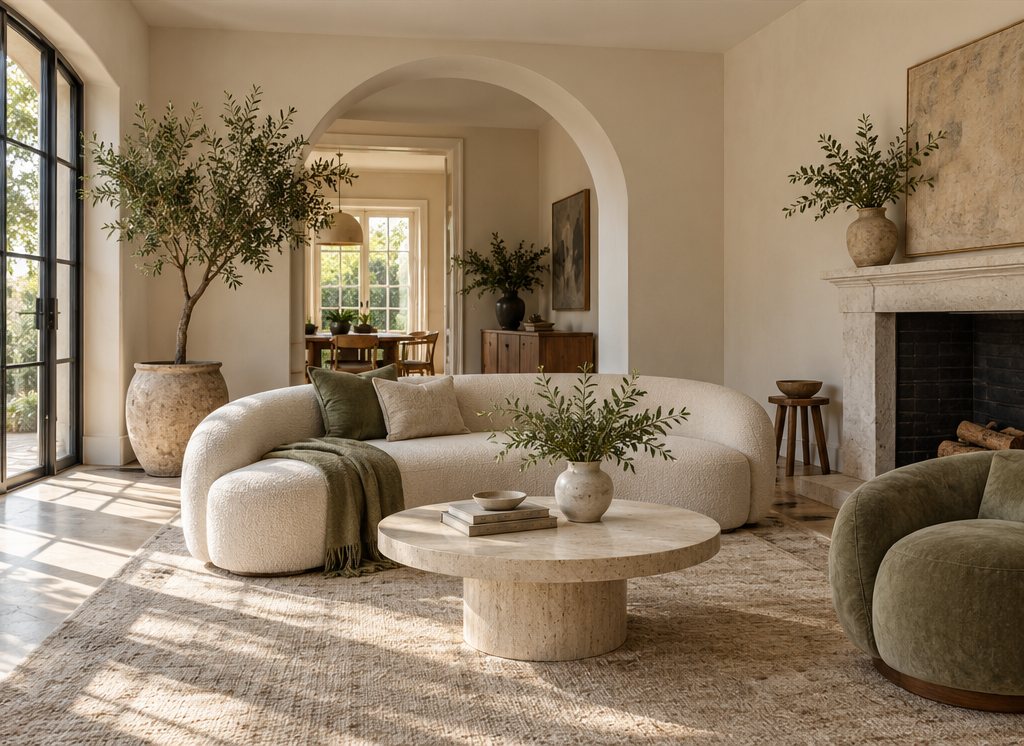
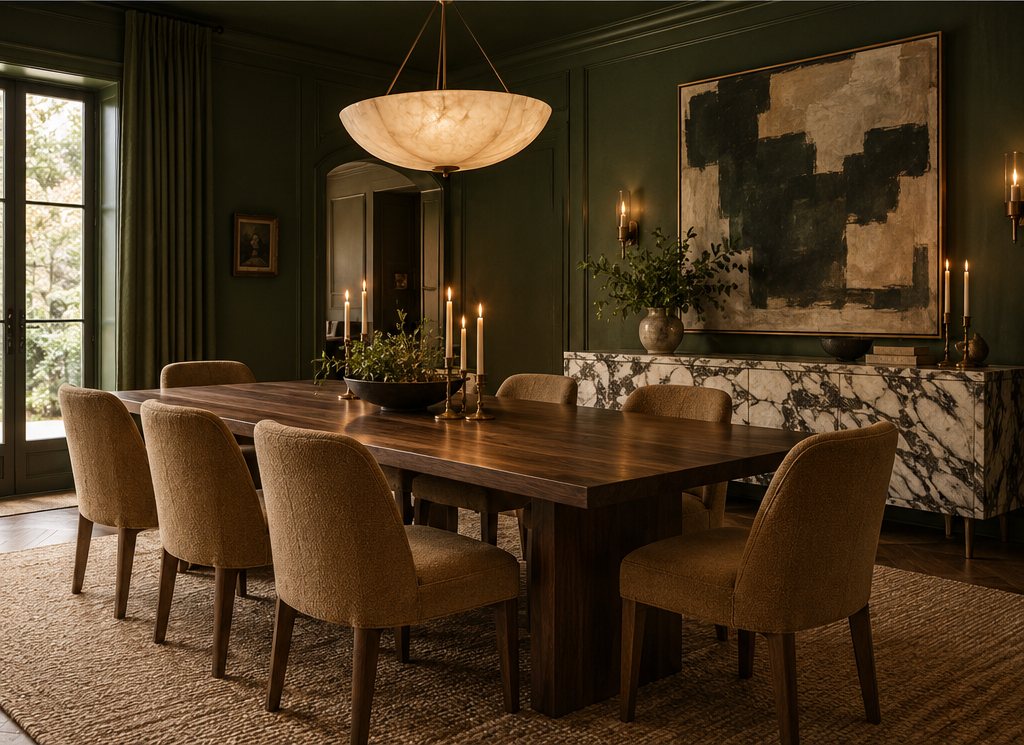
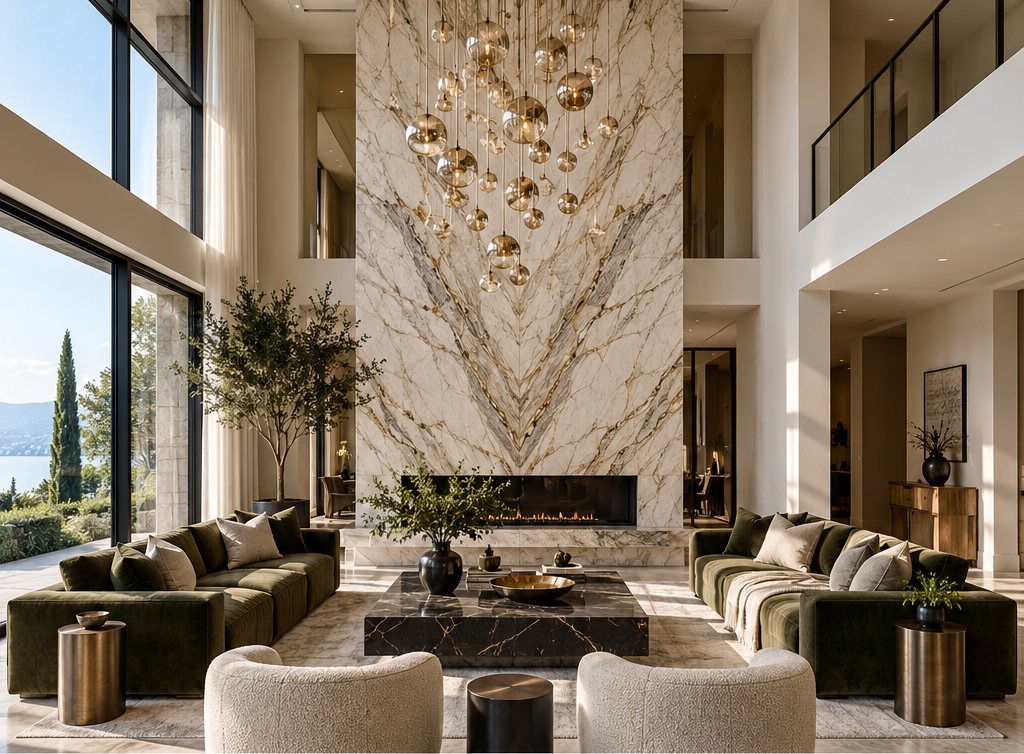
Luxury modern interior design in 2027 is warm, matte and architectural: pale plaster and stone, wide timber planks, curved sofas, low furniture, and lighting hidden in coves and joinery rather than hung from the ceiling. The chrome-and-gloss version of modern luxury has been fading for years, replaced by a softer modern luxurious interior design that borrows from Mediterranean and Japanese houses. The pieces that signal this direction include travertine or limestone coffee tables, bouclé or wool seating in oat and clay tones, fluted timber or plaster, and oversized pendant lights in linen or alabaster.
The modern luxury interior design concept has four working principles:
- Architecture first: the plan, the openings and the ceilings are the design; furniture fills in behind.
- A warm neutral envelope: walls, floors and ceilings in a tight range of warm whites, stone and timber tones, so color comes from art, textiles and the view.
- Low and horizontal: sofas at 30–32 in (76–81 cm) back height, beds on low platforms, long credenzas, so the walls and windows stay tall.
- Invisible technology: flush speakers, hidden screens, recessed blinds, climate that works without visible vents.
For the stylistic cousins of this look, see our guides to organic modern style and warm minimalism; both describe the same restraint from different angles.
How do luxury contemporary and traditional luxury interiors differ?
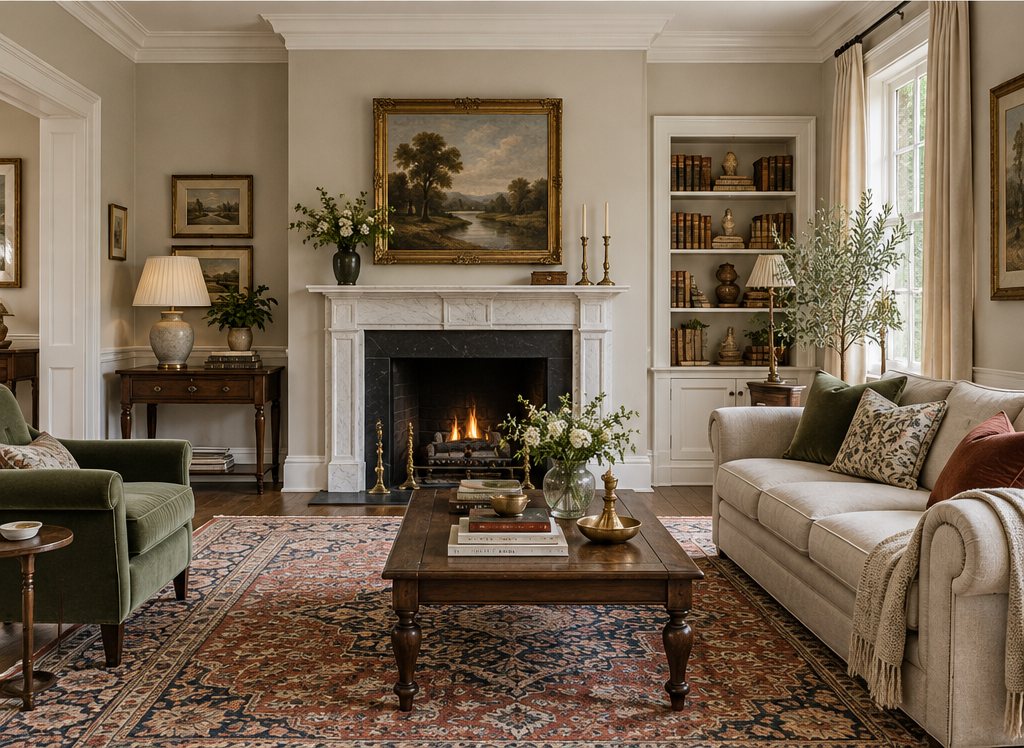
Luxury contemporary interior design relies on proportion, surface and light, while traditional luxury relies on ornament, symmetry and layered antiques; both are expensive, but they spend in different places. Contemporary luxe interior design puts its money into slab stone, long runs of joinery and architectural lighting. Traditional luxury puts it into moldings, hand-printed papers, passementerie and the kind of upholstery that takes a workshop three weeks per chair. Many of the best luxury residential interiors blend the two, with contemporary architecture and a few serious antiques.
| Trait | Contemporary luxe | Traditional luxury | Blended (most common in 2027) |
|---|---|---|---|
| Walls | Plaster, limewash, flush paneling | Picture rail, dado, wallpaper, cornices | Plaster with one paneled room |
| Floors | Wide plank or large stone slabs | Parquet, bordered carpet, antique rugs | Wide plank with antique rugs |
| Lighting | Cove, recessed, sculptural pendants | Chandeliers, lamps, picture lights | Hidden ambient plus decorative lamps |
| Furniture | Low, curved, modular | Skirted sofas, wing chairs, mahogany | Modern sofa, antique case pieces |
| Color | Warm neutrals, one earth tone | Saturated rooms, pattern on pattern | Neutral envelope, one colored room |
| Spend focus | Stone, joinery, lighting | Upholstery, textiles, antiques | Joinery, lighting, a few antiques |
If you lean traditional, our traditional interior design guide covers that version, and art deco revival covers the glamour end.
What luxury interior design ideas work room by room?
The luxury home interior design ideas that matter most are the ones that change how a room is used, not how it is dressed. Here is where each room earns its upscale feel.
Entrance and hallway
A luxury house announces itself in the first 10 ft (3 m): stone or wide timber on the floor, a full-height ceiling, one large mirror or artwork, a console with a lamp on its own switch and a concealed closet. Keep the hall at least 48 in (122 cm) wide. Our entryway design ideas article has the zoning and storage detail.
Living room
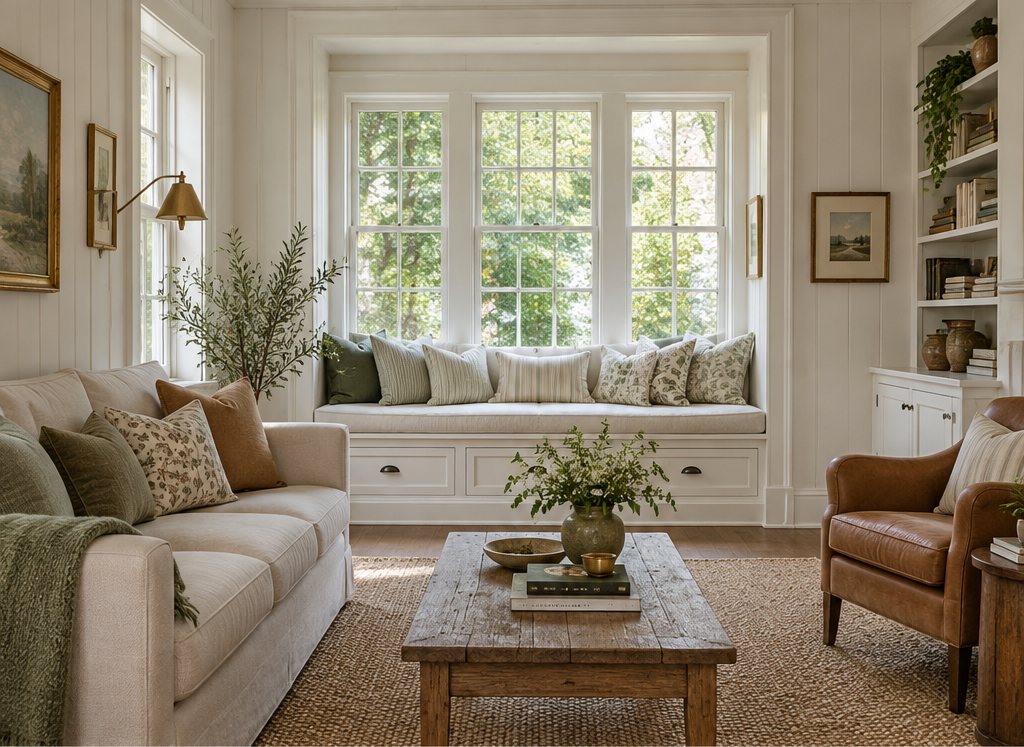
Size the sofa to the room using the sofa size guide: 90–110 in (229–279 cm) for a room over 300 sq ft (28 m²). Put a rug under the whole seating group, not just in front of it, sized with the rug size calculator. Hang curtains from the ceiling line, 2–2.5 times the window width in fullness, lined and interlined. Add three light circuits and dim everything.
Kitchen
Luxury kitchens hide most of what they contain: appliances behind panels, a pantry or scullery for the mess, and a run of stone that reads as one piece. A 1.25 in (3 cm) slab with a mitered waterfall edge, flush induction, an island 42–48 in (107–122 cm) deep and tall-cabinet storage are the usual moves; the kitchen island size guide has the clearances.
Primary bedroom
Upholstered headboard 48–60 in (122–152 cm) tall, a rug that extends 24–36 in (61–91 cm) beyond the bed on three sides, blackout blinds recessed into a ceiling pocket, bedside lighting on its own switch at the bed, and a dressing room or built-in wardrobe wall rather than freestanding pieces. See bedroom trends 2027 for the current direction.
Bathroom
One stone, used everywhere; a freestanding or built-in tub positioned to a window; a walk-in shower with a linear drain and no curb; a vanity with drawers, not doors; and a heated floor. The lighting should be sconces at face height, 60–66 in (152–168 cm) from the floor, flanking the mirror, as covered in our bathroom sconce guide.
How do you make a home look expensive on a smaller budget?
You get 70 percent of the luxury effect by fixing proportion, lighting and the surfaces you touch, which together cost a fraction of a full luxury fit-out. A home can look like an expensive interior without expensive interiors if you spend in the right order. Here is the sequence we recommend when the budget is real but limited.
- Raise the lines. Hang curtains at the ceiling, take joinery and tile to the ceiling, replace standard doors with 8 ft (2.4 m) doors where the ceiling allows, and remove any dropped soffits that are not hiding services.
- Fix the lighting. Swap single-switch overhead lighting for three circuits: 2700K recessed or cove ambient, lamps on a switched circuit, and a picture or accent light. Put every circuit on a dimmer. Our lighting layering guide walks through this, and the lighting calculator sizes it.
- Replace what hands touch. Door levers, cabinet pulls, taps and switch plates in one solid metal finish throughout. This runs $2,000–6,000 for a whole house and changes everything.
- Narrow the palette. Repaint in two or three warm neutrals across the whole home; see neutral paint colors and our palette library. Use a limewash or a matte finish rather than eggshell.
- Buy one serious piece per room. A real wool rug, a sprung-seat sofa, a solid timber dining table or a stone coffee table. Fill the rest with simpler, cheaper things in natural materials.
- Edit. Remove half the objects. Luxury rooms have more empty surface than most people are comfortable with.
- Add textiles last. Lined curtains, a wool throw, linen cushions in two sizes, and a thick rug pad under every rug.
The first four steps alone move a standard home into luxury style interior territory for roughly $15–40 per sq ft.
What mistakes make a luxury interior look cheap?
The fastest way to make an expensive interior look cheap is to buy luxury signals, gold, gloss, crystal and oversized logos, without the proportions and materials behind them. The errors are consistent enough to list:
- Too many materials and finishes: three metals, four woods and five fabrics in one room.
- Gloss on everything: high-gloss floors, lacquered cabinets and mirrored furniture together read as a hotel lobby, not a home.
- Undersized rugs and curtains: a 5 × 8 ft (152 × 244 cm) rug floating in front of the sofa, or curtains that stop at the sill.
- A single ceiling light: no amount of furniture survives one bright fixture in the center of the room.
- Furniture pushed to the walls: luxury living rooms float the seating and leave 30–36 in (76–91 cm) of circulation around it, as laid out in our living room layout ideas.
- Visible technology: screens, speakers and vents on show. Hide them or make them part of the joinery.
- Matching sets: luxury residence interior design mixes pieces that were chosen separately, never a sofa, loveseat and armchair from one range.
How do you plan a luxury interior from scratch?
Start with the plan and the ceiling, then lighting and joinery, then surfaces, and only then furniture and decoration; that order is the single biggest difference between a professionally designed luxury interior and an expensive shopping trip. For a whole-house project, the sequence looks like this:
- Brief and budget: fix the all-in number per sq ft and split it: 20 percent kitchen, 20 percent bathrooms, 20 percent lighting and electrical, 15 percent floors and walls, 15 percent joinery, 10 percent furniture and textiles. Adjust to taste, but write it down.
- Plan and openings: widen doorways, align doors on axis, raise door heads, and plan sightlines from the entrance through to the best window.
- Ceilings and lighting: decide where coves, pendants, downlights and picture lights go while the ceiling is open. Lay out switching and dimming by scene, not by room.
- Joinery: design built-ins on elevation at 1:20 scale, with hardware, internal fittings and lighting included.
- Surfaces: pick the hero material per room and sample it at full scale on site. Order stone from the slab, not the catalog.
- Furniture: plan on a scaled drawing with clearances marked, and order the long-lead upholstery first; custom sofas run 10–16 weeks.
- Textiles, art and objects: last, and fewer than you think. Leave 20–30 percent of wall space empty.
If you are unsure which direction suits you, the style quiz narrows the field between contemporary, traditional and blended luxury, and our interior design trends 2027 report shows which of these directions is gathering momentum.
Free toolTile CalculatorWork out tiles, boxes, grout and adhesive with the right wastage.Frequently asked questions
What is luxury interior design?
Luxury interior design is the practice of creating rooms with generous proportion, honest natural materials, custom joinery and layered lighting, finished with resolved details such as flush doors and consistent hardware. It is defined by quality of decision rather than by price, which is why a small apartment can be more luxurious than a large house with cheap finishes.
How much does a luxury interior cost per square foot?
A luxury interior typically costs $150–400 per sq ft ($1,600–4,300 per m²) for finishes, fixtures and furnishings, rising to $400–800+ at the top of the market. A standard mid-range renovation runs $40–90 per sq ft. Lighting and electrical absorb 15–25 percent of a luxury budget, and the kitchen and primary bathroom take 35–45 percent.
What are the key elements of a luxury modern interior?
A luxury modern interior has a warm neutral envelope of plaster, stone and wide timber planks; low, horizontal furniture that keeps walls tall; three dimmable lighting circuits at 2700K; one hero material per room with three or four supporting ones; and hidden technology. Curved sofas, travertine tables and bouclé or wool seating are the typical 2027 pieces.
How do I make my house look luxurious on a budget?
Fix proportion and lighting first: hang curtains at the ceiling, replace single overhead lights with three dimmable circuits, and swap every door lever, pull and tap for one solid metal finish. Then narrow the paint palette to two or three warm neutrals, buy one serious piece per room and remove half the objects. This costs roughly $15–40 per sq ft.
What is the difference between luxury contemporary and traditional luxury design?
Luxury contemporary design spends on proportion, slab stone, long joinery runs and architectural lighting, with plaster walls and low furniture. Traditional luxury spends on moldings, hand-printed wallpaper, layered textiles and upholstery made in a workshop. Most 2027 luxury residential interiors blend the two: contemporary architecture with a few serious antiques and lamps.
Which materials are used in high end home interiors?
High-end homes use solid rather than applied materials: wide-plank oak or walnut, honed marble, limestone and travertine, three-coat lime plaster, wool and linen upholstery at 30,000+ Martindale, full-grain leather and unlacquered brass or bronze. Each room is limited to 3–5 materials, with one hero material carrying the space.
What makes an expensive interior look cheap?
Too many materials and finishes, gloss on every surface, undersized rugs and curtains, a single bright ceiling light, furniture pushed against the walls, visible screens and vents, and matching furniture sets. Luxury rooms rely on restraint: a tight palette, floated seating with 30–36 in of circulation, and 20–30 percent of wall space left empty.
Some links may be affiliate links. Regulations and specifications change — always confirm with suppliers and qualified professionals.