Modern Interior Design: Principles, Materials and Room-by-Room Ideas
Modern interior design uses clean lines, open plans, honest materials and a restrained palette of 3–4 colors, with every piece earning its place. Here are 8 principles, real specs and room-by-room ideas.
Part of our guide: Contemporary vs Modern Interior Design: The Real Difference
Key takeaways
- Modern interior design means clean lines, little ornament, open space and honest materials such as wood, steel, glass, concrete and leather
- Modern is a fixed 20th-century style; contemporary means whatever is current now, so the two overlap but are not the same
- Keep the palette to warm white, one wood, one dark anchor and one accent, and repeat it room to room
- Warmth comes from texture and light: 2700K lamps at CRI 90+, wool, oak and a large rug stop modern rooms feeling cold
Modern interior design is a style of clean lines, little or no ornament, open uncluttered space and honest materials such as wood, steel, glass, concrete and leather. It grew from early-20th-century modernism, so it is a defined look rather than whatever is new. Get three things right: a restrained palette, generous light and fewer, better pieces.
People often use modern and contemporary as synonyms. They overlap, but contemporary means the design of the present moment, which today borrows heavily from modernism and adds softer curves and warmer colors. Our guide to contemporary vs modern interior design explains the difference in detail; this page covers how to actually design a modern home interior in 2027.
- Lines: straight or gently curved, horizontal emphasis, slim profiles.
- Materials: oak, walnut, steel, glass, concrete, leather, wool, stone.
- Palette: warm white, black or charcoal, one wood tone and one accent.
- Layout: open or semi-open plan with clear 36 in (91 cm) circulation paths.
- Cost: furnishing a modern living room typically runs $10,000–35,000 at mid-market level.
What is modern interior design?
Modern interior design is an approach that strips rooms back to function, structure and material, removing decoration that does not do a job. It draws on Bauhaus, mid-century and Scandinavian modernism: form follows function, ornament is replaced by proportion, and materials are shown as they are.
Eight principles define the look in practice:
- Clean lines. Furniture with flat planes, straight legs and minimal molding.
- Negative space. Empty wall and floor area is part of the design, not a gap to fill.
- Honest materials. Wood looks like wood, steel like steel; no faux finishes.
- Restrained palette. Neutrals with one or two controlled accents.
- Light. Large windows, minimal window dressing and layered artificial light.
- Open flow. Fewer walls, clear sightlines, defined zones rather than closed rooms.
- Built-in storage. Flush cabinets and concealed doors keep surfaces clear.
- Few, strong pieces. One sculptural chair or table instead of many accessories.
What is the difference between modern and contemporary style?
Modern style refers to a fixed design movement of roughly 1920–1970, while contemporary style describes what designers are doing now, so a contemporary home in 2027 is often modern in structure but warmer and softer in detail.
| Feature | Modern | Contemporary (2027) |
|---|---|---|
| Era | Fixed: early to mid 20th century | Changing: current decade |
| Lines | Straight, rectilinear | Straight plus curves and rounded corners |
| Palette | White, black, wood, primary accents | Warm neutrals, earth tones, muted color |
| Materials | Teak, walnut, steel, glass, leather | Oak, travertine, plaster, bouclé, brushed metals |
| Furniture | Raised on legs, slim arms | Lower, deeper, often grounded on plinths |
| Typical sofa seat depth | 21–22 in (53–56 cm) | 23–26 in (58–66 cm) |
In practice most "house modern contemporary" briefs we see want a blend: modern bones with a contemporary style interior of warmer materials. That blend is what the rest of this guide describes. If you lean toward the period version, our mid-century modern guide covers it in depth.
Which materials and colors suit a modern home interior?
A modern home interior works best with four or five materials repeated throughout: one wood, one metal, one stone or concrete, one textile family and glass. Repetition is what makes modern rooms feel calm rather than sparse.
#F2EFEA#C9BFB2#9C7A5B#3B3A38#5F6E5AThe swatches are approximate screen references, not paint matches. Our working ratio is 60 percent warm white and pale stone on walls and large surfaces, 25 percent wood and textile, 10 percent charcoal or black for definition, and 5 percent accent color. Choose warm whites with an LRV of 82–88; cool, blue-white paint is the quickest way to make a modern living room feel like an office. For finishes, matte walls, hardwax-oiled wood, honed stone and brushed or blackened metal photograph and wear better than gloss.
Concrete, microcement and large-format porcelain tiles of 24 × 48 in (60 × 120 cm) suit modern floors, with few grout lines. On wood, 7–9 in (18–23 cm) wide oak planks in a natural matte finish are the current standard.
Modern living room ideas
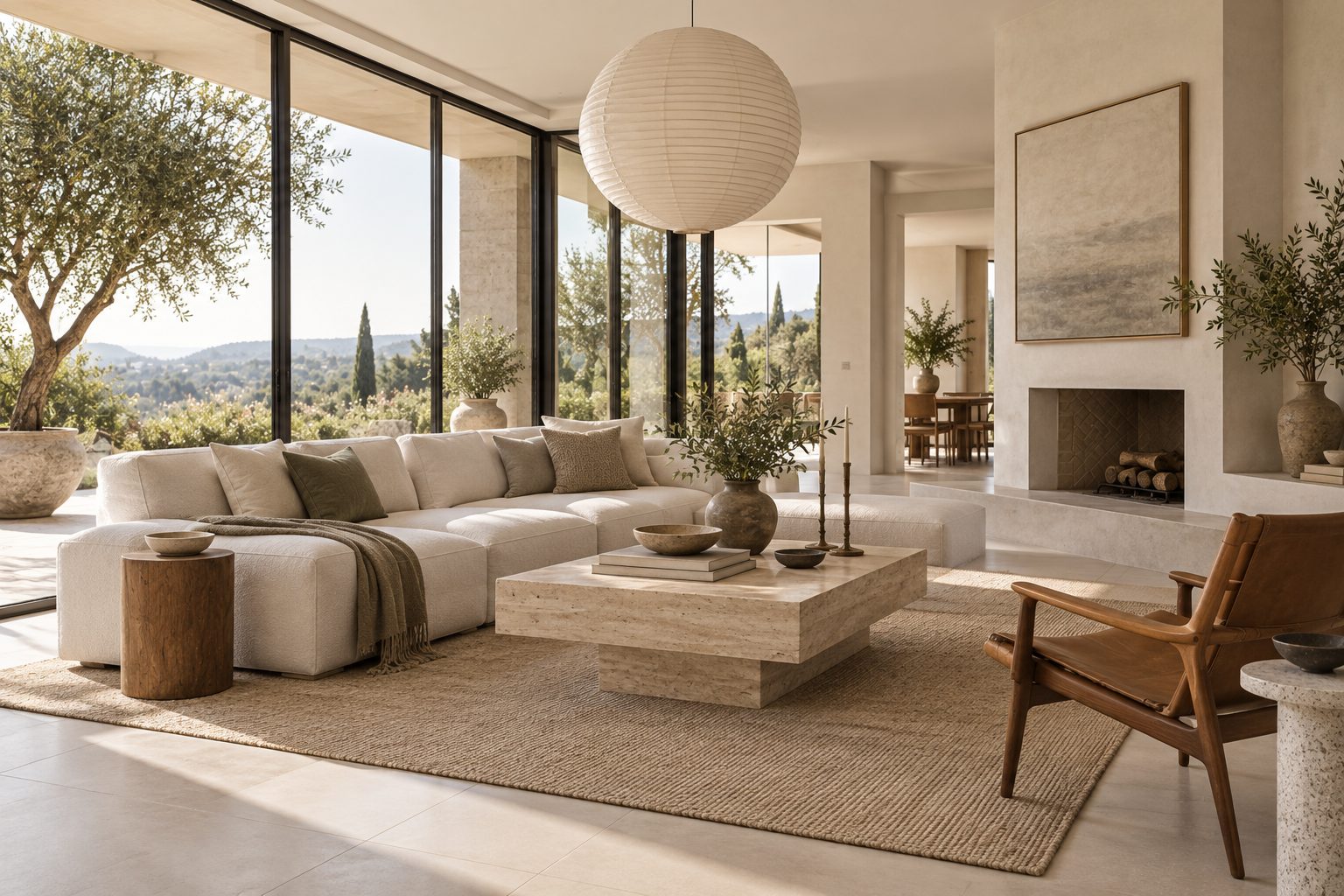
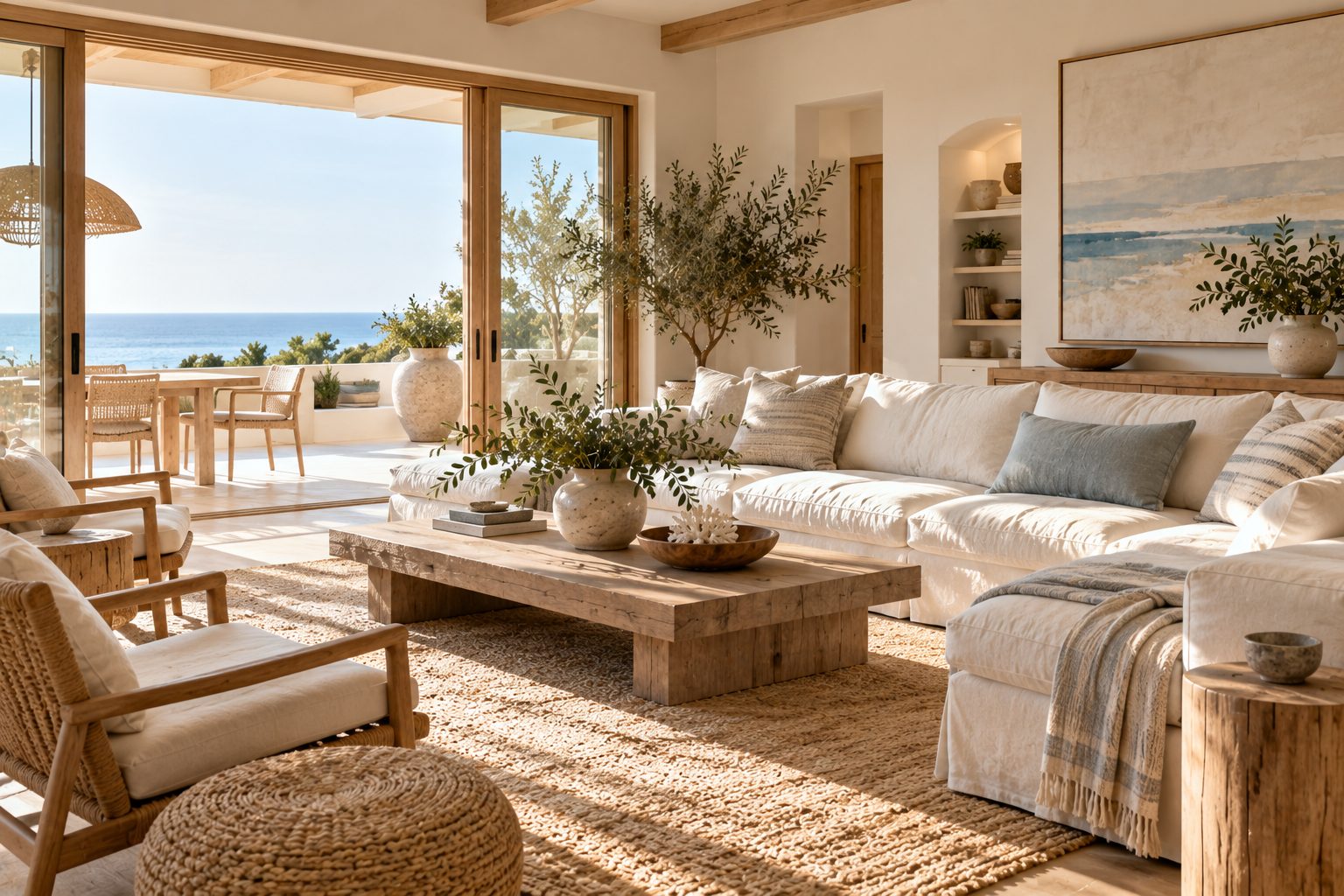
A modern living room rests on a low, tight-backed sofa, a simple rectangular or round coffee table, one sculptural chair, a large rug and layered lighting, with storage hidden in a long low unit.
Layout and sizes
For a room of 13 × 16 ft (4 × 4.9 m), a sofa of 84–96 in (213–244 cm) and a 9 × 12 ft (274 × 366 cm) rug are the right scale. Keep 16–18 in (41–46 cm) between sofa and coffee table and at least 36 in (91 cm) for walkways. A media unit of 72–96 in (183–244 cm) wide and 18–24 in (46–61 cm) high keeps the TV wall horizontal and calm. Our living room layout ideas show furniture plans for six room shapes.
Lounge room designs modern families can live with
Lounge room designs that are modern and family-proof use performance wool or a tight-weave polyester blend at 35,000+ Martindale, rounded corners on tables and a washable flatweave rug. The living hall modern design common in open-plan homes needs a rug and a pendant to define the seating zone; without them the sofa floats.
Contemporary living room ideas for 2027
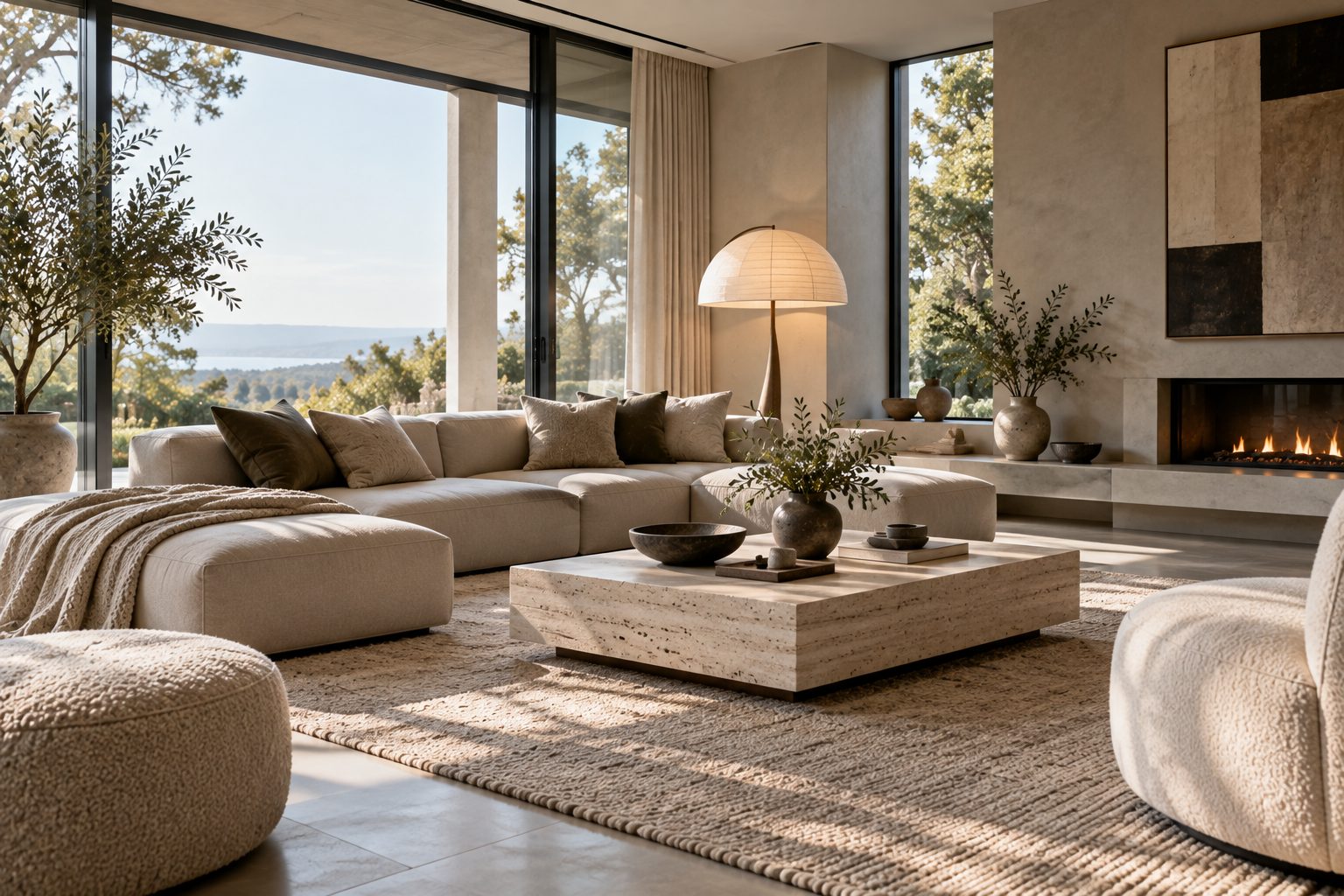
Contemporary living room ideas for 2027 soften the modern template: a curved sofa or chair, a travertine coffee table, plaster walls and a muted color such as olive or rust on one piece. A contemporary living room still keeps surfaces clear; the warmth comes from material, not from accessories.
How do you make a modern living room cozy?
To make a modern living room cozy, add texture, warm light and soft layers rather than more objects: a thick wool rug, 2700K lamps at three heights, a wool or leather chair and lined curtains. Coziness in modern rooms is built from materials, not clutter.
- Light in layers: a dimmable pendant, two table or floor lamps and one accent light. Plan 10–20 lumens per sq ft (108–215 lux) overall; our lighting calculator works it out per room.
- Warm color temperature: 2700K and CRI 90+ make oak and wool look rich instead of flat.
- Texture contrast: combine smooth plaster with nubby wool, oiled wood and leather.
- Acoustic softness: a rug of at least 70 percent of the seating zone and full-height curtains cut echo in hard-floored rooms.
- A focal point: a fireplace, a large artwork or a view gives the eye somewhere to rest.
How to design a contemporary home step by step
To design a contemporary home, fix the plan and light first, then materials, then furniture and finally accessories, because modern interiors expose any mistake made in the early stages. This is the sequence we use on projects:
- Edit the plan. Decide which walls stay, where zones begin and end, and where storage hides. Built-in joinery is easier before furniture is bought.
- Plan the light. Note window orientation, then place recessed, pendant and lamp positions; aim for three light sources per room.
- Choose the hard materials. One floor throughout the main level, one wood tone, one stone or tile, one metal finish.
- Set the palette. A warm white, a dark anchor and one accent; test paint on 2 × 2 ft (60 × 60 cm) boards.
- Buy the anchor pieces. Sofa, dining table and bed first, measured against the room and doorways.
- Add the sculptural piece. One chair, light or table per room that carries the design.
- Accessorize last and lightly. Art, books and a few ceramics; leave half of every surface empty.
Typical 2026 US budgets: $40–80 per sq ft for furniture and decor in a mid-market modern house interior design project, and $100–250 per sq ft once built-in joinery, lighting and finishes are included.
Modern house design: kitchens, bedrooms and bathrooms
Modern house design carries the same rules into every room: flush storage, one wood tone, minimal hardware and lighting that is planned rather than added.
- Kitchen: handleless or slim-pull flat-panel cabinets, a quartz or honed stone counter of 1.2 in (3 cm), an island with 42 in (107 cm) clearance on every side.
- Bedroom: a low platform bed, wall-hung or slim nightstands, wall lights instead of table lamps. Our small bedroom ideas show how modern furniture saves floor area.
- Bathroom: a floating vanity, large-format tiles, frameless glass and a matte black or brushed nickel finish used consistently.
- Entry: concealed shoe storage, a bench and one strong light.
Windows, doors and architecture
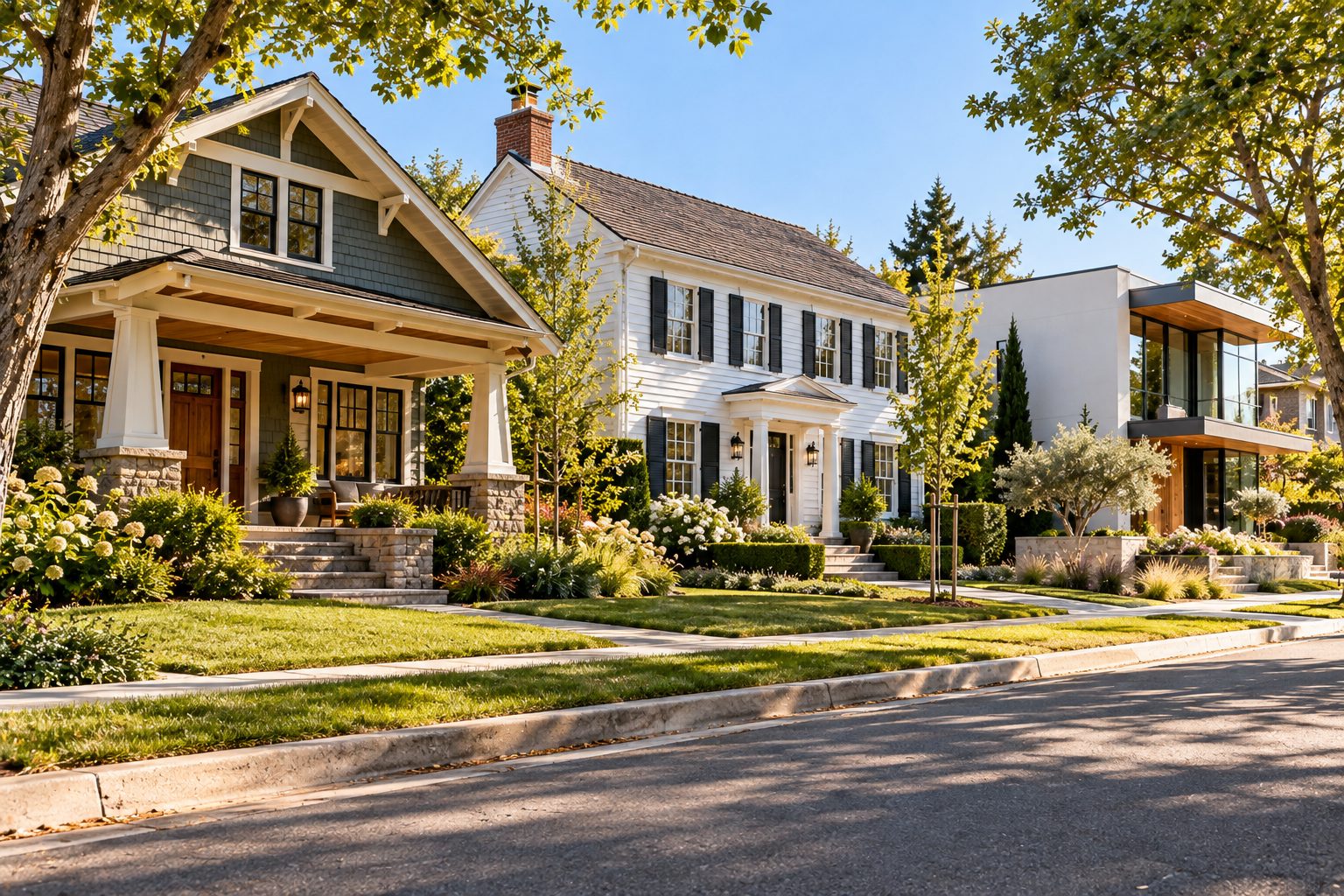
Modern home design depends more on the shell than most styles do. Large, minimally framed windows, flush or shadow-gap skirting of 2–4 in (5–10 cm), doors that run floor to ceiling at 8–9 ft (2.4–2.7 m) and recessed curtain tracks all make a modern style home design read as intentional. Where the architecture is traditional, do not fight it: keep the moldings, paint them the wall color and let modern furniture and lighting carry the look. Contemporary interior decor then layers in softer elements such as plaster, travertine and a curved chair, without changing the bones.
Modern style homes rarely need more decor than this. Modern living decor should be a short list: a large artwork, a few books, one plant species, some handmade ceramics.
Mistakes we see in modern interior design
The mistake we see most often in modern interior design is confusing empty with modern: a gray sofa, a glass table and bare white walls produce a cold room nobody wants to sit in. Modern needs warmth through material and light.
- Cool gray everything. Swap for warm white, oak and one earthy accent.
- Only ceiling downlights. A grid of recessed lights flattens rooms; add lamps at seated height.
- Undersized rugs. A 5 × 8 ft rug in a 15 ft (4.6 m) room looks like a bath mat.
- Too many finishes. Three metals and four woods destroy the calm; repeat one of each.
- Cheap minimalism. Thin veneer and hollow doors look worse in a pared-back room, where nothing hides them.
Our verdict: the most successful modern interior design ideas for 2027 are modern in structure and warm in finish. Spend on the sofa, the floor and the lighting; keep everything else simple and real. That combination ages well and is easier to live with than a showroom version.
Want a plan drawn for your rooms? Our interior design services produce layouts, material boards and lighting plans for modern and contemporary homes, remotely or in person.
Free toolTile CalculatorWork out tiles, boxes, grout and adhesive with the right wastage.Shop & source the look
Buy it today — or have it made
Retail links are affiliate links: we may earn a commission at no extra cost to you (disclosure). “Get it made” sends the item to our sourcing desk for factory quotes in custom sizes and finishes.
Frequently asked questions
What is modern interior design?
Modern interior design is a style based on early-20th-century modernism that uses clean lines, little ornament, open uncluttered space and honest materials such as wood, steel, glass, concrete and leather. Rooms are organized around function and light, with a restrained palette of warm white, one wood tone, a dark anchor and one accent color.
What is the difference between modern and contemporary interior design?
Modern interior design is a fixed historical style from roughly 1920 to 1970, defined by straight lines and functional furniture. Contemporary design means whatever is current, which in 2027 adds curves, warmer earth tones, plaster and stone to modern foundations. Many homes today blend both: modern bones with contemporary finishes.
How do you make a modern living room cozy?
Add texture and warm light instead of more objects. Use 2700K bulbs with CRI 90 or higher in lamps at several heights, a large wool rug, lined full-height curtains and a mix of oiled wood, leather and nubby fabrics. Warm white walls instead of cool gray also make a modern living room feel much more inviting.
How do I design a contemporary home?
Start with the floor plan and natural light, then choose a short list of hard materials: one floor, one wood, one stone and one metal. Set a three- or four-color palette, buy the anchor furniture to measured sizes, add one sculptural piece per room and accessorize lightly, leaving about half of every surface clear.
What colors are used in modern interior design?
Modern interiors use warm white, greige or pale stone as the base, charcoal or black for definition, natural wood as the warm middle tone and one accent such as olive, rust or deep blue. Keep the accent to around 5–10 percent of the room so the overall look stays calm and cohesive.
Some links may be affiliate links. Regulations and specifications change — always confirm with suppliers and qualified professionals.