Japandi Style Guide: Principles, Palette and Shopping List
Where Japanese restraint meets Scandinavian comfort — how to design a Japandi room that feels calm rather than empty.
Key takeaways
- Less, but better: fewer objects of higher quality.
- Pair pale Scandinavian woods with darker Japanese tones.
- Low, grounded furniture creates calm sightlines.
- Use honest materials — avoid veneered imitations.
Japandi blends two traditions that share a respect for craft, nature and simplicity: Japanese minimalism and Scandinavian hygge. Done well, it produces rooms that are quiet, warm and highly functional. Done badly, it produces a beige showroom with a paper lamp. The difference is almost entirely in proportion, material honesty and light, and this guide covers all three in detail.
The core principles
Japandi works because the two cultures it borrows from arrive at the same place by different routes. Japanese interiors reach calm through emptiness, ritual and a deep attention to how a space is used. Scandinavian interiors reach it through comfort, daylight and practical, well-made furniture built for long winters. The overlap is where Japandi lives.
- Less, but better: fewer objects, each chosen for quality and use. A useful test is whether you would repair the piece if it broke. If not, it probably does not belong.
- Natural materials: wood, paper, linen, stone, clay and bamboo. Synthetic materials can appear where durability demands it, but never as imitations of natural ones.
- Low, grounded furniture: pieces that sit close to the floor create calm sightlines and make ceilings feel higher. Seat heights of 38–42 cm (15–16.5 in) instead of the standard 45 cm (18 in) change the whole mood of a room.
- Visible craft: joinery, hand-thrown ceramics and woven textures. The eye should be able to read how something was made.
- Balance of light and dark: pale Scandinavian woods contrasted with darker Japanese tones. A room that is entirely pale reads as unfinished; one dark element anchors it.
- Negative space as a material: the empty wall, the clear floor area and the bare shelf are deliberate design decisions, not budget gaps.
Palette
The Japandi palette is built on warm neutrals with muted green and deep charcoal as the accents. Keep undertones consistent: if your walls lean yellow, your textiles should too. Mixing a cool gray wall with warm oak is the fastest way to make the look feel off.
#F4F1EA#DDD3C2#B9A184#7D8B6A#2F2B27A reliable split is roughly 60 percent pale base (walls, large textiles), 30 percent mid-tone wood and oat, and 10 percent dark accent in charcoal, black-stained timber or iron. Moss and muted clay work best in small doses: a cushion, a glaze, a single upholstered chair. If you want to test combinations before buying paint, build a scheme in our Palette Studio, and see our 2027 color palettes for warmer variations.
Materials and finishes
Light oak and ash for large pieces; darker walnut, smoked oak or charred timber (shou sugi ban) for contrast. Paper lanterns, linen curtains, wool rugs, unglazed ceramics and bamboo accessories complete the look. Beyond that shortlist, the finish matters as much as the species.
| Material | Where to use it | What to specify |
|---|---|---|
| White oak / ash | Beds, tables, shelving, flooring | Solid or thick-veneer, matte hardwax oil, no orange tint |
| Walnut / smoked oak | Accent pieces, frames, small tables | One dark species only; matte finish |
| Linen | Upholstery, curtains, bedding | Stonewashed, 230–300 gsm for upholstery, washable covers |
| Paper / washi | Pendants, screens, lamp shades | Flame-retardant treated paper for contract use |
| Stoneware | Vases, bowls, tableware | Unglazed or satin reactive glazes |
| Wool / jute | Rugs | Flatweave or low pile in undyed tones |
Keep sheen low everywhere. Satin-matte finishes on wood, eggshell or matte paint on walls and honed rather than polished stone all soften reflections and keep the room quiet. If you are mixing several timbers, read our guide on how to mix wood tones; the short version for Japandi is two species, repeated.
Lighting the Japandi room
Light is what turns a sparse room from cold to calm. Aim for diffused, low, warm sources: a large paper pendant, a paper or linen floor lamp and one or two table lamps. Specify 2700K color temperature and CRI 90 or above so oak reads golden rather than green and linen looks like linen. Hang pendants over dining tables 70–80 cm (28–32 in) above the surface, and avoid rows of bright downlights, which flatten texture. Put everything you can on dimmers. Our guide to layering lighting explains how to combine ambient, task and accent light without clutter.
Room by room
Living room
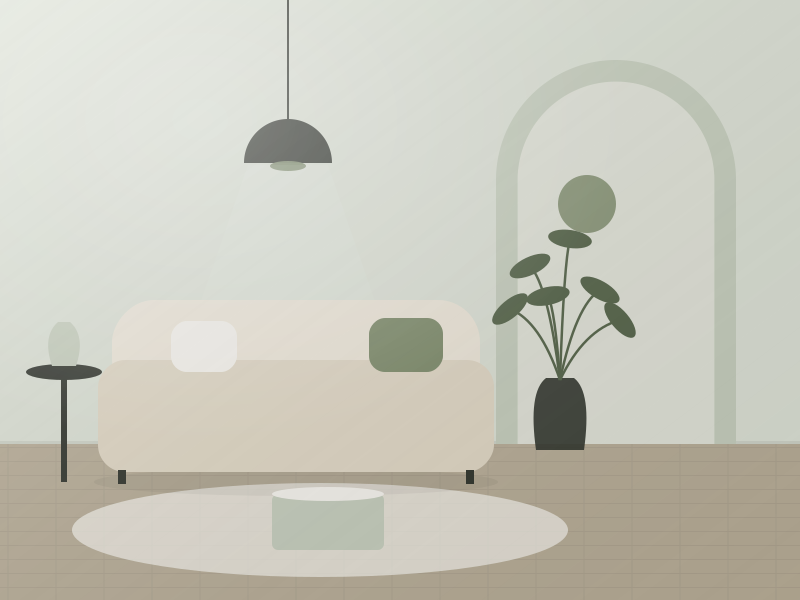
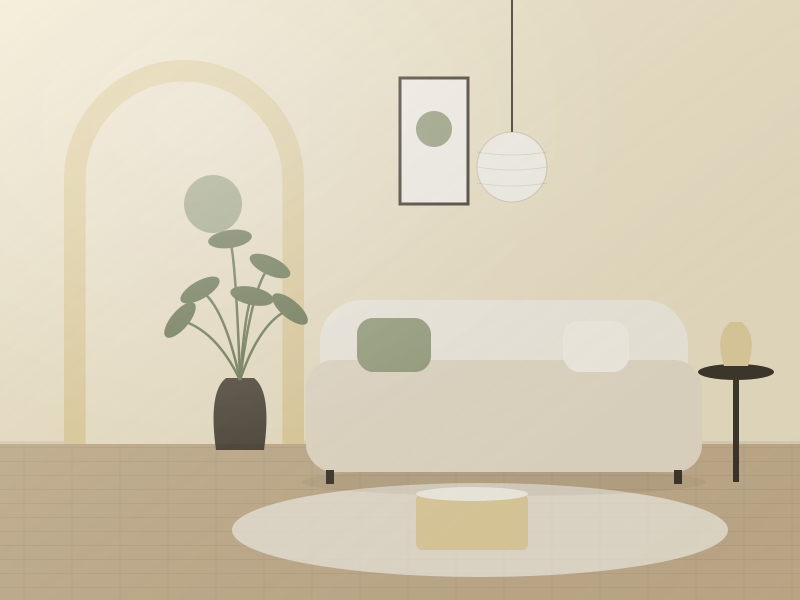
A low, deep sofa in oatmeal linen, ideally with a seat depth of 60–65 cm (24–26 in) so it invites sitting cross-legged; a solid-wood coffee table with rounded edges, placed about 45 cm (18 in) from the sofa; one large paper pendant; a single branch in a stoneware vase. Use a flatweave wool or jute rug large enough that at least the front legs of all seating sit on it. Storage should be closed: a long, low sideboard with plain fronts hides the media equipment and cables that break the calm.
Bedroom
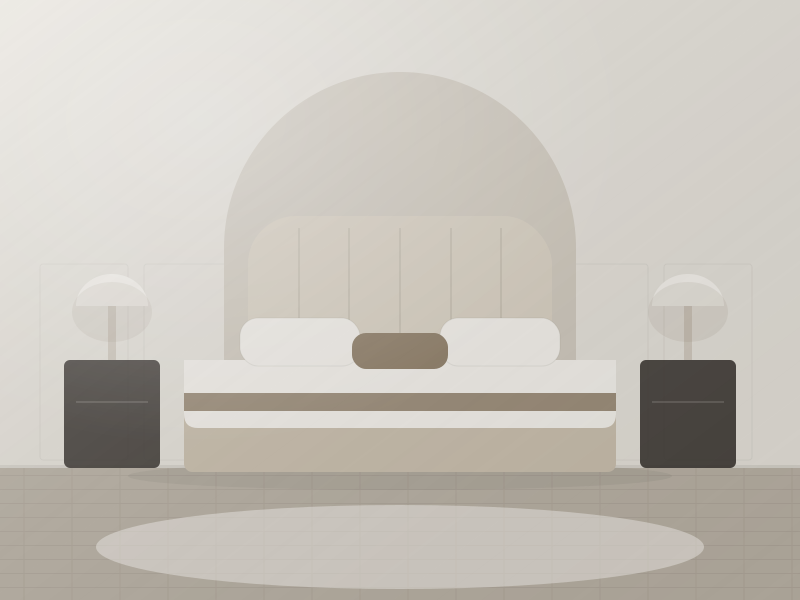
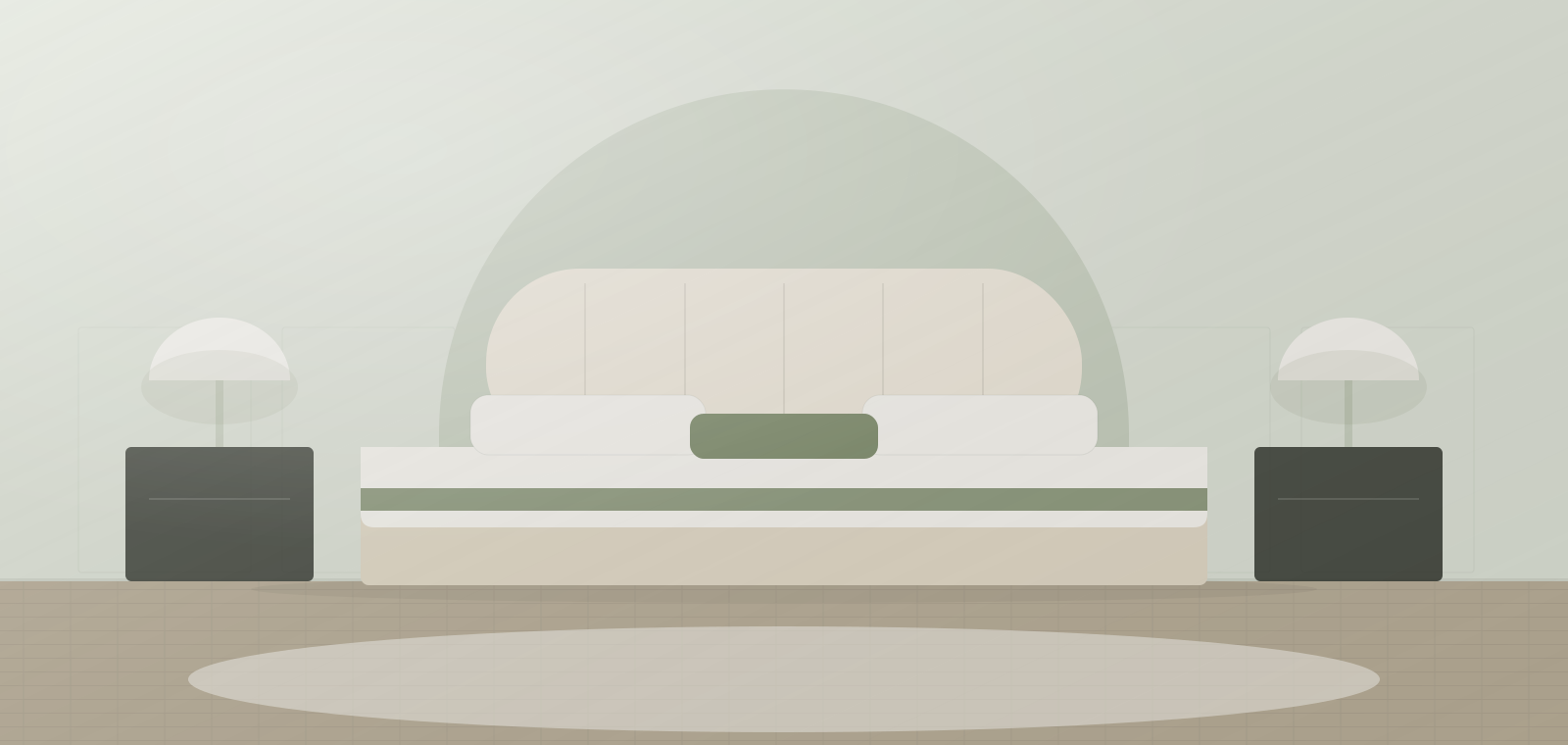
Platform bed in oak, linen bedding in two tones, a slatted wooden headboard and hidden storage to keep surfaces clear. A low bed with a mattress top at 45–50 cm (18–20 in) feels grounded without being awkward to get out of. Leave at least 60 cm (24 in), ideally 75 cm (30 in), of clear floor on each side of the bed. Bedside tables can be simple wooden cubes or wall-mounted shelves; wall lights free up surface space entirely.
Dining
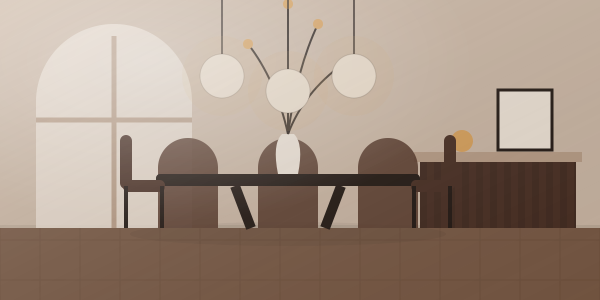
Solid-wood table, spindle-back or woven-seat chairs and handmade ceramics displayed on open shelving. Allow 60 cm (24 in) of table length per diner and at least 90 cm (36 in) between the table edge and a wall for chairs to pull out. A bench on one side is both space-saving and very much in keeping with the style.
Entry and work areas
Japanese homes treat the entrance as a threshold, and borrowing that idea pays off: a low bench, closed shoe storage and a single hook rail keep clutter at the door. In a home office, choose a solid-wood desk with a cable tray and a paper task lamp, keep reference material in closed boxes or drawers, and give the desk a view of a window or a plant rather than a wall of shelves.
Bathroom
Japanese bathing culture treats the bathroom as a place to slow down, and a Japandi bathroom borrows that mood. Use large-format matte tiles or microcement in warm stone tones, a timber vanity in oak or teak with a sealed finish, a slatted wooden bath mat and a single stool. Brushed nickel or matte black fittings suit the palette better than polished chrome. Hide toiletries in a recessed niche or mirrored cabinet so surfaces stay clear, and choose waffle or linen towels in two tones.
Small spaces
Japandi is especially forgiving in small apartments because it depends on few, well-chosen pieces. Use furniture on legs so the floor reads continuously, choose one multi-use piece such as a bench that doubles as storage or a daybed that works as a guest bed, and replace solid partitions with slatted screens that divide without blocking light. Keep window treatments simple: linen panels or paper-style blinds mounted high and wide make ceilings feel taller.
Styling and restraint
Styling a Japandi room is mostly subtraction. Group objects in odd numbers, keep at least a third of every shelf empty and let one piece per surface be the focus. Choose one plant with a strong silhouette, such as an olive, fiddle-leaf fig or a single branch, instead of many small pots. Textiles should vary in texture rather than color: a nubby wool throw on smooth linen, a waffle towel against a slubby curtain. Art should be minimal and considered: ink drawings, abstract monochrome prints or a single textile hanging.
Plan storage before styling. Clutter is the fastest way to lose the look, so every room needs more closed storage than you think: full-height built-in cupboards with flush fronts, baskets with lids and drawers inside sideboards. A good rule is that anything used less than weekly should live behind a door. Then rotate displayed objects with the seasons, which keeps the room fresh without buying more.
Common mistakes
- Going too cold. Japandi needs texture and warm light to avoid feeling like an empty gallery. Add a thick rug and a warm lamp before adding any more objects.
- Using too many different woods. Pick two and repeat them. Three is the maximum even in large open-plan spaces.
- Buying "Japandi-look" pieces in veneered particleboard. The style relies on honest materials; thin foil wraps show at every edge.
- Confusing it with wabi-sabi. Japandi is cleaner and more refined; for the rawer, aged look, see our guide to wabi-sabi interiors.
- Ignoring ergonomics. Very low seating does not suit every household. Keep seat heights slightly lower than standard rather than floor-level if older family members or guests use the room.
Japandi shopping list
- Low linen sofa with removable covers
- Solid oak or ash coffee table with rounded edges
- Paper or rice-paper pendant, 50–80 cm diameter
- Slatted room divider or screen
- Wool or jute flatweave rug
- Stoneware vases and bowls in unglazed or satin finishes
- Oak platform bed
- Stonewashed linen curtains and bedding
- Low closed sideboard for media and storage
- Solid-wood bench for dining or entry
When buying, ask for the timber species and whether a piece is solid or veneered, the finish type (oil, hardwax oil or lacquer) and, for upholstery, whether covers are removable. For trade projects needing custom dimensions or finishes, the factories in the box below can work to drawing.
Free toolTile CalculatorWork out tiles, boxes, grout and adhesive with the right wastage.Shop & source the look
Buy it today — or have it made
Retail links are affiliate links: we may earn a commission at no extra cost to you (disclosure). “Get it made” sends the item to our sourcing desk for factory quotes in custom sizes and finishes.
Frequently asked questions
What is the difference between Japandi and Scandinavian style?
Scandinavian style is lighter, cozier and often includes more pattern and color, while Japandi adds Japanese restraint: lower furniture, darker contrasting woods, fewer objects and more emphasis on craft and negative space.
What colors work best in a Japandi interior?
Warm neutrals such as rice white, oat and ash-toned wood form the base, with muted moss green, clay and charcoal as accents. Keep undertones consistently warm and avoid cool grays.
Is Japandi furniture always low to the ground?
It tends to be lower than standard, but it does not need to be floor-level. Seat heights around 38–42 cm (15–16.5 in) give the grounded look while staying comfortable for most people.
How many wood tones should a Japandi room have?
Two is ideal: a pale wood such as oak or ash for large pieces and one darker wood such as walnut or smoked oak for contrast. Repeat both around the room so they feel intentional.
Some links may be affiliate links. Regulations and specifications change — always confirm with suppliers and qualified professionals.