Living Room Lighting Ideas: Layers, Lumens, Lamps and Fixtures
The best living room lighting ideas use three layers on separate switches, 10–20 lumens per sq ft, five or more light sources and warm 2700–3000K light. Fixtures, lamp heights and a step-by-step plan.
Part of our guide: How to Layer Lighting in a Room Like a Designer
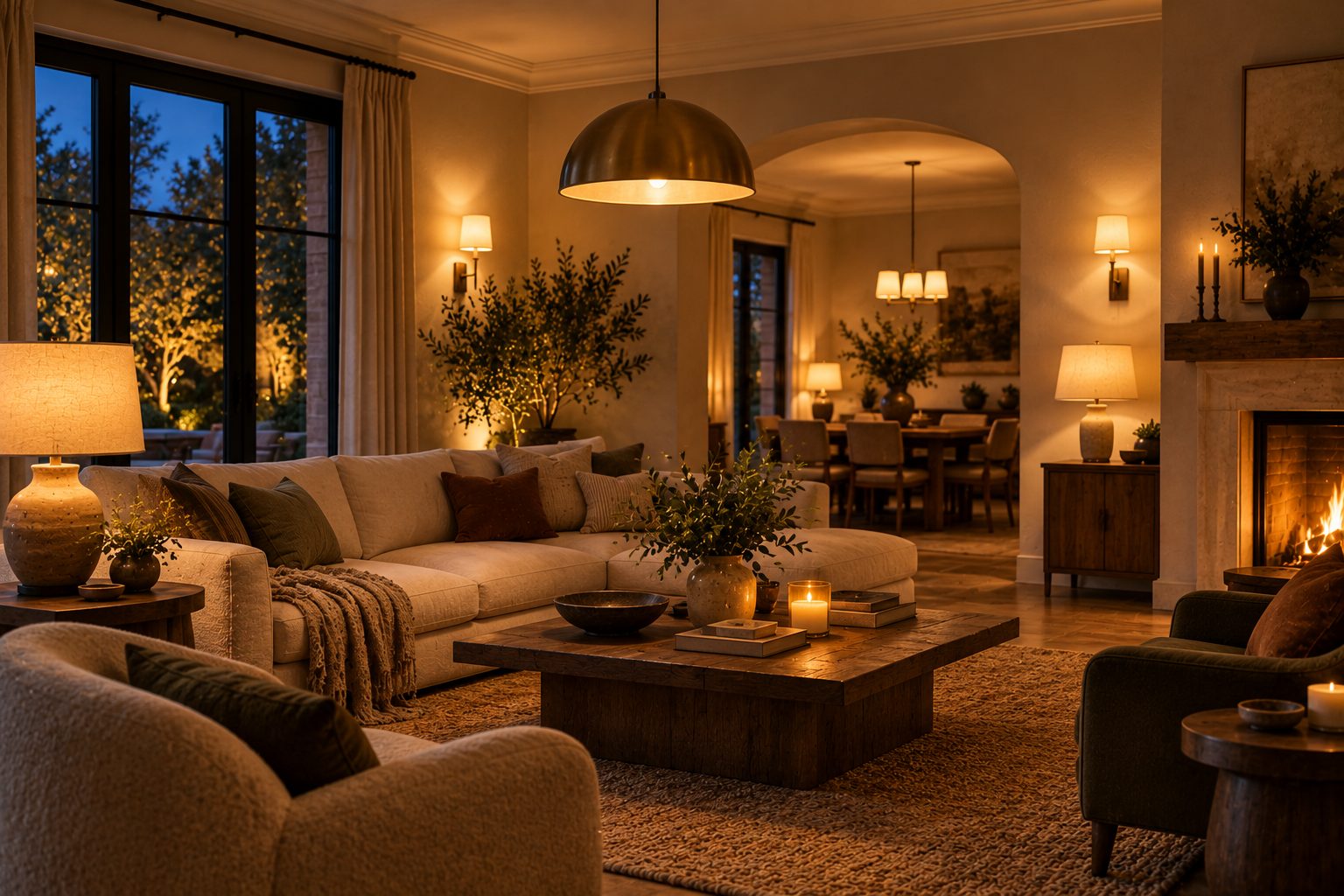
Key takeaways
- Plan three layers on separate controls: ambient, task and accent, with at least five light sources in a typical living room
- Aim for roughly 10–20 lumens per sq ft in total, about 2,000–4,000 lumens for a 200 sq ft (19 m²) room, then dim down
- Use 2700–3000K and CRI 90+ everywhere in the room so lamps and ceiling lights match
- Put table-lamp shades at seated eye level, about 38–42 in (97–107 cm) from the floor, so you never see the bare bulb
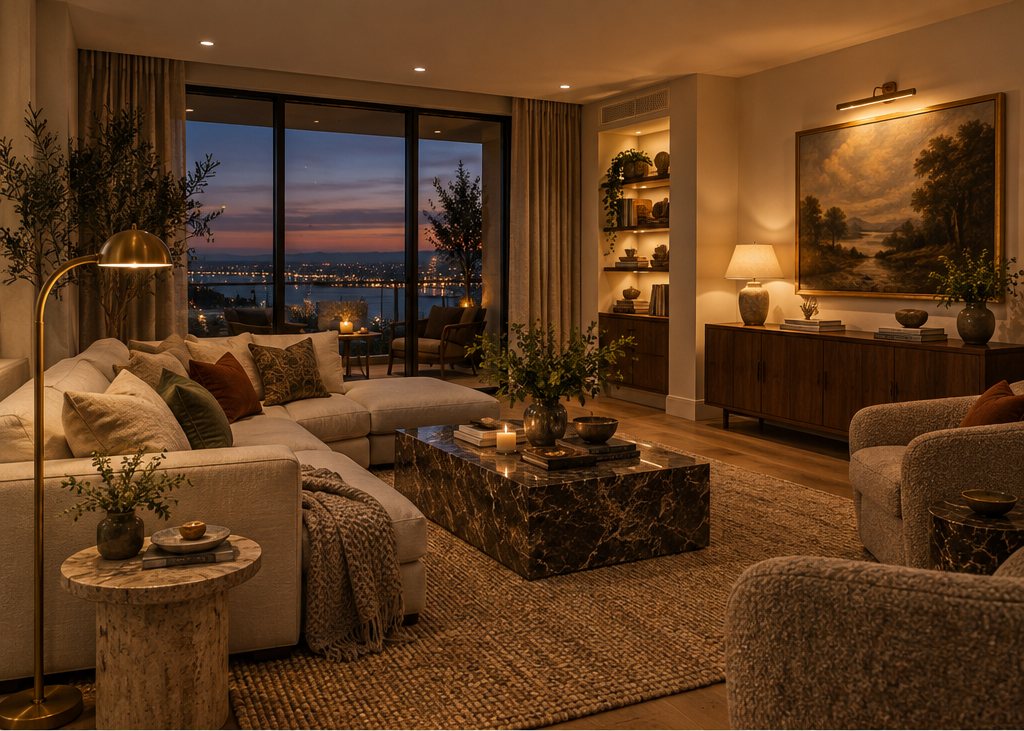
The best living room lighting ideas all start from three layers on separate controls: ambient light at about 10–20 lumens per sq ft (roughly 2,000–4,000 lumens for a 200 sq ft room), task light at reading spots and accent light on art or shelves. Use at least five sources, warm 2700–3000K bulbs and dimmers on everything, and the room works day and night.
The principle behind this is covered in our guide on how to layer lighting; this page applies it to the living room specifically, with the fixtures, lamp sizes and numbers we use when we plan one. Most living rooms do not need more light. They need light from more places, at lower heights, under better control.
- Layers: ambient, task and accent, each on its own switch or dimmer.
- Total light: about 10–20 lumens per sq ft (108–215 lumens per m²).
- Sources: five or more for a 150–300 sq ft (14–28 m²) room.
- Color: 2700–3000K and CRI 90+ for all lamps and fixtures.
- Heights: table-lamp shade bottoms at about 38–42 in (97–107 cm) from the floor.
What does ambient light mean?
Ambient light is the general, even illumination that lets you move around a room safely and see faces, without lighting any one task or object in particular. Ambient lighting can come from ceiling fixtures, recessed downlights, wall washers, cove lighting or simply several shaded lamps. In a living room the best ambient room lighting is soft and indirect: light bounced off the ceiling or walls rather than thrown straight down from a single central fixture.
The other two layers sit on top. Task light is concentrated where you read, knit or work. Accent light picks out a painting, a bookshelf, a plant or a textured wall. Interior lighting that combines all three looks deliberate; a room with only one ceiling light, however expensive, looks like a waiting room after dark.
How much light does a living room need?
A living room needs roughly 10–20 lumens per sq ft in total across all its fixtures and lamps, with the upper end for dark finishes, low daylight and older eyes. Lumens, not watts, are the number to count: an old 60 W bulb is roughly 800 lumens, a 100 W bulb about 1,600.
| Living room size | Total lumens | Suggested sources | Typical mix |
|---|---|---|---|
| Small: 120–150 sq ft (11–14 m²) | 1,200–3,000 lm | 4–5 | 1 ceiling or wall fixture, 2 table lamps, 1 floor lamp, 1 accent |
| Medium: 150–250 sq ft (14–23 m²) | 1,500–5,000 lm | 5–7 | Ceiling fixture or 4–6 downlights, 2 table lamps, 1–2 floor lamps, 1–2 accents |
| Large: 250–400 sq ft (23–37 m²) | 2,500–8,000 lm | 7–10 | Two ceiling zones, 3–4 lamps, wall sconces, shelf and art lighting |
| Open plan living area | Plan each zone separately | 3–5 per zone | Separate circuits for seating, dining and kitchen zones |
These are planning ranges, not targets to hit at full brightness. Install toward the top of the range and dim down; you cannot dim up a room that was underlit from the start. For a room-by-room figure, our lighting calculator takes your dimensions and wall color.
Which living room light fixtures work best?
The best living room light fixtures spread light widely and can be dimmed: semi-flush fittings, a properly sized pendant or chandelier, and wall sconces or cove light outperform a grid of bright downlights. Here is how the main indoor light fixtures compare in a living room.
Decorative ceiling lights
A chandelier, a paper lantern or a sculptural pendant gives the room a center and plenty of ambient light if it is diffused. Size it by adding the room's length and width in feet and reading the total as inches of fixture diameter: a 14 × 16 ft room takes a fixture about 30 in (76 cm) across. Keep at least 7 ft (213 cm) of clearance below in walk-through areas. Semi-flush fittings at 16–22 in (41–56 cm) suit ceilings under 8 ft 6 in (259 cm).
Recessed and track lighting
Recessed downlights are best as a supporting layer, not the whole plan. Space them about half the ceiling height apart, 4 ft (1.2 m) for an 8 ft ceiling, and keep them 2–3 ft (61–91 cm) from walls so they wash the walls rather than creating scallops in the middle of the floor. Adjustable versions double as accent lights for art.
Wall sconces and cove lighting
Modern living room light fixtures increasingly move light onto the walls: up-down sconces either side of a fireplace or window, and dimmable LED tape in a ceiling cove or behind a valance. Wall light makes a room look larger because it lights the boundaries. For the full fixture vocabulary, see our types of light fixtures guide.
How do you choose living room lamps?
Choose living room lamps by height and shade first and style second: the shade should hide the bulb from every seat in the room. Lamps are what make home lighting feel warm, because they put light at the height of the people using it.
- Table lamps: 26–32 in (66–81 cm) tall on a side table of 22–26 in (56–66 cm), so the shade bottom lands at seated eye level, 38–42 in (97–107 cm) from the floor. Shade diameter about equal to the lamp base height.
- Floor lamps: 58–64 in (147–163 cm) tall beside a sofa or chair, set just behind the seat arm. Arc lamps need 70–80 in (178–203 cm) of reach and a heavy base.
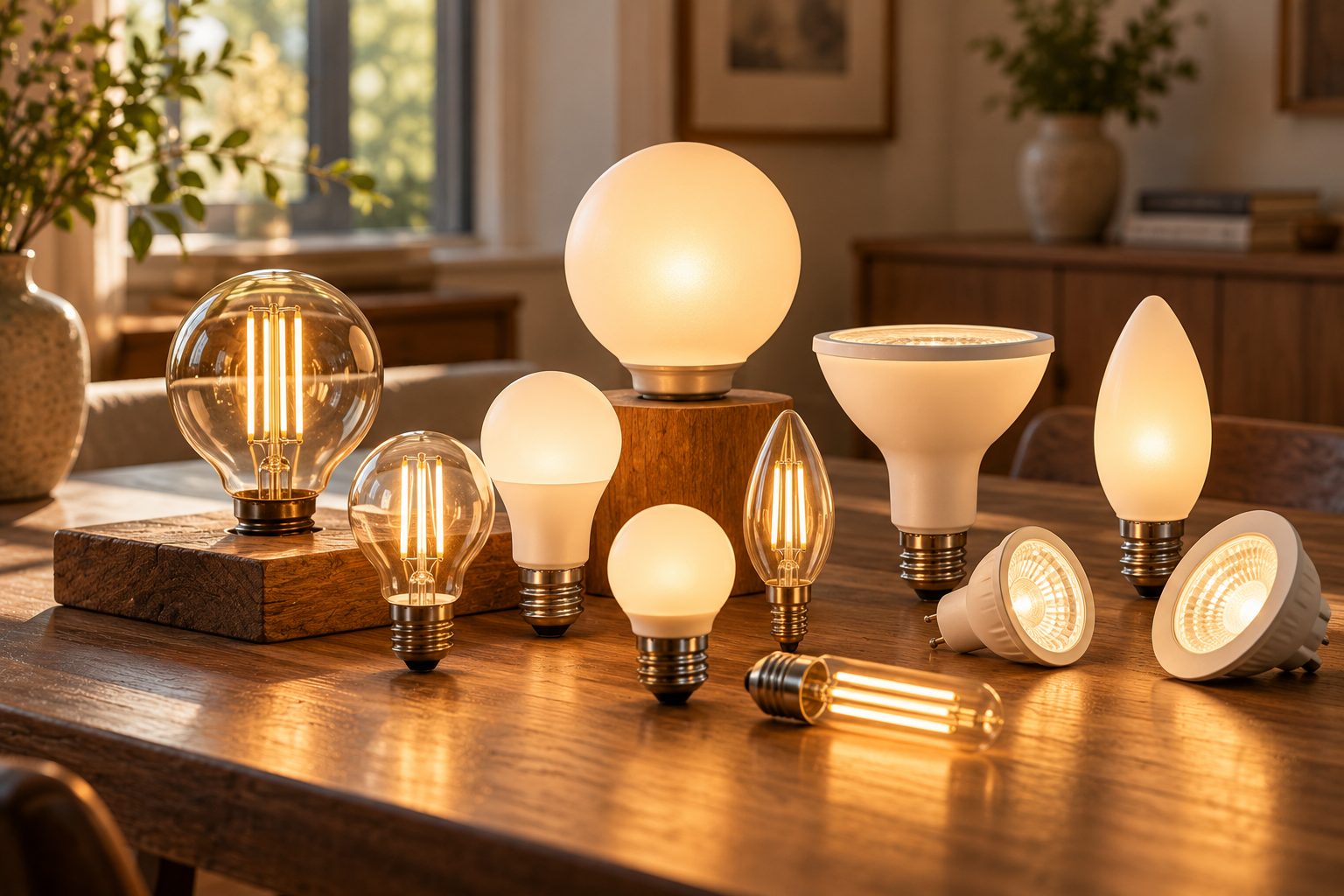
- Bulbs: 450–800 lumens per table lamp and 800–1,600 for a floor lamp, all at the same color temperature.
Cool floor lamps can be the room's sculpture. A pleated floor lamp with a fabric shade in linen or paper is the 2027 favorite, and the most beautiful floor lamps right now are the ones that glow evenly through the shade rather than spotlighting the floor. Interesting floor lamps work best in a corner that otherwise goes dark at night, where they double as ambient light. The same rules work in bedrooms, so lamp stands for bedroom reading corners follow identical heights. Whether you call them lounge room lamps or sitting room lamps, the test is the same: sit down and check that no bulb is visible. Our lamp shade guide covers shade sizes, shapes and fabrics.
What accent lighting ideas work in a living room?
Accent lighting should make one or two features three to five times brighter than their surroundings, and it is the layer most living rooms are missing. Good targets are a painting over the sofa, built-in shelves, a fireplace breast, a textured plaster wall or a large plant.
- Art: a picture light or an adjustable ceiling spot aimed at 30 degrees; our picture lights guide covers sizes and bulbs.
- Shelves: LED tape or puck lights under each shelf, 2700K, CRI 90+, set toward the front edge.
- Textured walls: grazing light from 6–12 in (15–30 cm) away exaggerates brick, plaster and slats.
- Plants: a small uplight on the floor throws leaf shadows across the ceiling, an easy evening effect.
How do you light a small, large or dark living room?
Small living rooms need light on the walls and corners, large ones need separate zones, and dark rooms need higher lumen counts with pale, reflective finishes. People asking how to decorate a small living room rarely think of lighting first, but it changes the perceived size more than furniture does.
Small living rooms
Skip the large central pendant and use wall sconces, a slim floor lamp and a table lamp to light the perimeter. Plug-in sconces save floor space. When you arrange a small living room, put a lamp in the darkest corner first; a lit corner pushes the walls out visually. Our small living room ideas cover the furniture side.
Large living rooms
Treat each seating group as its own room with its own lamps, and light the long wall with sconces or art lighting so the space does not feel cavernous. A big room with only ceiling light feels empty even when it is full of furniture.
Dark living rooms
Work to the 20 lumens per sq ft end of the range and choose wall paint with an LRV of 50 or more if you want the light to travel; deep colors with LRV under 15 can need almost twice the light for the same brightness.
How do you plan living room lighting?
Plan living room lighting from the furniture layout outward, because lamps and sconces have to land beside the seats they serve. The cheapest moment to get house lights right is before the electrician closes the walls: moving a junction box later costs far more than adding one now, and a floor outlet under a floating sofa is almost impossible to retrofit neatly in a finished room. Indoor lighting that is planned this way rarely needs a single extension cord. This is the sequence we use:
- Draw the furniture plan with seating, side tables, art and shelves marked.
- Mark task points: every reading seat gets a lamp within arm's reach.
- Mark accent targets: one or two features, no more.
- Choose the ambient source: ceiling fixture, sconces, cove or a mix, sized to the lumen range.
- Plan the electrical fixtures and outlets: floor outlets under sofas that float, switched outlets for lamps and dimmers for every circuit.
- Set one color temperature for the room, usually 2700K.
- Test at night and adjust shade heights and dimmer settings before buying anything else.
Mistakes we see with living room lights
The mistake we see most often is a single overhead fixture or a ceiling full of downlights doing all the work, which flattens faces and leaves corners dark. Next come mixed color temperatures, cool 4000K bulbs in a ceiling fitting beside warm lamps, and lamps with shades too high, so everyone seated looks straight into a bare bulb. Finally, lights with no dimmers: a room without dimmers has one mood, and it is usually the wrong one after 8 p.m.
How we would do it: a dimmable semi-flush or pendant for ambient light, a pair of table lamps, one floor lamp at the reading chair, one accent on the art, and switched outlets so the lamps come on from the door. Five sources, one color temperature, everything dimmable. Most living room lighting ideas that look effortless in photos are exactly that simple. In an open-plan room, fix the seating plan first, then give each zone its own version of that five-source recipe.
Ready to work out the numbers for your own room? Enter its dimensions and finishes in our free lighting calculator to get target lumens, the number of fixtures and suggested bulb sizes.
Free toolPaint CalculatorWork out exactly how much paint to buy.Shop & source the look
Buy it today — or have it made
Retail links are affiliate links: we may earn a commission at no extra cost to you (disclosure). “Get it made” sends the item to our sourcing desk for factory quotes in custom sizes and finishes.
Frequently asked questions
What does ambient light mean?
Ambient light is the general, even light that fills a room so you can move around and see faces, without focusing on any one task or object. In a living room it usually comes from a ceiling fixture, wall sconces, cove lighting or several shaded lamps, ideally bounced off walls and ceilings rather than aimed straight down.
How many lights should a living room have?
Most living rooms need at least five light sources: an ambient fixture or sconces, two table lamps, a floor lamp and one accent light. Small rooms of 120–150 sq ft (11–14 m²) can manage with four; large rooms over 250 sq ft (23 m²) usually need seven to ten across separate zones.
What color light is best for a living room?
Warm white at 2700–3000K is best for a living room, with a CRI of 90 or higher. It flatters skin tones, wood and fabric and feels relaxing in the evening. Use the same color temperature for every lamp and fixture in the room so the light does not look patchy.
How bright should living room lighting be?
Plan roughly 10–20 lumens per sq ft in total, about 2,000–4,000 lumens for a 200 sq ft (19 m²) living room, spread across several sources. Choose the upper end for dark walls or little daylight, and put everything on dimmers so you can lower the level in the evening.
How do you light a living room without ceiling lights?
Use lamps and wall lights instead: two table lamps, one or two floor lamps, plug-in wall sconces and LED tape on shelves or behind furniture. Put lamps on switched outlets or smart plugs so they turn on from the door. Uplighting floor lamps can bounce light off the ceiling as ambient light.
Some links may be affiliate links. Regulations and specifications change — always confirm with suppliers and qualified professionals.