Plaster Wall Texture: Types, Costs & How to Apply It Yourself
Plaster wall texture is any finish whose relief comes from how plaster or compound is troweled, from a 1/32 in skip trowel to a 1/4 in rough lime render. The eight common finishes cost $3–18 per sq ft and most work over plasterboard.
Part of our guide: Wall Treatments Guide: 14 Wall Finishes & Covering Ideas
Key takeaways
- Hand-troweled plaster textures range from a 1/32 in skip trowel to a 1/4 in rough lime render and cost $3–18 per sq ft applied
- Almost any plastered wall texture can be reproduced on plasterboard with a bonding primer and a 1/16 in coat of setting compound
- Rough plaster wall design in 2027 means one or two rendered walls in a mineral color, grazed by side light, with everything else smooth
- Use matte lime, clay or flat paint over plaster texture; gloss paint and center-ceiling light flatten the relief
Plaster wall texture is a finish whose surface relief comes from the way wet plaster or compound is troweled, dragged or sponged, rather than from spraying it. The eight common textured plaster finishes range from a nearly flat trowel-skip at 1/32 in (0.8 mm) to a rough lime render at 1/4 in (6 mm), and they cost $3–18 per sq ft ($32–195 per m²) applied, with hand-troweled lime and clay at the top of the range.
Texture made by hand is the direction walls are heading in 2027, as the sprayed builder finishes of the past 40 years give way to surfaces with visible trowel marks, mineral variation and soft light. The good news for anyone with plain drywall is that almost every plastered wall texture can be reproduced over plasterboard with the right base coat. This guide sets out the finishes, what each costs, how rough plaster wall designs are used in current interiors, and how to apply the most achievable one yourself.
- Relief range: 1/32 in (0.8 mm) for a light trowel texture to 1/4 in (6 mm) for a rough render.
- Cost: $3–6 per sq ft for troweled joint compound; $8–18 per sq ft for lime, clay or tadelakt finishes.
- Base: level 3 plasterboard plus a bonding primer, or a scratch coat on masonry.
- Dry time: 24 hours for setting compound; 3–7 days between coats for lime.
- Light: raking light from a window or wall washer doubles the visual depth of any texture.
What is textured plaster and how is it different from drywall texture?
Textured plaster is a finish created in a wet, troweled coat of plaster, lime, clay or setting compound, where the tool and the hand leave the pattern; drywall texture is a finish sprayed from a hopper gun onto painted or primed board. Hand texture is irregular, directional and slightly different in every square foot; sprayed texture is uniform. That irregularity is exactly why plaster finishes photograph as expensive and orange peel does not.
There is also a difference in material depth. True plaster finishes are 1/16–1/4 in (1.5–6 mm) thick and carry pigment through the coat, so a chip shows plaster, not white gypsum. Compound textures are thinner and usually painted. For the whole family of options, including sprayed types, see wall texture types, and for the material itself, our plaster walls guide.
What are the main types of plaster wall texture?
The main types, from lightest to roughest, are skip trowel, Spanish lace (a finer skip), knockdown over trowel, sand float, slap brush, sponge or stipple, rough lime render, and tadelakt-style burnished finishes that are smooth but mottled. Each is defined by the tool and the moment at which the plaster is worked.
| Finish | Relief | Material | Applied cost per sq ft | Style read |
|---|---|---|---|---|
| Skip trowel | 1/32–1/16 in (0.8–1.5 mm) | Setting compound or veneer plaster | $3–6 ($32–65 per m²) | Mediterranean, transitional |
| Spanish lace | 1/32 in (0.8 mm) | Thin compound, small trowel | $3–5 | Southwestern, 1990s if heavy |
| Sand float | Fine grit, 1/32 in | Plaster with silica sand | $4–7 | European, quietly modern |
| Slap brush / stomp | 1/8 in (3 mm) | Compound, stipple brush | $3–5 | Rustic; dated indoors |
| Sponge stipple | 1/16 in (1.5 mm) | Compound or lime | $4–7 | Soft, cottage |
| Hand-troweled lime (limewash look) | 1/32 in, mottled | Lime plaster or lime paint | $6–12 | Warm minimalism, 2027 core |
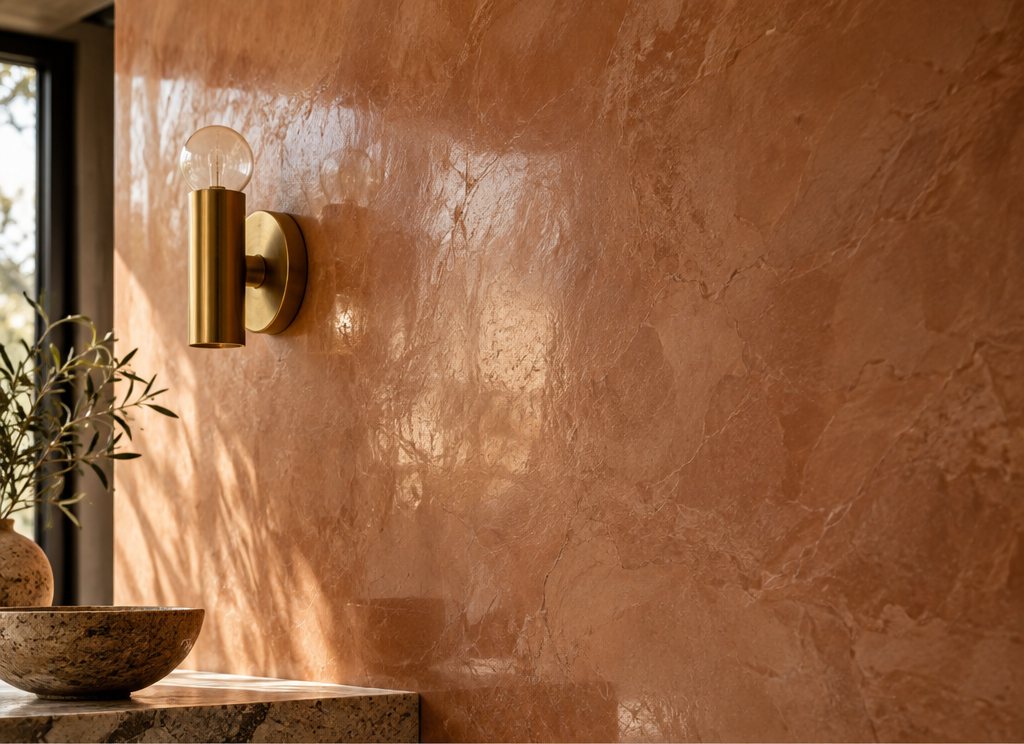
| Rough lime or clay render | 1/8–1/4 in (3–6 mm) | Lime-sand or clay plaster | $10–18 | Wabi-sabi, rustic modern |
| Burnished (tadelakt-style) | Smooth, cloudy | Lime with soap polish | $12–25 | Spa bathrooms, showers |
If the smooth, polished end of this scale appeals, that is a different craft; our venetian plaster guide covers burnished marble-dust finishes and their $8–15 per sq ft price. For a mineral, seamless surface that also goes on floors, see what is microcement.
How much does textured plaster cost per square foot?
Textured plaster costs $3–6 per sq ft ($32–65 per m²) when a plasterer trowels setting compound over existing drywall, $6–12 per sq ft for a two-coat lime finish, and $10–18 per sq ft for a thick clay or lime render with a reinforcing mesh. A 12 × 15 ft (3.7 × 4.6 m) living room with 9 ft ceilings has about 480 sq ft (45 m²) of wall; that is $1,450–2,900 for a compound skip trowel and $4,800–8,600 for a rough lime render.
| Cost driver | Low end | High end | Why |
|---|---|---|---|
| Wall preparation | $0.50 per sq ft, prime only | $2.00 per sq ft, skim and mesh | Painted texture must be keyed and bonded |
| Material | $0.30 per sq ft, compound | $3.00 per sq ft, pigmented lime | Natural binders and mineral pigments cost 5–10 times gypsum |
| Coats | One | Three plus sealer | Lime needs 3–7 days between coats |
| Labor | $2 per sq ft | $10 per sq ft | Skilled lime plasterers are scarce in most US markets |
| Sealing | None | $1–2 per sq ft | Wet rooms need a breathable sealer or soap treatment |
Compare these to a painted skim coat at $1.50–4.00 per sq ft and painted wall paneling at $8–20 per sq ft in our wall treatments guide. A texture that is nearly flat is the cheapest route to a hand-finished look, because it needs no extra material and a single pass.
Can you get a plasterboard texture without real plaster?
Yes. A plasterboard texture is created by skimming ordinary gypsum board with a setting-type joint compound or a veneer plaster, then texturing that coat with a trowel, sponge or brush before it sets. Setting compounds that cure chemically in 45–90 minutes hold a trowel mark far better than air-drying all-purpose mud, and a 1/16 in (1.5 mm) coat is enough for every finish except a rough render.
The two things that go wrong over plasterboard are suction and flatness. Unprimed paper sucks water out of the compound, so the texture dries too fast and flashes, which is why a bonding primer or a thin PVA coat goes on first. And the board must be flat to level 4 before texturing, because a hand-troweled finish cannot hide a proud seam the way a sprayed one can. If the wall already has sprayed texture, either skim it flat first, as covered in how to smooth textured walls, or embrace it and trowel a skip coat over it, which is the standard way to upgrade a 1990s wall without removal.
Plastering texture over paint, tile and masonry
Over painted drywall, scuff-sand, prime with a bonding primer and texture as above. Over masonry or old lime plaster, use a lime or cement-lime base coat rather than compound, which fails on damp walls. Over tile, a cement-based microtopping or microcement is the only sound option; compound and lime will crack along the grout lines.
How is rough plaster wall design used in 2027 interiors?
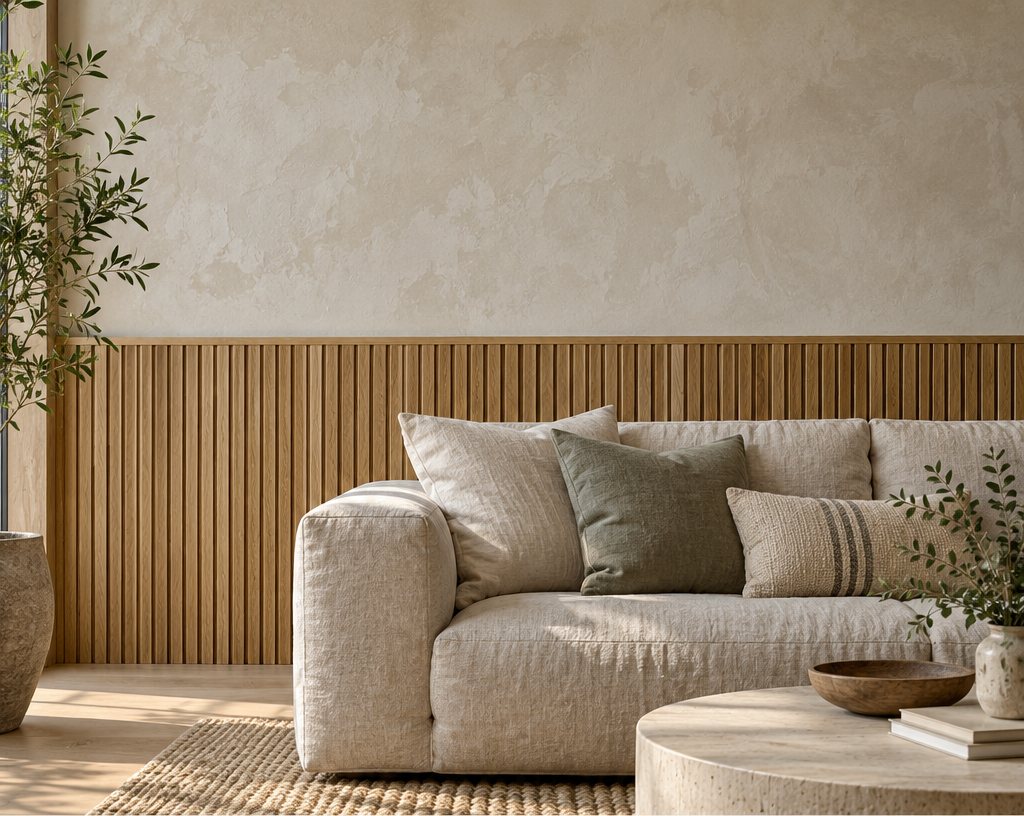
Rough plaster wall design in current interiors uses a thick lime or clay render on one or two walls, in a warm mineral color, lit from the side so the trowel marks show, and paired with smooth, quiet surfaces everywhere else. The texture is the feature; nothing hangs on it, and the furniture in front of it is simple. It is the signature wall of wabi-sabi and warm minimalist rooms.
- Fireplace wall: a 1/8–1/4 in (3–6 mm) clay or lime render over the chimney breast, in a clay, sand or stone tone, with a flush plaster hood. The most-requested use in our reader mail.
- Bed wall: a hand-troweled lime finish in a mottled warm white or ochre behind a low upholstered bed, no headboard, with a single sconce.
- Entry and stair: a sand-float finish that takes scuffs well and hides repairs.
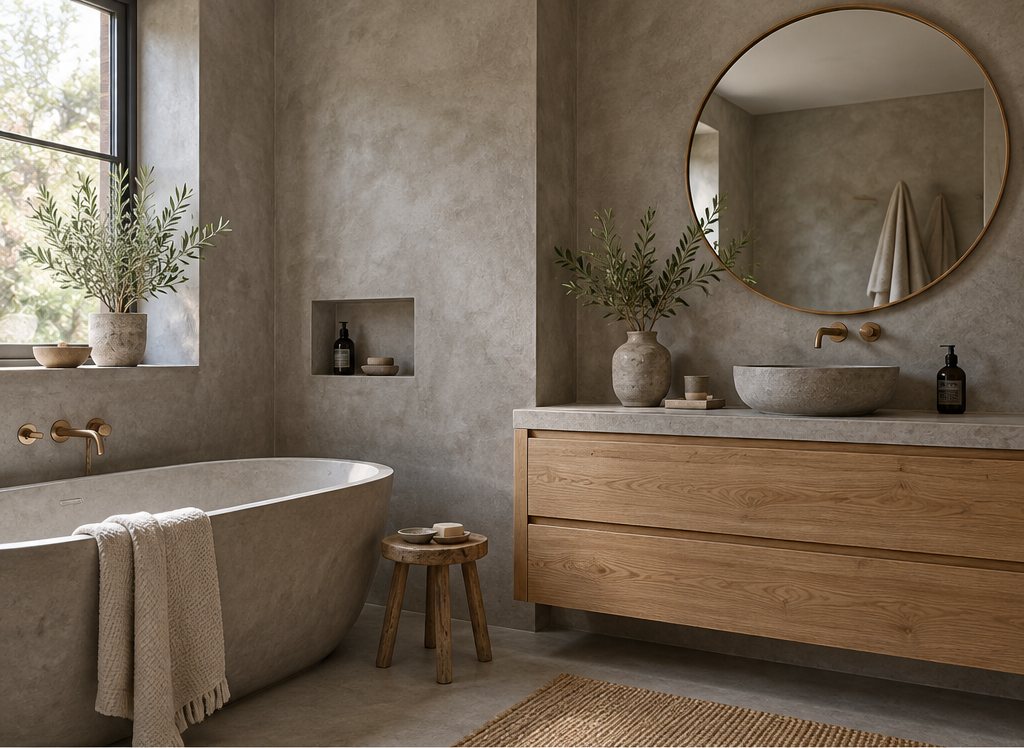
- Bathroom: a burnished lime or tadelakt-style finish in the shower and a rougher lime texture on dry walls, matching the direction in our bathroom trends report.
- Arches and niches: plaster is the only finish that turns a corner without a trim line, which is why rough plaster and arched openings appear together so often in Mediterranean-style homes.
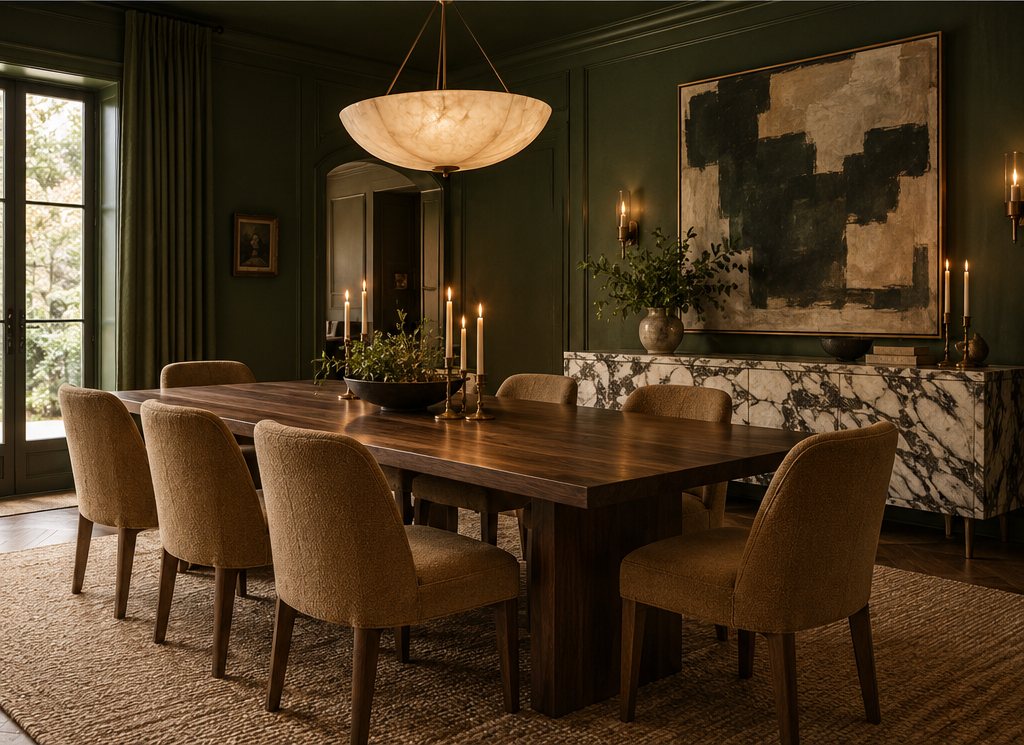
Color stays mineral: whites with a yellow or pink cast, clay, sand, terracotta, olive and a deep oxblood for a dramatic dining room. Pigment goes into the plaster or into a lime paint over it; standard latex over a rough plaster flattens the surface and kills the variation. Our 2027 color palettes report has the specific tones.
How do you create a textured plaster finish step by step?
The most achievable hand finish for a non-plasterer is a skip trowel or a light hand-troweled texture in setting compound over primed drywall, which takes an afternoon for a feature wall and costs about $0.50 per sq ft in materials. Here is the sequence.
- Prepare the wall. Fill holes, sand ridges, wash off dust, and roll a bonding or PVA primer. Allow it to dry fully; a tacky primer tears when troweled.
- Mask and light the wall. Tape off ceiling, trim and adjacent walls, and set a work light to one side at a low angle so you can see the relief as you build it.
- Mix a setting compound. Choose a 90-minute setting-type compound and mix only what you can apply in 30–40 minutes, to a stiff peanut-butter consistency for skip trowel or slightly looser for a hand-troweled lime look.
- Apply a thin, uneven base coat. Load a 10–12 in (25–30 cm) trowel with a small amount, hold it at 15–20 degrees and sweep in random arcs 12–24 in (30–61 cm) long, letting the trowel skip so compound lands in patches covering 50–70 percent of the wall. Vary direction constantly; a repeated stroke becomes a pattern.
- Knock down or layer. After 10–15 minutes, when the surface has lost its gloss, lightly pass a clean trowel over the high spots to flatten them to 1/16 in (1.5 mm). For a lime look, apply a second thin coat the next day, filling most of the gaps so the final surface is nearly flat but cloudy with trowel marks.
- Cure and lightly sand. Leave 24 hours. Sand only the sharp edges with 220 grit; do not flatten the texture.
- Prime and finish. For a painted finish, roll a flat primer and two coats of matte paint with a 3/4 in (19 mm) nap roller. For a mineral finish, brush on two coats of lime paint in cross strokes; the brush marks add a second layer of texture and the color settles unevenly into the relief, which is the look.
For a true lime render, the process is different: a scratch coat, a 3–7 day cure, a float coat, and pigmented finish coats, with a mist of water between each. Hire that one unless you have plastered before.
Which paint and lighting make plaster texture look best?
Plaster texture looks best under matte or flat mineral finishes and under light that rakes across the wall from the side, so the relief casts soft shadows. Gloss paint fills the texture with reflections and makes it look like a repair; overhead light from the ceiling center flattens it. Position a floor lamp, a wall washer or a sconce 12–24 in (30–61 cm) from the wall to graze it, and use the lighting calculator to keep ambient levels low enough that the grazing light reads.
For paint, flat latex is acceptable over a compound texture, but lime paint, mineral silicate paint and clay paint all sit better on a troweled wall because they are matte to the point of chalkiness and vary in tone across the surface. Choose a warm neutral from our neutral paint colors guide if you want the texture to be the quiet background rather than the feature.
Is textured plaster hard to maintain or repair?
Textured plaster is easy to maintain and moderately easy to repair, because the irregularity hides patches that a smooth wall would show. Dust it with a soft brush, spot-clean with a damp cloth and no detergent on lime finishes, and expect lime to develop a patina rather than stains. Chips and cracks are filled with the same material, textured with a small trowel to match, and either painted or washed with the same lime paint; a repaired area 6 in (15 cm) across typically disappears from 3 ft (1 m) away.
The things to avoid are hanging heavy items on raw lime without anchors rated for plaster, scrubbing with abrasive pads, and sealing a breathable lime wall with a film-forming latex, which traps moisture and causes peeling. Where a wall will be touched constantly, in a stair or a hallway with children, choose a sand-float or skip-trowel compound texture under washable matte paint rather than a soft lime.
Free toolTile CalculatorWork out tiles, boxes, grout and adhesive with the right wastage.Frequently asked questions
What is textured plaster?
Textured plaster is a wall finish in which the surface relief is made by hand in a wet coat of plaster, lime, clay or setting compound, using a trowel, sponge or brush. Unlike sprayed drywall texture, it is irregular and directional, with relief from 1/32 in (0.8 mm) to 1/4 in (6 mm), and it is often pigmented through the coat rather than painted.
How do you texture plasterboard walls?
Prime the board with a bonding or PVA primer, then trowel a 1/16 in (1.5 mm) coat of 90-minute setting compound in random arcs, letting the trowel skip. After 10–15 minutes, lightly flatten the high spots with a clean trowel. Cure 24 hours, sand only the sharp edges, then prime and paint matte or brush on lime paint.
How much does plaster wall texture cost?
Expect $3–6 per sq ft for a plasterer to trowel a skip or sand-float texture in setting compound over existing drywall, $6–12 per sq ft for a two-coat lime finish, and $10–18 per sq ft for a thick clay or lime render with mesh. A typical living room with 480 sq ft of wall runs $1,450–8,600 depending on the finish.
What is a rough plaster wall design?
A rough plaster wall design is a feature wall finished in a thick lime or clay render, 1/8–1/4 in (3–6 mm), with visible trowel marks, usually in a warm mineral color and lit from the side. It is used on fireplace walls, bed walls and entries in wabi-sabi, warm minimalist and Mediterranean-style rooms, with the other walls kept smooth.
What is the difference between limewash and textured plaster?
Limewash is a thin mineral paint made of slaked lime and pigment that gives a cloudy, matte color on a flat or lightly textured wall; textured plaster is a thicker troweled coat that creates physical relief. Many 2027 walls combine them: a light hand-troweled texture in compound or lime plaster with limewash brushed over it.
Can you paint over textured plaster?
Yes. Use a flat or matte paint and a 3/4 in (19 mm) nap roller so the paint reaches into the relief, and avoid satin or gloss sheens, which fill the texture with reflections. On lime or clay plaster, use a breathable lime, silicate or clay paint rather than a film-forming latex, which can trap moisture and peel.
Some links may be affiliate links. Regulations and specifications change — always confirm with suppliers and qualified professionals.