Venetian Plaster Walls: Finishes, Cost per Sq Ft & Application
Venetian plaster is a lime-and-marble-dust wall finish applied in 2–4 thin trowel coats and burnished to a polished or matte sheen. Professional installation runs $8–25 per sq ft; acrylic venetian stucco paint costs $3–7 per sq ft DIY.
Part of our guide: Wall Treatments Guide: 14 Wall Finishes & Covering Ideas
Key takeaways
- Professional lime venetian plaster costs $8–25 per sq ft installed; acrylic venetian stucco paint is $3–7 per sq ft DIY
- Apply 2–4 coats of 1–2 mm each over a level-5 smooth wall, and burnish while the final coat is still green
- Matte white and warm mineral tones are the 2027 specification; heavy marble veining and metallics look dated
- Lime plaster is breathable, mold-resistant and repairable; acrylic is cheaper but patches show and it belongs in dry rooms
- Seal with wax or lime soap in bathrooms and kitchens; leave dry-room walls unsealed for the softest finish
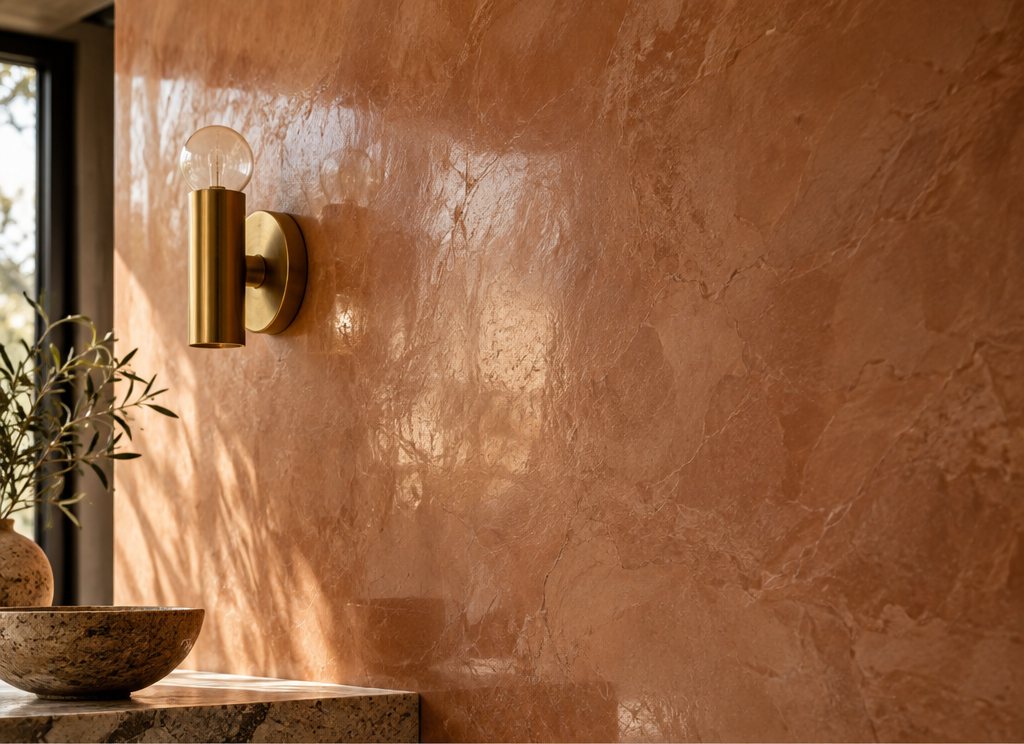
Venetian plaster is a wall finish made from slaked lime and fine marble dust, troweled on in two to four tissue-thin coats and burnished with steel until it glows like polished stone. A professional venetian plaster finish costs $8–25 per sq ft ($85–270 per sq m) installed, while acrylic venetian stucco paint runs $3–7 per sq ft as a DIY job. It suits living rooms, entries, fireplace walls and bathrooms.
The look is centuries old, but modern venetian plaster has moved away from the glossy, veined, faux-marble effect of the 1990s toward soft, matte, chalky surfaces in white, bone, clay and stone that read as a single quiet material. It is the wall finish that anchors warm minimalism and quiet luxury interiors, and it sits at the heart of our wall treatments guide.
- Material: slaked lime putty (grassello) plus marble dust; acrylic versions substitute polymer binders.
- Coats: 2–4, each 1–2 mm (1/16 in or less), applied with a flexible steel trowel.
- Installed cost: $8–25 per sq ft for lime; $5–12 per sq ft for acrylic.
- Cure time: lime plaster carbonates over 28 days; walls can be touched after 24 hours.
- Lifespan: 30–50 years for lime; 10–20 years for acrylic before refinishing.
What is venetian plaster?
Venetian plaster is the English name for stucco veneziano, a polished lime plaster developed in the Veneto region to imitate marble on walls that could not carry the weight of real stone. The traditional mix is lime putty aged for months, blended with marble dust ground finer than flour, tinted with mineral pigments and applied in very thin coats that are burnished and compressed with a trowel while still green. The compression is what creates the depth: light passes through the semi-translucent top layers and bounces back from the layers beneath, giving venetian plaster walls the cloudy, mottled, mineral quality that paint can only imitate.
Three terms come up constantly and they are not the same thing. Stucco veneziano is the fine, glass-smooth, highly polished version. Marmorino uses coarser marble dust for a stony, matte or satin surface with visible grain. Grassello di calce is the lime putty base itself, sometimes used plain for a soft, cloudy, lightly polished wall. All three are lime-based venetian plaster; an "italian plaster finish" in a product catalog usually means one of them. Then there is venetian stucco paint: a thick acrylic coating sold in cans at big-box stores that is troweled on the same way and gives a reasonable imitation at a fraction of the cost and skill.
How much does venetian plaster cost?
Expect $8–25 per sq ft ($85–270 per sq m) for professionally installed lime venetian plaster and $5–12 per sq ft for professionally applied acrylic, with materials accounting for only $1–4 of that. A 12 × 15 ft living room with 9 ft ceilings has about 430 sq ft of wall after openings, which puts a full-room lime job at $3,500–10,000 and a single fireplace feature wall of 120 sq ft at $1,000–3,000.
| Finish | Material cost per sq ft | Installed cost per sq ft | Difficulty | Best rooms |
|---|---|---|---|---|
| Acrylic venetian stucco paint (DIY) | $1.50–3 | $3–7 incl. tools | Moderate | Bedrooms, dining, powder rooms |
| Acrylic, professionally applied | $1.50–3 | $5–12 | Pro | Any dry room |
| Marmorino (lime, matte or satin) | $2–4 | $8–16 | Pro | Living rooms, kitchens, baths |
| Stucco veneziano (lime, polished) | $3–5 | $12–25 | Expert | Entries, feature walls, bars |
| Lime plaster with wax or soap seal | +$0.50–1 | +$1–3 | Pro | Bathrooms, kitchens |
| Exterior lime plaster | $2–4 | $10–20 | Expert | Facades, garden walls |
Price drivers are the number of coats, the level of polish, the color (deep pigments need an extra coat for evenness), wall condition and ceiling height. A smooth level-5 drywall surface is the baseline; walls with existing texture add $1–3 per sq ft for skim coating first, which we cover in how to smooth textured walls. Ceilings and curved surfaces add 20–40 percent. Plasterers commonly quote a minimum of $800–1,500 for a single small wall because setup, sampling and the multi-day return visits are the same whatever the area.
What are the different venetian plaster finishes?
Venetian plaster finishes range from a mirror-like polish to a chalky matte, and the choice is made by the fineness of the marble dust, the number of coats and how hard the final coat is burnished. The modern preference, by a wide margin, is matte or low-sheen.
Polished venetian plaster
Venetian polished plaster is the classic stucco veneziano: three or four coats of the finest grade, the last one burnished with a clean steel trowel at a low angle until the surface compacts and shines. It has depth, movement and a cool, glassy touch. It shows every bump in the substrate and every trowel stroke, which is the point, but it also shows fingerprints and scuffs on dark colors. It is best on a feature wall, a bar front, a fireplace chimney breast or an entry, where it gets light from the side.
Matte venetian plaster
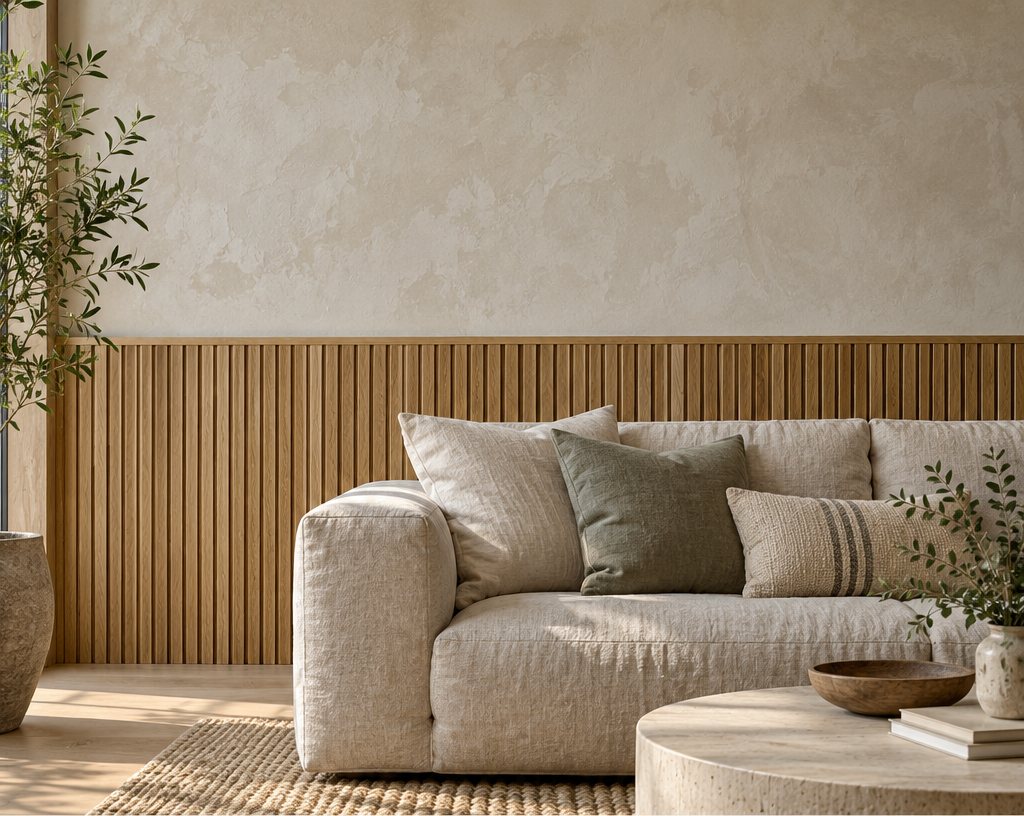
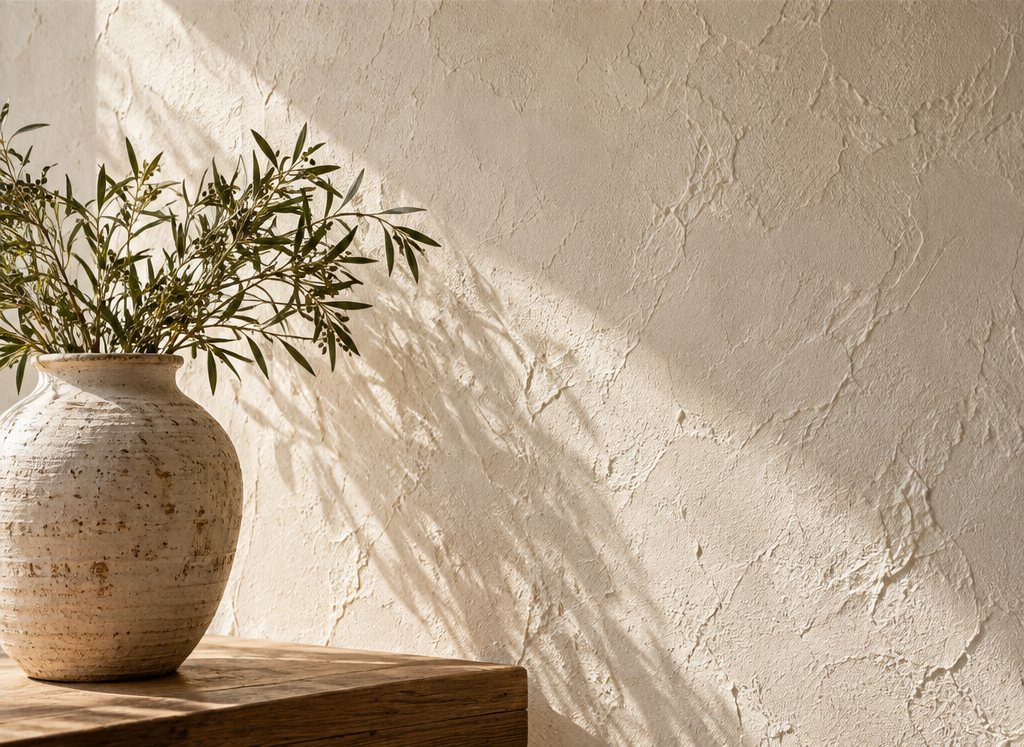
Matte venetian plaster, usually a marmorino or a lightly troweled grassello, is left unburnished or burnished only enough to close the surface. The texture is velvety, like suede or limestone, with gentle tonal variation rather than veining. Matte white venetian plaster is now the single most requested specification: it gives a white wall the softness of a plaster sculpture and does not glare under downlights. It is also the easier finish to patch.
Textured and marbled effects
Venetian plaster texture can be pushed further. A skip-troweled marmorino leaves raised islands that are knocked back for a stony, travertine-like surface. Venetian marble plaster uses two or three close tones dragged and blended in the final coat for a veined, white-marble effect; it is spectacular when restrained and dated when overdone. Metallic and pearlescent additives exist, but they belong in commercial lobbies rather than homes.
Is lime venetian plaster better than acrylic?
Lime venetian plaster is better in every respect except price and ease: it is breathable, naturally mold-resistant because of its high pH, repairable, and it develops more depth with age, whereas acrylic venetian stucco paint is cheaper, faster, more forgiving to apply and good enough in low-traffic rooms. If the budget allows lime in the rooms you see most and acrylic elsewhere, that is the sensible split.
| Factor | Lime-based venetian plaster | Acrylic venetian stucco paint |
|---|---|---|
| Binder | Slaked lime (calcium hydroxide), cures by carbonation | Acrylic polymer, cures by evaporation |
| Depth and sheen | True translucent depth; polishes to a stone-like glow | Surface sheen only; can look plasticky when polished hard |
| Breathability | Vapor-open; suits old masonry and bathrooms | Forms a film; can trap moisture |
| Mold resistance | High (pH 12+ while curing) | Relies on additives |
| Working time | Long; can be re-troweled for 30–60 minutes | Short; 10–20 minutes on warm days |
| Skill needed | High | Moderate; a confident DIYer can manage a wall |
| Repair | Blends when patched by a plasterer | Patches usually show; repaint the wall |
| Cost installed | $8–25 per sq ft | $3–12 per sq ft |
| Lifespan | 30–50 years | 10–20 years |
Venetian plaster products sold online span both camps, and labels can be vague. Check the data sheet for "lime putty," "calce" or "slaked lime" as the primary binder; if the first ingredient is an acrylic or vinyl resin, it is a stucco paint, whatever the name on the tub. Hybrid lime products with 3–5 percent acrylic for adhesion are an acceptable middle ground for drywall.
What colors work best for venetian plaster walls?
White, bone, greige, clay and warm stone tones work best, because venetian plaster's tonal variation is most beautiful in colors with low saturation and medium-high value. White venetian plaster in particular is the finish of the moment: specify a warm white with a drop of ochre or raw umber rather than a pure white, which can look chalky and blue under daylight.
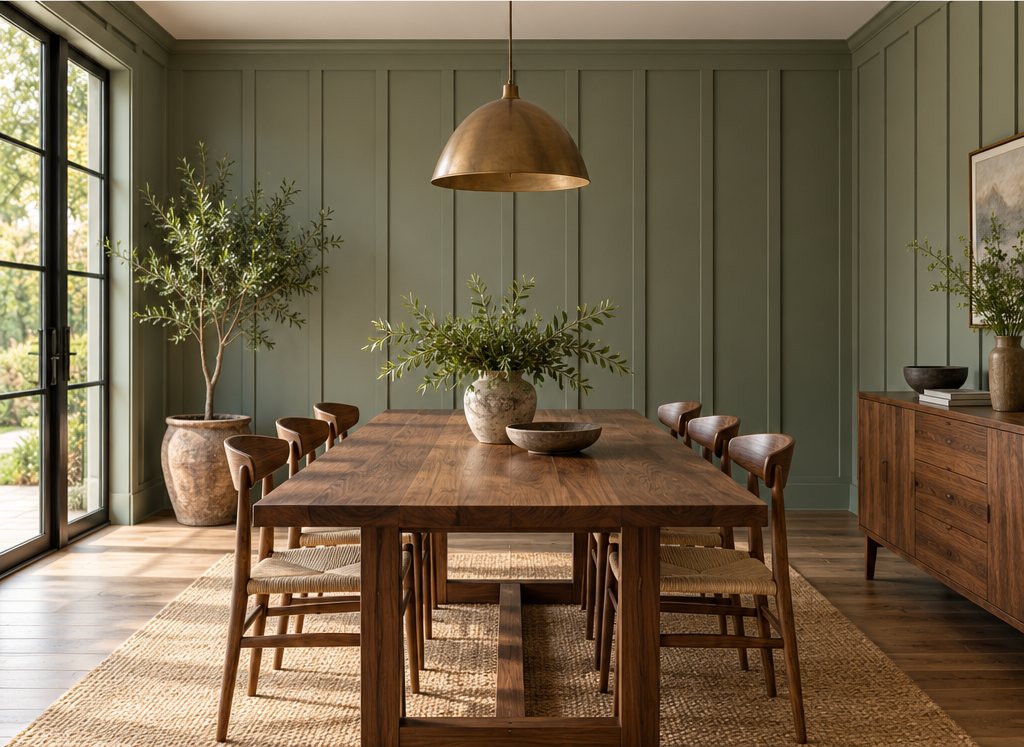
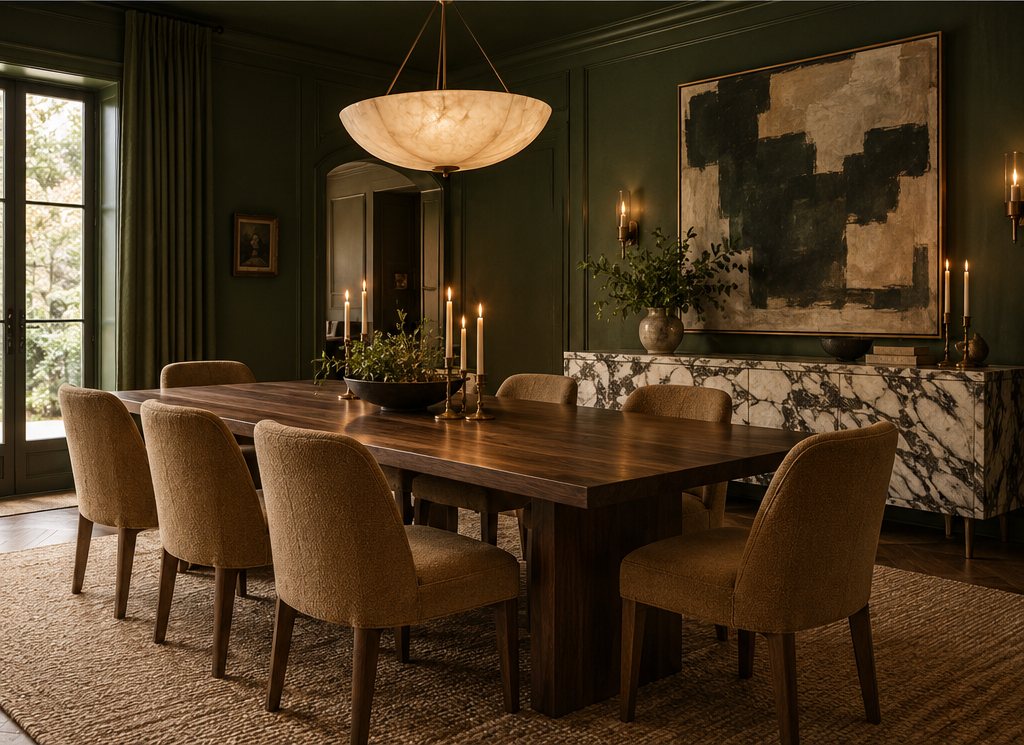
#F2EDE4#E4DACB#CFC2B0#B99C84#8E8A7E#4E4A45For a venetian plaster living room, a single matte tone across all four walls and the ceiling creates the enveloping effect that paint-based color drenching chases; the plaster does it with more depth and fewer visible edges. Dark venetian walls in smoke, olive or oxblood are dramatic in a dining room or study but show scuffs, so keep them polished and sealed. Pair pale plaster with oak, travertine, linen and unlacquered brass, the material family from our trending materials guide, and choose warm whites for trim using the warm white paint guide so the painted woodwork does not look cooler than the plaster.
How do you apply venetian plaster?
Venetian plaster is applied in thin, overlapping trowel strokes over a primed, smooth substrate, built up in two to four coats, and then burnished and sealed. A single 10 × 12 ft wall takes a professional two to three days including drying time; a first-timer should allow a weekend and practice on a 4 × 4 ft board first.
- Prepare the wall to a level-5 smooth finish. Fill holes, sand ridges, and skim any texture flat. Lime plaster amplifies defects; a bumpy wall makes a bumpy polished wall.
- Prime with a quartz or sanded primer. Lime needs mechanical key; a gritty primer tinted close to the plaster color gives it one and hides any thin spots in the first coat.
- Apply the base coat. Load a flexible stainless trowel with a thin ribbon of plaster and pull it across the wall at a 15–30 degree angle, leaving 1–2 mm. Cover the whole wall in random, overlapping strokes. Let it dry 4–12 hours.
- Apply the second coat in short, crossing strokes. Fill the troughs the first coat left, working wet edges into dry ones so no lap lines form. For a marmorino, this may be the final coat.
- Apply the finish coat as thin as skin. Hold the trowel almost flat, spread the plaster, then scrape most of it off. Work 3 × 3 ft sections and keep the edge wet.
- Burnish while green. Once the surface turns matte but is still cool to the touch (20–40 minutes), press a clean trowel flat against it and sweep in long arcs. Pressure and speed build the polish; stop when the sheen is where you want it.
- Cure and seal. Let lime cure 3–7 days before sealing. Use a liquid wax or a lime-soap for bathrooms and kitchens, buffed with a soft cloth; leave dry living areas unsealed for maximum breathability or use a clear matte sealer for dark colors.
Two mistakes ruin most DIY jobs: applying the coats too thick, which causes crazing and shows trowel edges, and over-burnishing, which polishes the high spots and leaves the low spots dull. Thin coats and patience solve both. Corners need an inside-corner trowel or a small Japanese trowel to avoid gouges.
Can you use venetian plaster in bathrooms and outdoors?
Yes to both, with the right product. In bathrooms, lime venetian plaster sealed with a lime soap (the traditional tadelakt method) or a two-part sealer is water-resistant enough for walls outside the shower, and sealed properly it can line a shower itself, although the sealing has to be meticulous. Its breathability and alkalinity are exactly what a damp room wants. Acrylic venetian stucco paint should stay out of wet zones.
Exterior venetian plaster is a lime render rather than the fine polished interior mix: a coarser marmorino or an exterior rough plaster wall finish with 2–3 mm grain, applied over a lime base coat on masonry and left matte. Polished exteriors streak in rain. Cost runs $10–20 per sq ft and the plaster should be protected from driving rain for 48 hours after application. In freeze-thaw climates, use a natural hydraulic lime binder rather than pure putty lime. The soft, sun-bleached facades of Mediterranean-style homes are lime render of exactly this kind.
How do you clean and repair venetian plaster?
Clean venetian plaster with a soft cloth and warm water, adding a drop of pH-neutral soap for marks; never scrub, and never use abrasive or acidic cleaners on lime. Waxed surfaces can be re-waxed every 3–5 years in kitchens and baths to refresh the water resistance.
Small chips and scratches in lime plaster are repairable: a plasterer fills the damage with the same tinted mix, burnishes it in and the patch disappears once cured. Keep a sealed 1 lb (500 g) sample of the finish mix from the original job for this reason. Acrylic repairs rarely blend because the polymer surface does not re-wet, so damage on an acrylic wall usually means re-coating the whole panel from corner to corner. Hairline cracking across a lime wall normally points to a moving substrate or coats applied too thick; a stable wall with thin coats stays sound for decades.
Is venetian plaster still in style for 2027?
Yes. Venetian plaster is one of the strongest wall directions for 2027, but in its contemporary form: matte or satin, one soft mineral tone across whole rooms, no faux-marble veining and no metallic glitter. It is favored precisely because it is slow, hand-made and imperfect, the qualities that wabi-sabi interiors and this year's broader trends prize over flat, printed perfection.
Contemporary venetian plaster is also being used on surfaces beyond walls: range hoods, fireplace surrounds, bathtub skirts, headboard walls and whole ceilings. The thing to avoid is the high-gloss, heavily veined, two-tone look of the early 2000s, which reads as a hotel lobby. If polished is what you love, keep it to one wall and one color. For a comparison with the other plaster families, from clay to tadelakt to lime wash, see plaster walls and finishes, and for a cheaper route to a similar depth, the wall texture types guide covers trowel finishes in joint compound.
Free toolPaint CalculatorWork out exactly how much paint to buy.Frequently asked questions
What is venetian plaster made of?
Traditional venetian plaster is slaked lime putty mixed with finely ground marble dust and mineral pigments. It cures by carbonation, slowly turning back into limestone on the wall, which is why it is hard, breathable and long-lived. Acrylic venetian stucco paint replaces the lime binder with a polymer resin and is applied the same way, but it cures by evaporation and lacks the translucent depth of lime.
Is venetian plaster expensive?
It is a premium finish. Professionally installed lime venetian plaster runs $8–25 per sq ft, roughly five to ten times the cost of a quality paint job, mostly because of the labor across three or four coats and the skill involved. Acrylic versions applied by a pro cost $5–12 per sq ft, and a DIY acrylic wall can be done for $3–7 per sq ft including trowels.
Can you do venetian plaster yourself?
Acrylic venetian stucco paint is a realistic DIY project for a patient person: practice on a board, keep every coat thin, and work small sections. Lime stucco veneziano is harder, because the burnishing window is short and mistakes cannot be sanded out, so most homeowners hire a plasterer for lime and reserve DIY for a bedroom or powder room in acrylic.
What is the difference between venetian plaster and marmorino?
Both are lime and marble dust plasters. Marmorino uses coarser marble grains and is usually finished matte or satin with a stony texture, while venetian plaster (stucco veneziano) uses the finest grade and is burnished to a smooth, polished, marble-like sheen. Marmorino is more forgiving to apply, hides substrate flaws better and is the more popular modern choice.
Does venetian plaster crack?
Properly applied lime venetian plaster on a stable wall rarely cracks; it flexes and cures into a very hard surface. Cracks appear when coats are applied too thick, when the wall moves at drywall joints, or when the plaster is forced to dry too fast by heat or sun. Thin coats, a sound substrate and slow curing prevent almost all of it.
Can you paint over venetian plaster?
Yes. Unsealed lime plaster takes mineral or breathable matte paint directly after a light sanding; waxed or sealed surfaces need the wax removed with a solvent and a bonding primer first. Painting flattens the depth, so most owners who want a color change have a plasterer apply a new tinted finish coat instead, which costs less than the original job.
Is venetian plaster good for bathrooms?
Lime venetian plaster is one of the best bathroom wall finishes: it is breathable, naturally resists mold, and when sealed with lime soap or a two-part sealer it sheds water on walls outside the shower and, with careful sealing, inside it too. Acrylic venetian stucco paint should be kept to dry walls only.
Some links may be affiliate links. Regulations and specifications change — always confirm with suppliers and qualified professionals.