Wall Paneling Ideas: Types, Costs & Wood Panel Walls
Wall paneling comes in eight main types, from board-and-batten and wainscoting to slats, fluted and raised panels, at $4–30 per sq ft installed. This guide compares every type by cost, height and room, covers cheap wall paneling, and explains how to update old wood paneling.
Part of our guide: Wall Treatments Guide: 14 Wall Finishes & Covering Ideas
Key takeaways
- Eight types of wall paneling cover the market: board-and-batten, wainscoting (flat, raised, beadboard), shiplap, tongue-and-groove, slat, fluted, 3D and sheet paneling
- Wall panel installation costs $4–12 per sq ft for MDF board-and-batten or wainscoting, $5–15 for shiplap, $8–30 for solid wood slats and $3–20 for fluted, 3D and PVC panels
- Standard heights are 32–36 in (81–91 cm) for a dining-room wainscot, 48–60 in (122–152 cm) for halls and bedrooms, and full height for modern slat and fluted walls; never exactly half the wall
- Cheap wall paneling that still looks designed uses primed MDF strips, hardboard beadboard or peel-and-stick planks over a smooth wall, at $1.50–5 per sq ft in materials
- Old brown wood paneling is best updated by painting it (after degreasing, sanding and a bonding primer) or by filling the grooves and skimming; removing it usually exposes damaged drywall
Wall paneling is any system of boards, battens, sheets or molded panels fixed to an interior wall for decoration and protection, in eight main types: board-and-batten, wainscoting, shiplap, tongue-and-groove, slat, fluted, 3D and sheet paneling. Installed costs run $4–12 per sq ft for painted MDF, $5–15 for shiplap and $8–30 for wood slats. This guide compares types, heights and costs, and covers wood panel walls and old paneling.
Paneling is the fastest-growing wall treatment because it does three things at once: it protects the lower wall, it gives a flat room line and shadow, and most versions go up in a weekend. It also spans the whole budget range, from a hardboard beadboard wainscot to a full-height white oak slat wall. The sections below work through the types, then costs, then the specific cases people search for: cheap options, wood sheets, office panels, fireplaces, ceilings and covering old paneling. The wider family of plaster, paint and wallpaper alternatives is in the wall treatments guide.
- Eight types: board-and-batten, wainscoting (flat, raised, beadboard), shiplap, tongue-and-groove, slat, fluted, 3D and sheet paneling.
- Installed cost: $4–12 per sq ft MDF systems; $8–30 solid wood; $3–20 fluted, 3D and PVC.
- Heights: 32–36 in (81–91 cm) dining wainscot; 48–60 in (122–152 cm) halls and bedrooms; full height for modern slat and fluted walls.
- Materials: MDF (painted), hardboard, plywood and veneer sheets, solid pine, oak and walnut, PVC and gypsum.
- Trend direction: vertical slats and fluted panels painted or in pale oak are up; glossy laminate and dark 1970s sheet paneling are the ones being covered.
What are the different types of wall panelling?
The different types of wall panelling are defined by the shape and direction of the boards: vertical battens over flat panels (board-and-batten), framed panels inside stiles and rails (wainscoting, in flat, raised or beadboard versions), horizontal boards with a reveal (shiplap) or interlocking edge (tongue-and-groove), narrow vertical strips with gaps (slat), molded ridges (fluted), sculpted relief (3D) and large sheets with a printed or veneered face (sheet paneling). The table sets them side by side.
| Type | What it is | Usual material | Installed cost per sq ft | DIY difficulty | Typical height | Best rooms |
|---|---|---|---|---|---|---|
| Board-and-batten | Vertical battens at 12–24 in (30–61 cm) over a flat field, capped with a rail | Primed MDF, pine | $4–10 | Moderate | 36–60 in (91–152 cm) or full | Halls, mudrooms, bedrooms, dining |
| Flat-panel wainscoting | Flat recessed panels inside stiles and rails | MDF, poplar | $5–12 | Moderate | 32–36 in (81–91 cm) | Dining rooms, halls, stairs |
| Raised-panel walls | Beveled panels standing proud of the frame | MDF, poplar, oak | $8–20 | Hard | 36 in (91 cm) or full | Formal dining, libraries, traditional halls |
| Beadboard | Narrow vertical beads in a sheet or T&G strips | Hardboard, MDF, pine | $3–8 | Easy–moderate | 36–48 in (91–122 cm) | Baths, kitchens, porches, cottages |
| Shiplap | Horizontal boards with a 1/8–1/4 in (3–6 mm) reveal | MDF, pine, poplar | $5–15 | Moderate | Full or ceiling | Bedrooms, living rooms, ceilings |
| Tongue-and-groove | Interlocking boards, horizontal or vertical, often V-groove | Pine, cedar, oak | $6–18 | Moderate | Full or wainscot | Ceilings, cabins, baths (painted) |
| Slat (acoustic) panels | Vertical strips 0.75–1.5 in (19–38 mm) wide at 0.5–1 in (13–25 mm) gaps on a felt backer | Oak, walnut, ash veneer on MDF | $8–30 | Easy–moderate | Full height | Media walls, offices, bed walls |
| Fluted and 3D panels | Molded ridges or sculpted relief in sheets | MDF, gypsum, PVC, polyurethane | $3–20 | Easy | Full or as a band | Accent walls, baths (PVC), island fronts |
| Sheet paneling | 4 × 8 ft (1.2 × 2.4 m) sheets, grooved, veneered or printed | Plywood, hardboard, veneer, laminate | $2–12 | Easy | Full height | Budget full walls, basements, offices |
Within the family, wainscoting and board-and-batten share the most searches and have their own detailed guide in wainscoting ideas; slats are in wood slat wall panels and acoustic panels; fluted, 3D and gypsum options are in modern wall panels.
How much does wall panel installation cost?
Wall panel installation costs $4–12 per sq ft for painted MDF board-and-batten, flat wainscoting or beadboard, $5–15 for shiplap, $8–20 for raised panels, $8–30 for solid or veneered wood slats and $3–20 for fluted, 3D and PVC panels, all installed on existing smooth drywall. Labor is 50–70 percent of those figures, so DIY installs come in at $1.50–8 per sq ft in materials for most types.
| Project | Area | Professional | DIY materials | Time (pro / DIY) |
|---|---|---|---|---|
| Dining room wainscot, 36 in high, 12 × 14 ft room | ~150 sq ft (14 m²) | $750–1,800 | $250–500 | 1–2 days / 2–3 days |
| Board-and-batten hall, 60 in high, 30 linear ft | ~150 sq ft | $700–1,500 | $200–400 | 1 day / 2 days |
| Full-height shiplap bedroom wall, 12 × 9 ft | 108 sq ft (10 m²) | $600–1,600 | $200–450 | 1 day / 1–2 days |
| Oak slat media wall, 14 × 9 ft | 126 sq ft (12 m²) | $1,500–3,800 | $900–2,200 | 1 day / 1–2 days |
| Fluted MDF accent wall, 12 × 9 ft | 108 sq ft | $700–1,800 | $350–800 | 1 day / 1 day |
| Raised-panel library, full height, 4 walls | ~400 sq ft (37 m²) | $4,000–9,000 | $1,200–2,500 | 4–6 days / 2 weeks |
Variables that move the number: textured walls that need a skim coat or a backer sheet ($1–3 per sq ft more), rooms with many outlets and windows (each one adds 20–40 minutes of fitting), hardwood instead of MDF (two to three times the material), and painting, which adds $1–2 per sq ft professionally. Ask for quotes on the same drawing, with heights, batten spacing and finish specified, so bids are comparable.
What are the best wood panel wall ideas for 2027?
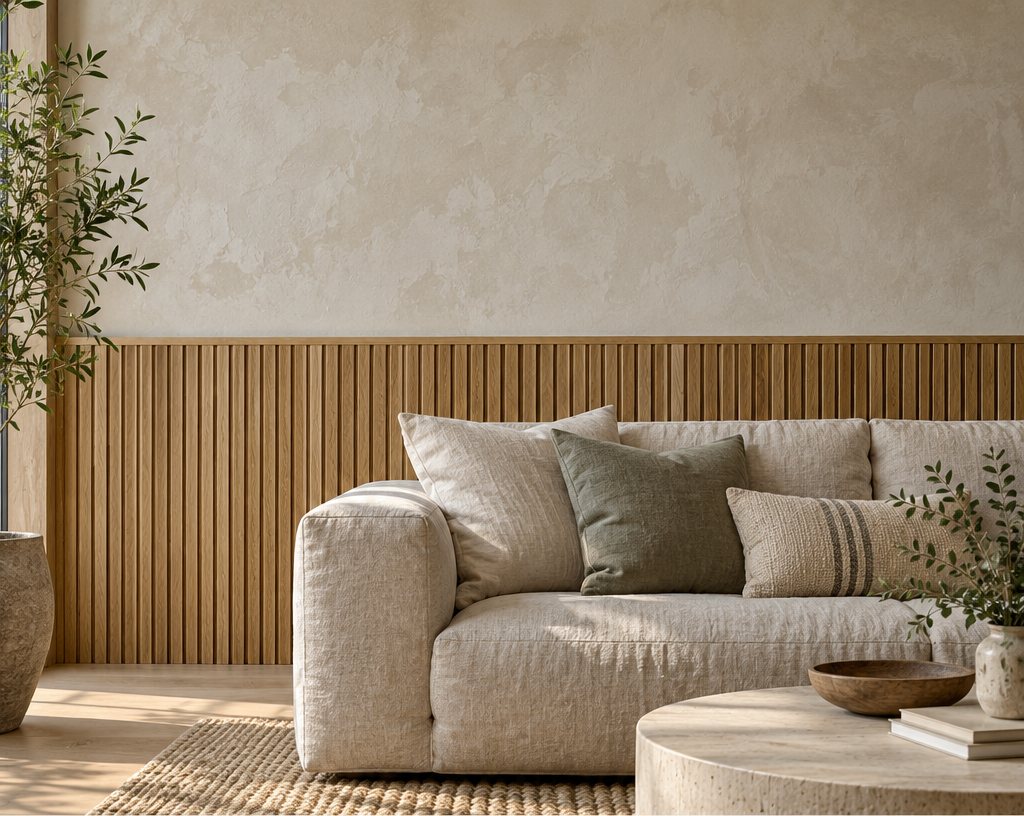
The best wood panel wall ideas for 2027 use timber as texture rather than as a dark surface: vertical oak or ash slats behind a bed or media unit, fluted panels painted the wall color, pale tongue-and-groove on a ceiling, a board-and-batten wall in a deep olive or ink, and a single full-height veneer panel wall in walnut or smoked oak as the room's one rich surface. Modern wood wall paneling is lighter in color, vertical in direction and limited to one or two walls.
- Slat headboard wall: 0.75–1 in (19–25 mm) oak slats at 0.5 in (13 mm) gaps, floor to ceiling, 10–12 ft (3–3.7 m) wide behind the bed; wall-mounted lamps through the slats.
- Fluted media wall: fluted MDF painted in the wall color, TV recessed or surface-mounted, a 12 in (30 cm) deep floating shelf below.
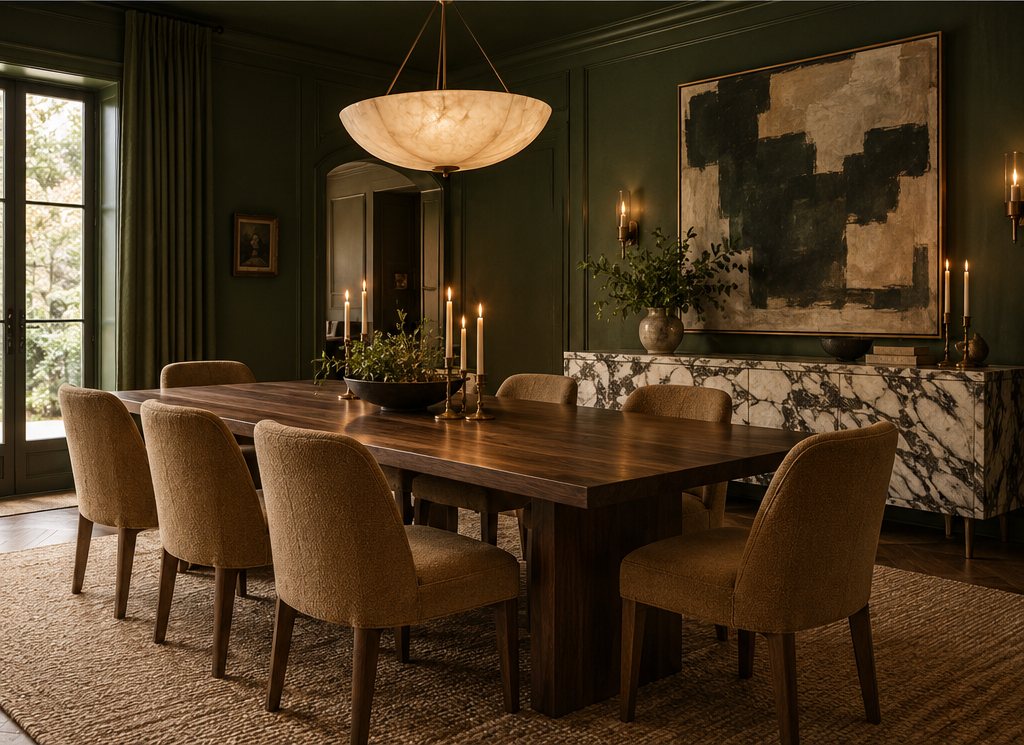
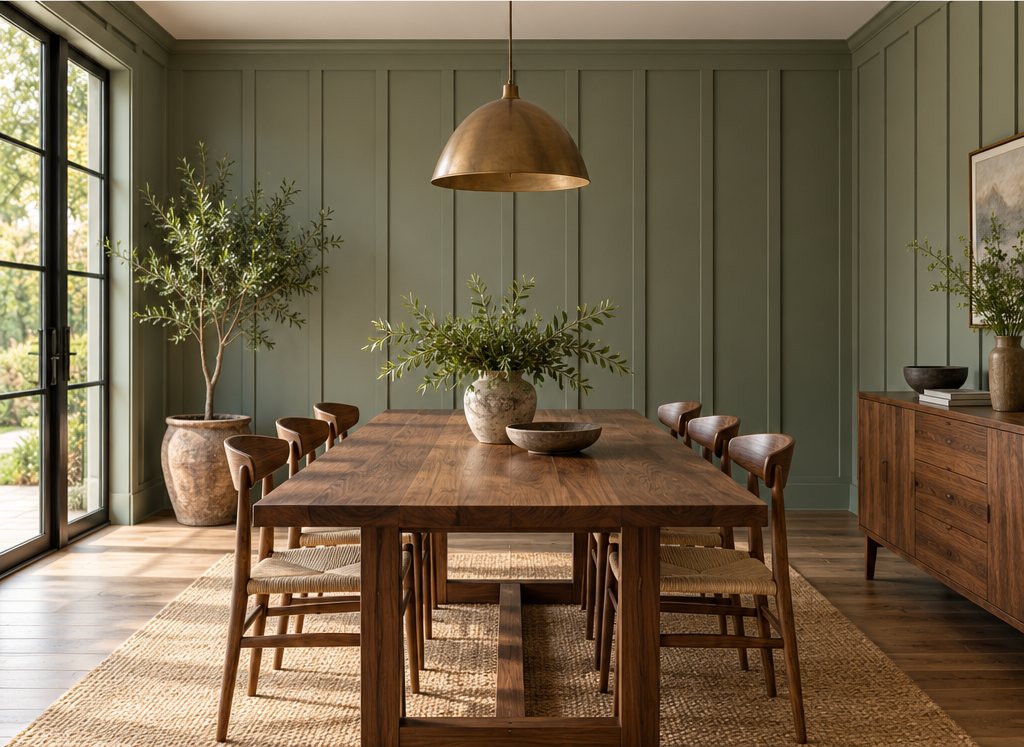
- Half-wall in color: board-and-batten to 54–60 in (137–152 cm) in olive, ink or cocoa, with a 2 in (5 cm) ledge rail for art; a wooden half wall of this kind is the most-searched paneling idea for halls and bedrooms.
- Horizontal wood paneling on walls: wide 8–10 in (20–25 cm) boards in a clear-finished pale wood, used in a reading corner or a cabin-style bedroom; horizontal boards widen a room, vertical boards raise it.
- Veneer sheet feature wall: book-matched walnut or oak veneer on 4 × 8 ft (1.2 × 2.4 m) MDF, with 1/8 in (3 mm) shadow gaps, as a dining or office wall.
- Fireplace wall panelling: slats or fluted panels flanking a stone or plaster surround, kept 12 in (30 cm) from the firebox opening or further if the manufacturer's clearance is larger; never combustible paneling within the clearance zone.
Wood panelling colours in 2027 run pale: natural white oak, ash, bleached walnut and painted-out MDF in the wall color. Stained brown wall paneling is used deliberately in small doses, a walnut office or a smoked-oak dining wall, rather than as a default. If the room already has oak floors and a walnut table, read how to mix wood tones before adding a third timber, and for a single-wall approach, wood accent wall ideas.
What is the cheapest way to panel a wall?
The cheapest way to panel a wall is primed MDF strips laid as board-and-batten directly over smooth, painted drywall, at $1.50–3 per sq ft in materials, followed by hardboard beadboard sheets at $1–2 per sq ft and peel-and-stick wood planks or PVC fluted panels at $2–5 per sq ft. All three avoid the cost of a backer panel by using the existing wall as the field.
- MDF board-and-batten over drywall: 1 × 3 in (19 × 64 mm) primed MDF at $1–2 per linear ft, construction adhesive and brad nails, a 1 × 4 in (19 × 89 mm) top rail. A 12 ft (3.7 m) wall to 60 in (152 cm) costs $60–120 in battens.
- Hardboard beadboard sheets: 4 × 8 ft (1.2 × 2.4 m) sheets at $20–35, cut to 36 in (91 cm) and capped with a chair rail; the classic cheap bathroom and kitchen wainscot.
- Peel-and-stick planks: real wood veneer or vinyl planks at $2–5 per sq ft; see peel-and-stick wood walls for the surface rules.
- PVC or polystyrene fluted panels: $2–6 per sq ft, glued up, waterproof, the only cheap wall paneling that goes in a shower room.
- Lightweight wood panels: poplar or paulownia slat panels at $5–8 per sq ft, half the weight and cost of oak, for ceilings and rentals.
The full list, with the ones to avoid, is in cheap wall panels that don't look cheap. The two rules that keep budget paneling from looking budget: paint battens and wall the same color, and keep spacing regular with equal end bays.
Are wood wall paneling sheets and wall cladding worth it?
Wood wall paneling sheets are worth it when you need to cover a full wall quickly and cheaply, a basement, a garage office, a rental, and when the sheet is a real veneer or a quality printed face rather than the thin grooved plywood of the 1970s. Wall cladding, the term used for exterior-grade and heavier interior timber boards, is the choice when the wall takes abuse or moisture: a mudroom, a stair wall, a sunroom.
Sheet paneling
A 4 × 8 ft (1.2 × 2.4 m) sheet covers 32 sq ft (3 m²) and costs $15–40 for grooved hardboard or plywood, $40–120 for a real oak or walnut veneer on MDF, and $60–200 for a fluted or 3D MDF sheet. Sheets go up with adhesive and finish nails into studs, with joints hidden by battens, by a shadow gap or by a groove in the pattern. Interior wood siding, meaning tongue-and-groove or shiplap boards used inside, costs more per sq ft than sheets but has no visible joints and takes paint or oil better.
Interior wood cladding
Cladding wall wood inside a house is usually 0.5–0.75 in (13–19 mm) thick boards of cedar, larch, thermally modified ash or oak, fixed to battens over a vapor-open membrane where moisture is a concern. It costs $8–20 per sq ft installed, resists knocks that would dent MDF, and in cedar or larch can run from a covered porch straight into a hall for a continuous look. Keep cladding at least 0.25 in (6 mm) off the floor and seal the end grain.
How do you choose office wall panels?
Choose office wall panels for sound first and appearance second: a slatted acoustic panel with a felt backer, a fabric-wrapped panel, or a cork or PET felt system, covering 20–40 percent of the wall area facing the desk, will cut echo in a hard-surfaced home office by half. Office wall panels in a plain fluted MDF or a flat raised-panel wainscot look the part but do nothing for the acoustics of a room where video calls happen.
An office with low paneling, a 36–42 in (91–107 cm) flat-panel or beadboard wainscot with a ledge, protects the wall from chair backs and gives a place to lean monitors and art; pair it with a slat or felt panel above the desk. Match the paneling color to the wall for a calm background on camera, and keep anything with strong horizontal lines out of the camera frame, where it reads as stripes. Our home office design ideas guide covers the desk, light and sound together.
Can you panel ceilings as well as walls?
Yes: paneling for ceilings and walls uses the same tongue-and-groove, shiplap, slat and beadboard products, and a paneled ceiling is often the better investment because it is the largest uninterrupted surface in the room. Ceilings take lighter, thinner materials, 0.25–0.5 in (6–13 mm) MDF or lightweight wood panels, fixed with adhesive and brads into joists or into furring strips at 16 in (41 cm) centers.
- Tongue-and-groove pine or poplar: painted white or a soft color, run across the short dimension of the room; $6–14 per sq ft installed.
- Slat ceiling: oak or ash slats on a felt backer over a dining table or a kitchen island zone; $10–30 per sq ft; integrate lighting between slats.
- Beadboard porch ceiling: the traditional choice, in a pale blue-green or white, in moisture-resistant MDF or PVC beadboard outdoors.
How do you update or cover old wood paneling?
Update old wood paneling by painting it, which is the cheapest and most reliable fix, or by filling the grooves and skimming it smooth for a flat wall; remove it only if you are prepared to repair or replace the drywall behind, which is usually damaged, missing or unfinished. Covering paneling with drywall or a new paneling system over the top is the third option when the old sheets are sound but ugly.
- Assess. Tap the paneling: solid wood or thick plywood paints well; thin printed hardboard or vinyl-faced sheets need a bonding primer and may still bubble. Check for loose sheets and dampness.
- Clean. Degrease with a strong detergent or a degreasing cleaner; decades of furniture polish stop paint from bonding.
- Sand. Scuff the whole surface with 150–180 grit to dull the finish; on real wood, sand with the grain.
- Fill or keep the grooves. For smooth wall paneling, fill the grooves with a flexible wood filler or a setting-type joint compound in two passes and sand flush; for a shiplap look, caulk any gaps at the top of the groove and leave the lines.
- Prime. One coat of a stain-blocking bonding primer; two on knotty pine or dark stain, which bleeds tannin through light paint.
- Paint. Two coats of a water-borne alkyd or a scrubbable satin, brushed into grooves first and rolled with a 3/8 in (10 mm) nap.
Expect 2–3 days for a 12 × 14 ft (3.7 × 4.3 m) room and $150–350 in materials. A painted-out brown-panel room in a warm white, olive or deep ink is one of the most convincing before-and-afters in renovation, and it reads as deliberate paneling rather than a cover-up. If the paneling is real wood in a good species, oiling or limewashing it to a paler tone keeps the material while losing the orange; the wall texture types guide covers the skim-coat route if you want the wall completely flat.
How do you choose the right wall paneling for a room?
Choose wall paneling by matching the room's exposure and style to the type, then setting a height that relates to the ceiling and the furniture, then picking a material to suit the budget. Four questions settle it.
- What does the wall have to survive? Water: PVC, moisture-resistant MDF or painted T&G. Knocks (halls, mudrooms, kids): board-and-batten or raised panels in MDF or poplar. Nothing (bedrooms, living rooms): any type, including slats and fluted.
- Which style? Traditional: raised or flat-panel wainscot, beadboard. Transitional: board-and-batten, shiplap. Modern: slats, fluted, veneer sheets, full-height board-and-batten painted out.
- What height? 32–36 in (81–91 cm) with a chair rail for dining rooms and 8 ft (2.4 m) ceilings; 48–60 in (122–152 cm) for halls, entries and bedrooms; two-thirds of the wall or full height for modern schemes with 9 ft (2.7 m) ceilings or more. Avoid exactly half the wall height, which cuts the room in two.
- What budget per sq ft? Under $5: MDF strips, hardboard beadboard, peel-and-stick, PVC. $5–15: MDF wainscot, shiplap, fluted MDF, veneer sheets. Over $15: solid wood slats, raised panels in hardwood, cladding.
Finish decides the final look more than the type: paneling painted the same color as the wall above reads as architecture; paneling in a contrasting white reads as traditional trim; natural pale wood reads as modern. Sample the color on a batten before committing, and check the direction of the whole scheme against interior design trends 2027.
Free toolWallpaper CalculatorHow many rolls you need, allowing for the pattern repeat.Frequently asked questions
What are the different types of wall paneling?
The eight main types are board-and-batten, wainscoting (flat-panel, raised-panel and beadboard), shiplap, tongue-and-groove, slat or acoustic panels, fluted panels, 3D panels and sheet paneling. They differ by board direction and profile, with MDF, solid wood, veneer, PVC and gypsum as the common materials.
How much does it cost to install wall paneling?
Installed wall paneling costs $4–12 per sq ft for painted MDF board-and-batten, wainscoting or beadboard, $5–15 for shiplap, $8–20 for raised panels, $8–30 for solid wood slats and $3–20 for fluted, 3D and PVC panels. A 36 in wainscot around a 12 × 14 ft dining room is about 150 sq ft, or $750–1,800 installed and $250–500 in DIY materials.
What is the cheapest wall paneling?
Primed MDF strips used as board-and-batten over smooth drywall, at $1.50–3 per sq ft in materials, followed by hardboard beadboard sheets at $1–2 per sq ft and peel-and-stick planks or PVC fluted panels at $2–5 per sq ft. Paint battens and wall the same color so the budget material reads as millwork.
Is wood paneling outdated?
Dark, glossy sheet paneling from the 1970s is outdated; wood paneling as a category is not. The current versions are vertical oak or ash slats, fluted panels, pale tongue-and-groove ceilings and board-and-batten painted in the wall color. Old brown paneling is best painted out rather than removed.
How high should wall paneling be?
Use 32–36 in (81–91 cm) with a chair rail for dining rooms and standard 8 ft ceilings, 48–60 in (122–152 cm) for halls, entries and bedrooms, and two-thirds height or full height for modern slat and fluted walls in rooms with 9 ft ceilings or more. Avoid exactly half the wall height.
Can you paint over wood paneling?
Yes. Degrease, scuff-sand with 150–180 grit, fill the grooves if you want a smooth wall or caulk the groove tops if you want to keep the lines, apply a stain-blocking bonding primer (two coats on knotty or dark-stained wood), then two coats of a water-borne alkyd or scrubbable satin. Allow 2–3 days per room.
What is the difference between wall paneling and wall cladding?
Wall paneling covers decorative interior systems such as wainscoting, shiplap, slats and fluted sheets, usually in MDF or thin wood. Wall cladding means thicker boards, often cedar, larch or oak at 0.5–0.75 in, fixed to battens, that protect a wall from knocks and moisture and can run from a porch into a hall. Cladding costs $8–20 per sq ft installed.
Some links may be affiliate links. Regulations and specifications change — always confirm with suppliers and qualified professionals.