Sunroom Furniture Ideas: Materials, Fabrics and Layouts
The best sunroom furniture combines wicker, rattan, aluminum or teak frames with fade-resistant, solution-dyed fabric. Here is what works in a 12 × 14 ft (3.7 × 4.3 m) sunroom, from sizes to fabrics and layouts.
Part of our guide: Outdoor Living Trends 2027: Living Outdoor Space Ideas and Specs
Key takeaways
- Match furniture to the room type: indoor pieces only in a heated four-season room, outdoor-rated pieces in a three-season porch
- Wicker and rattan are the classic sunroom furniture; choose resin wicker if the room gets damp or unheated in winter
- UV fades fabric fastest: specify solution-dyed acrylic or olefin, rated for 1,000+ hours of lightfastness
- In a 12 × 14 ft (3.7 × 4.3 m) sunroom, a 72–84 in (183–213 cm) loveseat or sofa plus two chairs is the comfortable maximum
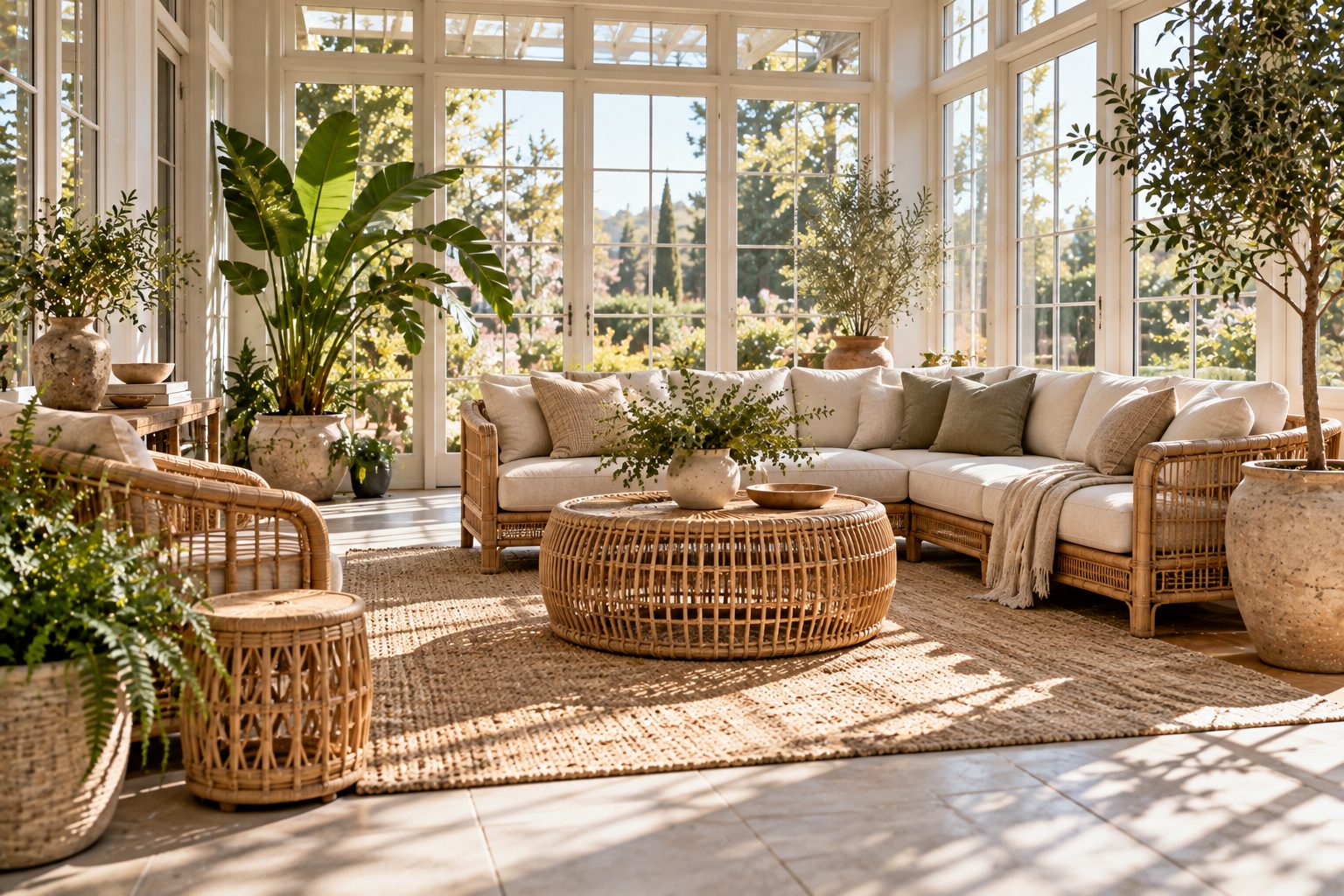
The best sunroom furniture pairs a light frame in natural rattan, resin wicker, aluminum or teak with fade-resistant, solution-dyed upholstery. In a heated four-season sunroom, indoor furniture is fine as long as fabrics resist UV; in an unheated three-season porch, choose outdoor-rated pieces that tolerate humidity, cold and condensation.
A sunroom sits between house and garden, and its furniture has to handle both: the comfort of a living room and light levels closer to a patio. Our outdoor living trends 2027 forecast sees sun rooms becoming relaxed second living rooms rather than formal garden rooms. Here is how to furnish one so it stays comfortable and does not fade.
- Four-season room: heated and cooled; indoor sunroom furniture works with UV-resistant fabric.
- Three-season room: unheated; use outdoor-rated frames and cushions.
- Fabric rule: solution-dyed acrylic or olefin, 15,000+ Martindale for daily seats.
- Typical size: 10 × 12 to 14 × 16 ft (3 × 3.7 to 4.3 × 4.9 m).
What is the best sunroom furniture?
The best sunroom furniture is light in weight and color, built from rattan, wicker, aluminum or teak, and upholstered in solution-dyed fabric that will not fade in strong daylight.
Sunrooms see far more light than ordinary living rooms, and glass magnifies heat in summer. Heavy dark upholstery fades and feels hot, while open woven frames let air circulate and keep the garden view. The table compares the frame materials we use most.
| Frame | Room type | Look | Typical price, lounge chair | Watch for |
|---|---|---|---|---|
| Natural rattan or cane | Four-season only | Warm, classic, textured | $300–1,200 | Dries and splits in direct heat; keep off radiators |
| Resin wicker on aluminum | Three- or four-season | Porch classic, easy care | $250–900 | PVC strand cracks; ask for HDPE |
| Powder-coated aluminum | Any | Modern, slim | $250–800 | Cold to touch without cushions |
| Teak | Any | Warm, natural, ages to silver | $400–1,400 | Oil if you want to keep the honey tone |
| Upholstered indoor frame | Four-season only | Living-room comfort | $600–2,500 | Fabric must be fade-resistant |
Prices are typical US 2026 ranges for a single cushioned lounge chair; contract-grade and custom pieces run higher.
Indoor sunroom furniture vs outdoor furniture
Use indoor sunroom furniture only in a room that is heated and dry year-round; any sun porch that drops below about 50°F (10°C) or gets damp needs outdoor-rated pieces.
The difference is in what you cannot see. Indoor sun porch furniture often uses kiln-dried wood frames, particleboard or plywood platforms and polyurethane foam, all of which absorb moisture and mildew when a porch sweats overnight. Outdoor frames use aluminum, HDPE or teak, and outdoor cushions use quick-dry reticulated foam and breathable covers. In a four-season room, indoor upholstery gives better comfort and a softer look; in a three-season room, outdoor pieces avoid swelling, rust and smells. If you are unsure, our outdoor furniture materials guide compares how each frame handles humidity and cold.
Wicker sun porch furniture: natural or resin?
Natural rattan and cane wicker sun porch furniture looks and feels best indoors, while resin wicker is the safer choice for unheated porches, because synthetic HDPE strand does not swell, mold or split.
Wicker describes the weave, not the material. Natural versions are woven from rattan, cane, willow or seagrass over a rattan or wood frame. They are light, cool to sit on and age beautifully, but they dislike both very dry heat and damp; keep them out of puddled condensation and away from heating vents, and wipe them with a barely damp cloth. Resin wicker sun room furniture uses a flat or round polyethylene strand over aluminum and needs little more than a vacuum and a hose. For a four-season room, natural rattan with linen-look cushions is our first choice; white-painted wicker reads more traditional, while honey rattan and tight cane panels feel more 2027.
Comfortable sunroom furniture: sizes and layout
Comfortable sunroom furniture has seats 20–23 in (51–58 cm) deep, cushions at least 4–5 in (10–13 cm) thick and enough clearance to walk past without brushing the glass.
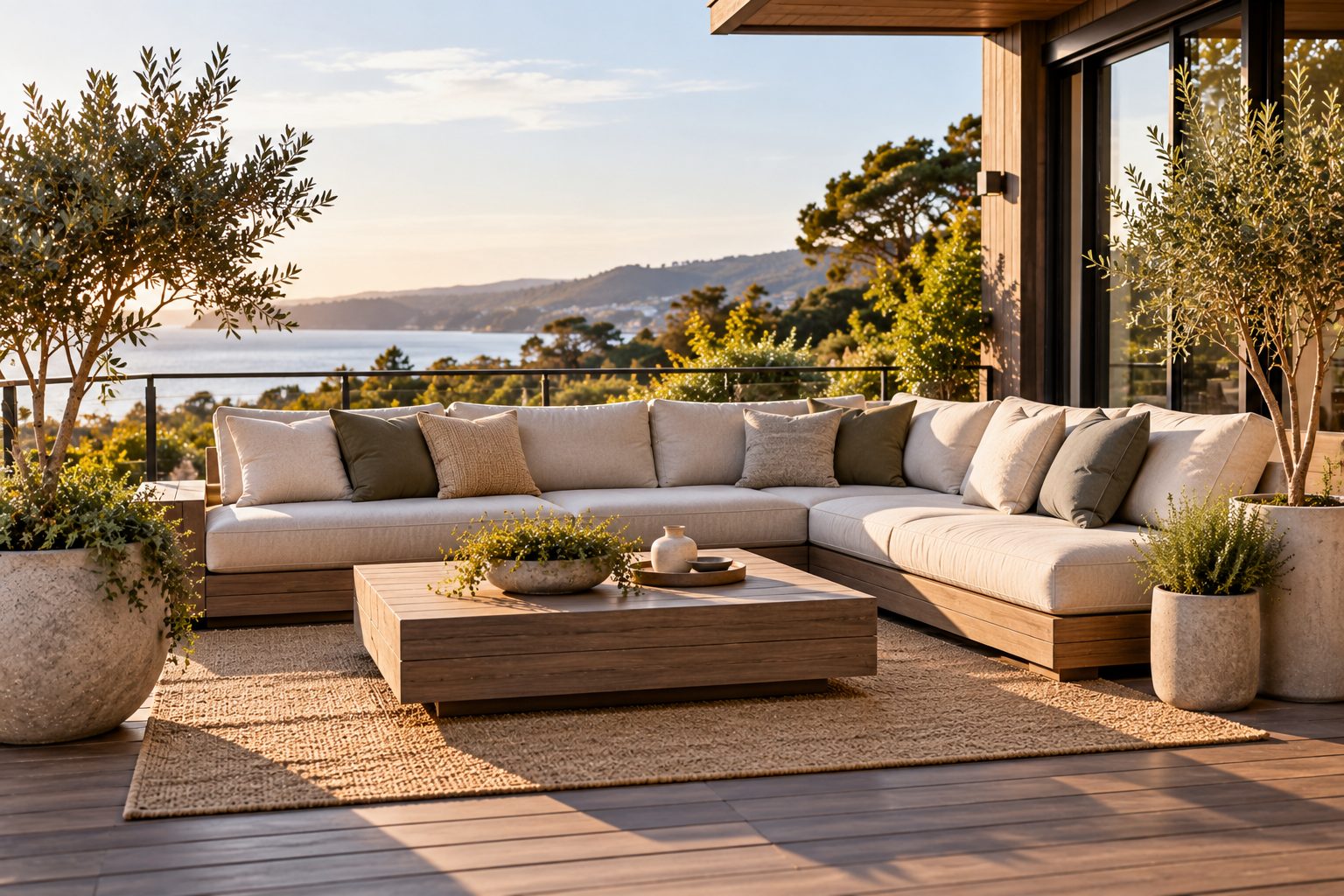
Plan the layout around the view and the door to the garden, not around the walls, which are mostly glass. In a typical 12 × 14 ft (3.7 × 4.3 m) sunroom we fit:
| Piece | Typical size | Clearance |
|---|---|---|
| Loveseat or small sofa | 72–84 in (183–213 cm) wide, 32–36 in (81–91 cm) deep | 12–18 in (30–46 cm) off the glass |
| Two lounge chairs | 28–32 in (71–81 cm) wide | 16–18 in (41–46 cm) to the coffee table |
| Coffee table | 36–42 in (91–107 cm) long or round | Two-thirds the sofa length |
| Walkway to garden door | 36 in (91 cm) clear | Keep it straight |
| Rug | 6 × 9 ft or 8 × 10 ft (183 × 274 or 244 × 305 cm) | Front legs on the rug |
Use our rug size calculator to check the rug, and choose a low-pile flatweave or a natural fiber that can handle sun. Our natural fiber rugs guide covers jute, sisal and seagrass, which fade gracefully rather than blotchily. Swivel chairs are worth the extra cost in a sunroom: they turn from the conversation to the garden.
Dining in a sunroom
A sunroom large enough for both seating and dining needs roughly 14 × 16 ft (4.3 × 4.9 m) or more. A 42–48 in (107–122 cm) round table seats four and leaves the corners free for plants. Allow 36 in (91 cm) behind each chair so people can stand without hitting the glass. Woven rattan or cane dining chairs keep the room light; give them tie-on cushions in the same performance fabric as the lounge seating so the two zones read as one room. Morning breakfast is where a sunroom earns its keep, so set the table on the side that gets early light.
Fabrics and colors that survive the sun
Solution-dyed acrylic and olefin are the best sunroom upholstery fabrics, because the color is locked into the fiber and resists fading for years, where printed cotton can fade visibly in a single summer.
Ask for a lightfastness rating of about 1,000 hours or more in accelerated UV testing for full-sun rooms, and an abrasion rating of 15,000 Martindale or more for daily seats; our upholstery fabric guide explains both numbers. Linen-look performance weaves give the softness of indoor fabric. Color matters too: mid-tone, warm and slightly muted colors fade least visibly, while saturated reds, navy and black show sun damage first. A 2027 sunroom palette leans on butter, sage, warm white and terracotta.
#F2E6C4#A9B39A#F4F0E7#C27A55#C8A877Screen colors are approximate; hold fabric swatches in the room itself at midday before ordering.
Indoor solarium furniture: managing heat and glare
Indoor solarium furniture needs the most protection of all, because a room with a glass roof gets light from above for most of the day and can overheat even when the furniture itself is right.
Control the room before you furnish it: low-e or tinted glazing, roof blinds or pleated shades and ceiling fans make far more difference than any fabric choice. Our window treatment ideas guide covers shades for large glass areas. Then choose open-weave frames, light cushions and side tables in stone, ceramic or teak, which shrug off heat. Avoid glass-topped tables under a glass roof; they glare and show every water spot. Plants complete a solarium, and the light suits many tropical species.
How to furnish a sunroom
Furnish a sunroom by settling the room's climate first, then choosing frames, fabrics and layout in that order.
- Decide the room type. Heated four-season or unheated three-season sets the furniture rating.
- Fix glare and heat. Add shades, fans or tinted film before buying upholstery.
- Measure and tape the layout, keeping a 36 in (91 cm) path to the garden door.
- Choose one frame material for the main seating, and a second for tables.
- Specify sun-safe fabric, solution-dyed, in mid-tone colors.
- Add a rug, lamps and plants, so the room works at night as well as by day.
Our verdict on sunroom furniture
Our verdict: in a four-season room, buy natural rattan or an upholstered indoor sofa in solution-dyed linen-look fabric; in a three-season porch, buy resin wicker or aluminum with outdoor cushions, and do not mix the two. The mistake we see most often is a living-room sofa moved onto an unheated porch, where it mildews within a year. Second most common is a beautiful printed cotton that fades in a single summer. Get those two choices right and sunroom furniture can last as long as anything indoors. A sunroom planted generously and lit warmly at night becomes the room everyone ends up in.
Furnishing several sunrooms, a hotel conservatory or a garden-room restaurant? Send room sizes and quantities to our furniture sourcing desk for factory pricing on rattan, wicker and performance upholstery.
Free toolRug Size CalculatorFind the right rug size for your room and furniture.Shop & source the look
Buy it today — or have it made
Retail links are affiliate links: we may earn a commission at no extra cost to you (disclosure). “Get it made” sends the item to our sourcing desk for factory quotes in custom sizes and finishes.
Frequently asked questions
What kind of furniture is best for a sunroom?
Light frames in natural rattan, resin wicker, aluminum or teak, with solution-dyed fabric cushions, are best for a sunroom. Natural rattan and upholstered indoor pieces suit heated four-season rooms; resin wicker, aluminum and teak suit unheated three-season porches. Choose mid-tone fabrics with high lightfastness so the sun does not bleach them.
Can you use indoor furniture in a sunroom?
Yes, you can use indoor furniture in a sunroom that is heated, cooled and dry all year, as long as the upholstery resists fading. In unheated or damp sun porches, indoor wood frames, plywood and standard foam absorb moisture and can mildew, so outdoor-rated furniture is the safer choice there.
How do you keep sunroom furniture from fading?
Keep sunroom furniture from fading by choosing solution-dyed acrylic or olefin upholstery, adding shades or UV-filtering film to the glass, and rotating cushions every few months. Mid-tone warm colors hide fading better than saturated reds, navy or black. Natural fiber rugs and teak fade evenly, which looks intentional rather than damaged.
Is wicker furniture good for a sunroom?
Yes, wicker is the classic sunroom furniture because it is light, airy and cool to sit on. Natural rattan or cane wicker suits heated, dry four-season rooms. Resin wicker in HDPE strand over aluminum is better for unheated or humid sun porches, because it will not swell, mold or split.
Some links may be affiliate links. Regulations and specifications change — always confirm with suppliers and qualified professionals.