Types of Light Fixtures: 14 Fixtures, Where They Go and Costs
The types of light fixtures fall into three groups: ceiling, wall and portable. This guide explains 14 fixtures, where each goes, mounting heights, bathroom damp ratings and typical 2026 costs.
Part of our guide: Lighting Trends 2027: Statement Lighting, Warm-Dim LEDs and Specs
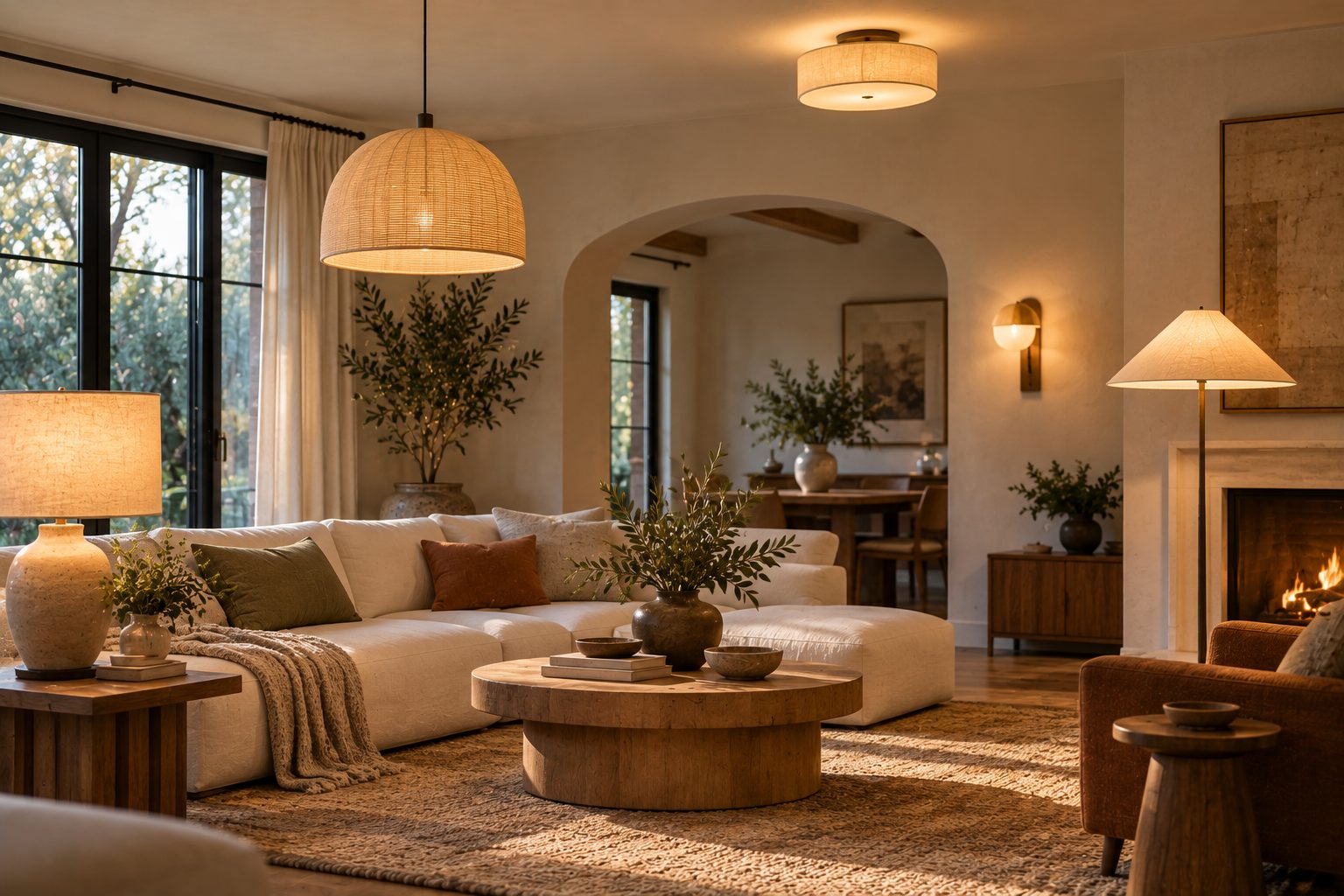
Key takeaways
- Light fixtures fall into ceiling-mounted, wall-mounted and portable groups, and a good room uses at least one from each
- Flush mounts suit ceilings under 8 ft (244 cm); pendants and chandeliers need 7 ft (213 cm) of clearance over walkways
- Bathroom ceiling light fixtures need a damp rating, and wet-rated or IP65 fixtures inside showers
- Replace a yellowed ceiling light cover by matching the diameter and fixing method, not by buying a whole new fixture
The main types of light fixtures are ceiling-mounted (flush mount, semi-flush, pendant, chandelier, recessed and track), wall-mounted (sconces, vanity lights and picture lights) and portable or plug-in (table, floor and plug-in lamps), plus integrated strip and under-cabinet lighting. Most rooms need one fixture from at least two of these groups.
Choosing a light fixture is easier when you know what each type is for. Ceiling fixtures give ambient light, wall fixtures add task light and atmosphere, and lamps fill corners and set mood. The direction for 2027, covered in our lighting trends 2027 guide, is fewer overhead downlights and more layered, lower light, which makes knowing the different types of light fixtures more useful than ever.
- Ceiling fixtures: flush, semi-flush, pendant, chandelier, recessed, track and monorail.
- Wall fixtures: sconces, vanity bars, picture lights and swing-arm lamps.
- Portable: table lamps, floor lamps and plug-in pendants.
- Integrated: LED strips in coves, shelves and under cabinets.
- Bathrooms: damp-rated fixtures overhead, wet-rated or IP65 in showers.
What are the different types of light fixtures?
The 14 types of light fixtures most homes use are listed below with where they go, how high they mount, how much light they give and what they typically cost in 2026.
| Fixture type | Best for | Mounting / size | Typical lumens | Typical cost (US, 2026) |
|---|---|---|---|---|
| Flush mount | Low ceilings, halls, closets | Ceilings under 8 ft (244 cm); 11–20 in (28–51 cm) | 800–2,500 | $30–300 |
| Semi-flush | Bedrooms, 8–9 ft ceilings | 6–14 in (15–36 cm) drop | 1,200–3,000 | $60–500 |
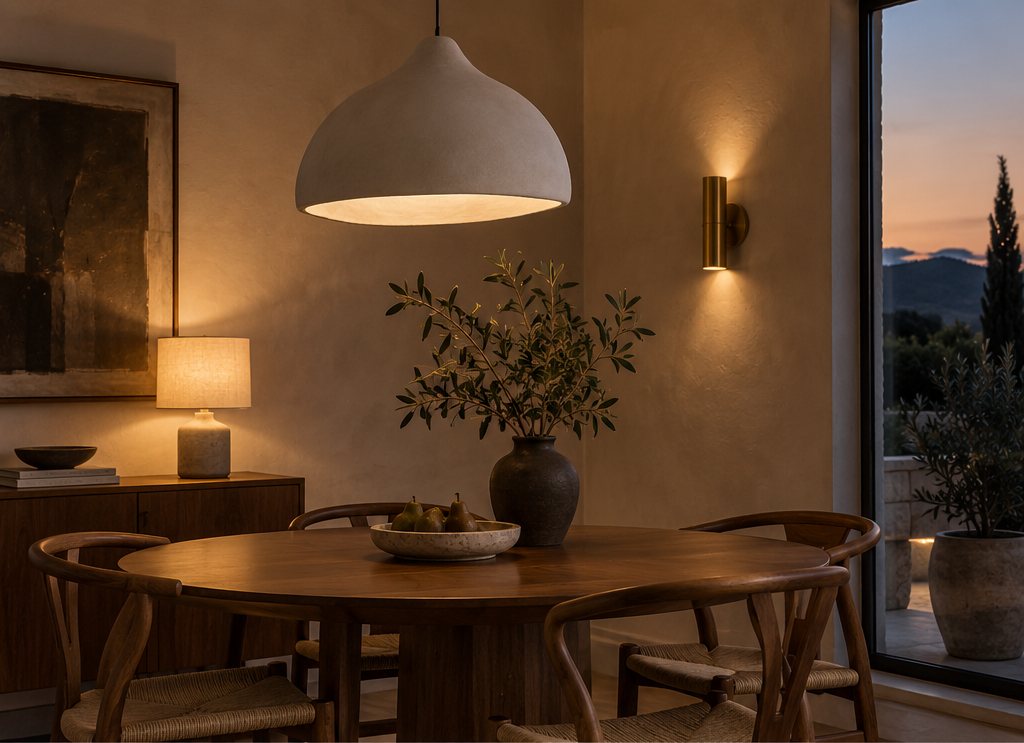
| Pendant | Islands, tables, entries | 30–36 in (76–91 cm) above surface | 500–3,000 each | $50–1,200 |
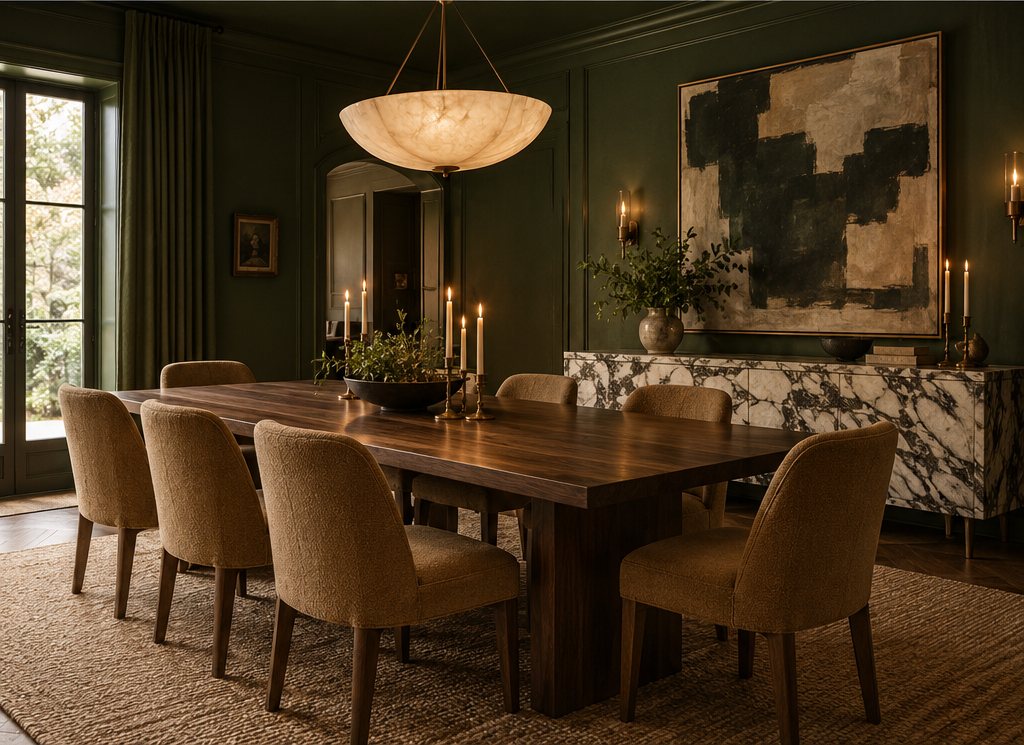
| Chandelier | Dining rooms, foyers | Diameter in in ≈ room length + width in ft | 2,000–6,000 | $200–3,000+ |
| Recessed downlight | Kitchens, general ambient | 4–6 in (10–15 cm); spaced about half ceiling height apart | 600–1,000 each | $20–120 each plus install |
| Track / monorail | Art, galleries, kitchens | Ceiling or wall; adjustable heads | 400–1,000 per head | $100–800 |
| Wall sconce | Halls, bedsides, living rooms | 60–66 in (152–168 cm) to center | 300–800 | $40–600 |
| Vanity light | Bathroom mirrors | Sides at 60–66 in (152–168 cm); bar 75–80 in (190–203 cm) | 1,600–3,200 total | $60–500 |
| Picture light | Art, bookcases | Arm length about 1/3 of frame height | 100–400 | $60–400 |
| Under-cabinet | Counters | Front third of cabinet base | 200–400 per ft | $20–60 per ft |
| Cove / LED strip | Ceilings, shelves | Hidden in a ledge | 100–400 per ft | $10–40 per ft plus driver |
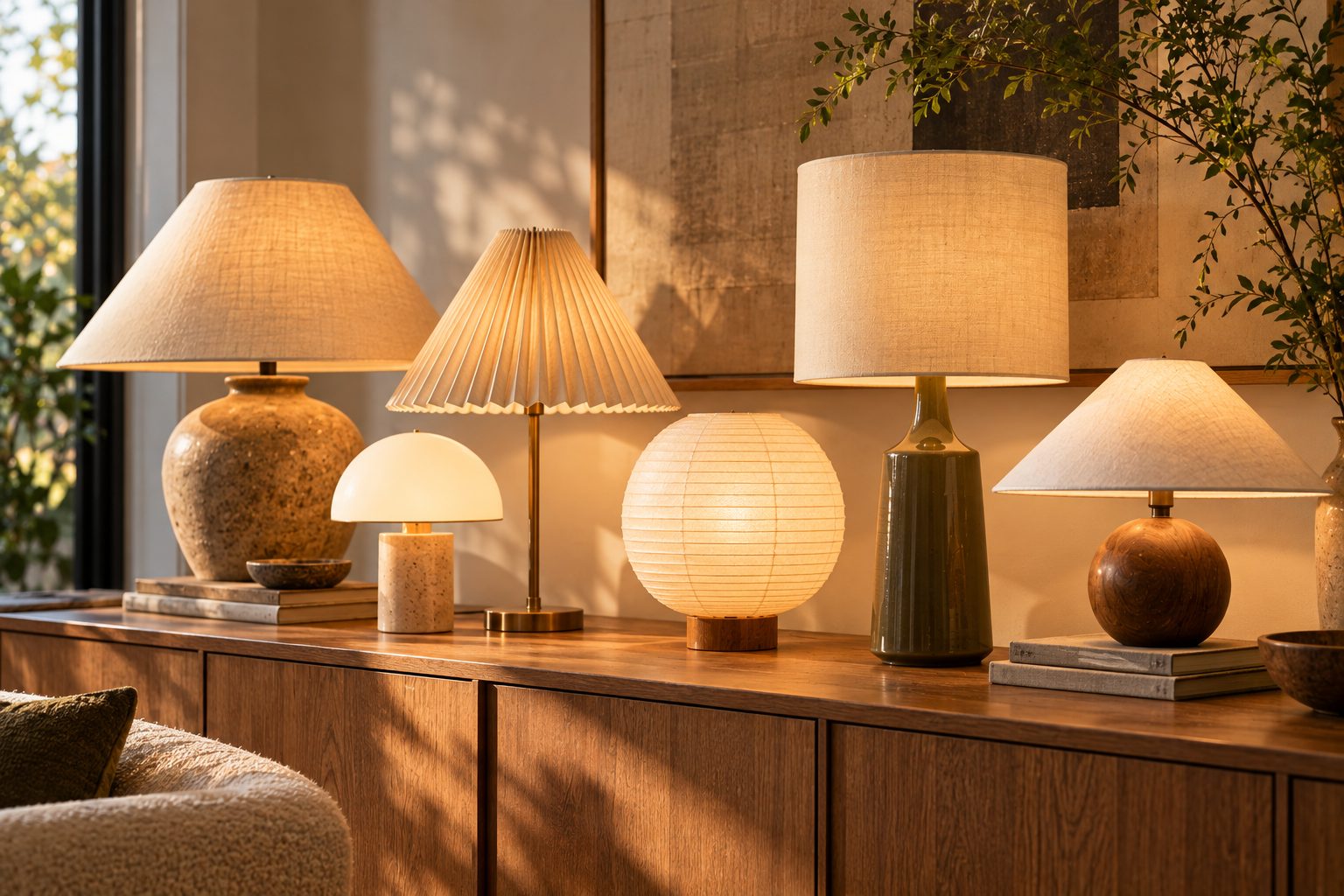
| Table lamp | Side tables, bedsides | Shade bottom at seated eye level | 450–1,100 | $40–600 |
| Floor lamp | Reading, corners | 58–64 in (147–163 cm) tall | 800–2,600 | $60–800 |
| Plug-in pendant or sconce | Rentals, no wiring | Hook or wall plate, cord to outlet | 400–800 | $40–250 |
Price bands are typical retail ranges for fixtures only. Hardwired fixtures add electrician labor, commonly $100–300 per fixture for a straight swap and more for new wiring. Our lumens to watts guide converts the lumen figures into bulb choices.
Ceiling light types: flush, semi-flush, pendant and chandelier
A ceiling light is the main ambient source in most rooms, and the right type depends on ceiling height first and style second.
Flush mount and semi-flush ceiling lamps
A flush mount ceiling lamp sits tight to the ceiling and is the default for rooms under 8 ft (244 cm). A semi-flush hangs 6–14 in (15–36 cm) on a short stem and suits 8–9 ft (244–274 cm) ceilings, throwing some light up to the ceiling for a softer room. Size either at roughly 1 in of diameter per foot of room width plus a few inches: a 12 ft (3.7 m) wide bedroom takes a 14–18 in (36–46 cm) fixture.
Pendants and chandeliers
Pendants hang on a cord, rod or chain and focus light below them. Over a kitchen island hang them 30–36 in (76–91 cm) above the counter with 24–30 in (61–76 cm) between centers; our kitchen island pendant lighting guide covers spacing. A chandelier is a multi-arm or multi-light pendant; the old rule of adding room length and width in feet to get diameter in inches still works (a 12 × 14 ft room takes about a 26 in or 66 cm chandelier).
Recessed and track lighting
Recessed downlights sit inside the ceiling. Use IC-rated housings where they touch insulation and space them about half the ceiling height apart, so 4 ft (1.2 m) apart on an 8 ft ceiling. Track and monorail systems are a better choice for art and for rooms where you want to aim light; the heads can be moved later.
Modern ceiling lights and contemporary lighting fixtures
Modern ceiling lights in 2026–2027 are sculptural but low-glare: opal glass globes, linen drums, alabaster-look discs and slim linear LEDs with warm 2700–3000K output.
The difference between modern and contemporary ceiling lights is mostly vocabulary in shops: modern usually means mid-century-derived shapes such as globes, saucers and sputniks, while contemporary lighting fixtures means whatever is current now, which in 2027 means soft forms, warm metals and diffused light. Practical checks matter more than the label. Look for CRI 90+, a dimmable driver and a diffuser that hides the LED dots. Integrated-LED fixtures last 25,000–50,000 hours, but when the driver fails you may have to replace the whole fixture, so buy from makers that offer replaceable drivers or standard bulb sockets.
Wall-mounted light fixtures: sconces, vanity and picture lights
Wall-mounted light fixtures supply light at face height, which makes rooms look warmer and people look better than overhead light alone.
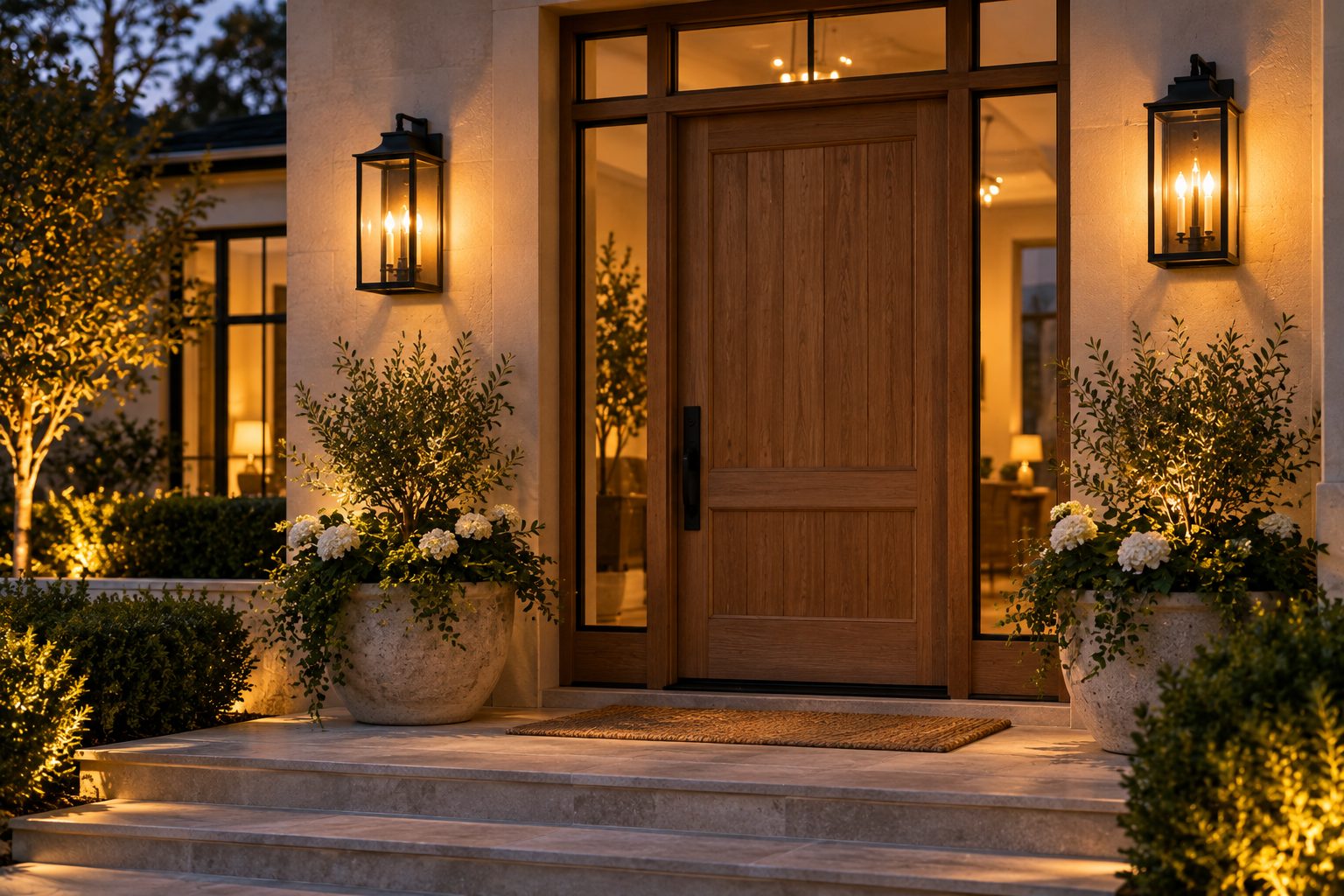
Wall sconces mount 60–66 in (152–168 cm) from the floor to the center of the fixture in halls and living rooms, and 48–60 in (122–152 cm) above the floor beside a bed, depending on mattress height. Projection in hallways should stay under 4 in (10 cm) to meet common accessibility guidance. Swing-arm sconces replace bedside lamps where nightstands are small. Our wall sconces guide gives spacing, and for art, a picture light with an arm about one-third the frame height and a 2700–3000K, CRI 95 source keeps colors true without heating the canvas.
Portable and integrated fixtures: lamps, plug-ins and LED strips
Portable lamps and integrated LED strips fill the gaps ceiling and wall fixtures leave, and they are the cheapest way to change how a room feels without an electrician.
Table lamps give 450–1,100 lumens at seated eye level and belong beside sofas, beds and on consoles; floor lamps of 58–64 in (147–163 cm) put 800–2,600 lumens into corners and over reading chairs. Plug-in pendants and plug-in sconces run a cord to an outlet, which suits rentals and rooms with no junction box; route the cord through a fabric sleeve or a paintable cord cover so it reads as intentional. Integrated LED strips are the hidden layer: 100–400 lumens per foot (330–1,300 per meter) tucked into a ceiling cove, under shelves or along a toe kick. Specify an aluminum channel with a diffuser so you see a line of light rather than dots, a driver sized at least 20 percent above the strip load, and the same Kelvin as the room's other fixtures. Under-cabinet strips in kitchens should sit at the front third of the cabinet base, not against the wall, so the light lands on the counter rather than the backsplash.
Bathroom ceiling light fixtures and damp ratings
Bathroom ceiling light fixtures must be at least damp-rated, and any fixture inside a shower or directly over a tub needs a wet rating or an IP65 rating.
In US terms, a damp-location rating covers fixtures exposed to moisture but not direct water, which is the right light fitting for bathroom ceilings outside the shower. A wet-location rating covers fixtures in the spray zone. In IP terms, IP44 is the usual minimum for bathroom ceiling lights, and IP65 is used in showers. Local code governs exact zones, so confirm with your electrician.
- Small bathroom ceiling light fixtures: one 11–14 in (28–36 cm) flush mount giving 1,200–2,000 lumens covers a 40–50 sq ft (4–5 m²) bath.
- Larger baths: combine a central fixture with wet-rated recessed lights over the shower.
- Color: 3000K and CRI 90+ for accurate skin tones at the mirror.
- Fans: fan-light combinations work, but choose one with at least 1,000 lumens.
Overhead light alone casts shadows under eyes, so pair bathroom ceiling fixtures with mirror lighting; see our bathroom vanity lighting ideas.
Ceiling light covers and light fixture covers
A ceiling light cover is the glass or acrylic diffuser on a flush mount, and replacing a cracked or yellowed one is cheaper than replacing the fixture if you match its diameter and fixing method.
- Turn off the power at the switch and breaker, and let the bulbs cool.
- Identify the fixing: center finial nut, side thumb screws, twist-lock or spring clips.
- Measure the cover: outside diameter and the diameter of the lip or neck that sits in the fitter, in inches and centimeters.
- Measure the depth so the new cover clears the bulbs by at least 1 in (2.5 cm).
- Choose the material: glass lasts longer; acrylic is lighter and does not shatter, but can yellow over years.
- Fit and check that the cover sits level and is secure before restoring power.
Ceiling light covers typically cost $15–80. Decorative clip-on light fixture covers and fabric drum covers can disguise a plain fixture, but keep them at least 2 in (5 cm) from the bulb and use LED only.
Decorative and unique light fixtures
Decorative light fixtures earn their place when they also do a lighting job, so treat a unique fixture as the room's focal point and back it up with practical light elsewhere.
Cool lighting in 2026–2027 means oversized paper lanterns, alabaster-look pendants, sculptural plaster sconces, pleated fabric shades and colored glass. Unique light fixtures often give less usable light than their size suggests, because the diffuser blocks output. Check the lumens and make sure ambient light is covered by something else. When choosing among types of lamp fixtures with fabric shades, our lamp shade sizes guide covers proportions.
How we'd choose light fixtures for a room
We choose fixtures in a fixed order: ambient first, task second, accent last, and we never let one ceiling light carry the whole room.
- Living room: semi-flush or low-glare pendant, two lamps, one sconce pair or picture light.
- Kitchen: recessed or flush ambient, under-cabinet task, island pendants.
- Bedroom: semi-flush, bedside lamps or swing-arm sconces, a dimmer on everything.
- Bathroom: damp-rated ceiling fixture, vertical lights either side of the mirror.
The mistake we see most is a grid of downlights at 4000K with nothing at eye level; the fix is two lamps and a dimmer. Our verdict: of all the types of light fixtures, a table lamp is the most underrated and a recessed can grid the most overused. Use our free lighting calculator to work out total lumens and fixture counts for your room before you shop.
Free toolPaint CalculatorWork out exactly how much paint to buy.Shop & source the look
Buy it today — or have it made
Retail links are affiliate links: we may earn a commission at no extra cost to you (disclosure). “Get it made” sends the item to our sourcing desk for factory quotes in custom sizes and finishes.
Frequently asked questions
What are the main types of light fixtures?
The main types of light fixtures are ceiling fixtures (flush mount, semi-flush, pendant, chandelier, recessed and track), wall fixtures (sconces, vanity lights and picture lights), portable lamps (table, floor and plug-in) and integrated LED strip or under-cabinet lighting. Most rooms work best with fixtures from at least two groups.
What type of light fixture is best for a low ceiling?
A flush mount is the best light fixture for a ceiling under 8 ft (244 cm) because it keeps full head clearance. Slim recessed downlights also work. Add wall sconces and lamps for eye-level light. Avoid pendants over walkways unless the bottom stays at least 7 ft (213 cm) above the floor.
What kind of light fixture can go in a bathroom?
A bathroom needs damp-rated light fixtures over the main room and wet-rated or IP65 fixtures inside the shower or directly over a tub. IP44 is the usual minimum elsewhere in the bathroom. Choose 3000K, CRI 90+ lighting and pair the ceiling fixture with lights beside the mirror to avoid facial shadows.
How do I choose the right size ceiling light?
Add the room's length and width in feet and use that number in inches as the fixture diameter. A 12 × 14 ft room suits a 24–26 in (61–66 cm) fixture. For flush and semi-flush mounts in smaller rooms, 14–18 in (36–46 cm) usually works. Check the lumens too, not just the size.
Can you replace just a ceiling light cover?
Yes, you can replace just a ceiling light cover if you match the outside diameter, the neck or lip diameter and the fixing method. Covers attach by finial nut, thumb screws, twist-lock or clips. Glass covers last longest; acrylic is lighter and shatterproof. Replacement covers typically cost $15–80.
Some links may be affiliate links. Regulations and specifications change — always confirm with suppliers and qualified professionals.