Lamp Shade Sizes: How to Measure, Fit and Choose the Right Shade
Lamp shade sizes follow two numbers: the shade should be about two-thirds the height of the base and roughly twice its widest point. Here is how to measure, which fitter you need and what fits bedside, pendant and sconce lamps.
Part of our guide: Cordless Table Lamps: Rechargeable Lighting for Tables, Terraces & Rentals
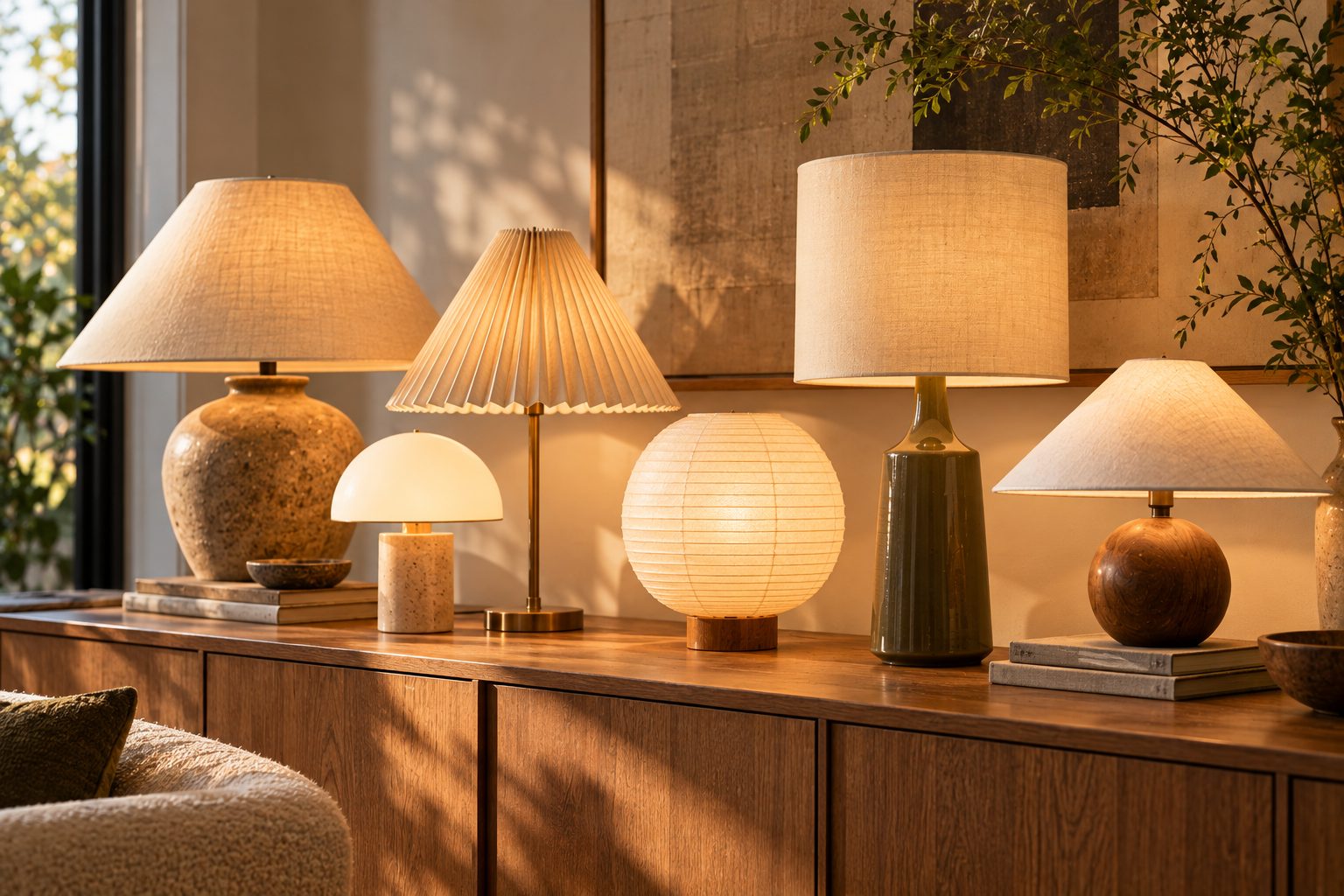
Key takeaways
- Size a table lamp shade at about two-thirds of the base height and about twice the base's widest point, with the bottom edge hiding the socket
- Shades are measured top diameter × bottom diameter × slant height, in that order, in inches
- Check the fitter before the shape: spider with harp, uno, clip-on or washer fitters are not interchangeable
- Bedside lamps work when the shade's bottom edge sits near eye level when you are sitting up in bed
The right lamp shade sizes follow a simple proportion: the shade should be about two-thirds the height of the lamp base and roughly twice as wide as the base at its widest point, with the bottom edge low enough to hide the socket. A 21 in (53 cm) base therefore takes a shade about 14 in (36 cm) tall and 14–16 in (36–41 cm) across.
A lamp that looks wrong usually has a shade problem, not a base problem. Too small and the lamp looks top-heavy and pinched; too big and it swallows the base and throws a narrow pool of light. This guide covers table and floor lamps, pendant light shades and sconce shades. If you are choosing the lamp itself, start with our cordless table lamps guide, where shade fit matters even more because the bulb is a fixed LED.
- Height: shade height about 60–70 percent of base height (from foot to socket).
- Width: bottom diameter about twice the widest part of the base, at least 1 in (2.5 cm) clear each side.
- Measurement: top × bottom × slant, in inches, for example 10 × 16 × 11.
- Fitter: spider (with harp), uno, clip-on or washer; check before you buy.
- Total lamp: shade about 40 percent of overall lamp height.
How do you measure a lamp shade?
Measure a lamp shade across the top opening, across the bottom opening and along the sloping side, and write the three numbers as top × bottom × slant.
- Top diameter: measure straight across the top ring, edge to edge.
- Bottom diameter: measure straight across the bottom ring.
- Slant height: measure along the outside of the shade from top edge to bottom edge, following the slope.
- Vertical height: optional, but useful for drums; hold the shade on a table and measure straight up.
- Fitter drop: on spider shades, measure how far the spider sits below the top ring; it changes how high the shade sits on the harp.
A shade listed as 10 × 16 × 11 is 10 in (25 cm) across the top, 16 in (41 cm) across the bottom and 11 in (28 cm) on the slant. For rectangles and ovals, give width and depth for both top and bottom. If you are replacing a shade you like the proportions of, measure it and buy the same numbers in a new fabric.
Lamp shade size chart: matching shade to base
Use the base height from the foot to the bottom of the socket to choose the shade, then check the bottom diameter against the widest point of the base.
| Base height (foot to socket) | Shade height (vertical) | Shade bottom diameter | Typical harp size |
|---|---|---|---|
| 10–12 in (25–30 cm) | 6–8 in (15–20 cm) | 8–10 in (20–25 cm) | 6–7 in (15–18 cm) |
| 13–16 in (33–41 cm) | 8–10 in (20–25 cm) | 10–13 in (25–33 cm) | 7–8 in (18–20 cm) |
| 17–20 in (43–51 cm) | 10–12 in (25–30 cm) | 13–16 in (33–41 cm) | 8–10 in (20–25 cm) |
| 21–24 in (53–61 cm) | 12–15 in (30–38 cm) | 15–18 in (38–46 cm) | 10–11 in (25–28 cm) |
| Floor lamp, 48–58 in (122–147 cm) | 11–15 in (28–38 cm) | 16–20 in (41–51 cm) | 10–12 in (25–30 cm) |
The table is a starting point. Bulbous ginger-jar bases often need a slightly wider shade than the chart suggests; very slim stick bases look better with a narrower drum. The bottom edge of the shade should cover the socket and the top of the harp so you never see hardware at standing eye level.
Lamp shade shapes and which bases they suit
Match the shade shape to the base: drums and straight cylinders for modern and column bases, empire and tapered shades for traditional and urn bases, and square shades for square or angular bases.
- Drum: top and bottom nearly equal; throws light up and down evenly; suits modern rooms and wide, short bases.
- Empire: narrow top, wide bottom; the classic choice for traditional lamp and lamp shades pairings and for bedside reading.
- Bell: curved, flared sides; decorative, softer light at the bottom edge.
- Coolie: very small top and steep slope; dramatic downlight on a desk or console.
- Square and rectangle: for angular bases and narrow consoles where a round shade would overhang.
- Pleated: box or knife pleats in linen or cotton, a traditional detail that is back in 2026–2027 rooms.
Fabric opacity changes the light as much as the shape. White linen with a white lining spreads warm diffuse light into the room; dark or lined-metallic shades push most of the light up and down for mood. Linings matter too: a white styrene or plastic-backed liner makes the shade rigid and bounces light out, a gold or silver liner warms and focuses it downward, and an unlined fabric shade lets the bulb show through as a hot spot unless the fabric is tightly woven. Paper and parchment shades glow; tight-woven rattan throws patterned light and suits cool lamps for casual rooms.
Lamp shade fitters: spider, uno, clip-on and washer
The fitter is how the shade attaches to the lamp, and the four common types are not interchangeable, so check the lamp's hardware before choosing the shade.
| Fitter | How it attaches | Common on | Watch out for |
|---|---|---|---|
| Spider | Sits on a harp with a finial on top | Most table and floor lamps | Harp height sets shade height; harps come in 1 in (2.5 cm) steps |
| Uno (threaded or slip) | Ring that screws or slips over the socket | Floor lamps, swing-arm and small table lamps | Threaded uno and slip uno are not the same |
| Clip-on | Clips directly to the bulb | Chandeliers, sconces, small lamps | Needs a cool LED; keep fabric 2 in (5 cm) from the bulb |
| Washer (ring) | Ring held between socket and fixture | Pendants and ceiling shades | Ring diameter must match the lampholder, often about 1.1 or 1.6 in (28 or 40 mm) |
If a shade sits too high and you can see the socket, buy a harp 1 in (2.5 cm) shorter rather than a new shade. Most shades come with no harp included.
Bedside lamps and nightstand lamps: what size shade?
Bedside lamps work best when the bottom of the shade sits at about eye level when you are sitting up in bed, typically 20–24 in (51–61 cm) above the mattress top.
For most beds with a 24–26 in (61–66 cm) mattress height and a nightstand within 2 in (5 cm) of that height, bedside table lamps of 24–28 in (61–71 cm) overall height with a 12–16 in (30–41 cm) shade work well. Small bedside lamps of 15–20 in (38–51 cm) suit narrow nightstands under 18 in (46 cm) wide, but they need an empire or tapered shade to direct light down onto a book. The shade's bottom diameter should be at least 3–4 in (8–10 cm) narrower than the nightstand top so it does not hit the wall or headboard.
A bedroom lamp for reading needs 450–800 lumens at 2700K; our lumens to watts guide explains the bulb numbers. If you prefer wall-mounted reading lights, see our wall sconces guide. The same proportions apply to side table lamps in the living room: the bottom of the shade at roughly seated eye level, 38–42 in (97–107 cm) from the floor.
Pendant light shades and hanging lamps for living rooms
Pendant light shades should be about one-third to one-half the width of the table or space below, hung so the bottom sits 30–36 in (76–91 cm) above a table or at least 7 ft (213 cm) above a walkway.
A hanging light lampshade in fabric or paper needs a washer fitter and a bulb that stays at least 2 in (5 cm) from the fabric; a 60 W-equivalent LED runs cool enough. For hanging lamps for living room ceilings of 8 ft (244 cm), a drum or paper shade of 18–24 in (46–61 cm) in diameter keeps the room proportioned; for ceilings over 9 ft (274 cm), go to 24–30 in (61–76 cm). Over a dining table, our dining table pendant light guide gives the widths and hanging heights.
Hallway light fixtures and small light shades
Hallway light fixtures with fabric shades should be shallow: a drum of 12–16 in (30–41 cm) diameter and 6–9 in (15–23 cm) deep keeps head clearance above 7 ft (213 cm). Light shades small enough for halls, sconces and chandeliers start at about 3 × 5 × 4 in (8 × 13 × 10 cm).
Sconce shades
Sconce shades are usually clip-on or uno-fitted, 4–8 in (10–20 cm) across the bottom, and should project no more than 4 in (10 cm) past the backplate in hallways where people pass.
Choosing decorative lamps, cool lamps and fun lamps
Decorative lamps work when the shade still follows the proportion rules, even if the base is sculptural, colorful or funky.
Cool lamps, cute lamps and funky lamps with mushroom, globe or sculpted ceramic bases are a strong 2026 trend, and they are the easiest way to add personality. The rule we use: one statement lamp per room, sized to the furniture it sits on, with a plain or pleated shade that lets the base do the talking. Fun lamps with integrated shades such as glass mushrooms skip the fitter question, but check the lumens, because many are 200–400 lumens, closer to a glow than a reading light. Typical 2026 US prices: replacement fabric shades $25–90, custom lined shades $120–400, decorative lamps $80–450.
Lamp shade mistakes we see
The lamp shade mistake we see most is a shade that is too small, which makes the base look heavy and leaves the bulb glaring at seated eye level.
- Too short: the socket and harp show; drop the harp or go taller.
- Too narrow: the base overhangs the shade edge visually; go at least twice the base width.
- Wrong fitter: buying a spider shade for an uno lamp; check before ordering.
- Bulb too hot: old incandescent bulbs scorch paper and silk; use LED.
- Mismatched pairs: two bedside lamps with shades at different heights; align the bottom edges.
Our verdict: buy shades by numbers, not by eye. Measure the base, measure the existing harp, and choose a lined linen drum or empire in off-white unless the room needs a color accent. Need shades or lamps in quantity? Send your sizes and fitter types through our lighting sourcing desk for factory quotes.
Free toolLighting CalculatorLumens, fixtures and color temperature for any room.Shop & source the look
Buy it today — or have it made
Retail links are affiliate links: we may earn a commission at no extra cost to you (disclosure). “Get it made” sends the item to our sourcing desk for factory quotes in custom sizes and finishes.
Frequently asked questions
What size lamp shade do I need?
You need a lamp shade about two-thirds the height of the base and about twice its widest point. For a 20 in (51 cm) base, that means a shade around 12–13 in (30–33 cm) tall and 15–16 in (38–41 cm) across the bottom. The shade's bottom edge should hide the socket and harp from standing eye level.
How do you measure a lamp shade?
Measure a lamp shade across the top, across the bottom and along the slanted side, then write it as top × bottom × slant. A 10 × 16 × 11 shade is 10 in across the top, 16 in across the bottom and 11 in on the slant. Note the fitter type too, because spider, uno and clip-on fitters differ.
How tall should bedside lamps be?
Bedside lamps should usually be 24–28 in (61–71 cm) tall overall, so the bottom of the shade sits near eye level when you sit up in bed. Small bedside lamps of 15–20 in (38–51 cm) suit low or narrow nightstands. Keep the nightstand within about 2 in (5 cm) of the mattress top.
Can I put any lamp shade on any lamp?
No, a lamp shade must match the lamp's fitter as well as its size. Spider shades sit on a harp, uno shades screw or slip over the socket, clip-on shades grip the bulb and washer fitters suit pendants. Check the hardware before buying; a shorter or taller harp can fix height problems.
What size pendant light shade should I choose?
Choose a pendant light shade about one-third to one-half the width of the table or space beneath it. For an 8 ft (244 cm) living room ceiling, an 18–24 in (46–61 cm) drum or paper shade works; hang it at least 7 ft (213 cm) above the floor, or 30–36 in (76–91 cm) above a table.
Some links may be affiliate links. Regulations and specifications change — always confirm with suppliers and qualified professionals.