Bathroom Tile Ideas: Floor, Wall and Backsplash Designs With Specs
The best bathroom tile ideas use slip-rated porcelain on the floor, a larger or textured tile on the walls and one accent. Compare 6 bathroom flooring options, sizes, PEI and DCOF ratings and typical costs of $15–40 per sq ft.
Part of our guide: Tile Trends 2027: Zellige, Large-Format Porcelain and Warm Grout
Key takeaways
- Porcelain is the best flooring for a bathroom: water absorption 0.5 percent or less, PEI 3 or higher and a wet DCOF of 0.42+
- Large floor tile makes small bathrooms look bigger; small mosaics add grip and suit period homes
- Tile the walls where water lands: the shower, a 4–6 in (10–15 cm) backsplash or more, and optionally a wainscot to 36–48 in (91–122 cm)
- Typical installed cost is $15–40 per sq ft for porcelain floor tile, more for stone and mosaics
The bathroom tile ideas that last pair a matte porcelain floor tile rated PEI 3 or higher with a wet DCOF of at least 0.42, a larger or more textured tile on the walls, and one accent such as a patterned floor, a feature wall or a full-height backsplash. Installed, porcelain floor tile typically costs $15–40 per sq ft in the US.
Tile choices in a bathroom are about water, safety and scale before style. This guide works through floors, walls, backsplashes and the toilet wall, and it pairs with our tile trends 2027 report, which covers the colors and finishes leading the year.
- Floor material: porcelain, 0.5 percent water absorption or less.
- Floor ratings: PEI 3+ for wear, wet DCOF 0.42+ for slip resistance.
- Wall tile: glazed ceramic or porcelain, any PEI rating is fine on walls.
- Grout joints: 1/16–1/8 in (1.5–3 mm) for rectified tile, 3/16 in (5 mm) for handmade.
- Typical installed cost: $15–40 per sq ft for porcelain floors.
What is the best flooring for a bathroom?
The best flooring for a bathroom is porcelain tile, because it is waterproof, hard-wearing and available with slip-resistant finishes, with luxury vinyl the strongest budget alternative.
Good flooring for a bathroom must survive standing water, daily cleaning and wet bare feet. The table compares the six bathroom flooring options we see specified most.
| Bathroom flooring | Water resistance | Slip resistance | Lifespan | Typical installed cost |
|---|---|---|---|---|
| Porcelain tile | Excellent | Good to excellent with matte or textured finish | 30+ years | $15–40 per sq ft |
| Ceramic tile | Very good, glazed | Varies; check DCOF | 20–30 years | $10–30 per sq ft |
| Natural stone | Good when sealed | Good honed, poor polished | 30+ years | $25–60 per sq ft |
| Luxury vinyl plank or tile | Very good, waterproof core | Good | 10–20 years | $5–12 per sq ft |
| Sheet vinyl | Excellent, few seams | Good | 10–20 years | $3–8 per sq ft |
| Microcement | Good when sealed | Good with anti-slip topcoat | 15–25 years | $15–35 per sq ft |
Costs are typical US 2026 ranges and include labor but not demolition or subfloor repair. Engineered wood and laminate appear in some bathroom flooring ideas, but we only use them in powder rooms with no shower. Our flooring trends 2027 guide compares these surfaces across the whole house, and microcement suits anyone who wants a seamless floor with no grout at all.
Bathroom floor tile ideas
Bathroom floor tile ideas fall into two camps: large, calm porcelain that makes the room feel bigger, and small patterned or mosaic tile that adds character and grip.
Floor tile designs for bathrooms
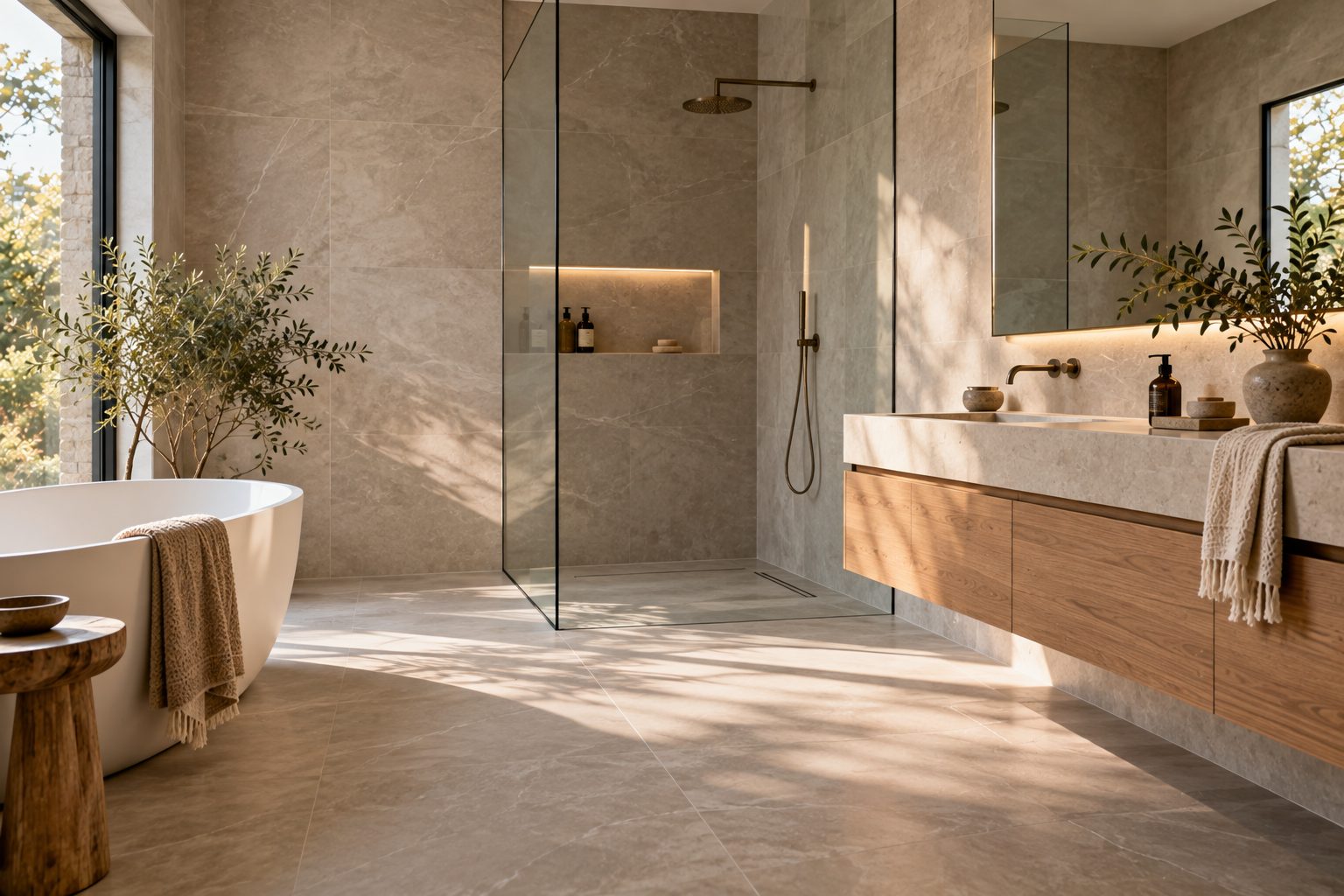
- Large stone-look porcelain: 24 x 24 in (60 x 60 cm) or 24 x 48 in (60 x 120 cm), matte, in warm limestone or travertine tones.
- Hexagon mosaic: 1–2 in (2.5–5 cm) in white, black or mixed tones, a timeless choice.
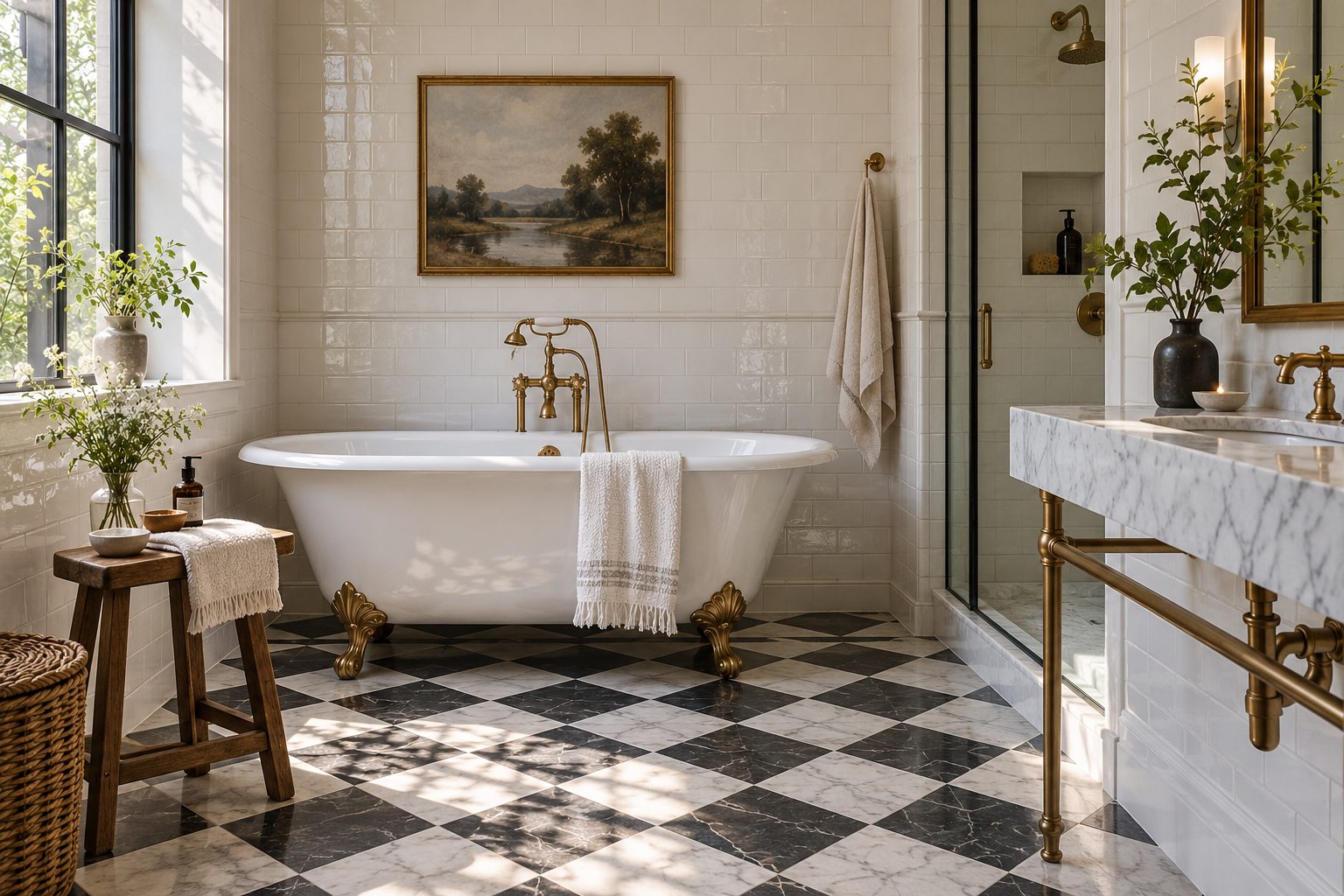
- Checkerboard: 8 x 8 in (20 x 20 cm) or 12 x 12 in (30 x 30 cm) in two close or two contrasting tones.
- Encaustic-look patterned porcelain: the look of cement tile without the sealing.
- Wood-look porcelain plank: 8 x 48 in (20 x 120 cm), warmth with full water resistance.
- Terrazzo-look: speckled porcelain or real terrazzo tile, durable and forgiving of dirt.
Modern tile flooring for 2027 favors matte finishes and warm stone colors over high-gloss gray. The same porcelain is often used as living room floor tile in open-plan homes, which lets a ground-floor bathroom match the rest of the house. Pattern choice changes the look as much as the tile; see our tile patterns guide for herringbone, stacked and offset layouts.
Small bathroom floor tile ideas
In a small bathroom, large floor tiles with tight joints and grout matched to the tile usually look best, because the floor reads as one uninterrupted surface.
The most common question we get is what size tiles to use for a small bathroom floor. Our answer for small bathroom tiles design is 12 x 24 in (30 x 60 cm) or 24 x 24 in (60 x 60 cm), laid along the long side of the room. Below about 25 sq ft (2.3 m²), small mosaics are also a good choice, because cuts around the toilet are easier and the grout adds grip. Avoid medium tiles with wide contrasting grout and very busy patterns across the whole floor; keep pattern for a powder room or an entry strip. See our small bathroom ideas for layouts and colors that work with each tile size.
Bathroom wall tile ideas
Bathroom wall tile ideas should start with where water actually lands: the shower needs full-height tile, the sink wall needs a backsplash, and every other wall can be paint, paneling or partial tile.
Bathroom wall tiles design options
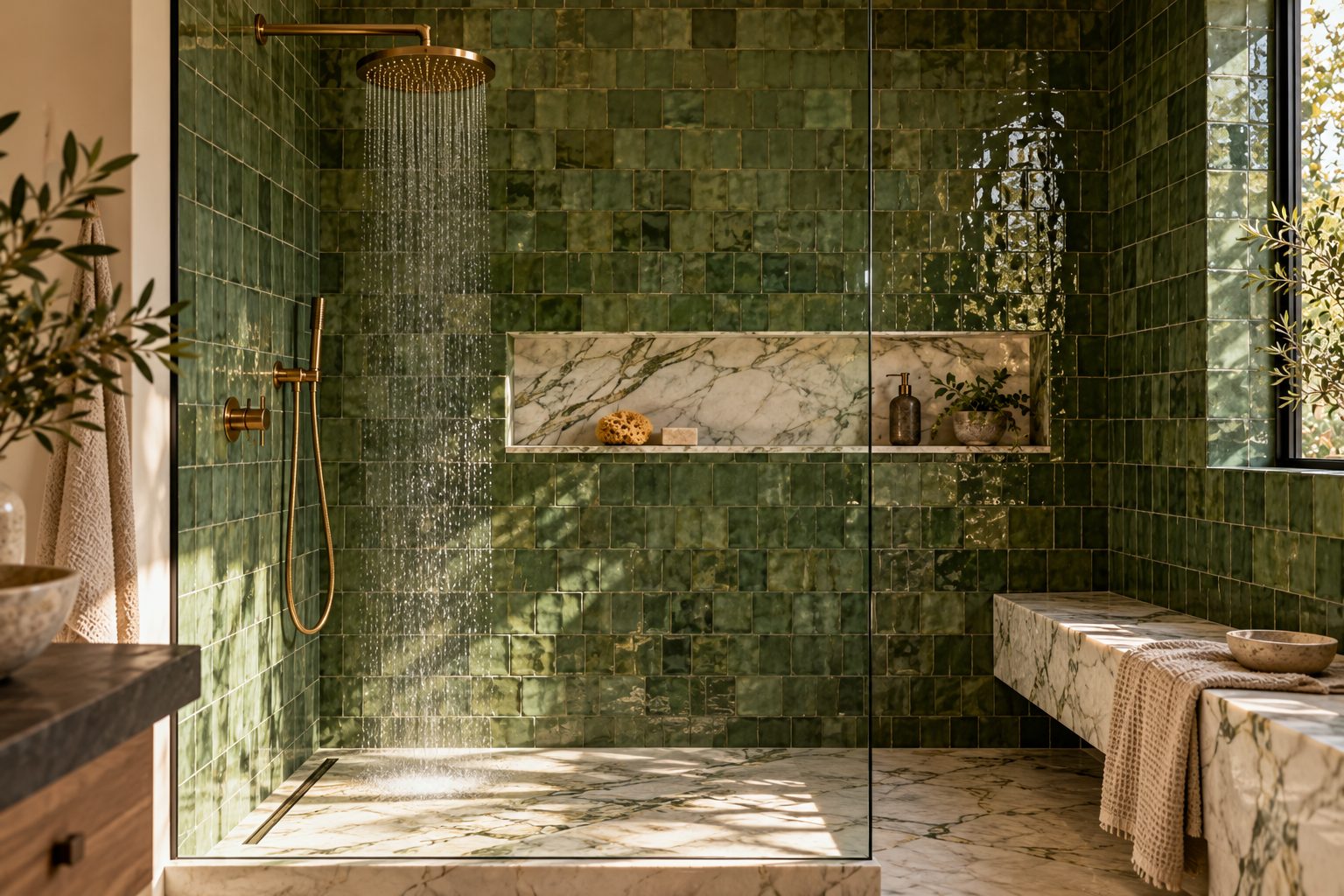
- Full-height wet walls: large porcelain in the shower; see our shower tile ideas.
- Tiled wainscot: tile to 36–48 in (91–122 cm) on all walls, with paint above.
- Vertical stacked tile: narrow 2 x 8 in (5 x 20 cm) or 3 x 12 in (7.5 x 30 cm) tile laid vertically to lift a low ceiling.
- Textured feature wall: fluted, ribbed or 3D tile behind the vanity.
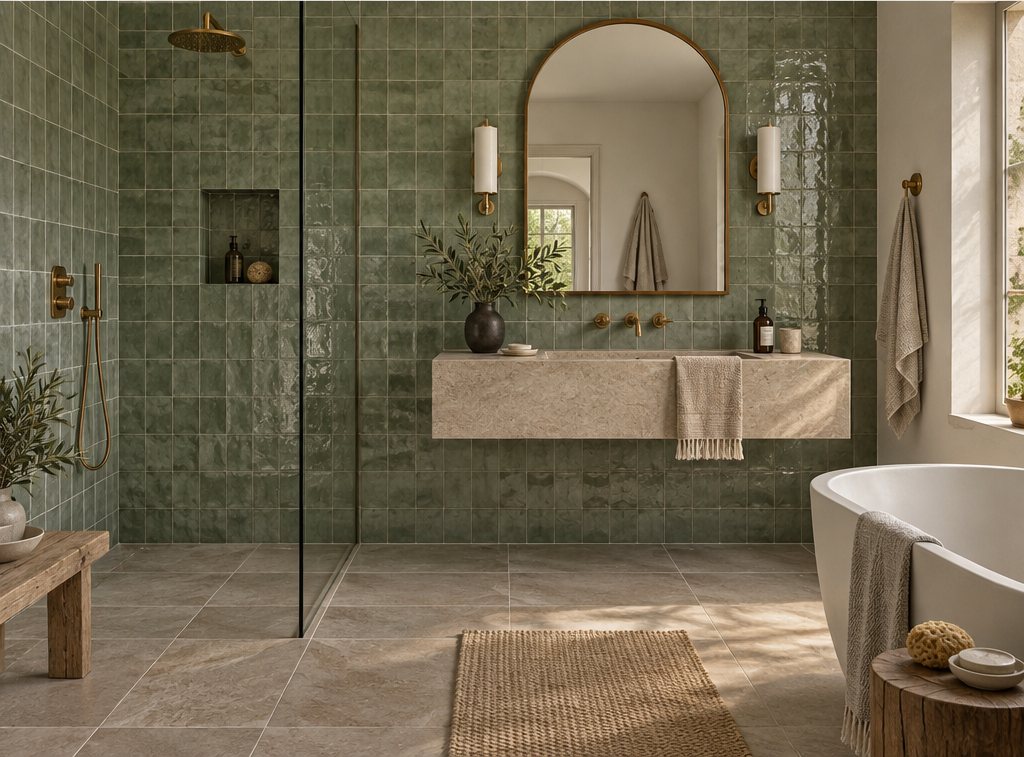
- Handmade glazed tile: zellige or zellige-look for a soft, reflective surface.
Ceramic tile in a bathroom is ideal on walls: lighter, easier to cut and cheaper than porcelain, with a glaze that is just as waterproof on vertical surfaces. Wall tile does not need a PEI rating, but it does need a flat substrate and cement board or a waterproofed backer in wet zones.
Bathroom wall ideas beyond tile
Not every bathroom wall needs tile. Moisture-resistant paint, wainscoting, limewash or a waterproof plaster such as tadelakt can all sit beside tile. For toilet walls ideas, a tiled half wall with a wallpaper or a painted mural above is a strong, inexpensive look, and the toilet wall is often the first thing you see from the door.
Bathroom backsplash ideas
A bathroom backsplash should run at least 4–6 in (10–15 cm) above the vanity, but taking it to the mirror or ceiling usually looks more finished and protects the wall from splashes.
- Full-height backsplash: the same tile from counter to ceiling, the mirror hung over it.
- Slab backsplash: a 3/4 in (2 cm) stone or quartz upstand matching the counter.
- Contrast tile: a colored or patterned bathroom backsplash tile behind a plain vanity.
- Short upstand: 4 in (10 cm) of the counter material, with washable paint above.
Many of the same tiles and sizes used in kitchens work here, scaled down to a vanity that is usually 21 in (53 cm) deep. A tile countertop is possible too, using 4 x 4 in (10 x 10 cm) or larger glazed tile with epoxy grout, though we prefer a solid surface or stone on vanities because grout lines collect toothpaste and soap.
Colors in bathroom tiles design for 2027
The bathroom tile colors leading 2027 are warm whites, limestone beige, clay, sage and soft charcoal, all in matte or satin finishes rather than glossy white and cool gray.
#F0EBE3#D8C6B0#B98266#AEB8A6#4B4A47The hex values are approximate screen references; glaze and body color vary between production lots, so always approve a full tile from your actual order. In practice we keep the floor one or two shades darker than the walls, which grounds the room and hides footprints, and we choose grout within one shade of the tile unless we want the pattern to show.
How to choose bathroom tile step by step
Choose bathroom tile in this order: safety and performance for the floor first, then wall tile that complements it, then the accent, then grout.
- Measure the room and calculate square footage per surface; our guide to calculating square footage covers awkward shapes.
- Pick the floor tile: porcelain, PEI 3+, wet DCOF 0.42+, size suited to the room.
- Pick the wall tile: one size and finish for wet walls, consistent tone with the floor.
- Choose one accent: pattern, color or texture, not all three.
- Choose grout color and type: cement grout for walls, epoxy or high-performance for floors and showers.
- Order with waste: 10 percent straight lay, 15 percent offset, 15–20 percent herringbone or diagonal.
- Check lot numbers on every box before installation starts.
Grout, trim and edge details that make tile look finished
Grout color, joint width and edge trim decide whether bathroom tile looks custom or cheap, and they cost very little compared with the tile itself.
Rectified porcelain can be set with joints of 1/16–1/8 in (1.5–3 mm); pressed or handmade tile needs 3/16 in (5 mm) or more to absorb size variation. On floors and in showers, an epoxy or high-performance grout resists stains and does not need sealing; ordinary cement grout should be sealed and resealed every year or two. Exposed tile edges, at the end of a wainscot or around a niche, need a finish:
- Bullnose tile: a matching tile with one rounded, glazed edge.
- Metal edge profile: slim brushed brass, stainless or matte profiles that match the faucet finish.
- Mitered corners: the cleanest look on porcelain, but only with a skilled installer.
- Pencil liner or chair rail: a traditional cap for a tiled wainscot.
Plan tile layout from the center of the most visible wall so cuts at both ends are equal and never less than half a tile wide. Leave movement joints at the perimeter and at changes of plane, filled with flexible sealant rather than grout, so the tile can move without cracking.
How much does it cost to install bathroom tile?
Installing bathroom tile typically costs $15–40 per sq ft for porcelain floors and $20–50 per sq ft for walls and showers, materials and labor included.
A 40 sq ft (3.7 m²) bathroom floor therefore typically runs $600–1,600, while a full bathroom with tiled floor, shower and backsplash often lands between $3,000 and $10,000. Mosaics, large-format panels, natural stone and patterned layouts all add labor. Our tile installation cost guide gives a full breakdown by job type. These are typical US 2026 ranges.
Our verdict on bathroom tile ideas
For most bathrooms we specify one warm stone-look porcelain at 24 x 24 in (60 x 60 cm) on the floor, a glazed ceramic in a close tone on the walls and one textured or patterned accent, and the result rarely dates.
The mistakes we see most are glossy floor tile in a bathroom used by children or older adults, too many tile types in one room, and grout that contrasts so strongly it turns the floor into a grid. Keep to two tiles plus one accent, match grout closely and spend on the floor, which takes the most wear. Those three rules cover nine bathroom tile ideas out of ten.
Before you order, run every surface through our free tile calculator to get square footage, waste and box counts for floors, walls and backsplash.
Free toolTile CalculatorWork out tiles, boxes, grout and adhesive with the right wastage.Shop & source the look
Buy it today — or have it made
Retail links are affiliate links: we may earn a commission at no extra cost to you (disclosure). “Get it made” sends the item to our sourcing desk for factory quotes in custom sizes and finishes.
Frequently asked questions
What is good flooring for a bathroom?
Porcelain tile is the best flooring for a bathroom because it is waterproof, durable and available with slip-resistant finishes rated at a wet DCOF of 0.42 or higher. Luxury vinyl and sheet vinyl are good budget choices, honed natural stone suits high-end rooms, and microcement gives a seamless look when properly sealed.
What size tiles for a small bathroom floor?
Large tiles of 12 x 24 in (30 x 60 cm) or 24 x 24 in (60 x 60 cm) usually suit a small bathroom floor, because fewer grout lines make the room look bigger. In very small rooms under about 25 sq ft, 1–2 in mosaics are also a good choice for easy cuts and extra grip.
How much does it cost to install bathroom tile?
Installing bathroom tile typically costs $15–40 per sq ft for porcelain floors and $20–50 per sq ft for walls and showers, including materials and labor, in the US in 2026. A 40 sq ft bathroom floor typically costs $600–1,600; a fully tiled bathroom often runs $3,000–10,000.
Is ceramic or porcelain tile better for a bathroom?
Porcelain is better for bathroom floors and showers because it absorbs 0.5 percent water or less and is harder wearing. Glazed ceramic is perfectly suitable on bathroom walls and backsplashes, where it costs less and is easier to cut. Many bathrooms combine porcelain floors with ceramic walls.
How high should a bathroom backsplash be?
A bathroom backsplash should be at least 4–6 in (10–15 cm) tall above the vanity counter. Running tile up to the bottom of the mirror or to the ceiling usually looks more finished and better protects the wall from splashes and humidity.
Some links may be affiliate links. Regulations and specifications change — always confirm with suppliers and qualified professionals.