Tile Patterns: 12 Layouts From Herringbone to Versailles, Explained
Tile patterns change a room more than tile color: 12 layouts from straight lay to herringbone and Versailles, with best tile sizes, waste rates of 10–20 percent and what each one costs to install.
Part of our guide: Tile Trends 2027: Zellige, Large-Format Porcelain and Warm Grout
Key takeaways
- Straight lay and running bond are the cheapest tile patterns, needing about 10 percent waste; herringbone and chevron need 15–20 percent
- Herringbone tile works best with rectangles at a 3:1 to 5:1 ratio, such as 3 × 12 in or 4 × 16 in
- Complex layouts typically add $3–10 per sq ft in labor to US 2026 installation quotes
- Pick the pattern for the room shape: long lines stretch narrow rooms, diagonals hide out-of-square walls
Tile patterns are the layouts used to arrange tiles on a floor or wall, and the five that cover most projects are straight lay, running bond, herringbone, chevron and basketweave. Straight lay is cheapest, with about 10 percent waste; herringbone needs 15–20 percent extra tile and typically $3–10 more per sq ft in labor, but makes ordinary tile look custom.
- Cheapest layouts: straight lay (stack) and running bond, about 10 percent waste.
- Most requested in 2027: herringbone, vertical stack and offset planks.
- Highest waste: diagonal herringbone and chevron, 15–20 percent.
- Rule of thumb: one pattern per sightline; let the second surface stay quiet.
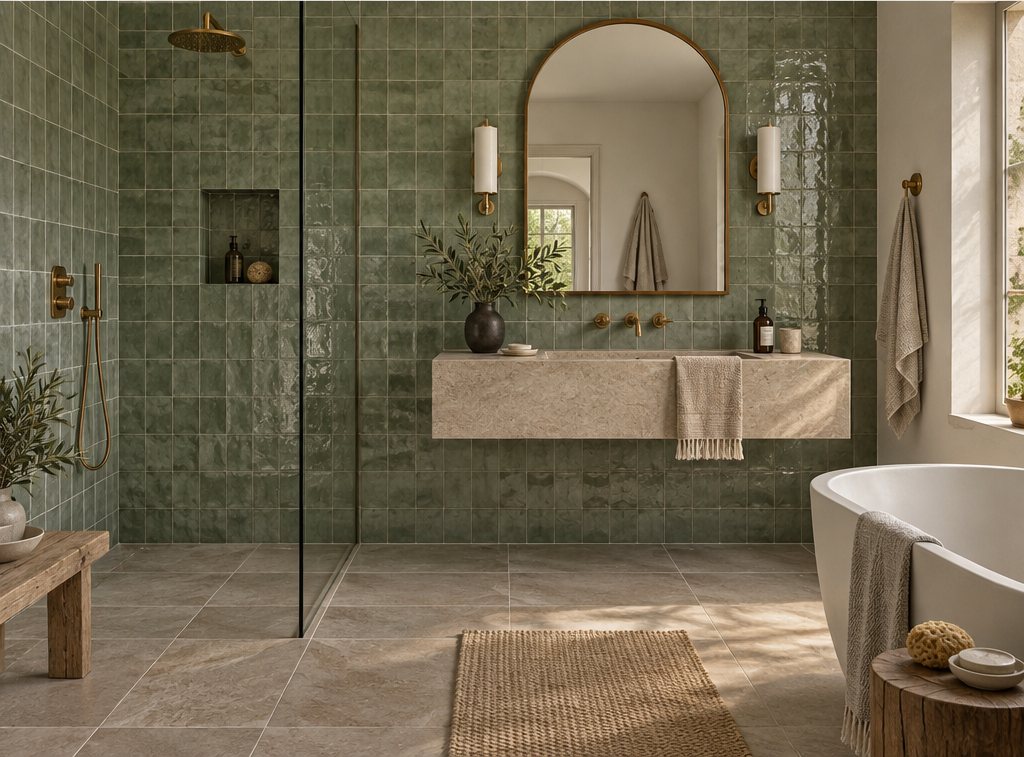
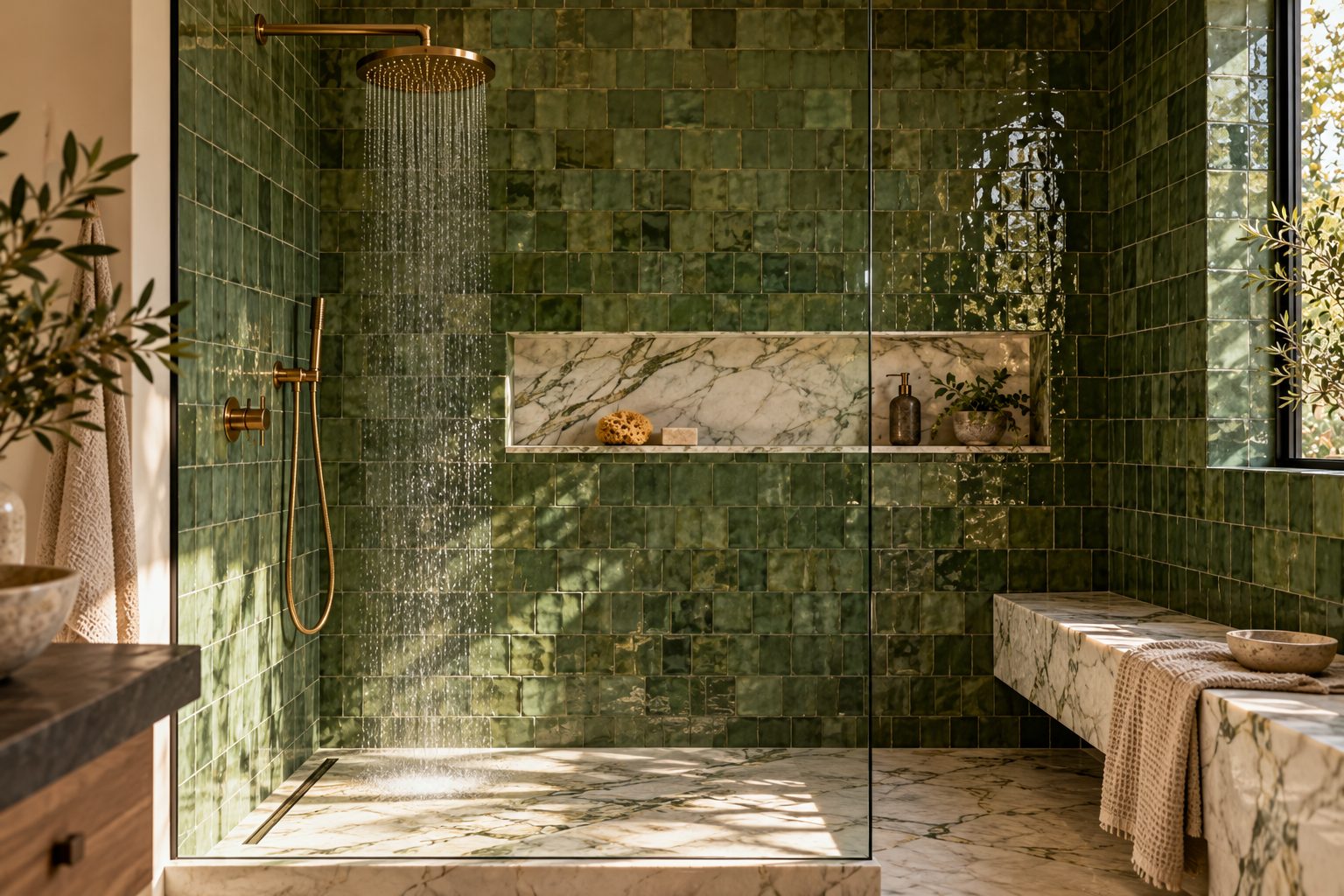
Layout is one of the quiet shifts in our tile trends 2027 forecast: plain, inexpensive tiles laid in characterful patterns are replacing loud printed tile. Below are the different tile patterns worth knowing, where each one works and what it costs you in tile and labor.
What are the most common tile patterns?
The most common tile patterns are straight lay, running bond, one-third offset, herringbone, chevron, basketweave, diagonal, pinwheel and Versailles, and each suits a particular tile shape.
| Pattern | Tile shape | Typical waste | Labor vs straight lay | Best for |
|---|---|---|---|---|
| Straight lay / grid | Squares | 10% | Baseline | Any floor, modern rooms |
| Vertical stack | Rectangles | 10% | Baseline | Shower and kitchen walls |
| Running bond (50%) | Rectangles under 18 in long | 10% | +0–10% | Subway walls, classic floors |
| One-third offset | Long planks, 24 in plus | 10–12% | +0–10% | Wood-look and large format floors |
| Diagonal | Squares at 45° | 15% | +15–25% | Small or out-of-square rooms |
| Herringbone (90°) | Rectangles 3:1 to 5:1 | 15% | +30–60% | Floors, backsplashes, feature walls |
| Diagonal herringbone | Rectangles 3:1 to 5:1 | 15–20% | +40–80% | Long hallways, entries |
| Chevron | Parallelograms, pre-cut ends | 15–20% | +30–60% | Feature walls and floors |
| Basketweave | 2:1 rectangles | 10–12% | +20–40% | Bathroom floors, traditional rooms |
| Pinwheel / hopscotch | Large and small squares | 10–12% | +15–30% | Bathrooms, mudrooms |
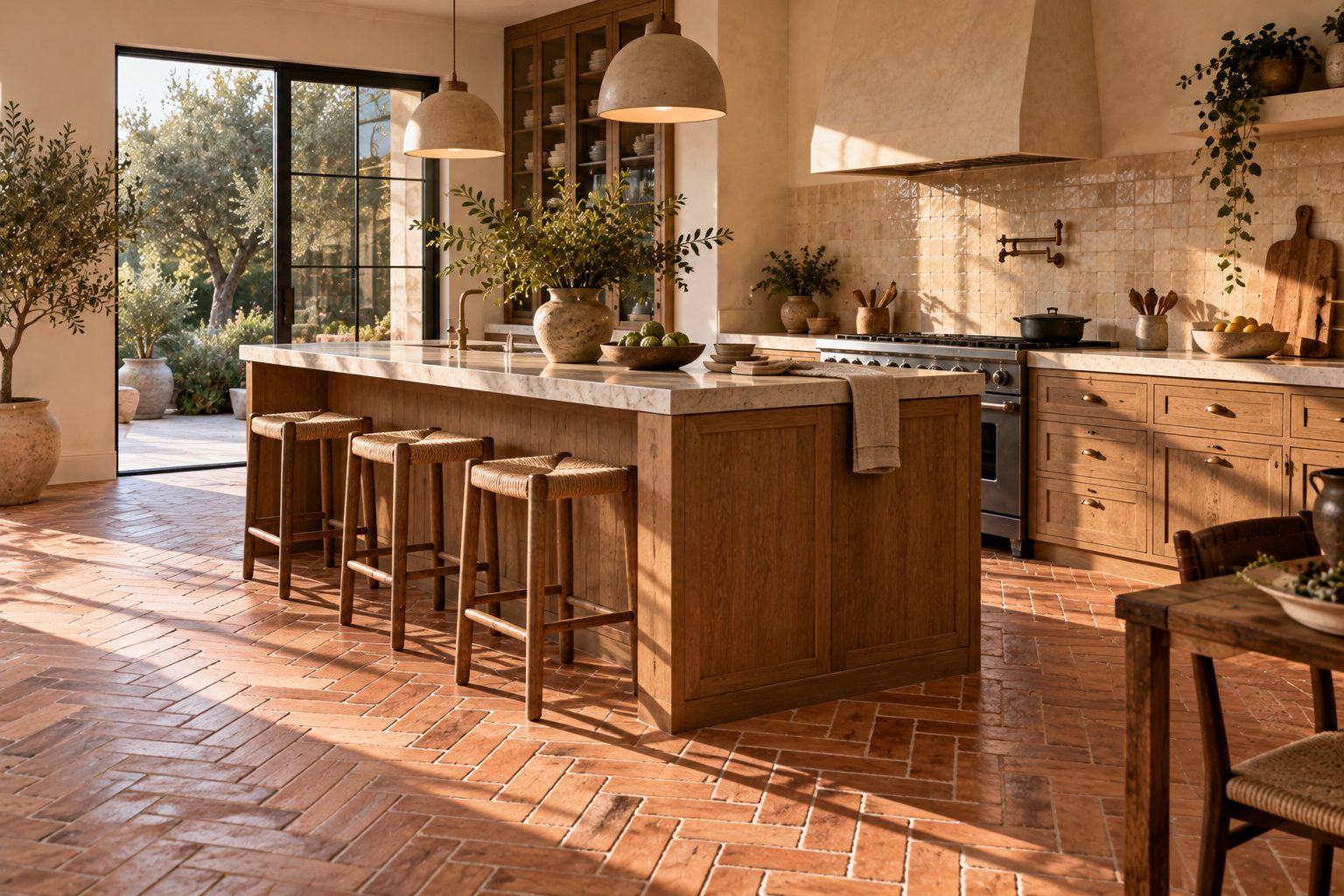
| Versailles (French pattern) | 4 sizes in a set | 10–15% | +20–40% | Stone floors, patios, kitchens |
| Fish scale / fan | Scallop tiles | 10–15% | +30–60% | Backsplashes, shower niches |
Labor uplifts are typical relative ranges in US 2026 quotes; on a base of $6–12 per sq ft for straight lay, a herringbone floor usually adds $3–10 per sq ft. Waste figures assume a simple rectangular room; add 5 percent for many corners, columns or a cabinet island.
Herringbone tile: sizes, angles and where it works
Herringbone tile is a zigzag of rectangles laid at right angles to each other, and it looks best with tiles whose length is three to five times their width.
A herringbone pattern tile in 3 × 12 in (7.5 × 30 cm), 4 × 16 in (10 × 40 cm) or 2 × 10 in (5 × 25 cm) gives a crisp zigzag. A 2:1 tile such as a standard 3 × 6 in subway works, but reads chunky and closer to basketweave. Choose 90° herringbone, with the V pointing along the room, to stretch a hallway; choose 45° to the walls for a more formal floor that hides out-of-square rooms. Center the first row on the main sightline, usually the door you enter by, so the points line up where people see them.
Herringbone wall tile
A herringbone wall tile backsplash or shower wall makes a small, cheap tile look bespoke. Herringbone pattern wall tile pointing upward draws the eye to the ceiling; laid horizontally it widens a narrow wall. Use a grout close to the tile color for texture, or a contrasting grout only if every cut is perfect, because contrast shows every wobble.
Which floor tile patterns suit which rooms?
Floor tile patterns should follow the room: long linear layouts for narrow spaces, square grids for big open plans, and busier patterns only in small rooms where they become the main feature.
- Narrow hallways and galley kitchens: planks in a one-third offset or herringbone running lengthwise.
- Open-plan kitchen and living: straight lay in 24 × 24 in (60 × 60 cm) or larger for calm.
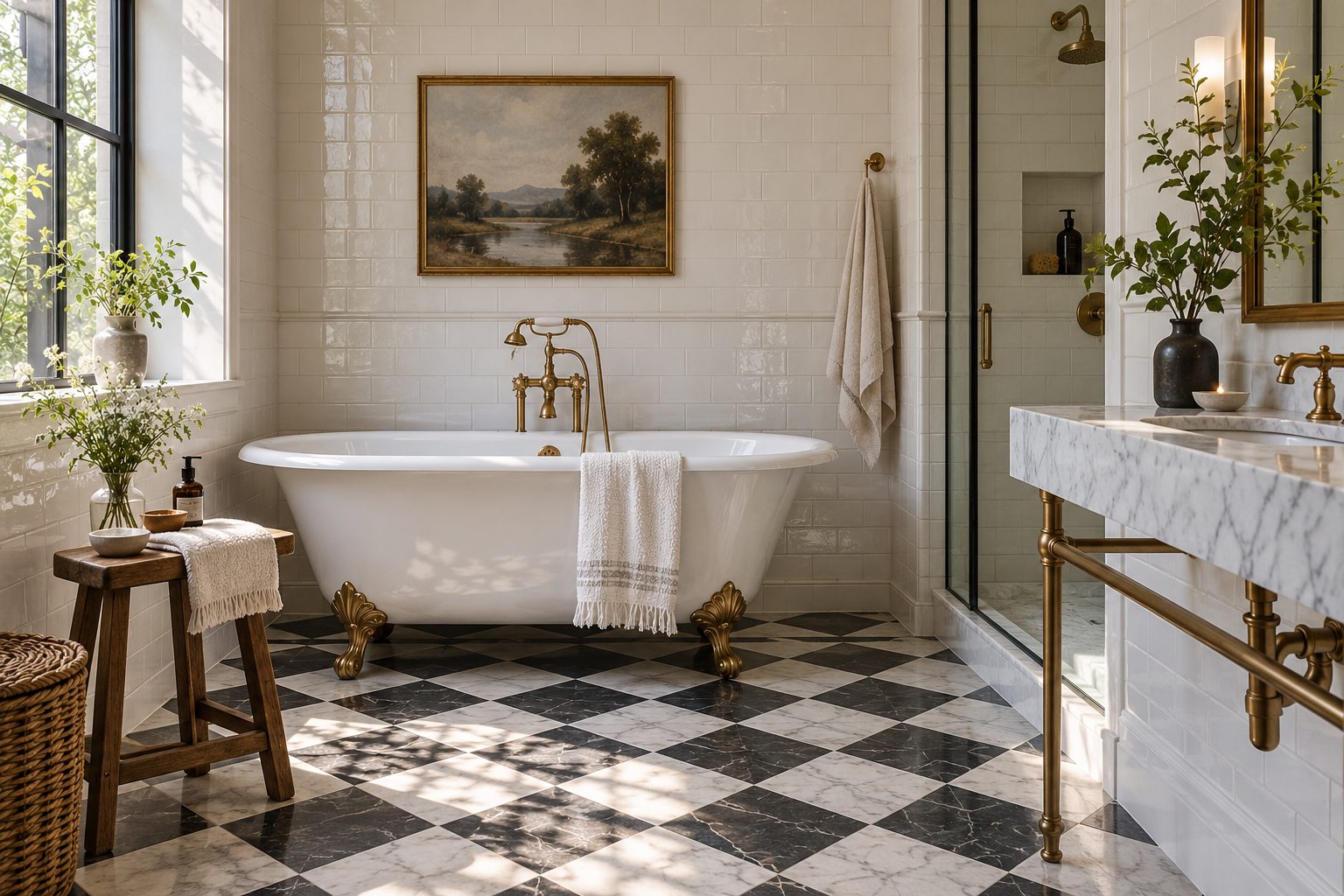
- Small bathrooms: basketweave, hexagon or patterned bathroom floor tiles for character in a few square feet.
- Entries and mudrooms: pinwheel, checkerboard or Versailles, which hide dirt and wear well.
- Out-of-square rooms: diagonal or herringbone at 45°, which disguise tapering walls.
Floor tiles design also depends on size. Ceramic tile patterns with small formats, under 4 in (10 cm), are ideal for sloped shower floors, while patterned ceramic floor tiles in 8 × 8 in (20 × 20 cm) give the encaustic look without sealing. Check that any bathroom floor tile has a wet DCOF of 0.42 or more.
#F1ECE3#C9B79C#5E6B5C#9C8064#2F3A3ATwo-color tiling patterns such as checkerboard or a herringbone in two tones work best with colors close in value, like chalk and sand or moss and ink, unless you want a graphic, high-contrast floor.
What are the best wall tile patterns?
The best wall tile patterns are vertical stack for modern rooms, running bond for classic ones and herringbone for a feature, because walls are seen face-on and every line counts.
Wall tile patterns read more strongly than floor ones, since you see the whole surface at eye level. Vertical stack, with planks of 2.5 × 10 in (6.5 × 25 cm) or 3 × 12 in standing upright in a grid, is the most modern tile pattern and makes ceilings feel taller. Horizontal stack widens. Running bond is timeless with subway tile. Fish scale and arch shapes are 2027's softer options for backsplashes and niches. See our shower tile ideas and kitchen backsplash ideas for room-specific combinations.
How do you plan a tile layout pattern?
You plan a tile layout pattern by finding the room's visual center, dry-laying from it and adjusting so no cut tile at a wall or doorway is less than half a tile wide.
- Measure and sketch. Draw the room to scale, marking doors, cabinets, the toilet flange and drains.
- Choose the reference line. Snap a chalk line along the main sightline, usually from the entrance door, not the nearest wall.
- Dry-lay a row each way. Shift the line so cuts at both walls match and stay above half a tile.
- Calculate waste. Add 10 percent for straight lay, 15 percent for diagonal and herringbone, 20 percent for diagonal herringbone or chevron.
- Mix boxes. Pull tiles from three or four boxes at once so shade variation spreads evenly.
- Set and check. Re-check the pattern against the line every few rows; herringbone drifts quickly.
Our tile calculator adds the waste factor for each layout automatically.
Modern tile patterns and cool tile patterns for 2027
The modern tile patterns gaining ground for 2027 are vertical stack, offset planks with very tight joints, two-tone herringbone and checkerboard in soft, close colors rather than black and white.
Cool tile patterns no longer depend on printed motifs. Instead, tile design patterns come from the layout itself: a stacked grid of narrow planks with grout matched to the tile, a herringbone in two shades of green, or a Versailles floor in honed limestone that reads like an old European kitchen. Floor tile layout patterns that mix sizes, such as a pinwheel of 12 in and 4 in squares, add movement without color. If you want one bold surface, pair it with tiling layouts elsewhere that stay plain, so the pattern looks deliberate rather than busy.
Mistakes we see with tile laying patterns
The mistake we see most often is starting a pattern at a crooked wall, which drags herringbone or diagonal lines visibly off-square by the far side of the room.
Close behind: using a 50 percent running bond on planks longer than 18 in (46 cm), which exaggerates lippage; picking a complex pattern for a floor already busy with cabinets and furniture, so nobody ever sees it; and mixing two strong tiling styles, such as a herringbone floor and a fish-scale wall, in the same sightline. Our rule: one hero pattern per room, and everything else in straight lay or stack.
Our verdict: which tile pattern should you choose?
If you are unsure, choose a vertical stack for walls and a one-third offset or straight lay for floors, and spend your pattern budget on one herringbone surface where everyone will see it.
Tile patterns are the cheapest way to make inexpensive tile look expensive, but only when the installation is precise. A herringbone backsplash of plain 3 × 12 in porcelain often costs less than a fancy printed tile in straight lay, and it ages better. Pay for an installer who will dry-lay and show you the starting line before setting a single tile.
Before ordering, put your room dimensions and chosen pattern into our tile calculator to get the right box count with waste included.
Free toolTile CalculatorWork out tiles, boxes, grout and adhesive with the right wastage.Shop & source the look
Buy it today — or have it made
Retail links are affiliate links: we may earn a commission at no extra cost to you (disclosure). “Get it made” sends the item to our sourcing desk for factory quotes in custom sizes and finishes.
Frequently asked questions
What is the most popular tile pattern?
Straight lay and running bond remain the most popular tile patterns, because they are fast and cheap with only about 10 percent waste. For 2027, herringbone and vertical stack are the most requested feature patterns, especially on backsplashes, shower walls and entry floors where a simple tile laid in a strong layout looks custom.
How much extra tile do I need for herringbone?
Order about 15 percent extra tile for a 90-degree herringbone and 20 percent for a diagonal herringbone or chevron. The pattern creates angled cuts at every wall, and many offcuts cannot be reused. Add another 5 percent in rooms with many corners, columns or a kitchen island.
What is the difference between herringbone and chevron?
Herringbone uses rectangular tiles laid at right angles so each tile's end meets the side of the next, forming a broken zigzag. Chevron uses tiles with angled ends that meet point to point, creating a continuous V. Chevron needs pre-cut parallelogram tiles; herringbone works with any long rectangle.
What tile pattern makes a small bathroom look bigger?
A straight lay or diagonal layout of large, light tiles makes a small bathroom look bigger, because fewer grout lines read as one plane. On walls, a vertical stack of planks draws the eye up. Keep strong patterns to a single surface, such as a herringbone shower wall, so the room does not feel busy.
Some links may be affiliate links. Regulations and specifications change — always confirm with suppliers and qualified professionals.