Floating Shelves Ideas: Sizes, Spacing and Load Limits by Room
The best floating shelves ideas start with the numbers: 8–12 in (20–30 cm) deep, 12–16 in (30–41 cm) apart, fixed into studs. Here are room-by-room ideas with sizes, materials, load limits and typical costs.
Part of our guide: Home Interior Design Ideas: House Styles, Rooms & Layouts
Key takeaways
- Most floating shelves should be 8–12 in (20–30 cm) deep and 1.5–2 in (38–51 mm) thick; go shallower in baths and halls
- Space shelves 12–16 in (30–41 cm) apart for books and objects, and start 18–20 in (46–51 cm) above a kitchen counter
- Load depends on the fixing, not the board: concealed brackets screwed into studs are the only way to hold books or dishes
- Style shelves with 30–40 percent empty space and repeat one material or color across them
The best floating shelves ideas follow three numbers: shelves 8–12 in (20–30 cm) deep, spaced 12–16 in (30–41 cm) apart, and fixed with concealed brackets into wall studs. Get those right and almost any wall shelf looks deliberate; get them wrong and shelves sag, look cluttered or pull out of drywall within a year.
- Depth: 8–12 in (20–30 cm) for most rooms, 5–8 in (13–20 cm) for bathrooms and halls.
- Thickness: 1.5–2 in (38–51 mm) reads solid; under 1 in (25 mm) looks flimsy past 36 in (91 cm).
- Spacing: 12–16 in (30–41 cm) vertically for objects and books.
- Typical cost: $40–250 per solid wood shelf, plus $75–200 per shelf for installation.
A floating shelf is a wall shelf with no visible brackets: the board slides over steel rods or a rail fixed to the wall, so it appears to hover. It is one of the most useful pieces in any room, and one of the easiest to get slightly wrong. This guide belongs to our wider home interior design ideas series and works room by room.
What size should floating shelves be?
Floating shelves should be 8–12 in (20–30 cm) deep, 1.5–2 in (38–51 mm) thick and at least 24 in (61 cm) long, sized to the wall and the objects they will hold. Deeper than 12 in (30 cm) and the leverage on the bracket rises sharply; shallower than 6 in (15 cm) and only small objects fit.
| Use | Depth | Thickness | Vertical spacing | Typical load (stud-fixed) |
|---|---|---|---|---|
| Living room books and objects | 10–12 in (25–30 cm) | 1.75–2.5 in (45–64 mm) | 13–16 in (33–41 cm) | 40–80 lb (18–36 kg) |
| Kitchen dishes and glasses | 10–12 in (25–30 cm) | 1.75–2 in (45–51 mm) | 15–18 in (38–46 cm) | 50–100 lb (23–45 kg) |
| Bedroom display shelf | 8–10 in (20–25 cm) | 1.5–2 in (38–51 mm) | 12–14 in (30–36 cm) | 25–50 lb (11–23 kg) |
| Bathroom toiletries and towels | 5–8 in (13–20 cm) | 1.25–1.75 in (32–45 mm) | 10–12 in (25–30 cm) | 15–30 lb (7–14 kg) |
| Picture ledge for art | 3.5–5 in (9–13 cm) | 0.75–1.5 in (19–38 mm) | 12–20 in (30–51 cm) | 15–25 lb (7–11 kg) |
| Corner shelves | 10–12 in (25–30 cm) legs | 1.25–1.75 in (32–45 mm) | 10–14 in (25–36 cm) | 15–35 lb (7–16 kg) |
Load figures are typical ranges for good concealed brackets screwed into two or more wood studs; always use the bracket maker's own rating, which is the real limit. Into drywall anchors alone, assume no more than 10–20 lb (5–9 kg) per shelf.
How far apart should floating shelves be?
Floating shelves should be 12–16 in (30–41 cm) apart vertically, with the first shelf 18–20 in (46–51 cm) above a kitchen counter or 10–14 in (25–36 cm) above a sofa back or console. Measure your tallest object, add 3–4 in (8–10 cm) of breathing room, and use that as the gap.
Horizontally, keep stacked shelves the same length and aligned on a common center line, or stagger them on purpose by at least 6 in (15 cm). Small offsets of 1–2 in (3–5 cm) just look like mistakes. On a long wall, leave 6–12 in (15–30 cm) between the shelf ends and corners, windows or door casings so the shelf does not look jammed in.
How do you install floating shelves so they hold weight?
Install floating shelves by screwing a concealed steel bracket into at least two wall studs, leveling it, then sliding a drilled shelf over the rods and fixing it from below. The bracket and the studs carry the load; the shelf itself only has to stay stiff.
- Find the studs. In US framing they sit at 16 in (41 cm) or 24 in (61 cm) on center. Mark both edges of each stud.
- Choose the bracket. Rod brackets with 3/8–1/2 in (10–12 mm) rods suit 1.5–2 in boards; rail-and-cleat systems suit long or heavy shelves.
- Mark a level line. Use a 4 ft (1.2 m) level or a laser; even a 1/8 in (3 mm) drop shows on a long shelf.
- Fix the bracket. Use 3 in (75 mm) structural screws into studs; add toggle anchors only between studs as backup.
- Drill the shelf. Match rod positions exactly, drilling slightly undersize for a tight fit; a jig keeps holes square.
- Slide and lock. Push the shelf on, check it sits tight to the wall, and add a small screw from below into the bracket.
- Load it gradually. Heavy items go near the wall and near the studs; light objects to the front and ends.
On masonry, use sleeve anchors rated for the load. On tile, drill with a diamond bit and never through grout lines at the edge of a tile, which cracks easily.
Which material is best for a floating wall shelf?
Solid hardwood such as oak, walnut or ash is the best material for a floating wall shelf: it is stiff, it can be drilled for rods, and it can be sanded and re-oiled when marked. Hollow MDF shelves are cheap and light but hold little; plywood with a hardwood edge is a good middle ground.
- Solid hardwood: $60–250 per shelf. Best for books and dishes; finish with hardwax oil and dry timber at 8–10 percent moisture content.
- Hollow-core MDF or particleboard: $20–60. Light display only; usually rated 10–25 lb (5–11 kg).
- Edge-banded plywood: $40–120. Stable in humid rooms, takes paint well.
- Steel ledges: $40–150. Thin profile, very strong; suits modern kitchens and art ledges.
- Stone or engineered quartz: $120–400. Beautiful in bathrooms; heavy, so it needs a steel bracket into studs.
- Tempered glass: $30–100. Light and easy to clean; shows dust and needs clip brackets.
If you mix shelf wood with nearby furniture or flooring, our guide to mixing wood tones explains how to keep two or three timbers working together.
Living room shelving ideas
The strongest living room shelving ideas are stacked floating shelves flanking a TV or fireplace, a long single shelf above a sofa, or a full wall of shelves that works as built-in storage. Living room shelves carry books, objects and media, so give them depth (10–12 in / 25–30 cm) and solid fixings.
- Alcove shelves: three to five shelves in each alcove beside a chimney breast, 13–15 in (33–38 cm) apart. Paint the back wall a darker shade for depth.
- Shelves around a TV: keep shelf ends 6–10 in (15–25 cm) clear of the screen so it does not look crowded; see our decorating around a TV guide.
- One long shelf above the sofa: 10–14 in (25–36 cm) above the sofa back, about two-thirds of its length, with light objects only.
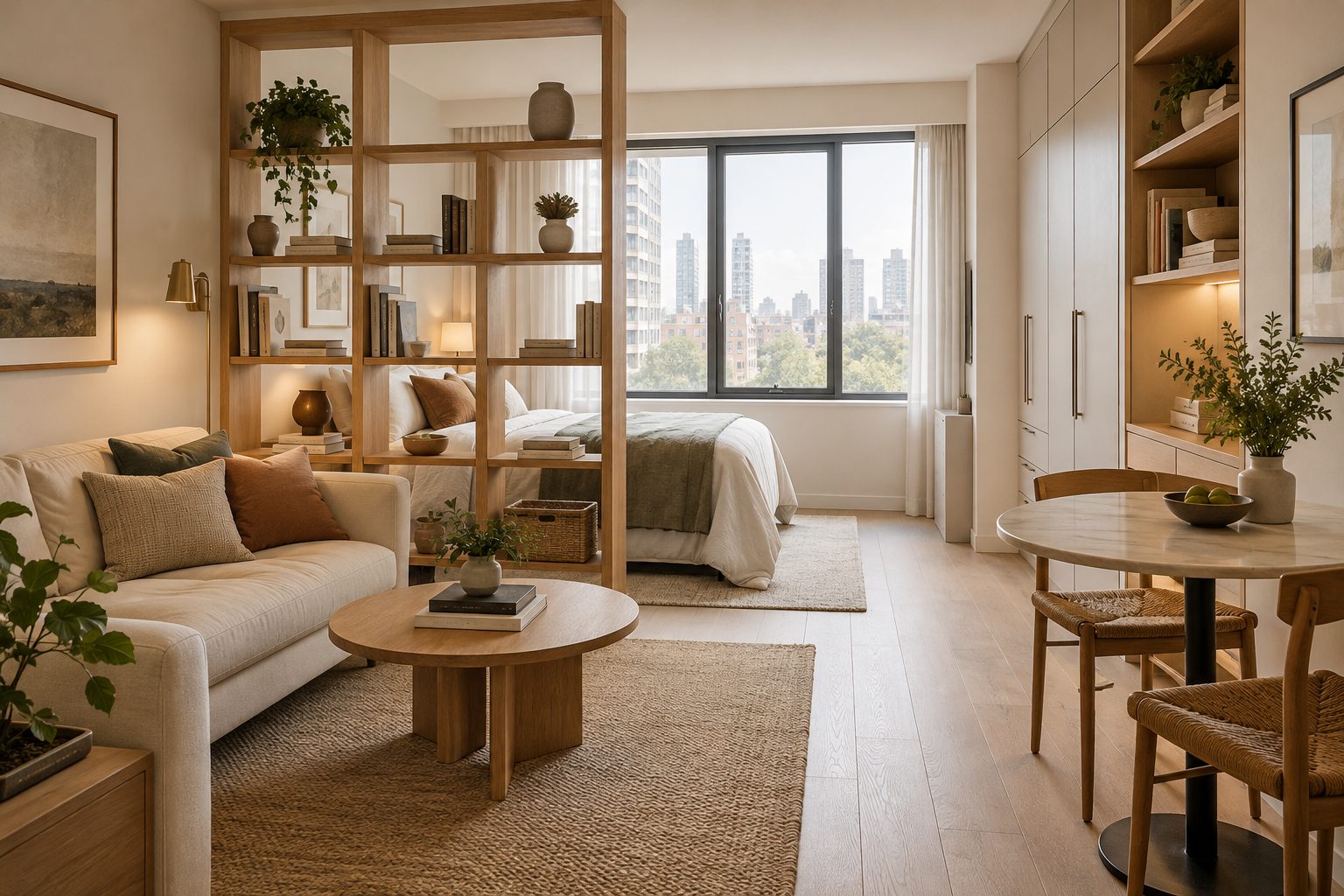
- Floor-to-ceiling wall: when you need real storage, a living room shelving unit or wall-hung cabinets with drawers below and open shelves above beats loose floating boards.
Lounge room shelving ideas follow the same rules; in an open-plan space, keep shelves on the wall you face from the sofa, not the one behind it. Our living room storage ideas guide compares built-ins, media units and cabinets.
Shelves for bedroom walls and corners
Shelves for bedroom walls work best as slim display shelves, bedside wall shelves or corner shelves, kept shallow (8–10 in / 20–25 cm) and away from where you sit up in bed.
- Floating nightstand: a 16–20 in (41–51 cm) wide shelf or wall-hung drawer at mattress height, about 24–28 in (61–71 cm) from the floor.
- Above the bed: only a shallow picture ledge, at least 10–12 in (25–30 cm) above the headboard, holding light framed prints. Nothing heavy over sleeping heads.
- Corner shelves for bedroom: three tiers of 10–12 in (25–30 cm) triangular or L-shaped shelves turn a dead corner into display space.
- Bedroom organizer wall: pegboard or rail systems with small shelves, hooks and a shelf organizer for jewelry or accessories suit small rooms and teens.
A shelf for bedroom use should hold the things you reach for daily, so keep at least one shelf in easy reach at 40–60 in (102–152 cm) high.
Kitchen, bathroom and corner shelves
Kitchen and bathroom shelves need moisture-tolerant materials and generous fixings, while corner shelves need careful sizing so they do not clash with doors or windows.
Kitchen
Open shelves replacing a run of upper cabinets should be 10–12 in (25–30 cm) deep, start 18–20 in (46–51 cm) above the counter and sit 15–18 in (38–46 cm) apart. Keep shelves at least 30 in (76 cm) from a cooktop and store everyday plates and glasses there, since items in daily use do not gather grease. Our kitchen counter decor guide covers styling below them.
Bathroom
Use 5–8 in (13–20 cm) shelves in oiled hardwood, stone, glass or powder-coated metal, at least 12 in (30 cm) outside the shower splash zone. Over a toilet, start about 24–30 in (61–76 cm) above the tank lid.
Corner shelves
Corner shelves work on inside corners where nothing else fits, sized at 10–12 in (25–30 cm) on each wall face. Fix each shelf into the stud nearest the corner; most corners have one.
How do you style floating shelves?
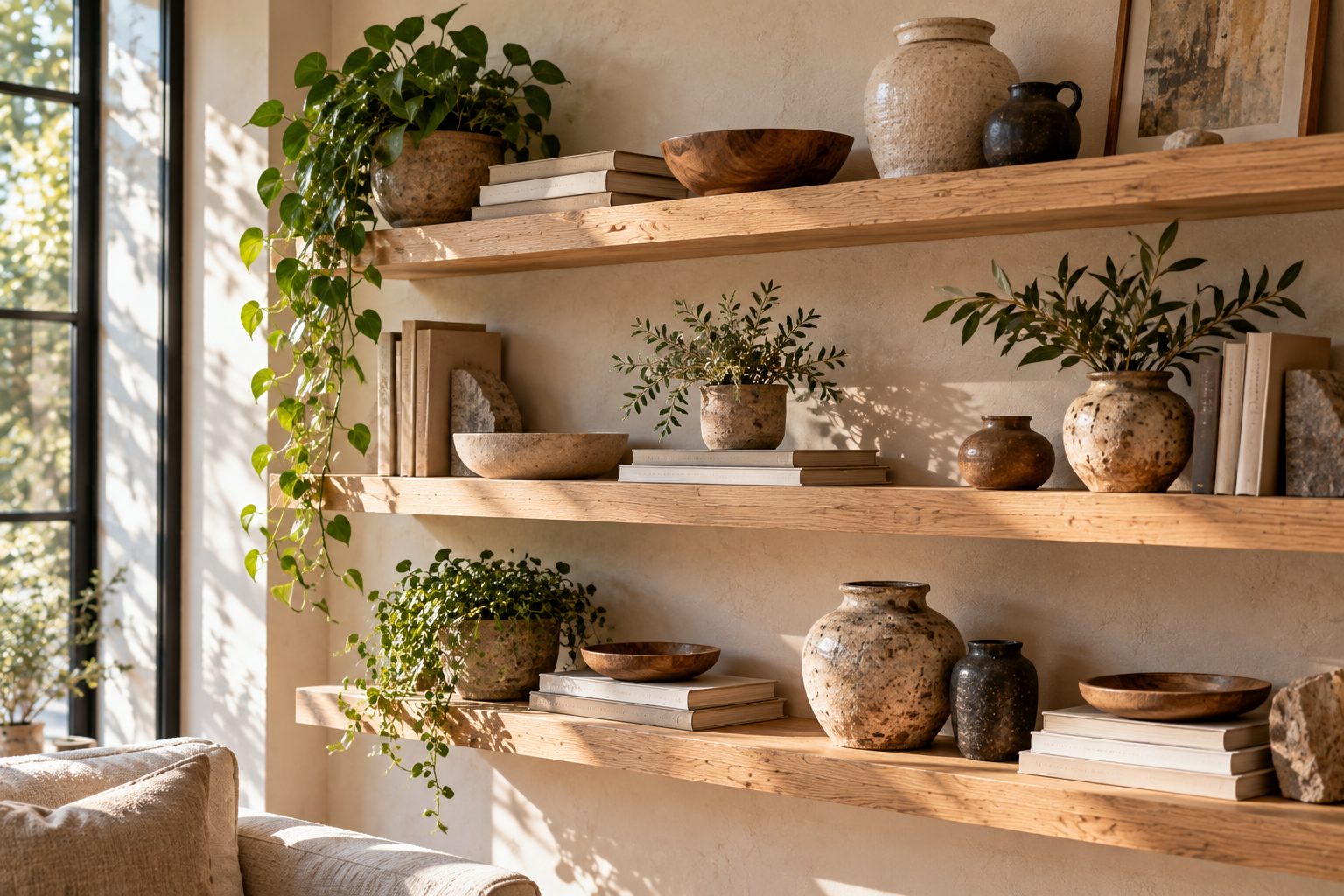
Style floating shelves with 30–40 percent empty space, objects grouped in odd numbers, and one repeated material or color running across every shelf. A wooden display shelf looks curated rather than cluttered when the eye can rest between groups.
- Start with anchors. Place the largest items first, alternating left and right on each shelf so they zigzag.
- Add books. Stand some, stack some horizontally as plinths for small objects.
- Layer art. Lean one framed piece at the back of a shelf, partly overlapped by an object.
- Finish with greenery. One trailing plant per two or three shelves softens hard edges.
- Edit. Remove one item from every shelf, then step back.
Small wooden shelves look best with small things: a single shelf 24 in (61 cm) long holds three objects, not ten. Behind closed doors, a cupboard organizer or stacking shelf organizer handles the clutter that open display shelves should not.
Mistakes we see with floating shelves
The mistakes we see most are shelves fixed only into drywall, shelves too thin for their length, and shelves filled edge to edge. In our experience, at least half of sagging shelves are not failed wood but failed fixings.
- Drywall-only fixings: anchors pull out once books go on. Always find studs or use a rail across them.
- Thin, long boards: a 3/4 in (19 mm) shelf longer than 36 in (91 cm) sags under books.
- Too deep: 14 in (36 cm) shelves collect clutter and stress brackets.
- Hanging shelves with ropes or chains in busy rooms: they swing when bumped; keep hanging shelves for low-traffic corners and light loads.
- Misalignment: shelves that nearly line up with windows or cabinets look worse than shelves that clearly do not.
Our verdict: buy fewer, thicker, solid wood shelves, fix them into studs, and leave space on them. That is the floating shelves idea that never dates. Unsure which wood or finish suits your rooms? Our free style quiz narrows it down.
Furnishing multiple units or a hospitality project? Send shelf sizes, wood species and quantities to our furniture sourcing desk for factory quotes and lead times.
Free toolTile CalculatorWork out tiles, boxes, grout and adhesive with the right wastage.Shop & source the look
Buy it today — or have it made
Retail links are affiliate links: we may earn a commission at no extra cost to you (disclosure). “Get it made” sends the item to our sourcing desk for factory quotes in custom sizes and finishes.
Frequently asked questions
How deep should floating shelves be?
Most floating shelves should be 8–12 in (20–30 cm) deep. Use 10–12 in (25–30 cm) for kitchen dishes and living room books, 8–10 in (20–25 cm) for bedroom display, and 5–8 in (13–20 cm) for bathrooms and narrow halls. Going deeper than 12 in (30 cm) greatly increases the strain on concealed brackets.
How much weight can a floating shelf hold?
A floating shelf screwed into two or more studs with a good concealed bracket typically holds 25–100 lb (11–45 kg), depending on bracket, depth and board. Fixed into drywall anchors alone, assume only 10–20 lb (5–9 kg). Always use the bracket maker's rating and keep heavy items close to the wall.
How far apart should floating shelves be?
Space floating shelves 12–16 in (30–41 cm) apart vertically for books and decor, and 15–18 in (38–46 cm) in kitchens where plates and glasses need clearance. Measure the tallest item you will store and add 3–4 in (8–10 cm) to set the gap.
Can you put floating shelves on drywall without studs?
You can, but only for light display loads of about 10–20 lb (5–9 kg) per shelf using heavy-duty toggle anchors. For books, dishes or anything valuable, fix the bracket into studs or screw a horizontal rail across two or more studs and mount the shelf on that.
What wood is best for floating shelves?
Solid hardwoods such as oak, walnut, ash and maple are best for floating shelves because they resist sagging and can be drilled for rod brackets. Edge-banded plywood is a stable, cheaper alternative for painted shelves. Avoid hollow MDF for anything heavier than light decor.
Some links may be affiliate links. Regulations and specifications change — always confirm with suppliers and qualified professionals.