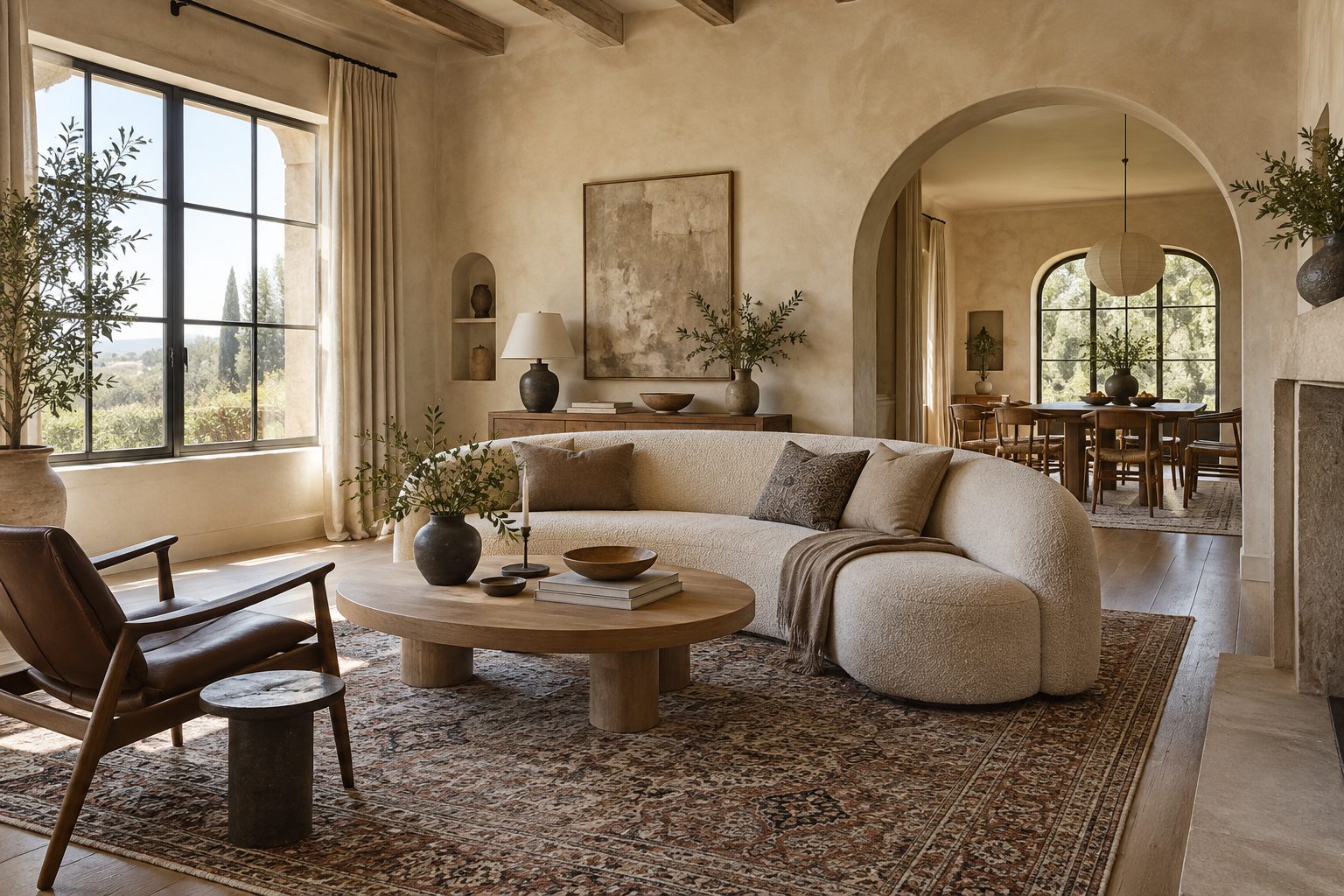
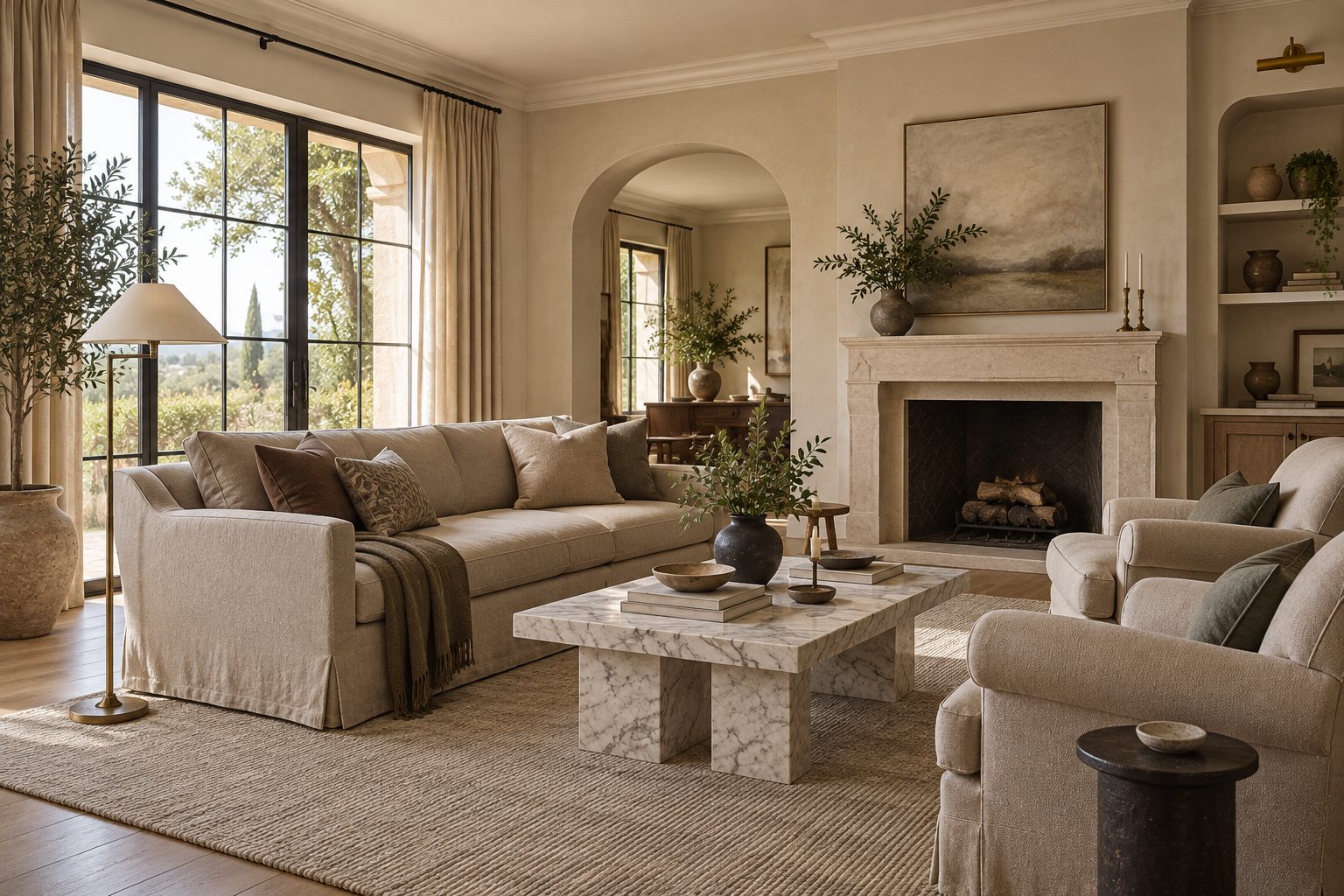
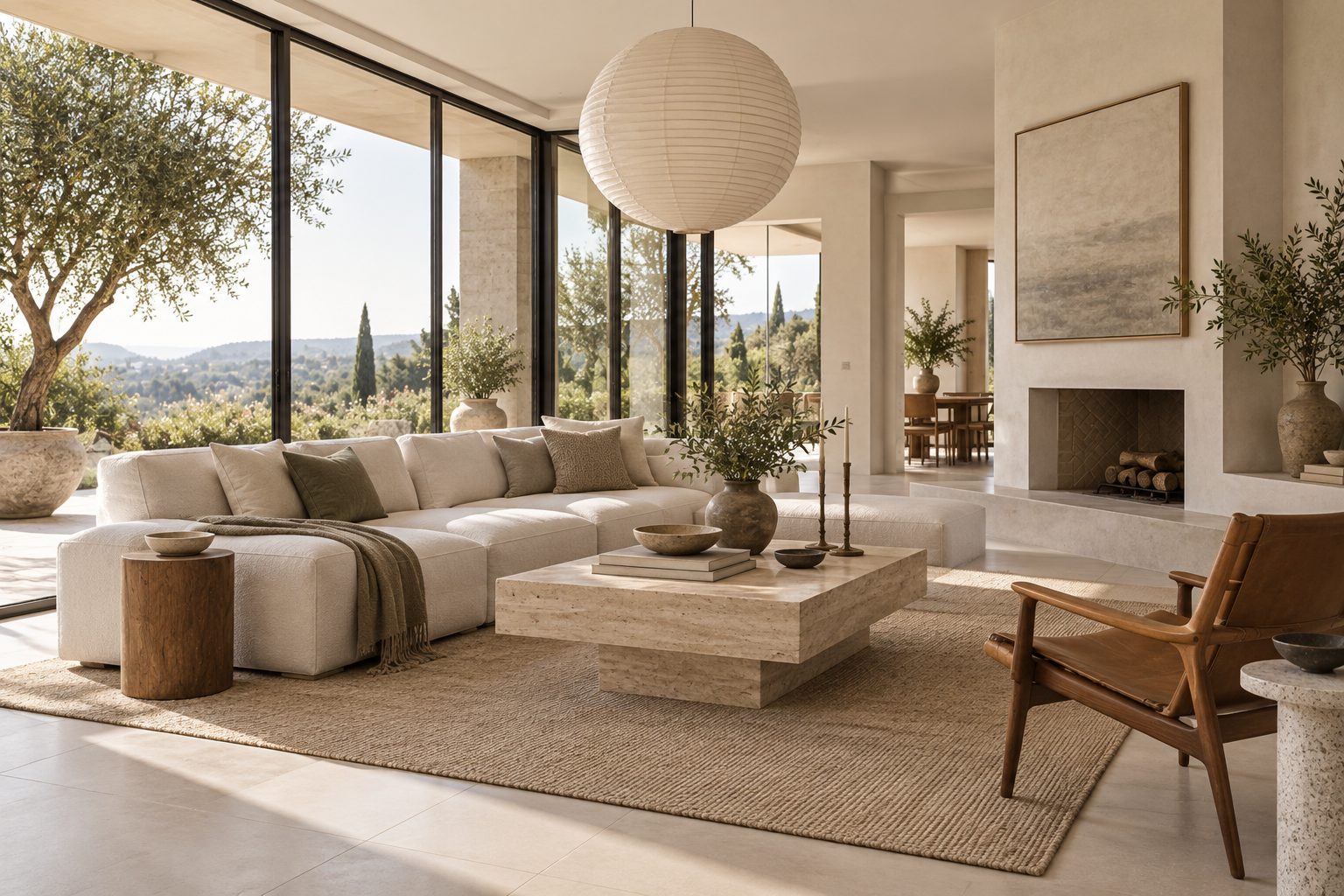
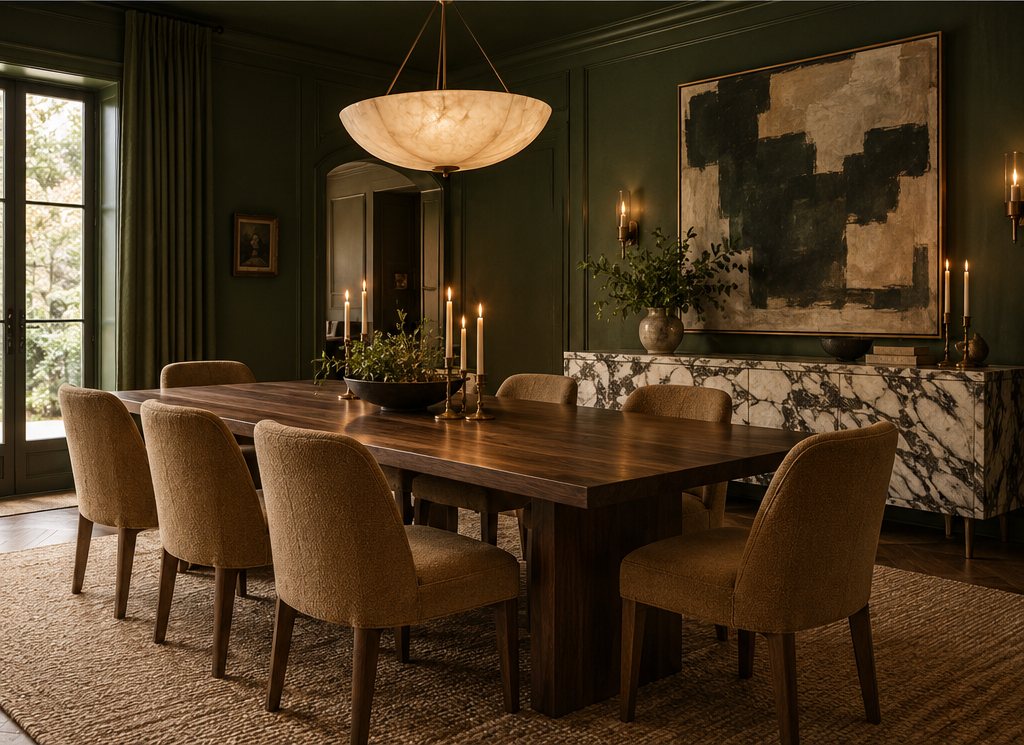
Coastal Interior Design: How to Get the Modern Coastal Look Right
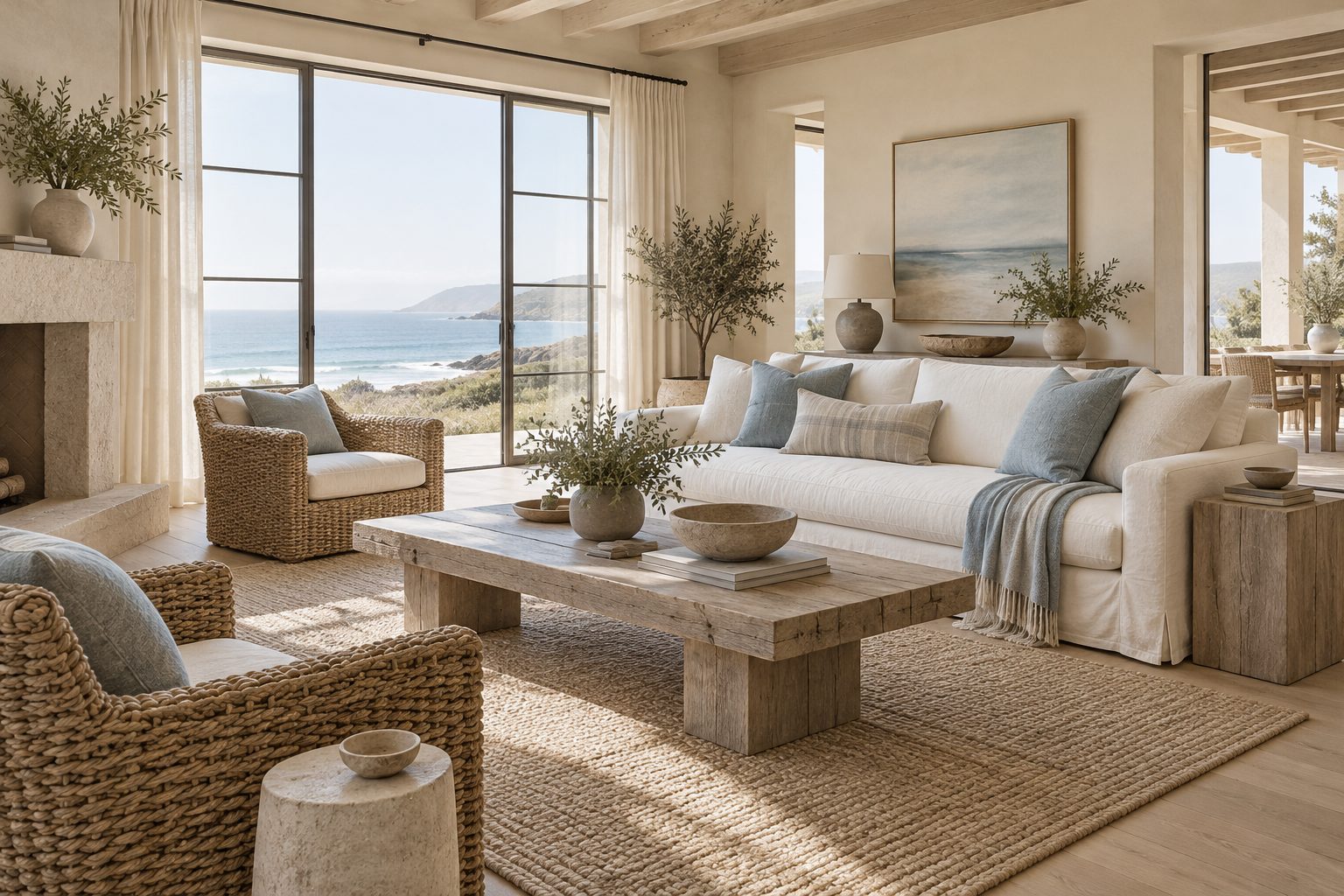
Coastal interior design builds a room from soft whites, washed blues, pale oak, linen and natural fiber, so it feels like a beach house without a single anchor. Most coastal rooms work on a 60-30-10 split of white, sand and blue.
Part of our guide: Interior Design Styles: 24 Decorating Styles Explained for 2027
Key takeaways
- Coastal interior design is defined by light, texture and a sand-and-sea palette, not by shells, anchors or signs
- Use a 60-30-10 color split: warm white walls, sand and oak in the furniture, one muted blue in textiles
- Modern coastal swaps the nautical stripes for linen slipcovers, pale oak, plaster and natural fiber rugs
- Specify performance linen or a 30,000+ Martindale washable fabric, because coastal rooms get sand, sun and wet swimsuits
Coastal interior design is a relaxed, light-filled style that borrows the palette and materials of the shore: warm whites, sand, washed blue, pale oak, linen, rattan and jute. The modern coastal version keeps the palette and drops the props, so the room feels like a beach house through light and texture rather than anchors, shells and painted signs. A 60-30-10 split of white, sand and blue gets most rooms there.
Coastal is one of the most searched looks in the US, and also one of the easiest to get wrong, because shops sell it as a theme rather than a style. This chapter is part of our interior design styles guide, and it sits close to Mediterranean and organic modern in its love of natural materials and daylight.
- Palette: warm white (LRV 80–88), sand and driftwood neutrals, one muted blue or sea green, a touch of navy.
- Core materials: pale oak or ash, linen, cotton, rattan, cane, jute, sisal, limewash and honed stone.
- Furniture shapes: deep, slipcovered sofas 38–42 in (97–107 cm) deep, rounded arms, open-weave chairs.
- Light: unlined or lightly lined sheers, 2700–3000K lamps, as much daylight as the plan allows.
- Avoid: literal nautical motifs, word art, high-gloss white and anything that looks bought as a set.
What is coastal interior style?
Coastal interior style is a casual, airy way of decorating built on light colors, natural textures and comfortable furniture that recalls a house near the water. The defining quality is ease: nothing precious, everything washable, surfaces that look better with a little wear. It grew out of American beach cottages on the Atlantic and Pacific coasts, where houses were whitewashed, furnished with slipcovered sofas and woven chairs, and left open to the breeze.
Coastal design is not one look but a family. Classic coastal leans crisp white and navy; Hamptons coastal is tailored, with paneled walls and striped upholstery; Californian coastal is warmer and more relaxed, with oak, terracotta and woven textures; and Mediterranean coastal shifts toward plaster, terracotta and olive, which our Mediterranean style guide covers in depth. What they share is a palette taken from sand, water and sky, and materials that feel good underfoot with bare feet.
The test we use for any coastal room: would it still feel coastal if you removed every object with a beach motif? If the answer is yes, the style is in the bones of the room, which is where it belongs.
What is modern coastal design?
Modern coastal design keeps the light palette and natural materials of traditional coastal but strips away the nautical decoration, using cleaner lines, warmer woods and more texture instead. It is the version most designers mean in 2026, and it will remain the dominant strand of coastal decorating ideas into 2027.
The key shifts from classic to modern coastal interior design are:
- From navy and white stripes to tonal neutrals: sand, oat, warm white and stone, with blue used as an accent rather than a theme.
- From white-painted furniture to natural oak: pale white oak, ash or bleached walnut, oiled or matte, never orange.
- From gloss to matte: limewash, plaster, honed stone and matte paint replace semi-gloss trim on every surface.
- From props to texture: a jute rug, a linen slipcover, a cane headboard and a ceramic lamp do the work shells used to do.
- From busy to edited: fewer objects, larger single pieces, more empty wall.
Modern coastal home decor also borrows a few ideas from Scandinavian and Japandi rooms: low furniture, a tight material count, and light used as a design material. The result is calmer and more grown-up, and it ages far better than a room built around a theme.
What colors are coastal?
Coastal colors are warm whites, sand and driftwood neutrals, washed sky blues, sea-glass greens and a deep navy or ink used sparingly. The safest structure is 60 percent warm white or pale sand on walls and large surfaces, 30 percent mid-tone neutrals in wood, rugs and upholstery, and 10 percent blue or green in textiles, art or a single painted piece.
#F4F0E8#E3D7C3#C2B49C#A9BFC9#9DB3A6#2F3E4ETwo rules keep coastal color from looking flat. First, use warm whites rather than stark, blue-based whites; a white with a slight cream or gray undertone, LRV 80–88, looks soft in strong coastal light, while a bright white at LRV 92+ looks clinical and glares. Second, choose blues that have gray in them. Saturated turquoise and royal blue are what make a coastal room look like a souvenir shop. A washed sky blue or a gray-green reads as water seen through haze, which is the effect you want.
For darker coastal rooms, such as a den or a north-facing bedroom, flip the ratio: navy or ink walls, white trim and ceiling, and sand-colored linen. Our interior color schemes guide explains how to test the undertones before committing.
How do you make coastal decor not look cheesy?
Coastal decor stops looking cheesy when the beach feeling comes from palette, material and light instead of from motifs, so the first fix is removing anything shaped like an anchor, shell, starfish or wave. The mistake we see most often is a perfectly good room spoiled by a dozen small themed accessories that each cost very little and together make the room look like a rental listing.
- Remove the literal objects. Signs with words, rope-wrapped lamps, ship wheels, painted oars, faux coral and seashell mirrors all go. Keep one genuine found object if it means something.
- Warm up the wood. Replace white-painted or distressed furniture with natural pale oak or ash in a matte finish; it adds warmth that white-on-white coastal lacks.
- Add texture in layers. One jute or sisal rug, one linen upholstery fabric, one woven element such as cane or rattan, and one ceramic or stone surface per room.
- Mute the blues. Swap saturated turquoise and bright navy stripes for washed blue, sea-glass green and one deep ink accent.
- Edit stripes and patterns. Allow one stripe and one small-scale pattern per room, both in low contrast.
- Choose real art. Abstract seascapes, large photographs of water or sand, botanical prints or plain ceramics beat any print with a beach slogan.
- Fix the light. Hang sheer linen curtains from ceiling height and add lamps at 2700K so the room glows at night instead of reading as a blank white box.
Applying just the first three steps transforms most beach house decor, and none of them requires buying expensive pieces.
What is coastal grandma style?
Coastal grandma style, also called coastal grandmother style, is a relaxed, well-off version of coastal decorating that mixes crisp white and blue with linen, antiques, books, fresh flowers and slipcovered furniture. The name became a social media trend a few years ago, but the look itself is classic East Coast summer house: comfortable, collected and slightly old-fashioned in the best way.
Its signatures are easy to list:
- Slipcovered white or oat sofas with deep seats and loose cushions.
- Blue-and-white ceramics such as ginger jars and plates, plus striped or checked cotton.
- Natural fiber rugs layered with a faded vintage rug.
- Stacks of books, hydrangeas in jars, wicker baskets and a cashmere throw on the sofa arm.
- Painted paneling or shiplap in a soft white, with antique wood furniture as contrast.
Coastal grandma works best in houses with some age and architecture. In a new-build apartment it can tip into costume, so take the palette, the linen and the books, and leave the hydrangea-and-ginger-jar styling for one vignette.
How do you design a coastal living room?
A coastal living room needs a deep, washable sofa, a natural fiber rug large enough to anchor the whole seating group, light-filtering window treatments and a palette of warm white, sand and one blue. Comfort is the brief: coastal living room decor should invite you to sit down in damp clothes or with sandy feet.
| Element | Coastal spec | Size or rating | Typical cost |
|---|---|---|---|
| Sofa | Slipcovered, deep seat, rounded or track arm | 84–96 in (213–244 cm) wide, 38–42 in (97–107 cm) deep | $1,800–5,500 |
| Upholstery fabric | Performance linen blend or washable cotton | 30,000+ Martindale, solution-dyed if sunlit | $40–110 per yd |
| Rug | Jute, sisal or flatweave wool | 8 × 10 ft (244 × 305 cm) for most rooms | $350–1,800 |
| Coffee table | Pale oak, travertine or woven top | 2/3 sofa length, 16–18 in (41–46 cm) high | $400–2,000 |
| Accent chairs | Rattan, cane or rope-weave frame | 28–32 in (71–81 cm) wide | $350–1,400 each |
| Curtains | Unlined or lightly lined linen sheers | 2–2.5x window width, ceiling-hung | $120–450 per panel |
| Lighting | Ceramic or linen lamps, woven pendant | 2700–3000K, CRI 90+ | $150–900 per fixture |
The rug is where coastal rooms most often go wrong. Natural fibers look best large; a small jute rug floating in front of the sofa looks like a doormat. Choose a size where at least the front legs of every seat sit on it, and see our natural fiber rugs guide for the jute, sisal and seagrass trade-offs. Jute is soft but sheds and stains; sisal is tougher but scratchy; a wool-jute blend is the best compromise for a family room.
How do you design a coastal bedroom?
Coastal bedroom design relies on soft white or pale blue walls, layered linen bedding, a natural headboard in cane, rattan or pale oak, and light-filtering curtains backed with a blackout layer for sleep. Coastal bedrooms should feel cool, airy and uncluttered, like a room you wake up in on holiday.
- Bed: a queen at 60 × 80 in (152 × 203 cm) needs a room of at least 10 × 12 ft (3.0 × 3.7 m); leave 24–30 in (61–76 cm) on each side and 36 in (91 cm) at the foot.
- Headboard: cane, rattan or upholstered linen, 48–56 in (122–142 cm) tall from the floor for a queen.
- Bedding: stonewashed linen or percale in white and sand, one blue or striped accent, and a waffle or cotton blanket rather than a heavy duvet in summer.
- Rug: a 8 × 10 ft (244 × 305 cm) jute or flatweave under a queen, extending 24 in (61 cm) on each side.
- Window: sheer linen on one track and blackout lining on a second, both ceiling-hung.
- Lighting: ceramic or woven bedside lamps at 2700K, and a woven pendant instead of a flush ceiling light.
Modern coastal bedrooms work best with a restrained material count: oak, linen, cane and one ceramic, with no more than three accessories on each nightstand. That restraint is also the broader direction for sleep spaces in 2027.
Our verdict on coastal design in 2027
Coastal design is here to stay, but the themed version is finished; in 2027 the coastal rooms that look current are warmer, more textured and almost entirely free of beach motifs. We expect three things to define the next phase: warmer sand and clay tones replacing gray-white, more plaster and limewash on walls, and a move from white oak toward slightly deeper honey and bleached walnut tones.
If we were furnishing a beach house interior from scratch this year, we would spend first on a large slipcovered sofa in performance linen, a wool-jute rug sized properly, and full-height sheer curtains, then buy everything else slowly. We would paint every room in one warm white, add one blue room for contrast and skip the decorative accessories entirely for the first month. A coastal house should look lived in, and that only happens over time. Mixing two or three wood tones carefully, as our guide to mixing wood tones explains, is what gives an all-white coastal scheme its depth.
Ready to furnish a coastal room or a whole beach property? Our sourcing desk works with factories that make rattan, slipcovered upholstery and solid oak furniture for coastal resorts. Request factory quotes for coastal furniture and we will match your specification to the right workshop.
Free toolCurtain Size CalculatorRod length, panel size, ready-made match and yardage.Shop & source the look
Buy it today — or have it made
Retail links are affiliate links: we may earn a commission at no extra cost to you (disclosure). “Get it made” sends the item to our sourcing desk for factory quotes in custom sizes and finishes.
Frequently asked questions
What is coastal interior style?
Coastal interior style is a relaxed, airy way of decorating built on warm whites, sand neutrals, washed blues and natural materials such as linen, pale oak, rattan and jute. It recalls a beach house through light, texture and comfortable, washable furniture rather than through nautical decorations, and works in any home, not only by the sea.
What is modern coastal design?
Modern coastal design keeps the light palette and natural materials of classic coastal but drops the nautical props. It uses cleaner lines, pale natural oak instead of white-painted furniture, matte limewash and plaster, tonal sand and oat neutrals, and texture from jute, linen and cane. Blue becomes an accent instead of a theme.
What is coastal grandma style?
Coastal grandma style is a collected, comfortable take on East Coast summer-house decorating: slipcovered white sofas, blue-and-white ceramics, striped cotton, natural fiber rugs, stacks of books, fresh flowers and antique wood furniture. It looks best in older houses with some architecture; in new apartments, borrow the palette and linen rather than the full styling.
What colors are coastal?
Coastal colors are warm whites with an LRV of 80–88, sand and driftwood neutrals, washed sky blue, sea-glass green and a deep navy used sparingly. A 60-30-10 split works well: white walls, sand and oak in furniture and rugs, and blue or green in textiles. Choose blues with gray in them rather than saturated turquoise.
How do you make coastal decor not look cheesy?
Remove literal motifs such as anchors, shells, rope lamps and word signs, then let palette, material and light carry the style. Swap white-painted furniture for natural oak, layer jute, linen and cane, mute bright blues to washed tones, and choose abstract or photographic art. Those changes cost little and remove the themed look.
Some links may be affiliate links. Regulations and specifications change — always confirm with suppliers and qualified professionals.