French Country Interior Design: Colors, Furniture and Modern Ideas
French country interior design pairs rustic materials such as limestone, plaster and oak beams with curved, painted furniture and soft faded colors. Here are 6 core colors, the key pieces and a 7-step plan for a modern version.
Part of our guide: Interior Design Styles: 24 Decorating Styles Explained for 2027
Key takeaways
- French country interior design combines rustic farmhouse materials with refined curved furniture, so a room feels both relaxed and elegant
- The palette is sun-faded: cream, butter yellow, lavender gray, sage, soft blue and terracotta, usually on limewashed or plastered walls
- French country differs from farmhouse through its curves, carved and painted furniture, toile and stripes, and stone floors rather than shiplap and black metal
- To make French country modern, keep the materials and the curves but cut the pattern, the ruffles and the collected objects by half
French country interior design is a relaxed, rural style from the farmhouses and manor houses of provincial France that pairs rustic materials, such as limestone floors, plastered walls and oak beams, with curved, carved or painted furniture and soft, sun-faded colors. The result is warmer than formal French design and more refined than American farmhouse, and it adapts well to modern homes.
The style has been popular for decades, but the version that works in 2027 is lighter and less cluttered than the one many people remember. This article is part of our interior design styles guide and covers what French country is, the colors and furniture that define it, how it differs from farmhouse, and how to make it feel current.
- Origin: rural houses of Provence, Normandy and the French countryside, 17th to 19th century.
- Core materials: limestone or terracotta floors, lime plaster, oak and walnut, wrought iron, linen and cotton.
- Furniture signature: cabriole legs, scrolled aprons, carved or painted finishes, rush or caned seats.
- Palette: cream, butter yellow, lavender gray, sage, faded blue and terracotta, with walls typically at LRV 60–80.
- Patterns: toile, ticking stripe, small florals and checks, used in two or three at most per room.
What is French country style?
French country style is a decorating approach that mixes the rough, practical materials of a farmhouse with the curves and craftsmanship of French provincial furniture. It sits between rustic and refined. A French country room might have a worn limestone floor and timber ceiling beams, but also a carved walnut armoire, a painted bergère chair and linen curtains in a faded toile.
Three ideas hold the style together. First, natural, aged surfaces are welcome; patina on wood, stone and metal is part of the look. Second, furniture is curved and slightly feminine: cabriole legs, serpentine fronts and scrolled arms are common. Third, the room feels collected rather than bought at once, with pieces from different decades living together. French country interiors are also practical; kitchens are built for cooking and living rooms for sitting, which is why the style suits family homes.
Where does French country interior decorating come from?
French country interior decorating comes from rural French homes of the 17th to 19th centuries, where local craftsmen copied the elegant furniture of Paris in simpler forms and humbler woods for farmhouses and country manors. These provincial pieces used oak, walnut, chestnut and fruitwood instead of gilded veneer, and they were often painted or left in a waxed finish.
The region shaped the variant. Provençal interiors in the south lean toward ochre, lavender, terracotta and printed cottons, with tiled floors suited to the heat. Northern interiors in Normandy and Burgundy lean toward heavier oak, stone and cooler grays. The style became widely known in the United States in the second half of the 20th century, and country French decor became shorthand for a warm, slightly romantic look with roosters, toile and copper pots. Today's French country home decor keeps the materials and the forms and drops most of the souvenir objects.
What colors are French country?
French country colors are soft and sun-faded: creamy whites, butter yellow, lavender gray, sage green, pale blue and terracotta, set against natural stone and wood. Nothing should look saturated or new; a good test is whether the color looks like it has been in the sun for twenty years.
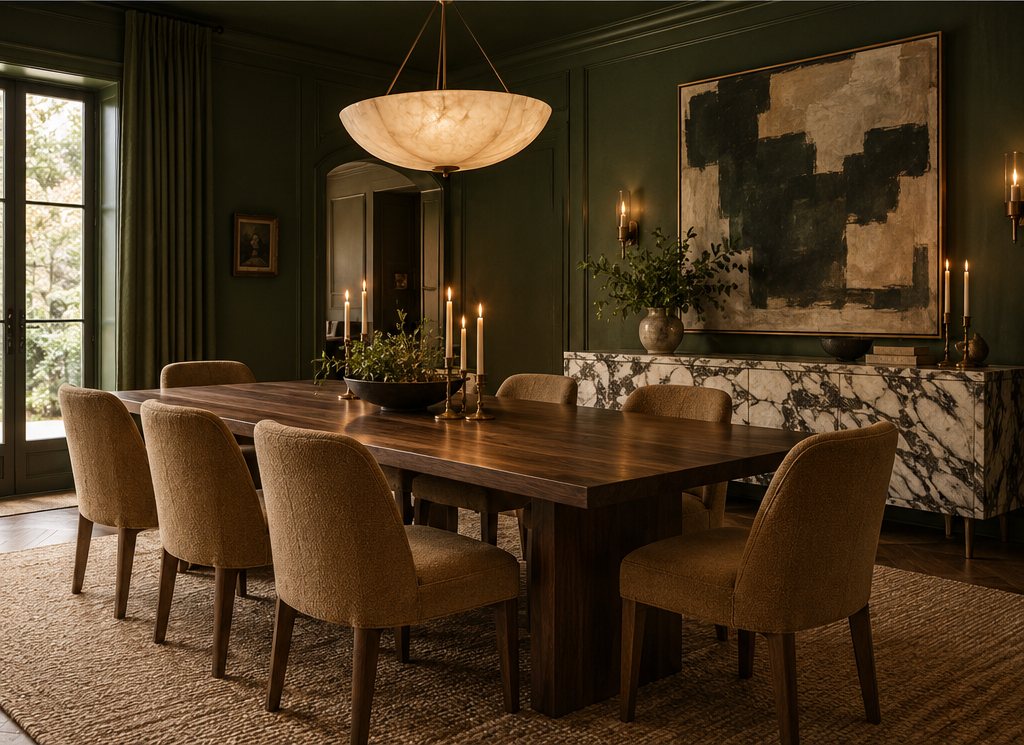
#F2EADA#E8D49A#B5B2C2#A9B39A#9DB3C2#B9673FUse cream or chalk white on walls, ideally in limewash or mineral paint for the soft, cloudy texture plaster gives. Bring in butter yellow or sage on painted furniture, kitchen cabinetry or a single room. Lavender gray and faded blue work on shutters, interior doors and linens. Terracotta arrives mostly through floor tiles and pottery. Accents of black come from wrought iron rather than paint. If you want a darker French country room, a muted olive or a deep blue-gray at LRV 15–25 in a dining room or library stays within the style.
Which furniture and materials define French country decor?
French country decor is defined by curved provincial furniture in oak, walnut or painted wood, combined with stone or terracotta floors, plaster walls, timber beams and wrought iron. The table below lists the core pieces and the specifications we look for when sourcing them.
| Element | What to look for | Typical size | Finish |
|---|---|---|---|
| Armoire | Carved or paneled doors, scrolled apron, bun or cabriole feet | 48–60 in (122–152 cm) wide, 78–90 in (198–229 cm) tall | Waxed walnut or oak, or painted cream with distressing |
| Bergère chair | Upholstered closed arms, exposed carved frame, loose seat cushion | 26–30 in (66–76 cm) wide | Painted gray or cream frame, linen or toile cover |
| Farmhouse dining table | Thick plank top, turned or trestle legs | 36–40 in (91–102 cm) wide, 72–96 in (183–244 cm) long | Oiled oak, often with a worn edge |
| Ladder-back or rush chairs | Woven rush or cane seat, simple turned frame | Seat height 17–18 in (43–46 cm) | Natural, black or painted |
| Flooring | Limestone, reclaimed terracotta tiles or wide oak | Stone 16 × 16 in (40 × 40 cm) or random ashlar | Honed or tumbled, sealed matte |
| Walls | Lime plaster or limewash, exposed stone in places | Two to three coats | Matte, slightly mottled |
| Lighting | Wrought iron or wood chandeliers, tole sconces, linen-shaded lamps | Chandelier 24–36 in (61–91 cm) wide | Black iron, aged gilt or painted metal |
For textiles, think washed linen, cotton ticking and toile in one or two colors. Keep pattern to two or three per room, and keep the scales different: a large toile on curtains, a small check on cushions and a plain linen on the sofa.
What is the difference between French country and farmhouse?
French country is softer and more decorative than farmhouse: it uses curved and carved furniture, faded pastels, toile and stone floors, while farmhouse relies on straight lines, white shiplap, black metal and a more utilitarian feel. Both share wood, open shelving and a lived-in mood, which is why people confuse them.
| Trait | French country | Farmhouse |
|---|---|---|
| Furniture lines | Curved, cabriole legs, carved aprons | Straight, chunky, plank and trestle |
| Palette | Cream, butter, lavender gray, sage, faded blue | White, black, gray, natural wood |
| Walls | Lime plaster, exposed stone | Shiplap, board and batten, flat white paint |
| Floors | Limestone, terracotta, wide oak | Wide pine or oak, often distressed |
| Metals | Wrought iron, aged brass, copper | Matte black, galvanized steel |
| Textiles | Toile, ticking, florals, linen | Buffalo check, grain-sack stripe, plain cotton |
| Mood | Romantic, elegant, collected | Practical, casual, clean |
If you like the warmth of both, our modern farmhouse decor guide covers the American side, and the two blend easily in kitchens.
What does a French country kitchen and living room look like?
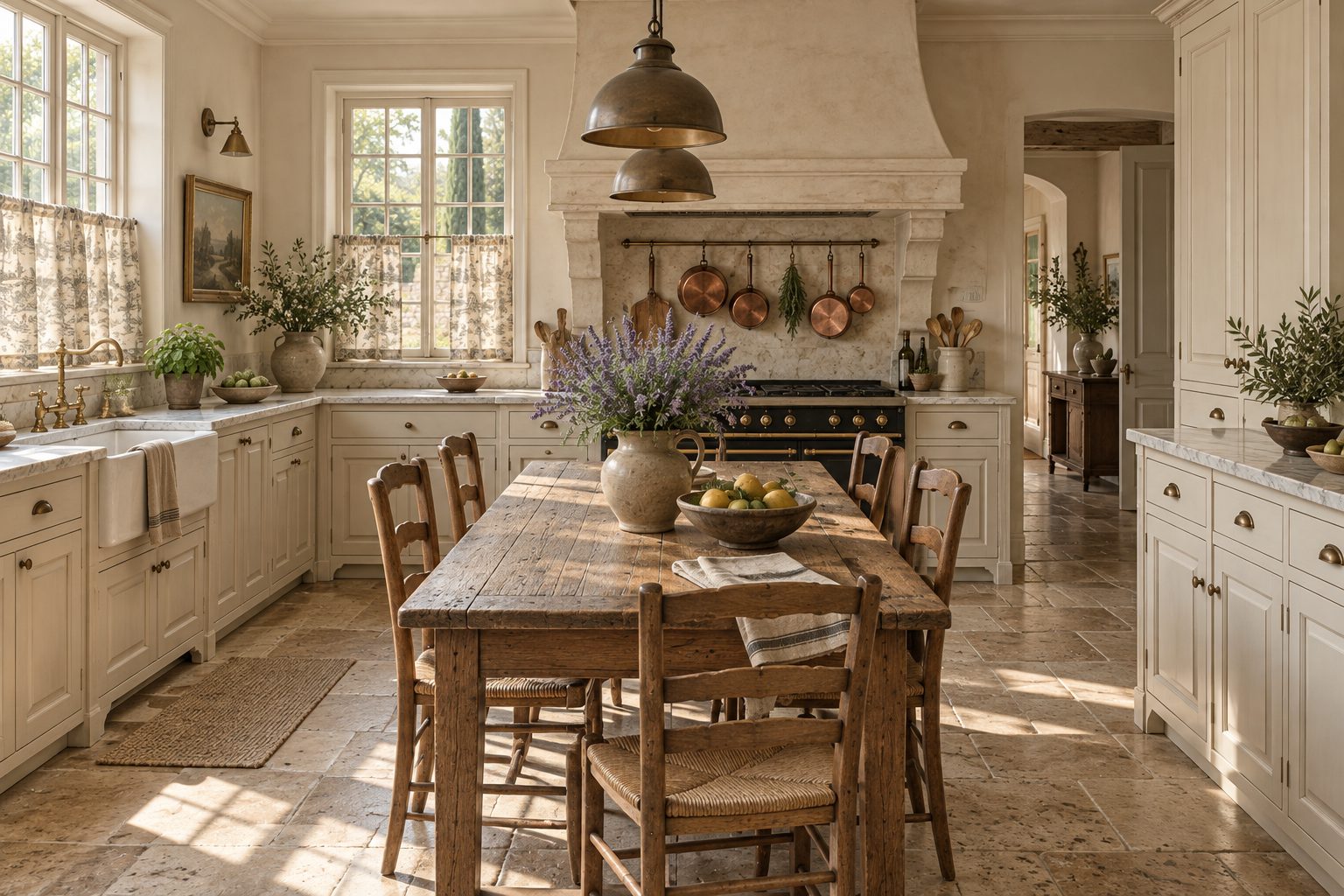
A French country kitchen is a working kitchen with a stone or tile floor, a large range set into a plaster or tiled alcove, open shelves or glass-front cabinets and a big wooden table, while a French country living room centers on a stone fireplace, slipcovered seating and painted antiques.
French country kitchen
- Cabinetry: inset or framed doors with simple beaded or raised panels, painted cream, sage or soft gray, with aged brass or iron hardware.
- Range wall: a range 36–48 in (91–122 cm) wide set under a plaster hood, with a zellige or handmade terracotta backsplash.
- Counters: honed limestone, marble or butcher block, 1.25–1.5 in (3–4 cm) thick.
- Island or table: a freestanding table or furniture-style island with turned legs, 36 in (91 cm) high, with 42–48 in (107–122 cm) of clearance around it.
- Open storage: a plate rack, copper pans on a rail and stoneware on open shelves, edited to everyday pieces.
Our kitchen trends 2027 report shows how unlacquered metals, plaster hoods and furniture-style islands are moving into the mainstream, all of which suit this style.
French country living room
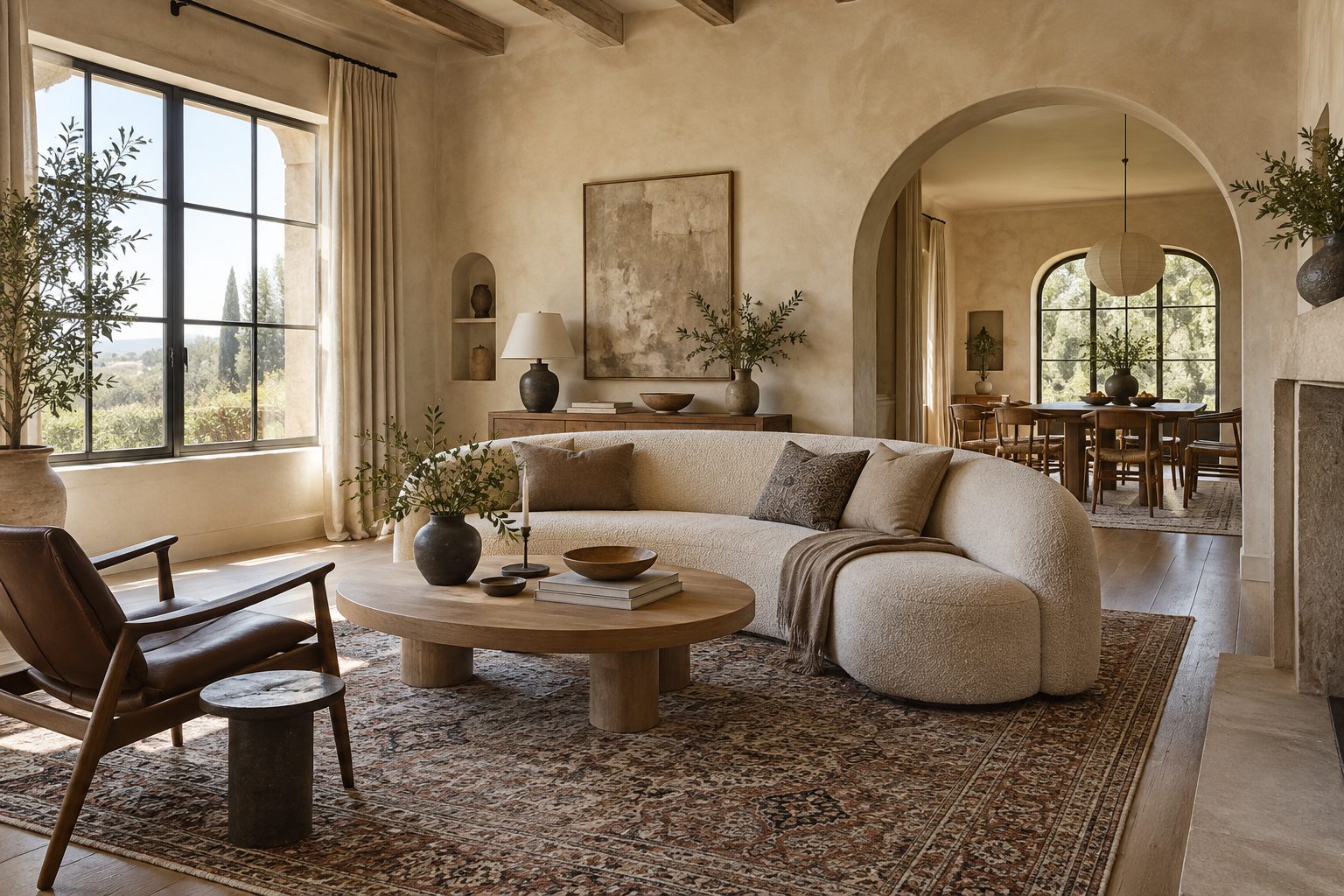
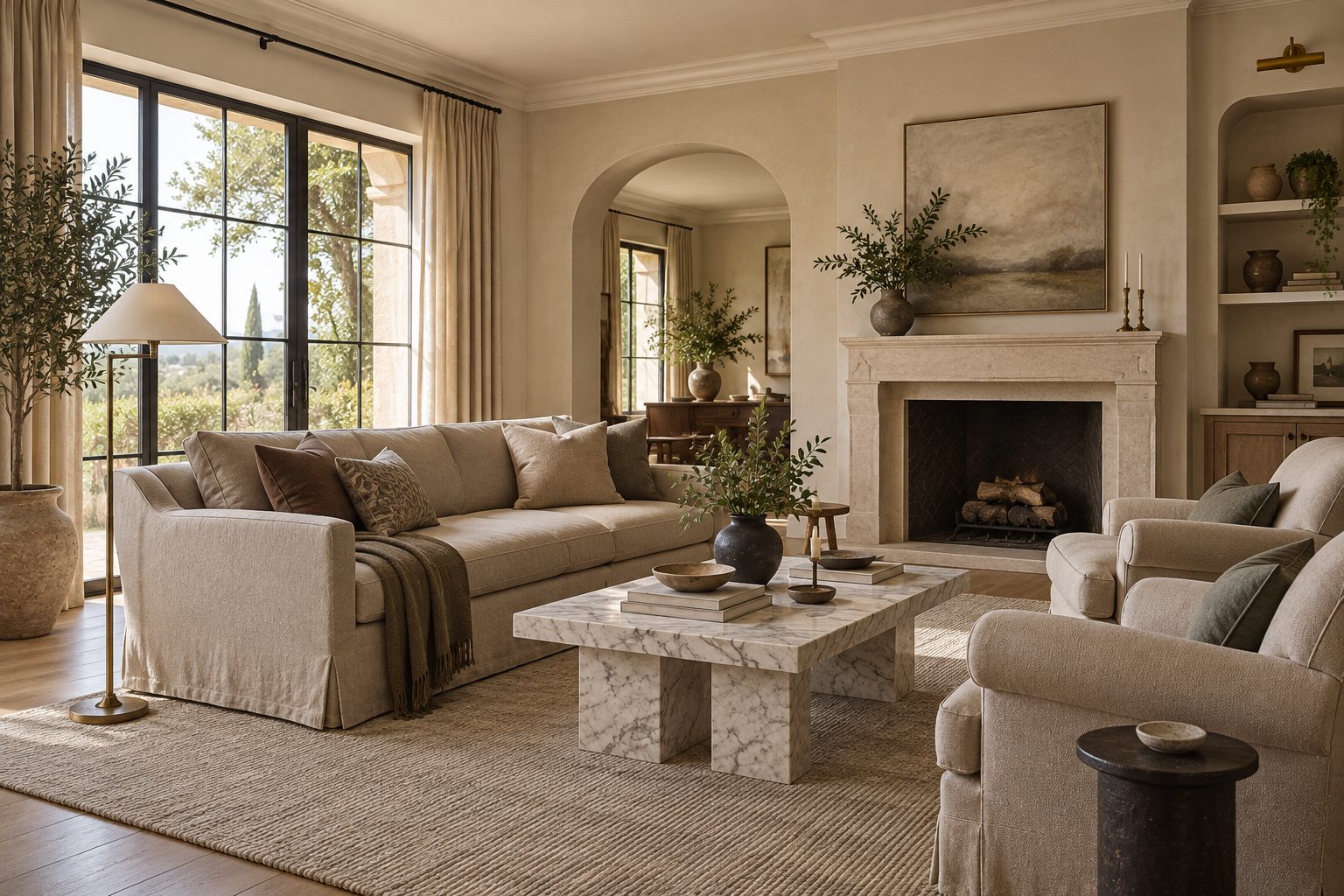
Anchor the room on the fireplace with a sofa 80–90 in (203–229 cm) long in washed linen or a slipcover, flanked by a pair of bergère chairs. Add a rustic oak or stone coffee table, an antique rug or a flatweave in faded tones, and linen curtains hung from just below the ceiling with 2–2.5 times fullness. A gilt or painted-frame mirror over the mantel and a pair of iron sconces complete it.
Scale matters more than objects in French country style decor. Keep the coffee table 16–18 in (41–46 cm) from the sofa, leave 30–36 in (76–91 cm) walkways, and choose a rug large enough for the front legs of every seat, usually 8 × 10 ft (244 × 305 cm) or 9 × 12 ft (274 × 366 cm). Put the color into slipcovers and curtains rather than walls, so you can shift from a summer scheme of white linen and faded blue to a winter one of ochre, rust and wool without repainting. On the mantel, a pair of candlesticks, a stoneware jug and one leaning painting is plenty; the old habit of filling every ledge with plates, roosters and baskets is what made the style feel themed.
How to make French country look modern
To make French country look modern, keep the natural materials and one or two curved signature pieces, then strip back pattern, ornament and accessories so the room has more empty space and cleaner lines. Modern French country decor is French country with editing. The steps:
- Start from a pale, textured envelope. Limewash or plaster walls in one warm white, trim to match, and a pale oak or limestone floor.
- Choose one hero antique per room. An armoire, a carved console or a painted bergère, and let the rest of the furniture be simple.
- Swap fussy for tailored upholstery. A tight-back sofa in linen or a slubby cotton reads more modern than ruffled skirts and fringe.
- Limit pattern to one. A single toile or ticking stripe on curtains or a chair, with everything else in solid linen.
- Use modern lighting with old forms. A simple iron chandelier, plaster sconces or ceramic lamps with pleated linen shades, all at 2700K.
- Mix in contemporary art. A large abstract painting above a carved console is the fastest way to signal the style is current.
- Edit the accessories. Keep three to five objects per surface, mostly functional: stoneware, a bowl of fruit, a stack of books.
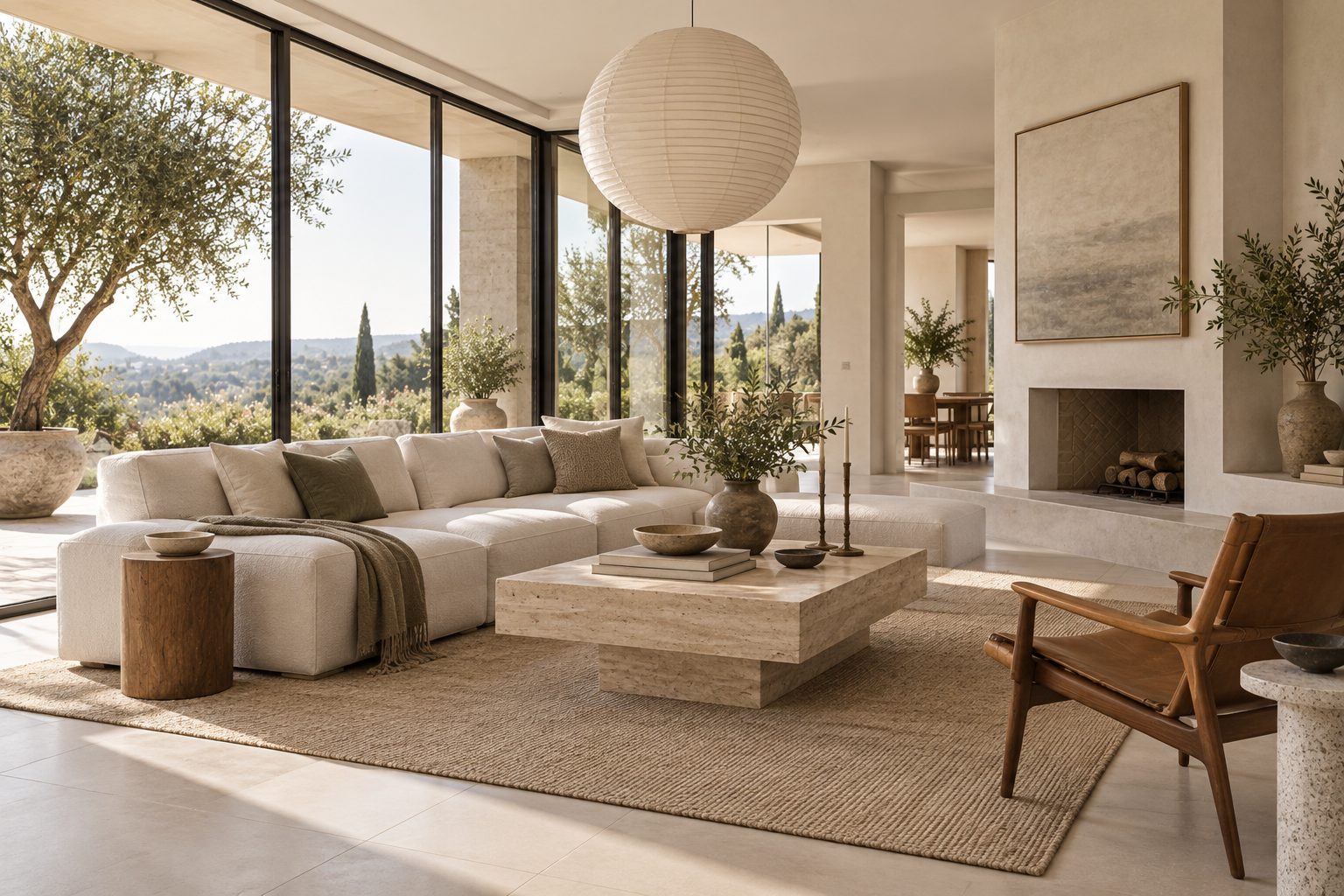
The modern version borrows from Mediterranean style, which shares the plaster, stone and terracotta but uses even less ornament.
Our verdict: French country in 2027
French country is well placed for 2027 because the materials it depends on, limewash, honed stone, unlacquered brass, oak and washed linen, are exactly the materials leading current interiors. What has dated is the dense, themed version with rooster motifs, heavy toile on every surface and too many collected objects.
The way we would approach French country interiors now is to treat them as a material palette first and a decorating style second. Lay a honed limestone or reclaimed terracotta floor, plaster or limewash the walls, choose painted cabinetry in a soft butter or sage, and add two or three genuine curved pieces. Keep the rest calm. French country cottage decor works the same way at a smaller scale: one painted armoire, linen curtains and a stone floor give a small house more character than a room full of accessories.
Looking for armoires, bergère chairs or plank dining tables made to your dimensions? Share your list with our furniture sourcing team and we will gather factory quotes for provincial-style pieces in solid oak, walnut or painted finishes.
Free toolTile CalculatorWork out tiles, boxes, grout and adhesive with the right wastage.Shop & source the look
Buy it today — or have it made
Retail links are affiliate links: we may earn a commission at no extra cost to you (disclosure). “Get it made” sends the item to our sourcing desk for factory quotes in custom sizes and finishes.
Frequently asked questions
What is French country style?
French country style is a relaxed decorating style based on rural French homes that mixes rustic materials, such as limestone, lime plaster, oak beams and terracotta, with curved, carved or painted provincial furniture. It uses soft, faded colors and linen, ticking and toile textiles, so rooms feel both elegant and lived in.
What colors are French country?
French country colors are soft and sun-faded: chalky cream and warm white on walls, butter yellow, sage green, lavender gray and faded blue on cabinetry, furniture and linens, and terracotta from floors and pottery. Black appears only through wrought iron. Walls usually sit at an LRV of 60–80, often in limewash for texture.
What is the difference between French country and farmhouse?
French country uses curved, carved furniture, faded pastels, toile and stone or terracotta floors, with wrought iron and aged brass. Farmhouse uses straight, chunky furniture, white shiplap, black metal and buffalo check. French country feels romantic and collected; farmhouse feels practical and casual. Both share natural wood and open shelving.
How do you make French country look modern?
Keep the plaster walls, stone or oak floors and one curved antique per room, then simplify everything else. Use a tailored linen sofa, limit pattern to a single toile or stripe, choose simple iron or plaster lighting at 2700K, hang one large contemporary artwork and keep only three to five objects per surface.
Some links may be affiliate links. Regulations and specifications change — always confirm with suppliers and qualified professionals.