Wall Molding Ideas: Picture Frame, Box and Modern Trim Designs
The best wall molding ideas use picture frame or box molding with consistent 3–6 in (8–15 cm) margins, painted the wall color. Spacing formulas, material costs, modern designs and a step-by-step install.
Part of our guide: Wall Treatments Guide: 14 Wall Finishes & Covering Ideas
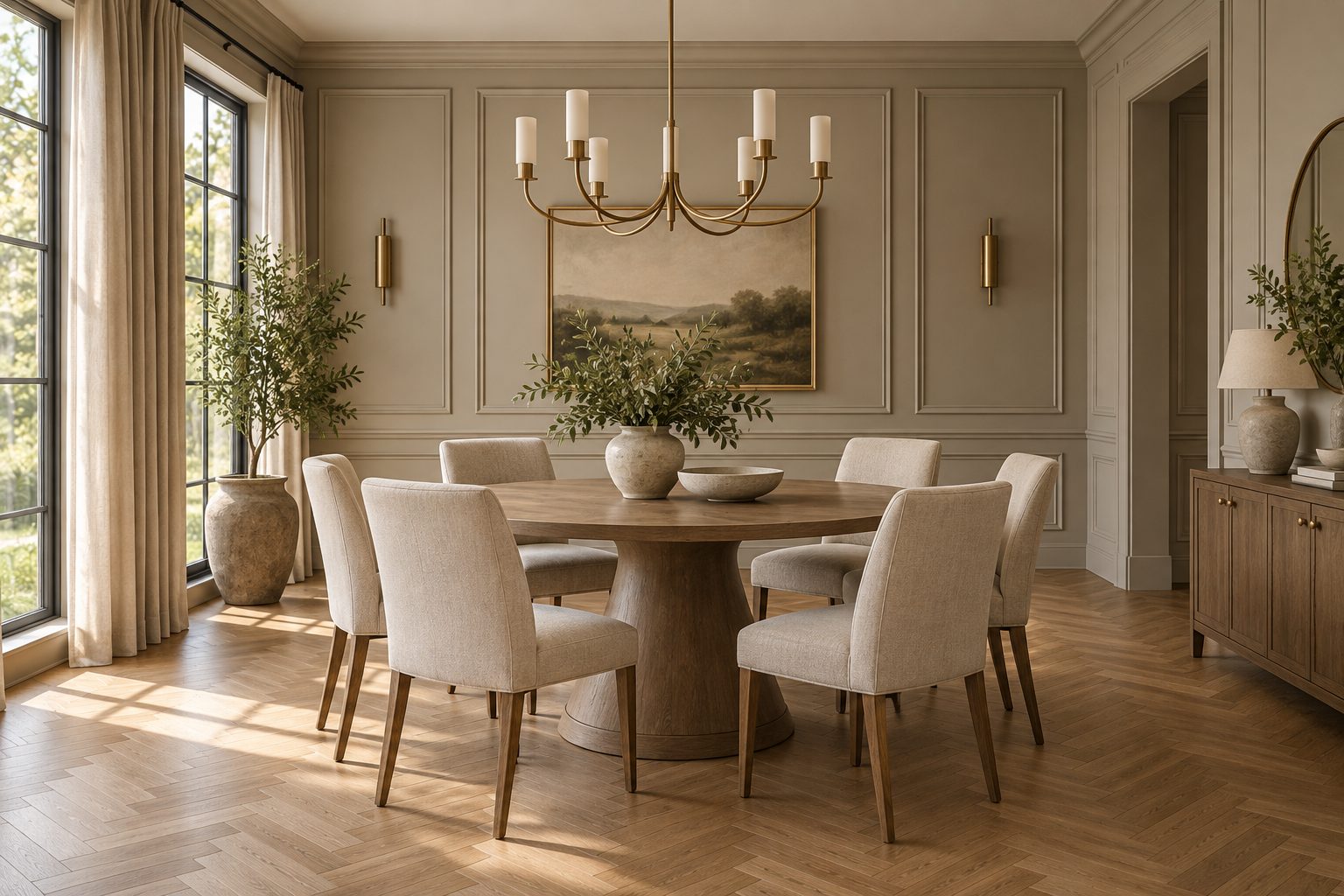
Key takeaways
- Keep box margins consistent: 3–6 in (8–15 cm) between boxes and the same reveal from the chair rail, baseboard and ceiling
- Primed MDF and finger-jointed pine cost $1–4 per linear ft and suit painted walls; polyurethane suits curves and damp rooms; plaster suits period homes
- Paint molding and wall the same color for a modern tonal look, using a satin or semi-gloss on the trim for subtle contrast
- A DIY accent wall of picture frame molding costs about $100–300 in materials; professionally installed it runs $500–2,000
The wall molding ideas that look best in 2026 are picture frame or box molding laid out with consistent 3–6 in (8–15 cm) margins and painted the same color as the wall, so the trim adds shadow and proportion rather than contrast. Primed MDF costs about $1–3 per linear ft, a DIY accent wall runs $100–300 in materials, and the spacing math matters more than the profile.
Molding on walls is the fastest way to give a plain drywall box the proportions of an older house. It works in bedrooms, dining rooms, halls and behind beds, and it costs far less than full paneling. This article is part of our wall treatments guide, and it covers the main wall trim designs, how to space them, which materials to buy, what it costs and how to install it.
- Definition: wall molding is decorative trim applied to the face of a wall to create panels, borders or lines.
- Box margins: 3–6 in (8–15 cm) between boxes, with the same reveal used around the whole wall.
- Chair rail height: 32–36 in (81–91 cm), or about one-third of the wall height.
- Typical profile: 1.25–2.5 in (3–6 cm) wide, 0.5–0.75 in (13–19 mm) deep for picture frame molding.
- Cost: $1–10 per linear ft in materials; $6–15 per linear ft installed.
What is picture frame molding?
Picture frame molding is thin decorative trim mitered into rectangles on a flat wall so each rectangle looks like an empty picture frame. Also called box molding or applied panel molding, it imitates the raised and recessed panels of traditional wood paneling at a fraction of the cost.
The boxes can run full height, from baseboard to just under the crown, or sit above and below a chair rail in two tiers. A typical profile is 1.25–2.5 in (3–6 cm) wide with a small ogee or bead edge, which catches light and creates a shadow line. Because it is applied directly over drywall, picture frame molding works in rentals with permission, new builds and older homes alike, and it is reversible with filler and paint.
Which wall molding designs work best?
Six wall trim designs cover most rooms: full-height picture frame molding, two-tier boxes with a chair rail, wainscoting, a single chair rail or picture rail, grid or board-and-batten, and modern linear molding. Choose by ceiling height and the style of the house.
Full-height picture frame molding
Tall rectangles from baseboard to ceiling suit bedrooms, behind-the-bed accent walls and rooms with 9 ft (2.7 m) ceilings or more. They emphasize height and feel elegant, Parisian and calm.
Two-tier boxes with a chair rail
A chair rail at about one-third of the height, small boxes below and tall boxes above. This is the classic dining room and hallway design, and it protects the lower wall from chair backs.
Wainscoting
Panels or boards on the lower third or half of the wall only, capped with a rail. Our wainscoting ideas guide covers the styles and heights in depth.
Chair rail or picture rail alone
A single horizontal line is the simplest trim on walls. A picture rail sits 12–20 in (30–51 cm) below the ceiling and can be used to hang art on hooks; it suits period houses with tall ceilings.
Grid and board-and-batten
Flat battens laid out in a square or rectangular grid, or vertical battens over a flat board. It reads more farmhouse or modern than traditional, and it is forgiving of slightly uneven walls.
Modern linear molding
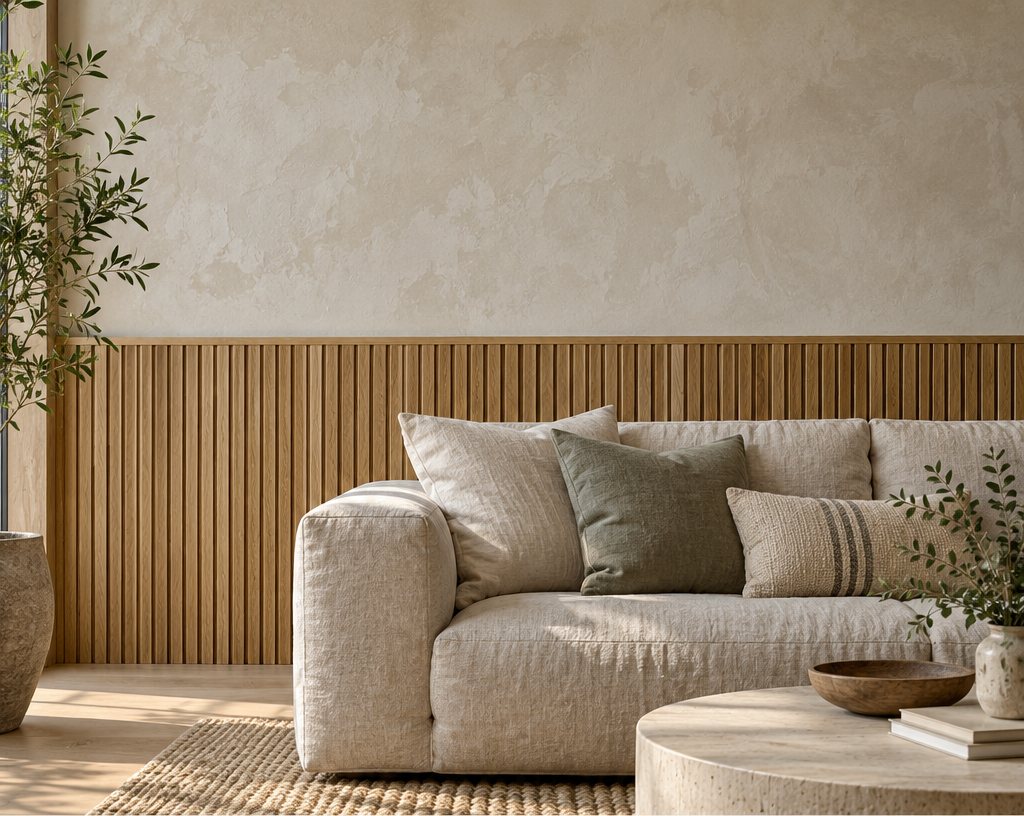
Modern wall molding uses thin, square-edged strips, often 0.5–1 in (13–25 mm) wide, in simple rectangles, arches or vertical lines. Painted tonal with the wall, it gives texture without ornament, which is why it suits minimalist and Japandi rooms. For full-surface options, see our wall paneling ideas.
Ceiling height should steer the choice. Under 8 ft (2.4 m), stick to full-height boxes or vertical battens, which pull the eye upward; a chair rail on a low wall cuts it in half and makes the room feel shorter. Between 8 and 9 ft (2.4–2.7 m), any of the six designs works. Over 9 ft (2.7 m), two tiers, a picture rail or a combination of boxes and a deep crown gives the wall enough structure to stop it feeling empty. Match the profile size to the room as well: slim 1.25 in (3 cm) profiles for small rooms, 2–2.5 in (5–6 cm) for large ones.
How far apart should wall molding boxes be?
Wall molding boxes should be 3–6 in (8–15 cm) apart, and the same distance should be used between the boxes and the baseboard, chair rail, ceiling or corners, so every reveal around the wall is consistent. Consistency is what makes molding look built-in rather than stuck on.
Use this layout method for any wall:
- Measure the wall width between corners, or between a corner and a door or window casing.
- Choose the margin. 3–4 in (8–10 cm) for small walls and low ceilings; 5–6 in (13–15 cm) for large walls and tall rooms.
- Choose the number of boxes. Aim for boxes that are taller than wide above the rail, roughly 1:1.5 to 1:2. Odd numbers usually look best on a feature wall.
- Calculate box width: wall width minus (number of boxes + 1) × margin, divided by the number of boxes. For a 144 in (366 cm) wall with 3 boxes and 4 in margins: (144 − 16) ÷ 3 = 42.7 in (108 cm) per box.
- Calculate box height the same way vertically: the space between baseboard and chair rail, or between chair rail and ceiling, minus two margins.
- Align with openings. Where a window or door interrupts the wall, align box edges with the casing and size the boxes above and below to match.
Draw the wall to scale or tape the boxes on with painter's tape before buying. Seeing tape on the wall for a day catches proportion problems that look fine on paper.
What is the best material for wall molding?
The best material for wall molding on a painted wall is primed MDF, because it is cheap, stable, smooth and easy to cut; polyurethane is best for curves, arches and humid rooms, and solid pine or poplar for heavy-use areas. Plaster is the premium choice for restoration work.
| Material | Material cost per linear ft | Best for | Pros | Cons |
|---|---|---|---|---|
| Primed MDF | $1–3 | Painted picture frame and box molding in dry rooms | Smooth, stable, cheap, crisp miters | Swells if wet, dents, edges crush |
| Polyurethane (foam or resin) | $3–10 | Curves, arches, bathrooms, ornate profiles | Moisture-proof, light, flexible versions available | Can look plasticky in shallow profiles, costs more |
| Finger-jointed pine | $1.50–4 | Chair rails, hallways, kids' rooms | Tougher than MDF, takes nails well | Joints can telegraph through paint |
| Solid poplar or oak | $3–8 | Stained trim, high-traffic walls | Durable, can be stained | Moves with humidity, pricier |
| Plaster (cast) | $10–30+ | Period homes, restoration | Authentic depth and crispness | Heavy, fragile, specialist install |
| Flexible PVC strip | $2–5 | Modern linear and arched designs | Bends to curves, waterproof | Limited profiles, needs careful painting |
How much does wall molding cost?
Wall molding costs about $6–15 per linear ft installed by a carpenter, or $1–10 per linear ft in materials if you install it yourself. A typical 12 × 8 ft (3.7 × 2.4 m) accent wall of picture frame molding uses 80–120 linear ft, so it runs about $100–300 DIY or $500–2,000 professionally installed, including caulk and paint.
- Accent wall, DIY MDF: $100–300 including adhesive, nails, caulk and paint.
- Accent wall, installed: $500–2,000 depending on profile, height and region.
- Whole dining room with chair rail and two tiers: $1,500–5,000 installed.
- Plaster restoration: $25–60+ per linear ft installed by a specialist.
Labor drives the price far more than material. Walls with many windows and doors cost more, because each opening adds miters and layout time.
Is wall molding outdated?
Wall molding is not outdated; it is one of the defining wall treatments of 2026 and is expected to stay strong into 2027, especially in tonal, wall-color finishes and simpler modern profiles. What looks dated is high-contrast white trim on a colored wall in a builder-grade layout with uneven margins.
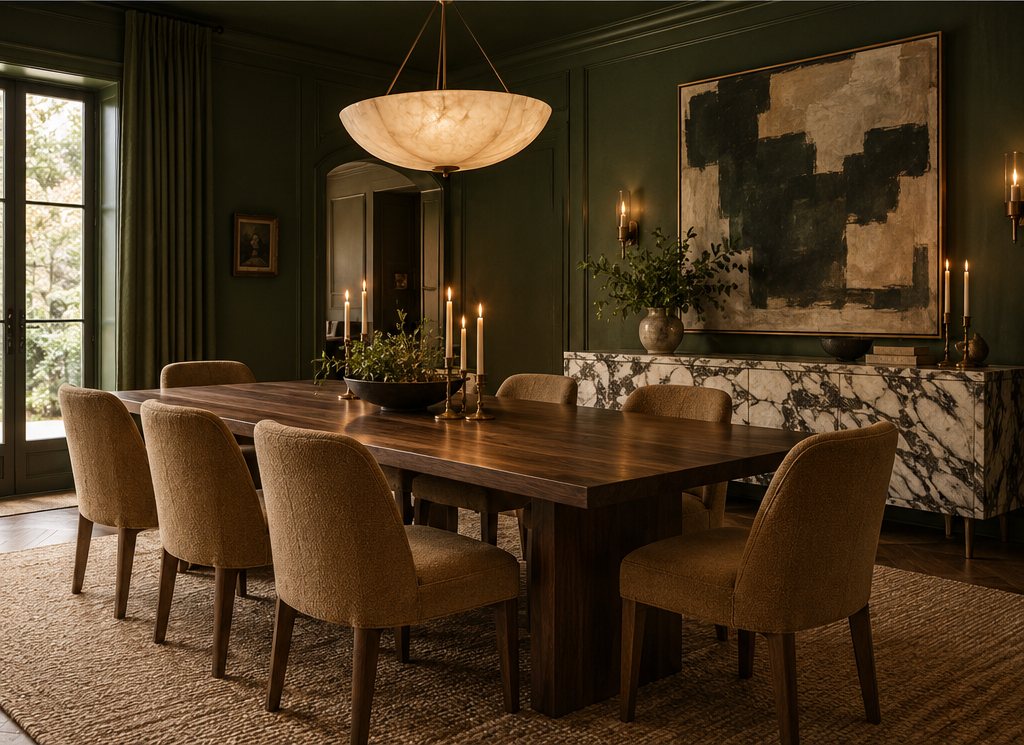
The current direction favors molding accent walls painted entirely in one color, often a mid-tone like sage, putty, clay or deep green, so the panels read as relief. Color drenching over molding, from baseboard to ceiling, is the strongest version of the look.
#B7AE98#8E9A82#B8846A#3F4A3C#E6DFD2For sheen, use matte or eggshell on the wall and satin or semi-gloss on the molding in the same color. The sheen difference creates a soft highlight on the trim profile without changing the hue. Our paint sheen guide explains the durability trade-offs.
How do you install wall molding?
Install wall molding by laying out the boxes in pencil with a level, cutting 45-degree miters, fixing each piece with construction adhesive and 18-gauge brad nails, then filling, caulking and painting. A competent DIYer can finish an accent wall in a weekend.
- Prep the wall. Remove outlet covers, fill holes, sand and paint the wall color first if the molding will be tonal.
- Mark the layout. Use a laser or 4 ft (1.2 m) level and pencil the outside corners of every box, checking margins with a spacer block cut to your margin width.
- Cut the pieces. Cut 45-degree miters on a miter saw. Cut all pieces of the same length together so identical boxes match exactly.
- Dry-fit one box. Tape it to the wall and check that the corners close before cutting the rest.
- Fix the molding. Run a bead of construction adhesive along the back and nail with 1.25–1.5 in (32–38 mm) brads every 12–16 in (30–41 cm), into studs where possible.
- Fill and caulk. Fill nail holes with wood filler, caulk the top and bottom edges and any gaps at miters with paintable acrylic caulk.
- Prime and paint. Spot-prime filler, then paint two coats; brush the profiles and roll the wall.
Outlets falling inside a box are fine; outlets that clip a molding line should be moved or the layout adjusted by a margin, which is why the tape stage matters.
How we'd use molding in each room
Our editorial rule: the plainer the house, the simpler the molding. In a new-build bedroom, we would run full-height picture frame molding on the wall behind the bed only, three boxes with 5 in (13 cm) margins, painted the wall color in eggshell and satin. In a dining room, a chair rail at 34 in (86 cm) with two tiers of boxes earns its keep by protecting the wall. Hallways get a chair rail and a darker lower wall. Bathrooms get polyurethane, never MDF.
Where we see projects go wrong, it is almost always spacing: boxes of different widths on one wall, margins that change at corners, or molding that crashes into a window casing. Spend an extra hour on layout and the most modest profile will look architectural.
Specifying molding for a development, hotel or multi-unit project? Our decor sourcing desk can quote primed MDF, polyurethane and PVC profiles from factories, with samples sent before you commit.
Free toolPaint CalculatorWork out exactly how much paint to buy.Shop & source the look
Buy it today — or have it made
Retail links are affiliate links: we may earn a commission at no extra cost to you (disclosure). “Get it made” sends the item to our sourcing desk for factory quotes in custom sizes and finishes.
Frequently asked questions
What is picture frame molding?
Picture frame molding is thin decorative trim mitered into rectangles on a flat wall so each looks like an empty picture frame. Also called box molding, it imitates traditional raised paneling at a fraction of the cost. Typical profiles are 1.25–2.5 in wide, applied over drywall with adhesive and brad nails, and usually painted to match or contrast with the wall.
How far apart should wall molding boxes be?
Space wall molding boxes 3–6 in (8–15 cm) apart and use the same distance from the baseboard, chair rail, ceiling and corners. Use 3–4 in on small walls and low ceilings and 5–6 in on large walls. To size boxes, subtract all the margins from the wall width and divide the remainder by the number of boxes.
What is the best material for wall molding?
Primed MDF is the best material for most painted wall molding: it costs $1–3 per linear ft, cuts cleanly and stays straight. Choose polyurethane for curves, arches and bathrooms because it is moisture-proof, finger-jointed pine or poplar for high-traffic walls, and cast plaster for period restoration where authenticity justifies the higher cost.
Is wall molding outdated?
No. Wall molding is one of the strongest wall treatments in 2026 and continues into 2027, especially painted in the same color as the wall for a tonal, relief effect. What looks dated is stark white trim on a colored wall with uneven, builder-grade spacing. Simple modern profiles and color-drenched molding accent walls look current.
How much does wall molding cost?
Wall molding costs about $6–15 per linear ft installed, or $1–10 per linear ft in materials for DIY. A 12 × 8 ft accent wall of picture frame molding uses 80–120 linear ft, so expect roughly $100–300 doing it yourself or $500–2,000 with a carpenter. A full dining room with chair rail and two tiers runs $1,500–5,000 installed.
Some links may be affiliate links. Regulations and specifications change — always confirm with suppliers and qualified professionals.