Interior House Paint Ideas: Color Schemes & Room Paint Design
Interior house paint planning comes down to four decisions: a whole-house palette of 3–5 colors, a sheen per room, a paint type per surface and a technique per wall. This guide gives 9 modern color schemes with codes and costs of $2–6 per sq ft.
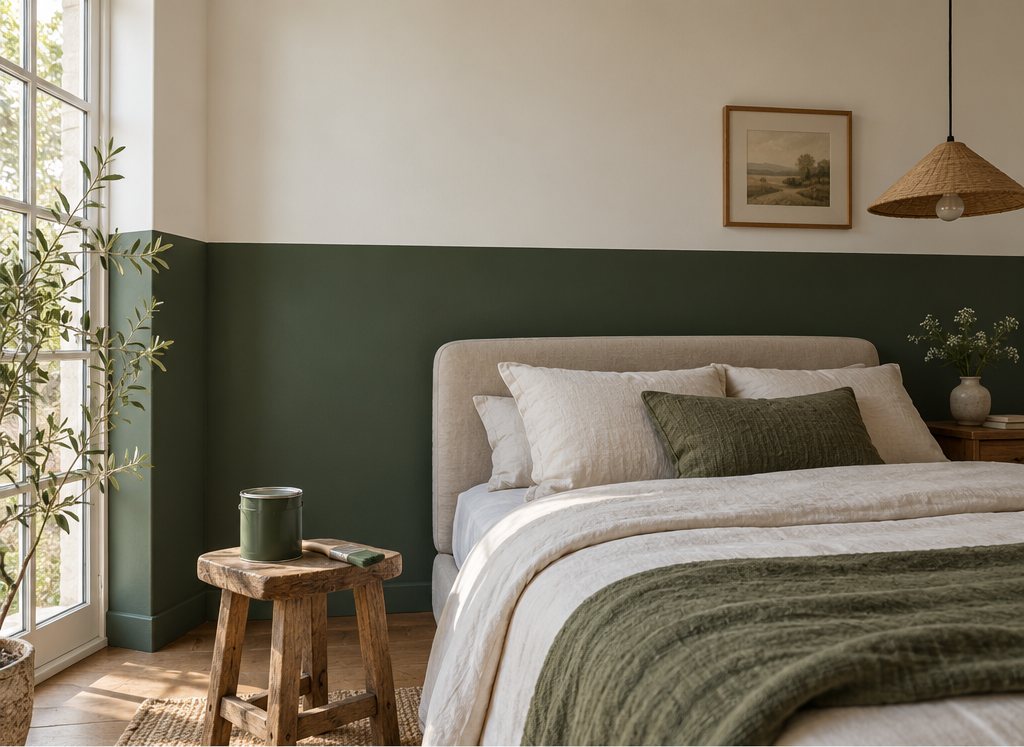
Key takeaways
- Build a whole-house palette of three to five colors (one dominant neutral, one deeper anchor, one or two accents, one trim white) before picking any single room color
- Test every interior paint color on 2 × 2 ft (61 × 61 cm) boards in the actual room for 48 hours, viewed morning, afternoon and under evening lamps, before committing
- Match sheen to the job: flat or matte for ceilings and bedrooms, eggshell for living areas, satin in kitchens and baths, semi-gloss on trim and doors
- Professional interior painting costs $2–6 per sq ft of wall, or roughly $900–3,000 for a 12 × 14 ft room including trim and ceiling; DIY materials run $0.50–1.50 per sq ft
- The 2027 interior color direction is warm and enveloping: clay, cocoa, butter, olive and ink, with color drenching replacing the single accent wall
Interior house paint is the fastest and cheapest way to change how a home feels, at $2–6 per sq ft professionally or $0.50–1.50 per sq ft in DIY materials. The decisions that matter are the whole-house palette, the sheen per room, the paint type per surface and the technique per wall. This guide covers choosing interior paint colors, nine modern color schemes with codes, sheen, costs and 2027 painting ideas.
Most interior painting ideas fail for one of two reasons: the color was picked from a chip under store lighting, or each room was chosen in isolation so the house reads as a sequence of unrelated boxes. The fix for both is to work from the whole house inward, test big samples in place and decide sheen and finish at the same time as color. Everything below follows that order.
- Palette size: 3–5 colors for the whole house, including a trim white; most homes need fewer colors than their owners think.
- Coverage: one gallon covers about 350–400 sq ft (33–37 m²) per coat; plan two coats on walls and allow 10 percent extra.
- Sheen ladder: flat, matte, eggshell, satin, semi-gloss, gloss, in order of increasing washability and increasing visibility of wall flaws.
- Cost: $2–6 per sq ft of wall professionally; $25–70 per gallon for quality interior paint; $900–3,000 for a typical 12 × 14 ft (3.7 × 4.3 m) room done by a crew.
- 2027 direction: warm earth tones, color drenching, matte and limewash finishes, and warm whites replacing cool grays.
How do you choose interior paint colors for a whole house?
Choose interior paint colors for a whole house by building a palette of three to five colors first, assigning them to rooms by light and function second, and testing large samples in place third. The order matters: a room chosen alone will fight its neighbors, and an open plan home in particular reads every wall at once.
- Start with the fixed elements. Floors, countertops, tile, brick, large upholstery and the wood tone of cabinets and furniture are already a palette; the paint has to work with their undertones. A warm oak floor and a cool gray wall is the single most common interior color mismatch.
- Pick one dominant neutral. This covers 60–70 percent of wall area, usually a warm white, greige or soft clay. Our guides to neutral paint colors and warm white paint colors cover undertones in detail.
- Add one anchor color. A deeper tone from the same family, olive, cocoa, ink or oxblood, for a study, a dining room, a powder room or a drenched bedroom.
- Add one or two accents. Used on cabinetry, a door, a ceiling or furniture rather than whole walls.
- Fix one trim white. One white for trim, doors and ceilings in every room keeps the house coherent; make it the same undertone as the dominant neutral.
- Assign by light. North-facing and small rooms take the warmer, lighter tones; south-facing rooms can carry cooler or deeper colors; rooms used at night suit the anchor.
- Test at scale. Paint two coats on 2 × 2 ft (61 × 61 cm) boards, move them around the room over 48 hours and check them at 8 am, 2 pm and under lamps at night.
The full whole-house method, including how to run a palette down a hallway and up a stair, is in how to choose an interior color scheme for your whole house.
How light changes an interior paint color
The same paint reads as three different colors in a north-facing room, a south-facing room and under evening lamps, which is why chip-based choices disappoint. North light is cool and gray-blue, and it pulls the blue out of any neutral: a greige turns lavender, a cool white turns icy. Give north rooms warm whites, clay and butter, and go one step warmer than the chip suggests. South light is warm and strong for most of the day, so cooler and deeper colors hold their character there, and a warm white can tip toward yellow. East rooms are bright and cool in the morning and dim by afternoon; west rooms are flat until the warm late light arrives, which flatters terracotta, oxblood and cocoa. At night, 2700 K lamps warm every color by roughly a step, so a mid-tone chosen only in daylight reads darker and richer after dark. Test boards in each condition before deciding.
What are the modern home color schemes for 2027?
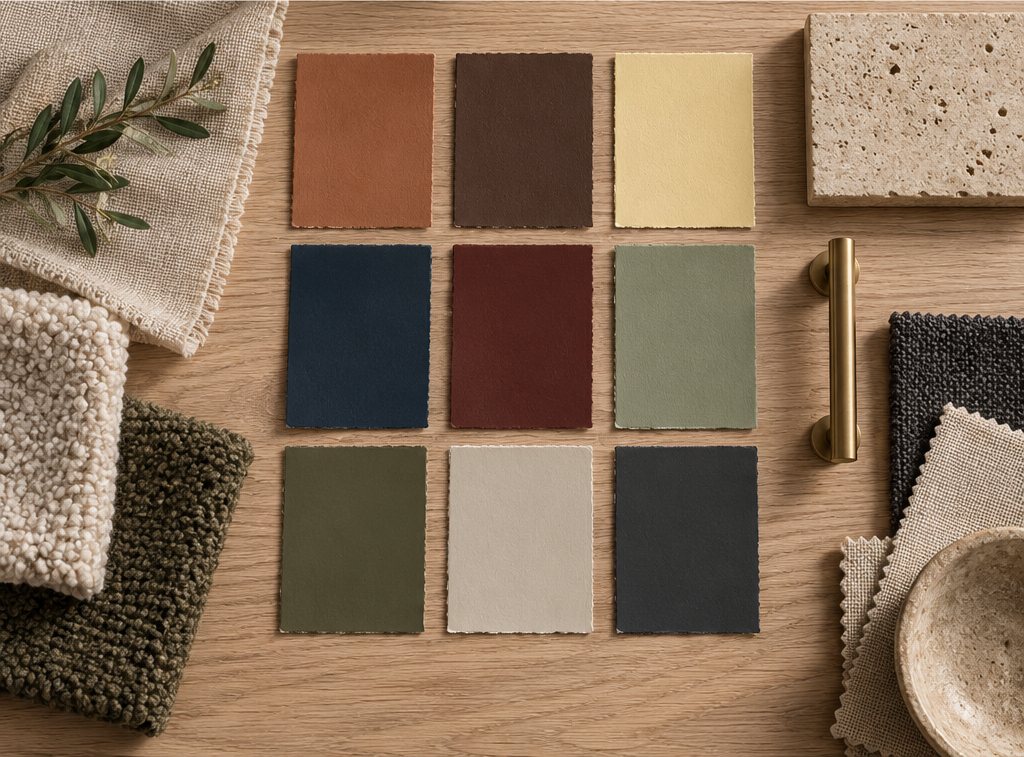
Modern home color schemes for 2027 are warm, matte and tonal: earth-based neutrals, a deep anchor and soft, buttery or mineral accents, applied in large uninterrupted fields rather than as a single accent wall. The gray-and-white interior of the last decade has moved to warm white, clay and cocoa; blues have shifted toward ink and slate; greens toward olive and sage. Nine schemes cover the direction, each with codes you can match at any paint counter.
| Scheme | Dominant (60%) | Secondary (30%) | Accent (10%) | Best rooms |
|---|---|---|---|---|
| Warm white and oak | Warm white #F3EDE2 | Soft clay #C9A98E | Olive #6B6B47 | Open plan living, kitchens |
| Clay and cocoa | Pale clay #D9C3B0 | Cocoa #6E4B3A | Cream #F4EAD8 | Living rooms, dining rooms |
| Olive and stone | Stone #CFC8BA | Olive #5F6B4E | Brass-toned ochre #B98A3C | Kitchens, studies, mudrooms |
| Butter and ink | Butter #EBDDB0 | Ink #23303B | Warm white #F3EDE2 | Bedrooms, halls |
| Oxblood and plaster | Plaster pink #E8D5C8 | Oxblood #5E2A2B | Charcoal #3A3A38 | Dining rooms, powder rooms |
| Sage and linen | Linen #ECE4D6 | Sage #9CA58C | Walnut brown #4E3B2F | Bedrooms, bathrooms |
| Night and brass | Night #1F2328 | Mid gray-brown #7A6E64 | Ochre #B98A3C | Drenched studies, media rooms |
| Terracotta and cream | Cream #F4EAD8 | Terracotta #B5634A | Deep teal #2F4F4F | Kitchens, entries, sunrooms |
| Greige monochrome | Light greige #D6CFC4 | Mid greige #A89E92 | Dark greige #5C554D | Whole-house minimal schemes |
#F3EDE2#C9A98E#6E4B3A#EBDDB0#5F6B4E#23303B#5E2A2B#1F2328The 60-30-10 split is a starting ratio, not a rule; a drenched room is 90-10, and a white minimalist room may be 80-15-5. All nine schemes appear in the 2027 color palettes report, and the palette library has each one expanded to six or seven tones with suggested materials.
What interior house color combinations work room by room?
Interior house color combinations work room by room when they follow the function and light of each space while staying inside the house palette: warm and energizing where people cook and gather, deeper and calmer where they sleep and read, lightest in the smallest and darkest rooms. The combinations below are the ones that hold up across styles.
Living room
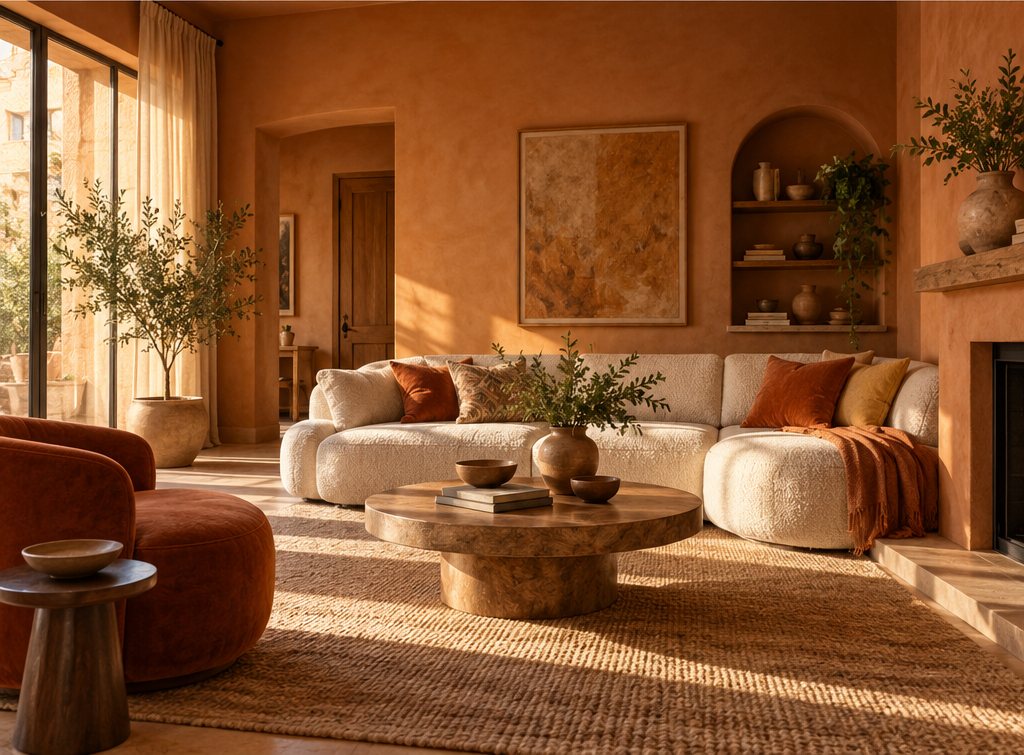
Warm living room colors dominate 2027: clay, caramel, warm greige and soft terracotta on the walls, with cream, olive or ink on sofas and a darker trim or ceiling for depth. The dedicated guide, warm living room colors, gives 12 combinations by orientation. Avoid the pale cool gray that reads blue under north light.
Bedroom
Bedrooms take the deepest, most enveloping colors in the house because the room is used at night: sage, ink, cocoa, slate or a dusty plaster pink, drenched over walls, trim and ceiling, with linen and cream in textiles. A mid-tone wall with white trim is the compromise if drenching feels like too much. See bedroom trends 2027 for the color-and-fabric pairings.
Kitchen
Kitchen paint lives on cabinetry as much as walls. The working combinations are warm white walls with olive, ink or cocoa lower cabinets; stone walls with oak and a plaster-colored hood; and a fully drenched terracotta or sage kitchen where walls and cabinets match. Walls in satin, cabinets in a hard-wearing enamel. Cabinet color trends are tracked in kitchen trends 2027.
Dining room, study and powder room
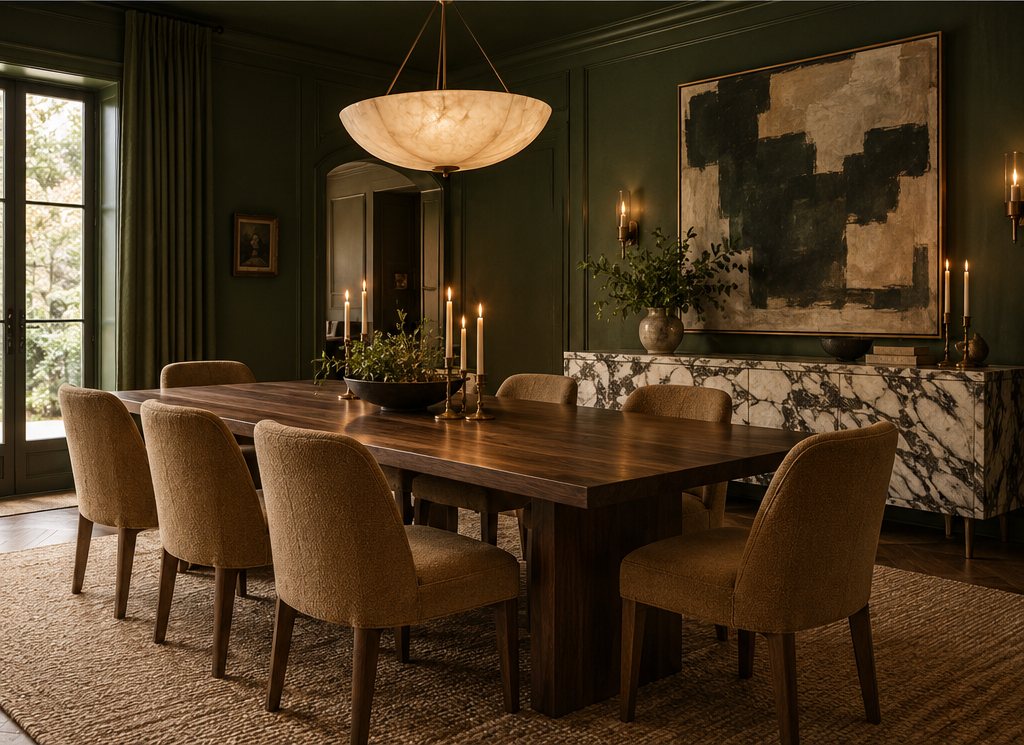
These are the rooms for the anchor color: oxblood, night, deep olive or cocoa on every surface, because small or evening-use rooms gain more from drama than from light. A dining room in a deep tone with a warm white ceiling and candlelight is the oldest interior decorating painting idea in the book and still the most effective.
Bathroom, hall and ceilings
Bathrooms take a warm white or a pale sage in satin, or a drenched mid-tone if the room is windowless. Halls take the dominant neutral so the transition between rooms is quiet. Ceilings are the overlooked surface: a ceiling in the wall color at half strength, or in the full wall color in a drenched room, removes the hard white line and makes rooms feel taller.
Which paint sheen should you use in each room?
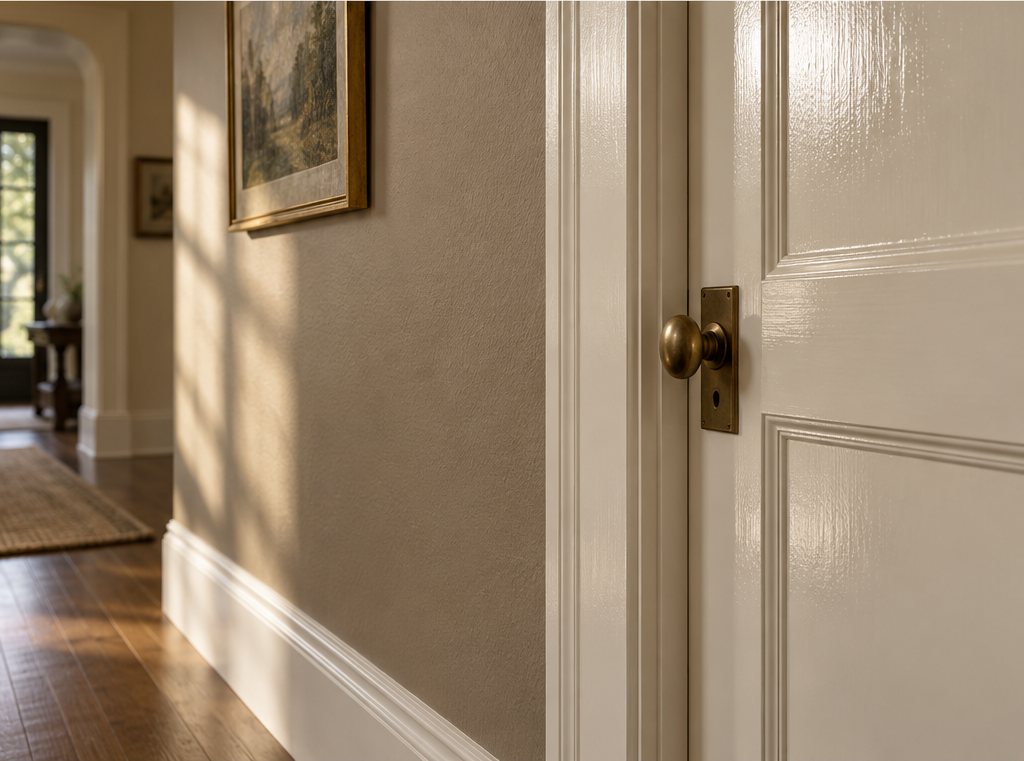
Use flat or matte on ceilings and in bedrooms and living rooms with imperfect walls, eggshell as the general-purpose wall finish, satin in kitchens, baths, halls and kids' rooms, and semi-gloss on trim, doors and cabinetry. Sheen is a durability decision as much as a visual one: every step up the ladder is more washable and shows more of the wall's flaws and roller marks.
| Sheen | Gloss level (60°) | Washability | Hides flaws | Use it on |
|---|---|---|---|---|
| Flat | 0–5 | Low | Best | Ceilings, low-traffic adult rooms |
| Matte | 5–10 | Low–moderate (scrubbable matte exists) | Very good | Bedrooms, living rooms, drenched rooms |
| Eggshell | 10–25 | Moderate | Good | Living, dining, halls, most walls |
| Satin | 25–35 | Good | Fair | Kitchens, baths, kids' rooms, mudrooms |
| Semi-gloss | 35–70 | Very good | Poor | Trim, doors, cabinets, windows |
| Gloss | 70–85+ | Excellent | Worst | Front doors, lacquered feature pieces |
The current look favors the matte end for walls, including scrubbable matte in kitchens, with a sharp step up to semi-gloss or a soft lacquer on trim and doors in the same color. The paint sheen guide explains how the same color changes between sheens and how to combine them.
What types of interior house paint are there?
Interior house paint comes in four main types, acrylic latex (water-based), alkyd or oil-based, hybrid water-borne alkyds, and mineral paints such as limewash and clay, plus specialty products for primers, cabinets, floors and ceilings. For 95 percent of walls a premium 100 percent acrylic latex is the right answer; the exceptions are worth knowing.
- Acrylic latex: low odor, dries in 1–2 hours, cleans with water, stays flexible. Use on all drywall and plaster walls and ceilings. Expect $25–70 per gallon; the cheaper tiers need a third coat on strong colors.
- Water-borne alkyd (hybrid enamel): levels like oil, cures hard, cleans with water. The standard for trim, doors and cabinets in 2027. $40–80 per gallon.
- Oil-based alkyd: hardest film, slowest dry (16–24 hours), yellows over time, restricted in many regions. Now a niche choice for restoration and some floors.
- Limewash and clay paints: mineral, breathable, matte with visible movement. Limewash needs a mineral primer and two to three brushed coats; clay paints roll on like latex but have less washability. $40–90 per gallon, covering about 250–300 sq ft (23–28 m²) per coat.
- Primers: a bonding primer over gloss or glossy laminate, a stain-blocking primer over water marks and tannin-rich wood, a tinted primer under deep colors to save a coat.
- Low- and zero-VOC: most quality interior latex is now under 50 g/L; a zero-VOC base with low-VOC colorants is the choice for bedrooms and nurseries.
Paint quality is mostly solids content and resin quality. A premium line at 40–45 percent solids by volume covers in two coats where a contractor grade at 30 percent needs three, which makes the expensive gallon the cheaper one on any wall over 200 sq ft (19 m²).
What interior wall painting ideas go beyond a flat color?
Interior wall painting ideas that go beyond a flat color fall into four groups: color drenching, two-tone and painted architecture, textured mineral finishes, and painted pattern. All four are inexpensive compared with any other wall treatment, since the material is still paint; the cost is in planning and labor.
Color drenching
Color drenching paints walls, trim, doors, radiators and ceiling in one color, usually with a sheen change between walls (matte) and trim (satin or semi-gloss). It is the defining room paint design of 2027 because it makes awkward rooms coherent, hides ugly trim and lets a strong color feel calm. Our color drenching guide covers choosing the color, the sheen combinations and the ceiling question.
Two-tone walls and painted architecture
A darker color to a dado line at 36 in (91 cm) or to a picture rail at 72–84 in (183–213 cm), a painted "skirting" band 8–12 in (20–30 cm) high in a dark tone, a contrasting ceiling, or a painted arch or headboard shape on the wall behind a bed. These give a room the structure of paneling for the price of a roll of tape. Keep the lines level with a laser and the tape burnished, and use the wall color to seal the tape edge before the second color goes on.
Limewash, textured and specialty finishes
Limewash brushed in crossing strokes gives the cloudy, mineral surface that reads as plaster; a roller-applied clay paint gives a softer version; textured and suede-effect paints are a budget stand-in for the real plaster finishes compared in our wall treatments guide. Chalkboard paint, magnetic primer and metallic glazes still have their place in kids' rooms and small feature areas but are not where the market is heading.
Stripes, blocks and murals
Wide horizontal bands of 12–18 in (30–46 cm) in two close tones, a single painted color block behind a desk or dining table, a tonal ombré on a bedroom wall and hand-painted murals in a limited palette all read as current when the colors come from the house palette; a rainbow of unrelated hues does not. Accent walls in a strongly contrasting color are the one interior painting idea that has clearly aged; if you want one wall to differ, drench the whole room or shift the wall by two or three tones, not by a color family.
How much does it cost to paint the interior of a house?
Painting the interior of a house costs $2–6 per sq ft of wall area professionally, which works out to about $900–3,000 per average room and $8,000–25,000 for a whole 2,000 sq ft (186 m²) home including ceilings and trim. Doing it yourself cuts the number to materials of $0.50–1.50 per sq ft plus tools, or roughly $150–400 per room.
| Job | Professional | DIY materials | Time (pro / DIY) |
|---|---|---|---|
| Walls only, one 12 × 14 ft room, 8 ft ceiling (~400 sq ft) | $800–1,600 | $120–250 | 1 day / 2 days |
| Walls, ceiling and trim, same room | $1,200–3,000 | $200–400 | 1.5–2 days / 3–4 days |
| Color-drenched room (walls, trim, doors, ceiling, one color) | $1,200–2,800 | $200–380 | 1.5–2 days / 3–4 days |
| Kitchen cabinets, 25–30 doors and drawers | $3,000–7,000 | $300–600 | 3–5 days / 5–8 days |
| Limewash feature wall, 120 sq ft | $400–900 | $120–200 | 1 day / 1–2 days |
| Whole 2,000 sq ft house interior | $8,000–25,000 | $1,200–3,000 | 1–2 weeks crew / 3–6 weekends |
Variables that move the number: ceiling height over 9 ft (2.7 m) adds 15–25 percent, heavy prep (peeling paint, texture, wallpaper removal) adds $1–3 per sq ft, deep colors need a tinted primer or a third coat, and a dark-to-light change needs two coats of primer. Run the paint calculator for gallons and cost before getting quotes, and ask painters to quote on the same wall area and coat count so the bids compare.
How do you paint a room so it looks professional?
A professional-looking paint job is 60 percent preparation and 40 percent technique: a clean, filled, sanded, primed wall, cut-in edges done wet, and two full coats rolled in a consistent pattern with a quality roller. The sequence below is the one a good crew follows, and it does not change for a DIY room.
- Clear and protect. Move furniture to the center, cover with plastic, drop cloths on the floor, remove outlet and switch plates, bag fixtures.
- Repair. Fill nail holes and dents with lightweight filler, patch larger damage with mesh and compound, caulk gaps at trim with paintable acrylic caulk, and sand everything flush with 180–220 grit.
- Clean and degloss. Wash kitchen and bath walls with a degreaser; scuff-sand any gloss or semi-gloss surface so the new coat bonds.
- Prime where needed. Spot-prime repairs, prime bare drywall or plaster fully, use a stain blocker over marks, and a tinted primer under deep colors.
- Paint in order: ceiling first, then walls, then trim, then doors. Cut in one wall at a time with a 2–2.5 in (50–64 mm) angled brush and roll it while the cut line is wet to avoid a visible band.
- Roll correctly. A 3/8 in (10 mm) nap on smooth walls, 1/2 in (13 mm) on light texture; load fully, work in 3 × 3 ft (0.9 × 0.9 m) sections in a W pattern, then lay off lightly in one direction. Keep a wet edge; never go back over a drying area.
- Second coat. After the recoat time on the can (usually 2–4 hours for latex), apply a full second coat; a "touch-up" second coat flashes.
- Trim and doors. Water-borne alkyd with a 2 in (50 mm) sash brush or a 4 in (100 mm) foam roller; two thin coats beat one thick one. Remove tape at a 45-degree angle while the final coat is still slightly soft.
Allow full cure, 7–30 days depending on the product, before scrubbing or hanging anything heavy against the wall, and keep a labeled quart of each color for touch-ups.
How do you choose between all these interior painting ideas?
Choose between interior painting ideas by deciding the house palette first, the room's role in that palette second, and the technique only third. A technique chosen before the palette, a drenched room in a color that fights the hall, is the most common way a good idea becomes a regret.
- If the house feels disjointed: stop, build the three-to-five color palette, and repaint halls and open areas in the dominant neutral before touching any feature room.
- If a room is small, dark or awkwardly shaped: color-drench it in a warm mid-tone or deep anchor; it will feel bigger and more intentional than it would in white.
- If a room is large, bright and plain: two-tone with a dado or picture-rail line, or a limewash finish, to add structure and texture.
- If walls are in poor condition: matte or limewash, never satin or gloss; consider the skim coat or paneling routes in the wall treatments guide.
- If you rent or move often: keep walls in the dominant neutral and put the color into doors, a ceiling or furniture; both are quicker to reverse.
- If you want the 2027 look specifically: warm white and clay in open areas, a drenched olive, cocoa or ink room, warm-white trim throughout, and a matte wall finish.
For the broader style direction that the colors sit inside, the interior design trends 2027 report and the style quiz are the next stops.
Free toolTile CalculatorWork out tiles, boxes, grout and adhesive with the right wastage.In this guide
Frequently asked questions
How do you choose interior paint colors?
Start from the fixed elements (floors, counters, large furniture), build a whole-house palette of three to five colors including one trim white, assign warmer and lighter tones to north-facing and small rooms and deeper tones to evening rooms, then test two-coat samples on 2 × 2 ft boards in the room for 48 hours before buying.
What are the most popular interior house paint colors for 2027?
Warm whites, clay, greige and soft stone lead as whole-house neutrals, with olive, cocoa, ink and oxblood as anchor colors for drenched dining rooms, studies and bedrooms. Butter yellow, sage and plaster pink are the soft accents. Cool grays and stark white trim are fading.
What color combinations look good inside a house?
Combinations that share an undertone: warm white with clay and olive, cream with terracotta and deep teal, stone with olive and ochre, butter with ink, plaster pink with oxblood. Keep a 60-30-10 ratio of dominant, secondary and accent, and use the same trim white in every room so the scheme reads as one house.
What paint sheen is best for interior walls?
Eggshell is the general-purpose wall sheen; use matte or flat in bedrooms, living rooms and on ceilings, satin in kitchens, bathrooms, halls and kids' rooms, and semi-gloss on trim, doors and cabinets. Higher sheens wash better but show roller marks and wall flaws more.
How much does it cost to paint the interior of a house?
Professional interior painting costs $2–6 per sq ft of wall, about $900–3,000 per room including ceiling and trim, and $8,000–25,000 for a 2,000 sq ft house. DIY materials run $0.50–1.50 per sq ft. Tall ceilings, heavy prep, deep colors and cabinet painting push the price up.
What is color drenching?
Color drenching paints walls, trim, doors, radiators and often the ceiling of a room in one color, usually in matte on walls and satin or semi-gloss on woodwork. It makes small or awkward rooms feel coherent and lets a deep color feel calm. It is the leading room paint design of 2027.
Should the whole house be painted the same color?
Not necessarily, but it should share one palette. Paint halls, stairs and open-plan areas in one dominant neutral, use one trim white everywhere, and give individual rooms a deeper or lighter tone from the same family. A single color throughout works well in small homes and minimalist schemes.
How many coats of paint do interior walls need?
Two full coats over a sound, same-tone surface. Add a primer coat on bare drywall, patched areas, glossy surfaces and when changing from dark to light; use a tinted primer under deep reds, oranges and yellows. Limewash takes two to three brushed coats over a mineral primer.
Some links may be affiliate links. Regulations and specifications change — always confirm with suppliers and qualified professionals.