Sage Green Paint: Light, Dark and Exterior Sage Colors That Work
Sage green paint is a muted gray-green named after the herb, typically at an LRV of 20–65. Here are light, mid and dark sage shades, the best rooms, exterior tips and the colors that go with sage green.
Part of our guide: Interior House Paint Ideas: Color Schemes & Room Paint Design
Key takeaways
- Sage green is a gray-green with a soft yellow or blue undertone; most sage paints sit between LRV 20 and 65
- Light sage green suits bedrooms, bathrooms and north-facing rooms; dark sage green suits cabinets, studies and exteriors
- Sage looks best with warm whites, cream, oak, terracotta, brass and blush; avoid stark cool white trim
- Outdoors, sage reads lighter and bluer, so choose an exterior sage one or two steps darker than the chip you like
Sage green paint is a muted, gray-green color named after the dried herb, usually sitting between LRV 20 and 65 with a soft yellow or blue undertone. It is the most versatile green for walls: light sage green calms bedrooms and bathrooms, mid sage works in living rooms, and dark sage green suits cabinets, studies and exteriors.
Sage has stayed near the top of green paint searches for several years, and for 2027 it is shifting slightly deeper and earthier rather than fading. This guide explains the sage color itself, compares light, mid and dark shades, and shows where sage green wall paint works inside and out. For finishes, prep and other color ideas, start with our pillar guide to interior painting ideas.
- Definition: a desaturated green with gray, plus a yellow or blue undertone.
- LRV range: light sage 50–65, mid sage 35–50, dark sage 15–35.
- Best pairings: warm white, cream, oak, terracotta, brass, blush and charcoal.
- Best sheens: matte or eggshell on walls, satin in bathrooms and on cabinets.
What is sage green color?
Sage green is a soft, grayed green that mimics the silvery leaves of the sage plant; it sits between green and gray, so it reads calm and natural rather than bright.
What does the color sage green look like on a wall? In daylight, a typical mid sage looks like a dusty green with a silvery cast; in warm evening light it turns warmer and slightly olive. The sage color family is broad: some versions lean yellow (warmer, closer to olive), others lean blue (cooler, closer to eucalyptus). Neither is better. The undertone just needs to suit your light and your fixed finishes.
Sage vs olive vs mint
Sage is often confused with its neighbors. Olive green is darker and more yellow-brown, with less gray; mint is lighter, brighter and bluer, with almost no gray at all. Eucalyptus sits on the blue side of sage, and celadon is a paler, slightly glassy blue-green. If a chip looks fresh and bright, it is probably mint or celadon rather than sage. Real sage always looks a little dusty, as though the color has been softened by a fine layer of gray.
On screen, a classic sage green color sits around #9CAF88. Treat that as a reference only; paint on a wall looks lighter and grayer than the same color on a monitor.
What are the best sage green paint colors?
The best sage green paint colors are muted enough to read as a neutral on a large wall, with an LRV that matches the room's light: higher in dim rooms, lower in bright ones.
The table sorts shades of sage green into three bands. LRV ranges are typical across paint makers; hex codes are screen references to help you compare chips, not paint formulas.
| Sage shade | Typical LRV | Approx. hex reference | Undertone | Best rooms |
|---|---|---|---|---|
| Pale sage (sage-white) | 60–70 | #D6DDCB | Gray | Whole-house walls, small rooms, ceilings |
| Light sage green | 50–60 | #BCC7AE | Gray or blue | Bedrooms, bathrooms, north-facing rooms |
| Mid sage | 35–50 | #9CAF88 | Yellow or gray | Living rooms, dining rooms, kitchens |
| Deep sage | 25–35 | #7E8F6E | Yellow | Accent walls, cabinets, built-ins |
| Dark sage green | 15–25 | #5D6B52 | Yellow or black | Studies, islands, exteriors, front doors |
If you are torn between two shades, choose the one a step lighter for walls and the darker one for woodwork or cabinets. That tonal pairing is one of the easiest ways to use sage paint well.
Light sage green paint: where it works best
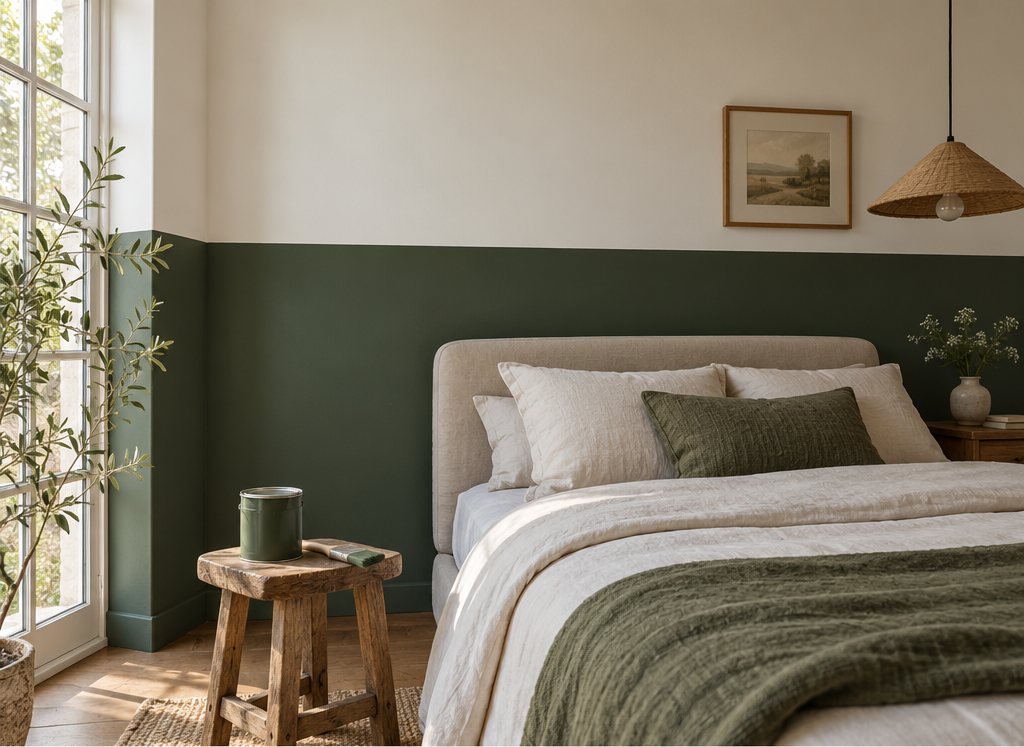
Light sage green paint works best in bedrooms, bathrooms and rooms with limited daylight, where it adds color without darkening the space.
A light sage green color at LRV 50–60 behaves almost like a warm neutral. It is our favorite alternative to greige in a north-facing room, because the green holds its warmth where a beige can turn muddy. In a south-facing room, it can wash out to near-white at midday; go a step deeper there.
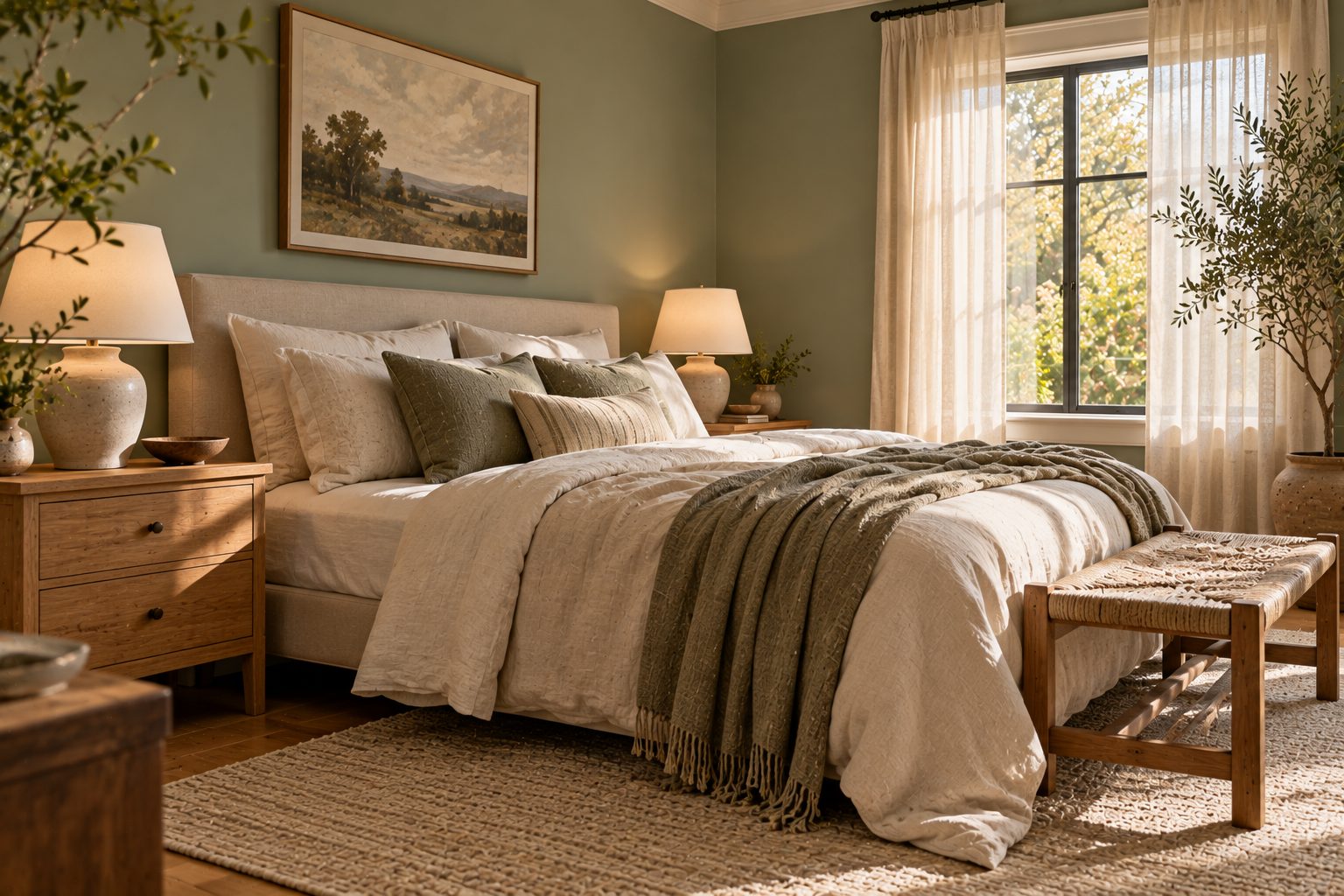
- Bedrooms: light sage with cream bedding, oak and linen curtains is a reliably restful scheme.
- Small rooms: paint walls and ceiling in the same light sage to blur the edges of the room.
- Trim: a soft warm white at LRV 80–85, not a blue-white, which makes sage look dirty.
Dark sage green: cabinets, studies and accent walls
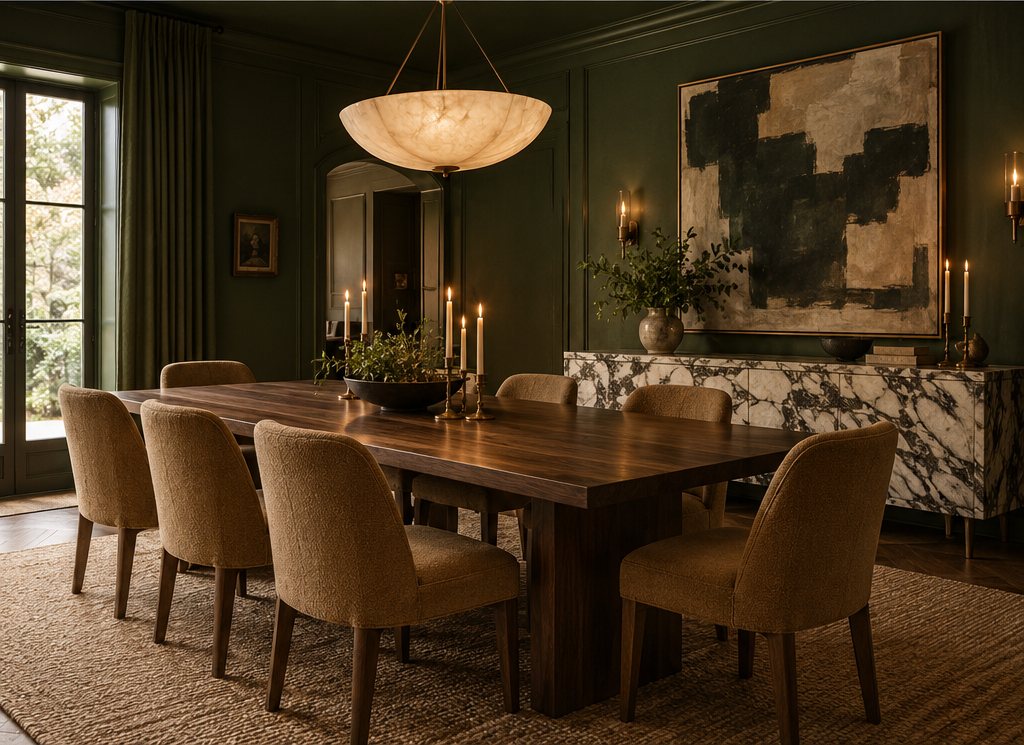
Dark sage green is a deep, earthy gray-green at LRV 15–25 that works as a sophisticated alternative to navy or charcoal on cabinets, built-ins and accent walls.
Dark sage is where the 2027 shift shows most clearly: deeper, more olive-leaning greens on kitchen islands, library shelving and color-drenched studies. It flatters walnut, brass and stone, and it hides fingerprints better than lighter cabinet colors. Use satin or semi-gloss on cabinets and trim, and matte on walls. Pair it with a lighter sage or warm white on surrounding walls so the room does not close in.
Green living room ideas with sage
A sage green living room works when the green is balanced by warm wood, cream textiles and one darker accent, so the room feels grounded rather than flat.
Most green living room ideas fall into three schemes. Each one starts with sage on the walls and changes the supporting cast:
- Warm natural: mid sage walls, oak floors, a cream or oatmeal sofa, jute rug, terracotta pots and brass lamps.
- Gray and green living room: light sage walls with a charcoal or soft gray sofa, white oak and black metal accents. Keep the gray warm, or the room turns cold.
- Tonal green: mid sage walls, dark sage built-ins and a moss or olive velvet chair, broken up by cream and camel.
The color green living room schemes go wrong when everything is the same mid-tone: green walls, green sofa, green rug. Vary the depth by at least two steps (for example, LRV 50 walls and LRV 20 joinery) and add a warm contrast such as rust or blush. Lamps at 2700 K and a few pieces of aged wood do more to warm a green room than any accent color.
Sage green bathroom paint and kitchens
Sage green bathroom paint should be a moisture-resistant satin or a dedicated bathroom formula, in a light or mid sage that flatters white tile, brass and wood.
Sage and bathrooms suit each other: the gray-green looks clean next to white porcelain and adds warmth to marble. Choose a light sage at LRV 45–60 for small bathrooms without windows, and use bulbs at 2700–3000 K with a CRI of 90 or higher so skin tones look natural in the mirror. In kitchens, sage works on walls with white or wood cabinets, or on cabinets themselves in a deeper shade. Our bathroom paint colors guide covers sheen and moisture in more depth.
Sage green exterior paint: what to know
Sage green exterior paint looks lighter and bluer outdoors than on the chip, so choose a shade one or two steps darker than the one you like indoors.
Sage green exterior house paint suits cottages, bungalows, farmhouses and modern houses with wood or stone accents, and it blends into planted gardens. The most successful schemes pair a mid or dark sage body at LRV 20–40 with cream or warm white trim at LRV 75–85 and a darker door in deep green, charcoal or natural wood. Sage green exterior paint colors with a yellow undertone hold their warmth better in full sun; blue-leaning sage can look gray at a distance.
- Finish: exterior acrylic in flat or low-luster for siding, satin or semi-gloss for trim and doors.
- Test: paint a 2 × 2 ft (60 × 60 cm) patch on the north and south sides and view it from the street.
- Roof check: sage pairs well with charcoal, brown and weathered-wood roofs; it fights with red or orange tile.
One practical note: exterior sage fades faster than whites on sun-facing walls, so buy a premium exterior acrylic with good UV resistance and keep a labeled quart for touch-ups. Expect to repaint siding every 7–10 years in full sun.
For full-house schemes, see our exterior house paint colors guide.
What colors go with sage green?
The colors that go with sage green are warm white, cream, oatmeal, terracotta, blush, mustard and charcoal, plus natural oak and brass; sage pairs poorly with stark cool whites and bright primaries.
#BCC7AE#7E8F6E#F1EBDF#C0714F#D9B5A6#3D3F3AHex values are screen references. Sage is a natural partner for other muted, earthy colors, which is why it slots easily into a neutral scheme. If you want a softer base, pair it with one of the warm neutrals from our guide to beige paint colors; for a crisper contrast, try a deep navy from our blue paint colors guide on a door or a single piece of furniture.
How to choose the right sage green paint
Choose the right sage green paint by matching LRV to the room's light, then matching the undertone to your fixed finishes, then testing large samples at three times of day.
- Check orientation. North-facing rooms need a lighter, yellow-leaning sage; south-facing rooms can take deeper or bluer sage.
- Pull your fixed finishes. Hold samples against flooring, countertops and tile, because these decide which undertone looks right.
- Shortlist three. One lighter, one at your target LRV and one deeper.
- Paint large boards. At least 12 × 12 in (30 × 30 cm), two coats, moved around the room for 48 hours.
- Choose the sheen. Matte for living rooms and bedrooms, eggshell for halls, satin for baths and cabinets.
- Work out quantities. Use our paint calculator; mid and dark sage usually cover in two coats over a light wall.
Mistakes we see with sage green
The mistake we see most often is pairing sage green walls with a bright blue-white trim, which makes the green look gray and grubby. Use a warm white instead. The second is choosing a sage from a small chip in a store, then finding it reads almost mint on a sunny wall; always go a little grayer than you think. The third is overloading a room with green: walls, sofa, rug and curtains in the same mid-tone, which flattens everything. Keep sage on one or two surfaces, vary the depth, and let wood, cream and one warm accent do the rest. Done that way, sage green paint is the most forgiving color we specify.
Want sage schemes already balanced with trim, wood and accent colors? Our 2027 palette pack includes tested sage palettes with hex references and LRV notes for every room.
Free toolTile CalculatorWork out tiles, boxes, grout and adhesive with the right wastage.Shop & source the look
Buy it today — or have it made
Retail links are affiliate links: we may earn a commission at no extra cost to you (disclosure). “Get it made” sends the item to our sourcing desk for factory quotes in custom sizes and finishes.
Frequently asked questions
What is sage green color?
Sage green is a muted, gray-green color named after the leaves of the sage herb. It mixes green with gray and a soft yellow or blue undertone, so it reads calm and natural. Most sage green paints sit between LRV 20 and 65, which makes the lighter versions behave almost like a warm neutral on walls.
What does the color sage green look like?
Sage green looks like a dusty, silvery green, similar to dried herbs or eucalyptus leaves. In daylight it reads soft gray-green; under warm evening light it turns slightly warmer and more olive. Lighter sages look almost like a green-tinged off-white, while dark sage looks earthy and close to olive or moss.
What colors go with sage green walls?
Warm white, cream, oatmeal, terracotta, blush, mustard and charcoal go best with sage green walls, along with natural oak, rattan and brass. Avoid stark blue-whites and bright primary colors. For a polished look, pair sage walls with a deeper sage on cabinets or trim, and add one warm accent such as rust.
Is sage green a good exterior house color?
Sage green is a good exterior house color, especially for cottages, bungalows and farmhouses with wood or stone details. Choose a shade one or two steps darker than you would indoors, because sunlight makes it look lighter and bluer. Pair it with cream trim at LRV 75–85 and a charcoal, brown or weathered-wood roof.
Is sage green still in style for 2027?
Sage green is still in style for 2027, but the trend is moving toward deeper, earthier and more olive-leaning sages rather than pale minty versions. Light sage remains a popular neutral for bedrooms and bathrooms, while dark sage is increasingly used on kitchen cabinets, islands, built-ins and front doors.
Some links may be affiliate links. Regulations and specifications change — always confirm with suppliers and qualified professionals.