Types of Rugs: 8 Constructions, 6 Fibers and Which to Buy
The types of rugs come down to 8 constructions, from hand-knotted to flatweave, braided and shag, and 6 main fibers. This guide compares pile height, lifespan and typical price per sq ft so you buy the right one.
Part of our guide: Natural Fiber Rugs & Carpet: Jute, Sisal, Wool & Seagrass
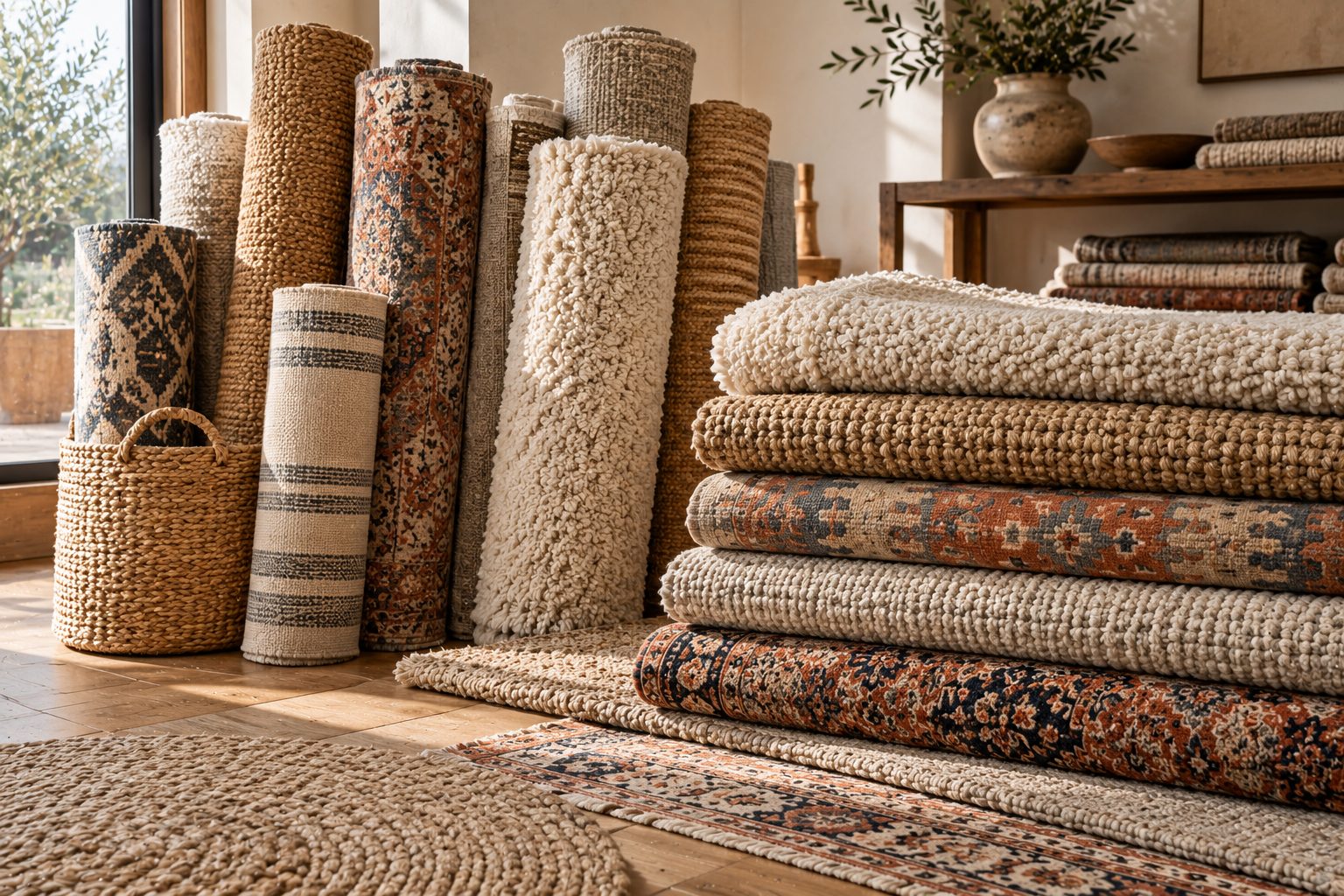
Key takeaways
- Rugs are classified three ways: by construction (how they are made), by fiber and by shape; construction predicts lifespan best
- Hand-knotted wool lasts 25+ years, hand-tufted 5–10, machine-made polypropylene 3–7; price follows the same order
- Flatweave and braided rugs suit dining rooms, kitchens and entries; shag and plush rugs belong in low-traffic bedrooms
- Custom size area rugs cost roughly 20–50 percent more than stock sizes and take 6–16 weeks depending on construction
The main types of rugs are hand-knotted, hand-tufted, hand-loomed, flatweave, braided, hooked, shag and machine-made (power-loomed or printed). Construction matters more than looks: a hand-knotted wool rug lasts 25 years or more, a hand-tufted one 5–10 years and a printed polyester rug 2–5 years, and prices fall in the same order.
Every rug can be described by three things: how it was made, what fiber it uses and what shape it is. This guide walks through all three, then explains custom rugs, sizing and the mistakes we see most often. If you are leaning toward jute, sisal or wool, our pillar guide to natural fiber rugs goes deeper on those materials.
- Constructions: 8 common methods, from hand-knotted (slowest, most durable) to printed (fastest, cheapest).
- Fibers: wool, cotton, jute and sisal, silk and viscose, nylon, and polypropylene or polyester.
- Pile heights: flat under 0.25 in (6 mm), low 0.25–0.5 in (6–13 mm), medium 0.5–0.75 in (13–19 mm), shag 1 in (25 mm) and up.
- Typical price: roughly $3–150 per sq ft ($30–1,600 per m²) across all types in the US in 2026.
What are the different types of rugs by construction?
Rug construction is the single best predictor of how long a rug will last, how it cleans and what it costs. The table compares the eight constructions you will meet when shopping; prices are typical US retail ranges for 2026 and vary with fiber and density.
| Construction | How it is made | Typical pile | Lifespan | Typical price per sq ft |
|---|---|---|---|---|
| Hand-knotted | Each knot tied by hand onto warp threads | 0.25–0.75 in (6–19 mm) | 25–50+ years | $25–150 |
| Hand-tufted | Yarn punched through a canvas with a tufting gun, latex-glued backing | 0.4–1 in (10–25 mm) | 5–10 years | $8–30 |
| Hand-loomed | Woven on a hand-operated loom, often with a backing | 0.25–0.6 in (6–15 mm) | 8–15 years | $10–35 |
| Flatweave | Warp and weft woven with no pile (kilim, dhurrie, soumak) | None, 0.15–0.3 in (4–8 mm) thick | 10–20 years | $5–40 |
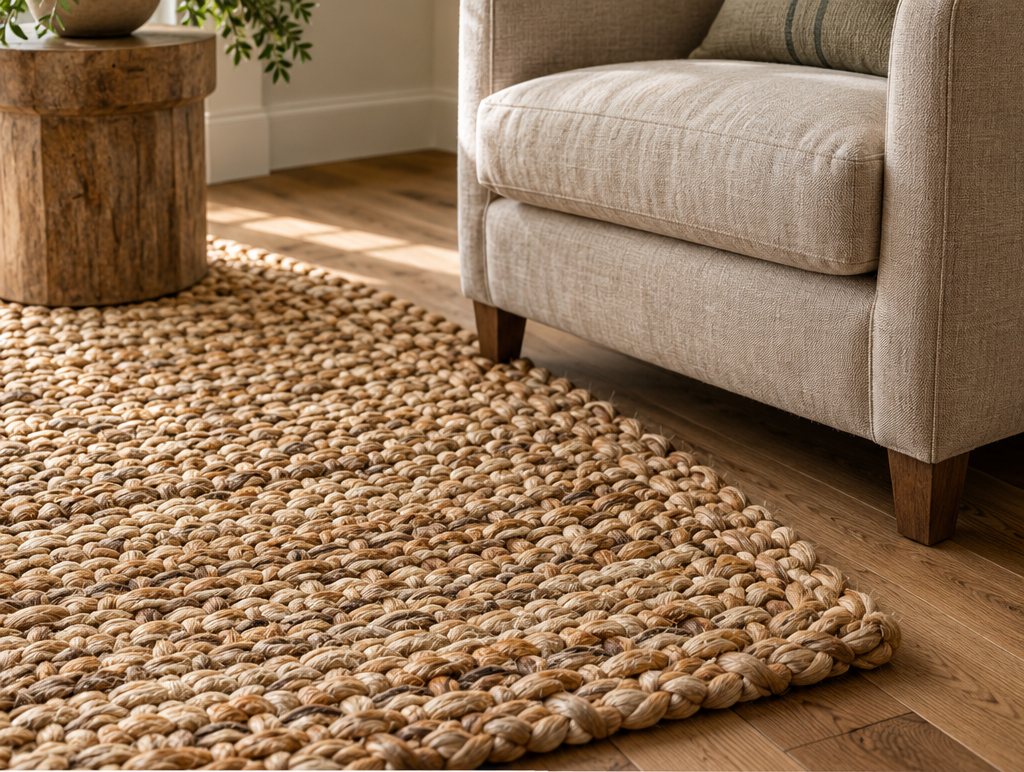
| Braided | Fabric or yarn braids coiled and stitched together | None, 0.4–0.6 in (10–15 mm) thick | 10–20 years | $5–20 |
| Hooked | Loops pulled through a backing by hand hook | 0.25–0.5 in (6–13 mm) loops | 8–15 years | $8–25 |
| Shag | Long pile, tufted or woven | 1–3 in (25–75 mm) | 5–15 years | $6–40 |
| Machine-made (power-loomed, printed) | Woven or printed on automated looms | 0.2–0.5 in (5–13 mm) | 2–10 years | $3–15 |
Turn any rug over before you buy it. Individual knots visible on the back mean hand-knotted. A glued canvas or felt backing means tufted. A back that mirrors the front exactly means flatweave or braided, which also makes it reversible.
Hand-knotted versus hand-tufted
These two look similar on a showroom floor and are the most confused pair of rug types. Hand-knotted rugs are measured in knots per square inch, typically 60–150 for good-quality wool and 200 or more for fine silk. Hand-tufted rugs have no knots; the yarn is held by latex glue, which dries out over 5–10 years and can shed and smell when new. Tufted is a fair buy for a bedroom or a rental; knotted is the one to buy for a living room you plan to keep. Our Persian rugs guide explains knot density in more detail.
What types of rugs are there by material?
Wool is the best all-round rug fiber; cotton, jute, synthetics and silk each solve a narrower problem. Choose the fiber after the construction, because a poor construction ruins a good fiber.
- Wool: resilient, naturally soil-resistant and flame-resistant, and it bounces back from furniture dents. The same fiber is used for wool carpet laid wall to wall, typically at 40–60 oz per sq yd (1,350–2,000 g/m²). Read our wool rug guide for shedding and cleaning.
- Cotton: cotton rugs are soft, cheap and often machine-washable in sizes up to 4 × 6 ft (122 × 183 cm). They flatten and stain faster than wool, so use them in kitchens, kids' rooms and bathrooms.
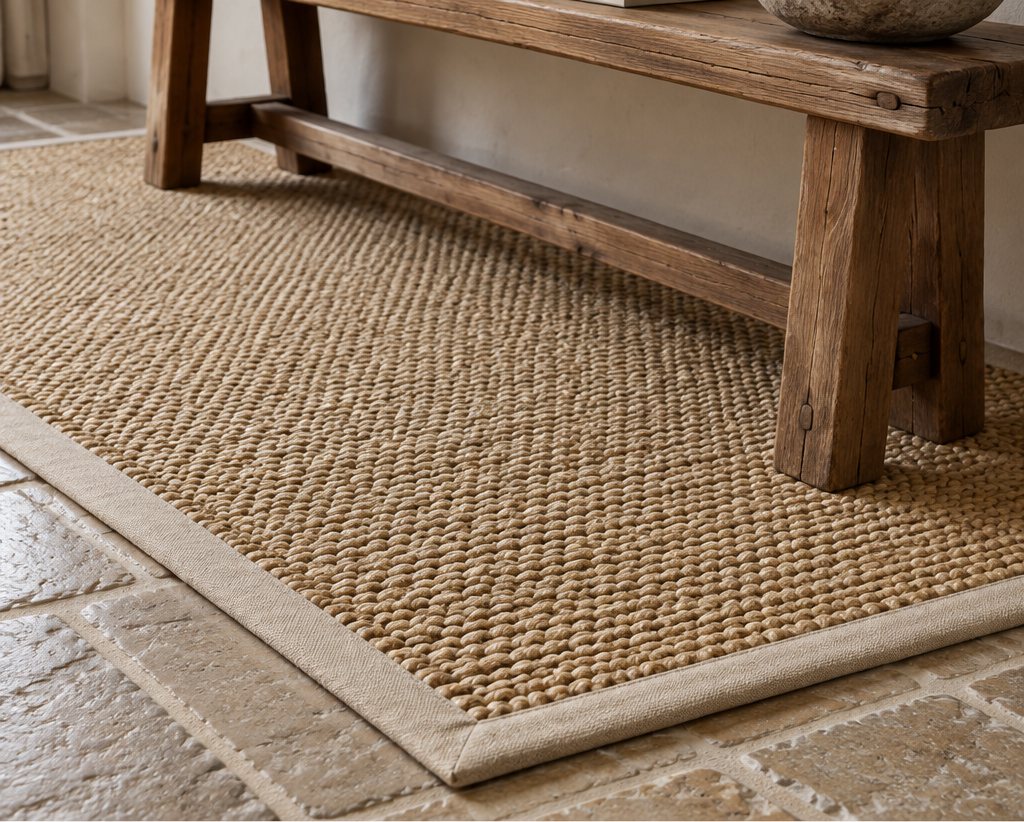
- Jute and sisal: plant fibers with a coarse, natural texture, best in dry, medium-traffic rooms. Water leaves marks. Our jute rug guide compares the two.
- Silk and viscose: silk is luxurious and strong; viscose (sometimes sold as art silk or bamboo silk) imitates its sheen but crushes, yellows and water-marks. Keep both away from traffic.
- Nylon: the toughest synthetic, common in commercial and wall-to-wall carpet, and a good choice for stairs and hallways.
- Polypropylene and polyester: inexpensive, fade-resistant and stain-resistant, used for outdoor and budget indoor rugs. Polyester holds bright color well but mats under heavy foot traffic.
What is a flatweave rug?
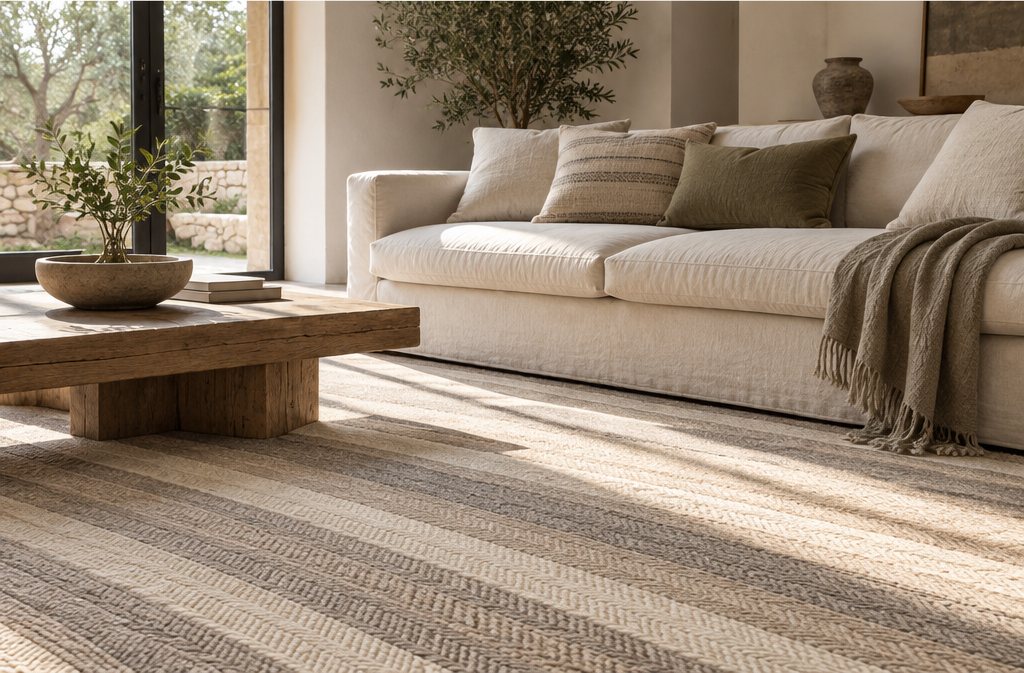
A flatweave rug is woven on a loom with no pile, so the surface is flat, thin and usually reversible. Kilims, dhurries and soumaks are the classic flat woven rug styles; modern versions often use wool, cotton or jute.
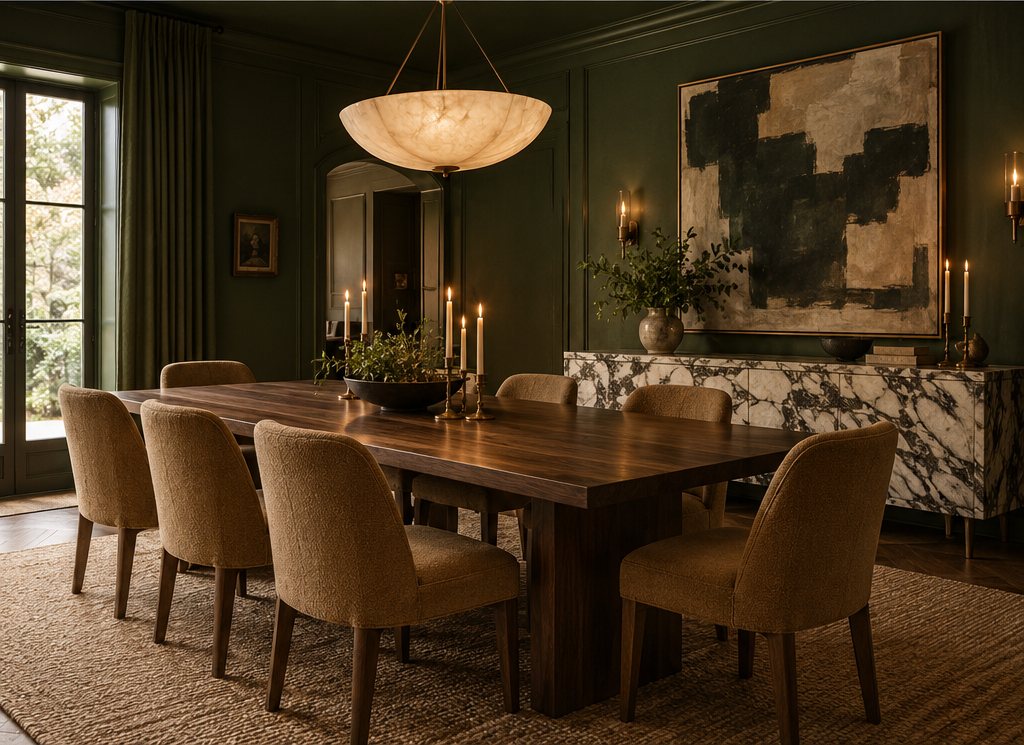
A flat weave rug is typically 0.15–0.3 in (4–8 mm) thick, which makes it the easiest type to slide a chair across, so it is our default for dining rooms. It also works under doors, in entries and in kitchens, and it rolls up small for storage. The trade-offs: a flatweave offers little cushioning and can slip, so always use a thin felt or rubber pad, and it shows furniture dents less than a pile rug but shows dirt faster because there is no pile to hide it. Expect $5–15 per sq ft for cotton and jute flatweaves and $15–40 for handwoven wool kilims.
Shag rugs and plush rugs: are they worth it?
Shag rugs and plush rugs are worth it for low-traffic rooms where comfort underfoot matters most, especially bedrooms, but they are a poor choice for dining areas, entries and homes with heavy shedding pets.
The difference is pile height. A plush rug has a dense cut pile of roughly 0.5–1 in (13–25 mm); a shaggy rug runs 1–3 in (25–75 mm), and a fuzzy rug or faux-fur rug is usually a long, fine polyester pile on a knitted backing. That is why fluffy rugs for bedrooms are the most popular use: you step onto them barefoot, and nobody drags a chair across them.
- Best fiber: wool shag recovers from crushing and cleans better; polyester shag is softer and cheaper but mats within 2–4 years.
- Cleaning: vacuum with the beater bar off, or use suction only; shake small shag rugs outside monthly.
- Furniture: keep heavy furniture off long pile, or only the front legs, because shag shows dents.
Are braided rugs and oval rugs still in style?
Braided rugs and oval rugs are back in style for 2027, driven by the cottage, farmhouse and vintage-revival looks, and they remain one of the most practical rug types for kitchens and family rooms.
A braided rug is made from strips of fabric or yarn braided into a rope, then coiled and stitched. Oval braided rugs are the traditional shape; round and rectangular versions exist too. Cotton braids are machine-washable in small sizes; wool braids last longer and resist soil. Check the stitching between coils: it should be tight, even and hidden, because a broken seam is the most common failure.
Oval rugs in other constructions are also gaining ground. An oval softens a long dining table or a rectangular room, and under a 72–84 in (183–213 cm) oval or racetrack table a 6 × 9 ft (183 × 274 cm) or 8 × 10 ft (244 × 305 cm) oval keeps chair legs on the rug. Size it with our rug size calculator.
What are irregular shaped rugs?
Irregular shaped rugs are rugs cut to an organic, asymmetric outline rather than a rectangle, circle or oval, and they work best as a single sculptural piece in a room with simple furniture.
Odd shaped rugs come in three main forms: pebble or blob outlines, usually hand-tufted; cowhide and hide-shaped rugs; and sculpted rugs cut from a standard rectangle. Because the edge is the design, leave at least 12–18 in (30–46 cm) of bare floor around the outline, and avoid pinning it under a sofa where the shape disappears. An odd shaped carpet can also be made to follow an L-shaped room or a bay window; that is a custom job, covered below.
Most irregular rugs are tufted, so the glued-backing lifespan of 5–10 years applies. Expect $10–30 per sq ft for tufted wool and $25–60 for hand-knotted custom outlines.
How much do custom rugs cost?
Custom rugs typically cost 20–50 percent more than the same rug in a stock size, with lead times of 6–10 weeks for tufted and broadloom work and 12–16 weeks or more for hand-knotted.
There are two routes to custom size area rugs. The first is a made-to-order rug from a rug maker, where you choose size, color and sometimes design; most will make any size in 6 in (15 cm) increments. The second is custom size carpet: broadloom wool or nylon cut to your exact dimensions and finished with binding or serging. Broadloom is the cheaper route, typically $6–25 per sq ft installed for wool with binding, and it can be any shape.
| Custom route | Typical price per sq ft | Lead time | Best for |
|---|---|---|---|
| Bound broadloom carpet | $6–25 | 1–3 weeks | Odd sizes, wall-to-wall look, budget |
| Custom hand-tufted | $15–40 | 6–10 weeks | Custom color, irregular shapes |
| Custom hand-loomed or flatweave | $15–45 | 8–12 weeks | Large dining and living rooms |
| Custom hand-knotted | $40–150 | 12–20 weeks | Heirloom quality, exact design |
Always approve a strike-off, a physical sample of the colors and weave, before production. For quantities, such as hotel rooms or a multi-unit rental, factories commonly quote minimums of 10–50 rugs per design.
How to choose the right type of rug
Choose the right type of rug by matching construction to traffic first, then fiber to cleaning needs, then shape and size to the furniture. This is the order we use on projects:
- Rate the room's traffic. Entries, hallways and dining rooms need flatweave, braided, low-pile wool or nylon; bedrooms can take shag or plush.
- Decide on cleaning. Need to wash it? Pick cotton flatweave or a washable synthetic. Need spot cleaning only? Wool.
- Set a lifespan budget. Divide the price by expected years: a $2,400 hand-knotted rug over 30 years costs less per year than a $500 tufted rug replaced every 6.
- Measure the furniture zone. The rug should hold at least the front legs of every seat. Our rug sizes chart lists standard sizes by room.
- Pick the shape. Rectangle for most rooms, round or oval for round tables and tight corners, irregular as a single statement.
- Add the right pad. Felt for pile rugs, felt and rubber for flatweaves; a pad should be about 1 in (2.5 cm) smaller than the rug on every side.
Mistakes we see with rug types
The mistake we see most often is buying a tufted or viscose rug for a high-traffic living room because it looks like a hand-knotted one in photos. Within two or three years the pile crushes, the viscose turns fuzzy and the latex backing starts to crumble. If the budget will not stretch to hand-knotted, a good flatweave or a power-loomed wool rug will outlast a cheap tufted one.
The second is a shag rug in the dining room: chairs snag, crumbs vanish into the pile and the rug never looks clean. The third is buying an irregular or oval rug too small, so it floats like a bath mat. Size up by one step from your first instinct. Finally, people forget the pad, and a rug without one wears out at least a third faster and slides on hard floors.
Specifying rugs for a hotel, rental portfolio or large home? Send us sizes, constructions and quantities through our textile sourcing desk and we will match you with vetted rug makers, strike-off timelines and typical minimums.
Free toolRug Size CalculatorFind the right rug size for your room and furniture.Shop & source the look
Buy it today — or have it made
Retail links are affiliate links: we may earn a commission at no extra cost to you (disclosure). “Get it made” sends the item to our sourcing desk for factory quotes in custom sizes and finishes.
Frequently asked questions
What are the different types of rugs?
The different types of rugs by construction are hand-knotted, hand-tufted, hand-loomed, flatweave, braided, hooked, shag and machine-made, which includes power-loomed and printed rugs. Each type can be made in several fibers, mainly wool, cotton, jute, silk or viscose, nylon and polypropylene, and in rectangular, round, oval or irregular shapes.
What type of rug is best for high-traffic areas?
Low-pile wool, wool flatweave and nylon are the best rug types for high-traffic areas. Wool resists soil and recovers from crushing, flatweaves have no pile to mat down, and nylon is the most abrasion-resistant synthetic. Avoid viscose, long shag and cheap tufted rugs in hallways, entries and family rooms, because they crush and shed quickly.
What is the difference between a flatweave and a pile rug?
A flatweave rug is woven without pile, so it is thin, flat and often reversible, while a pile rug has yarn tufts or knots standing up from the backing. Flatweaves are 0.15–0.3 in (4–8 mm) thick and suit dining rooms and entries; pile rugs are softer and warmer underfoot and suit living rooms and bedrooms.
Are shag rugs hard to clean?
Shag rugs are harder to clean than low-pile rugs because dirt and crumbs sink deep into the long pile. Vacuum with suction only or the beater bar raised, shake small rugs outdoors regularly and blot spills immediately. Wool shag cleans better than polyester shag, and professional cleaning every 12–18 months keeps the pile from matting.
How much does a custom size rug cost?
A custom size rug typically costs 20–50 percent more than a stock size of the same construction. Bound broadloom carpet runs about $6–25 per sq ft, custom hand-tufted rugs about $15–40 per sq ft and custom hand-knotted rugs about $40–150 per sq ft. Lead times range from one to twenty weeks.
Some links may be affiliate links. Regulations and specifications change — always confirm with suppliers and qualified professionals.