Sisal Rugs: Softness, Borders, Sizes & How to Buy the Best One
Sisal rugs are woven from agave leaf fiber, cost about $4–12 per sq ft for a bound rug, and are the hardest-wearing natural fiber you can put on a floor. They are not soft underfoot; wool-sisal blends and a cotton or linen border solve that.
Part of our guide: Natural Fiber Rugs & Carpet: Jute, Sisal, Wool & Seagrass
Key takeaways
- A bound sisal rug costs $4–12 per sq ft, so an 8x10 ft runs $320–960 before a border; broadloom by the roll is $2–5 per sq ft
- Pure sisal is firm and slightly coarse and does not soften with age; a 60/40 wool-sisal blend is the soft option for bedrooms
- Sisal is sold from a 13 ft (4 m) wide roll, so a 12x12 sisal rug is seamless and any dimension over 13 ft needs a seam
- A 2–4 in cotton, linen or leather border adds $25–60 per linear ft and is the finish that makes a plain sisal rug look custom
- Never wet a sisal rug: vacuum weekly, blot spills dry, and keep it out of kitchens, bathrooms and under dining tables
Sisal rugs are flat-woven floor coverings made from the leaf fiber of the agave plant, and they are the toughest natural fiber rug you can buy: a bound sisal carpet rug costs roughly $4–12 per sq ft ($43–130 per sq m), lasts 10–15 years in a living room, and comes in bouclé, herringbone and striped weaves up to 13 ft (4 m) wide. The trade-off is texture. Pure sisal is firm and slightly scratchy, so soft sisal rugs are usually wool-sisal blends, and most buyers add a cotton or linen border.
Sisal sits between jute and wool on both price and performance. It is stiffer and far more durable than jute, cheaper and more textural than wool, and the quiet, sand-colored backdrop that layered rugs are built on. This guide covers softness, borders, patterns, sizes, blends and care, with the price bands we see from mills and workrooms in 2027. For the full family of fibers, start with our natural fiber rugs guide.
- Cost: $4–12 per sq ft bound; $2–5 per sq ft for broadloom before binding; $25–60 per linear ft extra for a fabric border.
- Softness: firm and textured; a 60/40 wool-sisal blend is the soft option, a 100 percent sisal is not.
- Sizes: standard 5x8, 8x10, 9x12 ft; custom cuts up to 13 ft (4 m) wide, so a 12x12 sisal rug is one seamless piece.
- Wear: rated for heavy residential and light commercial traffic; stairs, halls and living rooms are its best rooms.
- Weak spot: water. Sisal stains and ripples when wet, so it stays out of kitchens, baths and uncovered porches.
What is sisal and how is it made into rugs?
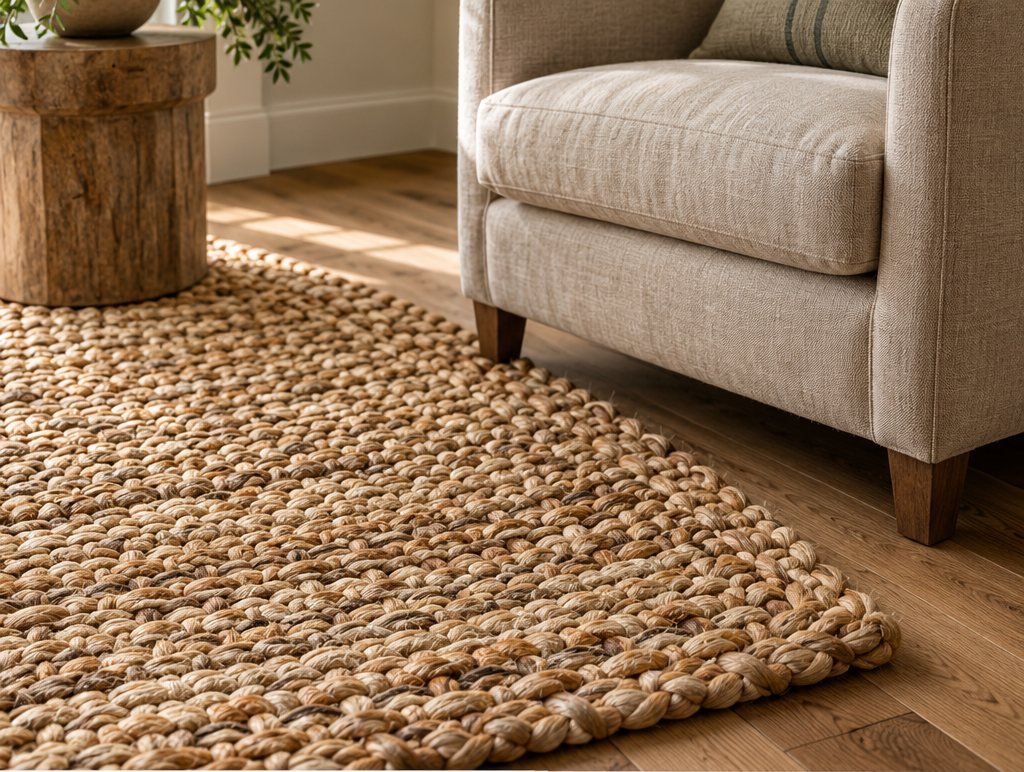
Sisal is a stiff, pale fiber stripped from the long leaves of the agave sisalana plant, grown mainly in East Africa, Brazil and Mexico, spun into yarn and woven on wide looms into a dense flat carpet. The leaves are crushed and washed to free the fibers, which are dried, brushed and graded by length; the longest, cleanest fibers go into rug yarn, the shorter ones into rope and twine. That origin tells you most of what you need to know about the material: it is strong enough to make ship's rope, it is naturally sound-absorbing, and it does not want to get wet.
Most sisal carpet rugs begin as broadloom, a roll 13 ft (4 m) wide and up to 100 ft (30 m) long, that is cut to size and finished with a serged edge or a sewn fabric border. The weave is latex-backed to hold the yarns in place, which is why sisal lies flat without curling and why it cannot go through a washing machine. A small number of sisal floor mats are hand-woven in panels and stitched together, which gives a slightly irregular, craft look at a higher price.
Against its siblings, sisal is the most durable and the least soft: jute is softer but wears fast, seagrass is nearly waterproof but cannot be dyed. Natural sisal takes dye well, which is why it comes in everything from bleached ivory to a dark sisal rug in charcoal.
Are sisal rugs soft underfoot?
No. A pure sisal rug is firm, slightly coarse and cool underfoot, closer to a dense woven mat than to a pile carpet. It is comfortable to walk on in shoes or socks and fine to sit on, but bare knees and small children notice the texture, which is why soft sisal rugs are almost always one of three things: a wool-sisal blend, a finer bouclé weave, or a sisal-look rug made from wool or synthetic fiber. The honest answer for a bedroom or a playroom is to choose one of those rather than expecting pure sisal to soften with age; it does not.
| Type | Softness (1–5) | Cost per sq ft | Durability | Best rooms |
|---|---|---|---|---|
| 100% sisal, bouclé weave | 2 | $4–8 ($43–86/sq m) | Very high | Halls, stairs, living room, office |
| 100% sisal, herringbone or tiger-eye weave | 2 | $5–10 ($54–108/sq m) | Very high | Living room, dining room |
| Wool-sisal blend (60/40 or 70/30) | 4 | $8–16 ($86–172/sq m) | High | Bedrooms, family rooms, stairs |
| Sisal-look wool | 4 | $10–20 ($108–215/sq m) | High | Bedrooms, formal rooms |
| Sisal-look synthetic (polypropylene) | 3 | $2–5 ($22–54/sq m) | Medium | Kitchens, porches, rentals |
| Jute, for comparison | 4 | $2–6 ($22–65/sq m) | Low–medium | Bedrooms, low-traffic living rooms |
The weave changes the feel as much as the fiber. A tight bouclé, which is a small looped weave, is the smoothest pure sisal; a chunky basketweave or a wide herringbone has more ridge to it. If softness matters, put a felt pad underneath, which adds give without changing the surface, and choose a weave with the smallest loop you can find.
How much do sisal rugs cost?
A finished sisal rug costs $4–12 per sq ft, so an 8x10 ft (2.4x3 m) rug runs $320–960 and a 9x12 ft (2.7x3.7 m) runs $430–1,300 before a border. Broadloom bought by the roll is $2–5 per sq ft, binding adds $3–6 per linear ft, and a 2–4 in (5–10 cm) cotton or linen border adds $25–60 per linear ft. Affordable sisal rugs at the bottom of the range are usually machine-serged standard sizes from big-box stores and online retailers; the top of the range is custom-cut broadloom with a leather or wide linen border from a workroom.
Three things move the price. Weave density is the first: a 32 oz per sq yd weave costs more than a 24 oz one and wears about twice as long. Width is the second: a 12x12 sisal rug or any piece wider than 13 ft (4 m) needs a seam, which adds $8–15 per linear ft and a visible line. The border is the third, and it is where most of the money goes on a bordered rug, so if you want discount sisal rugs, buy a plain serged edge and live without the border. Bear in mind that a cheap sisal rug under $3 per sq ft is often a sisal look rug in polypropylene; check the fiber content before you compare prices.
Which border is best for a sisal rug?
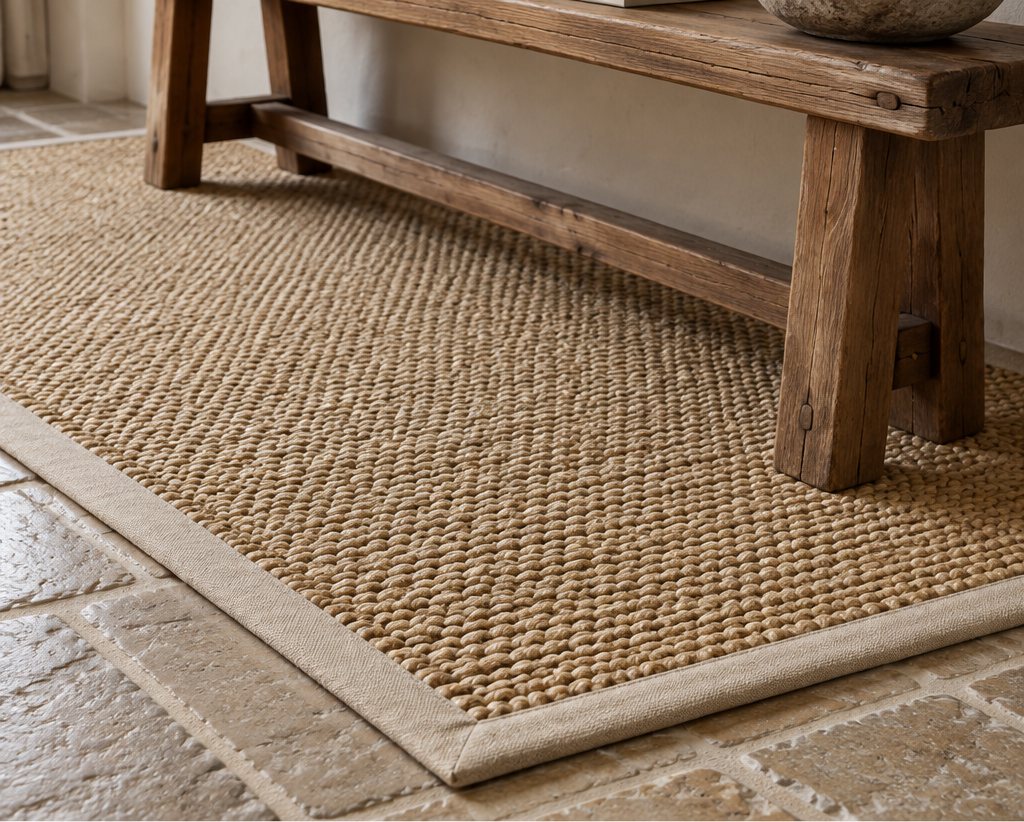
A sewn fabric border in cotton, linen or leather is the best finish for a sisal rug because it stops the edge yarns fraying, hides the latex backing and lets you choose a color that ties the rug to the room. Sisal rugs with borders are the classic version of this rug for a reason: the firm pale field needs a frame, and a 2–4 in (5–10 cm) band gives it one. The alternative, a serged edge, is simply the yarn ends overlocked in matching thread; it is cheaper and nearly invisible, and on a very large rug that disappears under furniture it is all you need.
Border widths and materials
- Cotton twill or canvas, 2–3 in (5–8 cm): the standard sisal border rug finish, in 40–60 stock colors, $25–35 per linear ft. Mitered corners look crisper than square ones.
- Linen, 3–4 in (8–10 cm): softer, more textural, slightly dearer at $35–50 per linear ft, and the border we specify most for living rooms.
- Leather or faux leather, 1.5–2.5 in (4–6 cm): $45–60 per linear ft, hard-wearing on stairs and halls, and the best match for a brown sisal rug or a dark sisal rug under a desk.
- Wide double border, 5–6 in (13–15 cm): a narrow inner band in a contrast color inside a wider outer band; expensive but it makes a plain rug read as custom.
Match the border to something fixed in the room, the sofa leg, the curtain fabric or the floor. A pale sand sisal with a charcoal cotton border is the safest living room combination; the same rug with a chocolate leather border suits a traditional study.
Do patterned and striped sisal rugs work in a living room?
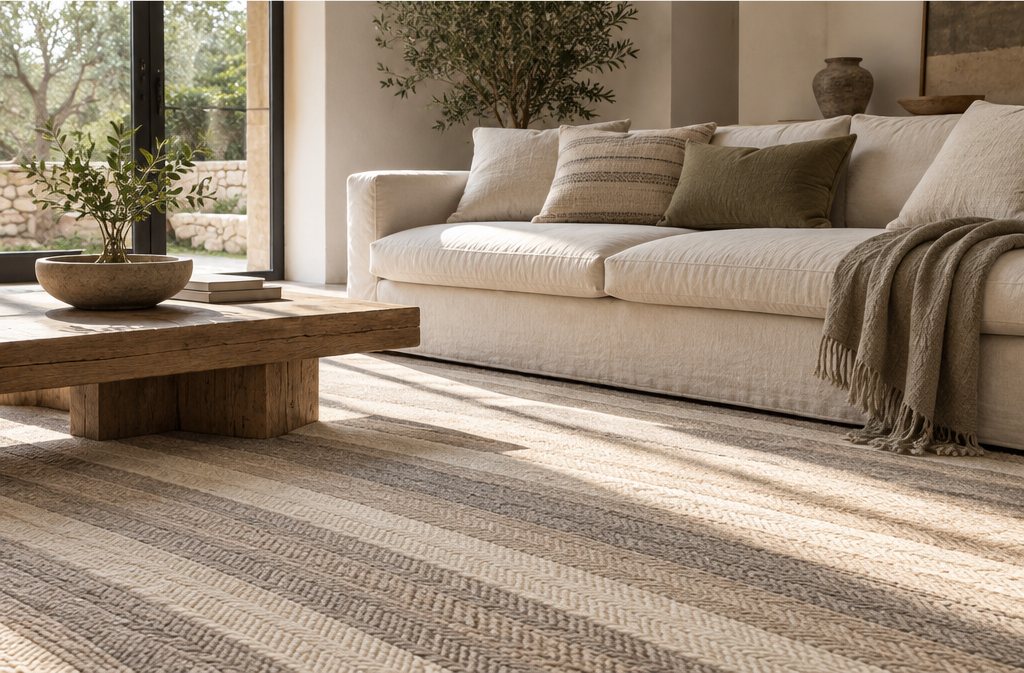
Yes, and a patterned sisal rug is the easiest way to add structure to a neutral room without adding color. Patterned sisal rugs come in three families: woven-in patterns such as herringbone, diamond, chevron and basketweave, where two tones of yarn make the design; printed patterns, where a trellis or stripe is applied to a plain weave; and striped sisal carpet, where colored yarns are woven in bands 1–6 in (2.5–15 cm) wide. Woven-in patterns last as long as the rug; printed patterns fade in direct sun within three to five years.
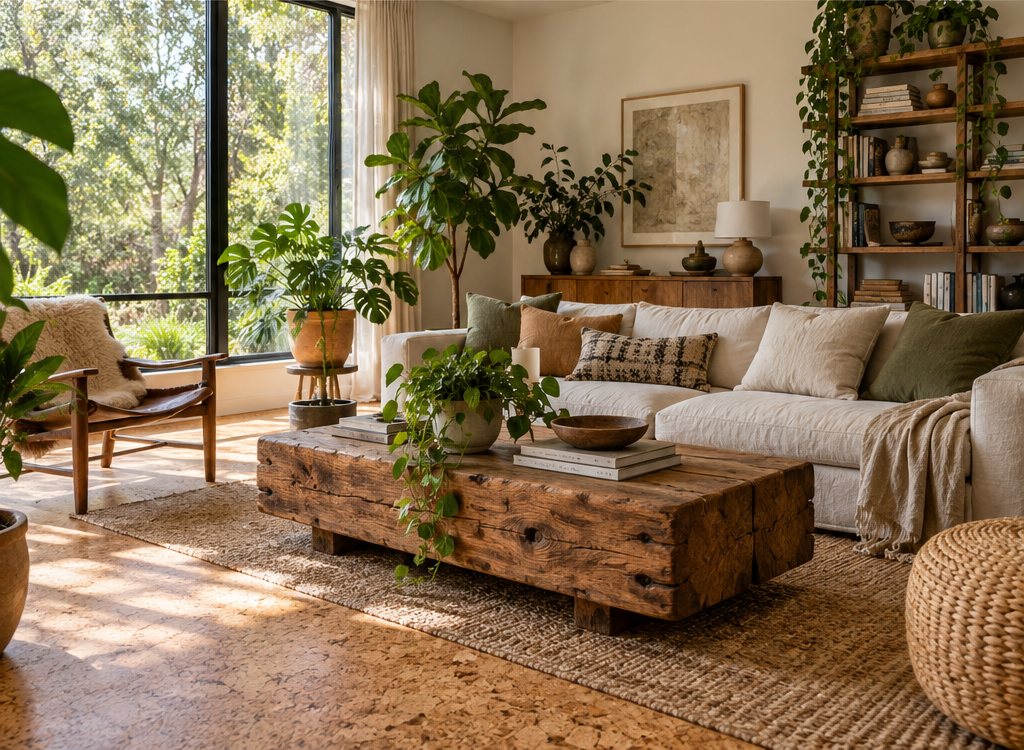
In a living room, a sisal rug living room scheme usually starts with a large bordered plain or a quiet herringbone in natural, then layers a smaller wool or vintage rug on top. A 9x12 ft (2.7x3.7 m) sisal with a 5x8 ft (1.5x2.4 m) patterned rug over it reads as one intentional composition and costs less than a 9x12 wool rug alone. Striped sisal suits halls and stairs, where the stripe runs with the length and visually extends the space. Keep stripes under 2 in (5 cm) wide in small rooms; wide stripes are for long corridors and beach houses.
For color, the market has settled on four groups for 2027: bleached and ivory sisal for pale rooms; natural sand and wheat, which is the bestseller; brown sisal rugs in walnut, tobacco and chocolate for traditional and moody rooms; and dark sisal in slate and charcoal for offices and modern spaces. Natural sisal yarn lightens slightly with sun exposure in its first year, so a dark dyed sisal in a south-facing room may show a lighter patch where a chair once stood.
What size sisal rug should you buy?
Buy the largest sisal rug the room will take: in a living room, the front legs of every seat should sit on it, which usually means a 9x12 ft (2.7x3.7 m) rug in a 14x18 ft (4.3x5.5 m) room and an 8x10 ft (2.4x3 m) in anything smaller. Large sisal rugs are one of the few cases where going big is also cheap, because sisal is sold from a 13 ft (4 m) wide roll and can be cut to any length. A wall-to-wall look with a 12–18 in (30–46 cm) margin of floor showing around the edge is the most polished way to use it.
| Room | Typical room size | Sisal rug size | Approximate cost (serged) |
|---|---|---|---|
| Entry or hall | 4x8 ft (1.2x2.4 m) | 2.5x7 ft runner (0.8x2.1 m) | $90–200 |
| Small living room | 12x14 ft (3.7x4.3 m) | 8x10 ft (2.4x3 m) | $320–960 |
| Large living room | 16x20 ft (4.9x6.1 m) | 12x15 ft (3.7x4.6 m) | $720–2,100 |
| Square family room | 14x14 ft (4.3x4.3 m) | 12x12 ft (3.7x3.7 m) | $580–1,700 |
| Dining room, 6-seat table | 12x14 ft (3.7x4.3 m) | 8x10 ft (2.4x3 m), 24 in past table edge | $320–960 |
| Bedroom, queen bed | 12x13 ft (3.7x4 m) | 8x10 ft (2.4x3 m) wool-sisal blend | $640–1,300 |
A 12x12 sisal rug is popular for square family rooms and fits inside the 13 ft (4 m) roll width without a seam; anything larger in both directions is seamed, which is fine under furniture but worth knowing before you order. Run the numbers for your own room with the rug size calculator and read how to choose a rug size for the clearance rules by room.
Is a wool-sisal blend better than pure sisal?
A wool-sisal blend is better for comfort and worse for durability and price, so it wins in bedrooms and family rooms and loses on stairs and in halls. Wool sisal rugs are typically 60–70 percent wool wrapped around or twisted with 30–40 percent sisal, which keeps the flat, textured, sisal look while adding spring and warmth. They cost $8–16 per sq ft, clean more easily because wool releases dirt, and are the right answer if you want the look of sisal somewhere people sit on the floor.
Pure sisal is harder, cooler and almost indifferent to grit, which is why the best sisal rugs for a mudroom-adjacent hall, a staircase or a home office with a rolling chair are 100 percent sisal at 32 oz or heavier. For a chair, add a hard chair mat or a leather border where the casters land; even sisal will fuzz under daily caster traffic. Where you want sisal texture with the easiest care of all, a sisal-look rug in solution-dyed polypropylene can be hosed down, and it is the only sensible choice for a covered porch.
How do you clean and care for a sisal rug?
Vacuum a sisal rug weekly with a suction-only head, blot spills immediately with a dry white cloth, and never saturate it with water; sisal absorbs moisture, swells, ripples and can brown as it dries. That is the whole discipline. A dry cleaning powder once or twice a year lifts grease and soil without wetting the fiber, and a rug pad underneath, see our rug pad guide, keeps grit from grinding through the weave from below.
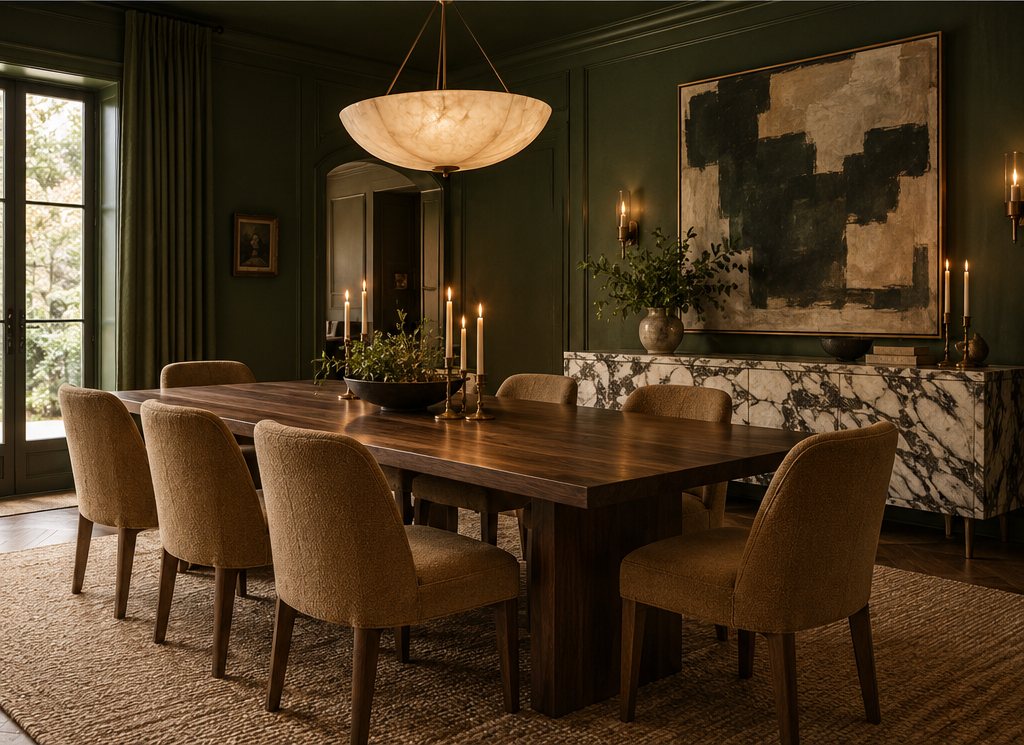
Sisal is a poor choice under a dining table where wine and sauces land, which is why dining room rugs are usually wool or a flat-weave polypropylene; if you want the look there, choose a sisal-look synthetic or accept that a stain is permanent.
Step by step: binding and installing a custom sisal rug
Buying a custom-cut sisal from broadloom is how you get a 12x12 or an odd size at a fair price. The process runs like this:
- Measure the room and decide the margin of floor to leave, usually 12–18 in (30–46 cm) at each wall; subtract that to get the finished rug size.
- Choose the weave and weight. Ask for the ounces per square yard; 24 oz is light residential, 32 oz and up is for stairs and halls. Order a 12 in (30 cm) sample and walk on it in socks.
- Pick the edge finish. Serging for a hidden edge, a 2–3 in (5–8 cm) cotton border for a classic look, linen or leather for a living room or hall. Request mitered corners.
- Confirm the roll width. Any dimension over 13 ft (4 m) means a seam; ask where the seam will fall and have it placed under furniture.
- Order the pad at the same time, cut 1 in (2.5 cm) smaller all round, in felt or felt-and-rubber for hard floors.
- Unroll the rug on delivery and let it relax for 24–48 hours before placing furniture; sisal arrives with roll memory and flattens under its own weight.
- Vacuum before use to lift loose fibers from cutting and binding, which shed for the first two weeks and then stop.
What should you look for when buying the best sisal rug?
The best sisal rugs have a dense, even weave of 28–32 oz or more, a latex backing that does not crumble when you flex a corner, a straight, flat border with mitered corners, and a fiber label that says 100 percent sisal rather than blend or sisal-look. Look at the back: cheap rugs show thin, uneven backing and loose yarn ends. Look at the color: natural sisal has a slight variation from strand to strand, which is correct; a perfectly uniform tan is usually a synthetic.
If you are buying sisal rugs for sale online, confirm the exact finished size, since bordered rugs are often listed by field size before the border is added; ask for a border swatch; and check the shipping weight, because an 8x10 ft 100 percent sisal rug weighs 35–50 lb (16–23 kg). Any rug described as machine-washable or hose-clean is not sisal.
For the flat-weave wool and cotton rugs that layer over sisal, see our woven rugs guide.
Free toolCurtain Size CalculatorRod length, panel size, ready-made match and yardage.Shop & source the look
Buy it today — or have it made
Retail links are affiliate links: we may earn a commission at no extra cost to you (disclosure). “Get it made” sends the item to our sourcing desk for factory quotes in custom sizes and finishes.
Frequently asked questions
Are sisal rugs soft?
No, pure sisal is firm, cool and slightly coarse underfoot, more like a dense woven mat than a carpet. It does not soften with age. If you want sisal texture with comfort, choose a wool-sisal blend with 60–70 percent wool, a fine bouclé weave, or a sisal-look wool rug, and add a felt pad underneath for extra give.
How much does a sisal rug cost?
A finished sisal rug costs about $4–12 per sq ft, which puts an 8x10 ft rug at $320–960 and a 9x12 at $430–1,300 with a plain serged edge. A sewn cotton, linen or leather border adds $25–60 per linear ft. Broadloom sisal bought by the roll is $2–5 per sq ft before cutting and binding.
What is the best sisal rug for a living room?
A 100 percent sisal at 28–32 oz in a bouclé or herringbone weave, sized so the front legs of all seating sit on it, with a 2–4 in cotton or linen border. In most living rooms that is a 9x12 ft rug. Layer a smaller wool or patterned rug on top if you want color or softness in the seating zone.
Can you get a 12x12 sisal rug?
Yes. Sisal broadloom is woven 13 ft (4 m) wide, so a 12x12 ft rug is cut as one seamless piece and bound to order; expect $580–1,700 depending on weave weight and border. Anything wider than 13 ft in both directions needs a seam, which workrooms place under furniture.
Are wool-sisal rugs better than sisal?
They are softer, warmer and easier to clean, but less durable and more expensive at $8–16 per sq ft. Choose a wool-sisal blend for bedrooms and family rooms where people sit on the floor, and pure sisal for halls, stairs and offices where durability matters more than comfort.
Is sisal good for stairs and hallways?
Sisal is one of the best natural fibers for stairs and halls because it resists crushing and hides grit. Specify a 32 oz or heavier weave, a leather or cotton border on a runner, and a non-slip pad. Avoid it only where water or mud comes in directly, as sisal stains and ripples when wet.
How do you clean a sisal rug?
Vacuum weekly with a suction-only head and blot spills at once with a dry white cloth; do not soak the rug, as sisal absorbs water, ripples and can brown as it dries. Use a dry cleaning powder once or twice a year for grease and soil. Permanent stains are common with wine and oil, so keep sisal away from dining tables.
Some links may be affiliate links. Regulations and specifications change — always confirm with suppliers and qualified professionals.