How to Choose a Rug Size: The Definitive Guide for Every Room
The rug sizing rules designers actually use — living room layouts, bed sizes, dining tables, runners, standard sizes in feet and centimeters, pile, materials and rug pads.
Key takeaways
- Size up: most living rooms need an 8×10 ft (240×300 cm) rug or larger.
- In bedrooms, show 45–60 cm (18–24 in) of rug beyond each side of the bed.
- Dining rugs need 60 cm (24 in) beyond the table on every side.
- Use a pad 2.5–5 cm (1–2 in) smaller than the rug on every side.
A rug that is too small is the most common styling mistake in otherwise well-furnished rooms. It makes furniture look like it is floating, shrinks the room visually and breaks the space into islands. The good news is that rug sizing follows a handful of reliable rules. This guide covers every room, gives standard sizes in feet and centimeters, and explains pile, materials and pads. If you want a quick answer for your exact dimensions, use our rug size calculator — then come back here for the reasoning behind it.
The three golden rules
- When in doubt, size up. A larger rug almost always looks better than a smaller one. The exception is a rug that runs under doors or crowds the walls.
- Leave a border of floor. In most rooms, leave 20–45 cm (8–18 in) of bare floor between the rug edge and the walls. Smaller rooms can go down to about 20 cm (8 in); large rooms look best with 30–45 cm (12–18 in).
- Let furniture tell you the size. Measure the furniture group, not the room. The rug should relate to the seating, bed or table it anchors.
Before buying, mark the proposed rug outline on the floor with painter's tape and live with it for a day or two. It is the cheapest and most reliable test there is.
Living room rug sizes
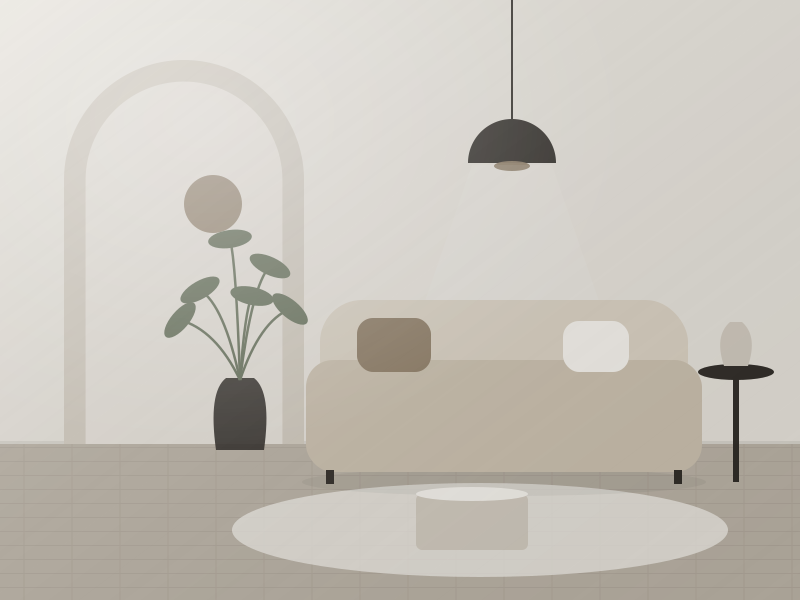
There are three accepted layouts. Choose one based on room size and the look you want.
All legs on
Every piece of seating sits fully on the rug, with 15–20 cm (6–8 in) of rug visible beyond the back legs. This is the most luxurious and unified look and suits large and open-plan rooms, where the rug defines the living zone. It typically requires a 9×12 ft (275×365 cm) or larger rug for a full sofa-and-chairs group.
Front legs on
The front legs of the sofa and chairs rest on the rug, with the back legs on the floor. This is the most versatile layout: it connects the group while needing a smaller rug. Aim for at least 15 cm (6 in) of rug under the front legs. In most living rooms this means an 8×10 ft (245×305 cm) rug; in smaller rooms a 6×9 ft (185×275 cm) can work.
Floating
Only the coffee table sits on the rug, with no furniture legs on it. This works only in small rooms or with layered rugs and needs a rug at least as wide as the sofa is long minus about 15–30 cm (6–12 in) — a small rug under a large sofa reads as a bath mat. A 5×8 ft (150×240 cm) is usually the minimum. For tighter spaces, see our small living room ideas.
Width check: the rug should extend at least 15–20 cm (6–8 in) beyond each end of the sofa. A 230 cm (90 in) sofa therefore needs a rug about 260–270 cm (102–106 in) wide — which points to an 8×10 or 9×12, not a 6×9. Keep the rug centered on the seating group, not the room, if the two differ.
Bedroom rug sizes by bed
The standard approach is to place the rug under the lower two-thirds of the bed, starting just in front of the nightstands, with 45–60 cm (18–24 in) of rug extending beyond each side and the foot of the bed. Nightstands usually sit off the rug. Orient the long side of the rug across the width of the bed.
| Bed size | Mattress (US) | Recommended rug | Metric equivalent |
|---|---|---|---|
| Twin | 38×75 in (97×190 cm) | 5×8 ft | 150×240 cm |
| Full / double | 54×75 in (137×190 cm) | 6×9 ft | 180×270 cm |
| Queen | 60×80 in (152×203 cm) | 8×10 ft | 240×300 cm |
| King | 76×80 in (193×203 cm) | 9×12 ft | 270×360 cm |
| California king | 72×84 in (183×213 cm) | 9×12 ft | 270×360 cm |
UK and European mattress sizes differ slightly (a UK king is 150×200 cm, a UK super king 180×200 cm), so measure the bed frame rather than relying on the name. Alternatives: two runners, about 75×240 cm (2.5×8 ft), one each side of the bed, or a smaller rug at the foot of the bed extending past both sides. Both suit beds with storage drawers or platform frames where a large rug is awkward.
Dining room rug sizes
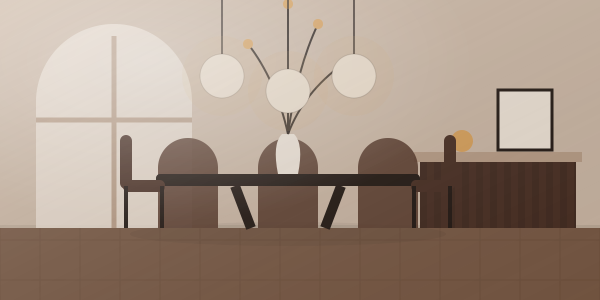
The dining rule is non-negotiable: chairs must stay on the rug when pulled out. Add 60 cm (24 in) to each side of the table — 120 cm (48 in) to both the length and the width. If your chairs are large or the table is used for long dinners, 75 cm (30 in) each side is more comfortable.
| Table | Minimum rug (table + 60 cm / 24 in each side) | Common rug size |
|---|---|---|
| Round Ø110 cm (42 in), 4 seats | Ø230 cm (90 in) | 8 ft round or 8×8 ft square |
| Round Ø150 cm (60 in), 6 seats | Ø270 cm (108 in) | 9–10 ft round |
| Rectangular 160×90 cm (63×35 in), 6 seats | 280×210 cm (111×83 in) | 8×10 ft / 240×300 cm |
| Rectangular 200×100 cm (79×39 in), 8 seats | 320×220 cm (127×87 in) | 9×12 ft / 270×360 cm |
| Rectangular 240×100 cm (94×39 in), 10 seats | 360×220 cm (142×87 in) | 9×12 ft or 10×14 ft |
Match the rug shape to the table shape. Choose a flatweave or low pile so chairs slide easily, and avoid shaggy or high-pile rugs under dining tables. For more on dining layouts, see dining room trends 2027.
Hallway runners and other spaces
Runners: leave 10–15 cm (4–6 in) of floor on each side along the width, and 15–30 cm (6–12 in) at each end. Standard runner widths are 2.5 ft (75–80 cm) and 3 ft (90 cm); lengths are commonly 8, 10, 12 and 14 ft (240–420 cm). In a hall 100 cm (39 in) wide, a 75 cm runner is right. Make sure doors clear the pile — a rug that catches every time the door swings will not last.
Kitchens: a runner in front of the sink or between island and counter, ideally in washable flatweave or a low-pile synthetic, leaving 15 cm (6 in) at the ends.
Entryways: a doormat outside and a durable rug inside that allows the door to swing freely. Size it to fill the landing area, leaving a floor border.
Home offices: the rug should hold the desk chair even when pushed back — typically 90 cm (36 in) beyond the desk edge.
Standard rug sizes in feet and centimeters
US rugs are sold in feet; European and many Middle Eastern and Asian markets sell metric sizes, which are close but not identical. Always check the actual dimensions.
| US size (ft) | Exact metric | Nearest common metric size | Typical use |
|---|---|---|---|
| 2×3 | 61×91 cm | 60×90 cm | Doormat, bathroom |
| 3×5 | 91×152 cm | 90×150 cm | Entry, beside a bed, kitchen |
| 4×6 | 122×183 cm | 120×180 cm | Small entry, reading nook |
| 5×8 | 152×244 cm | 160×230 cm | Small living room, twin bed |
| 6×9 | 183×274 cm | 200×290 cm | Full bed, compact living room |
| 8×10 | 244×305 cm | 250×300 cm | Most living rooms, queen bed, 6-seat dining |
| 9×12 | 274×366 cm | 250×350 or 300×400 cm | Large living room, king bed, 8-seat dining |
| 10×14 | 305×427 cm | 300×400 cm | Open plan, large dining |
| 2.5×8 runner | 76×244 cm | 80×250 cm | Hallway, kitchen, bedside |
If your space falls between sizes, or you need an unusual shape, custom rugs are widely available; see the sourcing note below.
Pile height and material guide
Pile height affects comfort, cleaning and furniture stability. Low pile (under about 6 mm / 0.25 in) and flatweaves suit dining rooms, hallways, kitchens and homes with pets or robot vacuums. Medium pile (about 6–13 mm / 0.25–0.5 in) is the everyday living-room choice. High pile and shag (over 13 mm / 0.5 in) is soft underfoot for bedrooms but can make chairs and tables wobble and is harder to clean.
| Material | Feel | Durability | Best for |
|---|---|---|---|
| Wool | Soft, springy, warm | High; naturally soil- and flame-resistant | Living rooms, bedrooms, hospitality |
| Jute and sisal | Coarse, textured | Good for light traffic; stains with water | Living rooms, layered under wool |
| Cotton | Flat, soft | Moderate; often washable | Kitchens, kids' rooms, bathrooms |
| Viscose / art silk | Silky sheen | Low; marks easily and is water-sensitive | Low-traffic bedrooms only |
| Polypropylene | Firm, can be wool-like | High; stain-resistant, suits outdoors | Outdoor, dining, family rooms |
| Nylon | Soft, resilient | Very high | High-traffic halls, commercial |
Rug pads
A pad stops slipping, protects floors, adds cushioning and extends rug life. Size the pad about 2.5–5 cm (1–2 in) smaller than the rug on every side so it stays hidden.
- Felt: adds cushion, best for large rugs held in place by furniture.
- Felt and natural rubber: the most versatile — cushion plus grip on hard floors.
- Thin natural rubber: for runners and small rugs where thickness would catch doors.
Avoid cheap PVC pads on finished wood or vinyl floors, as some can react with the finish over time. Check that the pad is suitable for underfloor heating if you have it, and choose a thinner pad in doorways.
Quick checklist before you buy
- Measure the furniture group, then the room, and tape the outline on the floor.
- Check door swings, floor vents and transitions to other floor finishes.
- Confirm the exact dimensions, not just the nominal size.
- Choose pile and material for traffic, pets and cleaning.
- Order a pad at the same time.
- Run the numbers through the rug size calculator.
For help pulling the whole room together, our e-design service produces a layout with rug sizes specified, and our shop lists rugs we recommend.
Free toolRug Size CalculatorFind the right rug size for your room and furniture.Shop & source the look
Buy it today — or have it made
Retail links are affiliate links: we may earn a commission at no extra cost to you (disclosure). “Get it made” sends the item to our sourcing desk for factory quotes in custom sizes and finishes.
Frequently asked questions
What size rug do I need for my living room?
Most living rooms need an 8×10 ft (about 240×300 cm) rug so at least the front legs of all seating sit on it; larger or open-plan rooms often need 9×12 ft (about 270×360 cm).
What size rug goes under a queen bed?
An 8×10 ft (about 240×300 cm) rug placed with its long side across the bed, covering the lower two-thirds and extending 45–60 cm (18–24 in) beyond each side.
How big should a rug be under a dining table?
At least 60 cm (24 in) larger than the table on every side, so chairs stay on the rug when pulled out.
How much floor should show around a rug?
Leave about 20–45 cm (8–18 in) of bare floor between the rug and the walls, less in small rooms and more in large ones.
Some links may be affiliate links. Regulations and specifications change — always confirm with suppliers and qualified professionals.