Ceiling Paint and Trim Paint: Which Type, Sheen and White to Use
Ceiling paint works best as a flat, high-hide white with an LRV of 85 or more, while trim paint should be a hard semi-gloss or satin enamel. Here are the sheens, whites, coverage rates and 2026 price bands.
Part of our guide: Interior House Paint Ideas: Color Schemes & Room Paint Design

Key takeaways
- Use flat or ultra-flat ceiling paint with an LRV of 85–92: it hides drywall seams and roller marks better than any sheen
- Trim, doors and baseboards need an enamel: waterborne alkyd or urethane-modified acrylic in semi-gloss or satin
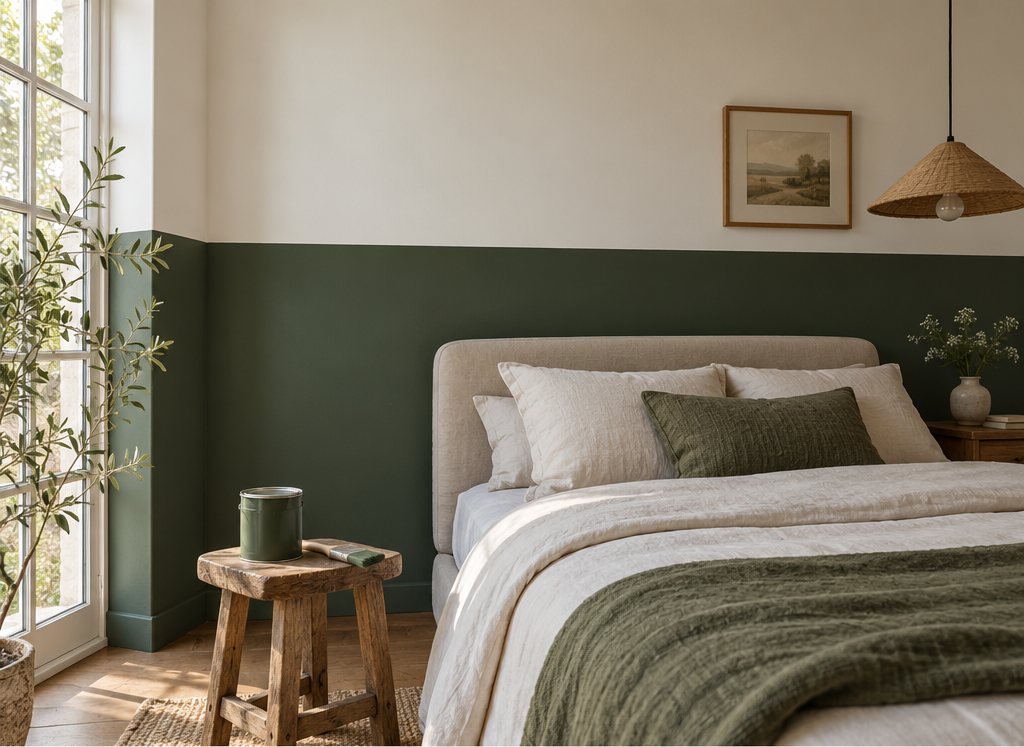
- Match the ceiling white to the wall undertone, or tint the ceiling with 25–50 percent of the wall color
- Budget one gallon per 350–400 sq ft of ceiling per coat, and roughly one quart per door side pair plus 50 ft of baseboard
The best ceiling paint is a flat or ultra-flat acrylic in a white with a light reflectance value (LRV) of 85–92, because flat sheen hides drywall seams and roller marks and high LRV bounces light back into the room. Trim paint is the opposite: a hard semi-gloss or satin enamel that shrugs off scuffs, cleaning and door slams.
Ceilings and trim are the two surfaces most people paint as an afterthought, and they are where cheap paint shows first. This guide sits under our interior painting ideas hub and covers what to buy, which sheen to pick and how to sequence the job.
- Ceiling sheen: flat or ultra-flat, under 5 gloss units (GU) at 85 degrees.
- Trim sheen: semi-gloss (about 35–70 GU) for doors and baseboards, satin (about 25–35 GU) for a softer look.
- Coverage: 350–400 sq ft (33–37 m²) per gallon per coat for ceilings; trim is measured in quarts.
- Typical 2026 US price: $30–60 per gallon for ceiling paint, $50–95 per gallon for premium trim enamel.
What type of paint is best for a ceiling?
The best type of paint for a ceiling is a 100 percent acrylic, flat or ultra-flat, formulated to spatter little and dry slowly enough to keep a wet edge. Those three qualities matter more overhead than on any wall.
Ceiling flat paint is not just wall paint with the sheen turned down. Dedicated ceiling formulas are thicker so they drip less off a roller, often use a slightly longer open time so you can roll across a 12 ft (3.7 m) span without lap marks, and pack more pigment for one-coat hide over a clean existing ceiling. Some go on pale pink or violet and dry white, which helps you see missed patches; they are worth it for first-timers.
Flat white ceiling paint vs wall and ceiling paint
A combined wall and ceiling paint is a flat or matte product that is fine for low-traffic rooms where you want one can for everything, such as a guest bedroom. It is not ideal for kitchens and bathrooms, where you need a scrubbable matte or eggshell on walls. In those rooms, use a moisture-resistant matte or a kitchen-and-bath formula with mildewcide on the ceiling as well, because steam rises and settles there first. Our paint sheen guide explains each sheen by gloss units and washability.
Which white ceiling paint should you choose?
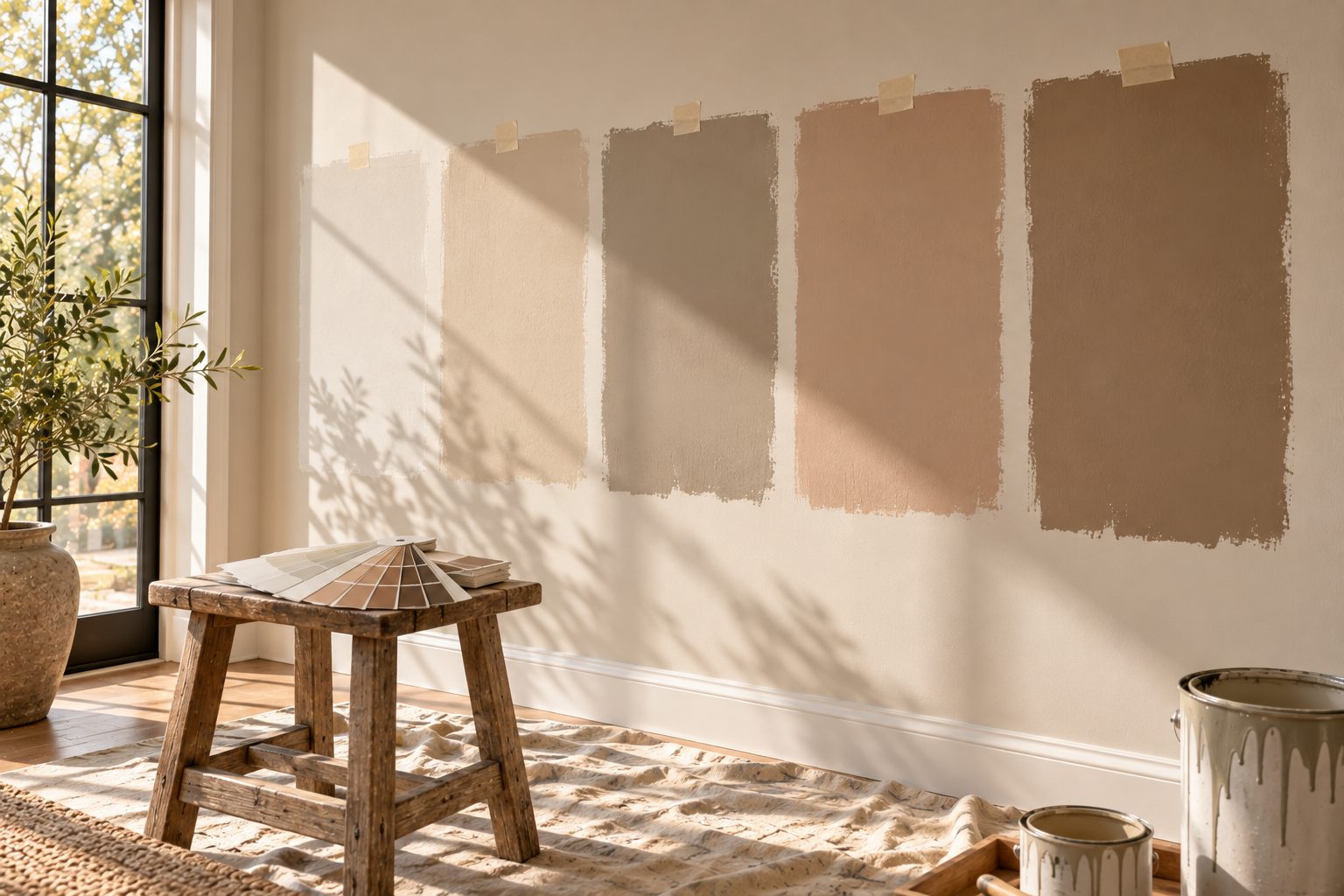
Choose a white ceiling paint whose undertone matches the walls: a warm white with creamy walls, a clean neutral white with gray or cool walls, and a slightly tinted white with saturated colors.
#F4F1EA#F2EEE3#EEF0EE#E3DCCB#3B3A36The hex values are screen approximations. A stark, untinted white with an LRV above 92 can look blue next to warm walls under 2700 K bulbs, which is why so many ceilings feel slightly off. If the walls are already a warm white, the safest option is to use the same color on the ceiling in flat sheen; the change in sheen and angle makes it read a touch lighter anyway. Our warm white paint colors guide lists whites by LRV and undertone.
Should the ceiling be white at all?
No rule says it must be. In rooms with 9 ft (2.7 m) or higher ceilings, painting the ceiling the wall color at 25–50 percent strength makes the room feel enveloped rather than lidded. In low rooms of 8 ft (2.4 m) or less, keep the ceiling at LRV 80 or above so the room does not feel compressed.
What is the best paint for doors and trim?
The best paint for doors and trim is a self-leveling enamel, either a waterborne alkyd or a urethane-modified acrylic, in semi-gloss or satin. Both cure hard, resist blocking (sticking) where a door meets its stop, and level out brush marks.
Traditional solvent-based oil gave the hardest finish but yellows and is restricted in many states because of VOC limits. Waterborne alkyds are the modern replacement: they brush like oil, level like oil and clean up with water, at the cost of a long recoat window of 16–24 hours. Urethane-modified acrylics dry faster, with a 4–6 hour recoat, and stay whiter, though they show brush strokes a little more. A good paint for doors has to cope with hands and knocks, so this is where we never buy the cheapest can.
| Paint type | Best for | Sheen | Recoat time | Typical 2026 price per gallon |
|---|---|---|---|---|
| Flat ceiling acrylic | Ceilings in living areas and bedrooms | Flat / ultra-flat, under 5 GU | 1–2 hours | $30–60 |
| Moisture-resistant matte | Kitchen and bath ceilings | Matte, 5–10 GU | 2–4 hours | $45–75 |
| Wall and ceiling flat | Low-traffic rooms, one-can jobs | Flat | 1–2 hours | $25–50 |
| Acrylic trim enamel | Baseboards, window casings | Satin or semi-gloss | 4–6 hours | $45–75 |
| Urethane-modified acrylic | Interior doors, stair rails | Satin or semi-gloss | 4–6 hours | $55–90 |
| Waterborne alkyd | Doors, trim, built-ins | Satin, semi-gloss, gloss | 16–24 hours | $60–95 |
Prices are typical US retail ranges for mid-grade to premium lines in 2026 and vary by region and tint base.
Semi-gloss or satin trim paint: which sheen is right?
Semi gloss trim paint is the durable default for baseboards and doors in family homes, while satin gives a quieter, more contemporary look that hides surface flaws better.
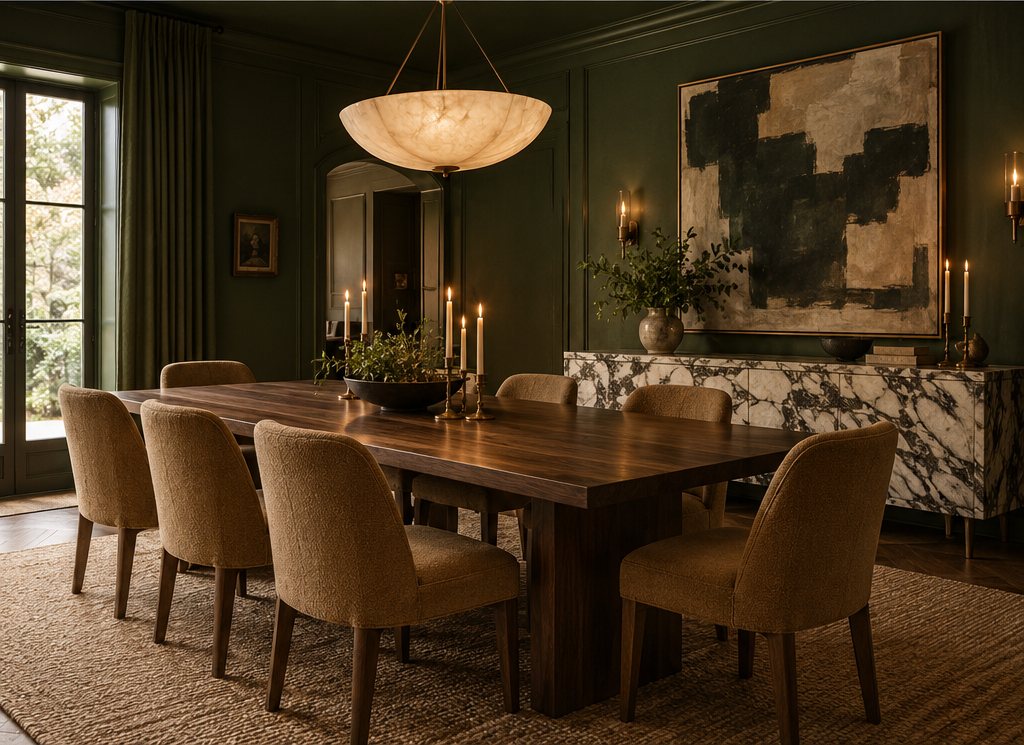
Gloss amplifies every dent, sanding scratch and drip on old trim, so on 1920s casings with a century of paint layers, satin is kinder. On new, smooth MDF trim, semi-gloss looks crisp and wipes clean. Full gloss on doors is a strong 2027 move in period homes and in color-drenched rooms, where the trim matches the walls and only the sheen changes; it is the classic color-drenching trick.
- Kids, pets, vacuums: semi-gloss on baseboards, satin or semi-gloss on doors.
- Older, wavy trim: satin to hide imperfections.
- Drenched or high-contrast rooms: gloss on doors, semi-gloss on trim.
- Kitchens and baths: semi-gloss everywhere wood meets water.
What paint for trim and baseboards takes the most abuse?
Paint for trim and baseboards needs abrasion and block resistance above all, so pick an enamel that lists a scrub rating and full cure time, not a wall paint in a glossier sheen.
Interior trim paint labeled "enamel" cures harder than wall paint, but almost all of them take two to four weeks to reach full hardness. Doors stick to their stops and baseboards scuff under vacuums during that window. Leave doors open, avoid taping over fresh trim and do not wash it for at least two weeks. If you are painting over old oil gloss, which you can test by rubbing a cotton ball with rubbing alcohol on it (oil will not soften), a bonding primer is not optional.
How to paint ceilings and trim in the right order
Paint top down: ceiling first, then walls, then trim and doors last, so drips always land on surfaces you have not finished yet.
- Prep and protect. Clear the room, cover floors with canvas drop cloths and remove switch plates. Fill cracks with lightweight spackle and sand trim with 180–220 grit.
- Prime where needed. Stain-blocking primer over water marks on ceilings; bonding primer over old oil-based trim.
- Cut in the ceiling. Brush a 2–3 in (5–8 cm) band around the edges with an angled sash brush.
- Roll the ceiling. Use a 3/8–1/2 in (10–13 mm) nap roller on an extension pole, working in 4 × 4 ft (1.2 × 1.2 m) sections, parallel to the main window light, keeping a wet edge.
- Paint the walls. Cut in under the ceiling, then roll.
- Paint trim and doors. Use a 2–2.5 in (50–63 mm) synthetic brush and a 4 in (10 cm) foam roller on door panels. Two thin coats, sanding lightly with 320 grit between them.
- Let it cure. Leave doors open overnight and avoid heavy cleaning for two to four weeks.
A standard 12 × 14 ft (3.7 × 4.3 m) ceiling is 168 sq ft (15.6 m²), so two coats need about one gallon. Walls and trim are worked out separately below.
How much ceiling paint and trim paint do you need?
You need about one gallon of ceiling paint per 350–400 sq ft (33–37 m²) per coat, and one quart of door and trim paint covers roughly two door sides or 50–60 linear ft (15–18 m) of baseboard per coat.
| Surface | Typical size | Paint per coat | Two coats |
|---|---|---|---|
| Ceiling, 10 × 12 ft (3 × 3.7 m) | 120 sq ft (11 m²) | About 1/3 gallon | 1 gallon |
| Ceiling, 15 × 20 ft (4.6 × 6.1 m) | 300 sq ft (28 m²) | About 3/4 gallon | 2 gallons |
| Interior door, both sides | 36 sq ft (3.3 m²) | About 1/3 quart | 1 quart for 1–2 doors |
| Baseboard, 3.5 in (9 cm) tall | 50 linear ft (15 m) | About 1/2 quart | 1 quart |
| Whole-house trim, 3 bedrooms | 10–12 doors plus 400 ft baseboard | About 1.5 gallons | 2–3 gallons |
Textured or popcorn ceilings absorb 25–50 percent more paint; budget accordingly. Our interior painting cost guide covers labor rates if you are hiring the job out.
Mistakes we see with ceiling and trim paint
The mistake we see most often is using leftover wall eggshell on the ceiling, which flashes every roller lap and drywall joint as soon as afternoon light rakes across it.
A close second is cheap trim paint: a $25 gallon of acrylic semi-gloss that stays soft, picks up fingerprints and peels off doors where they meet the stop. Third is a bright, cold white ceiling over warm walls, which makes the walls look dingy rather than the ceiling look clean. Fourth is skipping primer over old oil gloss, so the new latex peels in sheets within a year. Our view: spend on the trim enamel, save on the ceiling, and never let the ceiling be brighter and bluer than the whitest thing on the walls. If you are also refinishing kitchen doors, our best paint for cabinets guide uses the same enamel logic. For a bolder approach, a contrasting ceiling pairs well with one of our accent wall ideas.
Ready to buy? Enter your room sizes, door count and baseboard length in our paint calculator to get gallons and quarts for every surface before you go to the store.
Free toolRug Size CalculatorFind the right rug size for your room and furniture.Shop & source the look
Buy it today — or have it made
Retail links are affiliate links: we may earn a commission at no extra cost to you (disclosure). “Get it made” sends the item to our sourcing desk for factory quotes in custom sizes and finishes.
Frequently asked questions
What type of paint is best for a ceiling?
A flat or ultra-flat 100 percent acrylic ceiling paint is best for most ceilings. Flat sheen hides drywall seams and roller laps, and dedicated ceiling formulas spatter less and keep a wet edge longer. In kitchens and bathrooms, switch to a moisture-resistant matte with mildewcide, because steam collects on the ceiling first.
Should ceiling paint be flat or matte?
Ceiling paint should be flat in most rooms because it reflects the least light at a glancing angle and hides flaws best. Choose matte or a kitchen-and-bath formula where the ceiling sees steam or grease, since those can be wiped. Avoid eggshell or satin overhead; they flash roller marks under raking daylight.
What is the best paint for doors and trim?
A waterborne alkyd or urethane-modified acrylic enamel in semi-gloss or satin is the best paint for doors and trim. Both cure hard, level out brush marks and resist sticking where doors close. Waterborne alkyd levels better but needs 16–24 hours between coats; urethane acrylic recoats in 4–6 hours and stays whiter.
Can I use the same white for ceiling and trim?
Yes, using the same white for ceiling and trim is a clean, low-risk choice, with flat on the ceiling and semi-gloss or satin on trim. The sheen change alone separates them. It works best when that white also suits the wall undertone; a stark blue-white can look cold against warm walls.
Is semi-gloss or satin better for trim?
Semi-gloss is better for trim in busy homes because it is harder and easier to wipe, while satin is better on old or dented trim because it hides imperfections. Both work on doors. Use semi-gloss in kitchens and bathrooms where trim meets water, and consider gloss on doors in period or color-drenched rooms.
Some links may be affiliate links. Regulations and specifications change — always confirm with suppliers and qualified professionals.