Textured Wallpaper: White, Grey, Wood and Floral Styles That Work
Textured wallpaper adds raised or woven surface to a wall and typically costs $1–12 per sq ft. Here are the main types, how white, grey, wood-look and floral papers behave in real rooms, and where each one belongs.
Part of our guide: Wallpaper Trends 2027: Patterns, Types, Costs and Where to Use It
Key takeaways
- Textured wallpaper is any paper with a raised, embossed or woven surface, from paintable relief paper to grasscloth and linen
- Typical costs run $1–3 per sq ft for embossed vinyl and $3–12 per sq ft for natural grasscloth, cork and silk
- White and light grey textured papers hide imperfect walls far better than flat paint and suit 2027's quiet rooms
- Natural-fiber textures stay out of bathrooms and kitchens; choose vinyl or vinyl-coated textures there
Textured wallpaper is wallpaper with a raised, embossed or woven surface you can see and feel, such as grasscloth, linen, relief-embossed paper or wood-grain vinyl. It typically costs $1–12 per sq ft and does two jobs flat paint cannot: it hides uneven walls and adds quiet depth. White, light grey and natural fiber textures lead for 2027.
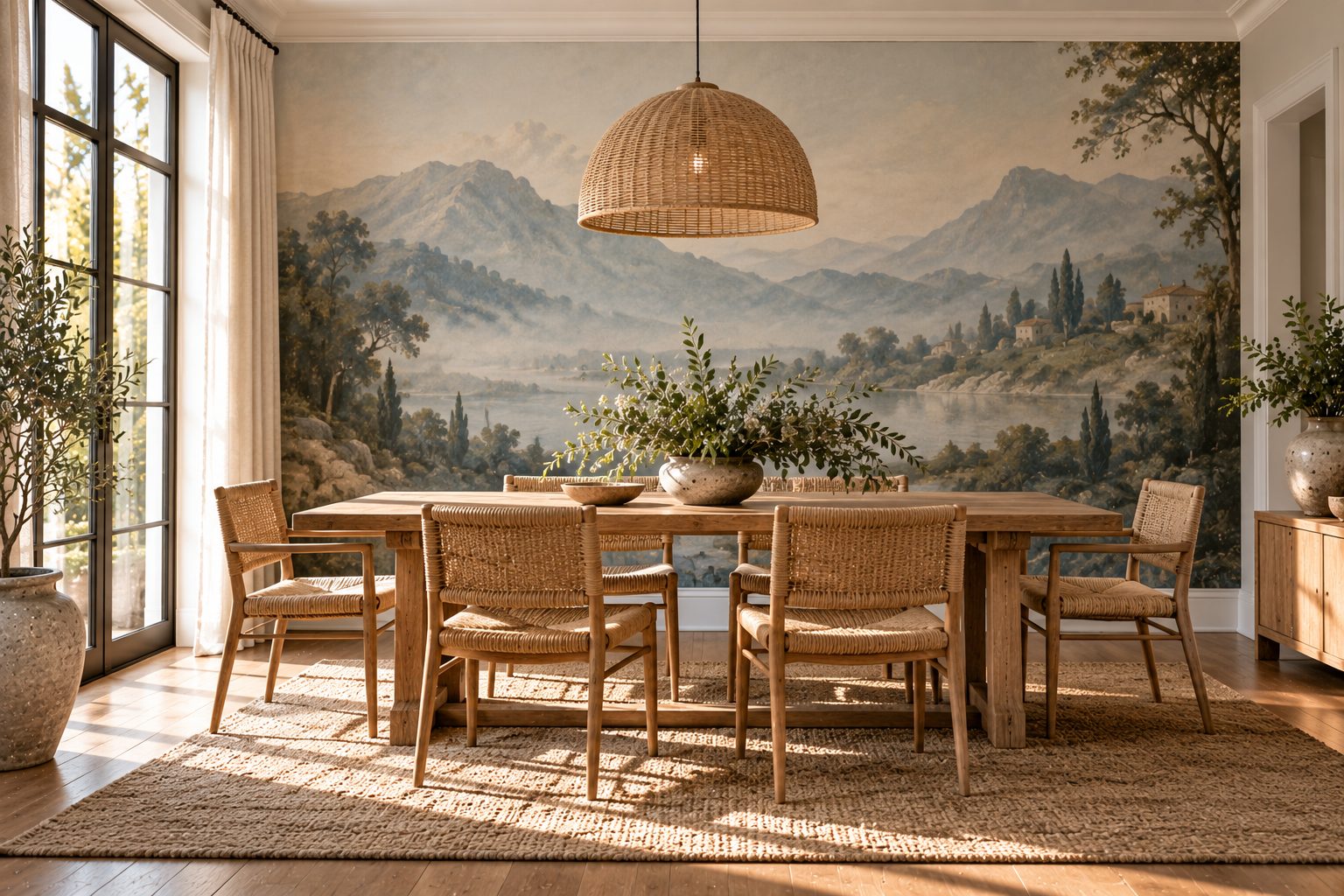
Texture is the counterweight to the big murals and bold florals in our wallpaper trends 2027 report. Where those make a statement, textured papers do the background work, and they are often the better choice for bedrooms, offices and hallways that need warmth without pattern.
- Main types: embossed vinyl, paintable relief paper, grasscloth, linen and silk, cork, mica and wood-look.
- Typical cost: $1–3 per sq ft for embossed vinyl, $3–12 per sq ft for natural fibers.
- Roll sizes: US double roll about 56 sq ft (5.2 m²); grasscloth often 36 in (91 cm) wide by 24 ft (7.3 m).
- Best rooms: bedrooms, living rooms, offices, dining rooms, hallways.
- Avoid: natural fibers in showers, full bathrooms and behind kitchen sinks.
What types of textured wallpaper are there?
The main types of textured wallpaper are embossed vinyl, paintable relief paper, natural grasscloth, fabric weaves such as linen and silk, cork and mica, and wood-look papers with embossed grain.
| Type | Surface | Typical cost (US 2026) | Washability | Best for |
|---|---|---|---|---|
| Embossed vinyl | Molded linen, plaster or grain effect | $1–3 per sq ft | Scrubbable | Hallways, kids' rooms, rentals, half baths |
| Paintable relief paper | Deep raised pattern, white | $1.50–4 per sq ft | Washable once painted | Ceilings, period homes, cracked plaster |
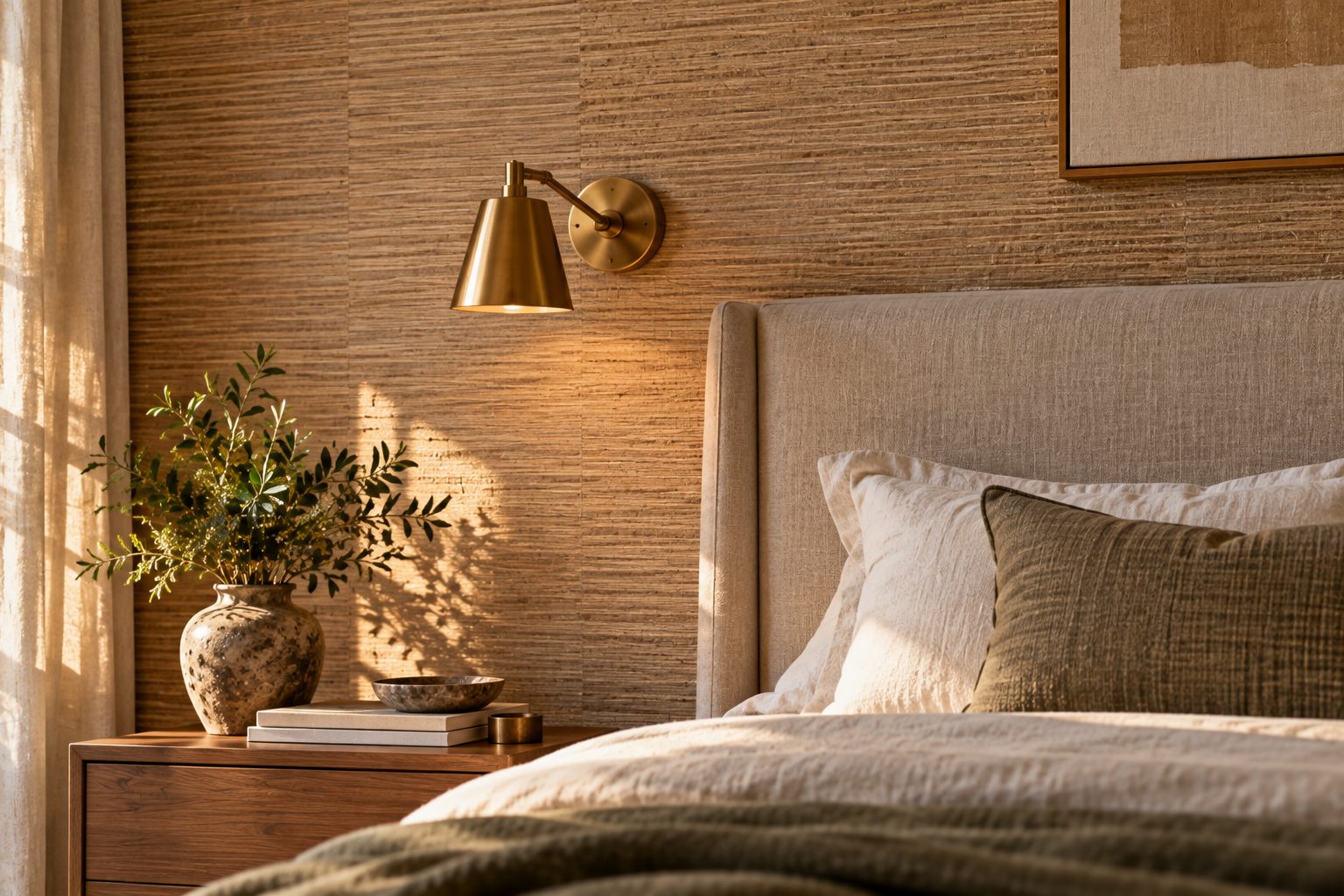
| Grasscloth | Woven sisal, jute or arrowroot | $3–12 per sq ft | Dust only | Living rooms, bedrooms, offices |
| Linen and silk weaves | Fine woven fabric on paper | $4–12 per sq ft | Spot clean | Bedrooms, dining rooms |
| Cork and mica | Granular, mineral shimmer | $4–10 per sq ft | Dust only | Studies, feature walls |
| Wood-look texture paper wallpaper | Embossed grain or bark | $1.50–5 per sq ft | Washable to scrubbable | Accent walls, cabins, offices |
Ranges are typical retail material prices. Natural fibers need a skilled hanger, which usually costs $3–7 per sq ft, compared with $2–4 for vinyl. Expect visible seams and color variation between panels on grasscloth; that is the material, not a defect.
Is white wallpaper a good idea?
White wallpaper is a good idea when it has texture, because a textured white hides dents and seams and catches light, while a flat white paper looks like paint that costs more.
White textured wallpaper is the most practical paper we specify. A linen-embossed or relief white over a bumpy plaster wall gives a calm, even surface in one day, where skim-coating takes three. For period homes, paintable relief paper on a ceiling or below a chair rail is a classic fix for cracked plaster. Paintable textured wallpaper also lets you repaint later without stripping, which matters if you change colors every few years. Read our how to smooth textured walls guide if you are deciding between paper and skim coating.
Look at the undertone. A white with an LRV of 80–88 and a faint warm base reads soft in north light; bright blue-whites at 90+ can feel clinical. White wallpaper with a subtle tone-on-tone print, such as a fine stripe, linen weave or soft dot, is the interior version of the wallpaper white background people want: quiet, clean and forgiving. If you lean toward warm whites, match the trim to the paper in a flat or eggshell warm white rather than a stark gallery white.
How do you use grey wallpaper without a cold room?
Use grey wallpaper with a warm undertone and a real texture, such as grasscloth or linen, and pair it with wood, brass or warm white trim so the grey reads soft rather than cold.
#E9E6E0#CFCBC3#A9A49B#6F6B65#3F3D3AThese swatches are approximate references for warm-leaning greys. Light grey wallpaper with an LRV of 55–70 suits bedrooms and offices; it shows texture well and keeps rooms bright. Dark grey wallpaper, around LRV 10–25, is best on one wall or in a small, enclosed room such as a study or powder room, where depth is the point. Gray wallpaper with a slightly blue base cools south-facing rooms; greige versions keep north-facing rooms from going flat.
Grey has been dominant for over a decade, and some of it now looks dated, especially flat cool greys with high-gloss white trim. The 2027 update is grey with texture and warmth: a grey grasscloth with natural slubs, or a wallpaper with grey background and an ivory or ochre motif. Build the rest of the scheme from oak, walnut, warm white and one earthy accent such as ochre or rust.
Is wood wallpaper worth it?
Wood wallpaper is worth it as an affordable accent or a rental-friendly finish, but it never fully replaces real timber on a wall you touch daily, because the flat surface gives it away up close.
The best wood look wallpaper is embossed, so the grain has relief, and printed at real scale, with planks around 5–8 in (13–20 cm) wide and no obvious repeat within 3 ft (91 cm). Wood panel wallpaper with printed vertical boards suits cabins and offices; reclaimed-plank prints suit bars and basements. Real wood veneer wallcoverings, a thin layer of genuine wood on a paper backing, are the premium version at a typical $8–20 per sq ft.
When it is worth paying for real wood, our wood accent wall and peel-and-stick wood wall guides compare the options. When it is not, wall wallpaper wood effects carry the look for a fraction of the cost and strip off cleanly.
Which floral wallpaper looks modern?
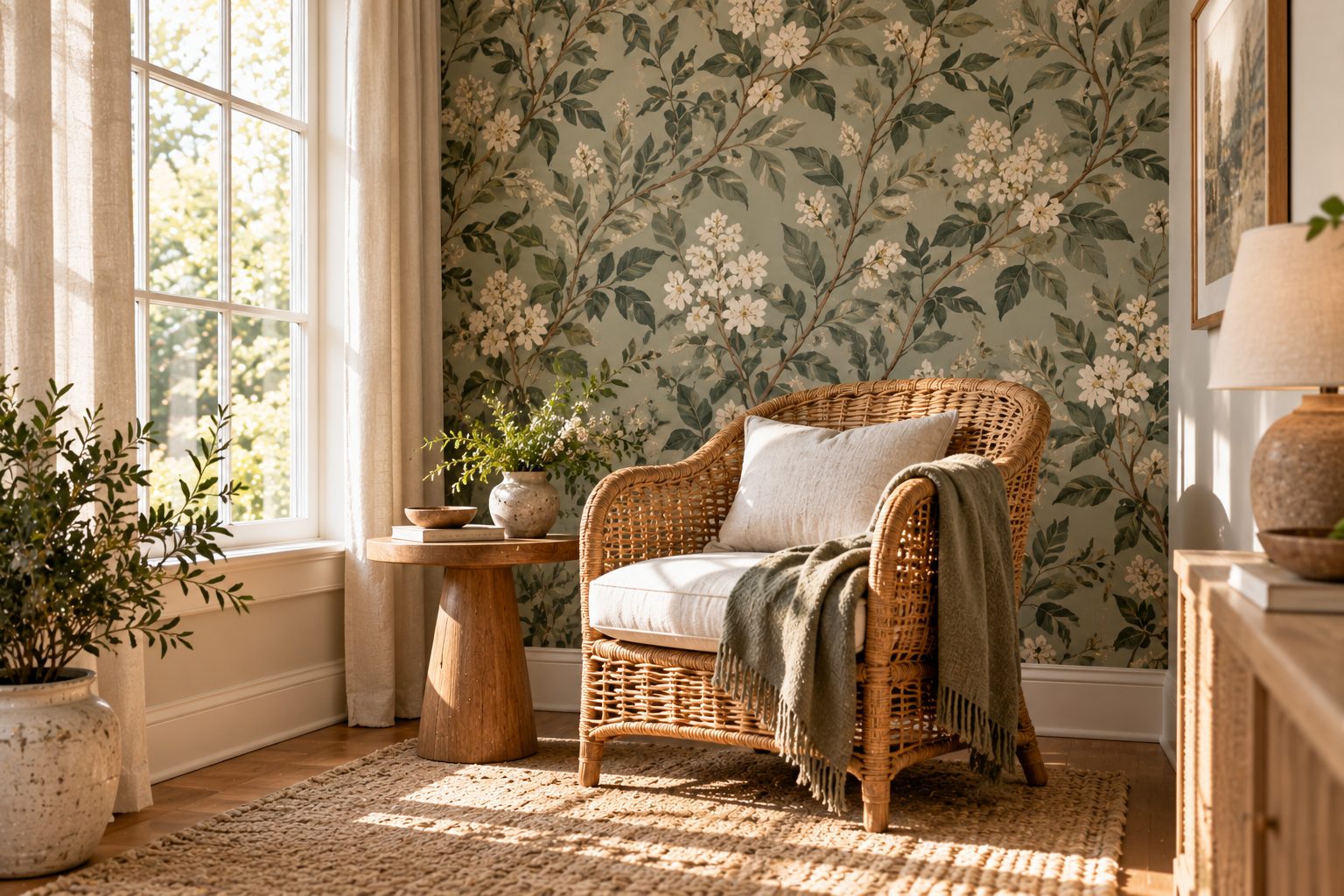
The floral wallpaper that looks modern in 2027 has a large scale, a limited palette and a painterly or textured finish, rather than small, busy, high-contrast repeats.
Large floral wallpaper
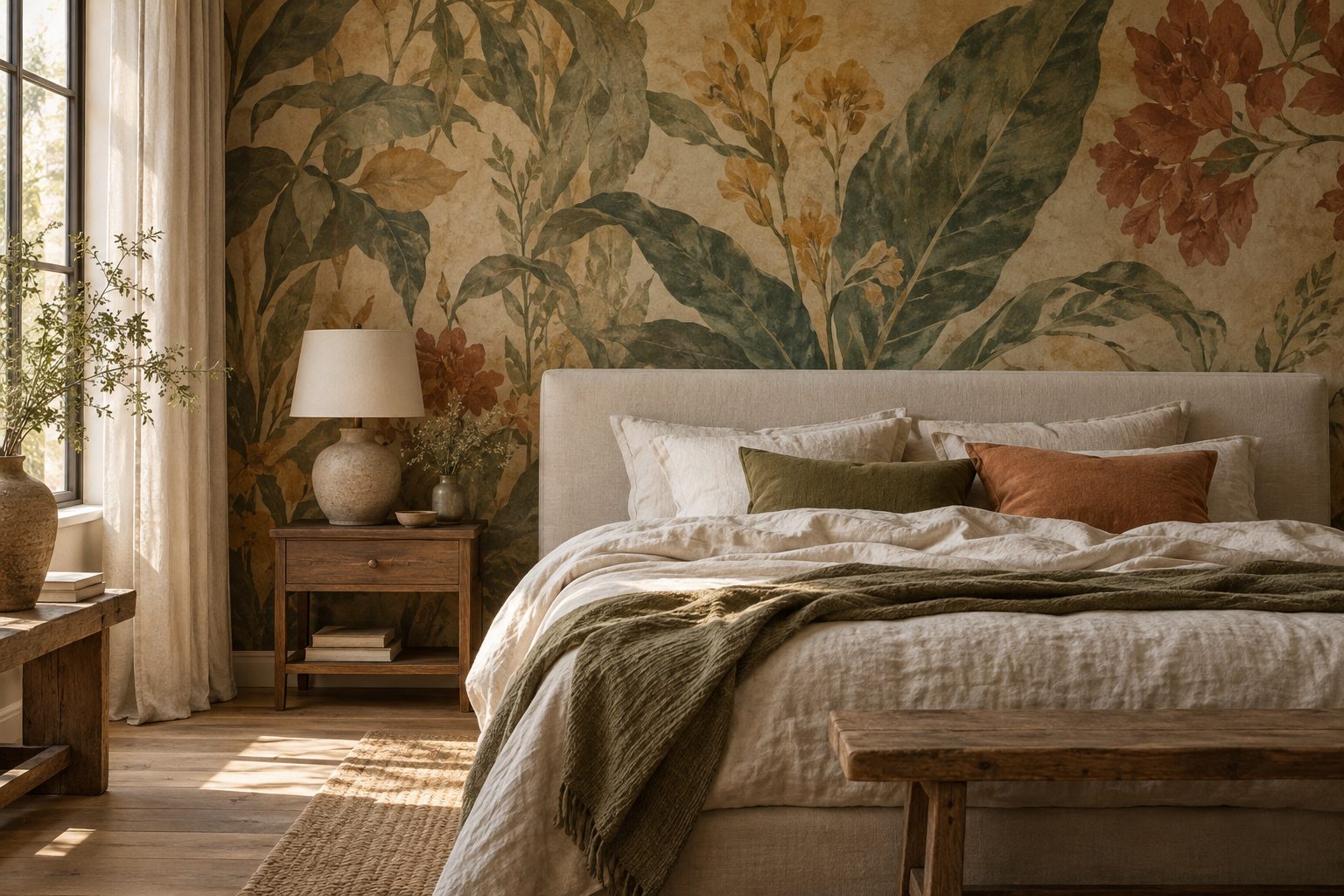
Large floral wallpaper, with motifs 12–36 in (30–91 cm) across, feels more contemporary than ditsy prints because it reads as art at a distance. It works on one wall behind a bed or on all four walls of a small dining room or powder room. Expect a pattern repeat of 25–36 in (64–91 cm), which means 15–25 percent more paper than a plain texture.
Modern and contemporary floral wallpaper
Modern floral wallpaper uses two or three tones, often tone-on-tone or on a textured ground such as a linen print. Contemporary floral wallpaper also includes line-drawn and block-printed florals, and dark backgrounds in ink blue, olive and deep plum. For a flower pattern wallpaper that will not date fast, choose a muted base and keep the scale big. Pattern wallpaper floral designs on a textured, matte surface look much more expensive than the same print on glossy smooth paper.
How do you hang textured wallpaper?
Hang textured wallpaper by priming the wall, hanging plumb from a marked line and smoothing gently with a soft brush rather than a hard smoother, which can crush embossing or fibers.
- Calculate rolls with the repeat. Work out rolls from wall area and repeat, then add 10–15 percent for waste; add more for large repeats.
- Prime. Use a wallpaper primer, tinted toward the paper color for grasscloth so gaps do not show white.
- Check every roll. Unroll and compare batch numbers; with grasscloth, check shade variation before cutting.
- Use the right paste. Clear, low-moisture paste for natural fibers; heavy-duty clear paste for vinyl; follow the label for paste-the-wall papers.
- Hang plumb. Snap a plumb line one roll width minus 1/2 in (12 mm) from the corner.
- Smooth gently. Use a soft brush on embossed and woven papers. Avoid pressing seams with a seam roller on relief papers.
- Keep paste off the face. On grasscloth, any paste on the front stains permanently; wipe immediately with a damp, not wet, sponge.
How does textured wallpaper compare with textured paint and plaster?
Textured wallpaper is faster and more removable than textured paint or plaster, while plaster gives the most authentic surface and textured paint the cheapest one.
The three finishes solve the same problem in different ways. Texture paper wallpaper arrives with a consistent, factory-made surface and goes up in a day; it hides small flaws and strips off when you move on. Textured paint, a thick latex with sand or fiber added, costs a typical $0.50–1.50 per sq ft in material but is hard to apply evenly and even harder to remove. Lime plaster and Venetian plaster give the deepest, most hand-made texture at a typical $6–20 per sq ft installed, and they are permanent. Our wall texture types guide compares the sprayed and troweled textures in more depth.
| Finish | Typical installed cost | Time for a 12 × 8 ft wall | Removable |
|---|---|---|---|
| Textured wallpaper | $3–19 per sq ft | Half a day to one day | Yes, strippable types |
| Textured paint | $2–5 per sq ft | One day plus drying | No, needs sanding or skim coat |
| Lime or Venetian plaster | $6–20 per sq ft | Two to four days | No |
Our rule: if you rent, if the walls are uneven or if you may change the room within five years, choose paper. If you own the house and want texture for decades, plaster is worth the cost.
Where should you not use textured wallpaper?
Do not use natural-fiber textured wallpaper in showers, full bathrooms, behind kitchen sinks or in high-traffic kids' zones, because grasscloth, cork and silk stain and cannot be scrubbed.
In those rooms, choose vinyl or vinyl-coated textures that imitate linen, grasscloth or plaster. They give about 70 percent of the visual depth and can be wiped down. Our bathroom wallpaper ideas guide covers moisture-safe options in detail. In sunny rooms, natural fibers also fade: grasscloth can shift a shade or two within a few years on a south wall without UV-filtering glass or shades.
Our verdict on textured wallpaper
Our verdict: textured wallpaper is the best-value upgrade for any room with imperfect walls, and the most underused one. We would put a warm white or light grey linen texture in a bedroom, a natural grasscloth in a living room or office, and a large, muted modern floral in a powder room or dining room. We would skip shiny metallic embossed papers and flat cool greys, which both look of their moment. Texture should feel like a material, not an effect.
Before ordering, plug your wall sizes and pattern repeat into our wallpaper calculator so you buy every roll from one batch.
Free toolWallpaper CalculatorHow many rolls you need, allowing for the pattern repeat.Shop & source the look
Buy it today — or have it made
Retail links are affiliate links: we may earn a commission at no extra cost to you (disclosure). “Get it made” sends the item to our sourcing desk for factory quotes in custom sizes and finishes.
Frequently asked questions
Is textured wallpaper in style for 2027?
Yes, textured wallpaper is in style for 2027, especially grasscloth, linen weaves, warm whites and soft greys that add depth without loud pattern. It suits the quieter, material-led interiors of 2027. Shiny metallic embossed papers and flat cool greys with high-contrast trim are the textures that look dated.
Can you paint over textured wallpaper?
You can paint over paintable textured wallpaper, such as relief or embossed papers designed for it, using a primer and then latex paint. Do not paint grasscloth, silk or vinyl not rated for painting, because the paint will not bond evenly and will flatten the texture. Check the label for the word paintable.
Does textured wallpaper hide wall imperfections?
Yes, textured wallpaper hides hairline cracks, small dents, patching and uneven plaster much better than flat paint or smooth wallpaper. Heavier relief papers and woven grasscloth hide the most. They do not hide damp, large holes or loose plaster, which must be repaired before hanging so the paper bonds properly.
How much does textured wallpaper cost?
Textured wallpaper typically costs $1–3 per sq ft for embossed vinyl, $1.50–4 for paintable relief paper and $3–12 per sq ft for natural grasscloth, linen, silk or cork. Professional hanging usually adds $2–4 per sq ft for vinyl and $3–7 for natural fibers, which need more skill.
Is grasscloth wallpaper hard to maintain?
Grasscloth is easy to maintain in dry rooms but cannot be scrubbed. Dust it with a soft brush or vacuum attachment every few months, and blot spills immediately. Water and paste stain it permanently, so keep natural grasscloth out of bathrooms, kitchens and kids' rooms and use vinyl grasscloth looks there instead.
Some links may be affiliate links. Regulations and specifications change — always confirm with suppliers and qualified professionals.