Maximalist Interior Design: Color, Pattern and Rules That Work
Maximalist interior design layers saturated color, mixed patterns and personal collections into rooms that feel abundant, not chaotic. Learn the 3-scale pattern rule, palettes and 7 steps to decorate.
Part of our guide: Interior Design Styles: 24 Decorating Styles Explained for 2027
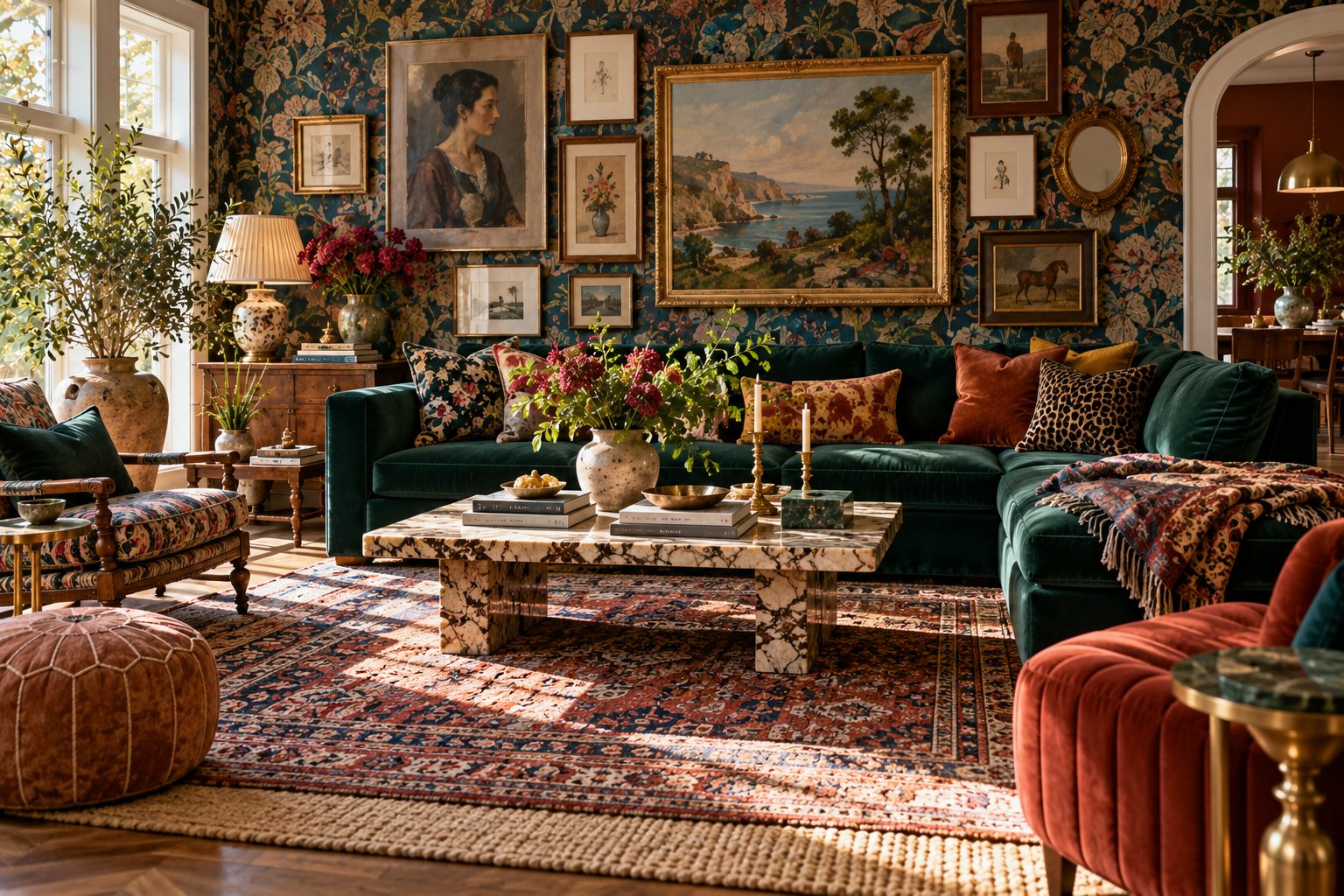
Key takeaways
- Maximalist interior design is abundance with structure: a defined palette, repeated colors and a clear focal point keep it from becoming clutter
- Mix patterns in three scales (large, medium, small) and tie them together with at least one shared color
- Dark, saturated walls, color drenching and patterned ceilings are the most effective maximalist moves
- Collections look intentional when grouped by color, shape or theme rather than scattered
Maximalist interior design is a style built on more: saturated color, layered patterns, abundant art and personal collections in the same room. It is not clutter. A maximalist room works because of structure, usually a palette of three to five colors repeated across walls, textiles and objects, and a clear focal point that stops the eye from wandering.
Maximalism sits at the bold end of our interior design styles guide, the counterpoint to minimalism and Japandi. Its cousin, dopamine decor, shares the color; maximalism adds pattern, history and objects.
- Defining traits: rich color, mixed patterns, layered textiles, gallery walls and collections on display.
- Roots: Victorian parlors, 1970s pattern-on-pattern and Hollywood Regency glamour.
- Key rule: mix patterns in three scales and share at least one color between them.
- Best rooms: dining rooms, powder rooms, libraries and living rooms used in the evening.
What is maximalist style?
Maximalist style is a decorating approach that celebrates abundance and personality through bold color, pattern and display, organized by a deliberate palette and repetition. Where minimalism removes until only the essential remains, maximalism adds until the room tells a story about the person who lives there.
The difference between a maximalist room and a messy one is editing. Every object should either be loved, useful or tie into the palette. In practice that means maximalist decorating takes more planning than minimalism, not less: you are coordinating dozens of elements rather than a handful.
Maximalism vs minimalism vs eclectic
Maximalism is about quantity and saturation, minimalism about restraint, and eclectic style about mixing periods and styles, which can be done at either volume. The table shows how they compare in practice.
| Element | Minimalism | Eclectic | Maximalism |
|---|---|---|---|
| Colors in palette | 2–3, mostly neutral | 3–5, mixed | 4–6, saturated |
| Patterns per room | 0–1 | 2–3 | 3–6 |
| Wall finish | Plain, light | Paint, some art | Dark paint, wallpaper, murals, patterned ceilings |
| Art and objects | One or two pieces | Curated mix | Gallery walls, full shelves, collections |
| Surfaces covered | About 10–20 percent | About 30–50 percent | About 50–70 percent |
The percentages are our rough working guide for how much of the visible shelf and tabletop area holds objects, not a rule. Even a maximalist room needs some empty surface, or nothing reads. For the lower-volume version, see our eclectic interior design guide.
How do you choose a maximalist color palette?
Choose a maximalist color palette with one dominant saturated color, two supporting colors and one or two accents, then repeat each at least three times in the room. Jewel tones, deep earth colors and unexpected pairings such as oxblood and teal or ochre and pink are the classic routes.
#5C1A1B#1F4E5A#C8962E#D98A8A#3F4A2E#1E2240The hex codes are screen approximations; test paint samples at least 2 × 2 ft (60 × 60 cm) in the room. Dark, saturated wall colors with an LRV of 5–15 make walls recede and let objects glow, which is why maximalists favor them. Color drenching, painting walls, trim and ceiling in one color, is the simplest way to make a room feel enveloping; our color drenching guide explains how.
How do you mix patterns in maximalist home decor?
Mix patterns in maximalist home decor by combining three scales (one large, one medium, one small) and linking them through a shared color. This single rule prevents most clashes.
| Scale | Typical repeat size | Where to use it | Examples |
|---|---|---|---|
| Large | 18–36 in (46–91 cm) | Wallpaper, curtains, rugs | Botanicals, scenic murals, big medallions |
| Medium | 4–12 in (10–30 cm) | Sofa, armchairs, bedding | Ikat, damask, geometric trellis |
| Small | Under 3 in (8 cm) | Cushions, lampshades, trims | Stripes, ticking, small checks, dots |
Beyond scale, vary the pattern type: one organic (floral, leaf), one geometric (stripe, check, trellis) and one textural (velvet, bouclé, a woven rug). Plain solids in the palette give the eye somewhere to rest. On upholstery, specify fabrics at 30,000 Martindale or more for sofas, because patterned velvet and jacquard wear visibly at the arms.
How to decorate a maximalist room
Decorate a maximalist room from the largest surfaces down: walls first, then rug and big furniture, then pattern, then art and objects. Working in that order keeps the palette under control:
- Pick an anchor. A wallpaper, rug or painting you love; take the palette from it.
- Color the walls and ceiling. A saturated paint, a wallpaper or both. Papered or painted ceilings are a maximalist signature.
- Lay the rug. Size it so at least the front legs of all seating sit on it: usually 8 × 10 ft (2.4 × 3 m) in a living room.
- Add the main furniture in solids or medium patterns. Velvet, leather or textured weaves in palette colors.
- Layer small patterns. Cushions, lampshades, throws and trims, using the three-scale rule.
- Hang art in groups. A floor-to-ceiling gallery wall or salon hang with 2–3 in (5–8 cm) gaps. Our gallery wall guide covers layout.
- Display collections, then edit. Group objects by color or theme in odd numbers, and remove a third before you call it finished.
Maximalist living room ideas
A maximalist living room works best with dark walls, one large patterned element, a generous rug and plenty of layered lighting at different heights. These are the moves that give the most impact:
- Jewel-tone sofa: emerald, teal or oxblood velvet, 84–90 in (213–229 cm), against a contrasting wall.
- Bookshelves as display: mix books horizontal and vertical with objects; fill about two thirds of each shelf.
- Layered rugs: a vintage patterned rug of 5 × 8 ft (1.5 × 2.4 m) over a larger jute or wool base rug.
- Lamps, not just ceiling light: four to six light sources at 2700K, with patterned or pleated shades.
- Mixed chairs: a pair of patterned armchairs opposite the sofa rather than a matching set.
Maximalist bedroom and dining room
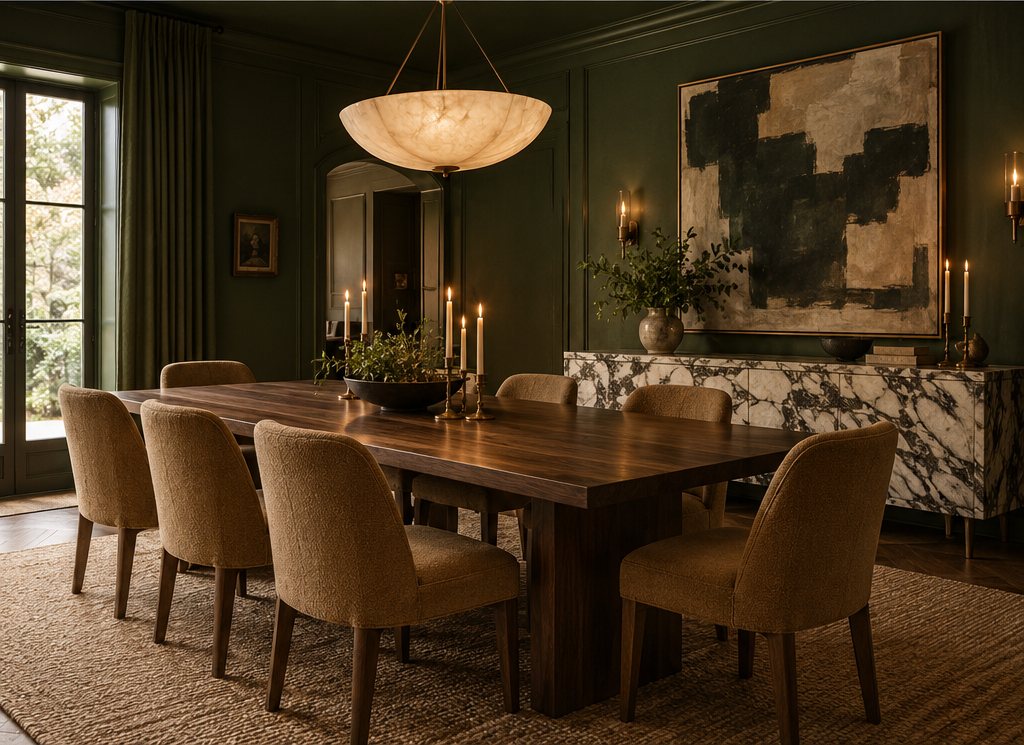
A maximalist room for sleeping should be enveloping rather than stimulating: a dark wall or wallpaper behind the bed, an upholstered or carved headboard, layered bedding in two or three patterns and heavy lined curtains. Keep bedside surfaces lighter than in the living room, because clutter at eye level when you lie down is tiring. The dining room is where maximalism is easiest to justify, since you spend a few hours there at a time, mostly in the evening. A scenic mural or a deep lacquered wall, a patterned rug that extends at least 24 in (61 cm) past the table on every side, mixed chairs and a statement chandelier make the most theatrical maximalist room in most homes.
Small spaces
Powder rooms, hallways and box rooms are the lowest-risk place to try maximalist home decor. A roll or two of wallpaper, a painted ceiling and a mirror in an ornate frame transform a 4 × 6 ft (1.2 × 1.8 m) cloakroom for a few hundred dollars.
In a maximalist house, carry one or two colors from room to room so the whole home feels connected even when each room has its own character. Hallways and powder rooms are the safest place to start, because they are small and you pass through them.
Mistakes we see in maximalist decorating
The mistake we see most often is maximalism without a palette, which produces a room that feels busy rather than rich. Add these to the list:
- Everything at the same scale. Five medium patterns fight; vary the scale.
- Light walls with bold contents. Saturated objects on stark white walls look scattered; deepen the background.
- No resting points. Leave some plain fabric and a little empty wall or shelf space.
- Cheap filler. Maximalism exposes quantity bought for its own sake. Collect slowly and favor vintage, handmade and inherited pieces.
- Poor lighting. Dark rooms with a single ceiling light look gloomy. Aim for 10–20 lumens per sq ft (108–215 lux) from several sources.
Our verdict: maximalist interior design rewards confidence and patience. Commit to a palette, go darker on the walls than feels comfortable, and let the room fill up over years rather than a weekend. The best maximalism style rooms we have seen look collected, not purchased.
Want a ready-made starting point? Our palette pack includes saturated jewel-tone and earth palettes with paint-matched hex codes, so you can build a maximalist scheme that holds together from wall to cushion.
Free toolWallpaper CalculatorHow many rolls you need, allowing for the pattern repeat.Shop & source the look
Buy it today — or have it made
Retail links are affiliate links: we may earn a commission at no extra cost to you (disclosure). “Get it made” sends the item to our sourcing desk for factory quotes in custom sizes and finishes.
Frequently asked questions
What is maximalist interior design?
Maximalist interior design is a style that layers bold color, mixed patterns, abundant art and personal collections in one space. It differs from clutter because it relies on a deliberate palette, repeated colors and a focal point. Rooms feel rich and personal, and they are usually built up over time rather than bought at once.
How do you make maximalism look good and not cluttered?
Make maximalism look good by limiting the palette to four to six colors, repeating each at least three times, and mixing patterns in large, medium and small scales. Group objects by color or theme, leave some plain surfaces as resting points, and edit by removing about a third of the accessories before calling the room finished.
What colors are best for maximalist decor?
The best colors for maximalist decor are saturated jewel and earth tones such as emerald, teal, oxblood, ochre, deep pink and navy. Use one dominant color on walls, two supporting colors in furniture and textiles, and one or two accents. Dark walls with low LRV values make collections and art stand out.
Is maximalism still in style for 2027?
Yes, maximalism remains in style heading into 2027, though it is maturing into a more collected, vintage-led version rather than pure pattern overload. Color drenching, papered ceilings, salon-hung art and inherited furniture are the strongest threads. It continues to sit alongside warm minimalism as one of the two main directions in interiors.
Some links may be affiliate links. Regulations and specifications change — always confirm with suppliers and qualified professionals.