Eclectic Interior Design: How to Mix Styles Without Chaos
Eclectic interior design mixes furniture, eras and cultures in one room, held together by a shared palette and repeated shapes. Learn the 80/20 rule, the rule of three and 7 steps to decorate an eclectic room.
Part of our guide: Interior Design Styles: 24 Decorating Styles Explained for 2027
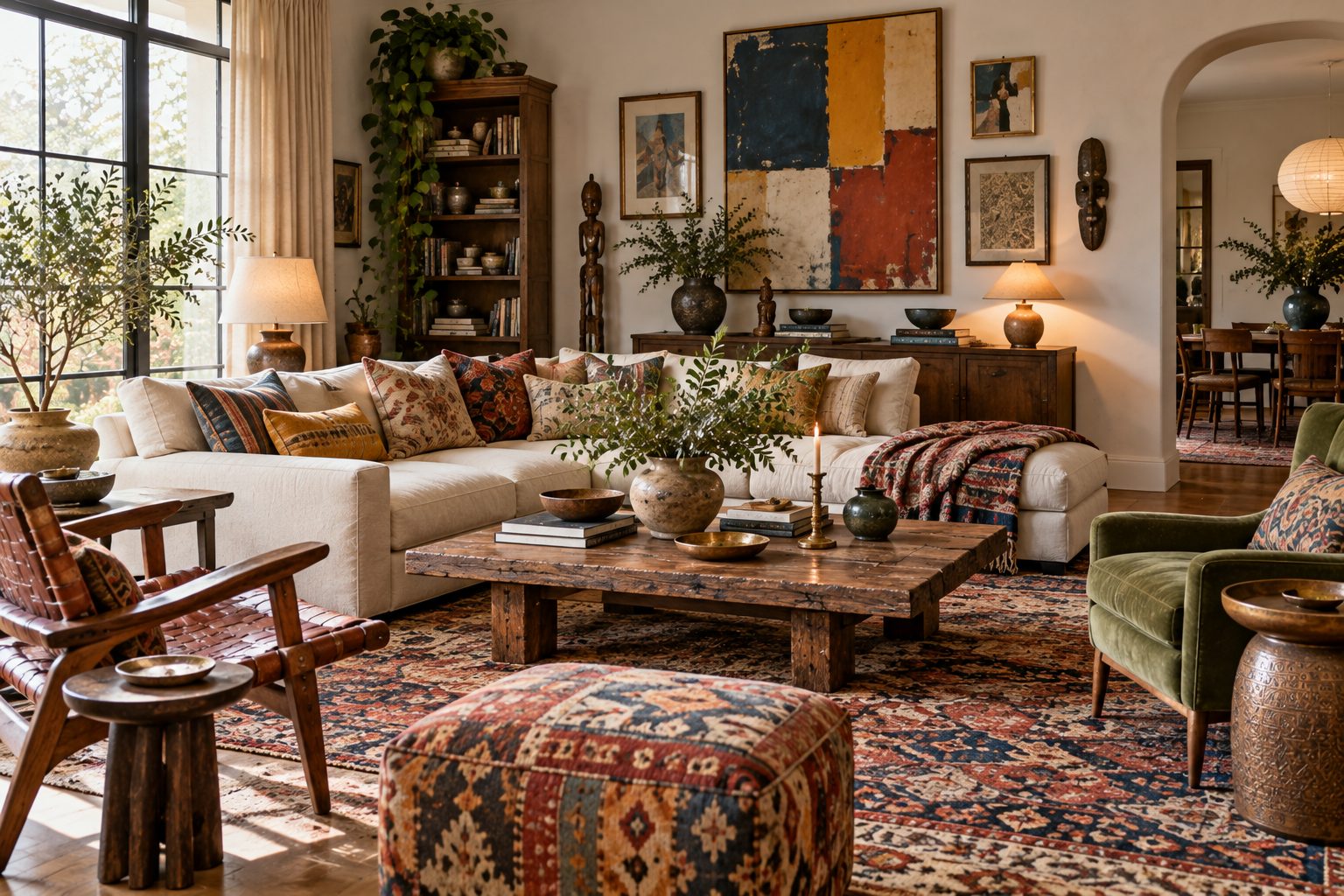
Key takeaways
- Eclectic interior design deliberately mixes styles and eras, unified by a limited palette, repeated shapes and consistent scale
- Use an 80/20 split: one base style for most of the room and one or two contrasting styles for the rest
- Repeat every color, metal or wood tone at least three times so the mix reads as intentional
- Modern eclectic keeps a clean, contemporary shell and adds vintage, global and handmade pieces on top
Eclectic interior design is a style that combines furniture, objects and finishes from different eras, cultures and styles in one room, held together by a limited color palette, repeated shapes and consistent scale. Think a mid-century chair, a vintage kilim, a modern sofa and a carved antique side table that look as if they belong together. The unifying thread matters more than any single piece.
Eclectic is the most personal of the looks in our interior design styles guide, and the one most people already have without realizing it. The skill lies in turning an accidental mix into a deliberate one.
- Definition: intentional mixing of styles and periods, not a style of its own furniture.
- Working ratio: roughly 80 percent base style, 20 percent contrast.
- Unifier: a palette of three to five colors, repeated metals and woods.
- Common bases: mid-century, traditional, Scandinavian or contemporary.
What is eclectic style?
Eclectic style is a curated mix of pieces from different periods and design traditions, chosen for how they relate in color, form and texture rather than for matching. The term comes from the Greek for "selecting," which describes the approach well: the eclectic decorator picks the best from several styles instead of committing to one.
Eclectic design differs from simply owning unrelated things. In an eclectic room, a brass lamp echoes a brass picture frame across the room, the curve of an antique chair repeats in a round mirror, and the rug's rust color shows up again in a cushion and a vase. Those links are what make the eclectic design style feel calm rather than random.
How is eclectic different from boho and maximalist?
Eclectic style mixes eras and styles at any volume, boho focuses on global, natural and handmade textures, and maximalism is about saturation and abundance. They overlap, but they are not the same.
| Element | Eclectic | Boho | Maximalist |
|---|---|---|---|
| Core idea | Mixing styles and periods | Relaxed, global, natural | More color, pattern and objects |
| Palette | 3–5 colors, often a neutral base | Earth tones, terracotta, cream | 4–6 saturated colors |
| Furniture | Mid-century, antique, modern mixed | Rattan, low seating, floor cushions | Velvet, carved, statement pieces |
| Pattern | 2–3 per room | Kilims, macrame, block prints | 3–6 per room, all scales |
| Visual density | Moderate | Moderate to high | High |
If you lean toward fewer, saturated layers, read our maximalist interior design guide; for the natural-fiber version, our boho interior design guide.
What are the rules of eclectic decorating?
The rules of eclectic decorating are a base style for about 80 percent of the room, a rule of three for every color and material, consistent scale, and one clear focal point. They sound strict, but they are what give an eclectic room its relaxed confidence.
The 80/20 rule
Choose one dominant style for most of the furniture and the architecture, such as mid-century or traditional, then bring in one or two contrasting styles for the remaining fifth. A room split evenly between three styles rarely works; one has to lead.
The rule of three
Repeat every accent color, metal finish and wood tone at least three times, spread around the room. A single brass object looks like a mistake; three look like a decision. The same applies to mixing woods, covered in our guide to mixing wood tones.
Consistent scale and height
Mixed pieces sit better together when seat heights stay within about 2 in (5 cm) of each other, typically 17–19 in (43–48 cm), and when tables align with arms: side tables within 2 in (5 cm) of the sofa arm height and a coffee table 1–2 in (2.5–5 cm) below seat height.
Eclectic color palettes that work
The eclectic color palettes that work best start from a warm neutral base and add two or three accent colors drawn from one key piece, usually a rug or a painting. A strong neutral backdrop lets mixed eclectic furnishings stand out without competing.
#EDE4D3#6E7350#B4613A#2E4057#D6A84E#3A2E28The hex values are approximate. For walls, a warm white or soft plaster tone with an LRV of 65–80 is the easiest base; if you want more drama, a mid-tone olive or ochre wall with LRV 25–40 gives eclectic style home decor a richer backdrop. Our palette library has more combinations to test.
What is modern eclectic interior design?
Modern eclectic interior design combines a clean, contemporary shell (plain walls, simple trim, modern sofa) with vintage, antique, global and handmade pieces layered on top. It is the most popular form of eclectic home interior design today, because it keeps rooms uncluttered while still feeling personal.
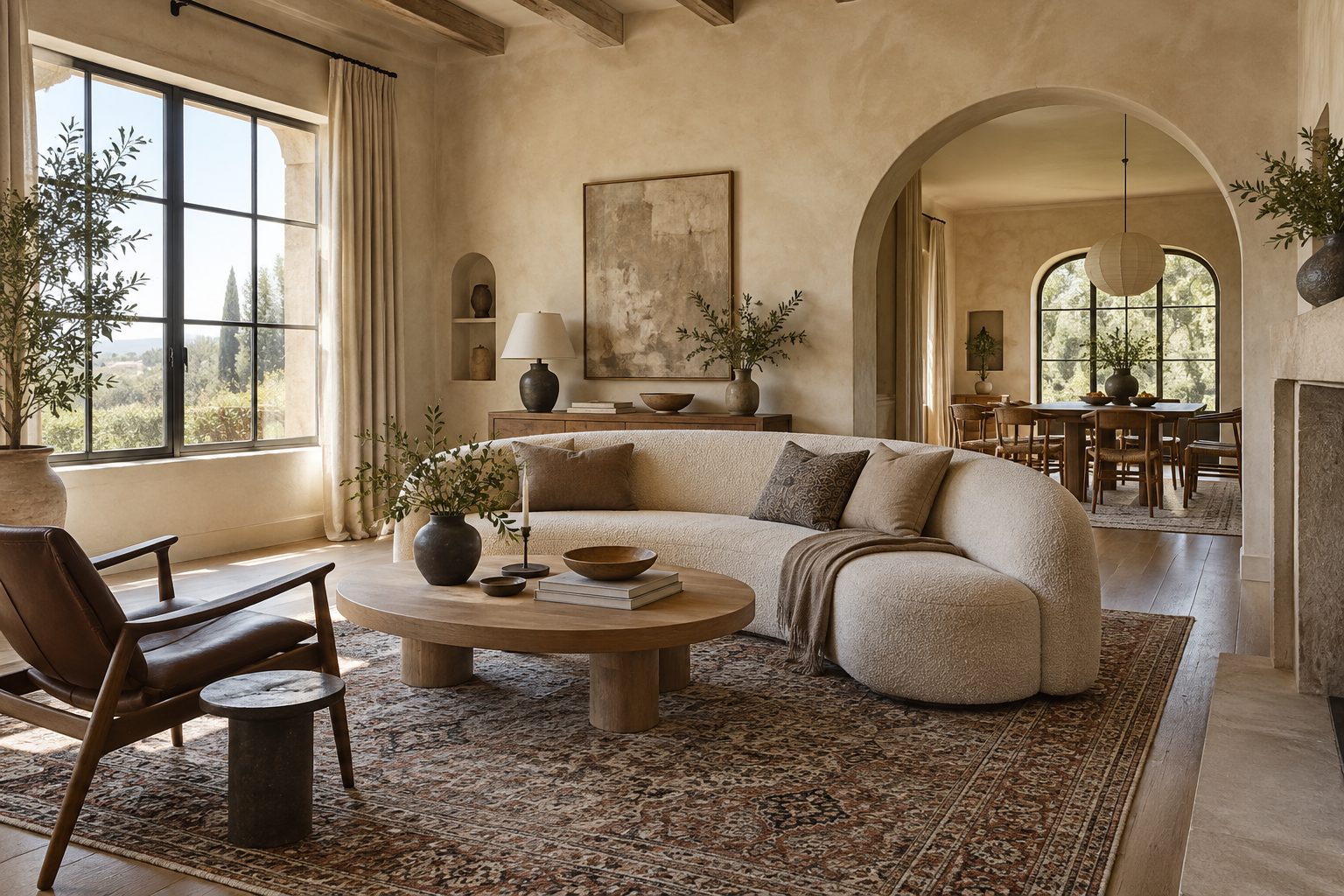
Contemporary eclectic interior design is a close variant that leans more on current furniture and art, adding just a few older pieces for character. In both, the base is calm: a neutral or tonal sofa, a large rug, good lighting. The eclectic layer comes from a vintage lounge chair, an antique chest, a contemporary artwork, a handwoven textile and ceramics from different makers. Modern eclectic decor tends to keep metals to two finishes and woods to two or three tones.
Eclectic room ideas, room by room
Eclectic room ideas work best when each room has one obvious contrast, such as old with new or rough with refined, rather than many small ones. These are the combinations we use most:
- Living room: a modern tight-back sofa, a pair of vintage armchairs, an antique or stone coffee table and a large kilim or Persian-style rug.
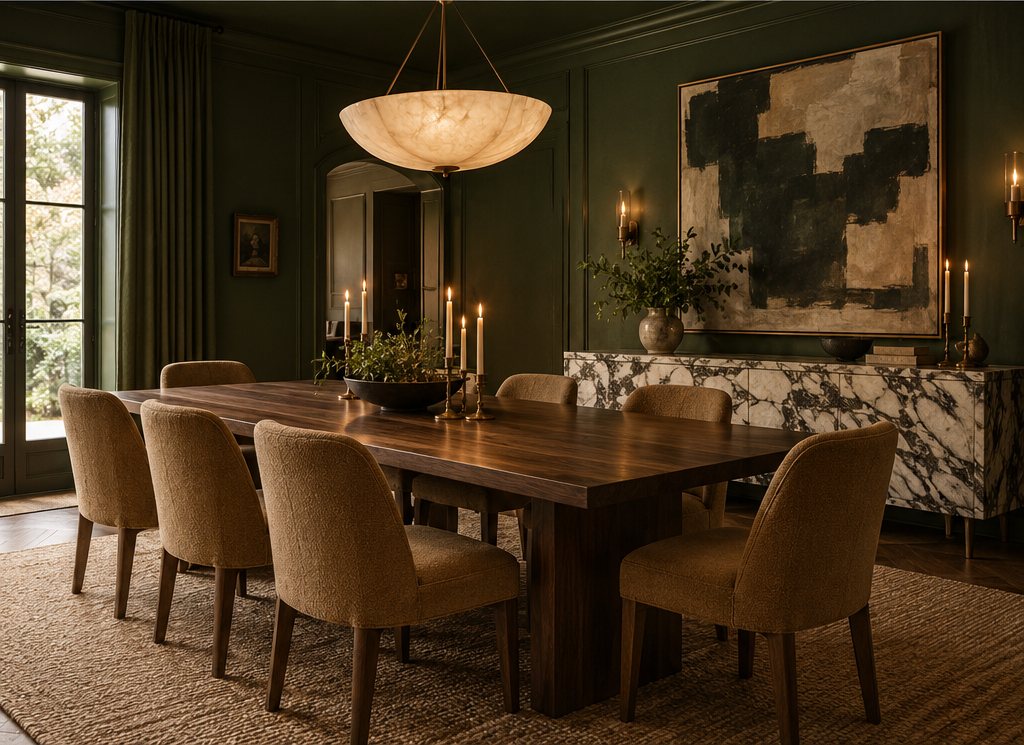
- Dining room: a plain oak or walnut table with mismatched chairs unified by one finish or color, and a sculptural pendant hung 30–34 in (76–86 cm) above the top.
- Bedroom: an upholstered modern bed, antique nightstands that need not match, and a vintage textile as a throw or headboard.
- Entry and hall: a gallery wall of mixed frames and art, a vintage console and a runner.
- Kitchen: modern cabinetry with vintage runner rugs, an antique dresser for display and mismatched pendant shades in one finish.
Eclectic furnishings do not need to be expensive. Flea markets, estate sales and family hand-me-downs supply the character; new pieces supply comfort and function. Check vintage upholstery for frame wobble and plan to budget $600–1,800 per armchair for professional reupholstery, which is often still cheaper than a new chair of the same quality.
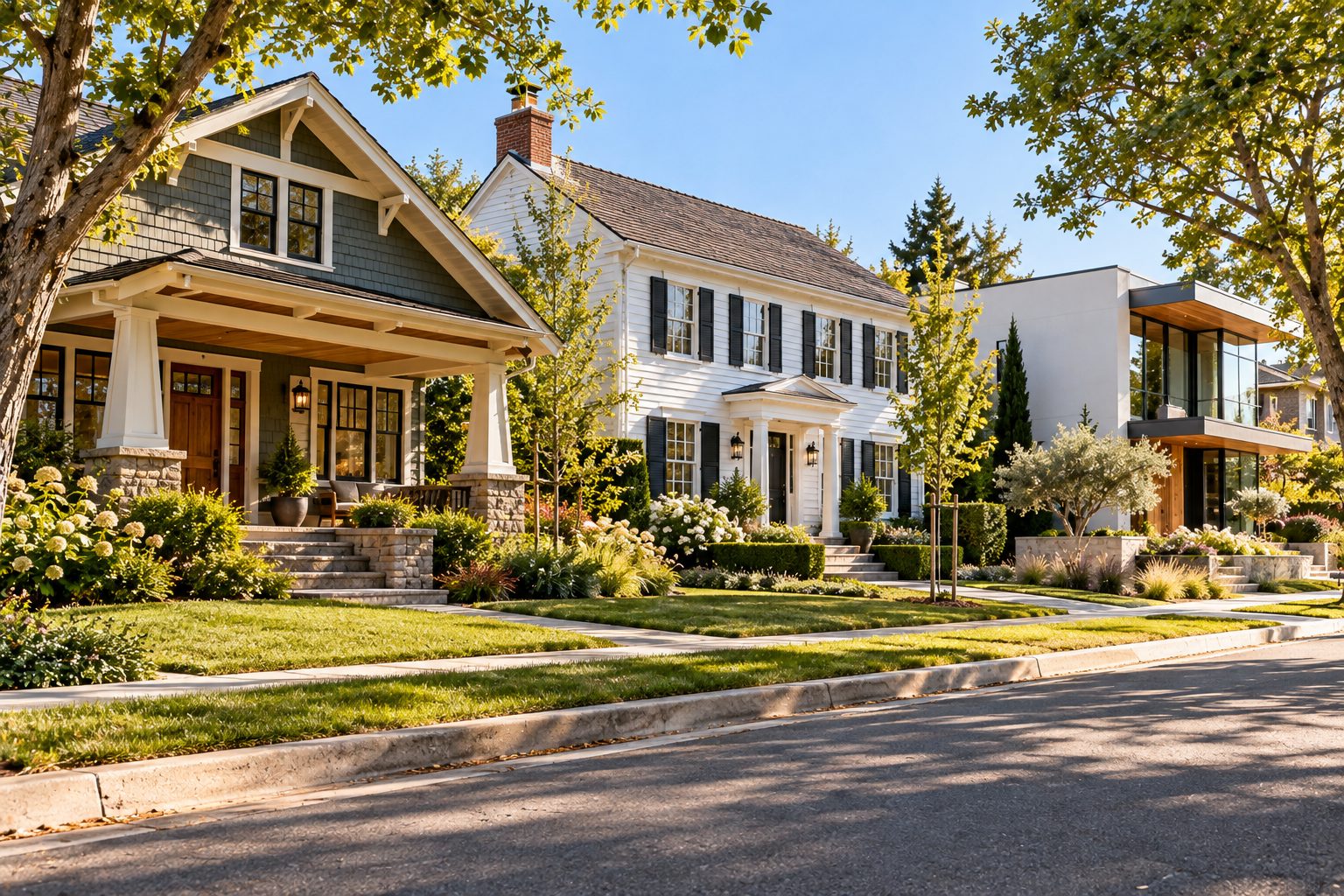
An eclectic style house works best when rooms share the same palette even if each has a different mix. That is what keeps eclectic home interiors feeling like one home rather than a series of showrooms.
How to decorate an eclectic room
To decorate an eclectic room, choose a base style, pull a palette from one anchor piece, then add contrasting pieces one at a time while repeating colors and materials. This is the sequence we follow:
- Pick the base style. The one that suits your architecture and most of what you own.
- Choose an anchor piece. A rug, painting or textile; take three to five colors from it.
- Keep the big pieces simple. Sofa, bed and dining table in solids or quiet textures.
- Add contrast with chairs, tables and lighting. These are the easiest places to mix eras.
- Repeat each accent three times. Color, metal and wood tone, spread across the room.
- Layer art and objects. Mix frames and mediums; hang the center of a group at 57–60 in (145–152 cm).
- Edit with a photo. Take a picture; anything that jumps out without a partner elsewhere in the room should go or be paired.
How we would do an eclectic interior
We would build an eclectic interior around one good rug and one good vintage chair, and keep everything large and expensive deliberately quiet. That approach makes it easy to change the mix later. Our usual eclectic interior decorating plan uses a mid-century or simple contemporary base, adds one antique piece with real age and wear, one handmade textile, one modern artwork and a pair of lamps with ceramic or stone bases. Two metal finishes, two or three wood tones, nothing that matches as a set.
The mistakes we see are the reverse: a matching furniture set with a few random accessories, or so many styles that no base is visible. Neither reads as eclectic design. These eclectic home decor ideas work because they let the room grow over years without ever needing a full redo.
Not sure what your base style is? Take our free interior style quiz to find the style you lean toward, then use it as the 80 percent that holds your eclectic mix together.
Free toolRug Size CalculatorFind the right rug size for your room and furniture.Shop & source the look
Buy it today — or have it made
Retail links are affiliate links: we may earn a commission at no extra cost to you (disclosure). “Get it made” sends the item to our sourcing desk for factory quotes in custom sizes and finishes.
Frequently asked questions
What is eclectic interior design?
Eclectic interior design is a style that mixes furniture, art and objects from different periods, cultures and design styles in one space. It stays cohesive through a limited color palette, repeated materials and shapes, and consistent scale. A typical eclectic room might combine a modern sofa, mid-century chairs, a vintage rug and antique tables.
How do you make eclectic decor look cohesive?
Make eclectic decor look cohesive by choosing one base style for about 80 percent of the room and limiting the palette to three to five colors. Repeat each accent color, metal and wood tone at least three times, keep seat and table heights consistent, and give the room one clear focal point.
What is the difference between eclectic and boho?
Eclectic style mixes any periods and styles, from antique to contemporary, while boho is a specific relaxed look built on global textiles, rattan, plants and earth tones. A boho room can be part of an eclectic mix, but eclectic interiors can also be formal, modern or traditional at their base.
What is modern eclectic style?
Modern eclectic style pairs a clean, contemporary base with vintage, antique and handmade pieces. Walls, trim and the main sofa stay simple and modern, while chairs, rugs, lighting, art and accessories bring in older or global character. It feels personal but less busy than traditional eclectic or maximalist rooms.
Some links may be affiliate links. Regulations and specifications change — always confirm with suppliers and qualified professionals.