Plaster Wall Repair: Fix Cracks, Holes and Loose Plaster Step by Step
Plaster wall repair depends on the damage: fill hairline cracks, reattach loose plaster with adhesive and washers, rebuild holes in layers. Pros typically charge $250–1,500 per room; most small fixes are a weekend DIY job.
Part of our guide: Plaster Walls: Types, Decorative Finishes & Cost per Sq Ft
Key takeaways
- Diagnose before you patch: tap the wall, and if it sounds hollow or moves when pressed, reattach it before filling any crack
- Plaster repair adhesive injected through 3/16 in (5 mm) holes plus temporary plaster washers is the standard fix for loose plaster on lath
- Rebuild holes deeper than 1/4 in (6 mm) in layers with setting-type compound or base-coat plaster, not premixed spackle
- Test for lead paint in pre-1978 homes before sanding, and hang heavy items with toggle bolts or screws into studs, never plastic plugs
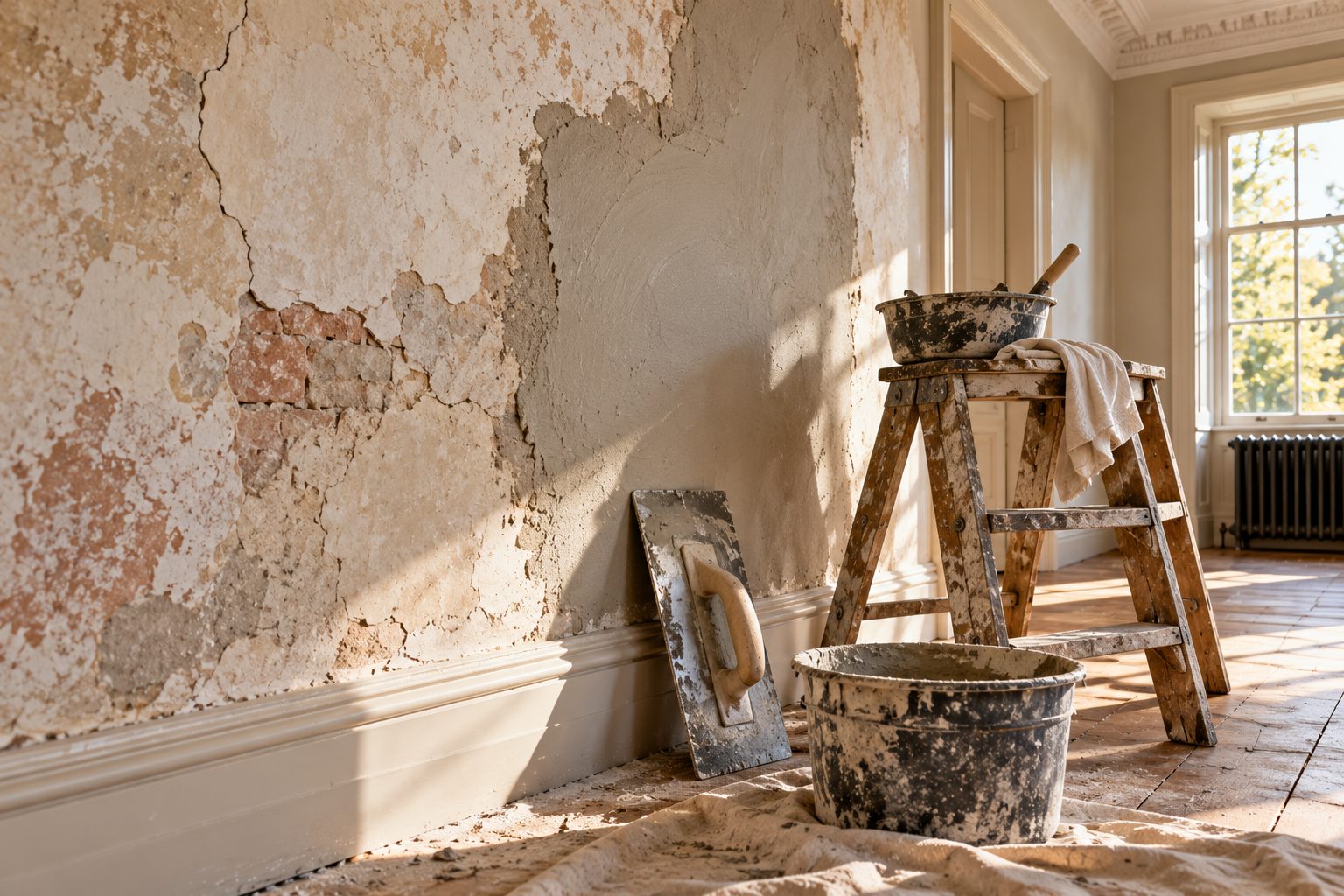
Plaster wall repair comes down to three jobs: fill cracks, reattach plaster that has come loose from its lath, and rebuild holes in thin layers. Most homeowners can fix hairline cracks and holes up to 12 in (30 cm) in a weekend for under $100 in materials; a plasterer typically charges $250–1,500 per room in 2026.
This guide sits under our main plaster walls guide, which explains plaster types and decorative finishes. Here we deal with plaster wall repair, fixing what is already on the wall: how to diagnose damage, which plaster repair method fits it, what to buy, and how to hang pictures and shelves without cracking the plaster again.
- Hairline cracks: open slightly, tape with mesh, skim with setting compound.
- Loose or bulging plaster: inject plaster adhesive, screw in washers, then skim.
- Holes: fill in layers of 1/4 in (6 mm) or less; back large holes with lath or board.
- Safety: pre-1978 paint may contain lead; some older textured plaster may contain asbestos.
- Typical pro cost: $250–600 for a small repair, $800–1,500+ for a full room.
What do plaster walls look like, and how do you know you have them?
Plaster walls feel hard, cold and dense when you knock on them, and they sound solid rather than hollow except where the plaster has failed. Drywall, by contrast, gives a hollow knock between studs and a paper face where it is damaged. Other giveaways: slightly wavy surfaces, rounded corners, deep window reveals, and walls 7/8–1 in (22–25 mm) thick at an outlet box instead of the 1/2 in (13 mm) of standard drywall.
Age tells you what is behind the surface. Homes built before about 1930 usually have lime-based house plaster on wood lath. Interior plaster walls in 1950s homes are usually gypsum plaster over rock lath, which is 16 × 48 in (41 × 122 cm) gypsum boards, or over expanded metal lath around corners and in bathrooms. That matters for repair, because wood lath gives you something to screw into and rock lath fails in neat rectangles along its seams.
Which plaster wall repair method fits the damage?
Good plaster wall repair matches the method to the cause: stable cracks need taping and filling, moving plaster needs reattaching first, and missing plaster needs rebuilding. Fill over loose plaster and the crack returns within a season.
| Damage | Likely cause | Repair method | DIY materials | Typical pro cost (US 2026) |
|---|---|---|---|---|
| Hairline crack, wall solid | Seasonal movement | Open crack, mesh tape, two skims | $20–40 | $150–350 |
| Crack with bulge or hollow sound | Broken keys behind plaster | Adhesive injection and washers | $40–80 | $300–800 |
| Hole up to 4 in (10 cm) | Impact, old anchors | Layered setting compound | $15–30 | $150–300 |
| Hole 4–12 in (10–30 cm) | Impact, plumbing access | Backer, base coat, finish coat | $30–60 | $250–600 |
| Large failed area or ceiling sag | Leak, age, vibration | Reattach or cut out and patch with board, or skim whole wall | $80–250 | $800–3,000+ |
Costs are typical US ranges for 2026 and rise for ceilings, ornate moldings and historic lime work. Any water stain means fix the leak first.
How to fix cracks in plaster walls
The durable fix for a plaster crack is to open it, bridge it with fiberglass mesh and fill it with setting-type compound, never with flexible caulk or premixed spackle alone. Here is the sequence we use:
- Check it is solid. Press both sides of the crack with a flat palm. Any movement means you need the reattachment steps in the next section first.
- Open the crack. Run a can opener or utility knife along it to make a shallow V about 1/8 in (3 mm) wide and remove crumbling edges.
- Dampen and prime. Brush out dust and wipe with a damp sponge, or apply a bonding agent on old lime plaster.
- Fill and tape. Press setting compound into the V, then bed 2 in (50 mm) mesh tape over the crack.
- Skim twice. Apply a first coat over the tape with a 6 in (15 cm) knife, let it set, then feather a second coat 10–12 in (25–30 cm) wide.
- Sand lightly and prime. Use 120–150 grit, prime with a high-build primer and paint.
How do you reattach loose plaster with plaster adhesive?
Reattach loose plaster by drilling small holes, spraying conditioner, injecting plaster repair adhesive behind the plaster and clamping it to the lath with screws and plaster washers until the glue cures. This is the single most useful plaster fix in older houses, and it saves walls that look as if they need demolition.
Drill 3/16 in (5 mm) holes through the plaster only, not the lath, on a 3–4 in (8–10 cm) grid across the loose area. Vacuum the dust, spray the conditioner, which helps the adhesive bond to dry plaster, then inject a small amount of adhesive into each hole. Press the plaster back gently, drive 1 1/4–1 5/8 in (32–41 mm) screws with plastic washers into the lath, and leave them for 24–48 hours. Remove the washers, fill the holes and skim. The products sold as plaster glue and plaster adhesive are typically acrylic; avoid expanding foam, which pushes the plaster further off the wall.
How do you patch holes in plaster walls?
Patch plaster holes in layers no thicker than 1/4 in (6 mm), building up from a solid backer to a thin finish coat, so the patch does not shrink, crack or bulge. Small holes under 4 in (10 cm) need only compound; bigger ones need lath or a board backer.
Small holes
Cut back to sound plaster, dampen the edges and fill with a 45- or 90-minute setting compound in two or three passes. Finish with a lightweight topping compound for easy sanding.
Holes 4–12 in (10–30 cm)
Square the hole, screw a strip of wood behind the opening if the lath is gone, then cut a piece of drywall that brings the surface to within 1/8 in (3 mm) of the wall face. Shim it out if the plaster is thicker. Tape the seams with mesh, fill with setting compound and skim the patch 2–3 in (5–8 cm) past its edges so it blends.
How to make plaster for walls at home
For patching, mixing your own plaster for walls rarely beats a bagged setting compound or base-coat gypsum plaster mixed with clean water to a peanut-butter consistency. On pre-1930 lime walls, use lime; our lime plaster guide gives ratios and curing rules. Gypsum over lime works in small patches but can fail at the edges in damp walls.
How to plaster sheetrock walls for a plaster look
You can plaster sheetrock walls by rolling on a bonding primer and applying a two-coat veneer plaster about 1/8 in (3 mm) thick, which gives a harder, more solid surface than taped drywall. It is also how we resurface a cracked plaster wall that is not worth patching inch by inch: skim the whole wall rather than chase dozens of cracks. If your aim is texture rather than repair, see our plaster wall texture guide, and for removing an old texture first, how to smooth textured walls.
How to hang heavy items on plaster walls
To hang heavy items on plaster walls, screw into a stud or into the wood lath where possible, and use toggle bolts through the plaster for anything heavier than about 20 lb (9 kg) between studs. Plastic expansion plugs crumble plaster and pull out. This is how to install a wall anchor in plaster without cracking it:
- Locate studs. Use a strong magnet to find lath nails, which line up on studs every 16 in (41 cm) in most houses.
- Tape the spot. A cross of painter's tape reduces chipping at the drill entry.
- Drill slowly. Use a masonry bit, no hammer action, at low speed and light pressure.
- Choose the fixing. Screws 2 1/2–3 in (64–76 mm) long for studs; spring or strap toggles for hollow spots; angled steel picture hooks for frames under 10–15 lb (5–7 kg).
- Spread the load. Mount heavy mirrors, TVs and shelves on a cleat spanning two studs.
The same rules answer how to hang heavy things in plaster walls of any age. For arranging the art once the fixings are in, our gallery wall guide covers spacing and heights.
Mistakes we see in plaster wall repair
The mistake we see most is filling a crack over loose plaster: it looks perfect for a month and then reopens along both edges. The second is sanding old walls without testing; paint applied before 1978 may contain lead, so use a lead test kit and wet methods, or hire a firm certified under the EPA's lead renovation rule. Third, premixed lightweight spackle in deep holes shrinks and cracks; it is a finishing product, not a filler. Our verdict on plaster wall repair: reattach first, fill with setting compound, skim wide, and you will rarely have to repair the same spot twice.
Planning a wider refresh once the walls are sound? Our design services team can specify wall finishes, paint and lighting for the whole room, and our paint calculator tells you how much primer and paint the repaired walls need.
Free toolPaint CalculatorWork out exactly how much paint to buy.Shop & source the look
Buy it today — or have it made
Retail links are affiliate links: we may earn a commission at no extra cost to you (disclosure). “Get it made” sends the item to our sourcing desk for factory quotes in custom sizes and finishes.
Frequently asked questions
How do you repair cracked plaster walls?
Repair cracked plaster walls by first checking the plaster is firmly attached, then opening the crack into a shallow V, bedding fiberglass mesh tape in setting-type compound and skimming two wide coats over it. If the plaster moves when pressed, reattach it with adhesive and plaster washers before filling, or the crack will return.
What makes up interior plaster walls in 1950s homes?
Interior plaster walls in 1950s homes are usually gypsum plaster applied in two or three coats over rock lath, which is 16 by 48 in (41 by 122 cm) gypsum board, or over expanded metal lath at corners and in wet rooms. Earlier houses more often have lime plaster on wood lath.
How do you hang heavy things on plaster walls?
Hang heavy things on plaster walls by screwing into studs or wood lath, or by using toggle bolts in hollow areas for loads over about 20 lb (9 kg). Tape the spot, drill slowly with a masonry bit and no hammer action, and spread heavy mirrors or shelves across two studs with a cleat.
Can you use drywall compound on plaster walls?
Yes, drywall compound works on plaster walls, but use a setting-type powder compound for fills and cracks because it hardens chemically and shrinks very little. Save premixed or lightweight compound for the final skim. On very absorbent or chalky old plaster, apply a bonding primer first so the compound grips.
Is it better to repair plaster or replace it with drywall?
Repairing plaster is usually better and cheaper when the plaster is mostly attached, because adhesive reattachment and a skim coat cost far less than demolition, disposal and new drywall. Plaster also blocks sound better. Replace sections only where plaster is crumbling, water-damaged or has fallen away from more than about a third of the wall.
Some links may be affiliate links. Regulations and specifications change — always confirm with suppliers and qualified professionals.