Limewash Paint Guide: Brick, Interior Walls, Colors and How to Apply
Limewash paint is slaked lime, water and mineral pigment brushed on in 2–3 thin coats to give a soft, mottled, breathable finish. Here is how to use it on brick and interior walls, what it costs and when it fails.
Part of our guide: Plaster Walls: Types, Decorative Finishes & Cost per Sq Ft

Key takeaways
- Limewash paint is a mineral coating of slaked lime, water and pigment that soaks into porous surfaces and cures by absorbing carbon dioxide
- It works on unsealed brick, stone, stucco and lime plaster; over latex paint or drywall it needs a mineral primer first
- Apply 2–3 thin coats with a wide masonry brush, wetting the surface first, and expect each coat to dry several shades lighter
- Exterior limewash needs a refresh roughly every 5–7 years, but it never peels the way acrylic paint does on brick
Limewash paint is a mineral finish made from slaked lime, water and natural pigment that soaks into porous surfaces instead of forming a film. It gives brick, plaster and masonry a soft, cloudy, chalky look, lets walls breathe and cures as it absorbs carbon dioxide. Plan on 2–3 thin coats and about $1–$5 per sq ft depending on who applies it.
- Composition: calcium hydroxide (lime putty), water and lightfast mineral pigments; ready-mixed versions may add small amounts of binder.
- Best surfaces: unsealed brick, stone, stucco, concrete block and lime plaster.
- Coverage: roughly 200–300 sq ft (19–28 m²) per gallon per coat on smooth walls, 100–200 sq ft (9–19 m²) on rough brick.
- Durability: it does not peel, but it chalks and wears; exterior walls need a refresh every 5–7 years or so.
- Safety: wet lime is caustic, around pH 12–13; wear goggles and gloves.
Limewash sits on the lighter end of the mineral finishes in our plaster walls guide: it gives a similar movement and depth to lime plaster at a fraction of the thickness and cost, but none of the build or smoothing.
What is limewash paint and how is it different from regular paint?
Limewash paint is a thin, breathable mineral coating that bonds chemically with porous masonry, while regular latex paint is a plastic film that sits on top of the surface. That one difference explains everything else: the look, the application, the longevity and the failures.
As lime wash dries, the calcium hydroxide reacts with carbon dioxide in the air and turns back into calcium carbonate, essentially limestone. On brick or plaster it becomes part of the surface, so it cannot peel or blister. Moisture can still move through the wall, which is why lime has been used on old masonry for centuries and why acrylic paint on old brick so often bubbles and flakes.
The trade-off is coverage and consistency. Lime paint is translucent, so brush marks, variations in the substrate and changes in suction all show. That is the appeal, but it means two walls painted from the same bucket will never look identical.
Limewash vs lime paint vs mineral paint vs latex
Limewash is the thinnest and most mottled of the mineral options; lime paint, silicate mineral paint and latex give progressively more even, opaque color. The terms are often blurred on labels, so compare the specs rather than the name.
| Finish | Look | Best on | Breathable | Typical life outside | Typical material cost |
|---|---|---|---|---|---|
| Limewash | Translucent, cloudy, chalky | Brick, stone, lime plaster | Very high | 5–7 years before refresh | $50–$120 per gal |
| Lime paint (thicker lime) | Soft, matte, more opaque | Plaster, render, primed walls | High | 6–10 years | $60–$130 per gal |
| Silicate mineral paint | Flat, even, slightly mineral | Masonry, render, concrete | High | 15–20+ years | $70–$150 per gal |
| Acrylic latex | Even, opaque, any sheen | Drywall, wood, siding | Low to moderate | 7–10 years | $35–$90 per gal |
| Lime plaster | Textured, deep, burnished | Feature walls, baths | Very high | Decades indoors | $6–$20 per sq ft installed |
Price bands are typical US ranges for 2026. Limewash sold by the liter often looks cheaper per can but covers less; compare cost per square foot per coat. For the heavier option, see our lime plaster guide.
Limewash brick: what happens when you lime wash brick?
Limewash brick soaks up the finish, softening the color of the masonry while letting some of the original brick show through, and the effect can be partially washed back while wet. It is the most popular use of limewash, and it is far kinder to old brick than acrylic paint.
Limewash brick house exteriors
A limewash brick house reads as weathered and Old World rather than freshly painted. Exterior limewash suits red and orange brick that clients find too strong, and painted brick where the old paint has already been stripped. It must go on bare, unsealed brick: if water beads on the surface, a sealer or water repellent is present and the limewash will not bond.
The look ranges from a light wash to almost solid cover. For a mottled effect, apply one coat and spray or sponge some of it off within 15–30 minutes, before it sets. For fuller cover, apply two or three coats without washing back. Exterior limewash will chalk and wear on the most exposed walls first; many owners like that patina, and refreshing it is just another coat.
Gray limewash brick and other tints
Gray limewash brick is the common choice on modern farmhouse and transitional homes; it tones down red brick without making it look white. Warm off-whites suit traditional houses, and soft putty or clay tints suit Mediterranean and Spanish revival styles. Test on a hidden patch, because the brick color underneath changes the result more than the tint does.
Limewash paint interior: lime wash walls inside
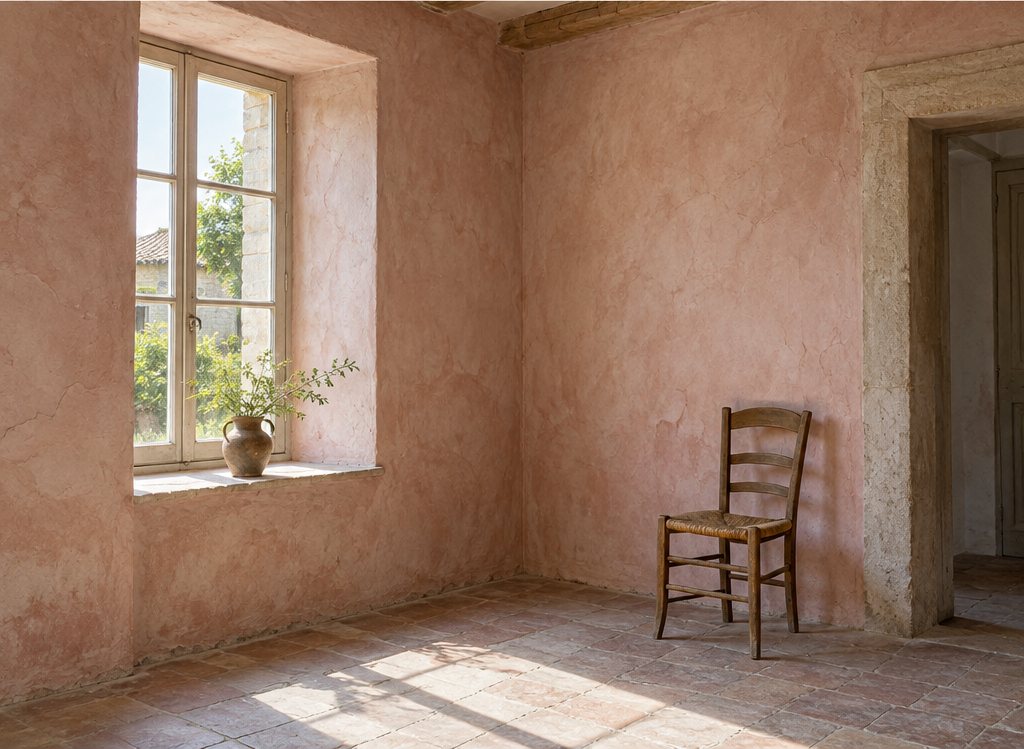
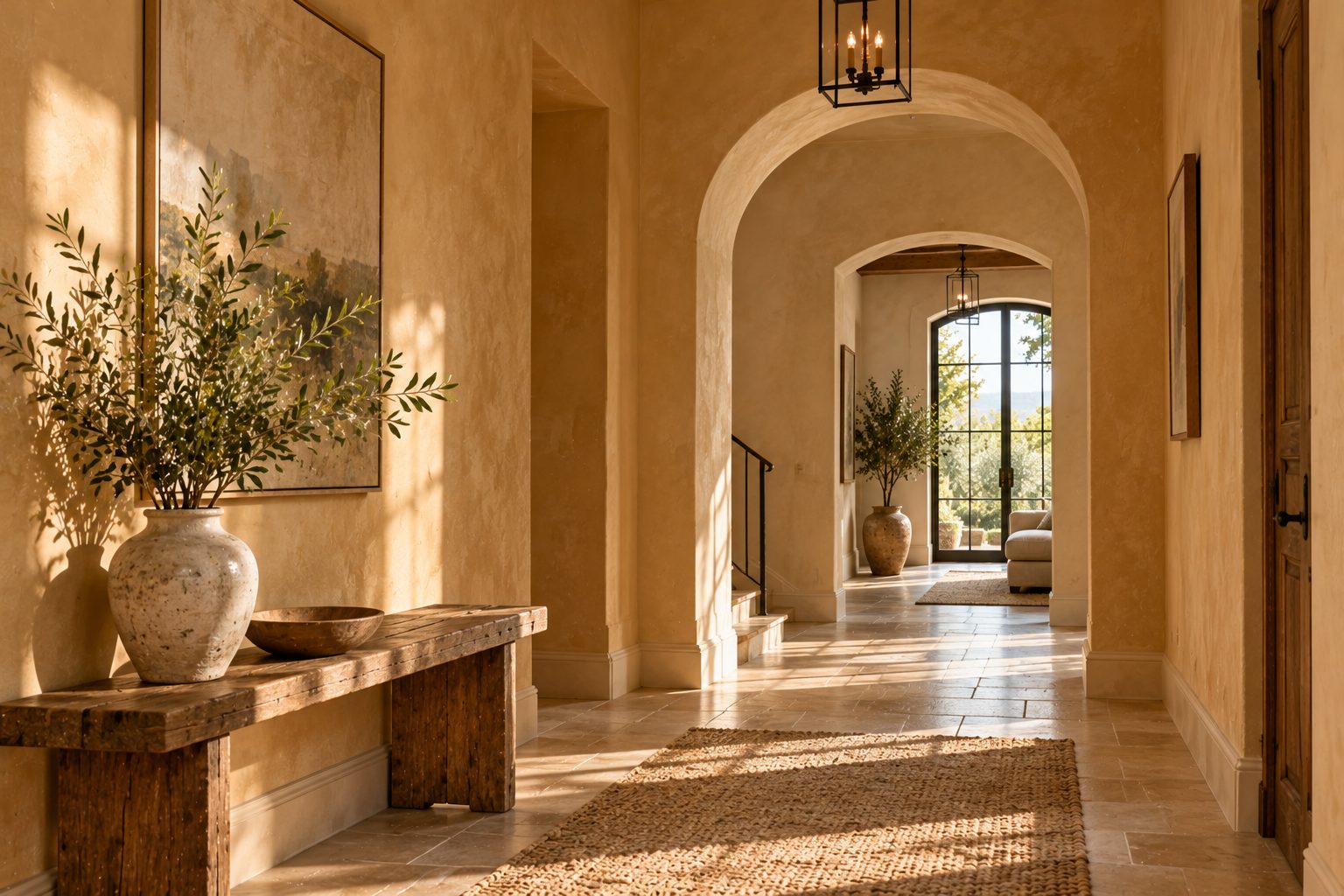
Limewash paint interior walls give a soft, cloudy, hand-made surface that looks like aged plaster and changes with the light through the day. Lime wash walls suit bedrooms, living rooms, stair halls and anywhere you want texture without the cost of a full plaster finish.
Inside, most walls are drywall or already painted, which limewash cannot bond to on its own. Prime with a mineral or quartz-filled primer first, then apply two coats. The finish is matte, mildly alkaline and resistant to mold, but it is not very washable; avoid it on kitchen backsplash zones and the lower half of busy hallways, or protect it with a breathable matte sealer made for lime.
Lime wall paint also tolerates humidity well, so it can work in a well-ventilated bathroom away from direct water. For areas that get wet, tadelakt or a waterproofed microcement is the better choice. For more ways to add movement to a plain wall, see our wall texture types guide.
What limewash paint colors work best?
The limewash paint colors that work best are earthy, low-chroma mineral tones — warm whites, stone, putty, clay, sage and charcoal — because lime itself dilutes and lightens any pigment. Bright, saturated colors are hard to achieve and usually look chalky.
#EAE4D8#D3C7B3#B9A88F#B98A6E#9AA08C#6E6B66Hex values are approximate for a cured, dry finish; limewash colors look two to four shades darker wet and keep lightening for several days as the lime carbonates. Judge a sample only after 48 hours. Most limewash colors are mixed from a white base with oxide pigments, so you can ask for a half-strength tint for a subtler result.
How to apply limewash paint
Apply limewash paint to a clean, damp, porous surface in thin coats with a wide brush, working in random crosshatch strokes and keeping a wet edge. This is the method we use on brick and primed interior walls:
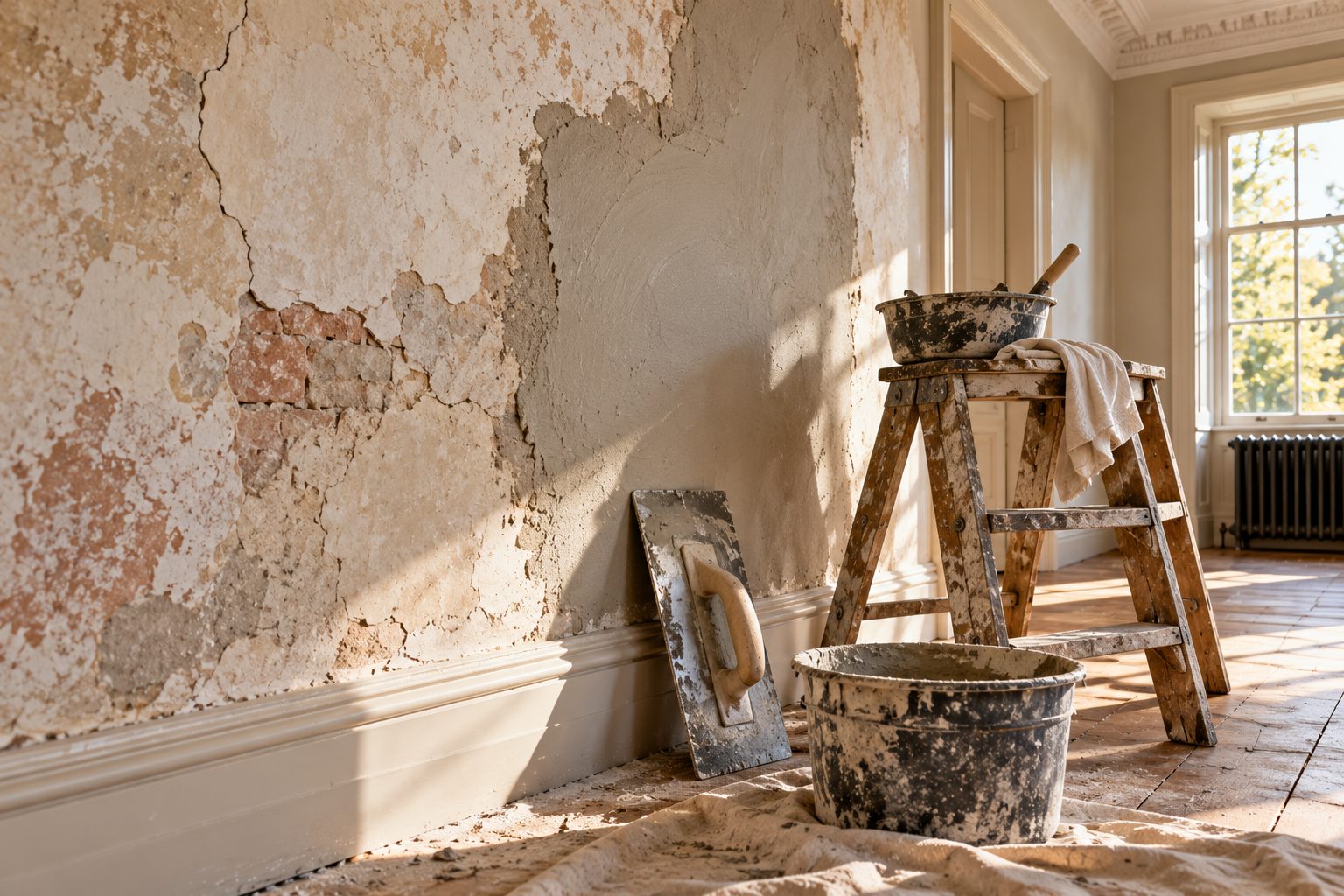
- Protect and prepare. Mask windows, trim and floors; lime splashes etch glass and stone. Wash brick with water and a stiff brush and let it dry; prime painted walls or drywall with a mineral primer.
- Dilute as directed. Ready-mixed limewash is usually thinned with 10–100 percent water depending on the look; first coats are normally thinner.
- Mist the surface. Dampen brick or plaster with a garden sprayer so it does not suck the water out of the limewash too fast.
- Brush in crosshatch strokes. Use a 4–6 in (10–15 cm) brush, work in areas of about 3 × 3 ft (1 × 1 m) and blend edges while wet.
- Wash back if wanted. On brick, spray and wipe within 15–30 minutes to reveal more of the masonry.
- Wait and recoat. Allow 2–4 hours indoors, or as directed, before the next coat; 2–3 coats in total.
- Let it cure. Keep exterior work out of hard rain and frost for at least 24–48 hours; the full cure takes weeks.
Work in shade and avoid temperatures below about 41°F (5°C) or above 86°F (30°C). Direct sun dries lime too fast and leaves powdery, patchy areas.
How to make limewash paint
To make limewash paint, mix mature lime putty or hydrated lime with clean water to the consistency of skim milk, then add lime-safe mineral pigment. A traditional starting ratio is about 1 part lime putty to 2–4 parts water by volume.
- Lime: use type S hydrated lime soaked overnight, or ready lime putty, which gives a smoother wash.
- Pigment: only alkali-stable oxide or earth pigments, typically up to about 10 percent of the lime by weight.
- Additives: some recipes add a little salt or a small amount of casein binder for interior durability.
- Safety: wear goggles, gloves and a dust mask when mixing dry lime, and keep water nearby to flush skin and eyes.
Homemade limewash is cheap but inconsistent from batch to batch. Mix the whole job in one go, or buy ready-mixed limewash, which is sold by paint stores, specialist mineral paint suppliers and online; buy all the cans from one batch number.
Can you limewash over paint?
You can limewash over paint only after applying a mineral primer that gives the lime something porous to grip; on bare latex or oil paint, limewash wipes off or flakes within weeks. This is also the answer to how to limewash walls with regular paint already on them.
The sequence is simple: clean and degrease, sand glossy areas, apply one coat of mineral or silicate primer, then limewash in two coats. Over painted exterior brick, the better long-term route is to strip the paint and limewash the bare masonry, because the paint layer still traps moisture behind it.
Mistakes we see with limewash
The mistake we see most is applying limewash to sealed brick or latex-painted drywall without a primer, then wondering why it rubs off on a sleeve. The other frequent ones:
- Judging color wet. It dries far lighter; wait 48 hours before deciding.
- Painting in direct sun. Fast drying causes lap marks and powdery patches.
- Expecting even color. Variation is the finish; if you want uniform walls, use mineral or latex paint.
- Sealing with acrylic. A plastic sealer stops the wall breathing and defeats the point.
Our verdict: limewash is the best way we know to soften strong brick without damaging it, and an affordable route to a plaster-like interior wall. Hire a pro for a whole limewash house, typically $2–$5 per sq ft; DIY a single room or fireplace.
Sourcing limewash, mineral primers or lime plaster for a larger project? Send quantities and surfaces through our decor and finishes sourcing desk for supplier quotes and sample boards.
Free toolPaint CalculatorWork out exactly how much paint to buy.Shop & source the look
Buy it today — or have it made
Retail links are affiliate links: we may earn a commission at no extra cost to you (disclosure). “Get it made” sends the item to our sourcing desk for factory quotes in custom sizes and finishes.
Frequently asked questions
Where can I buy limewash paint?
Limewash paint is sold by many paint stores, specialist mineral and heritage paint suppliers and online finish retailers, usually ready-mixed in tinted colors. Check that it is lime-based rather than a latex imitation, buy every can from the same batch number, and order a sample pot first, because the dry color is several shades lighter than the wet paint.
How do you apply limewash paint?
Apply limewash paint to a clean, damp, porous surface with a wide masonry brush in random crosshatch strokes. Work in small areas, keep a wet edge, and apply 2–3 thin coats a few hours apart. Mist brick before each coat, avoid direct sun and frost, and on brick you can spray and wipe within 15–30 minutes for a washed look.
Can you limewash over paint?
Yes, but only over a mineral or silicate primer. Limewash cannot bond to the plastic film of latex or oil paint and will rub or flake off. Clean the wall, lightly sand glossy areas, prime, then apply two coats of limewash. On painted exterior brick, stripping the paint first gives a longer-lasting result.
How long does limewash last on brick?
Limewash on exterior brick typically lasts about 5–7 years before it needs a refresh, depending on rain exposure and climate. It wears gradually by chalking rather than peeling, so the most exposed walls fade first. A refresh is simply another thin coat after washing the wall, with no stripping or scraping needed.
Is limewash paint good for interior walls?
Limewash paint is good for interior walls in bedrooms, living rooms and hallways where you want a soft, mottled, matte finish. It resists mold and lets walls breathe, but it is less washable than latex. On drywall or painted walls apply a mineral primer first, and avoid splash zones unless you protect it with a breathable lime-compatible sealer.
Some links may be affiliate links. Regulations and specifications change — always confirm with suppliers and qualified professionals.