Shabby Chic Decor: Modern Ideas, Colors and Room-by-Room Guide
Shabby chic decor mixes distressed painted wood, faded florals, white linen and vintage finds in a soft palette of 4–5 chalky pastels. Here is how to do it so it looks relaxed and modern, not dated.
Part of our guide: Interior Design Styles: 24 Decorating Styles Explained for 2027
Key takeaways
- Shabby chic is a soft, romantic style of painted and distressed furniture, washed florals, white linen and genuine vintage pieces
- The modern version keeps the white-and-wood base, cuts the ruffles and limits florals to one or two pieces per room
- Use chalky whites, blush, pale sage and duck-egg blue at matte sheen, with natural wood to stop the palette turning sugary
- Buy one or two real antiques per room; a house full of factory-distressed pieces is what makes shabby chic look cheap
Shabby chic decor is a soft, romantic interior style built on white and pastel painted furniture with gently worn edges, faded floral textiles, washed white linen and genuine vintage finds. It should look collected over decades rather than bought in one trip. Done in 2027, keep the white base, cut the ruffles by half and add natural wood.
The look began in English country houses and seaside cottages, where good furniture was repainted and reused rather than replaced, and was popularized as a decorating style in the late 1980s and 1990s. It is one of the gentler entries in our guide to interior design styles and a close cousin of French country style.
- Base: white or cream walls at LRV 80–90, whitewashed or painted wood, white linen.
- Accents: blush pink, duck-egg blue, pale sage and faded rose florals.
- Furniture: painted dressers, iron beds, rolled-arm slipcovered sofas, cane chairs.
- Lighting: one decorative chandelier per room plus fabric-shade lamps at 2700K.
- Budget: a typical shabby chic room costs $2,500–10,000, less if you buy vintage and paint it yourself.
What is shabby chic design?
Shabby chic design is a decorating style that pairs worn, painted vintage furniture with soft, feminine textiles and a pale palette, so a room feels lived-in, comfortable and a little romantic. The word "shabby" refers to the honest wear on old pieces: chipped paint, faded fabric, softened edges. The "chic" is the editing that keeps it from looking neglected.
It is sometimes misspelled as "shabby sheek decor", but the name comes straight from the two English words. Four features define the shabby chic design style:
- Patina over perfection. Furniture shows real use: rubbed corners, crazed paint, worn gilding.
- White as the backdrop. White walls, white linen and white-painted wood let pastel accents glow.
- Soft florals. Cabbage roses, sprigged prints and toile in faded, washed-out colors.
- Comfort first. Loose slipcovers, deep feather cushions and layered throws.
What colors are used in shabby chic home decor?
Shabby chic home decor uses warm chalky whites as the base, then blush pink, duck-egg blue, pale sage and soft gray-lavender as accents, all at matte or chalk-paint sheen. The colors should look sun-faded, never saturated.
#F4EFE6#E8CFC8#BFD3CF#B9C2A6#A79FB0The hex values are screen approximations; test paint on a large board before committing. Our rule for a balanced room is 60 percent white or cream, 25 percent natural or whitewashed wood and linen, and 15 percent pastel and floral. If you want more color, put it on a painted piece of furniture rather than every wall. Duck-egg and sage read cooler in north-facing rooms, so lean on blush and cream there.
How to decorate a shabby chic living room
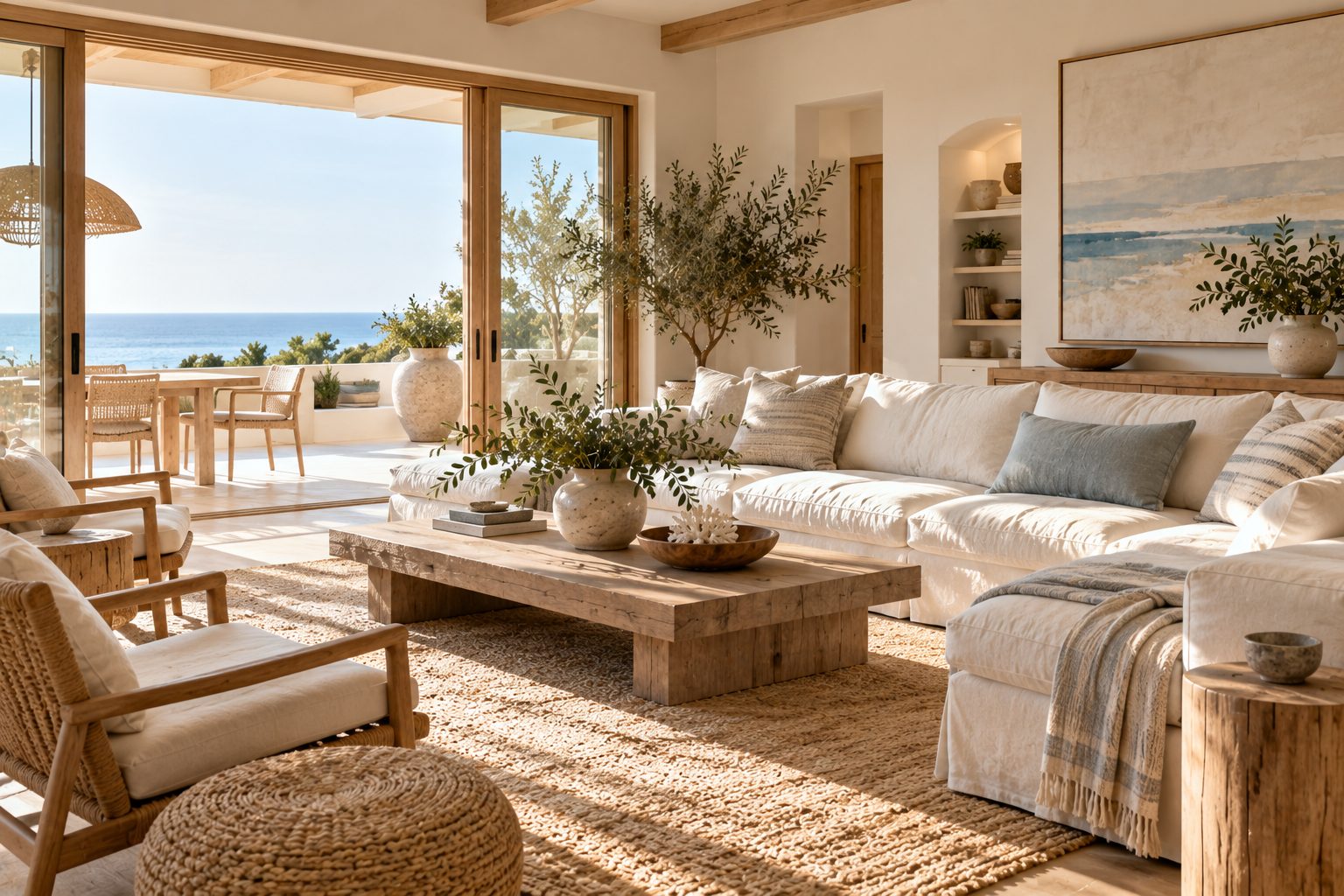
A shabby chic living room starts with a white or oyster slipcovered sofa, a painted or weathered wood coffee table, one floral and one plain textile, and a decorative ceiling light. This is where shabby chic living room decor earns its reputation for comfort.
Choose a rolled-arm sofa 78–90 in (198–229 cm) wide with a seat depth of 22–24 in (56–61 cm) in a washable linen or linen-cotton slipcover rated at 25,000+ Martindale. Pair it with a painted armchair or a cane-back bergère. A coffee table of 40–48 in (102–122 cm) in whitewashed oak or a painted farmhouse style keeps the room light; keep 16–18 in (41–46 cm) between it and the sofa.
Shabby chic lounge room ideas
In a lounge, front room or sitting room, the same rules apply at a smaller scale. Shabby chic lounge room ideas that work well in compact spaces include a loveseat of 60–72 in (152–183 cm) instead of a full sofa, a mirrored or painted console instead of a TV unit and a pair of slipper chairs. The best shabby chic sitting room ideas lean on one large gilt or white-framed mirror to bounce light and make a small front room feel larger.
Shabby chic living room accessories
Limit accessories to a handful with real character: an ironstone pitcher of garden roses, a stack of clothbound books, a pair of silver candlesticks, a vintage floral rug. Shabby chic lounge decor goes wrong when every surface carries a "Home" sign or a resin cherub.
Bedroom shabby chic decorating ideas
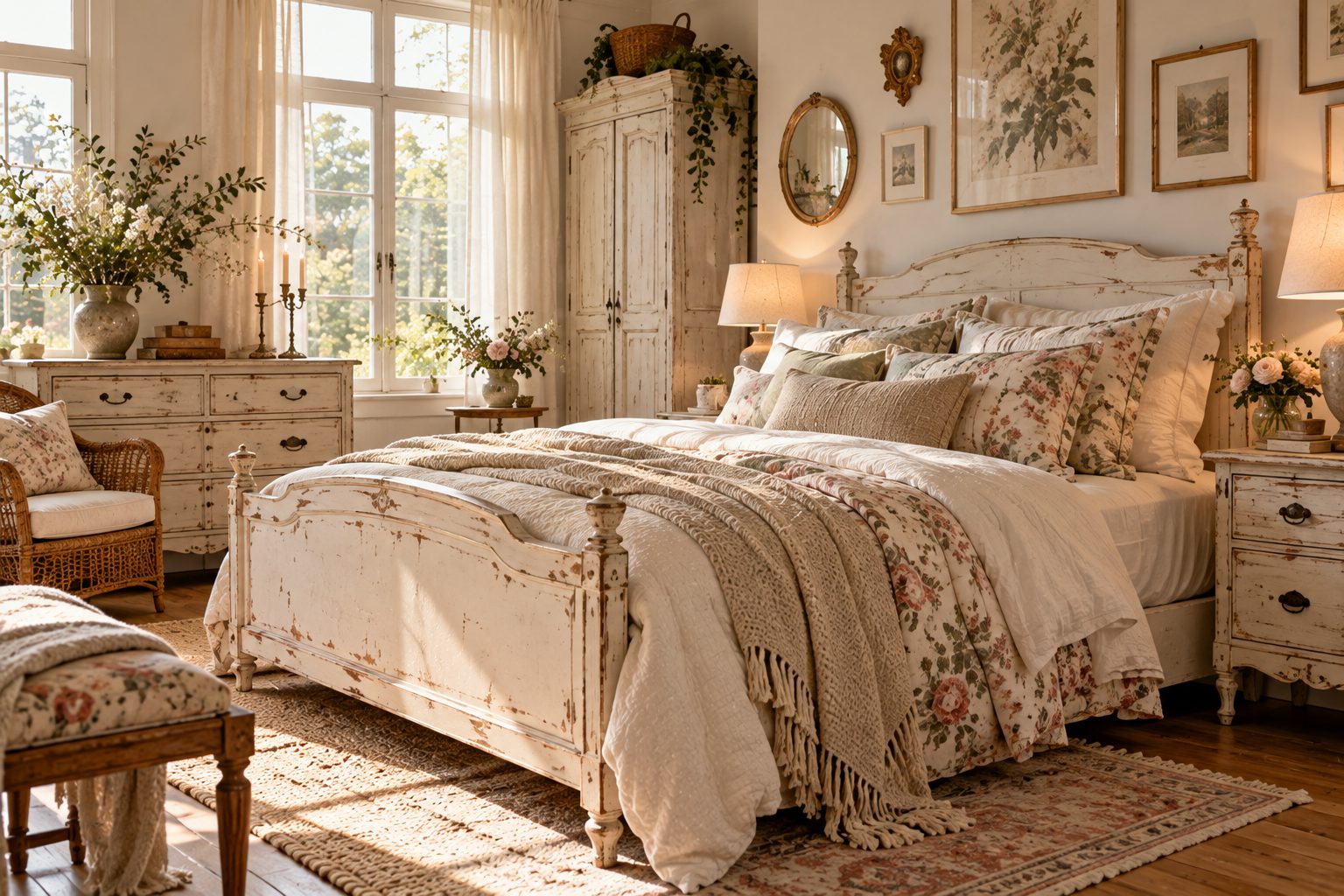
The bedroom is where shabby chic decorating style feels most natural: an iron or painted wood bed, white layered bedding, one floral and a soft chandelier create the look in a weekend.
- Pick the bed. A white iron bed or an upholstered linen headboard 48–56 in (122–142 cm) tall for a queen sets the tone.
- Layer white bedding. Washed linen sheets, a cotton matelassé coverlet and a quilt folded at the foot.
- Add one floral. Pillow shams or a duvet cover in a faded rose print, not both.
- Use mismatched nightstands. A painted bedside chest on one side and a small round table on the other look collected.
- Hang soft curtains. Unlined or lightly lined linen voile, mounted 4–6 in (10–15 cm) above the frame and puddling no more than 1–2 in (2.5–5 cm).
- Light it warmly. A small crystal chandelier of 18–22 in (46–56 cm) plus two fabric-shaded lamps at 2700K.
For a child's or guest shabby chic room, the same steps apply with a twin iron bed and a smaller dresser; keep the walls white and let the bedding carry the color.
How to make modern shabby chic interior design
Modern shabby chic interior design keeps the white, wood and vintage base but strips out ruffles, heavy distressing and excess pattern, so the room reads closer to a calm modern cottage than a 1990s catalog.
| Element | Classic shabby chic | Modern shabby chic (2027) |
|---|---|---|
| Walls | Pastel paint, floral wallpaper | Warm white limewash or plaster, one papered room at most |
| Furniture finish | Heavily sanded, crackle glaze | Lightly worn painted pieces mixed with natural oak |
| Florals | Every textile | One or two pieces per room |
| Ruffles and lace | Bed skirts, curtains, cushions | Linen with a simple flange or none |
| Metal | Ornate white iron | Aged brass and blackened iron in simple shapes |
| Accessories | Many small decorative pieces | Three to five vintage pieces per surface group |
| Typical sofa cost | $1,200–3,000 | $1,800–4,500 for performance linen slipcover |
Price bands are typical US mid-market ranges for 2026. The modern route blends neatly with modern cottage style and the softer end of modern farmhouse decor. If your home already has California-style natural materials, our California casual style guide shows how far toward pastel and vintage you can push before the two looks clash.
Shabby chic interior design ideas for the rest of the house
Shabby chic house decor extends beyond living rooms and bedrooms through kitchens, bathrooms and hallways, but each room should get only two or three signature pieces.
- Kitchen: painted open shelving with white ironstone, a farmhouse sink and a scrubbed pine table.
- Dining room: mismatched painted chairs around a whitewashed table and a linen tablecloth.
- Bathroom: a vintage dresser converted to a vanity, a gilt mirror and white cotton towels.
- Hallway: a painted bench, a row of hooks and a faded runner.
How to paint furniture for a shabby chic look
Painting your own pieces is the cheapest route into the style, and a solid wood dresser bought secondhand for $80–250 often outlasts a new one. Clean the piece with a degreaser, scuff-sand with 120–180 grit, apply two thin coats of chalk-type or mineral paint, then sand back only the edges and handles where wear would naturally occur. Seal tabletops and drawer fronts with a clear matte water-based topcoat or soft wax; a dresser top that takes daily use needs two or three topcoats. Skip veneered particleboard, which chips badly and cannot be sanded to reveal real wood beneath.
The aim for a shabby chic home is consistency of mood rather than repetition of objects: white walls and the same wood tone running through the house tie the rooms together.
Mistakes we see with shabby home decor
The biggest mistake with shabby home decor is fake age: factory-distressed furniture, printed "weathered" signs and resin ornaments make a room look cheap within a year. Real patina is irregular, worn where hands and feet actually touch.
- Too much pink. Balance pastels with natural wood, linen and a darker accent such as aged brass.
- Every surface covered. Leave 40–50 percent of surfaces clear.
- Distressing everything. Sand only edges and handles, and leave at least half the furniture undistressed.
- Cold light. Use 2700K bulbs; cool light makes white paint look blue and pastels look chalky.
- Ignoring scale. Small dainty pieces in a large room look lost; anchor it with one big armoire or bookcase.
Our verdict: shabby chic decor still works, provided it is honest and edited. We would keep the slipcovered sofa, the painted dresser and the white linen, and drop most of the ruffles and signs. Not sure the style suits you? Try our style quiz.
Furnishing a guesthouse, café or rental in shabby chic home decor? Send your list of mirrors, lighting and accessories to our decor sourcing desk for quotes from vetted makers of hand-finished pieces.
Free toolWallpaper CalculatorHow many rolls you need, allowing for the pattern repeat.Shop & source the look
Buy it today — or have it made
Retail links are affiliate links: we may earn a commission at no extra cost to you (disclosure). “Get it made” sends the item to our sourcing desk for factory quotes in custom sizes and finishes.
Frequently asked questions
What is shabby chic design?
Shabby chic design is a decorating style that combines worn, painted vintage furniture with faded floral textiles, white linen and a pale pastel palette. It aims for a comfortable, romantic room that looks collected over many years. The wear is genuine or gentle, and the editing keeps the look from appearing neglected or cluttered.
Is shabby chic still in style for 2027?
Shabby chic is in style in its modern form: white walls, natural and painted wood, washed linen and a few real antiques, with far fewer ruffles and florals than in the 1990s. Heavily distressed, themed shabby chic looks dated. The softer version overlaps with modern cottage and French country, which are both popular going into 2027.
What colors are shabby chic?
Shabby chic colors are chalky whites and creams as the base, with blush pink, duck-egg blue, pale sage and dusty lavender as accents. All should look faded and soft at matte sheen. A balanced room is roughly 60 percent white, 25 percent wood and linen, and 15 percent pastel or floral.
What is the difference between shabby chic and French country?
Shabby chic is paler and more romantic, built on white-painted, distressed pieces and faded florals. French country uses warmer, earthier colors such as ochre, terracotta and lavender, more carved natural wood, toile and checks, and rustic stone. Both value vintage furniture and comfort, and they mix easily in one home.
How do I make shabby chic look modern?
Keep the white base and painted wood but limit florals to one or two pieces per room, remove ruffles and lace, mix in natural oak and simple brass or iron, and clear at least 40 percent of surfaces. Swap pastel walls for warm white plaster or limewash, and buy fewer, better vintage pieces.
Some links may be affiliate links. Regulations and specifications change — always confirm with suppliers and qualified professionals.