Hotel Furniture Guide: Specs, Costs and How Hotels Source It
Hotel furniture is commercial-grade furniture built to last 7–10 years of heavy use. A guest room package typically costs $4,000–25,000 per key; here are the specs, room lists and how hotels source it.
Part of our guide: Hotel FF&E Sourcing: A Practical Guide for Boutique Projects
Key takeaways
- Hotel furniture must survive 7–10 years of daily use, so specify hardwood or plywood frames, HPL or sealed veneer tops and 50,000+ Martindale fabric
- A guest room furniture package typically costs $4,000–8,000 per key in midscale and $12,000–25,000 or more in luxury hotels
- Most hotels buy through hospitality contract furniture manufacturers or purchasing agents, not retail stores
- Allow 16–24 weeks from approved shop drawings to installation for custom hotel furniture shipped from overseas
Hotel furniture is commercial-grade furniture built to survive 7–10 years of daily use by strangers: solid hardwood or plywood frames, high-pressure laminate or sealed veneer surfaces, 50,000+ Martindale fabrics and certified fire ratings. A guest room furniture package typically costs $4,000–8,000 per key in midscale hotels and $12,000–25,000 or more in luxury properties.
Hotel furniture is one slice of a larger FF&E package; our hotel FF&E sourcing guide covers schedules, budgets and logistics end to end. Here we focus on the furniture itself: what goes in each room, how it is built and where hotels buy it.
- Service life: 7–10 years for casegoods, 5–7 years for upholstery before a soft refurbishment.
- Fabric: 50,000–100,000 Martindale, CAL 117 in the US, BS 5852 in the UK.
- Surfaces: HPL, sealed veneer or stone tops with radiused or banded edges.
- Lead time: 16–24 weeks for custom imported packages, 6–10 weeks from domestic stock lines.
What makes hotel furniture different from home furniture?
Hotel furniture differs from home furniture in durability, safety certification and serviceability: it is built heavier, tested to fire codes and designed to be cleaned and repaired fast. Commercial hotel furniture is used every night, moved by housekeeping, sat on by luggage and wiped with strong cleaners.
| Specification | Typical residential | Commercial grade hotel furniture |
|---|---|---|
| Frame | Pine, particleboard, light plywood | Kiln-dried hardwood, 18–25 mm plywood, metal reinforcement |
| Joinery | Staples, cam locks | Dowels, mortise and tenon, corner blocks, glued and screwed |
| Fabric abrasion | 15,000–30,000 Martindale | 50,000–100,000+ Martindale |
| Fire rating | Varies | CAL 117, NFPA 260, BS 5852 Crib 5 as required |
| Surfaces | Lacquer, thin veneer | HPL, catalyzed lacquer, sealed veneer, stone |
| Edges | Sharp or thin banding | 3 mm PVC or solid wood banding, radiused corners, metal guards |
| Expected life | 5–15 years, light use | 7–10 years, daily heavy use |
The rule we apply: if a piece cannot have a damaged panel, drawer front or seat cover replaced on site, it is not hotel furniture.
What hotel room furniture does a guest room need?
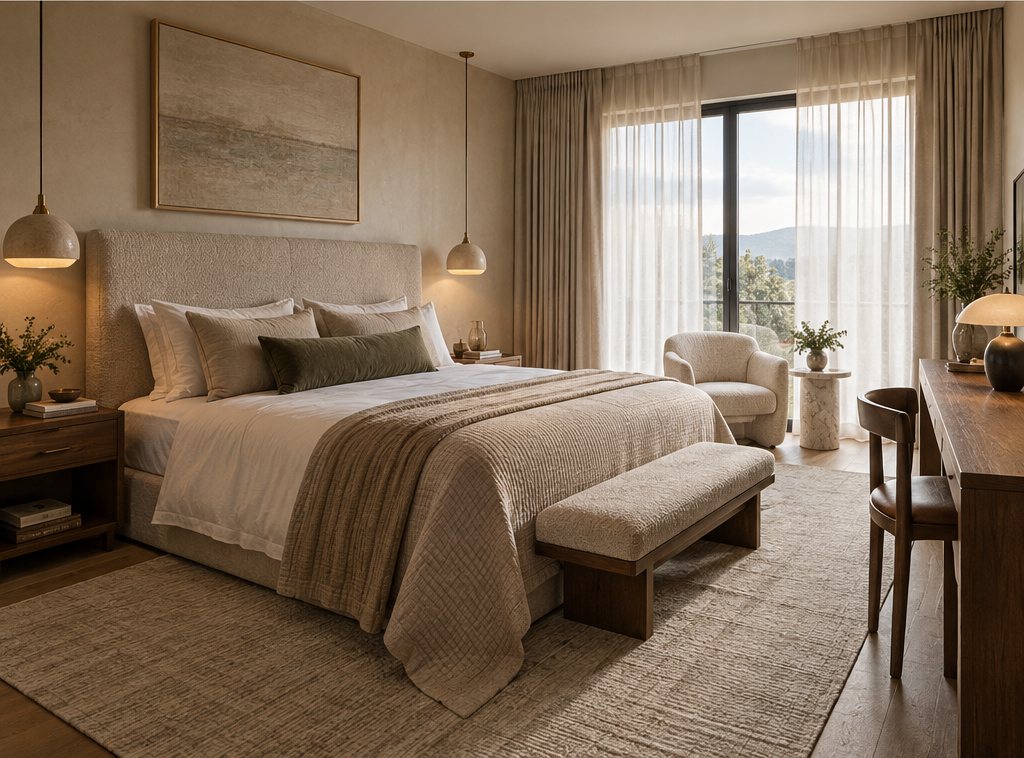
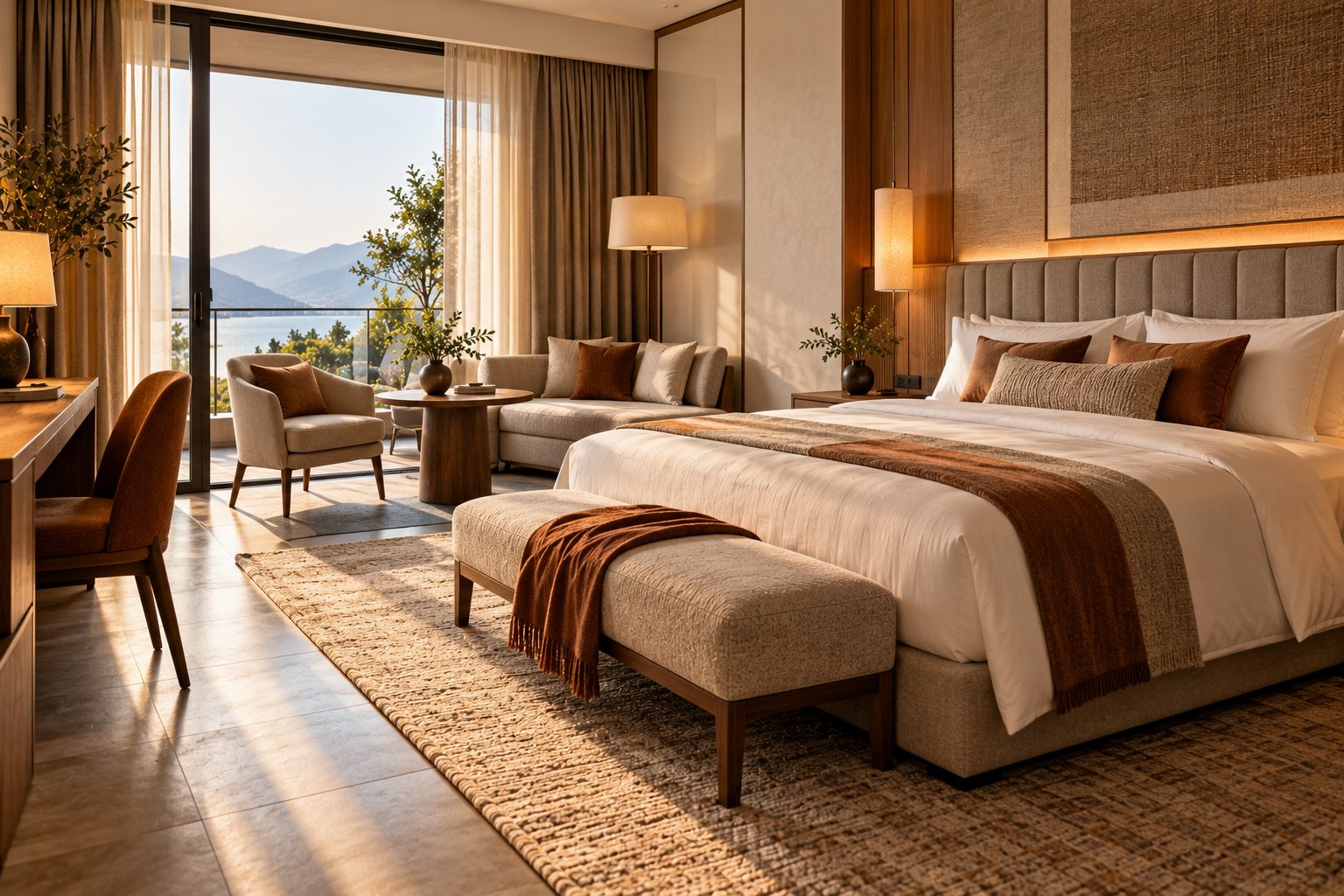
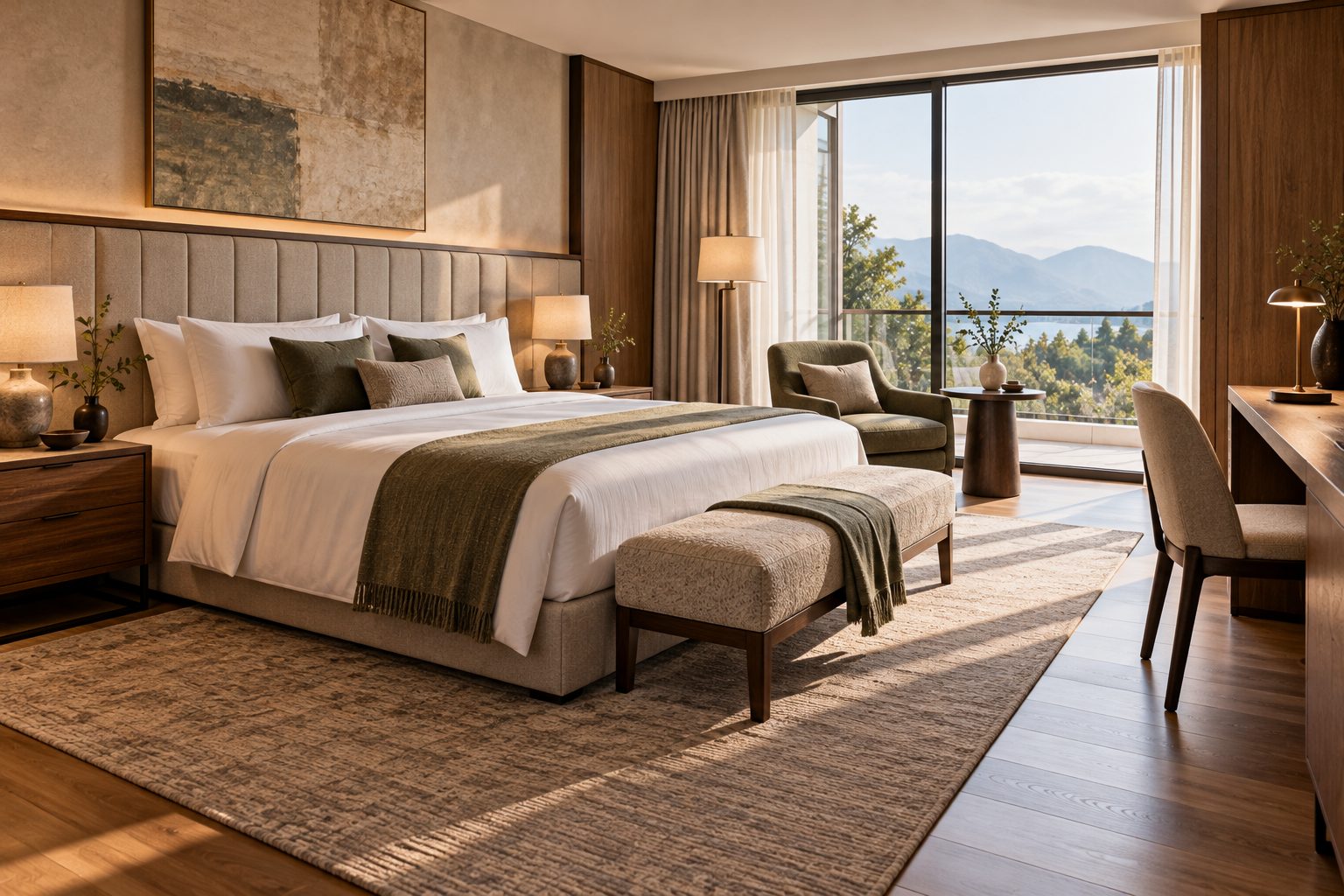
A standard guest room needs a bed base and headboard, two bedside tables, a desk or work surface with chair, one lounge chair, a luggage bench, a wardrobe or open closet, a mirror and a TV panel or console. That is the core hotel room furniture list for most brands, and boutique properties often drop the desk in favor of a larger lounge zone.
- Headboard: wall-mounted on a cleat, 48–60 in (122–152 cm) tall, upholstered or veneered; spans the full bed width or wall.
- Bedside tables: 18–24 in (46–61 cm) wide, top 1–2 in (2.5–5 cm) above mattress height, with power and USB nearby.
- Desk: 42–54 in (107–137 cm) wide, 29–30 in (74–76 cm) high, 20–24 in (51–61 cm) deep.
- Luggage bench: 36–48 in (91–122 cm) wide, 18–20 in (46–51 cm) high, with a laminate or metal top that resists scuffs.
- Lounge chair: 28–32 in (71–81 cm) wide, with a side table and floor lamp.
Our boutique hotel room design 2027 guide covers room dimensions and layouts around these pieces.
How should hotel lobby and lounge furniture be specified?
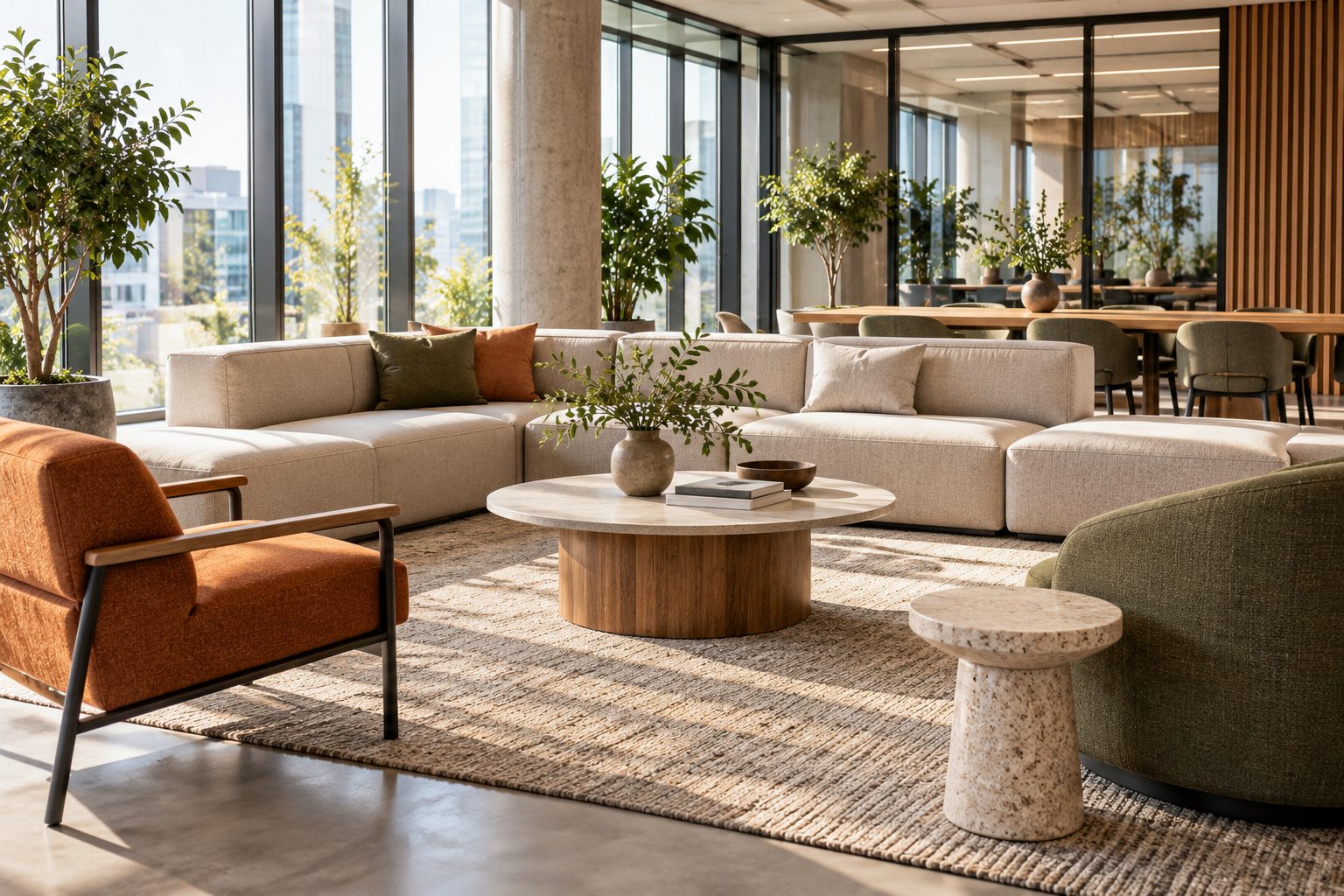
Hotel lobby furniture should be specified for the heaviest traffic in the building: 100,000 Martindale fabric or leather, hardwood frames, stable bases and seat heights that work for guests of every age. Lobbies and bars take more sitting per seat than any guest room.
For hotel lounge furniture, mix seat types: sofas for groups, lounge chairs in pairs, high-backed booths for privacy and a few firm chairs at 18 in (46 cm) seat height for older guests who need to stand easily. Keep seat depth at 20–23 in (51–58 cm); deep lounge sofas look generous but nobody can sit upright in them for a meeting. Luxury hotel lobby furniture often adds stone tables and custom carpets, which need 12–16 weeks of extra lead time. Hospitality lounge furniture in bars should have kick plates or metal feet that survive mopping. Restaurants have their own needs; see our restaurant furniture guide.
Which materials and finishes hold up in hotel furniture?
The materials that hold up best in hotel furniture are high-pressure laminate, sealed wood veneer over plywood, powder-coated steel, honed and sealed stone, and performance or wool-blend upholstery. Each solves a specific housekeeping problem, and good accommodation furniture usually combines several.
- High-pressure laminate (HPL): 0.7–1.2 mm sheets on desk tops, luggage benches and wardrobe interiors; resists scratches, heat and cleaning chemicals.
- Wood veneer: 0.6 mm or thicker over plywood or MDF, finished in catalyzed or polyurethane lacquer that survives alcohol and hot-cup tests.
- Solid wood: best for chair frames, legs and edges, where it can be sanded and touched up; keep it off large flat tops, which move with humidity.
- Metal: powder-coated steel or brushed stainless for bases, kick plates and luggage rack frames.
- Stone: honed quartzite, sealed marble or engineered quartz on vanities and side tables; polished marble shows rings and etches fast.
- Upholstery: 50,000–100,000 Martindale wool blends or performance polyester with removable, zipped covers on loose cushions.
Specify finish samples on the real substrate, not a printed chip, and keep a signed master sample with the factory and one with the owner. Color drift between batches is the most common dispute at delivery.
How much does hotel furniture cost?
Hotel furniture typically costs $4,000–8,000 per guest room in midscale hotels, $8,000–14,000 in upscale and $12,000–25,000 or more in luxury properties, before freight, duty and installation. Those bands cover furniture and casegoods only; lighting, carpet, drapery and artwork sit elsewhere in the FF&E budget.
| Segment | Guest room furniture per key | Lobby and public areas | Typical construction |
|---|---|---|---|
| Economy and select service | $2,500–4,500 | $40,000–120,000 | Laminate casegoods, stock upholstery |
| Midscale | $4,000–8,000 | $100,000–300,000 | HPL or veneer, semi-custom |
| Upscale and boutique | $8,000–14,000 | $250,000–700,000 | Custom veneer, upholstered headboards |
| Luxury | $12,000–25,000+ | $600,000–2,000,000+ | Solid wood, stone, bespoke upholstery |
All figures are typical US 2026 ranges for furniture only and vary with room size, quantity and origin. Wholesale hotel furniture imported direct from overseas factories can cut 20–40% from domestic pricing, but adds freight, duty, risk and 6–10 weeks.
Where do hotels buy their furniture?
Hotels buy their furniture from hospitality contract furniture manufacturers, either directly or through a purchasing agent, rather than from retail stores. Brand-managed hotels choose from approved hotel furniture suppliers; independent and boutique hotels have more freedom and often commission custom hotel furniture.
- Purchasing agents: manage tenders, contracts, logistics and installation for a fee, often 5–10% of FF&E value.
- Domestic contract manufacturers: faster, easier to inspect, higher unit cost.
- Overseas hotel furniture manufacturers: lower cost and full customization; need factory audits and inspections. See our guide to sourcing furniture from China.
- Stock contract lines: good for small properties and replacements, limited finishes.
When comparing the best hotel furniture suppliers, check references from similar projects, whether they produce in house or subcontract, and how they handle defects found at installation. Ask, too, whether the quote includes white-glove delivery, debris removal and touch-up on site; those three items often add 8–15% when they appear later as extras.
How to source custom hotel furniture step by step
Custom hotel furniture is sourced by sending a full specification package to three to five factories, approving shop drawings and a prototype room, then inspecting production before shipment. This is the sequence we run:
- Finalize the FF&E schedule. Item codes, dimensions, finishes, hardware, fire standards and quantities.
- Tender to 3–5 factories. Ask for unit price, MOQ, lead time, packing and payment terms.
- Review shop drawings. Check every dimension, joinery detail and finish code; allow 2–4 weeks.
- Build a mock-up room. One complete room, inspected in place, catches 80–90% of problems early (our experience across projects).
- Approve finish samples. Sign and keep master samples for veneer, lacquer and fabric.
- Inspect during and after production. Third-party inspection at 20% and 100% complete.
- Plan delivery by floor. Ship and install floor by floor so rooms open in sequence.
The schedule template, tender comparison sheet and inspection checklist in our FF&E procurement toolkit follow these steps.
What does modern and boutique hotel furniture look like in 2027?
Modern hotel furniture for 2027 is warm, residential-looking and soft-edged, built with commercial internals: walnut and oak veneers, rounded casegoods, tight wool-blend upholstery and integrated lighting. Boutique hotel furniture leans on a few custom statement pieces, such as a full-width headboard or a sculptural lounge chair, and keeps the rest simple and robust.
Luxury hotel furniture is moving away from high-gloss lacquer and mirrored surfaces toward honed stone, oiled-look finishes and textured fabrics. The trap is specifying residential softness without commercial protection; ask for sealed finishes that pass alcohol and hot-cup tests, and performance versions of the textures you like. For the wider look, see our furniture trends 2027 report.
Mistakes we see in hotel furniture projects
The costliest mistake we see is skipping the mock-up room to save four weeks, then discovering a headboard clashes with outlets or a desk blocks a door on all 120 rooms. Other repeat problems:
- No attic stock: order 3–5% spare chairs, drawer fronts and fabric.
- Light, flat fabrics in public areas: they show soiling within months.
- Glass and sharp corners in family rooms: specify radiused edges at 1/8 in (3 mm) or more.
- Ignoring housekeeping: beds with no gap underneath and heavy chairs slow every room clean.
Furnishing a hotel or serviced apartment project? Send your room count and FF&E schedule to our FF&E sourcing desk for factory quotes, MOQs and realistic 2027 delivery dates.
Free toolCurtain Size CalculatorRod length, panel size, ready-made match and yardage.Shop & source the look
Buy it today — or have it made
Retail links are affiliate links: we may earn a commission at no extra cost to you (disclosure). “Get it made” sends the item to our sourcing desk for factory quotes in custom sizes and finishes.
Frequently asked questions
Where do hotels buy their furniture?
Hotels buy their furniture from hospitality contract furniture manufacturers, either directly or through purchasing agents who run tenders, logistics and installation. Branded hotels often choose from approved supplier lists, while independent and boutique hotels commission custom pieces from domestic or overseas factories. Retail stores are rarely used because their pieces lack commercial durability and fire certification.
How much does hotel furniture cost per room?
Hotel guest room furniture typically costs $4,000–8,000 per room in midscale hotels, $8,000–14,000 in upscale and $12,000–25,000 or more in luxury hotels. These are furniture-only ranges before freight, duty and installation. Lighting, carpet, drapery and artwork are budgeted separately within the overall FF&E budget.
What is commercial grade hotel furniture?
Commercial grade hotel furniture is built and tested for daily heavy use: hardwood or thick plywood frames, glued and screwed joinery, HPL or sealed surfaces, 50,000+ Martindale fabrics and fire ratings such as CAL 117 or BS 5852. It is designed for 7–10 years of service and on-site repair of damaged parts.
How long does hotel furniture last?
Hotel casegoods typically last 7–10 years and upholstered pieces 5–7 years before a refurbishment. Hotels usually plan a soft refurbishment of fabrics and carpets every 5–7 years and a hard refurbishment of casegoods every 10–15 years, funded from an FF&E reserve that is often 3–5% of revenue.
Can you buy hotel furniture wholesale?
Yes, hotel furniture can be bought wholesale direct from contract manufacturers, which can cut 20–40% from domestic pricing on larger orders. Expect minimum order quantities, typically 20–50 pieces per item, plus freight, duty and 16–24 weeks of lead time. Third-party inspection before shipment is essential.
Some links may be affiliate links. Regulations and specifications change — always confirm with suppliers and qualified professionals.