What Is FF&E? Furniture, Fixtures and Equipment Explained
What is FF&E? It stands for furniture, fixtures and equipment: the movable items not built into a building. It typically runs 10–25% of a hotel project budget and is depreciated over about 7 years.
Part of our guide: Hotel FF&E Sourcing: A Practical Guide for Boutique Projects
Key takeaways
- FF&E means furniture, fixtures and equipment: the loose, movable items that are not permanently attached to the building structure
- In construction FF&E sits outside the general contractor's scope and is bought and installed by the owner or a procurement agent
- In accounting, furniture and fixtures are fixed assets, usually depreciated over a 7-year life under US tax rules
- On hotel projects FF&E typically runs 10–25% of total budget, with OS&E (operating supplies) budgeted separately
FF&E stands for furniture, fixtures and equipment: the movable items in a building that are not part of its permanent structure, such as beds, sofas, lamps, artwork, drapery and desks. On hotel and commercial projects FF&E typically accounts for 10–25% of the total budget, and in accounting it is treated as a fixed asset depreciated over roughly 7 years.
The term matters because it decides who buys what, which budget pays for it and how it is taxed. This page is the plain-language definition; for the full buying process on hospitality jobs see our hotel FF&E sourcing guide.
- Pronounced: "F-F-and-E" or simply "fee"; written FF&E, FFE or FF and E.
- Rule of thumb: if you could lift it out without damaging the building, it is usually FF&E.
- Typical share of budget: 10–25% on hotels, 5–15% on offices and restaurants (typical ranges).
- Accounting life: 7 years for furniture and fixtures under the US MACRS system.
- Sister term: OS&E, operating supplies and equipment, covers linens, crockery and consumables.
What does FF&E stand for?
FF&E stands for furniture, fixtures and equipment, and the FF and E meaning is the same in design, construction, real estate and accounting: loose items with no permanent connection to the building. Each word has a narrower sense on a project.
- Furniture: movable seating, tables, beds, casegoods and storage. This is the largest line in most FF&E budgets.
- Fixtures: decorative items that are attached but removable, such as pendant lights, wall sconces, mirrors, artwork and drapery hardware. Plumbing fixtures are usually excluded because they are built in.
- Equipment: freestanding operational items such as televisions, minibars, safes, luggage racks and fitness machines.
Ask "what does FFE stand for?" in an office and you get the same answer; only the item mix changes, with workstations and conference tables replacing beds and lounge chairs.
What does FF&E mean in construction?
In construction, FF&E means the items outside the general contractor's scope that the owner buys separately and installs after the building is complete. That split is the practical FFE meaning in construction: the contractor builds the shell and fit-out, and an FF&E team furnishes it.
Anything fixed to the structure or connected to building services, such as millwork, flooring, ceilings, plumbing fixtures, HVAC and recessed lighting, belongs to construction and is drawn on the architectural set. FF&E is specified separately by the interior designer on an FF&E schedule, procured by the owner or a purchasing agent, and delivered once the rooms are dust-free. Gray areas, such as headboards fixed to walls or built-in desks, must be assigned to one side in the contract, or both sides will assume the other is paying.
FF&E vs OS&E vs construction: what goes where?
The quickest way to sort an item is to ask whether it is built in (construction), movable and durable (FF&E) or consumable and replaced often (OS&E). The table shows typical hotel examples.
| Category | Examples | Who usually buys it | Typical life |
|---|---|---|---|
| Construction (fit-out) | Flooring, tile, millwork, recessed lights, plumbing fixtures, doors | General contractor | 15–40 years |
| FF&E: furniture | Beds, sofas, chairs, desks, dining tables, casegoods | Owner or purchasing agent | 7–10 years |
| FF&E: fixtures | Decorative pendants, lamps, mirrors, artwork, drapery | Owner or purchasing agent | 5–10 years |
| FF&E: equipment | TVs, safes, minibars, gym machines, luggage racks | Owner or purchasing agent | 3–7 years |
| OS&E | Bed linen, towels, crockery, glassware, hangers, bins | Operator | 1–3 years |
Life spans are typical planning ranges for mid-scale hospitality; luxury properties often refresh soft goods sooner, and brand standards may set the cycle.
What are examples of FF&E by property type?
FF&E examples change with the building, but the test stays the same: durable, movable and not part of the structure. These are the packages we see on typical projects.
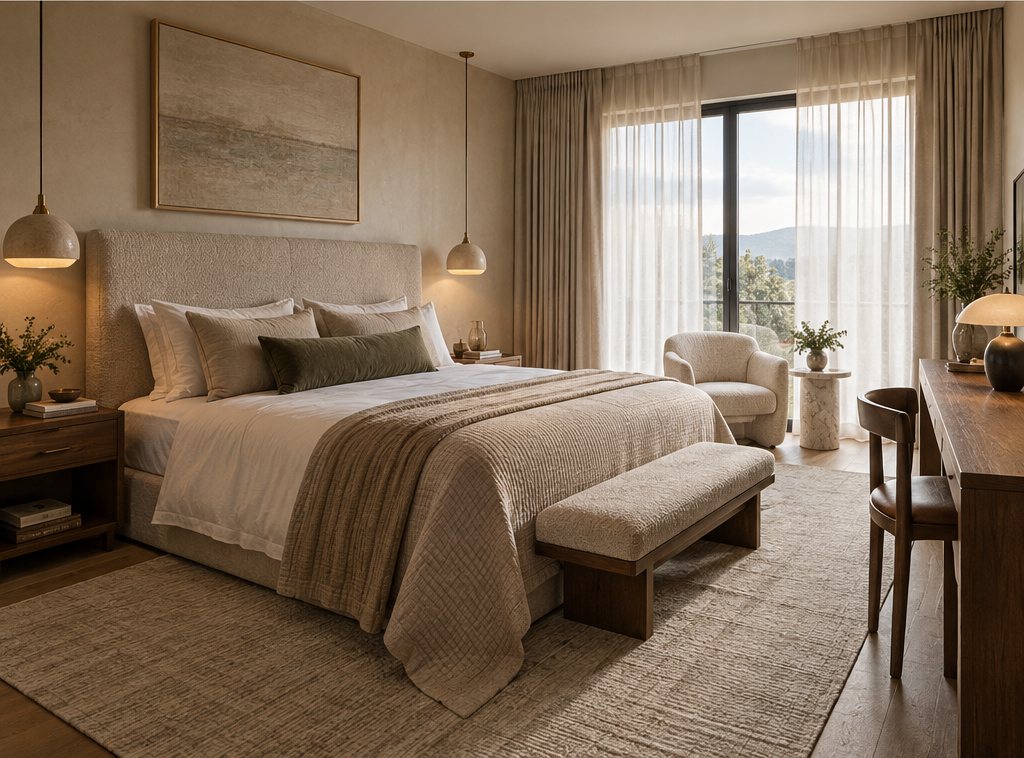
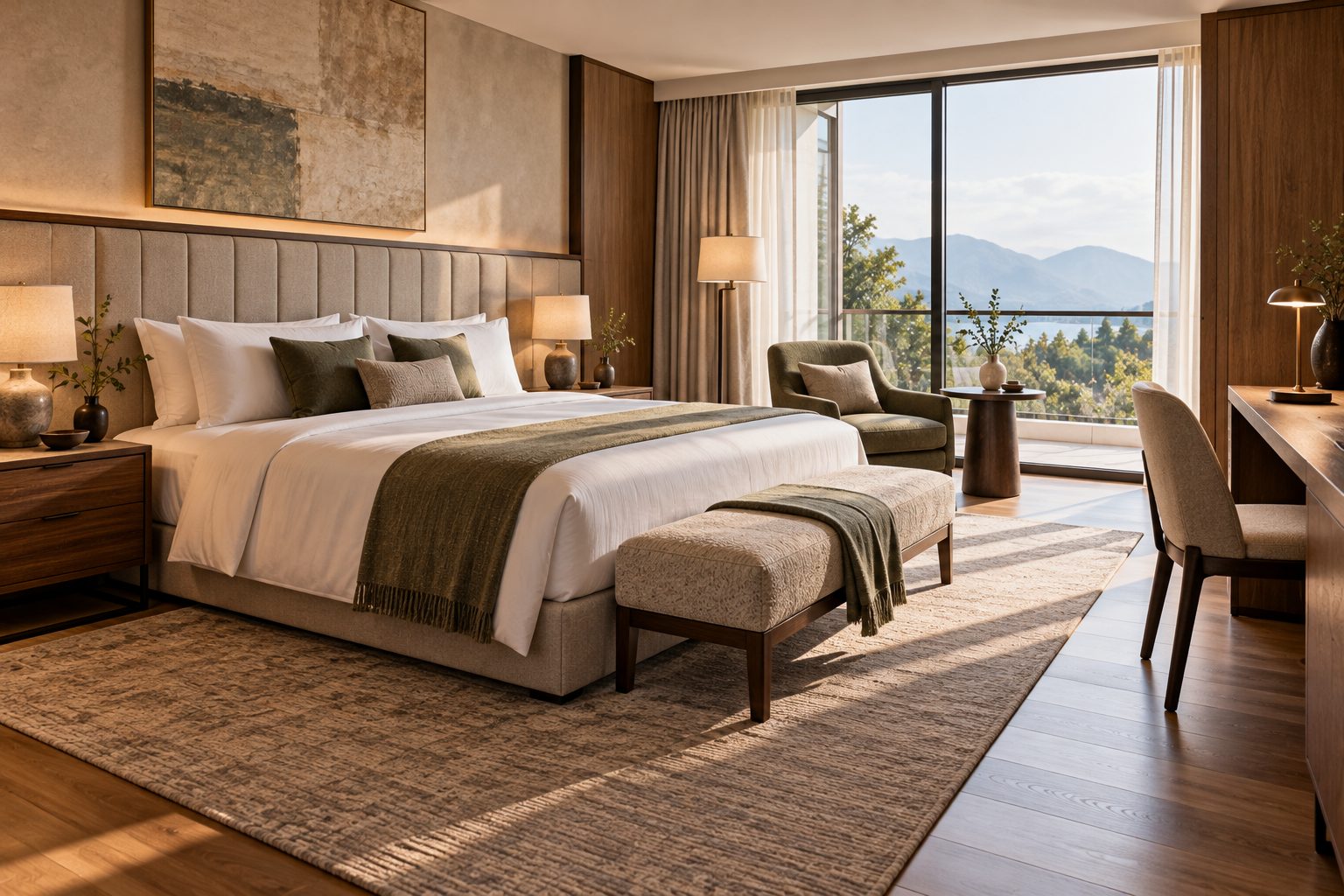
- Hotels: beds, headboards, casegoods, lounge chairs, desk chairs, lamps, mirrors, artwork, drapery, area rugs, TVs, safes, minibars, luggage racks and lobby seating.
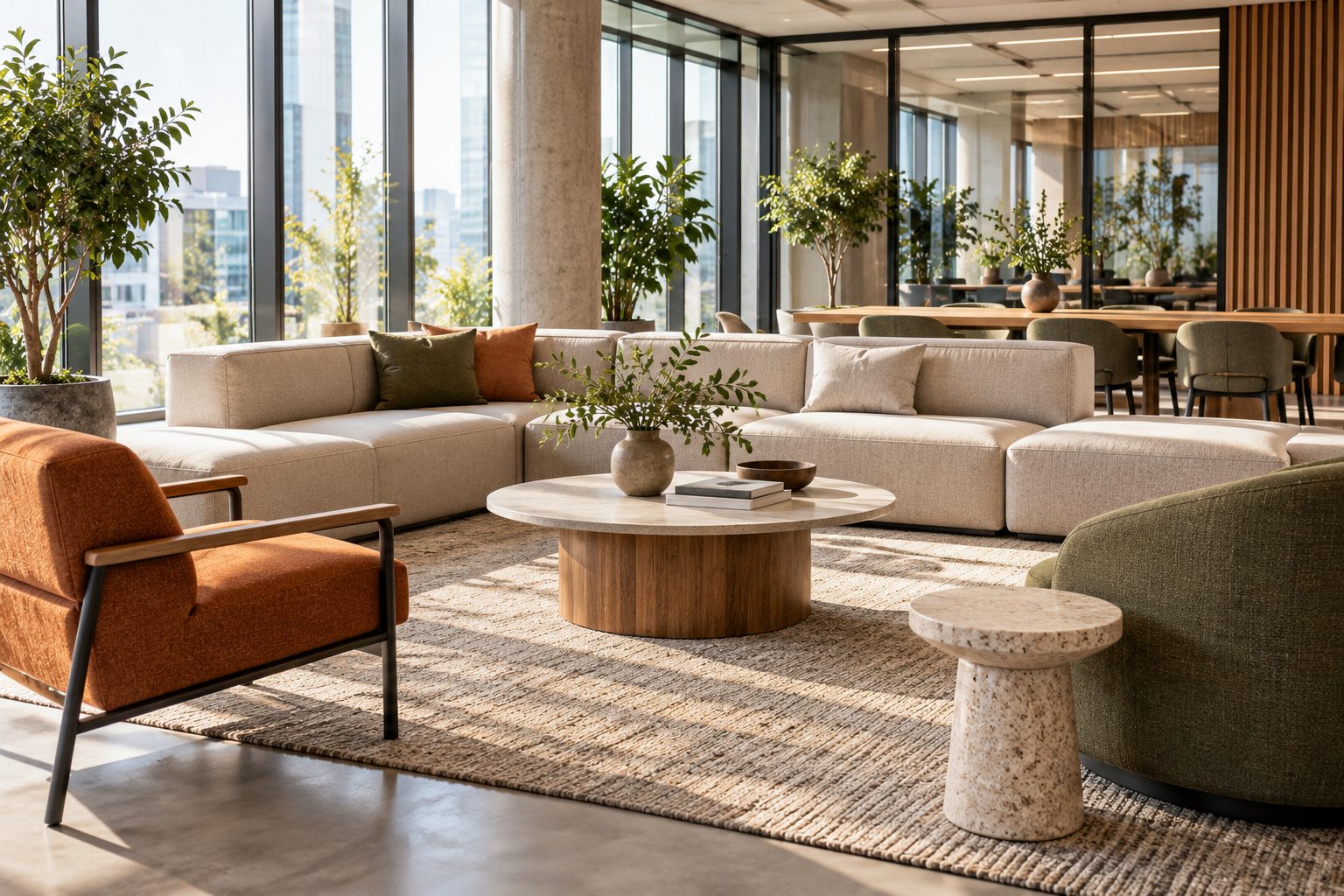
- Offices: workstations, task chairs, conference tables, lounge sofas, reception desks if freestanding, filing and lockers, decorative lighting and planters.
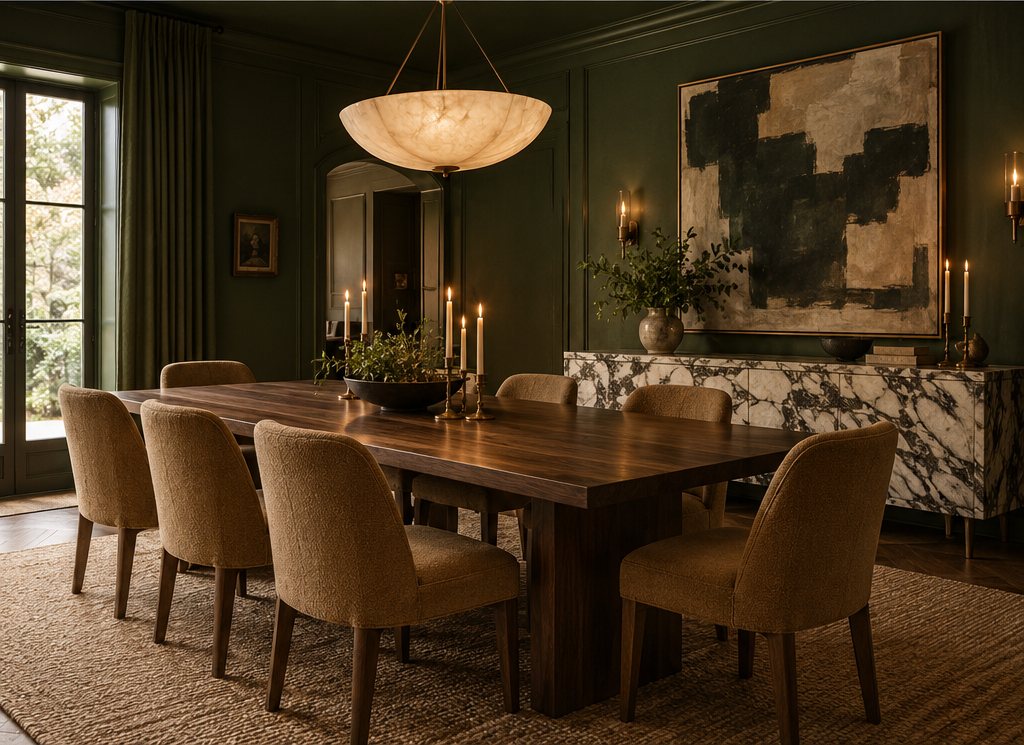
- Restaurants and bars: dining chairs, bar stools, tables and bases, banquettes if freestanding, host stands, decorative pendants and outdoor furniture.
- Healthcare: patient chairs, waiting room seating, bariatric chairs, over-bed tables, cubicle curtains and freestanding medical carts.
- Multifamily and senior living: amenity lounge furniture, co-working tables, gym equipment, model-unit furniture and common-area art.
Residential designers use the term too. On a full-home project, FF&E is everything the designer specifies after the builder leaves: sofas, beds, rugs, lamps, window treatments and accessories. A typical furnished three-bedroom home can carry an FF&E list of 150–300 line items, which is why even residential studios now run a formal schedule.
What are furniture and fixtures in accounting?
Furniture and fixtures in accounting are tangible, long-lived assets that a business owns and uses rather than sells, recorded on the balance sheet and depreciated over their useful life. A workable furniture and fixtures definition for bookkeeping is: movable items with a useful life over one year and a cost above the company's capitalization threshold.
That is also the core furniture accounting definition: desks, chairs, shelving, display cases, lamps and decorative fixtures are capitalized, while small items under the threshold (often a few hundred to a few thousand dollars, set by company policy) are expensed. If you need to define furniture and fixtures for an audit, list what is included and the threshold in your fixed-asset policy.
The meaning of furniture and fixtures in accounting is narrower than in design. Equipment such as computers and vehicles usually sits in its own asset class with a shorter life, and leasehold improvements, like built-in millwork in a rented space, are tracked separately again. Keeping those three groups apart on the fixed-asset register makes depreciation, insurance valuation and eventual disposal far simpler.
Do furniture and fixtures depreciate?
Yes. Under the US MACRS system, office furniture and fixtures generally fall in the 7-year property class, and many businesses use straight-line depreciation over 5–10 years in their own books. Section 179 and bonus depreciation can accelerate the write-off. Rules change, so confirm treatment with your accountant; this is general information, not tax advice.
What is FF&E in business and real estate?
In business, FF&E is the bundle of movable assets that transfers with a going concern or is valued separately when a property is sold, financed or insured. When a hotel, restaurant or office changes hands, the purchase agreement usually lists FF&E as its own line, so the buyer knows which loose items stay.
Hotel operators also keep an FF&E reserve, a fund typically set at 3–5% of gross revenue (a common industry range, often written into management and loan agreements) to pay for soft and hard refurbishments. Lenders and appraisers look at that reserve because tired furniture directly lowers room rates.
FF&E in interior design: who specifies it?
In interior design, furniture, fixtures and equipment are specified by the designer, priced and ordered by a procurement team, and installed by a logistics crew. The designer's FF&E schedule is the master document: one line per item with a code, dimensions, materials, finish, fire rating, quantity and location.
A good schedule removes guesswork for factories. Instead of "gray lounge chair," it says "Lounge chair LC-02, 30 × 32 × 31 in (76 × 81 × 79 cm), solid beech frame, 50,000 Martindale wool blend, CAL 117, qty 24." That level of detail is what turns FF&E furniture from a mood board into something you can quote. For hospitality-specific pieces see our hotel furniture guide and the contract furniture guide on commercial-grade construction.
How is an FF&E budget planned?
An FF&E budget is planned per room type and per key, then rolled up, with 8–12% contingency for freight, duty and price changes. This is the order we follow:
- List every room type. Guest rooms, suites, lobby, restaurant, corridors, back of house.
- Write a draft item list per room. Quantities first, finishes later.
- Apply cost bands. Typical US 2026 FF&E cost per key runs about $8,000–15,000 for midscale, $15,000–30,000 for upscale and $30,000–60,000 or more for luxury hotels.
- Add logistics. Freight, duty, warehousing and installation often add 15–25% on imported goods.
- Add contingency. Hold 8–12% until production samples are approved.
- Lock the schedule. Freeze specs before purchase orders; changes after production starts are expensive.
The schedule templates, cost-per-key worksheet and purchase-order tracker in our FF&E procurement toolkit follow this exact sequence.
Mistakes we see with FF&E
The most common FF&E mistake is leaving the line between construction and FF&E undefined, so wall-mounted headboards, built-in banquettes and wiring for lamps fall between two budgets. Others we see on almost every project:
- Residential specs in commercial rooms: fabrics under 30,000 Martindale and no fire certification fail inspections and wear out within two years.
- Forgetting electrical coordination: bedside lamps and USB modules need outlets placed during construction.
- No attic stock: order 3–5% spare fabric, carpet and chairs for future repairs.
- Underestimating lead times: custom furniture takes 12–20 weeks plus 4–6 weeks of ocean freight.
Planning a fit-out? Send us your room count and item list through our FF&E sourcing desk and we will return factory quotes, MOQs and lead times for each package.
Free toolTile CalculatorWork out tiles, boxes, grout and adhesive with the right wastage.Shop & source the look
Buy it today — or have it made
Retail links are affiliate links: we may earn a commission at no extra cost to you (disclosure). “Get it made” sends the item to our sourcing desk for factory quotes in custom sizes and finishes.
Frequently asked questions
What is FF&E?
FF&E is furniture, fixtures and equipment: the movable items in a building that are not permanently attached, such as beds, sofas, lamps, artwork, drapery, TVs and desks. It is specified by designers, bought separately from construction and treated as a depreciable fixed asset. On hotel projects it typically represents 10–25% of the total budget.
What does FFE stand for in construction?
In construction, FFE stands for furniture, fixtures and equipment, the loose items excluded from the general contractor's scope. The owner or a purchasing agent buys them and installs them after construction. Built-in items such as flooring, millwork, plumbing fixtures and recessed lighting stay in the construction budget instead.
What does FF and E stand for?
FF and E stands for furniture, fixtures and equipment, usually written FF&E. Furniture covers seating, tables and casegoods; fixtures cover removable decorative items such as lamps, mirrors and drapery; equipment covers freestanding operational items such as TVs, safes and minibars. The term is used across hospitality, offices, healthcare and restaurants.
Do furniture and fixtures depreciate?
Yes, furniture and fixtures depreciate because they are long-lived fixed assets that wear out. In the US, office furniture and fixtures generally fall in the 7-year MACRS property class, and Section 179 or bonus depreciation can speed the deduction. Confirm the current rules with an accountant before filing.
What is the difference between FF&E and OS&E?
FF&E is durable, movable furniture, fixtures and equipment with a life of about 5–10 years, while OS&E, operating supplies and equipment, covers items replaced often, such as linens, towels, crockery and glassware. FF&E is usually capitalized and depreciated; OS&E is budgeted by the operator and often expensed.
Some links may be affiliate links. Regulations and specifications change — always confirm with suppliers and qualified professionals.