Custom Built Furniture: Costs, Lead Times and How to Order It
Custom built furniture typically costs 1.5–3 times a comparable retail piece and takes 8–16 weeks. Here is how to choose a local maker or a factory, write a spec, approve drawings and avoid the costly mistakes.
Part of our guide: How to Source Furniture and Decor from China: A Guide for Designers
Key takeaways
- Custom built furniture usually costs 1.5–3 times a comparable retail piece and takes 8–16 weeks from approved drawing to delivery
- A local custom furniture builder suits one-off pieces; a factory, including Chinese furniture manufacturers, makes sense from roughly 10–30 matching pieces
- Always approve a dimensioned shop drawing and a physical finish sample before any timber is cut
- Specify wood species, moisture content of 8–10 percent, joinery and finish in writing, not just a photo
Custom built furniture is furniture made to your dimensions, materials and finish rather than picked from a catalog, and it typically costs 1.5–3 times a comparable retail piece with a lead time of 8–16 weeks. It pays off when a standard size will not fit, when you need solid wood instead of veneered particleboard, or when you need 10 or more matching pieces.
- Typical lead time: 8–16 weeks for a local workshop; 45–75 days of production plus 4–6 weeks of ocean freight from an overseas factory.
- Typical price premium: 1.5–3x comparable retail for one-off pieces; often below retail per piece at factory quantities.
- Deposit: 30–50 percent up front is standard, balance before delivery or shipment.
- Must-have documents: a dimensioned shop drawing, a finish sample and a written materials spec.
This guide sits under our pillar on how to source furniture from China, which covers factory vetting, inspections and freight in depth. Here we focus on the decisions that come first: what to have made, who should make it and how to describe it so the finished piece matches the picture in your head.
What is custom built furniture, and when is it worth it?
Custom built furniture is worth it when fit, material quality or quantity matters more than speed and the lowest price. The term covers three different things, and the price gap between them is large.
- Built-ins: bookcases, window seats, media walls and wardrobes fixed to the building and scribed to uneven walls.
- Freestanding custom made furniture: tables, beds, consoles and cabinets made to your drawing.
- Made-to-order (semi-custom): a catalog design in your choice of size, wood or fabric. Cheaper and faster, but you only change what the maker allows.
Commission it when the room has an awkward alcove, a sloped ceiling or a 30 in (76 cm) stair turn no retail sofa will pass; when you want high end wood furniture in solid timber; or when a hotel, restaurant or rental project needs identical pieces across many rooms. Skip it for anything you expect to replace within five years.
How much does custom furniture cost?
Custom furniture costs roughly $1,500–6,000 for a one-off solid wood table or cabinet from a local maker in the US, and built-ins run $500–1,200 per linear foot. The table gives typical 2026 US bands; regional labor rates and timber prices move them by 20–30 percent either way.
| Piece | Local custom furniture builder (typical) | Overseas factory, FOB per piece at MOQ (typical) | Lead time |
|---|---|---|---|
| Solid wood dining table, 84–96 in (213–244 cm) | $2,500–7,000 | $450–1,200 | 8–14 weeks local; 50–70 days factory |
| Upholstered sofa, 84 in (213 cm) | $3,000–7,500 | $350–900 | 10–16 weeks local; 45–60 days factory |
| Solid wood sideboard, 72 in (183 cm) | $2,000–5,500 | $300–800 | 8–12 weeks local; 50–70 days factory |
| Built-in bookcase or media wall | $500–1,200 per linear ft ($1,600–3,900 per m) | Rarely practical; site fitting needed | 6–12 weeks |
| Bed frame with upholstered headboard, queen | $1,800–4,500 | $250–650 | 8–12 weeks local; 45–60 days factory |
Factory prices exclude freight, duty, customs brokerage and last-mile delivery, which together often add 25–45 percent to the landed cost. They also assume an MOQ, typically 10–50 pieces per design, so they are not a fair comparison for a single table.
Where to get custom furniture made: local maker or factory?
For one to five pieces, a local maker is almost always the better choice; from around 10–30 matching pieces, a factory becomes cheaper even after freight. Each route has a different strength.
Local custom furniture builders and bespoke furniture makers
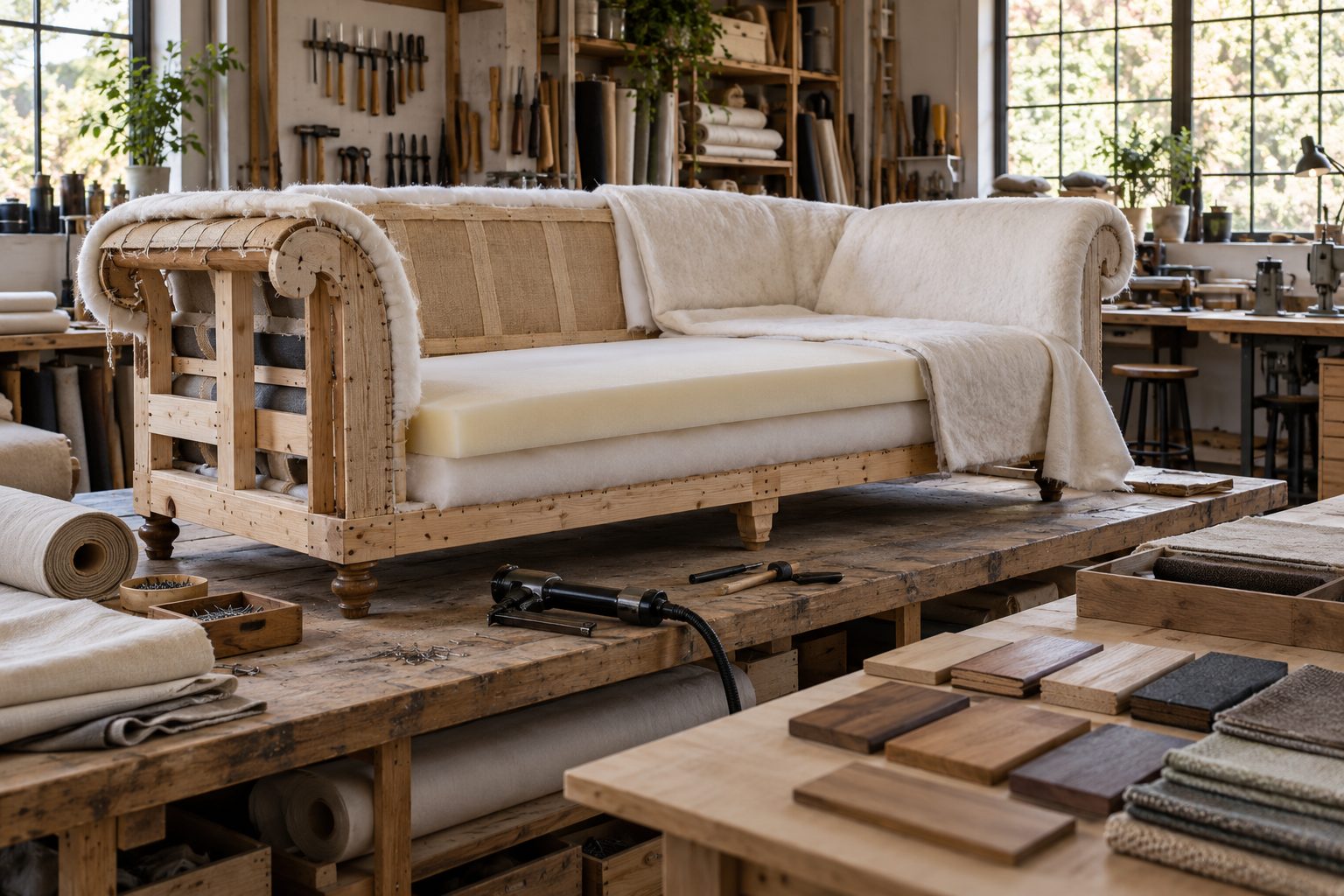
A small workshop can visit the site, template walls, adjust a design mid-build and fix problems in person. This is where custom handmade furniture and custom handcrafted furniture really live: hand-cut joinery, matched boards and finishes mixed for your room. Ask to see finished work in person, not only photos, and check that the shop carries liability insurance if it installs built-ins.
Factories and Chinese furniture manufacturers
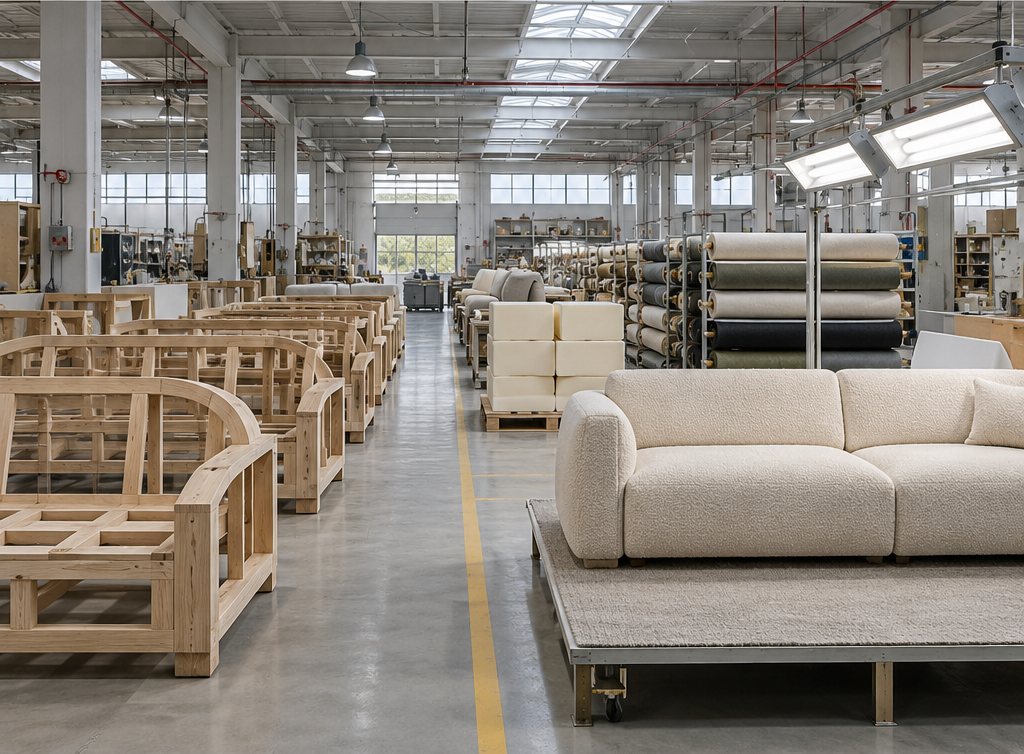
When people search "order furniture from China" they usually have a multi-unit project in mind: a boutique hotel, a restaurant group or a run of rental apartments. Chinese furniture suppliers and other overseas factories are strong on repeatable upholstery, case goods and metalwork at volume, with consistent finishes across 50 or 500 pieces. The trade-offs are MOQs, a 30 percent deposit sent abroad, quality inspections and three to four months door to door. The same factory routes apply to hospitality; see our contract furniture guide for commercial ratings.
A note on terms: "Chinese furniture" online can mean two unrelated things, furniture made in China to any design, or Chinese style furniture such as Ming-inspired horseshoe chairs, altar tables and lacquered cabinets. If you want traditional Asian furniture, look for makers that specialize in mortise-and-tenon joinery without metal fasteners, and ask whether the timber is solid elm, walnut or a stained substitute.
How do you order custom made furniture step by step?
Order custom made furniture by fixing the brief and drawing first, then the sample, then the deposit, never the other way round. This is the sequence we use on client projects:
- Measure the space and the route in. Record room size, door widths, stair turns and lift depth. A 36 in (91 cm) deep cabinet will not pass a 32 in (81 cm) door.
- Collect references. Two or three images per piece, with notes on what you like in each: the leg, the edge profile, the wood tone.
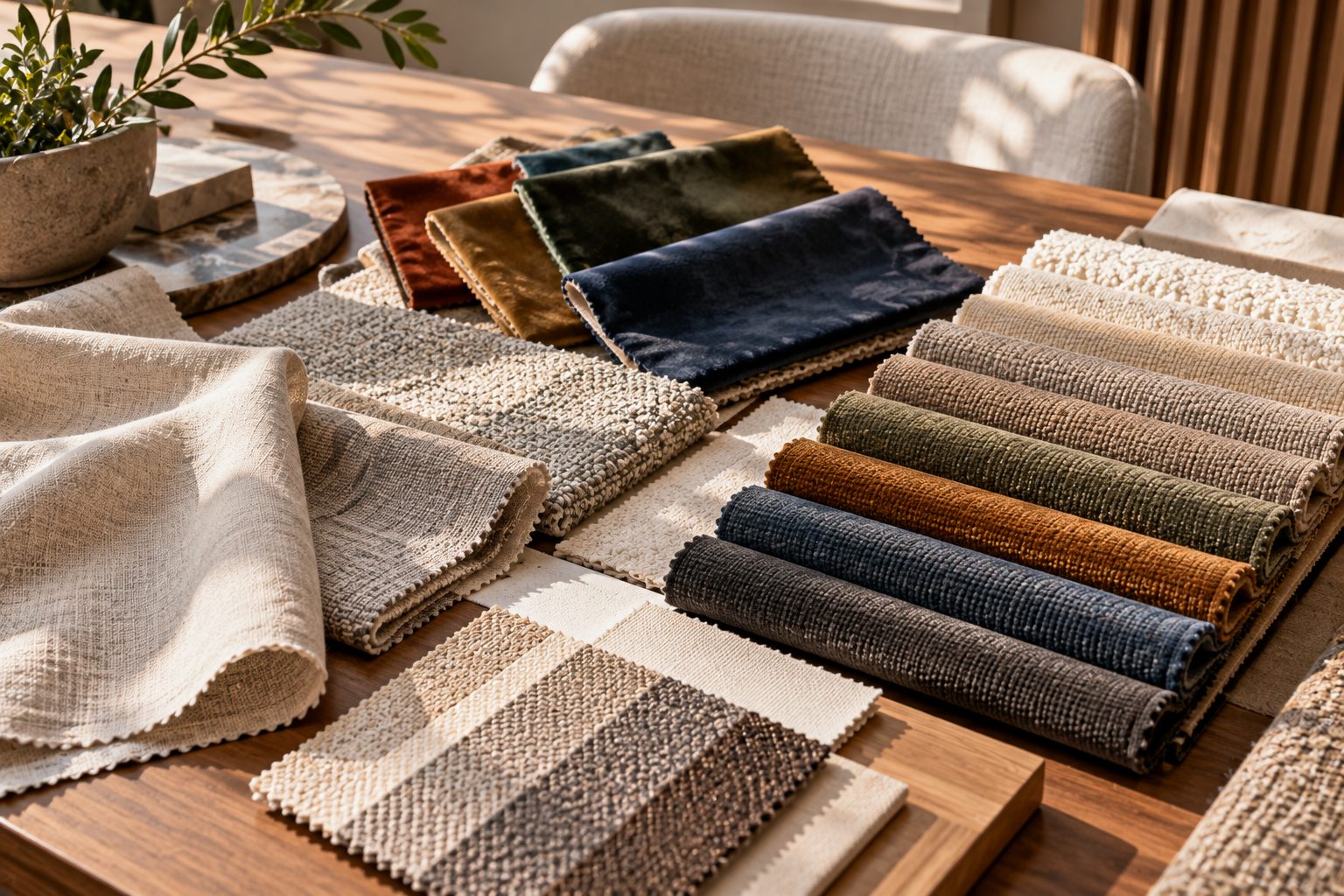
- Write the spec. Overall dimensions, wood species, solid or veneer, joinery, hardware, finish and sheen, fabric and Martindale rating.
- Get two or three quotes against the same spec. Quotes on different specs cannot be compared.
- Approve a shop drawing. It should show every dimension, section and material. Check heights against use: 29–30 in (74–76 cm) for dining, 18 in (46 cm) seats.
- Approve a physical finish sample. Stained wood looks different on screen and under your lighting; sign and keep one sample.
- Pay the deposit and agree milestones. 30–50 percent up front, a photo check before finishing, balance on delivery or before shipment.
- Inspect before final payment. Check dimensions, finish, drawer action and level; for factory orders, use a third-party inspection.
Which woods and specs should custom wooden furniture use?
Custom wooden furniture should be built from kiln-dried solid hardwood or thick veneer over plywood, at 8–10 percent moisture content, with joinery that allows the wood to move. Most failures in custom made wood furniture, cracked tops and sticking drawers, trace back to wet timber or tops fixed rigidly to frames.
- White oak: hard, stable and the default for 2027 interiors; quartersawn for straight grain.
- Walnut: rich mid-brown, works beautifully, costs more and lightens slightly over the years.
- Ash: pale and springy, good for chairs and bent parts.
- Cherry: warm reddish tone that darkens noticeably with light, back in favor for 2027.
- Maple: very hard and pale, ideal for painted or kitchen work.
#B8875A#6B4A33#D9C2A0#8E4B32#E3D3B4The swatches are approximate screen references; always approve a real sample. For mixing species in one room, our guide on how to mix wood tones gives the one-dominant-wood rule we use. Specify a 3/4 in (19 mm) minimum for carcass panels, 1–1.5 in (25–38 mm) for tabletops, dovetailed or doweled drawer boxes and full-extension soft-close runners. For seating, ask for corner-blocked hardwood frames; our custom upholstery guide covers foam densities and fabric choice.
What makes good custom furniture designs?
Good custom furniture designs start from function and standard ergonomic dimensions, then add one distinctive detail rather than five. A table that is beautiful but 31 in (79 cm) high will be uncomfortable every day.
Keep the proven numbers: dining tables at 29–30 in (74–76 cm) high with 24 in (61 cm) of width per diner; desks at 28–30 in (71–76 cm); sofa seats at 17–19 in (43–48 cm) high; shelves no deeper than 12 in (30 cm) for books and spans under 32 in (81 cm) in 3/4 in material to avoid sagging. Then choose the signature: a radiused edge, a fluted door, a contrasting inlay, a plinth base. Our interior design numbers page lists the standard heights and clearances in one place.
Mistakes we see with custom furniture
The mistakes we see most often are approving from a photo, skipping the finish sample and forgetting the delivery route. Each one has cost clients a remake.
- Ordering from an image alone. A photo hides depth, thickness and joinery; only a drawing fixes them.
- Accepting "solid wood" without detail. Ask which parts are solid and which are veneer or MDF. Both can be fine, but you should know.
- Ignoring wood movement. A 40 in (102 cm) wide oak top can move 1/4 in (6 mm) across a year; it needs buttons or slotted fixings.
- Paying 100 percent up front. Hold a balance until you have seen the finished piece or an inspection report.
- Forgetting freight on factory quotes. Compare landed cost, not FOB.
Our verdict on custom built furniture
Custom built furniture is worth the premium for pieces you will live with for decades and for spaces that standard sizes do not fit: a dining table, a built-in library wall, a bed in an awkward room. For a single home, we would hire a local maker for one or two hero pieces in solid oak or walnut and buy the rest ready-made. For a project of 20 rooms or more, we would brief a factory with full drawings and an inspection plan, and expect a better per-piece price than retail even after freight. Either way, the drawing and the sample are what protect you. If you are building a commercial outdoor scheme as well, our guide to outdoor restaurant furniture covers the weather-rated side.
Have drawings, references or a quantity in mind? Send them through our furniture sourcing desk and we will match you with vetted makers and factories, with typical MOQs, prices and lead times for your pieces.
Free toolPaint CalculatorWork out exactly how much paint to buy.Shop & source the look
Buy it today — or have it made
Retail links are affiliate links: we may earn a commission at no extra cost to you (disclosure). “Get it made” sends the item to our sourcing desk for factory quotes in custom sizes and finishes.
Frequently asked questions
Where can I get custom furniture made?
You can get custom furniture made by a local cabinetmaker or furniture workshop for one-off pieces, or by a furniture factory for 10 or more matching pieces. Local makers can measure on site and adjust designs; factories are cheaper per piece at volume but need full drawings, deposits and inspections. Ask either for finished-work references and a dimensioned shop drawing.
Is custom built furniture more expensive than retail?
Yes, custom built furniture from a local maker usually costs 1.5–3 times a comparable retail piece, because it is made one at a time and often in solid wood. At factory quantities of 10–50 pieces per design, custom made furniture can cost less per piece than retail even after freight, duty and delivery are added.
How long does custom furniture take to make?
Custom furniture typically takes 8–16 weeks from approved drawing to delivery for a local workshop. Factory orders usually need 45–75 days of production plus 4–6 weeks of ocean freight and customs. Upholstered pieces and complex finishes sit at the long end, and factory holidays such as Chinese New Year add three to five weeks.
What wood is best for custom furniture?
White oak is the best all-round wood for custom furniture because it is hard, stable and takes oil and stain well. Walnut is the premium choice for warm mid-brown tones, maple suits painted work, and cherry is returning for 2027. Whatever the species, insist on kiln-dried timber at 8–10 percent moisture content.
Can you order furniture from China as an individual?
You can order furniture from China as an individual, but most factories set minimum orders of 10–50 pieces per design and expect a 30 percent deposit. Freight, duty and delivery often add 25–45 percent to the factory price. For one or two pieces, a local maker or a consolidated sourcing service is usually simpler and safer.
Some links may be affiliate links. Regulations and specifications change — always confirm with suppliers and qualified professionals.