Battery-Operated Wall Sconces: Do They Actually Work?
Battery operated wall sconces work as accent light at 50–200 lumens, not as reading lamps. Disposable, rechargeable and puck types compared, real battery life, features worth paying for and damage-free mounting.

Key takeaways
- Battery sconces deliver 50–200 lumens, enough for accent and mood light and not for sustained reading
- Rechargeable models run 6–20 hours at full brightness and 20–60 on low; disposable-cell models run 30–100 hours at lower output
- Pay for a radio remote, a countdown timer and stepless dim-to-warm at 2700K and CRI 90+; skip color modes and app-only control
- Mount fixtures under 2 lb with rated removable strips, heavier ones with one screw, and level pairs to within a quarter inch
Battery operated wall sconces work, with one condition: they are accent lights, not lamps. Expect 50–200 lumens, which is enough to glow beside a mirror, flank a headboard or light a painting, and not enough to read by for long. Rechargeable models run 6–20 hours per charge at full brightness; disposable-cell models run 30–100 hours on low. Buy them for walls you cannot wire, and buy the right type.
The real question behind the search is whether a wireless wall sconce will look like a light fixture or like a novelty. That depends on which of three constructions you buy, how honest you are about brightness and where you put it, so this guide runs from the types through output and run time, features, placement and mounting.
Battery vs rechargeable vs puck-light sconces
There are three kinds of battery wall sconce, and the difference is where the power lives: in disposable cells, a sealed rechargeable pack or a separate puck dropped into an ordinary shade. Each has a different brightness ceiling, running cost and maintenance routine.
- Disposable-battery sconces. A compartment takes three or four AA or AAA cells, or C cells in larger fixtures. Output is modest, 30–100 lumens, and run time long, 30–100 hours on low. Running cost is $0.50–1.50 per fixture per month in alkaline cells at a few hours a night; lithium cells triple the life for double the price. Best for occasional use, such as a stair-landing glow or seasonal displays.
- Rechargeable sconces. A sealed lithium-ion pack, typically 1,000–4,000 mAh, charges through a USB-C port on the fixture or a removable light module. Output is higher, 100–200 lumens on most models and up to 300 on a few, and run time shorter: 6–20 hours at full brightness, 20–60 hours on low. They cost $40–120 and are the right choice for bedsides, mirrors and living-room accent light.
- Puck-light sconces. A shade, backplate or arm that holds a magnetic or clip-in rechargeable LED puck, 2–3 in (5–8 cm) across. The puck is what you charge, so you can swap a dead one for a spare in seconds. Brightness is 50–150 lumens per puck, and the format converts almost any small shade into a sconce. This is the most flexible system for renters and for hotels running many fixtures.
| Type | Typical output | Run time per charge or set | Recharging or replacement | Typical price | Best use |
|---|---|---|---|---|---|
| Disposable cells (AA/AAA/C) | 30–100 lumens | 30–100 hours on low | Replace cells every 1–3 months at 3 hours per night | $25–70 | Occasional and seasonal accent, stair landings |
| Sealed rechargeable | 100–200 lumens (up to 300) | 6–20 hours full, 20–60 hours low | USB-C, 3–5 hours to full, 500–1,000 cycles | $40–120 | Bedsides, mirrors, living-room pairs |
| Removable puck | 50–150 lumens per puck | 8–24 hours | Swap or charge puck, 2–4 hours | $30–90 plus $10–25 per spare puck | Rentals, hotels, converting existing shades |
| Plug-in sconce (for comparison) | 300–800 lumens | Unlimited | None | $40–150 | Any wall within 6–8 ft of an outlet |
The 2027 offer includes solid brass, plaster and opal-glass battery operated sconces with dim-to-warm LEDs that pass for hardwired pieces until you look for the cord. What has not changed is physics; a lipstick-sized battery cannot drive 600 lumens for an evening. For the wired alternatives, see Wall Sconces: Styles, Placement Heights & Room-by-Room Guide.
Brightness and battery life: realistic expectations
A good rechargeable wall sconce gives 100–200 lumens for 8–12 hours, which is mood light for two or three evenings between charges, not a reading lamp for a week. Listings quote peak lumens and maximum run time as if they happened together; they do not, and run time at full brightness is often a third of the headline figure.
- Lumens in context. A 40 W incandescent bulb is about 450 lumens; a phone flashlight is 40–60. A 150-lumen sconce at 2700K, 30 in (76 cm) from a book, gives roughly the light of a dim bedside lamp, fine for twenty minutes of reading and tiring for an hour. Two 150-lumen fixtures either side of a mirror light a face for makeup if the room has other light; they do not light a bathroom on their own.
- Battery capacity. Manufacturers reach their 8–12 hour claims by running the LED at 30–50 percent; a 2,000 mAh pack driving a 3 W LED at full power lasts closer to 2.5 hours. Judge fixtures by run time at the brightness you will actually use, and doubt any claim over 20 hours at full output unless the pack is 5,000 mAh or larger.
- Charge cycles. Lithium-ion packs deliver 500–1,000 full cycles before capacity drops noticeably: 10–20 years at one charge a week, 18–36 months at one a night. For nightly use, choose a replaceable pack or the puck format.
- Color and quality. Insist on 2700K or a dim-to-warm range of 1800–2700K, CRI 90 or higher and a frosted diffuser; 3500–4000K diodes make a brass sconce look like an emergency light. Three-step dimming is the minimum, stepless is better.
- Temperature. Batteries lose 20–40 percent of capacity below about 40°F (5°C), so battery powered wall lights on an unheated porch run short in winter.
Set expectations and the products stop disappointing: a pair of 150-lumen sconces on a 40 percent setting, charged every Sunday, gives two hours of warm glow each evening and never runs flat.
Remote and timer features worth paying for
Pay for a remote, a timer and stepless dim-to-warm; skip color-changing modes and app-only control. Battery operated wall sconces with remote cost $10–25 more than touch-only versions and earn it for one reason: the fixture is at 60 in (152 cm) and you are in bed.
- Remote control. A 2.4 GHz radio remote that groups two or more fixtures lets you switch a pair as one. Radio beats infrared, which needs line of sight and fails behind a shade.
- Timer. A countdown of 2, 4 or 6 hours is the single most useful feature: the sconce switches itself off after you fall asleep and never runs flat overnight. A repeating daily schedule is better still and rarer.
- Dimming. Stepless dimming from about 5 to 100 percent, warming as it dims, is what makes a battery fixture look like a real lamp. On/off only is not acceptable.
- Battery indicator. A charge indicator or a warning flash below 20 percent saves the fixture dying halfway through dinner.
- Motion sensor. Useful on a stair landing or hallway, where the fixture wakes for 30–60 seconds as you pass and runs for months on one charge; pointless at a bedside.
- Skip: RGB color modes, music-reactive flicker and app-only control. Every fixture should have a physical button on the body.
Check for a standard USB-C port or a shared puck charger; if a fixture needs a proprietary cable, buy a spare on day one.
Where wireless sconces make sense
Wireless sconces make sense in three situations: a rental where you cannot wire or hide a cord, a wall with no outlet or that cannot be drilled, and purely decorative accent light. Outside those, a plug-in or hardwired fixture serves better for the same money.
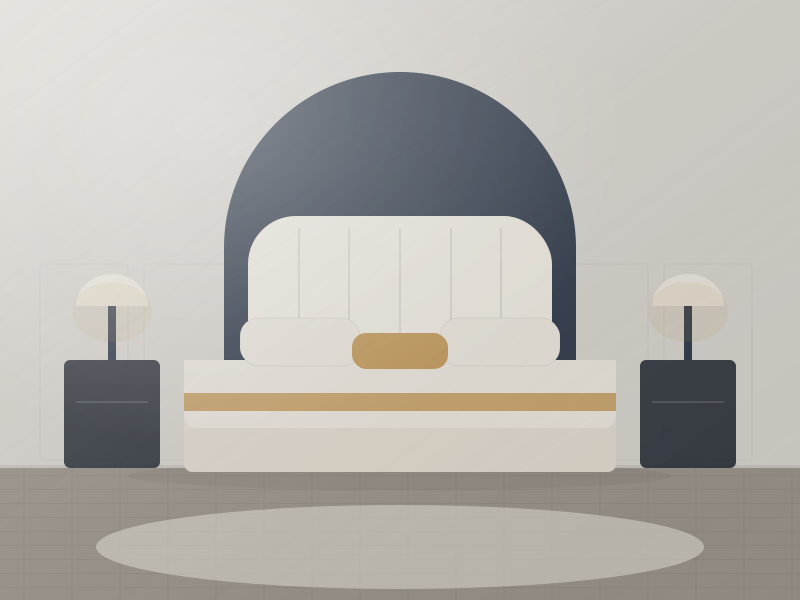
- Rentals and temporary homes. No wiring, no cord channel, no electrician, and the fixture leaves with you. A pair either side of a headboard gives a rental bedroom a layered look a ceiling light never will. If there is an outlet behind the nightstand, though, a plug-in fixture gives three to four times the light for the same price; compare in Plug-In Wall Sconces: Renter-Friendly Lighting Without an Electrician.
- Walls that cannot be wired. Brick, stone, tile, concrete, party walls, stairwells with no cavity, built-in cabinetry or paneling. Chasing a cable into any of these costs $300–800 per location and leaves scars; a battery fixture costs $60 and leaves none.
- Accent and mood light. Flanking a mirror, over art, on a bookshelf, in an alcove or niche. Here 100–200 lumens is exactly right and the lack of a cord is the point. A rechargeable picture light 12–16 in (30–40 cm) wide over a 30 in (76 cm) canvas is one of the best-value upgrades in a living room.
- Hospitality and short-term rentals. Hotels and holiday lets use puck-format sconces because housekeeping swaps pucks in seconds and no guest trips on a cord. Specify a spare puck for every three fixtures.
- Covered terraces. An IP44 or better rechargeable sconce on a covered porch or balcony gives evening light where no exterior circuit exists; bring it in for winter. The same logic applies to tabletop pieces, covered in Cordless Table Lamps: Rechargeable Lighting for Tables, Terraces & Rentals.
Where they do not make sense: as the only light in a room, as a bedside lamp for an hour's reading, as the primary vanity light or anywhere a fixture must simply work every evening unattended. Battery operated wall lights supplement a scheme, and the best battery operated wall sconces are the ones bought for that role.
#EFE7D8#C69C6D#F4EEE4#556052#2C2926On finish, choose brass, bronze or plaster over painted plastic; at eye level the material is what you see when the fixture is off, which for a battery sconce is most of the day.
How to mount without damaging walls
A battery sconce weighs 1–3 lb (0.5–1.4 kg) and carries no wiring, so it can hang from a rated removable adhesive strip or a single small screw, and both leave a wall you can restore in five minutes. The method depends on surface and weight.
- Weigh the fixture. Under 2 lb (0.9 kg) can go on adhesive; 2–4 lb (0.9–1.8 kg) wants a screw; over 4 lb wants a stud or a proper anchor.
- Clean and warm the wall. For adhesive mounting, wipe the spot with isopropyl alcohol and let it dry; strips bond poorly below about 50°F (10°C), so warm a cold wall with a hairdryer first.
- Use rated removable strips. Choose stretch-release picture-hanging strips rated for at least twice the fixture weight, apply them to the backplate, press for 30 seconds and wait an hour before hanging. They hold on painted drywall, plaster, tile and glass; not on limewash, wallpaper, brick or textured render.
- Prefer one screw on textured or papered walls. A single 1.5 in (4 cm) screw in a drywall anchor holds any battery sconce and leaves one hole that fills in a minute. On brick or tile, drill a mortar joint or grout line, where the hole disappears once filled.
- Consider magnets on steel. On a steel door or metal shelving, a magnetic puck-format sconce needs no fixing at all.
- Level and align. Use a level for pairs; a 0.25 in (6 mm) height difference between two sconces flanking a mirror shows from across the room. Mount at 60–66 in (152–168 cm) to center for general use, or with the shade bottom 30–36 in (76–91 cm) above the mattress at a bedside.
- Plan the charging routine. Position fixtures so the USB port or puck is reachable without a ladder, or so the light module lifts off the bracket.
To remove an adhesive strip, pull the tab slowly straight down along the wall, never outward. Fill screw holes, sand and touch up. These fixtures carry no mains wiring, so no electrical code applies, but use a certified charger and keep lithium packs away from heat.
Ready to add a pair? Our shop edit lists rechargeable and puck-format sconces that meet the brightness and color standards above, and for a property or a product line the sourcing desk can quote the same styles made to your specification with spare pucks and chargers included.
Free toolTile CalculatorWork out tiles, boxes, grout and adhesive with the right wastage.Shop & source the look
Buy it today — or have it made
Retail links are affiliate links: we may earn a commission at no extra cost to you (disclosure). “Get it made” sends the item to our sourcing desk for factory quotes in custom sizes and finishes.
Frequently asked questions
How long do batteries last?
A rechargeable sconce runs 6–20 hours per charge at full brightness and 20–60 hours at its lowest setting, so at two hours a night on a medium setting expect to charge every one to two weeks. Disposable-cell fixtures give 30–100 hours per set of alkaline AAs at low output, roughly one to three months of evening use. Packs last 500–1,000 charge cycles.
Are they bright enough to read?
For a short read, yes; for an hour, no. Most battery sconces deliver 100–200 lumens, about a dim bedside lamp, which is comfortable for twenty or thirty minutes of reading at 30 in (76 cm) from the page. Regular readers should use a plug-in or hardwired swing-arm at 450–800 lumens and keep battery fixtures for accent light.
Do battery operated wall sconces need to be hardwired, or can they be plug-in?
Neither. They run entirely on an internal battery or a removable puck, which is the point: no wiring, no cord, no outlet. Some models offer an optional USB cable for permanent power near an outlet. If an outlet is within 6–8 ft (1.8–2.4 m), a plug-in sconce is usually the better buy because it gives three to four times the brightness for a similar price.
What's the real difference between the main types of battery operated wall sconces?
The difference is where the power lives: disposable cells give low output and long life, a sealed rechargeable pack gives the highest brightness with 6–20 hours per charge, and a removable puck gives moderate brightness that you can swap instantly for a charged spare. Choose rechargeable for a bedside pair, puck format for rentals and hotels, and disposable for occasional accent light.
What should you look for when choosing battery operated sconces?
Look for 100–200 lumens with stepless dimming, a 2700K or dim-to-warm LED at CRI 90 or higher, a frosted diffuser, a run time of at least 8 hours at the setting you will use, USB-C charging, a radio remote that groups pairs, a countdown timer and a solid brass, plaster or glass body. Avoid 4000K diodes, on/off-only switching and proprietary cables.
Some links may be affiliate links. Regulations and specifications change — always confirm with suppliers and qualified professionals.