Sustainable Home Goods: Eco Friendly Decor That Really Lasts
Sustainable home goods are decor and furnishings made from renewable, recycled or reclaimed materials, built to last 10+ years, free of harmful finishes and made under fair conditions. Here are 12 categories, the materials and labels that count, typical prices and a 4-question greenwashing test.
Part of our guide: Sustainable Interior Design: Principles, Materials and Costs
Key takeaways
- A sustainable home good passes four tests: what it is made of, how long it will last, what finishes are on it and who made it; if a product answers only one, it is marketing
- Natural materials home decor in wool, linen, jute, cork, stoneware, solid timber and recycled glass covers 90 percent of what a room needs
- Buy fewer, heavier, plainer objects: a 10-year-plus lifespan does more for the planet than any eco label
- Secondhand and vintage are the most sustainable home accessories you can buy, at a third to a tenth of the price of new
- Watch for the greenwashing signals: 'eco' with no material listed, a recycled claim with no percentage, and bamboo or cotton with no word on the binder or dye
Sustainable home goods are textiles, ceramics, lighting, storage and decorative objects made from renewable, recycled or reclaimed materials, built to last 10 years or more, finished without harmful chemistry and produced under fair conditions. In practice that means wool, linen, jute, cork, solid timber, stoneware, recycled glass and metal, bought in smaller quantities. Here are 12 categories of eco friendly home decor, typical prices and how to spot greenwashing.
Environmentally friendly decor is the easiest part of a sustainable home to get wrong, because it is the part most heavily marketed. A cushion labeled eco may be polyester filled with polyester, dyed in an unregulated factory, shipped across the world and designed to be replaced next season. This article is the buying companion to our sustainable interior design guide, which covers the principles, surfaces and systems; here we deal with the objects.
- The four tests: material, lifespan, finish, maker. A sustainable product answers all four.
- Core materials: wool, linen, hemp, jute, sisal, cork, solid timber, rattan, stoneware, recycled glass, brass and steel.
- Lifespan target: 10+ years for textiles and lighting, 20+ for furniture and ceramics, forever for secondhand.
- Price reality: sustainable goods cost 20–60 percent more than fast decor per piece, and less per year of use.
- Best value: secondhand, vintage and reclaimed, which carry zero new manufacturing impact.
What makes home decor actually sustainable?
Home decor is sustainable when it scores on four things at once: the material it is made from, the number of years it will stay in use, the finishes and treatments applied to it, and the conditions under which it was made. Most products marketed as eco friendly home goods address only the first, and often only partly. The four-question test we use:
- What is it made of, exactly? A real answer names the fiber or material and its share: "100 percent wool, cotton backing", "solid oak, hardwax oil", "70 percent recycled glass". A vague answer, "natural", "eco", "sustainable materials", is a red flag.
- How long will it last, and can it be repaired? A wool throw lasts 15–20 years; a polyester fleece pills in two. A stoneware bowl lasts a lifetime; a painted resin one chips in a year. Ask whether a part can be replaced.
- What is on it? Dyes, water-repellent or stain-resistant coatings, flame retardants, lacquers and glues. Natural, undyed or low-impact dyed, oiled rather than lacquered and untreated are the answers you want.
- Who made it, and where? A named workshop, a region, a certification or an audited factory. Ethical home decor is traceable; the rest is anonymous.
A product that passes all four will usually be heavier, plainer and more expensive than its fast-decor equivalent, and that is the point. The most sustainable decor idea is to buy a third as many things and keep them three times as long.
Which materials should sustainable home accessories be made from?
Sustainable home accessories should be made from renewable fibers and plant materials (wool, linen, hemp, jute, sisal, seagrass, cork, rattan, solid timber), inert minerals (stoneware, porcelain, stone, recycled glass) and long-lived metals (brass, bronze, steel, aluminum), with the material used on its own rather than bonded to plastics. The table ranks the common ones.
| Material | Renewable / recycled | Typical lifespan | End of life | Best used for | Watch for |
|---|---|---|---|---|---|
| Wool | Renewable | 15–30 years | Biodegrades | Rugs, throws, cushions, upholstery | Moth-proofing chemistry; chrome-dyed |
| Linen / hemp | Renewable, low water | 10–20 years | Biodegrades | Curtains, bedding, cushions, table linen | Polyester blends; wrinkle-free coatings |
| Organic cotton | Renewable | 5–15 years | Biodegrades | Bedding, towels | Conventional cotton uses heavy pesticide and water |
| Jute / sisal / seagrass | Renewable, fast-growing | 5–10 years | Biodegrades | Rugs, baskets | Latex vs synthetic backing |
| Cork | Renewable, bark regrows | 10–20 years | Biodegrades or recycles | Trivets, boards, wall tiles, stools | Binder resin type |
| Solid timber | Renewable if certified | 30–100 years | Reuse, recycle, biodegrades | Furniture, boards, frames, bowls | Veneered MDF sold as wood; tropical species without certificate |
| Rattan / cane / bamboo | Renewable, fast-growing | 10–20 years | Biodegrades | Lampshades, baskets, chairs | Bamboo products bonded with formaldehyde resins |
| Stoneware / porcelain | Mineral, abundant | Lifetime | Inert; crushable as aggregate | Tableware, vases, lamps | Lead or cadmium glazes on imports |
| Recycled glass | Recycled | Lifetime | Recycles again | Vases, glassware, lamp bases | Claims without a percentage |
| Brass / steel / aluminum | Highly recyclable | Lifetime | Recycles at full value | Lighting, hardware, frames | Lacquered finishes that cannot be renewed |
| Recycled polyester | Recycled | 5–10 years | Rarely recycled again | Outdoor cushions, rugs | Sheds microfibers; use only where natural fibers fail |
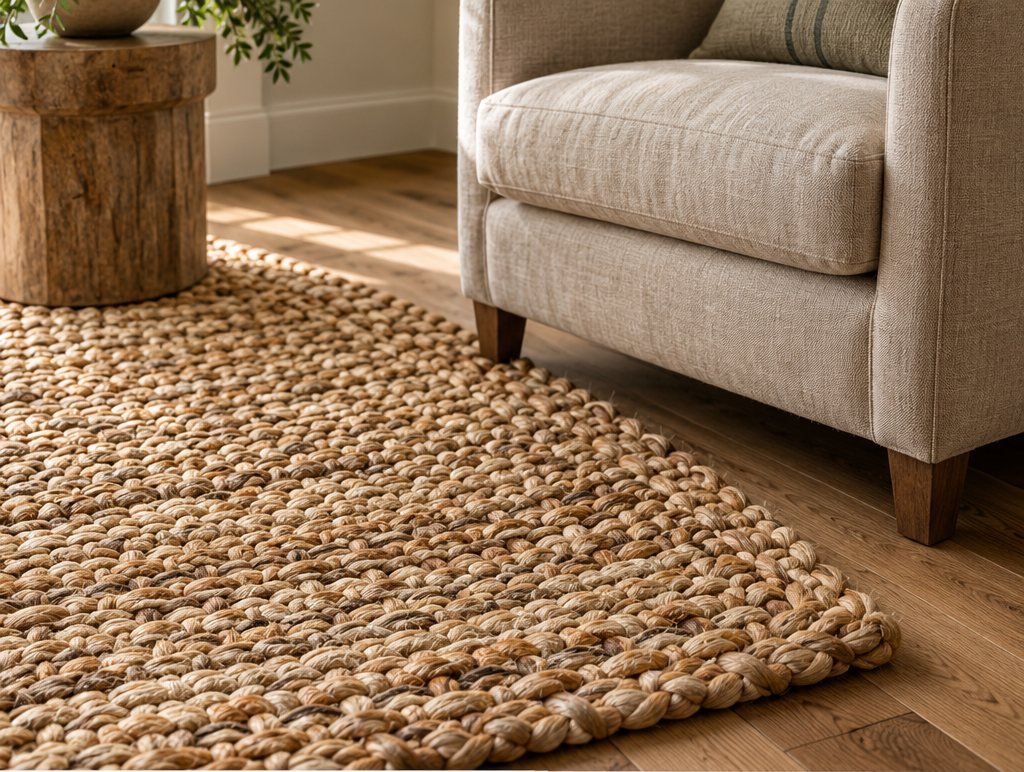
Natural materials home decor is not automatically sustainable: a tropical hardwood bowl with no certificate, a cotton throw dyed in an unregulated mill or a sisal rug with a PVC backing all fail on at least one test. The jute rug guide and wool rug guide show what the good versions look like in the largest textile category, and our trending materials guide covers rattan and other natural surfaces in a design context.
What eco friendly home furnishings are worth buying?
The eco friendly home furnishings worth buying are the ones with the longest lives and the biggest footprints: rugs, curtains, bedding, sofa covers and lighting, because a good one of each is used daily for a decade or more. Decorative objects matter less by weight and more by number, which is why fewer is the rule there. Twelve categories, with what to look for and what they cost:
| Category | Look for | Avoid | Typical price (sustainable) |
|---|---|---|---|
| Rugs | Wool, jute or sisal with cotton or latex backing; undyed or low-impact dye | Polypropylene, PVC backing, "washable" synthetics for main rooms | $400–1,500 for 6 × 9 ft (183 × 274 cm) |
| Curtains | Linen, hemp or wool, cotton lining, washable | Polyester with wrinkle-free or flame-retardant finish | $150–500 per panel |
| Bedding | Linen, organic cotton, hemp; wool or down duvets | Microfiber, polyester fill, easy-care coatings | $200–500 per set |
| Cushions and throws | Wool, linen, kapok or feather fill, removable covers | Polyester fill in a polyester cover | $40–150 each |
| Lighting | Brass, steel, ceramic or timber bases; linen, paper or rattan shades; replaceable LED bulb | Integrated non-replaceable LED; plastic shades | $120–600 per lamp |
| Tableware | Stoneware, porcelain, recycled glass, stainless steel | Melamine, bamboo-fiber composites bonded with resin | $15–60 per piece |
| Storage and baskets | Seagrass, rattan, jute, solid timber, steel | Plastic bins, veneered MDF boxes | $30–200 |
| Mirrors and frames | Solid timber or metal, glass; vintage | Resin or foam-core molded frames | $100–600 |
| Vases and objects | Stoneware, recycled glass, stone, timber; secondhand | Painted resin, "marble-effect" plastic | $30–200 |
| Candles and scent | Beeswax, soy or rapeseed wax, cotton wicks, refillable | Paraffin, synthetic fragrance | $20–60 |
| Bath textiles | Organic cotton or linen, 500–700 gsm towels | Microfiber, polyester blends | $25–60 per towel |
| Planters | Terracotta, stoneware, reclaimed timber | Plastic, foam composite | $15–150 |
Terracotta deserves a note: it is the cheapest, most honest planter material there is, lasts decades if it does not freeze, and our terracotta pots guide covers sizes and care. For curtains and rugs, size matters as much as material, because a curtain that is too short is replaced sooner; the curtain size guide and rug size calculator get the first purchase right.
How do you spot greenwashing in eco friendly home decor?
Greenwashing in eco friendly home decor shows up as vague material claims, missing percentages, borrowed natural imagery and single-attribute labels; the quickest filter is to look for the fiber content tag and the country of origin, which are legally required and hard to fake. Specific red flags:
- "Eco", "green", "conscious" or "natural" with no material named. These words are unregulated.
- "Recycled" or "organic" with no percentage. A product can be 5 percent recycled and claim the word.
- Bamboo or cotton with no mention of binder or dye. Bamboo textiles are usually viscose made with solvents; bamboo boards are often bonded with formaldehyde resin.
- A leaf logo that is not a certification. Real certifications have a name, a standard number and a verifying body.
- A single sustainable feature on an otherwise standard product, such as a recycled-plastic fill in a polyester cushion.
- Seasonal collections. A product line that changes every three months is designed for replacement, however it is made.
- Prices that are too low. A "wool" rug at $80 for 5 × 8 ft (152 × 244 cm) is not wool, or not fairly made, or both.
The labels worth trusting are the same ones listed in the parent guide: forest chain-of-custody for timber, organic or low-chemical textile standards covering dyeing, indoor-emission labels for finishes and a published supplier code for overseas production. When buying in volume for a project, the sourcing guide explains how to request certificates and audit reports directly from a factory.
Is secondhand the most sustainable home decor?
Yes. Secondhand, vintage and reclaimed pieces carry no new manufacturing impact, are often better made than new equivalents and cost a third to a tenth of the price, which makes them the most sustainable home decor available by every measure. A 1960s teak sideboard, a hand-knotted wool rug from 40 years ago, a cast brass lamp rewired for $60 or a set of stoneware plates from a closed restaurant all outperform anything new on carbon, durability and price.
What to buy secondhand, in order of value:
- Solid timber case furniture: sideboards, chests, dining tables, desks. Check joints, drawer runners and veneer edges; refinish with hardwax oil. Our mid-century dining table and solid wood desk guides show what to inspect.
- Wool rugs: hand-knotted or flatweave; check for moth damage and dry rot in the foundation; have them professionally washed for $3–6 per sq ft.
- Lighting: brass, ceramic and glass lamps, rewired by an electrician; replace the shade with new linen.
- Ceramics and glass: stoneware, porcelain, pressed and blown glass; check for crazing on anything used for food.
- Mirrors and frames: solid timber or gilt frames; re-silver or replace the glass if needed.
- Upholstered seating with hardwood frames: reupholster in wool or linen; see custom upholstery for costs, typically $1,500–3,500 for a sofa.
Avoid secondhand mattresses, particleboard furniture (it does not survive a move), and anything with a heavily lacquered or painted finish you cannot identify.
What are the best sustainable decor ideas for each room?
The best sustainable decor ideas put one or two long-lived natural objects in each room and remove the rest, so the room reads as calm and the objects earn their place. Room by room:
Living room
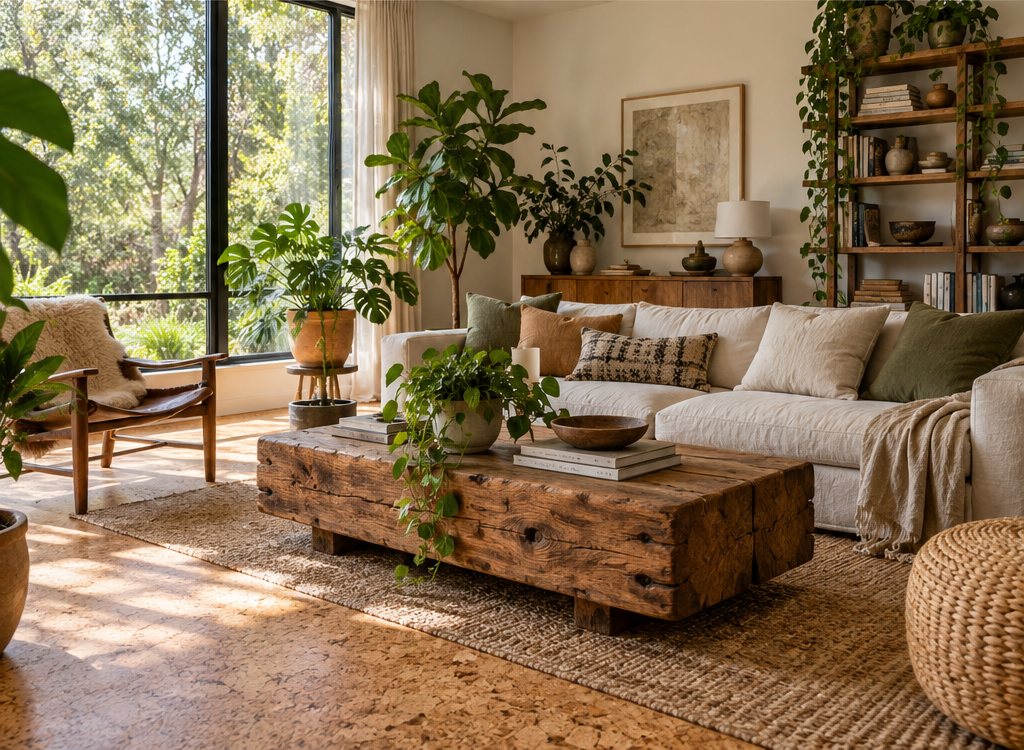
One large wool or jute rug with a felt pad, linen curtains to the floor, a wool throw and two linen cushions on the sofa, one ceramic or brass table lamp per seat, a solid-timber or stone coffee table, and one piece of art rather than a wall of prints. This is the furniture logic of warm minimalism and Japandi style, both of which are sustainable by default because they are sparse.
Bedroom
Linen or organic cotton bedding, a wool blanket, a secondhand solid-wood chest, rattan or paper pendant, lined linen curtains and a small jute rug on each side of the bed. Nothing on the surfaces but a lamp and a book.
Kitchen and dining
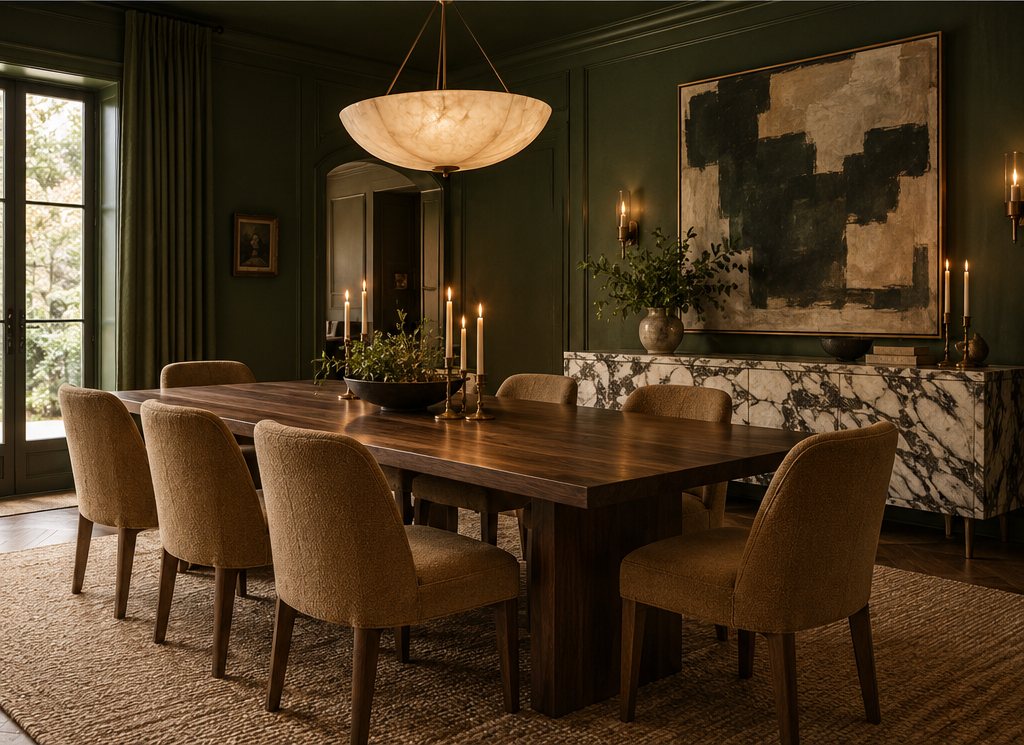
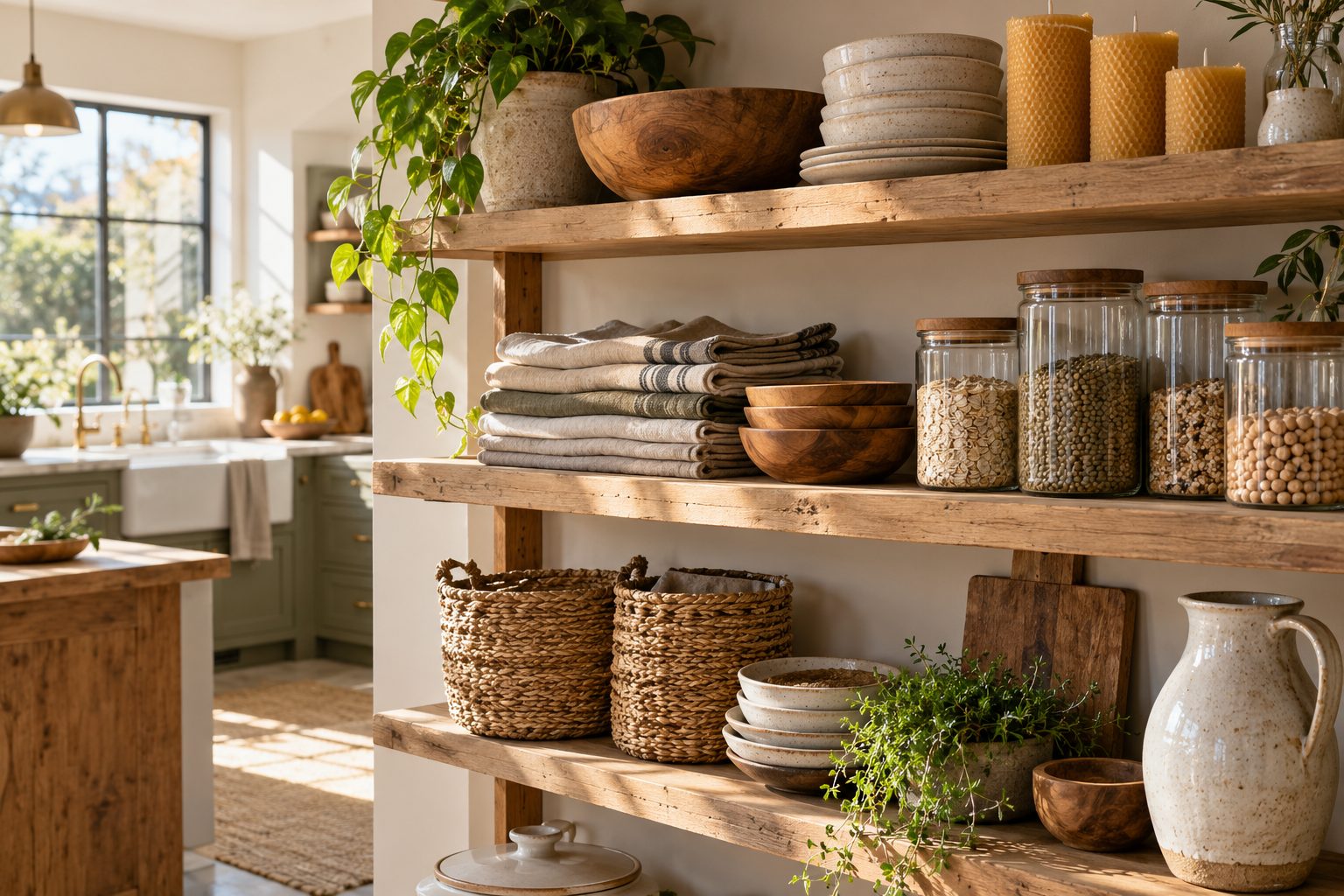
Stoneware plates, glass storage jars, timber boards, linen napkins instead of paper, a cork trivet, a brass or ceramic pendant over the table and a secondhand table and chairs. Our dining room trends 2027 report shows how the natural tableware look is being styled.
Bathroom
Organic cotton or linen towels, a teak or oak bath mat, refillable soap in glass or stoneware dispensers, a seagrass basket, and a solid wood vanity stool; see the teak shower bench guide for a durable seat.
Entry and outdoor
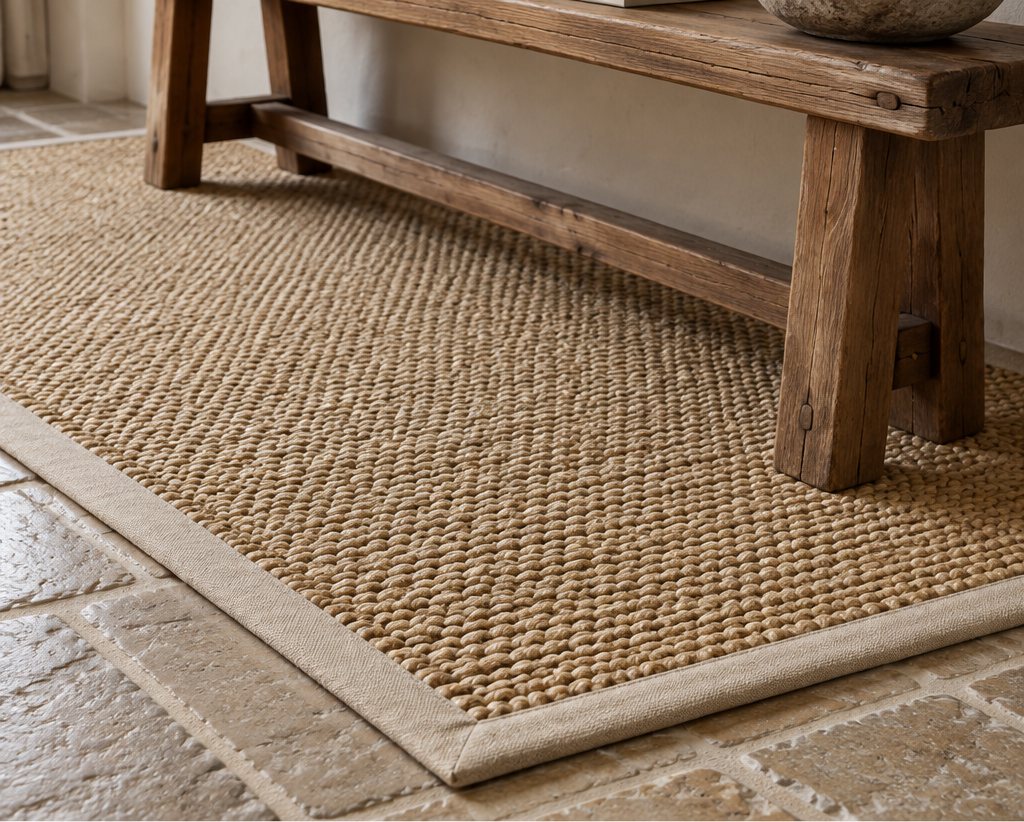
A coir or jute doormat, hooks in solid brass, a timber bench, terracotta planters and a wool runner; outdoors, teak or certified hardwood furniture with removable linen or recycled-polyester covers, covered in teak outdoor furniture and outdoor cushion covers.
How much do sustainable home goods cost compared with fast decor?
Sustainable home goods cost 20–60 percent more per piece than fast decor and 30–70 percent less per year of use, because they last three to ten times longer. A $600 wool rug that serves 20 years costs $30 a year; a $150 polypropylene rug replaced every three years costs $50 a year and sends six rugs to landfill. The same arithmetic applies to curtains, bedding, lighting and tableware. Where the premium is hardest to justify is in purely decorative objects, which is why the answer there is secondhand or fewer.
A realistic budget for furnishing the soft goods and accessories of a 1,000 sq ft (93 m²) apartment sustainably runs $4,000–9,000: roughly $1,500–3,000 for rugs, $1,000–2,000 for curtains, $500–1,000 for bedding and bath, $600–1,500 for lamps, and $400–1,500 for tableware, baskets and objects, with vintage pieces pulling the total down.
What is the checklist for buying ethical home decor?
Before buying any piece of ethical home decor, run it through these eight checks; a product that fails more than two is not sustainable, whatever the label says.
- Material named and quantified: "100 percent linen", "solid ash", "80 percent recycled glass".
- Single material or easily separated materials, so it can be recycled or composted.
- No unnecessary finishes: no stain-repellent, flame-retardant or wrinkle-free treatments; oiled rather than lacquered timber.
- Replaceable parts: covers, bulbs, shades, cords, cushions.
- A named origin: country, region or workshop, plus a certification or audit if made in a factory.
- Weight and construction that suggest a 10-year life: stitched not glued, welded not screwed through plastic, glazed not painted.
- A plain, durable form you will still want in a decade; test it against the style quiz result rather than against a trend.
- Price that reflects the above. Fair labor and real materials cost money; if it is cheap, something was cut.
Designers and buyers furnishing a hotel, rental portfolio or retail line with sustainable home accessories can use our sourcing desk to request factory quotes against a written material and certification spec, with samples checked before production.
Free toolTile CalculatorWork out tiles, boxes, grout and adhesive with the right wastage.Shop & source the look
Buy it today — or have it made
Retail links are affiliate links: we may earn a commission at no extra cost to you (disclosure). “Get it made” sends the item to our sourcing desk for factory quotes in custom sizes and finishes.
Frequently asked questions
What are sustainable home goods?
Sustainable home goods are decor and furnishings made from renewable, recycled or reclaimed materials such as wool, linen, jute, cork, solid timber, stoneware and recycled glass, built to last 10 years or more, finished without harmful treatments and made under fair, traceable conditions. A product counts only when it meets all four tests, not just the material one.
What is the most eco friendly home decor?
Secondhand and vintage pieces are the most eco friendly, because they carry no new manufacturing impact and cost a third to a tenth of new. Among new goods, undyed wool rugs and throws, linen curtains and bedding, stoneware tableware, cork, rattan and seagrass baskets, solid-timber furniture with oiled finishes and brass or ceramic lamps with replaceable bulbs score best.
How can I tell if home decor is really sustainable?
Check the fiber content tag and country of origin, which are required by law; look for a named material with a percentage, a recognized certification with a standard number rather than a leaf logo, no stain-repellent or flame-retardant treatments, replaceable parts and a price that reflects real materials and fair labor. Vague words like eco or natural with no material named are the main red flag.
Are natural materials always sustainable?
No. Tropical hardwood without a forest certificate, conventional cotton dyed in an unregulated mill, a sisal rug on a PVC backing or a bamboo textile made with solvent-based viscose are all natural in origin and poor on sustainability. Natural materials become sustainable when they are certified or reclaimed, undyed or low-impact dyed, untreated and used without plastic bonding.
Is sustainable home decor more expensive?
Per piece, yes, by 20–60 percent; per year of use, no. A $600 wool rug lasting 20 years costs $30 a year against $50 a year for a $150 synthetic rug replaced every three years. Furnishing the soft goods and accessories of a 1,000 sq ft apartment sustainably runs about $4,000–9,000, less if vintage pieces replace new ones.
What eco friendly home accessories should I buy first?
Start with the items used daily for the longest time: a wool or jute rug, linen or wool curtains, linen or organic cotton bedding, and one good lamp per seat with a replaceable LED bulb. These carry most of a room's material weight and last 10–20 years. Decorative objects come last and should be few, secondhand where possible.
What are some sustainable decor ideas for a living room?
One large wool rug on a felt pad, linen curtains hung at the ceiling, a wool throw and two linen cushions with removable covers, a ceramic or brass lamp per seat, a solid-timber or stone coffee table, a secondhand sideboard, one piece of art and two plants in terracotta. Remove the rest; the restraint is what makes it both sustainable and calm.
Some links may be affiliate links. Regulations and specifications change — always confirm with suppliers and qualified professionals.