Mid-Century Modern Dining Tables: Shapes, Woods & Styling
What makes a mid century modern dining table genuinely mid-century, round versus oval versus rectangular, walnut against teak and oak, how to pair chairs, and the checks that separate a good vintage find from a bad one.
Key takeaways
- Mid-century means a thin top 0.75–1.25 in thick on tapered splayed legs or a pedestal, in walnut, teak or oak with no ornament
- Round pedestals suit rooms under 12 ft square; ovals seat six to eight in a narrow room; rectangles extend
- Walnut for depth of color, teak for warmth and moisture resistance, oak for lightness and price; veneer is period-correct
- Pair chairs by seat height (17.5–18.5 in) and one shared constant, then check veneer, wobble and leaves on any vintage piece
A mid century modern dining table is defined by a thin, unornamented top on splayed tapered legs or a single pedestal, in walnut, teak or oak with visible grain and an oil or lacquer finish. The look is proportion, not decoration: a top 0.75–1.25 in (19–32 mm) thick, legs tapering to about 1 in (2.5 cm) at the floor, and a height of 28.5–29.5 in (72–75 cm).
What makes a dining table "mid-century"
A dining table is mid-century when its structure is the decoration: a slim top, an honest joint and a base that either splays outward in tapered legs or stands on one sculptural pedestal. The style dates from roughly 1945 to 1970, when new plywood, veneer and lamination techniques let makers build light, strong furniture with no carving and no bulk.
- At a glance: tops 0.75–1.25 in (19–32 mm) thick with a chamfered or knife edge; height 28.5–29.5 in (72–75 cm).
- Tapered legs: round or square-section legs that narrow toward the floor, usually splayed 5–15 degrees and often fixed through a brass or steel bracket to the apron.
- Tulip or pedestal base: a single cast or turned column flaring to a disc foot, or a pair of trestle pedestals, that frees the perimeter of legs.
- Woods: walnut and teak dominate, oak and rosewood follow; grain runs the length of the top and veneers are book-matched.
- Extension: many originals hide a butterfly leaf inside the top; the mechanism is usually the giveaway of quality.
The vocabulary is small and precise. An mcm dining table has no turned legs, no cabriole curves, no moldings and no distressed finish; if a listing shows any of those, it is farmhouse or transitional wearing a walnut stain. The full history and the rest of the furniture language, from credenzas to lounge chairs, is in our mid century modern guide.
Round vs oval vs rectangular
Choose round for rooms under 12 ft (3.7 m) square, oval for a narrow room that has to seat six or more, and rectangular when the room is long and you want a table that can extend. The mid-century catalog offers all three, and the shape decides the base.
| Shape | Common sizes | Seats | Room needed (36 in clearance) | Typical base |
|---|---|---|---|---|
| Round | 42 in (107 cm) | 4 | 9 × 9 ft (2.7 × 2.7 m) | Tulip pedestal or 4 tapered legs |
| Round | 48–54 in (122–137 cm) | 5–6 | 10 × 10 ft (3 × 3 m) | Pedestal |
| Oval | 72–84 × 40–44 in (183–213 × 102–112 cm) | 6–8 | 12 × 9.5 ft (3.7 × 2.9 m) | Pedestal, trestle or splayed legs |
| Rectangular | 60–72 × 36 in (152–183 × 91 cm) | 6 | 11 × 9 ft (3.4 × 2.7 m) | 4 tapered legs |
| Rectangular | 84–96 × 38–42 in (213–244 × 97–107 cm) | 8 | 13 × 9.5 ft (4 × 2.9 m) | Tapered legs or twin pedestals |
| Surfboard / boat | 78–90 × 36–42 in (198–229 × 91–107 cm) | 6–8 | 12.5 × 9.5 ft (3.8 × 2.9 m) | Splayed legs |
Round pedestal tables are the most forgiving mid century modern dining table for a kitchen, and the best mid century modern kitchen table because nobody sits astride a leg and a 42 in (107 cm) round fits a nook that a rectangle cannot. Ovals and the softened surfboard top, which is a rectangle with curved ends, are the most recognizable mid-century silhouettes and seat one more person per side than a rectangle of the same length because the curve gives elbows room at the corners. A rectangular mid century dining table is the workhorse and the one that usually extends; if seating changes from night to night, read Extendable Dining Tables: Types, Sizes & How to Choose for the mechanisms.
Whichever shape you pick, allow 24 in (61 cm) of table edge per person and 36 in (90 cm) from the edge to the wall or sideboard to pull a chair out, 42–48 in (107–122 cm) on a side that people walk past.
Walnut vs teak vs oak
Walnut gives the deepest color and the most refined grain, teak the warmest tone and the best resistance to moisture, and oak the lightest look and the lowest price; all three were used in the period and all three are correct. The choice is about the room's other woods and your appetite for maintenance.
| Wood | Color | Hardness (Janka) | Finish | Price (solid, 72 in table) | Watch for |
|---|---|---|---|---|---|
| American black walnut | Chocolate to purple-brown, lightens with age | 1,010 lbf | Oil or matte lacquer | $1,800–4,500 | Sapwood streaks; UV fading near windows |
| Teak | Golden honey, darkens to amber | 1,070 lbf | Oil | $2,000–5,000 (plantation) | Sourcing; old-growth is restricted |
| White oak | Pale straw to light brown | 1,360 lbf | Oil, hardwax or lacquer | $1,200–3,000 | Yellowing under some lacquers; heavier look |
| Rosewood (vintage only) | Deep red-brown, black streaks | 2,700+ lbf | Lacquer | Vintage market | Trade restrictions; usually veneer |
Solid versus veneer is not a quality question on a mid century modern dining table. Period makers used walnut or teak veneer over a stable core precisely so a 40 in (102 cm) wide top would not cup, and a good veneer of 0.6–1 mm on plywood is more stable than a solid plank top in a centrally heated room. Solid tops are for those who want to sand out damage in twenty years; specify a top of at least 1 in (25 mm) with breadboard ends or steel C-channels underneath to control movement.
#5A3A2A#B8834A#C8B08C#E9E1D3#6F7A63Finish decides the daily experience. An oil or hardwax oil finish looks and feels right, and a ring or scratch is spot-repaired in ten minutes with fine paper and a wipe of oil; it needs re-oiling once or twice a year. A matte lacquer resists wine and water better and never needs feeding, but damage means refinishing the whole top. For a walnut table in a room with an oak floor, keep the tones apart in value, dark table on a pale floor, and let a rug bridge them; how to mix wood tones covers the rules.
Pairing chairs: matching vs mixing
A matched mid century modern dining set is the safer purchase and the harder look to make interesting; mixed chairs of the same seat height around a period table are how designers actually do it. Whichever route, four dimensions govern the pairing.
- Seat height 17.5–18.5 in (44–47 cm) for a 29 in (74 cm) table, giving 10–12 in (25–30 cm) of thigh clearance to the underside of the top or apron.
- Apron clearance: an mcm table with a deep apron of 3–4 in (8–10 cm) needs armless chairs or arms lower than 25 in (64 cm) so they tuck under.
- Chair width 18–22 in (46–56 cm) so six chairs fit a 72 in (183 cm) table with 4–6 in (10–15 cm) between them.
- Weight: visually light chairs, bentwood, molded shell, spindle back or slim upholstered frames, keep the table's thin top from looking overloaded.
Three pairings work reliably around a mid century modern dining table. Molded shell chairs on wire or dowel bases against a walnut pedestal, the classic. Spindle-back or slat-back wooden chairs in the same species as the table, quieter and more Scandinavian. Or upholstered side chairs in a wool or bouclé in an olive, rust or oat tone against a rectangular teak table, which is where the mid century modern dining room set is heading for 2027: softer, more tactile and less museum-perfect. Mixing is easiest if you keep two constants, the seat height and either the material or the color, and vary everything else. Bench seating on one side of a rectangular table, at 17–18 in (43–46 cm) high, is period-correct and saves 12 in (30 cm) of pull-out space on that side.
Mid-century dining room ideas
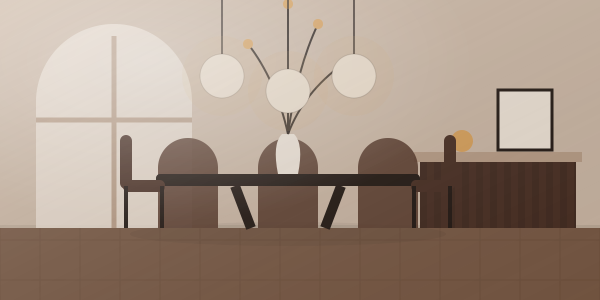
A mid century modern dining room works when the table is the darkest wood in the room, the lighting hangs low and the rest stays quiet and textured. The mistake we see most often is buying every object in walnut so the room reads as a furniture showroom.
- Hang one pendant low. A single shade 18–30 in (45–75 cm) across, bottom 30–34 in (76–86 cm) above the top, in opal glass, paper, spun metal or alabaster-effect resin, at 2700K and CRI 90 or higher. Over an oval or rectangle longer than 72 in (183 cm), use a linear fixture about half the table length or two pendants 30–36 in (76–91 cm) apart.
- Size the rug to the pulled-out chairs. Add 24–30 in (61–76 cm) to each side of the tabletop: a 72 × 36 in (183 × 91 cm) table wants a rug of at least 9 × 6.5 ft (2.7 × 2 m), so 8 × 10 ft (244 × 305 cm) in practice. Flatweave wool or a low-pile is easier under chair legs than a shag. The full method is in Dining Room Rugs: Size, Shape & What Works Under a Table.
- One long low piece. A mid century modern table wants a companion: a credenza or sideboard 60–72 in (152–183 cm) wide and 28–32 in (71–81 cm) high on the longest wall, with 36 in (90 cm) between it and the pulled-out chairs.
- Walls in warm plaster tones. Off-white with a light reflectance value of 70–80, or a single wall in olive, ochre or terracotta. Walnut turns muddy against gray.
- Curves for 2027. A round or oval top, a drum pendant and rounded chair backs are how the style is being refreshed; see dining room trends 2027 for the direction and lighting trends 2027 for the fixtures.
Vintage vs new mid century modern dining table: what to check
A well-made vintage midcentury dining table is a better long-term buy than a cheap new copy, and a well-made new solid-wood table beats a tired vintage veneer; the deciding factors are the condition of the top and the mechanism. Run these checks on either.
- Press the top. Bubbled, lifting or chipped veneer at the edges means water damage; small lifts can be re-glued, delamination across the field cannot. Look along the surface against a window for ripples.
- Rock it. Grip diagonally opposite corners and push. A quarter inch (6 mm) of wobble is loose bracket bolts and fixable; more suggests cracked joints or a split apron.
- Open the extension. Butterfly and draw leaves should glide on wooden or metal runners without lifting the top. Missing leaves cost 20–30 percent of the table's value to replace and rarely match.
- Read the underside. Screw holes that do not match any hardware, mismatched stains or a fresh dark finish over lighter wood at the edges point to repairs or a re-stained lesser wood sold as walnut.
- Sniff and touch. Musty smell means damp storage; a sticky finish means old oil or silicone polish that will need stripping before you can refinish.
- On a new table, check the spec. Kiln-dried solid timber or a veneer of 0.6 mm or more on a hardwood plywood core, not MDF; mortise-and-tenon or bolted steel brackets at the legs, not screws into end grain; and a stated finish.
Price the two honestly. A restored vintage walnut table of 72 in (183 cm) commonly sells for 1,200–3,500 USD; a new solid walnut table of the same size runs 1,800–4,500 USD, and a walnut-veneer version 600–1,500 USD. Made to order from a hardwood furniture factory, a solid walnut or white oak table in this style is typically quoted at 450–1,200 USD FOB with a 10–14 week lead time.
If you want the look without the vintage hunt, the solid walnut dining table in our quiet luxury dining room edit is the piece we would buy; find it with the chairs, pendant and rug that suit it in the shop, or ask the sourcing desk to quote it in your size and species.
Free toolRug Size CalculatorFind the right rug size for your room and furniture.Shop & source the look
Buy it today — or have it made
Retail links are affiliate links: we may earn a commission at no extra cost to you (disclosure). “Get it made” sends the item to our sourcing desk for factory quotes in custom sizes and finishes.
Frequently asked questions
What's the real difference between the main types of mid century modern dining table?
The difference is the base: tapered splayed legs give a light, airy rectangle or surfboard top, while a tulip or trestle pedestal frees the perimeter for round and oval tops and lets more chairs tuck in. Pick legs for a long room that may extend, and a pedestal for a square room or a kitchen nook.
What should you look for when choosing mid century dining table?
Look for a top 0.75–1.25 in (19–32 mm) thick in walnut, teak or oak, legs joined with bolted brackets or mortise-and-tenon rather than screws, and a stated oil or lacquer finish. Then confirm the size leaves 36 in (90 cm) clearance to walls and 24 in (61 cm) of edge per seat.
What should you look for when choosing mid century modern dining set?
Match the chairs to the table by seat height, 17.5–18.5 in (44–47 cm) for a 29 in table, and by apron clearance so arms tuck under. Choose visually light chairs in the same species or one shared color, and check that six chairs at 18–22 in wide fit the table length with 4–6 in between them.
What should you look for when choosing mcm dining table?
Judge the top first: on a vintage table, look for lifting veneer, water rings and wobble; on a new one, for kiln-dried solid wood or a 0.6 mm-plus veneer on plywood, not MDF. Then test any extension leaf, because a smooth, complete mechanism is the surest sign of a well-made piece.
What should you look for when choosing mid century modern dining room set?
Buy the table for the room's dimensions and the chairs for comfort, then add one long low credenza and a single low pendant. Keep the table the darkest wood in the room, size the rug 24–30 in beyond the tabletop on every side and avoid matching every piece in the same walnut.
Some links may be affiliate links. Regulations and specifications change — always confirm with suppliers and qualified professionals.