Patio Shade Ideas: Shade Sails, Pergola Covers, Canopies and Costs
The best patio shade ideas are a tensioned shade sail for $150–1,500, a covered pergola for $3,000–15,000 or a retractable awning. Here is how each one compares on UV block, rain, wind and cost.
Part of our guide: Outdoor Living Trends 2027: Living Outdoor Space Ideas and Specs
Key takeaways
- A tensioned shade sail is the cheapest real shade, but it is only as good as its posts and fixings, which carry hundreds of pounds of load in wind
- Knitted HDPE sails block roughly 85–98 percent of UV and let hot air escape; only coated, waterproof fabric keeps rain off
- A pergola cover, fixed or retractable, is the step up when you want shade that stays put and keeps light rain off a dining area
- Plan shade over the hours you actually use the patio and pitch every cover at least 1 in 5 so water runs off
The best patio shade ideas, in order of cost, are an umbrella ($100–1,500), a tensioned shade sail ($150–1,500 DIY, $1,500–6,000 installed), a freestanding shade canopy ($300–3,000), a retractable awning ($1,500–8,000) and a pergola with a fixed or retractable cover ($3,000–15,000, more for louvered roofs). Sails win on price and airflow; covered pergolas win on permanence and rain.
- UV block: knitted HDPE shade fabric stops roughly 85–98 percent of UV, depending on density and color.
- Rain: only coated or waterproof fabric, polycarbonate or a solid roof keeps water off.
- Size: plan shade 2–3 ft (60–90 cm) beyond the furniture on the sun side, because the shadow moves.
- Load: a shade sail can pull several hundred pounds per corner in a gust, so posts matter more than fabric.
- Prices: all figures here are typical US 2026 ranges, before permits.
Shade is now the first thing we plan on any terrace, ahead of furniture, because it decides when the space is usable at all. This guide sits under our outdoor living trends 2027 pillar, which covers the wider shift toward outdoor rooms that work from April to October.
What are the best patio shade ideas?
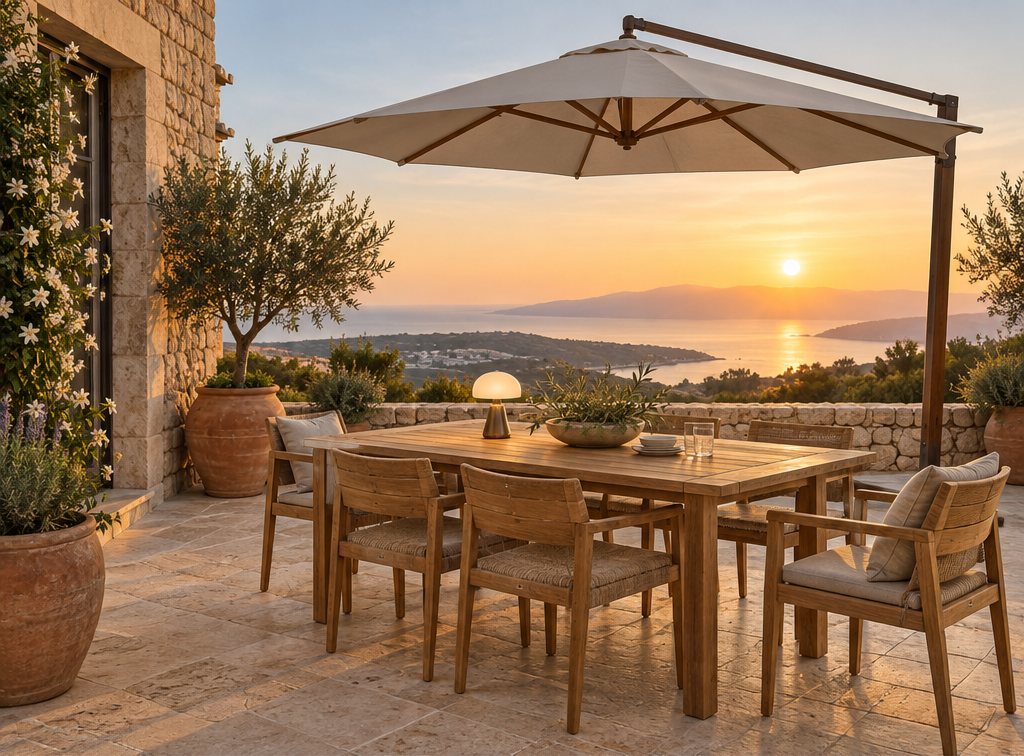
The best patio shade idea is the one that covers the hours you actually sit outside: a sail for afternoon lounging, a covered pergola for daily dining, an umbrella for small or rented spaces. The table compares the main options on the numbers that decide most projects.
| Shade type | Typical cost (US 2026) | UV block | Rain | Wind tolerance | Permanence |
|---|---|---|---|---|---|
| Market or cantilever umbrella | $100–1,500 plus base | 90–98% (UPF 50 fabric) | Light showers | Close above about 15–20 mph | Movable |
| Shade sail (knitted HDPE) | $150–1,500 DIY; $1,500–6,000 installed | 85–98% | No, water passes through | Good when tensioned; take down for storms | Seasonal or permanent posts |
| Waterproof sail (coated polyester) | $300–2,000 DIY | 95–100% | Yes, if pitched steeply | Lower, catches more wind | Seasonal |
| Freestanding shade canopy | $300–3,000 | 90–99% | Mostly | Must be anchored; vented tops help | Semi-permanent |
| Retractable awning | $1,500–4,000 manual; $3,000–8,000 motorized | 90–99% | Light rain only | Retract above about 20 mph | Wall-mounted |
| Pergola with fabric or polycarbonate cover | $3,000–15,000 | 70–99% by cover | Yes with solid or coated cover | High | Permanent |
| Louvered aluminum pergola | $12,000–40,000+ | Up to 100% closed | Yes, with gutters | High | Permanent |
Two rules cut through most patio shade ideas. If you need rain cover for a dining table, skip open-knit sails. If you rent, or the patio is under 120 sq ft (11 m²), skip anything with footings and use an umbrella or a weighted canopy.
Is a shade sail a good idea for a patio?
A shade sail is a good patio shade cover when you have solid anchor points and want cool, breezy shade at the lowest cost per square foot. A shade sail is a tensioned piece of fabric, usually triangular, square or rectangular, stretched between three or more fixed points with turnbuckles. The curved, cut-in edges are what let it pull drum-tight without flapping.
Sun shade sail fabric: knitted versus waterproof
Most sun shade sail fabric is knitted high-density polyethylene (HDPE) at 160–340 gsm. It breathes, so hot air rises through it and the space underneath feels several degrees cooler than under a solid cover. Look for 280 gsm or heavier for a permanent sail and a UV-stabilized fabric with a stated block of 90 percent or more. Waterproof sailcloth shade, typically PVC-coated polyester, keeps rain off but traps heat and puts far more load on the fixings in wind. A "solar shade sail" in product listings usually just means a sun shade sail; a few are sold with integrated solar lights along the edge.
Shade sail sizes and shapes
Squares and rectangles give the most usable shade per dollar. Triangles look sharper but shade far less than their dimensions suggest: a 16 ft (4.9 m) triangle shades only about 110 sq ft (10 m²). Overlapping two or three triangles at different heights is the classic sail shade canopy look and covers odd-shaped decks well. Order the sail 10–15 percent smaller than the distance between fixing points so there is room for hardware and tensioning.
Posts, fixings and pitch
- Posts: galvanized steel at 4–6 in (10–15 cm) diameter, or 6 × 6 in (15 × 15 cm) timber, set in concrete footings 3–4 ft (0.9–1.2 m) deep and raked slightly away from the sail.
- House fixings: bolt into a rafter, beam or masonry, never fascia board alone.
- Hardware: marine-grade 316 stainless turnbuckles, shackles and pad eyes; plated steel rusts within a season near the coast.
- Pitch: set corners at different heights, a twist of at least 1 ft in 5 ft (20 percent), so the sail sheds water and does not pond.
What are the best pergola cover options?
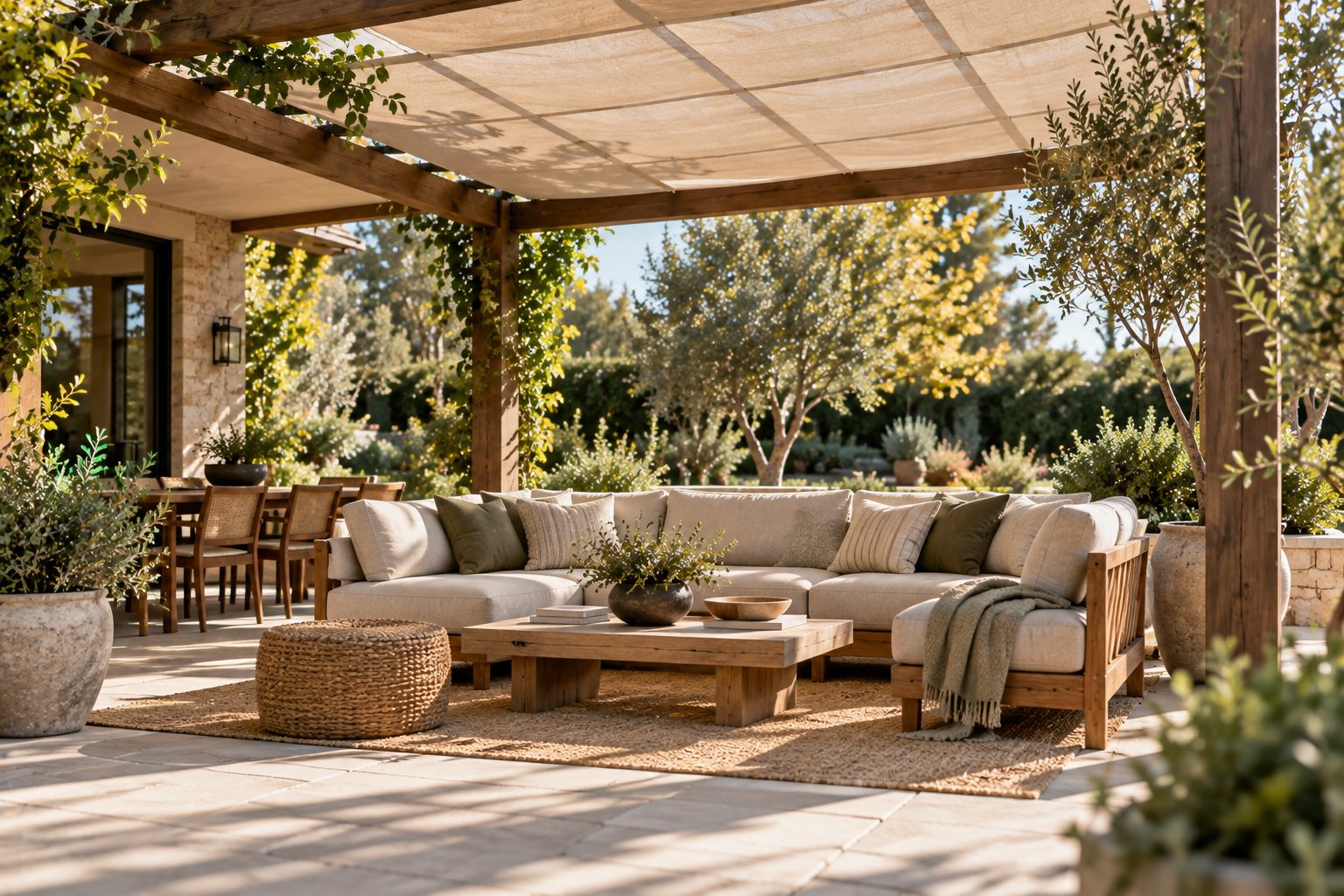
The best pergola cover for most homes is a retractable fabric canopy for flexible shade or twinwall polycarbonate for year-round rain cover. A pergola alone shades only 20–40 percent of the sun through its rafters; pergola covers turn it into usable shelter.
- Retractable canopy: fabric panels that slide on wires or tracks, $800–4,000 for a 12 × 12 ft (3.7 × 3.7 m) frame. Use solution-dyed acrylic for color stability or PVC-coated polyester for rain.
- Shade cloth: knitted HDPE stapled or clipped to the top, $150–600. Cheap and airy but not rainproof.
- Polycarbonate panels: twinwall or multiwall sheets at 6–16 mm, $6–15 per sq ft installed. Choose a tinted or opal sheet; clear ones create a greenhouse.
- Louvered roof: motorized aluminum blades that rotate from open to sealed, with integrated gutters. The premium option.
- Living cover: wisteria, grape or a deciduous vine gives dappled summer shade and winter sun in three to five years.
Check local code before adding a solid roof. In many US jurisdictions a covered, attached pergola counts as a roofed structure that needs a permit and may count toward lot coverage, while an open pergola with fabric does not.
What is the best shade canopy for a backyard?
The best freestanding shade canopy for a backyard has a powder-coated aluminum or steel frame, a vented top and proper anchors, because an unanchored canopy is a kite. A sun shade canopy, sometimes called a sunshade canopy or gazebo, needs no digging and suits pavers, decks and lawns where you cannot pour footings.
For a dining set for six you need at least 10 × 12 ft (3 × 3.7 m); for a sectional and coffee table, 10 × 13 ft (3 × 4 m) or more. Anchor with lag screws into deck joists or masonry anchors into pavers, or with 40 lb (18 kg) weights per leg on lawn. Soft-top outdoor shade canopy designs are seasonal; hardtop versions with steel or polycarbonate roofs can stay up all year, but check the stated snow and wind ratings and take the curtains down when storms are forecast.
What are the best deck shade ideas?
The best deck shade ideas fix to the structure you already have: wall-mounted awnings, sails anchored to the house and freestanding posts, or a cantilever umbrella with a deck mount. Decks raise specific problems: footings must clear the joists, and most deck boards cannot hold a post in tension.
- Retractable awning: the neatest patio sunshade for a deck against the house. Projections of 8–13 ft (2.4–4 m) are common; anything over 10 ft needs a strong wall and a wind sensor.
- Cantilever umbrella: a deck-mount bracket bolted through to blocking beats a 200 lb base. See our cantilever umbrella guide for base weights and wind limits.
- Post-and-beam frame: extend deck posts up through the deck and add a shade cloth or retractable fabric roof.
- Screens and planters: slatted screens and tall planting at 6–8 ft (1.8–2.4 m) block low evening sun that overhead covers miss.
Which colors work best for patio shade fabric?
Mid-tone and darker fabrics block more UV and glare, while light fabrics stay cooler to touch and feel brighter underneath. On knitted HDPE, a charcoal or deep green sail often blocks several points more UV than a white one of the same weight. Warm sand, olive and terracotta tones blend with stone and planting and do not show dust the way white does.
#D8C9AE#8C8A6A#B86A4B#4A4F4C#E9E4D8Color is one of the cheapest patio shade ideas to get right. These hex values are screen approximations; fabric looks different under direct sun, so view a sample outside at noon. For 2027 the palette leans earthy, in step with terracotta pavers and olive planting, and away from bright primary sails.
How do you plan backyard shade step by step?
Good patio shade ideas and backyard shade ideas alike start with the sun, not the catalog: plan backyard shade by tracking the sun at the hours you use the space, then sizing the cover to the shadow rather than the furniture. This is the sequence we use.
- Map the sun. Note where the shadow falls at 1 pm and 5 pm in midsummer; a phone compass and an afternoon of photos is enough.
- Measure the zone. Dining needs about 12 × 12 ft (3.7 × 3.7 m) for six; lounging needs 10 × 14 ft (3 × 4.3 m) or more. Our square footage guide helps with odd shapes.
- Decide on rain. If you need it, rule out knitted sails and open shade cloth.
- Check code and utilities. Call 811 before digging footings and ask about permits for attached or roofed structures.
- Set heights. Keep the lowest edge at 7–8 ft (2.1–2.4 m) and the high corners 10–12 ft (3–3.7 m) for a sail.
- Budget hardware. Posts, footings and stainless fittings often cost as much as the fabric or more.
- Plan for storms and winter. Sails come down before big wind or snow; awnings retract; louvers close.
Mistakes we see with patio shade
The most common mistake we see is undersized fixings: a sail tensioned to a fence post or a fascia board pulls it over or rips it off within a season. The others repeat just as often.
- Flat sails. With no twist, water ponds, the fabric stretches and the sail sags permanently.
- Shading the wrong spot. Overhead covers placed directly over the table leave it in sun by 4 pm. Offset toward the west.
- Clear roofing. Clear polycarbonate turns a pergola into an oven; use tinted, opal or heat-reflective sheet.
- Too low. A cover under 7 ft (2.1 m) traps heat and feels oppressive.
- Ignoring lighting. Once a pergola is covered it needs light; plan wiring with our outdoor wall lights guide.
Our verdict on patio shade for 2027
For most backyards we would install a pair of overlapping square sails on proper steel posts over the lounge area and a pergola with a retractable canopy over the dining table, which splits the budget sensibly between cheap airy shade and dependable shelter. That combination covers most patio shade ideas worth doing. Pair the shade with materials that survive full sun: our outdoor furniture materials guide covers which frames and fabrics fade, and our paver patio ideas cover the surface underneath.
Outfitting a terrace, rooftop or hospitality patio? Send sizes and quantities through our outdoor sourcing desk for factory quotes on sails, canopies, umbrellas and frames.
Free toolCurtain Size CalculatorRod length, panel size, ready-made match and yardage.Shop & source the look
Buy it today — or have it made
Retail links are affiliate links: we may earn a commission at no extra cost to you (disclosure). “Get it made” sends the item to our sourcing desk for factory quotes in custom sizes and finishes.
Frequently asked questions
What is the cheapest way to shade a patio?
A knitted HDPE shade sail fixed to existing walls and one or two new posts is the cheapest real patio shade, at roughly $150–1,500 for fabric and hardware. A large market umbrella is cheaper still for a small table. The real cost of a sail is the posts and footings, so use existing structure wherever it is strong enough.
Do shade sails keep rain off?
Standard knitted shade sails do not keep rain off; water passes through the open knit. Waterproof sails in PVC-coated polyester do, but only when pitched steeply enough to shed water, at least 1 ft of fall for every 5 ft of length. They also carry more wind load, so their fixings must be heavier.
How high should a shade sail be?
A shade sail should sit with its lowest corner at about 7–8 ft (2.1–2.4 m) and its high corners at 10–12 ft (3–3.7 m). The height difference creates the twist that sheds water and keeps the fabric taut. Going higher widens the shadow's drift through the day, so oversize the sail if you mount it tall.
What is the best cover for a pergola?
A retractable fabric canopy is the best pergola cover for flexible shade, and tinted twinwall polycarbonate is the best for permanent rain cover. Shade cloth is the budget option. A motorized louvered roof does both jobs but typically costs $12,000 or more. Check whether a solid roof triggers a permit in your area.
Can you leave a shade sail up all year?
You can leave a heavy-duty shade sail up through mild seasons, but take it down before forecast storms and before snow, which can load the fabric and posts far beyond their design. Most knitted HDPE sails last 5–10 years in full sun; storing them over winter extends that and protects the hardware.
Some links may be affiliate links. Regulations and specifications change — always confirm with suppliers and qualified professionals.