Gray Paint Colors: Light, Warm and Dark Grays That Still Work
Gray paint colors still work in 2027 when they are warm and chosen by undertone. Light grays at LRV 60–75 suit most rooms; here is how to read undertones, use dark grays and style a gray sofa.
Part of our guide: Neutral Paint Colors: How to Choose Common Paint Colors That Work
Key takeaways
- The most popular light gray interior paints are warm grays at LRV 60–72 with a beige or faint green undertone
- Undertone decides whether a gray looks blue, purple, green or beige on your walls, so compare samples side by side
- Dark grey paint colors at LRV 8–25 work in rooms used at night, on cabinetry and on doors, with warm 2700K bulbs
- With a gray couch, choose walls that contrast in warmth: warm white, greige, taupe or sage rather than a matching gray
The gray paint colors that still work in 2027 are warm light grays at LRV 60–72, soft greige-leaning grays and deep charcoals used with intent. The flat, blue-cool grays of the 2010s are fading. Choose gray by undertone first and depth second, and you will get a calm, versatile wall rather than a cold one.
- Most versatile range: light gray paint colors at LRV 60–72 suit nearly every room.
- Undertones: blue, green, violet or beige; the undertone shows strongest on four walls.
- Warm vs cool: warm gray paint colors lean beige and suit wood floors; cool grays lean blue and suit marble and steel.
- Dark grays: LRV 8–25, best on cabinetry, doors and rooms used at night.
- Bulbs: 2700–3000K, CRI 90+, to stop gray looking flat.
Gray is one branch of our neutral paint colors guide, and for many homes it is still the right one. It is calmer than white and cleaner than beige. The trick in 2027 is to pick a gray that carries a little warmth, then use it with wood, linen and stone rather than with chrome and glass alone.
Which gray paint colors are best in 2027?
The best gray paint colors for 2027 are warm light grays, greige-leaning mid grays and soft charcoals, all with a beige, green or brown undertone rather than blue. They read modern but never clinical.
Gray paint interior design has shifted in two directions. On one side, grays are getting warmer and softer, merging into greige and taupe; our taupe and greige paint colors guide covers that end. On the other, deep charcoals are used for color drenching, on walls, trim and ceiling together. What has dropped out is the middle: cool mid grays at LRV 45–55 with a strong blue cast, which look dated and dim in most homes.
#E6E4DF#CFCBC3#B4B1A9#8F938C#5A5C5C#3A3B3CHex values are approximate screen references for comparison; they are not product matches.
What is the most popular light gray interior paint?
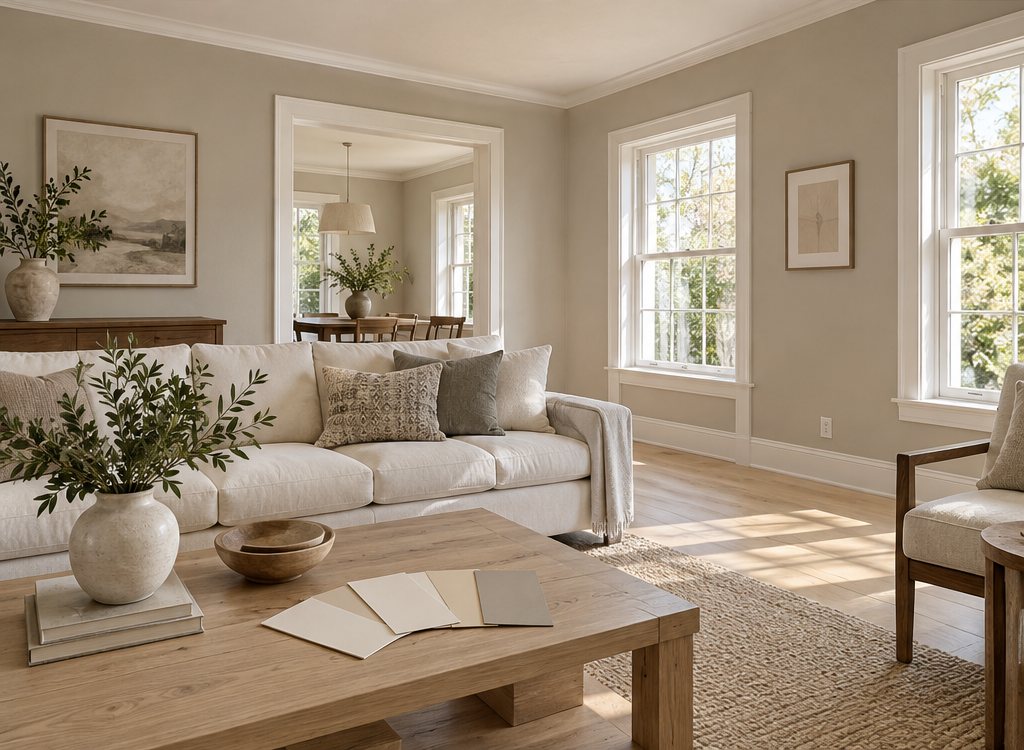
The most popular light gray interior paint is a warm, slightly beige light gray at roughly LRV 60–70, because it stays light in north light, does not turn blue at night and sits well beside oak floors. That is the band most designers reach for when a client asks for "light grey paint that isn't cold."
Light grey wall paint falls into three practical groups:
- White grey paint (LRV 75–85): almost white with a gray veil; good for ceilings, bright kitchens and as a softer alternative to stark white walls.
- Classic light gray (LRV 62–72): the whole-house choice for hallways, living rooms and bedrooms.
- Light-mid gray (LRV 52–60): enough depth to make white trim pop; best in rooms with good daylight.
In a north-facing room, push toward the warm, higher-LRV end. A light gray at LRV 58 with a blue undertone can look like an overcast sky all day. In a sunny south-facing room you can choose a cooler gray, because the warm light balances it.
Light gray paint colors by room
Hallways and stairwells take the classic band at LRV 62–72 in an eggshell or satin that wipes clean. Kitchens with white or pale stone counters look best with white grey paint at the top of the range, so the counters do not look yellow by comparison. Bedrooms can drop to LRV 55–62 for a softer, more enveloping feel, while home offices on video calls benefit from a warm light gray behind the desk because it renders skin tones naturally on camera. Ceilings in any of these rooms can be painted the same gray mixed at 50 percent strength, which keeps the room cohesive without the hard line of a bright white ceiling.
Warm gray vs cool gray paint colors: how do you read undertones?
Every gray has an undertone, and it is the undertone, not the name or the depth, that decides whether a gray looks blue, purple, green or beige once it is on your walls. Compare samples side by side against a white card to see it.
| Undertone | How it looks | Warm or cool | Pairs with | Watch out for |
|---|---|---|---|---|
| Beige / yellow | Soft, greige-like | Warm | Oak, walnut, cream, brass | Can look khaki next to yellow oak |
| Green | Earthy, slightly mineral | Neutral to warm | Sage, olive, natural linen | Can look murky in dim rooms |
| Blue | Crisp, airy | Cool | Marble, chrome, navy, white | Turns cold in north light |
| Violet | Elegant, slightly dusky | Cool | Charcoal, blush, polished nickel | Reads lilac under cool LEDs |
| Brown / red | Deep, cozy | Warm | Leather, terracotta, bronze | Can look muddy at mid depth |
Warm gray paint colors are the safer pick for most homes because they flatter wood floors, skin tones and warm lighting. Cool grays still suit modern bathrooms, white kitchens with steel appliances and bright, south-facing apartments. When comparing shades of gray paint, look at the darkest version on the same strip of the manufacturer's card; the undertone is easiest to see at depth.
Where do dark grey paint colors work?
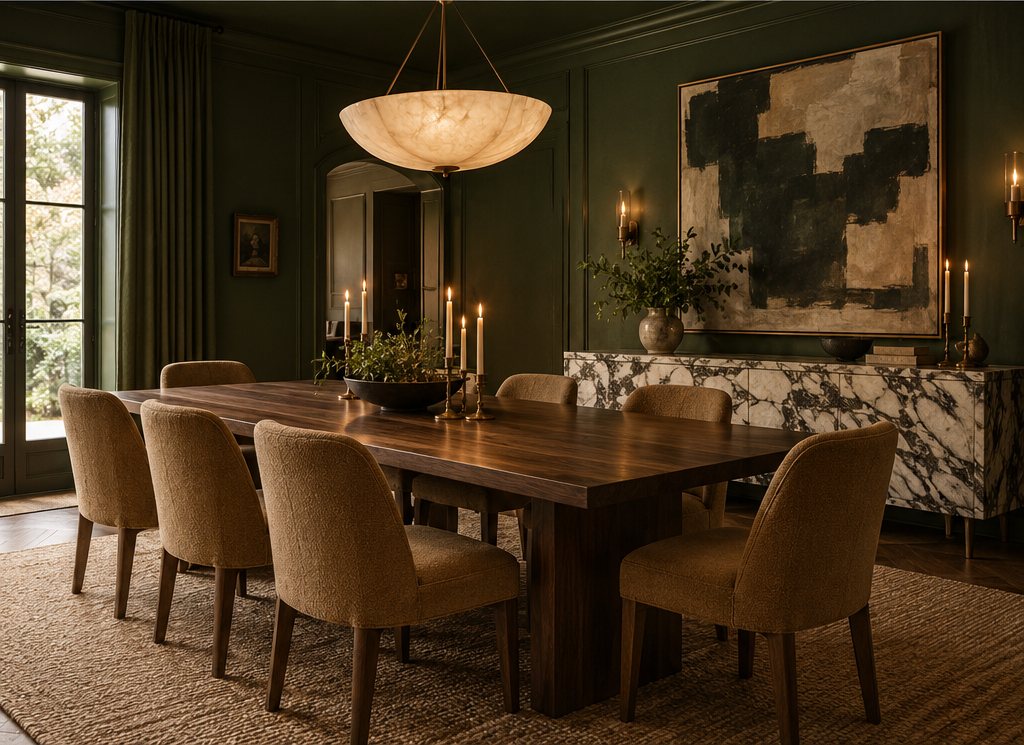
Dark grey paint colors at LRV 8–25 work best in rooms used mostly at night, on cabinetry and on doors, and in color-drenched spaces where walls, trim and ceiling share one shade. They fail in small, dim rooms painted only on the walls with bright white trim, where the contrast looks harsh.
- Living rooms and dens: a slate or charcoal with a brown or green base feels wrapped rather than gloomy, especially with 2700K lamps at three heights.
- Kitchens: charcoal lower cabinets with a white grey wall and oak shelving are a durable 2027 combination.
- Bedrooms: deep gray behind the headboard only, or drenched with a matte finish, absorbs light for sleep.
- Exterior doors and interior doors: soft charcoal in satin is a modern alternative to black.
Dark grays show scuffs and touch-up marks more than light ones. Use an eggshell or satin with a scrub-resistant formula, keep spare paint labeled by room, and plan three coats over a tinted gray primer on new drywall. For a full drenching scheme, see our color drenching guide.
Which gray and green paint colors work together?
Gray and green paint colors work together when the gray has a green or beige undertone and the green is muted, such as sage, eucalyptus or olive, at a similar or slightly deeper LRV. Gray with a blue undertone next to a yellow-green usually clashes.
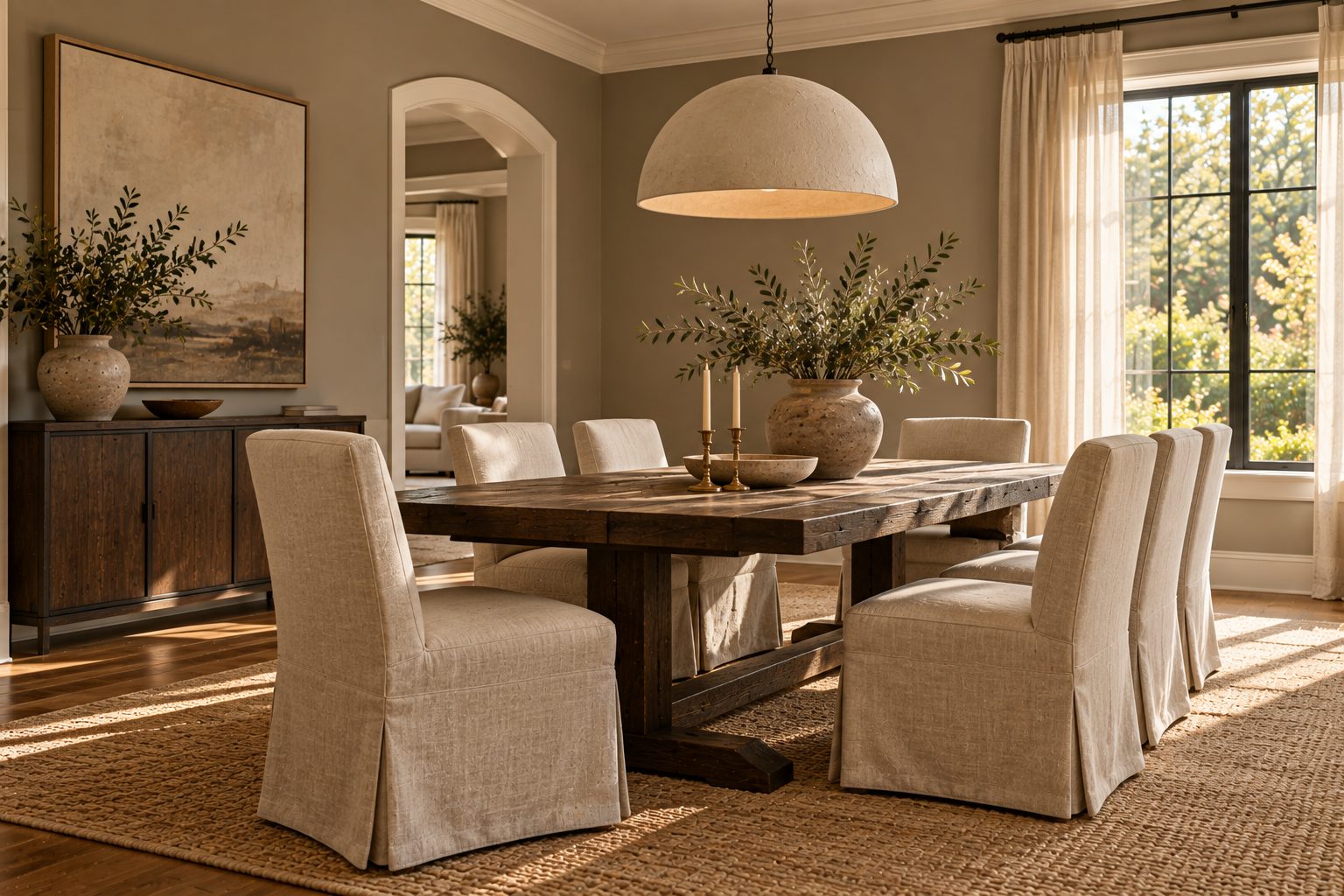
The easiest pairings are a warm light gray on walls with a sage on cabinetry or a single accent wall, or a gray-green itself, a grayed sage that sits between the two families, used throughout. Gray-green has become one of the strongest neutral directions for 2027 because it brings the calm of gray with some of the life of green. Our sage green paint colors guide shows the greener end. Keep trim a warm white and use natural wood and brass or bronze for warmth.
In kitchens, a gray-green on cabinetry with a warm light gray wall and a honed stone counter is one of the easiest ways to move a gray house forward without repainting everything. In bedrooms, a pale gray-green at LRV 55–65 behind the bed reads restful and pairs with oatmeal linen. Keep the two colors within about 10–15 LRV points of each other if you want a soft blend, or more than 30 apart for clear contrast.
What wall color goes with a gray couch?
With a gray couch, choose a wall color that contrasts in warmth or depth: warm white, greige, taupe, sage or a deeper charcoal, rather than a mid gray that matches the sofa. Matching gray on gray is the most common reason a gray living room feels flat.
Gray couch living room ideas that work
- Light gray sofa: warm white or creamy walls at LRV 80–88, oak furniture, rust or terracotta cushions and a jute or wool rug.
- Mid gray sofa: greige or light taupe walls, linen curtains, walnut side tables and olive or ochre accents.
- Charcoal sofa: pale walls for contrast or, for drama, a drenched deep green or slate room with cognac leather and brass.
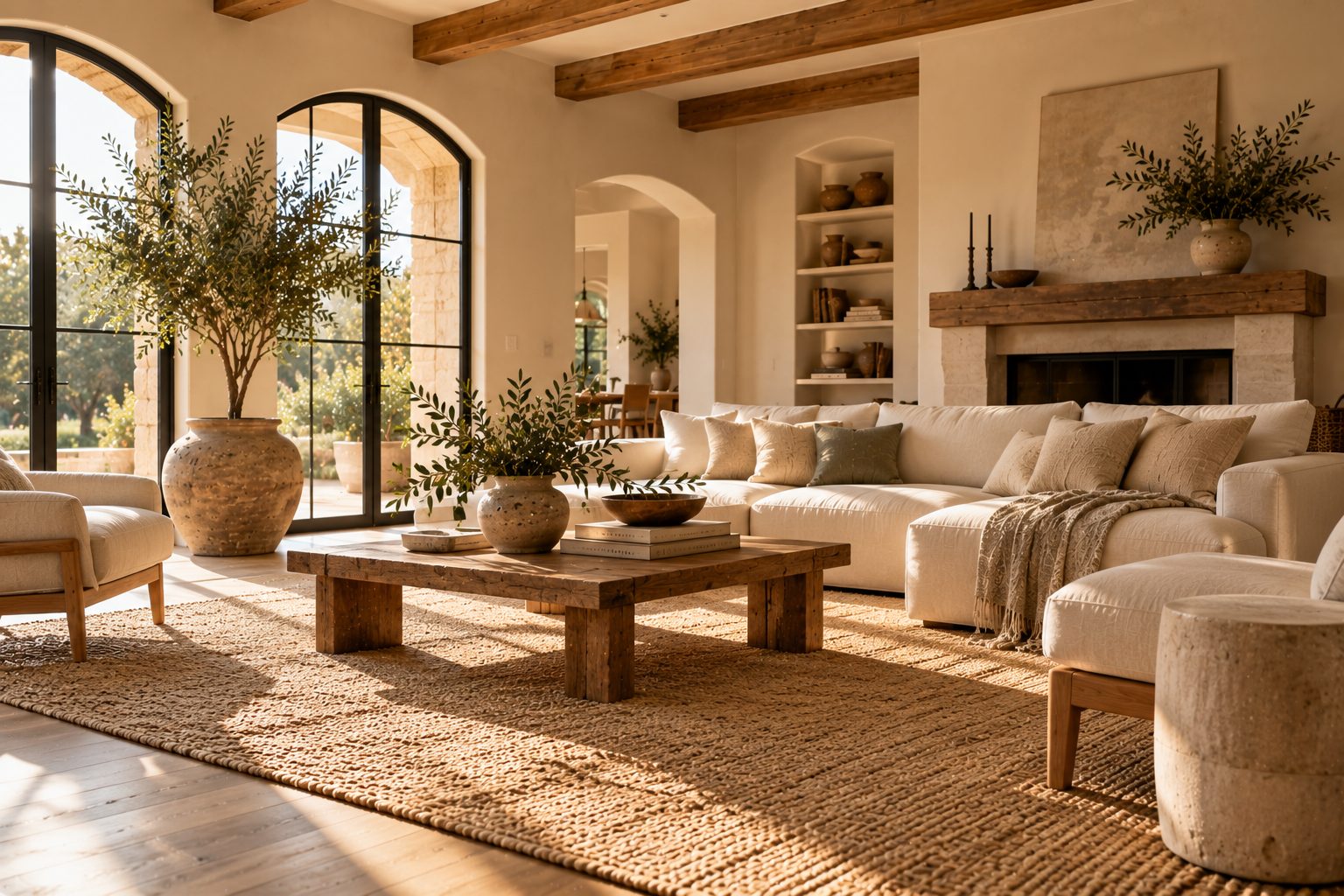
Living room with grey sofa ideas always land better with texture. Mix a nubby wool throw, a ribbed velvet cushion, a flatweave rug and one piece of solid wood. For grey living room furniture beyond the sofa, avoid gray-washed wood and matching gray side tables; choose warm oak, walnut or stone instead. If you are buying the sofa now, our sofa size guide gives the room-to-sofa ratios, and a daily-use sofa should be rated at 30,000–40,000 Martindale or more.
How to paint a room gray: step by step
Painting a gray room well comes down to testing large samples, preparing the surface and applying two full coats with the right sheen. This is the sequence we follow on projects:
- Shortlist three grays within the same depth band, for example LRV 60–70, with different undertones.
- Paint sample boards of at least 12 x 18 in (30 x 45 cm), two coats each, and move them around the room for two days.
- Measure the walls and run the numbers through our paint calculator; expect 350–400 sq ft (32–37 m²) per gallon per coat.
- Prepare: fill and sand holes, wash greasy areas, and spot-prime patches so they do not flash through.
- Prime when needed: use a gray-tinted primer under dark grey paint colors and over strong previous colors.
- Cut in, then roll with a 3/8 in (10 mm) nap roller on smooth walls, keeping a wet edge.
- Apply the second coat after the recoat time on the can, usually 2–4 hours for acrylic.
Typical US 2026 costs: $35–90 per gallon for quality interior paint, or roughly $400–1,000 for a professional to paint the walls of a 12 x 12 ft (3.7 x 3.7 m) room, depending on region and prep.
Mistakes we see with gray paint
The mistake we see most is a cool, mid-depth gray chosen from a chip and used on every wall of a north-facing house, which leaves the whole home looking like a rainy afternoon. Gray needs warmth around it, and often a lighter LRV than people expect.
- Gray on gray on gray: gray walls, gray sofa, gray rug and gray-washed floors remove all contrast.
- Cool 4000K+ bulbs: they turn even warm gray paint blue; use 2700–3000K.
- Bright blue-white trim: pick a softer white so the gray does not look dirty.
- Ignoring undertones across rooms: a green-gray hall next to a violet-gray living room looks like a mistake.
Our verdict: if you want gray in 2027, choose one warm light gray at LRV 62–70 for the main spaces, a charcoal for doors or cabinetry, and bring in oak, linen, brass and a green or rust accent. That keeps gray paint calm, current and easy to live with. Before you buy, measure your walls with our paint calculator so you order the right number of gallons for two full coats.
Free toolCurtain Size CalculatorRod length, panel size, ready-made match and yardage.Shop & source the look
Buy it today — or have it made
Retail links are affiliate links: we may earn a commission at no extra cost to you (disclosure). “Get it made” sends the item to our sourcing desk for factory quotes in custom sizes and finishes.
Frequently asked questions
What is the most popular light gray interior paint?
The most popular light gray interior paint is a warm light gray at roughly LRV 60–70 with a beige or faint green undertone. It stays light in north-facing rooms, avoids turning blue at night and works with oak floors and warm white trim, which is why designers use it for whole-house color schemes.
Are gray paint colors still in style for 2027?
Gray paint colors are still in style for 2027 when they are warm, soft or very deep. Cool blue-grays at mid depth are fading. Warm light grays, greige-leaning grays, gray-greens and charcoals used for cabinetry or color drenching remain current, especially when paired with natural wood and warm lighting.
What is the difference between warm and cool gray paint?
Warm gray paint has a beige, yellow, brown or green undertone and looks soft and cozy, while cool gray has a blue or violet undertone and looks crisp and airy. Warm grays suit wood floors and evening lighting; cool grays suit marble, white kitchens and bright, south-facing rooms.
What color walls go with a gray couch?
Warm white, greige, light taupe, sage green or a deep charcoal go best with a gray couch. Choose a wall that contrasts with the sofa in warmth or depth rather than matching its gray. Add warm wood, a textured rug and accents in rust, ochre or olive so the room does not feel flat.
Is light gray paint good for a small room?
Light gray paint is good for a small room if it has an LRV of 62 or higher and a warm undertone. Cool or mid-depth grays make small, dim rooms feel smaller. Paint the ceiling a white grey, keep trim a soft white, and use 2700–3000K bulbs to keep the space bright.
Some links may be affiliate links. Regulations and specifications change — always confirm with suppliers and qualified professionals.