Bedroom Paint Colors: Top 10 Calming Shades and How to Pick
The best bedroom paint colors are low-saturation, warm shades such as soft greens, dusty blues, warm whites and clay. Here are the top 10 with LRV ranges, schemes, finishes and typical painting costs.
Part of our guide: Bedroom Trends 2027: Good Bedroom Colors, Beds and Sizing Rules
Key takeaways
- The best bedroom paint colors are muted, low-chroma shades: soft sage, dusty blue, warm white, clay, greige and deep ink
- For calm, keep saturation low rather than chasing a specific hue, and light the room with 2700K bulbs
- Use matte or eggshell on bedroom walls, satin on trim and doors, and a flat finish on the ceiling
- Painting a typical 12 x 12 ft bedroom costs about $400–1,000 professionally (walls only) or $100–250 DIY
The best bedroom paint colors are muted, low-saturation shades that look soft in both daylight and lamplight: sage and eucalyptus greens, dusty blues, warm whites, greige, clay and plaster pinks, and deep ink or olive for a cocooning room. For most bedrooms, aim for LRV 45–75 and a warm or neutral undertone.
- Most calming: low-chroma greens and blues, warm neutrals and soft clay tones.
- Light range: LRV 55–75 for small or dim rooms; LRV 10–25 for drenched, cocoon bedrooms.
- Finish: matte or eggshell walls, satin trim, flat ceiling.
- Lighting: 2700K bulbs at CRI 90+ keep colors warm at night.
- Typical cost: $400–1,000 to have a 12 x 12 ft (3.7 x 3.7 m) bedroom painted, walls only.
A bedroom is the one room you mostly see at night, so choose paint that works under lamps first and daylight second. These bedroom color ideas follow the softer, earthier direction in our bedroom trends 2027 guide, where color is calmer, warmer and often wrapped over walls and ceiling together.
What are the top 10 bedroom colors?
The top 10 bedroom colors for 2027 are warm white, greige, soft sage, eucalyptus, dusty blue, clay pink, mushroom taupe, olive, ink blue and deep chocolate brown. The table shows where each works and the depth to look for.
| Color | Typical LRV | Mood | Best for | Pair with |
|---|---|---|---|---|
| 1. Warm white | 78–88 | Fresh, airy | Small rooms, north light | Oak, linen, brass |
| 2. Greige | 58–70 | Quiet, versatile | Any room, resale | Walnut, cream, black accents |
| 3. Soft sage | 50–62 | Restful, natural | Primary bedrooms | White oak, terracotta |
| 4. Eucalyptus | 40–52 | Calm, spa-like | South- or west-facing rooms | Cane, linen, brushed brass |
| 5. Dusty blue | 45–60 | Cool, serene | Warm, sunny bedrooms | Cream, walnut, rust |
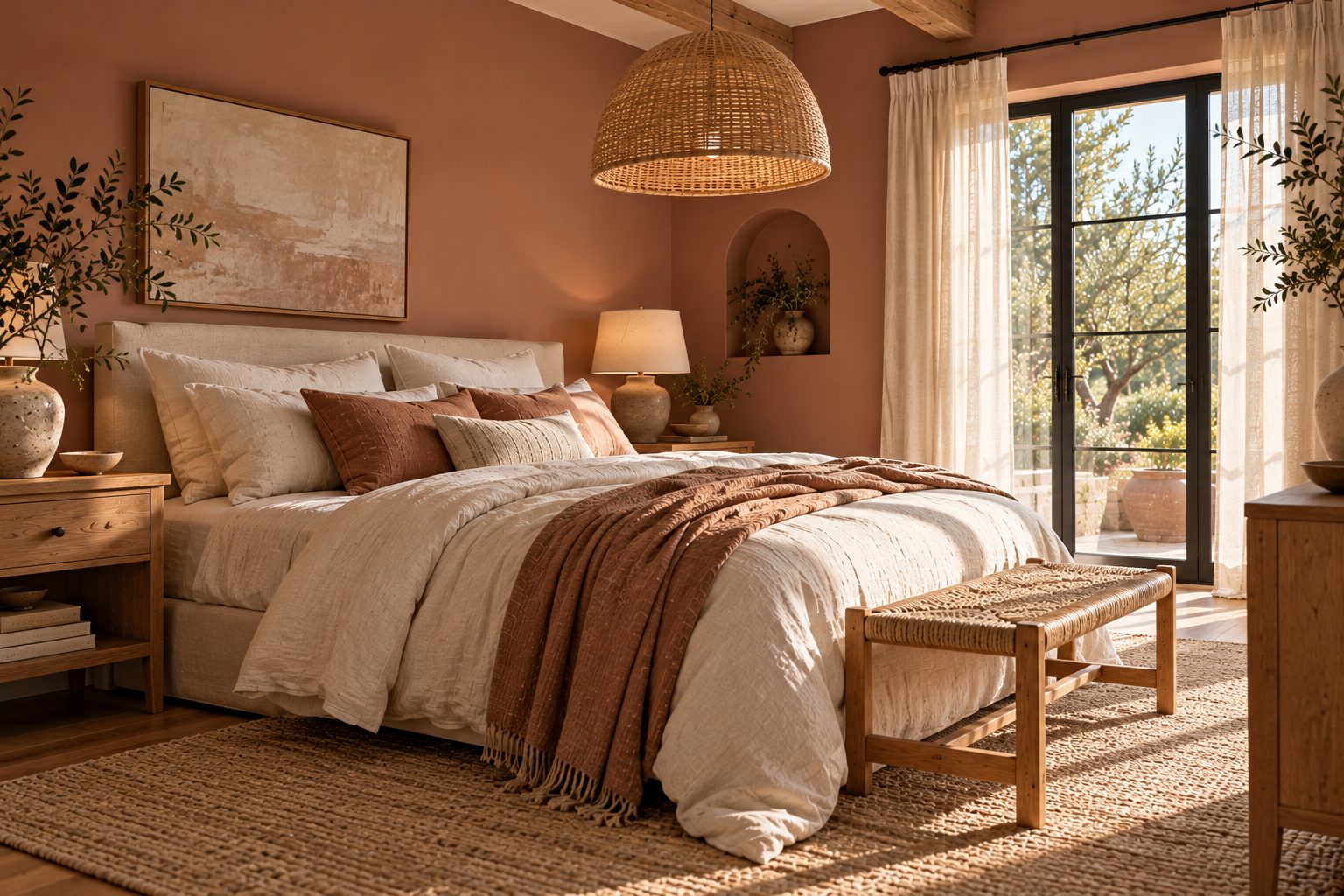
| 6. Clay pink | 50–62 | Warm, flattering | Guest rooms, north light | Olive, ochre, bronze |
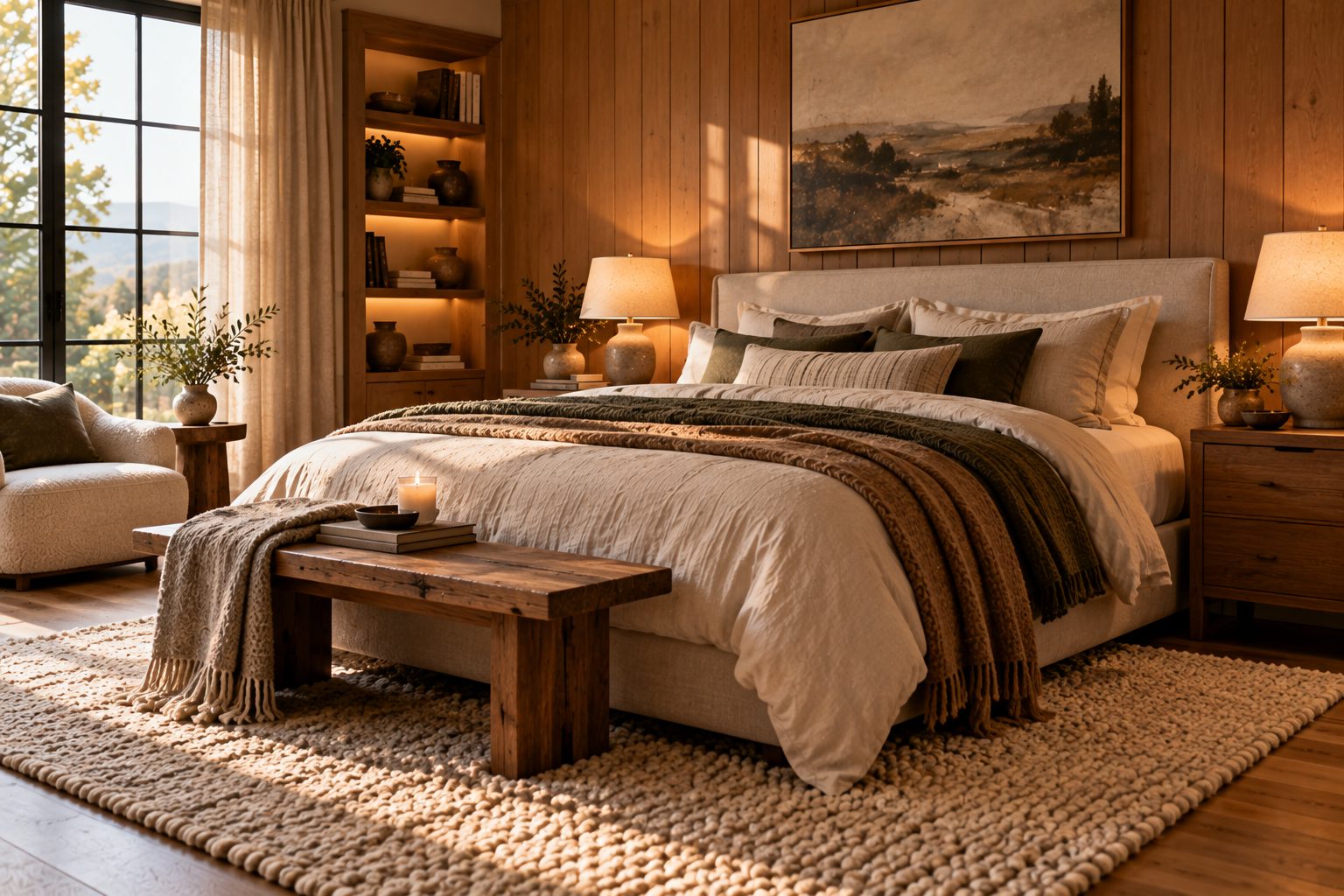
| 7. Mushroom taupe | 38–50 | Cozy, grounded | Large rooms, evening use | Nubby wool, oak |
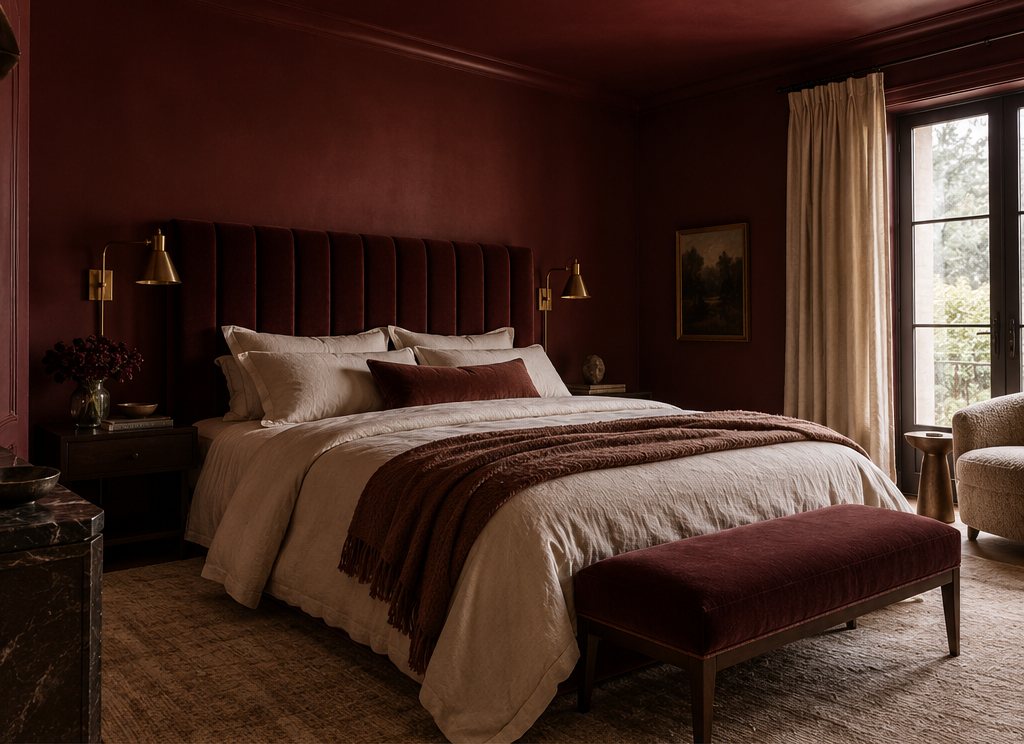
| 8. Olive | 18–30 | Enveloping | Drenched rooms, headboard walls | Cognac leather, brass |
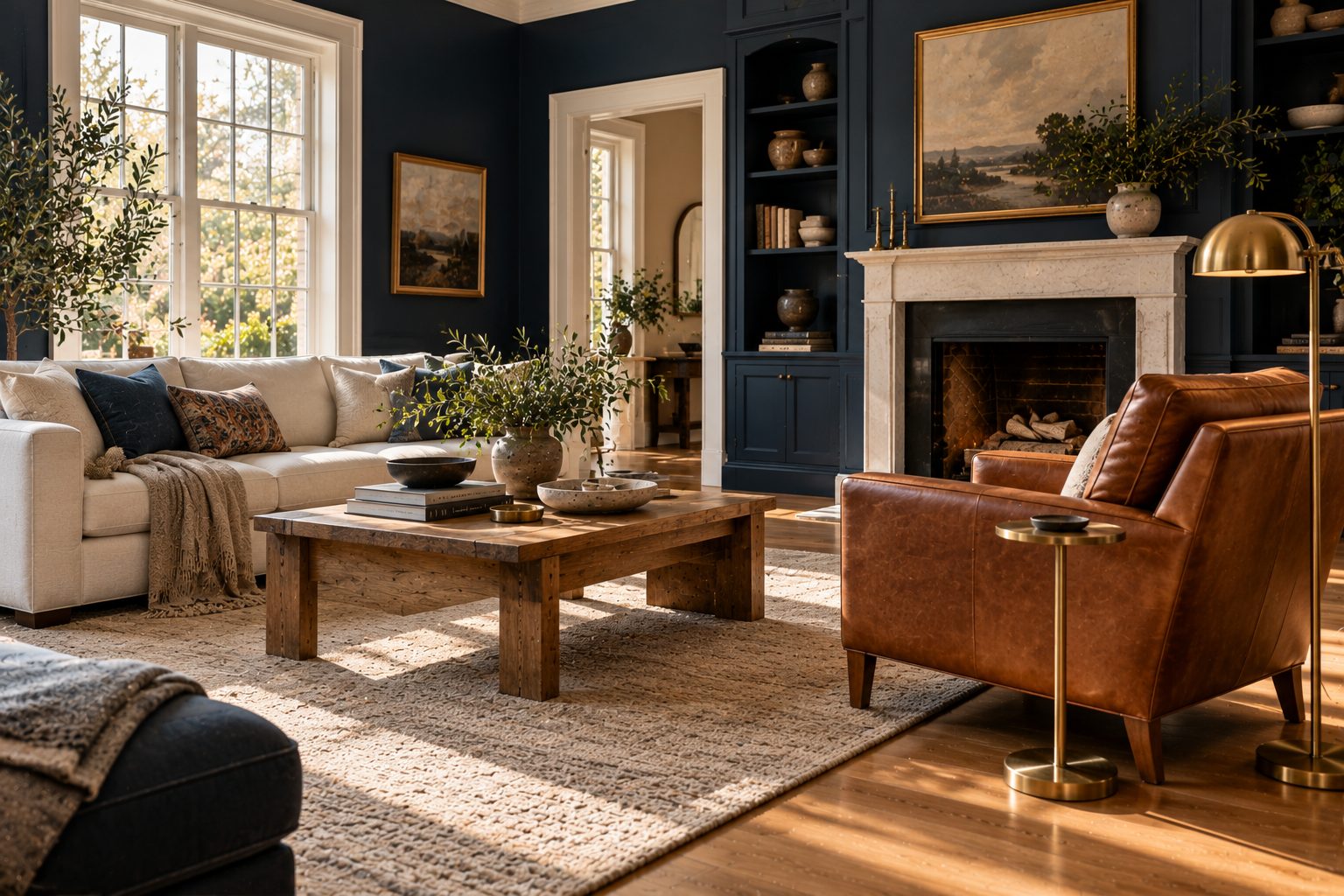
| 9. Ink blue | 6–14 | Dramatic, restful | Primary suites, dark rooms | Brass, white bedding |
| 10. Chocolate brown | 6–12 | Rich, cocooning | Accent walls, ceilings | Cream, cane, travertine |
LRV ranges are typical for each family, not product readings. This gives you a short list of paint shades for bedrooms to sample, rather than a single "best" color that suits every room.
#F0EAE0#C8CDBE#A9B7C0#C9A28C#5E6347#2F3A4CHex codes are approximate screen references only.
What is the best color for a sleeping room?
The best color for a sleeping room is a muted, low-saturation shade, usually a soft green, dusty blue or warm neutral, because calm comes more from low chroma and soft contrast than from any single hue. A bright, saturated red or yellow feels energizing whatever its name.
Calming colors for bedroom walls share three traits: they are grayed down, they have little contrast with the trim and bedding, and they read warm under 2700K lamps. That is why soothing bedroom paint colors often look slightly dusty on the chip. If you love a strong color, keep it deep and muted rather than bright: an ink blue or olive at LRV 10–25 can feel more restful than a mid-tone turquoise. Placement also matters; many people prefer the strongest color behind the headboard, where it frames the bed but is not in view when lying down. Contrast is the other lever: keep the trim within two or three LRV steps of a warm white and choose bedding in a tone already found on the wall chart, so nothing in your line of sight jumps out.
Daylight still matters for mornings. A bedroom facing east gets strong, cool early light, so a warm sage or clay balances it, while a west-facing room glows orange at sunset and suits dusty blue. If you sleep with blackout curtains, judge the color almost entirely under lamps.
Which bedroom color schemes work best?
The bedroom color schemes that work best combine one wall color, one trim or ceiling color and one accent drawn from bedding or wood, all in similar warmth. Three-color schemes are easier to live with than four or five.
- Soft natural: sage walls, warm white trim and ceiling, terracotta or rust in cushions and a jute rug.
- Quiet neutral: greige walls, warm white trim, walnut furniture and black iron or bronze accents.
- Coastal calm: dusty blue walls, cream trim, oak and natural linen.
- Warm cocoon: clay pink walls, olive velvet, aged brass and a painted ceiling one shade lighter.
- Drenched: ink blue or olive on walls, trim and ceiling, with white bedding and warm wood.
These color suggestions for bedroom schemes assume warm bulbs; check them at night before you commit, because bedding and lamp shades change how a wall reads.
Master bedroom color ideas and paint ideas
Master bedroom color ideas for 2027 favor deeper, more enveloping walls than smaller rooms can carry: eucalyptus, mushroom taupe, olive, ink blue or a drenched clay, set off by wood and warm lighting. A larger primary suite can absorb color that would crowd a small bedroom.
Three master bedroom paint ideas we specify often. First, a headboard wall in a deep shade with the other three walls in a lighter tint of the same color, which adds depth without a hard contrast. Second, a painted ceiling, either a darker shade for a cozy, lowered feel or a pale tint of the wall color to keep the room cohesive. Third, a two-tone wall with paneling or a picture rail at about 36–42 in (91–107 cm), darker below and lighter above. If the suite has an attached bath, link the two with a shared undertone; our bathroom paint colors guide suggests shades that flow from bedroom to bathroom. For warmer, layered styling, see our cozy bedroom ideas.
What are the best colors for a small bedroom?
The best colors for a small bedroom are warm light shades at LRV 60–80, such as warm white, pale greige, soft sage or blush, or else a single deep color used on every surface so the corners disappear. The weakest option is a mid tone with bright white trim.
- North-facing small rooms: warm white, blush or a yellow-based greige; avoid cool blues.
- South-facing small rooms: dusty blue or sage, which cool the strong light.
- Low ceilings: paint the ceiling in the wall color at 50 percent strength to lift it visually.
- Tiny guest rooms: go dark and drench, with a light bedspread to anchor the room.
Furniture color counts too. In a small bedroom, a bed frame, wardrobe or headboard in the same family as the walls, one or two shades deeper, keeps the room from feeling broken up, while a white wardrobe against a deep wall becomes the dominant object. Our small bedroom ideas cover furniture sizes and layouts that pair with these colors.
What type of paint and finish should you use for a bedroom?
Use a quality low-VOC acrylic interior paint in matte or eggshell for bedroom walls, satin or semi-gloss for trim and doors, and flat for the ceiling. Matte hides wall flaws and looks velvety; eggshell wipes clean more easily.
Choose matte for adult bedrooms with smooth walls and low traffic, since it gives the softest look and hides patches. Pick eggshell for kids' rooms, guest rooms that see a lot of luggage and any wall behind a desk. Gloss paint for bedroom walls is rarely a good idea; it shows every roller mark and reflects bedside lamps as glare. Satin is the right sheen for skirting, door casings and window trim, where hands and feet make contact. Low or zero VOC paint matters more here than in most rooms, because you sleep with the door closed; ventilate for 24–48 hours after painting before sleeping in the room. For the difference between the middle sheens, see our eggshell vs satin paint guide.
How much does it cost to paint a bedroom?
Painting a typical 12 x 12 ft (3.7 x 3.7 m) bedroom costs about $400–1,000 with a professional for walls only, $600–1,500 including ceiling and trim, or $100–250 if you do it yourself. Prices are typical US 2026 ranges and vary with region, wall condition and color change.
| Bedroom size | Wall area (approx.) | Paint for 2 coats | DIY cost | Pro, walls only | Pro, walls + ceiling + trim |
|---|---|---|---|---|---|
| 10 x 10 ft (3 x 3 m) | 320 sq ft (30 m²) | 2 gallons | $90–200 | $350–800 | $500–1,200 |
| 12 x 12 ft (3.7 x 3.7 m) | 384 sq ft (36 m²) | 2–3 gallons | $100–250 | $400–1,000 | $600–1,500 |
| 14 x 16 ft (4.3 x 4.9 m) | 480 sq ft (45 m²) | 3 gallons | $130–300 | $500–1,300 | $800–2,000 |
Wall areas assume 8 ft (2.4 m) ceilings before deducting doors and windows. Deep colors and dramatic changes, such as dark to light, add a primer coat and often a third coat. For a full breakdown by room and region, see our interior painting cost guide.
How to choose your bedroom paint color
Choose a bedroom paint color by testing two or three large samples at night, under your own lamps, against your bedding and floor. Use this order:
- Decide the mood: airy, natural, neutral or cocooning.
- Note the light: north light needs warm undertones, south light can take cooler ones.
- Shortlist three shades in one family and depth band.
- Paint sample boards 12 x 18 in (30 x 45 cm), two coats, and place one behind the headboard.
- Check at bedtime with bedside lamps on; that is when you will see the walls most.
- Choose trim and ceiling colors to match the warmth of the wall.
- Calculate gallons before you buy: about 350–400 sq ft (32–37 m²) per gallon per coat.
Our verdict on bedroom wall colors
For most people, the best color for bedroom walls is a soft sage, dusty blue or warm greige at LRV 50–70 in matte, with warm white trim and 2700K lamps; it is calm, flattering and easy to style. If you want more drama, drench a primary bedroom in ink blue or olive rather than painting one bright accent wall. The mistake we see most is choosing bedroom paint in a bright showroom; the right bedroom paint colors are the ones that still look good at 10 pm. When you have your shortlist, use our paint calculator to work out exactly how many gallons your bedroom needs.
Free toolCurtain Size CalculatorRod length, panel size, ready-made match and yardage.Shop & source the look
Buy it today — or have it made
Retail links are affiliate links: we may earn a commission at no extra cost to you (disclosure). “Get it made” sends the item to our sourcing desk for factory quotes in custom sizes and finishes.
Frequently asked questions
What is the most calming color for a bedroom?
Soft, muted greens and dusty blues are the most calming colors for a bedroom, followed closely by warm neutrals such as greige and warm white. Calm comes mainly from low saturation and soft contrast, so choose grayed-down shades with an LRV of about 45–70 and light the room with warm 2700K bulbs.
What type of paint finish is best for a bedroom?
Matte or eggshell is the best paint finish for bedroom walls. Matte hides imperfections and looks soft, while eggshell is easier to wipe and suits kids' rooms. Use satin or semi-gloss on trim and doors and flat paint on the ceiling. Avoid gloss on walls, because it reflects lamp glare.
How much does it cost to paint a bedroom?
It typically costs $400–1,000 to have a professional paint the walls of a 12 x 12 ft (3.7 x 3.7 m) bedroom in the US, or $600–1,500 with ceiling and trim. Doing it yourself usually costs $100–250 for paint, primer and supplies. Dark colors and major color changes cost more.
What kind of paint should you use on bedroom walls?
Use a quality low-VOC or zero-VOC acrylic latex interior paint on bedroom walls. It dries quickly, has little odor and cleans with water. Pair it with a primer over patches, stains or strong previous colors, and ventilate the room for 24–48 hours after painting before sleeping in it.
Should bedroom walls be light or dark?
Bedroom walls can be either, but avoid the middle: light shades at LRV 60–80 make small or dim bedrooms feel open, while deep shades at LRV 10–25 make a room feel enveloping and restful. Mid tones with bright white trim tend to look flat. Large primary bedrooms carry dark colors best.
Some links may be affiliate links. Regulations and specifications change — always confirm with suppliers and qualified professionals.