Plug-In Pendant Lights: How to Hang a Pendant Without Wiring
A plug in pendant light hangs from a ceiling hook and runs its cord to a wall outlet, so you get a real pendant with no electrician. How the kits work, swag versus straight drop, where they shine and how to hang one.
Key takeaways
- A plug-in pendant hangs from a ceiling hook and plugs into a wall outlet; nothing touches the house wiring
- Use a toggle-bolt swag hook for anything over 5 lb (2 kg) in drywall, or screw into a joist
- Hang the shade bottom 28–34 in (71–86 cm) above a table, 50–56 in (127–142 cm) from the floor at a bedside
- Paper, linen and pleated shades are light, diffuse well and match the 2027 sculptural direction
A plug in pendant light is a shade on a 12–20 ft (3.6–6 m) cord that hangs from a ceiling hook and plugs into an ordinary wall outlet, with an inline switch on the cord. No junction box, no electrician, and it comes down in ten minutes when you move. Here is how the kits work, where they beat a lamp and how to hang one.
- Cord length: 12–20 ft (3.6–6 m) is standard; measure your ceiling route before buying.
- Weight limit: a self-drilling ceiling hook holds 5–15 lb (2–7 kg) in drywall; heavier shades need a joist or a toggle anchor.
- Hanging height: bottom of the shade at 28–34 in (71–86 cm) above a table, 7 ft (2.1 m) above a walkway.
- Lamp: 600–1,000 lumens, 2700K, dimmable if the shade is translucent.
How plug in pendant lights work
A plug in pendant light is three parts: a ceiling hook that carries the weight, a cord set that carries the current from a wall outlet to the socket, and a switch on the cord that replaces the wall switch. Nothing connects to the house wiring, which is why renters can use one and why no permit or electrician is involved. The same kit sold as a plug in ceiling light, a plug hanging lamp or a hanging light with plug in cord is the identical product under a different name.
The hook is a swag hook, a threaded screw hook with a decorative cup. Toggle-bolt versions hold 10–15 lb (4.5–7 kg) in half-inch (12 mm) drywall; screw-in versions hold about 5 lb (2 kg) unless they land in a joist, where they hold 20 lb (9 kg) or more. The cord loops through the hook, or sits in a small cleat, and the shade hangs below.
The cord set is a fabric-covered or PVC two-core cord, typically 15 ft (4.6 m), with a lampholder at one end and a polarized plug at the other. Fabric braid in cotton or rayon looks better and comes in colors; PVC is cheaper and slightly stiffer. Look for a cord set rated for the lamp you will use (most are 60 W max, which is any LED you will ever need) and a lampholder with a shade ring so you can fit a standard shade.
The switch is a rocker or rotary inline switch on the cord, ideally 24–36 in (60–90 cm) from the plug so it sits at hand height on the wall. Some cord sets have a foot switch instead, and the smarter route is a plug-in smart adapter or a dimmer plug so the pendant joins the rest of the room's lighting scene. If you are furnishing a rental with several of these, the same logic covers wall lights; Plug-In Wall Sconces: Renter-Friendly Lighting Without an Electrician explains the wall version.
Two cautions. Never run the cord under a rug or through a door, never exceed the lampholder's wattage, and use a certified cord set with a polarized plug. Near water in kitchens and bathrooms, local electrical codes may restrict plug-in fixtures; ask an electrician if unsure.
Swag vs straight drop
A straight drop hangs the plug in pendant light directly below a single hook and looks like a hardwired fixture; a swag uses two or more hooks so the cord loops across the ceiling to the wall and becomes part of the design. Choose straight when the hook can sit exactly where you want the light, and swag when it cannot.
The straight drop is the cleaner look, but it leaves a visible run of cord down the wall unless the pendant hangs close to it. The trick: hang the pendant 8–12 in (20–30 cm) from the wall, run the cord vertically to the outlet inside a paintable channel, or fix it with adhesive clips every 18 in (45 cm) so it reads as a deliberate line.
The swag is for when the outlet is across the room, which is most bedrooms. Place the first hook directly above the pendant position, a second near the wall above the outlet and let the cord drape 4–8 in (10–20 cm) between them; a taut cord looks like a mistake. Both hooks carry weight, so both need proper anchors. Swagging is also how a plug in chandelier over a dining corner looks intentional: two hooks, a generous drape and a cord color matched to the ceiling or shade.
| Setup | Hooks | Cord needed | Best for |
|---|---|---|---|
| Straight drop, wall-adjacent | 1 | Ceiling height + drop, about 10–12 ft (3–3.6 m) | Bedside, reading nook, desk by a wall |
| Straight drop, room center | 1 + cord clips | Ceiling height + half the room width, 14–18 ft (4.3–5.5 m) | Small dining tables near an outlet |
| Swag, two hooks | 2 | Drop + drape + wall run, 15–20 ft (4.6–6 m) | Over a table or bed far from the outlet |
| Swag, multiple pendants | 3–4 | One cord set per pendant, 15 ft (4.6 m) each | Cluster over a dining table or island |
Where they work: bedside, over a desk, dining corner
Plug in hanging light fixtures earn their place wherever a table lamp would take up surface you need: above a bedside table, over a desk and above a dining table in a room with no ceiling box. In each case the pendant frees the surface and puts the light exactly where the task is.
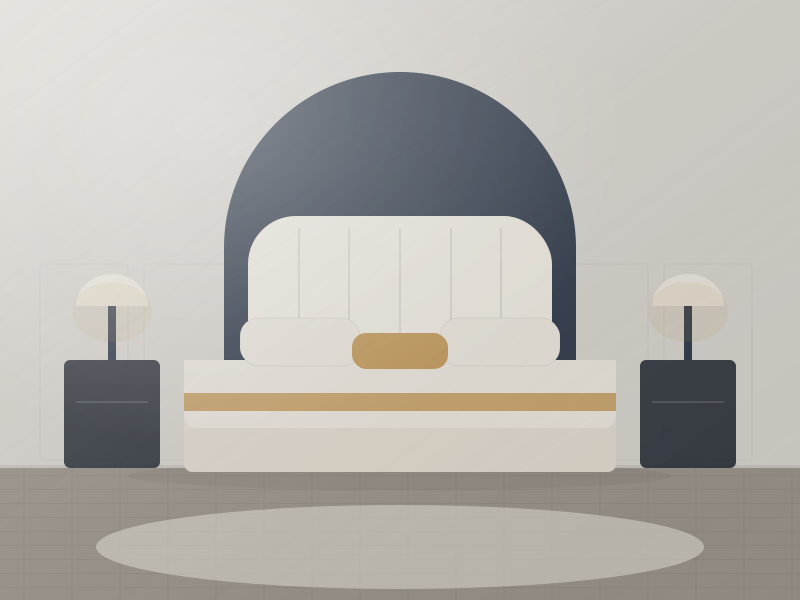
Bedside. The strongest of the bedroom pendant lighting ideas, because it clears the nightstand and looks custom. Hang a pair with the bottom of the shade 20–24 in (50–60 cm) above the nightstand, about 50–56 in (127–142 cm) from the floor, so light reaches a book without glare. Keep the shade 6–10 in (15–25 cm) from the wall, use a 400–600 lumen warm lamp and put the inline switch within reach of the pillow. A plug in pendant lamp in a pleated shade on an oxblood or olive fabric cord is the softest version.
Over a desk. An opaque or semi-opaque shade with its bottom edge 24–30 in (60–75 cm) above the desk gives a pool of task light and a clear surface. Offset it toward the wall so the screen does not catch the reflection, aim for 800–1,000 lumens and add a dimmer plug for video calls.
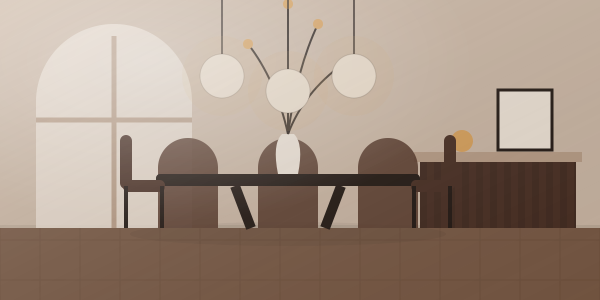
Dining corner. In a rental with no ceiling point, a plug in hanging light over the table is the most transformative fix available. Hang the shade bottom 28–34 in (71–86 cm) above the table, center it on the table rather than the room, and size it at half to two-thirds of a round table's width or one-third of a rectangle's length. A 60 in (152 cm) round table wants a 20–24 in (50–60 cm) shade; a 72 in (183 cm) rectangle wants one 30 in (76 cm) drum or two 14 in (35 cm) shades 30 in apart. Use 800–1,200 lumens total.
Paper, fabric and pleated shades
Light shades suit hanging pendant lights plug in style: paper, fabric and pleated shades weigh 1–4 lb (0.5–2 kg), hang happily from a drywall hook and diffuse an LED into a soft glow. Heavy glass and metal shades are possible but demand a joist or a rated toggle anchor and a cord set with a strain relief at the lampholder.
- Paper lanterns and pleated paper in oversized 20–30 in (50–75 cm) diameters are the cheapest route to sculptural presence, at 30–90 USD. They glow evenly and weigh almost nothing; keep them out of traffic paths and steam.
- Fabric drums in linen or cotton, 14–20 in (35–50 cm) across, give warmer light and a more finished look, at 60–180 USD. Add a top diffuser if the lamp is seen from a staircase or loft.
- Pleated fabric shades are the shape of the moment: a 12–16 in (30–40 cm) empire pleat over a bed or a 20 in (50 cm) pleated cone over a table, at 80–220 USD. They sit squarely in the softer direction we track in lighting trends 2027, where oversized paper and pleated textiles have replaced the industrial cage pendant.
- Rattan and woven shades throw patterned light and weigh 2–5 lb (1–2.3 kg); good in a bedroom, distracting over a desk.
- Opal glass globes of 8–10 in (20–25 cm) weigh 3–5 lb (1.4–2.3 kg) and want a toggle anchor.
#F3EBDD#E6D6B8#C4A882#6E3A33#3D4A3ABuy a lamp to suit the shade: translucent shades want a frosted 2700K LED of 600–800 lumens at CRI 90 or higher so linen and paper read warm, not grey; opaque shades can take a clear filament lamp. Most plug-in cord sets use a standard E26/E27 lampholder with a shade ring, so shades sold for hardwired pendants usually screw straight on.
Step-by-step installation
Hanging a plug in pendant light is a 30-minute job with a drill, a tape measure and a step ladder, and the only part that needs care is anchoring the hook. Here is the sequence we follow.
- Plan the route. Mark the pendant position on the ceiling with a pencil, then the outlet you will use. Measure ceiling height plus the intended drop plus the ceiling run to the wall plus the wall run to the outlet, and add 2 ft (60 cm) of slack. That is your minimum cord length; most bedrooms need 15 ft (4.6 m).
- Find the joist if you can. Tap or use a stud finder; joists are usually 16 or 24 in (40 or 60 cm) apart. If the mark lands within an inch of a joist, shift it and use a screw hook straight into the wood. If not, use a toggle-bolt swag hook rated for at least twice the shade weight.
- Fit the hooks. Drill a pilot hole for a screw hook, or a 1/2 in (12 mm) hole for a toggle, insert and tighten until the cup sits flat on the ceiling. For a swag, fit the second hook 4–6 in (10–15 cm) from the wall directly above the outlet.
- Hang and set the height. Thread the lamp and shade onto the cord set, lift the cord into the hook and adjust the drop: 28–34 in (71–86 cm) above a table, 50–56 in (127–142 cm) from the floor for a bedside, 7 ft (2.1 m) clear over a walkway. Lock the height with the cord grip or a loose knot above the hook.
- Dress the cord. Let a swag drape 4–8 in (10–20 cm); on the wall, fix the cord with adhesive clips every 18 in (45 cm) or run it inside a paintable channel. Keep it away from door swings and radiators.
- Switch and plug. Plug into a wall outlet, not a power strip, test the inline switch, and add a plug-in dimmer or smart plug if you want the pendant in a scene. Check the hook after a week; toggles in old plaster can settle.
Renters: photograph the ceiling first and fill the hook holes with lightweight spackle when you leave. A plug-in pendant falls outside almost every lease's definition of electrical work because nothing is wired, but check. And since a pendant alone leaves the walls dark, pair it with a floor lamp or wall wash; how to layer lighting explains the three-layer logic.
Ready to buy? Our shop gathers the oversized paper pendant and the pleated fabric pendant from this edit with matching cord sets, so a bedroom or dining corner can be lit in an afternoon, and the sourcing desk quotes kits in volume for rentals and hotels.
Free toolRug Size CalculatorFind the right rug size for your room and furniture.Shop & source the look
Buy it today — or have it made
Retail links are affiliate links: we may earn a commission at no extra cost to you (disclosure). “Get it made” sends the item to our sourcing desk for factory quotes in custom sizes and finishes.
Frequently asked questions
Do plug in pendant light need to be hardwired, or can they be plug-in?
They are plug-in by definition and need no hardwiring at all. The cord runs from a ceiling hook to a standard wall outlet with an inline switch, so there is no junction box or electrician involved. Hardwiring only makes sense if you own the home and want the pendant on a wall switch with no visible cord.
What size plug in pendant light is right for my space?
Size the shade to what it hangs over: about half to two-thirds of a round table's diameter, one-third of a rectangular table's length, 12–16 in (30–40 cm) for a bedside and 14–18 in (35–45 cm) over a desk. Keep the shade weight under the hook rating, usually 5–15 lb (2–7 kg).
Can you install plug in pendant light yourself, or do you need a professional?
You can install one yourself; it is a drill-and-hook job of about 30 minutes. The only part that matters is anchoring the hook into a joist or with a rated toggle bolt. Call an electrician only if you later want it converted to a hardwired fixture or you are hanging near water in a kitchen or bathroom.
What's the real difference between the main types of plug in pendant light?
The main split is straight drop versus swag: a straight drop hangs directly under one hook and looks hardwired, while a swag loops the cord across two or more hooks to reach a distant outlet. Beyond that, the shade decides the effect, with paper and fabric diffusing softly and glass or metal giving sparkle.
What should you look for when choosing plug in hanging light?
Look for a certified cord set of at least 15 ft (4.6 m) with a polarized plug, an inline switch 24–36 in (60–90 cm) from the plug, a standard lampholder with a shade ring and a lightweight shade under about 5 lb (2 kg). Add a dimmable 2700K lamp of 600–1,000 lumens and a hook rated for twice the shade weight.
Some links may be affiliate links. Regulations and specifications change — always confirm with suppliers and qualified professionals.