Large Outdoor Planters: Sizes, Materials, Weights and Costs
Large outdoor planters start at about 20 in (50 cm) across and can weigh 300 lb (136 kg) once filled. Compare clay, glazed ceramic, fiberglass, concrete, metal and wood on weight, frost resistance and typical price.
Part of our guide: Terracotta Pots: Sizes, Where to Buy Cheap & How to Care for Them
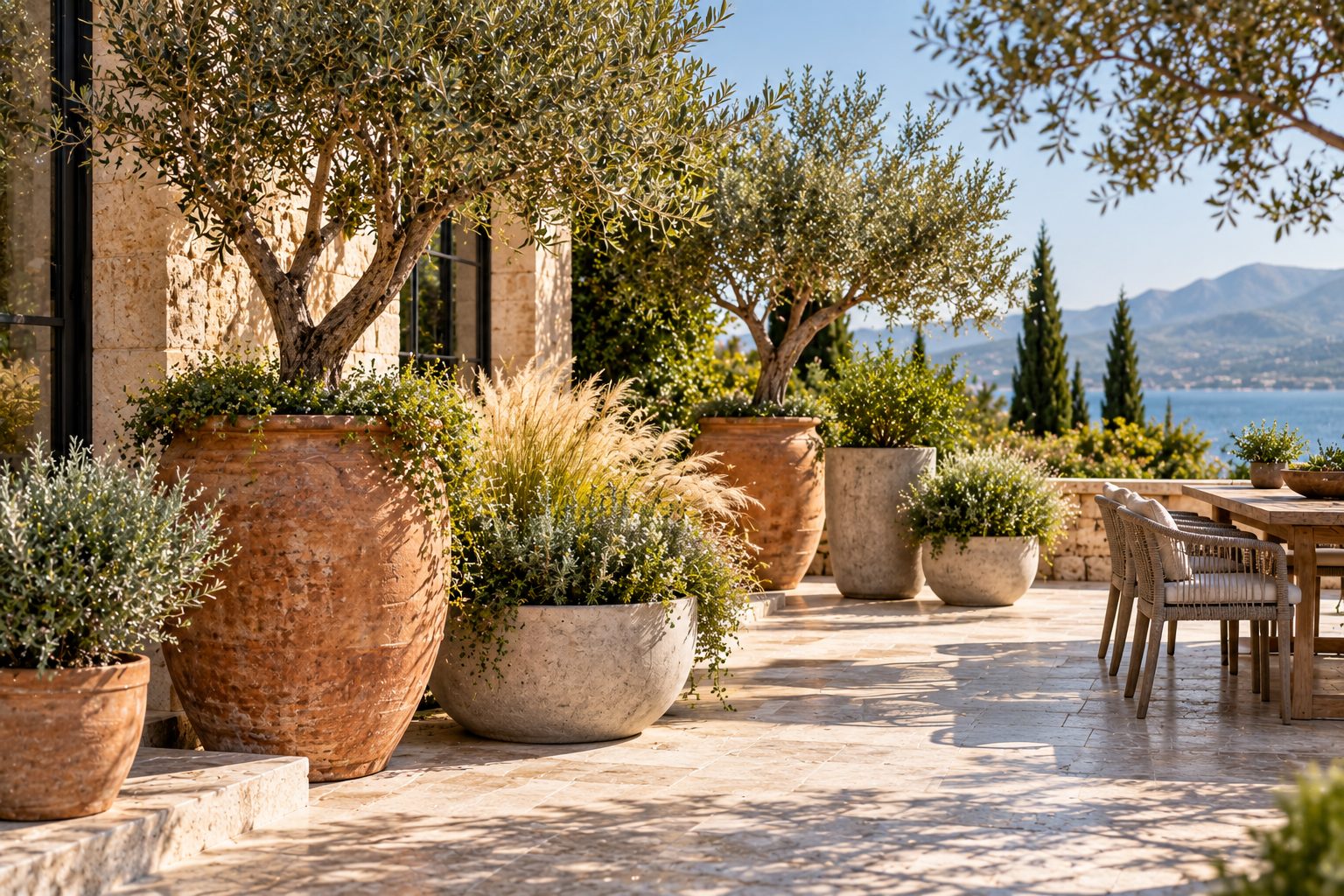
Key takeaways
- A large outdoor planter is about 20 in (50 cm) wide or more; 24–30 in (60–76 cm) is the useful size for shrubs and small trees
- Filled weight, not pot weight, is the real constraint: a 30 in (76 cm) planter can pass 300 lb (136 kg) with moist soil
- In freezing climates choose high-fired glazed ceramic, fiberglass, fiber-cement or metal over unglazed clay pots
- Every outdoor planter needs a drainage hole; a gravel layer does not improve drainage and wastes root space
Large outdoor planters are pots and containers roughly 20 in (50 cm) wide or more, holding at least 15 gallons (57 L) of soil. For shrubs, grasses and small trees, 24–30 in (60–76 cm) is the useful range. Pick the material by climate and filled weight: a 30 in (76 cm) pot can pass 300 lb (136 kg) once planted and watered.
Big containers change a terrace more than any piece of furniture, but they are also the outdoor purchase people most often get wrong, either too small to read from the street or too heavy for the balcony. Our terracotta pots guide covers clay in detail; this page compares every common material for large planters and gives the sizes, weights and costs to plan with.
- Large: 20–24 in (50–61 cm) wide, about 15–30 gallons (57–114 L) of soil.
- Extra large: 30–40 in (76–102 cm) wide, about 45–120 gallons (170–454 L).
- Tall planters: 30–40 in (76–102 cm) high, often narrow, used in pairs at doors.
- Frost-safe materials: fiberglass, fiber-cement, metal, resin and high-fired glazed ceramic.
- Typical price: roughly $60–700 per planter depending on size and material.
What size counts as a large outdoor planter?
A large outdoor planter starts at about 20 in (50 cm) in diameter; anything 30 in (76 cm) or wider is extra large, and those are the biggest pots most homes can move without equipment. Size the planter to the plant's root ball and mature height, then to the space it has to hold visually.
| Planter width | Approx. soil volume | Approx. filled weight | Suits |
|---|---|---|---|
| 16 in (41 cm) | 8–12 gal (30–45 L) | 50–90 lb (23–41 kg) | Herbs, annuals, one small grass |
| 20 in (51 cm) | 15–20 gal (57–76 L) | 80–140 lb (36–64 kg) | Boxwood ball, mixed annuals, tomatoes |
| 24 in (61 cm) | 25–35 gal (95–132 L) | 130–220 lb (59–100 kg) | Shrubs, dwarf citrus, olive standard |
| 30 in (76 cm) | 45–65 gal (170–246 L) | 230–380 lb (104–172 kg) | Small trees, Japanese maple, large grasses |
| 36 in (91 cm) | 80–110 gal (303–416 L) | 400–650 lb (181–295 kg) | Multi-stem trees, mixed screening plants |
Volumes assume a tapered pot about as tall as it is wide; cylinders and cubes hold more. Weights are approximate for moist potting mix plus a mid-weight pot, and they rise sharply with clay, stone or wet garden soil.
A visual rule we use at entries: the planter plus plant should reach about one-third to one-half the height of the door, so a 80 in (203 cm) door wants 27–40 in (69–102 cm) of combined height. On a terrace, one 30 in pot does more than three 16 in ones.
Which material is best for large outdoor planters?
For most large outdoor planters, fiberglass or fiber-cement is the best material, because both survive frost, weigh a fraction of stone or clay and come in big sizes; choose glazed ceramic or terracotta when you want handmade character and can manage the weight.
| Material | Empty weight, 24 in (61 cm) | Frost resistance | Typical life | Typical price, 24 in |
|---|---|---|---|---|
| Terracotta (unglazed clay) | 40–70 lb (18–32 kg) | Low unless frost-proof rated | 5–20 years | $60–250 |
| Glazed ceramic or stoneware | 40–80 lb (18–36 kg) | Good if high-fired | 10–25 years | $120–400 |
| Fiberglass | 10–25 lb (5–11 kg) | Excellent | 10–20 years | $150–500 |
| Fiber-cement or lightweight concrete | 30–60 lb (14–27 kg) | Very good | 15–25 years | $150–450 |
| Cast concrete or stone | 120–300 lb (54–136 kg) | Very good | 25+ years | $200–800 |
| Resin or rotomolded polyethylene | 8–20 lb (4–9 kg) | Excellent | 5–15 years | $40–180 |
| Corten or powder-coated steel | 30–70 lb (14–32 kg) | Excellent | 20+ years | $200–700 |
| Cedar or hardwood planter box | 25–60 lb (11–27 kg) | Good | 5–15 years | $150–500 |
All figures are typical US 2026 retail ranges for a single 24 in planter or a 48 in (122 cm) box. Handmade and imported pieces sit at the top of each band.
Clay pots and terracotta: beautiful, breathable, fragile in frost
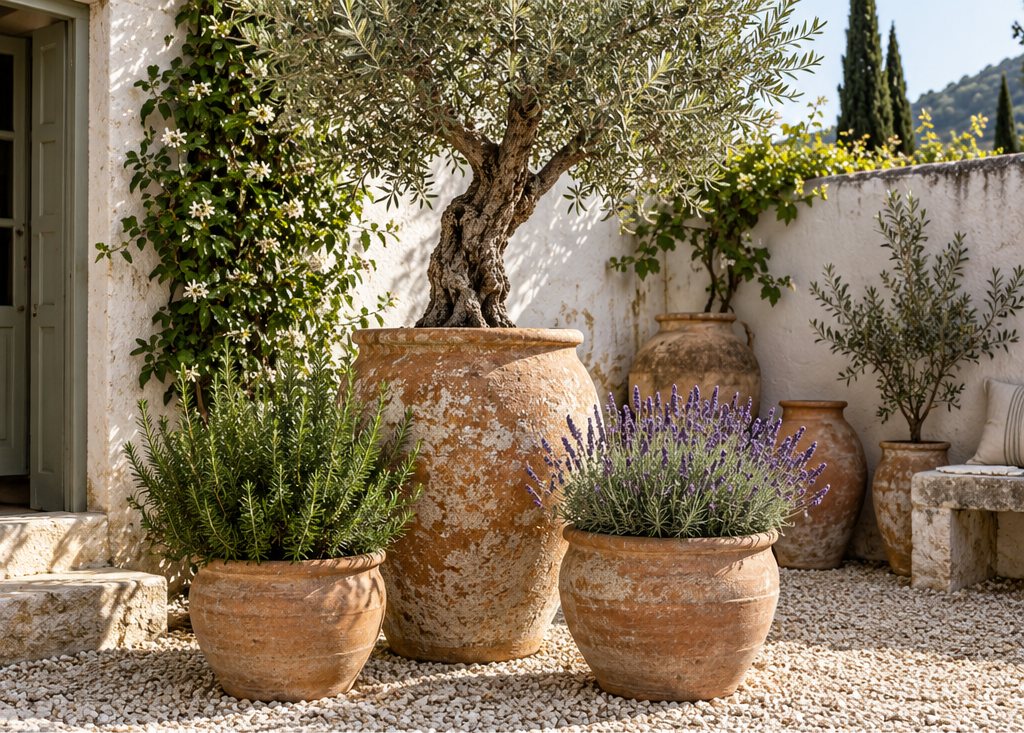
Clay pots are the best choice for Mediterranean plants and dry-loving herbs, because porous terracotta breathes and dries quickly, but unglazed clay absorbs water and can crack when it freezes.
The porosity that keeps roots of rosemary, olive and lavender healthy also wicks moisture from the soil, so large terracotta needs watering more often in summer heat. In zones with hard winters, empty large clay pots or move them under cover; a planted pot that freezes solid can split along the rim or base. Pots sold as frost-proof are fired at higher temperatures and absorb less water, which makes a real difference. Raise every clay pot on feet so the base drains and does not freeze to the paving. For finish and color choices, our pillar guide on clay goes deeper, and a pale travertine or limestone terrace shows how terracotta reads against pale stone.
Ceramic pots and large ceramic planters
Glazed ceramic pots are the most decorative large planters and handle frost well when they are high-fired stoneware with a glaze that covers the interior rim, because the glaze stops water soaking into the body.
Large ceramic planters are heavy, glossy or matte, and available in reactive glazes that vary from pot to pot. Big plant pots ceramic in deep colors anchor a terrace; a pair of ceramic big flower pots in celadon or ink blue flanking a door is one of the most reliable entry moves we know. Check three things on large ceramic pots:
- A real drainage hole: 0.75–1.5 in (19–38 mm), pre-drilled, not a knock-out you have to break.
- Glaze coverage: glaze over the rim and into the top few inches inside resists frost damage best.
- Shape: straight or flared sides let you remove a root ball; pots narrower at the neck than the belly can trap a plant and crack in frost as soil expands.
Smaller ceramic flower pots and a ceramic planter for a table can group with one large ceramic pot, but keep the glazes to one or two colors so the group reads as a set.
#B96F4A#9DB3A2#2F3E4E#D8CFC0#6B4A36Hex values are screen approximations; reactive glazes vary from pot to pot, so view samples outdoors before ordering a matched pair.
Fiberglass, concrete and metal outdoor planters
Fiberglass, fiber-cement and metal outdoor planters are the practical workhorses for big sizes, because they shrug off frost, come in shapes clay cannot achieve and weigh far less than solid stone.
Fiberglass and resin
Fiberglass planters are molded from glass fiber and resin, usually finished in a painted or stone-look coat. A 30 in (76 cm) fiberglass pot can weigh under 30 lb (14 kg) empty, which makes it the default for balconies and rooftops. Quality varies with wall thickness: press the rim, and if it flexes noticeably the finish will crack sooner. Rotomolded polyethylene and resin planters are cheaper and lighter still, but thin ones fade and bow in strong sun; look for UV-stabilized material and a wall of at least 0.25 in (6 mm).
Fiber-cement and concrete
Fiber-cement blends cement with cellulose or synthetic fibers into thin, strong walls, often only 0.5–0.75 in (13–19 mm) thick, which gives the look of concrete at about a third of the weight. Solid cast concrete and stone are the heaviest outdoor planters and the most permanent; they suit ground-floor terraces and commercial entries where theft or wind is a concern. Seal the inside of any concrete pot, because fresh cement leaches lime that can raise soil pH for acid-loving plants.
Corten and powder-coated steel
Metal planters suit long, crisp modern lines. Weathering steel develops a stable rust patina; powder-coated steel or aluminum stays one color. Metal heats up in full sun, so line the inner walls with foam board or choose pale finishes in hot climates to protect roots.
Tall planters and tall outdoor planters for entries
Tall outdoor planters, roughly 30–40 in (76–102 cm) high, are the best way to frame a front door or screen a seating area, because they lift plants to eye level without needing a tree-sized root ball.
A tall planter is usually far deeper than the plant needs. Fill the bottom third with a lightweight false floor, such as a cut plastic insert or upturned empty nursery pots, then add at least 12–18 in (30–46 cm) of potting mix for shrubs and grasses. This saves soil, money and up to half the filled weight. Keep the drainage path open below the insert. Square tall planters of 16 × 16 in (41 × 41 cm) suit narrow porches; for a wide entry use 20 × 20 in (51 × 51 cm) or larger. See our entryway design ideas for scaling planters against doors and steps.
Planter boxes and long troughs
A planter box is the best large planter for railings, terrace edges and vegetable growing, because its long shape screens and edges a space while holding more soil per foot than round pots.
- Window and railing boxes: 8–10 in (20–25 cm) deep and wide, 24–48 in (61–122 cm) long; secure them with brackets rated for wet weight.
- Screening troughs: 16–24 in (41–61 cm) deep for bamboo, grasses or clipped hedging.
- Raised vegetable boxes: 12–18 in (30–46 cm) of soil for most crops, 24 in (61 cm) for root vegetables.
Cedar is the classic wood; line it with a breathable fabric, not plastic sheet, so water still drains. Corten troughs weep rust in their first months, so keep them off light stone until the patina stabilizes. Our paver patio ideas shows where planter boxes help define zones.
How heavy are large planters, and are they safe on balconies?
Large planters can be safe on balconies if their filled weight per square foot stays well under the structure's rated load, which for many residential balconies is in the range of 40–60 lb per sq ft (about 1.9–2.9 kN/m²); confirm the actual figure with the building or an engineer.
A 24 in (61 cm) planter weighing 200 lb (91 kg) filled sits on about 3 sq ft (0.28 m²), so it concentrates far more than that on its footprint. Place heavy planters near walls and over beams or the building edge rather than at the middle of a cantilevered slab, use fiberglass, resin or fiber-cement, and mix a lightweight potting medium rather than garden soil. On rooftops, wind is the second risk: tall narrow planters need a wide base or fixing.
How to plant a large outdoor planter
Plant a large outdoor planter by setting it in place first, then building from drainage up; once filled it may be impossible to move.
- Position the empty pot on feet or a wheeled dolly; place it where it will stay.
- Check the drainage hole and cover it with a square of mesh or landscape fabric to hold soil.
- Add a false floor if the pot is deeper than the plant needs, leaving drainage below it.
- Fill with potting mix, not garden soil, to within 2 in (5 cm) of the rim, with a little slow-release fertilizer.
- Plant at the same depth the plant grew in its nursery pot and firm gently.
- Water slowly until it runs from the base, then mulch the surface to cut evaporation.
Skip the gravel layer at the bottom. It does not improve drainage; water collects in the soil just above it, and the gravel takes space roots could use.
Mistakes we see with large planters
The mistakes we see most are planters bought too small, planters with no drainage and heavy pots placed before anyone checked the floor or balcony beneath them.
- Undersizing: a 14 in (36 cm) pot disappears on a terrace; go up a size more often than down.
- Cachepots used outdoors: decorative pots with no hole drown plants after one heavy rain.
- Mixing too many materials: pots and planters in one or two materials and colors look curated; six look like a garden center.
- Forgetting water: large planters dry slower than small ones but still need deep watering in heat; a drip line saves summers.
Our verdict: buy fewer, bigger planters, in fiberglass or fiber-cement for frost and weight, and save glazed ceramic or terracotta for the one or two pots people see first. Pair them with weatherproof furniture from our outdoor furniture materials guide, and plan herb pots beside the grill with our outdoor kitchen ideas. For the case for living plants outdoors and in, see our biophilic design guide.
Specifying planters for a hotel courtyard, restaurant terrace or residential development? Send sizes and quantities to our outdoor sourcing desk for factory pricing, frost ratings and lead times.
Free toolRug Size CalculatorFind the right rug size for your room and furniture.Shop & source the look
Buy it today — or have it made
Retail links are affiliate links: we may earn a commission at no extra cost to you (disclosure). “Get it made” sends the item to our sourcing desk for factory quotes in custom sizes and finishes.
Frequently asked questions
What is the best material for large outdoor planters?
Fiberglass and fiber-cement are the best materials for most large outdoor planters, because they resist frost and weigh a fraction of clay or stone. Choose high-fired glazed ceramic for color and character, terracotta for Mediterranean plants in mild climates, and corten or powder-coated steel for long modern troughs that need to last 20 years or more.
How big should an outdoor planter be?
An outdoor planter should be at least 2–4 in (5–10 cm) wider than the plant's root ball for annuals and 6–12 in (15–30 cm) wider for shrubs and trees. In practice that means 20–24 in (51–61 cm) for shrubs and 30 in (76 cm) or more for small trees, with at least 18 in (46 cm) of soil depth.
Can ceramic pots stay outside in winter?
High-fired glazed ceramic pots can usually stay outside in winter if they drain freely and are raised on feet. Low-fired or unglazed pots absorb water that expands when it freezes and can crack. In hard-freeze climates, empty fragile pots or move them under cover, and avoid pots that narrow at the neck.
How do you make a large planter lighter?
Make a large planter lighter by filling the bottom third with a lightweight false floor such as upturned plastic nursery pots or a cut insert, then using a light potting mix rather than garden soil. Choosing fiberglass, resin or fiber-cement instead of clay or concrete can cut the empty weight by more than half.
Do large outdoor planters need drainage holes?
Yes, every large outdoor planter needs at least one drainage hole, ideally 0.75–1.5 in (19–38 mm) wide. Without one, rain fills the pot, roots rot and frost can crack the container. A gravel layer is not a substitute; cover the hole with mesh and raise the pot slightly so water can escape.
Some links may be affiliate links. Regulations and specifications change — always confirm with suppliers and qualified professionals.