Glass Cabinet Doors: Fluted, Frosted & Clear Options for Kitchens
Fluted, frosted, seeded and clear glass cabinet doors compared for concealment and cleaning, where glass fronts belong in a kitchen, how to style what sits behind them, what replacing solid doors involves, and care.
Key takeaways
- Glass belongs on 20–40 percent of upper cabinets: display runs, a dresser wall, a pantry or drinks cabinet
- Clear shows everything, frosted hides most, fluted blurs contents into stripes and leads for 2027
- Inserts into frame doors cost $80–250 per door; new glass doors $150–600; slab doors must be replaced
- Glass doors weigh 20–40 percent more, so add a third hinge or weight-rated hinges, and clean textured face out
Glass cabinet doors work best on 20–40 percent of a kitchen's upper cabinets, and the glass you choose decides how much you have to tidy: clear glass shows everything, frosted hides shapes but passes light, and fluted or reeded glass blurs contents into vertical shadows while looking the most current for 2027. Expect $80–250 per door to add glass inserts, or $150–600 per door for new glass-front doors.
- At a glance: a glass cabinet door is a wood or metal frame holding a 4–6 mm pane of tempered or laminated glass, hung on standard or glass-specific hinges.
- Glass types: clear, frosted (acid-etched or sandblasted), fluted or reeded, seeded, and smoked or tinted.
- Where they belong: upper display cabinets, a dresser or pantry wall, a drinks cabinet; not the whole kitchen.
- Cost bands: $80–250 per door for inserts into existing frames, $150–600 per door for replacement glass doors, plus labor.
- Care: microfiber and a vinegar-water spray; textured glass hides fingerprints, clear shows them.
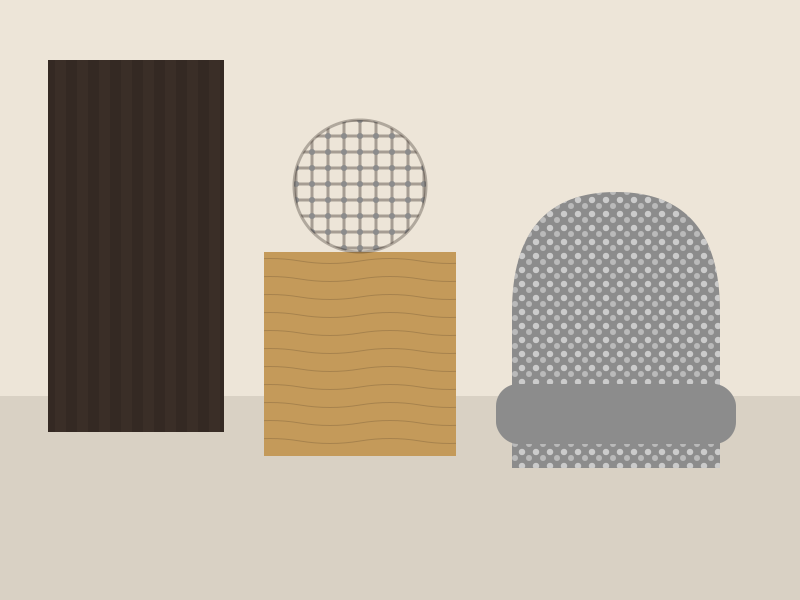
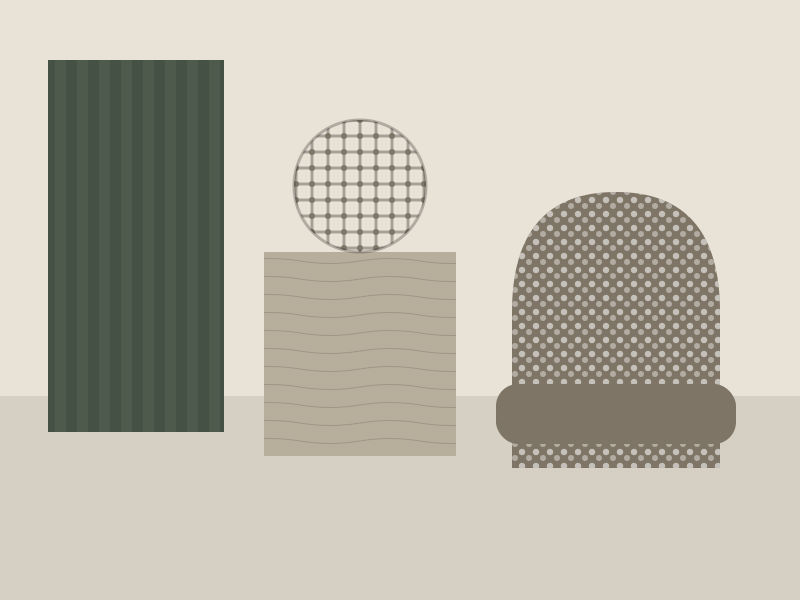
Types of glass fronts: fluted/reeded, frosted, seeded, clear
The glass type sets the level of concealment, and the more the glass hides, the less often it needs cleaning. All five are available in 4 mm and 6 mm tempered glass; laminated safety glass is the alternative where a cabinet sits within reach of children or over a hob.
| Glass type | How it is made | Concealment | Light through | Fingerprints and dust | Cost per sq ft | Best for |
|---|---|---|---|---|---|---|
| Clear | Float glass, tempered | None | Full | Very visible, both sides | $8–15 | Curated display of matched glassware and ceramics |
| Frosted | Acid-etched or sandblasted one face | High; shapes as soft blurs | About 70–85 percent | Etched side hides marks; smooth side shows them | $12–25 | Everyday cabinets that must stay light |
| Fluted / reeded | Rolled with vertical ribs 8–20 mm wide | Medium-high; contents become vertical streaks | About 80–90 percent | Low visibility on the ribbed face | $15–35 | The 2027 look; pantry walls, dressers, islands |
| Seeded | Rolled with small bubbles | Low-medium; softens outlines | About 85–90 percent | Low visibility | $12–30 | Traditional and farmhouse kitchens |
| Smoked / bronze tint | Body-tinted float glass | Medium in daylight; low when lit inside | About 40–60 percent | Visible on the smooth face | $15–30 | Drinks cabinets, dark kitchens with interior lighting |
Frosted glass cabinet doors and fluted glass do similar jobs by different means. Frosting scatters light evenly, so the cabinet glows and its contents dissolve into haze; fluting bends light in strips, so you see color and rough position but not detail. Fluted reads more architectural and hides less; frosted reads calmer and hides more. Lit cabinets favor clear or fluted glass, since frosting kills the depth.
Where glass fronts work best in a kitchen
Put glass cabinet fronts on the upper cabinets you would be happy to leave open, and nowhere else. That usually means one or two runs of glass door upper kitchen cabinets flanking a window or range hood, a floor-to-ceiling dresser or pantry wall, and a drinks or coffee cabinet; it almost never means base cabinets, which hold pans and cleaning products, or the cabinet over the sink, which holds the things nobody wants seen.
- Display uppers: a pair of 15–18 in (38–45 cm) wide glass cupboard doors either side of a hood or window, holding glassware and a few ceramics. Lit inside at 2700K, they become the kitchen's evening lamps and make a small room read deeper.
- Dresser or hutch wall: glass uppers over solid or fluted-wood bases, 84–96 in (213–244 cm) tall, on a wall that faces the dining side of an open plan. This is where glass kitchen cabinets do the most work, because they break up a wall of solid doors.
- Pantry and larder: a fluted-glass door on a 24–36 in (60–90 cm) wide tall cabinet shows shelved jars as color without showing labels.
- Drinks or coffee cabinet: smoked or fluted glass on a 30–36 in (76–91 cm) cabinet with a lit interior, ideally away from the working triangle.
- Avoid: glass on more than about 40 percent of the uppers, over a hob without a hood, and on base cabinets at knee height.
Fluted glass and the reeded-glass trend
Fluted and reeded glass is the cabinet-front detail most specified for 2027 because it hides everyday clutter while adding texture and vertical rhythm to a flat kitchen. The same fluted profile is running across the whole kitchen in the 2027 kitchen design trends: fluted oak on island ends, fluted ceramic tile on splashbacks and fluted glass on uppers. The mistake is doing all three; choose one surface to flute and let the others stay smooth.
Two sizes of ribbing exist. Narrow reeding at 8–12 mm pitch reads almost as a sheen from across the room; wide fluting at 15–25 mm pitch is bolder and hides more. Both are rolled, so the back face is flat and the ribbed face is set toward the room where it catches light. On glass front kitchen cabinets, run the ribs vertically to match tall cabinets and to align with fluted wood elsewhere; horizontal ribs read as retro and emphasize width. Fluted glass costs 30–60 percent more than clear tempered glass of the same size and is stocked in 4 mm and 6 mm; ask for tempered, since the ribs are a stress point in annealed glass.
#7A8B6A#E9E1D3#C9A961#D9B98A#F3F0EAFluted glass pairs best with deep greens, pale oak and satin brass frames; a thin 1.5–2 in (38–50 mm) frame keeps the glass dominant, a 3 in (76 mm) shaker frame reads as traditional.
Styling what's behind the glass
A glass cabinet looks good when it holds one or two categories of object in a limited palette, with about a third of each shelf left empty. That rule solves the anxiety most people feel about glass kitchen cabinet doors, which is that they will have to keep everything perfect. You will not, if the cabinet holds the right things.
- Edit to two categories. Glassware and white ceramics; or wood boards and stoneware; or cookbooks and one row of glass jars. Mugs in eight colors go behind a solid door.
- Stack and group. Plates in stacks of 6–8, bowls nested, glasses in rows of the same height. Odd numbers of objects on a shelf, two-thirds full at most.
- Repeat a material. Clear glass, white or cream ceramic and one wood or brass accent per shelf. Color belongs in one place, such as a row of green glasses or a stack of terracotta.
- Light it. A 2700K LED strip under each shelf edge or at the top of the cabinet, on a dimmer, 200–300 lumens per foot. Glass shelves let light fall through the whole cabinet; wood shelves need a strip per shelf.
- Behind fluted or frosted glass, think in color blocks. Detail disappears, so a shelf of amber jars reads as a warm stripe, a shelf of white plates as a pale one. Arrange by color, not by object.
Replacing solid doors with glass: what's actually involved
There are two routes: cut the center panel out of your existing doors and fit cabinet door glass inserts, at roughly $80–250 per door, or order replacement cabinet doors with glass made to the same size, at $150–600 per door plus fitting. Which one applies depends on how your doors are built.
- Five-piece frame-and-panel doors (shaker and similar): the center panel can be routed out from the back, leaving the frame, and a glass pane fitted into the rebate with silicone and retaining clips or a wood bead. A carpenter does this at $40–100 labor per door plus the glass. The frame must be solid wood or a well-made MDF at least 3/4 in (19 mm) thick; thin or hollow frames flex once the panel is gone.
- Slab doors (flat, single piece): cannot take an insert without becoming a frame, so these need new doors. Order frame doors with glass in the same width and height, in a paint or veneer to match, and reuse the hinge positions.
- Timeline: inserts take 1–2 days once glass is cut, with doors off for 3–7 days if they go to a workshop. Replacement doors run 3–8 weeks from order, longer for a matched paint. Fitting is half a day for four to six doors.
- Whole-kitchen arithmetic: four to six glass doors is the usual scope, so budget $500–1,500 for inserts or $900–3,500 for new doors, plus $200–600 for interior lighting and $100–300 for new hinges if needed. Prices vary widely by region, so treat these as bands and get local quotes.
Custom vs off-the-shelf glass cabinet doors
Stock glass doors fit stock cabinets, which are made in 3 in (76 mm) width increments from 9 to 36 in (23 to 91 cm) and in standard heights of 30, 36 and 42 in (76, 91 and 107 cm), so a kitchen built from a standard range can usually take an off-the-shelf glass door at $150–300; anything else needs custom glass cabinet doors at $300–600 or more. European-frameless kitchens follow metric modules of 300, 400, 450, 500 and 600 mm, and their doors are sized 3–4 mm under the carcass, so measure the door you have, not the cabinet.
Custom makes sense for a painted color that must match existing doors, for fluted glass in a non-stock rib size, for doors over 42 in (107 cm) tall on a pantry, or for a frame material such as thin steel or brass. Whatever the source, decide on the hardware at the same time. Glass doors are 20–40 percent heavier than the same door with a wood panel, so 6 mm glass in a 30 × 36 in (76 × 91 cm) door wants three hinges rather than two, or 165-degree hinges rated for the weight; frameless all-glass doors need dedicated glass hinges or UV-bonded fittings. Handles on glass-front cabinets are the most visible in the kitchen and worth matching carefully to the frame and the rest of the metal; our guide Brass Cabinet Hardware: Antique, Brushed & Unlacquered Pulls Explained covers finish and sizing, and how to mix metals covers pairing a brass frame with steel appliances.
Cleaning and care
Textured glass needs a wipe every few weeks; clear glass needs one every few days if the cabinet is used, and both are best cleaned with a microfiber cloth and a 1:1 vinegar-and-water spray rather than an ammonia cleaner, which can cloud the edge seal on laminated glass and lift a painted frame. Spray the cloth, not the glass, so liquid does not run into the frame joint.
- Fingerprints: put the ribbed or etched face toward the room; oils sit in the texture and disappear. On clear glass, a knob or pull with 1–1.5 in (25–38 mm) projection keeps hands off the pane.
- Scratches: avoid abrasive pads and dry paper towels, which drag grit across the surface. Light scratches on clear glass respond to a cerium oxide polish; on fluted or frosted glass they cannot be removed.
- Inside the cabinet: dust settles on lit shelves and the inside of the door; wipe both monthly, and brush fluted grooves before wiping.
- Frames and hinges: tighten hinge screws once a year, since the weight of glass loosens them.
If you want to give the kitchen a little transparency without rebuilding it, the fluted-glass uppers and display cabinets in our Warm Kitchen edit are the pieces we specify most; and for the same upgrade-the-details thinking applied to the bathroom, read Floating Bathroom Vanities next.
Free toolTile CalculatorWork out tiles, boxes, grout and adhesive with the right wastage.Shop & source the look
Buy it today — or have it made
Retail links are affiliate links: we may earn a commission at no extra cost to you (disclosure). “Get it made” sends the item to our sourcing desk for factory quotes in custom sizes and finishes.
Frequently asked questions
Do glass cabinet doors show fingerprints and dust more?
Yes, especially clear glass, which shows marks on both faces and dust on the shelves behind it. Frosted, fluted and seeded glass hide fingerprints almost completely on the textured face, so put that face toward the room and add a knob or pull so hands never touch the pane. A microfiber wipe with vinegar-water every few weeks keeps textured glass clean.
Is frosted glass better than clear glass for hiding clutter?
Yes. Frosted glass turns contents into soft blurs while still passing 70–85 percent of the light, so the cabinet glows without revealing what is inside. It suits everyday cabinets holding mixed items. Fluted glass hides slightly less but looks more current, and clear glass should be kept for a curated display of matched glassware or ceramics.
Can you replace solid cabinet doors with glass doors yourself?
It depends on the door. A five-piece frame-and-panel door can have its center panel routed out and a glass insert fitted with silicone and clips, which a confident DIYer with a router can do; a slab door cannot take an insert and needs a new door. Whole-door replacement, hinge changes and interior lighting are better left to a carpenter or kitchen fitter.
How much does it cost to add glass to kitchen cabinets?
Commonly $80–250 per door for glass inserts into existing frame doors, or $150–600 per door for replacement glass-front doors, plus $40–100 per door for fitting. A typical run of four to six doors lands at $500–1,500 for inserts or $900–3,500 for new doors, before lighting and hinges. Glass type, door count and whether frames must be rebuilt drive the figure; get local quotes.
Do glass cabinet doors need special hardware?
Usually. A glass door weighs 20–40 percent more than the same door with a wood panel, so doors over about 30 in tall want a third hinge or hinges rated for the weight, and frameless all-glass doors need dedicated glass hinges. A knob or pull is also worth adding so fingers stay off the glass. Existing hinge cups can often be reused if the new door matches the old size.
Some links may be affiliate links. Regulations and specifications change — always confirm with suppliers and qualified professionals.