Leather Sofa Guide: Leather Grades, Sectionals, Colors and Care
A good leather sofa is upholstered in full-grain or top-grain hide 1.0–1.4 mm thick and can last 15–25 years. Here is how to read leather grades, size a leather sectional, pick a color and keep it supple.
Part of our guide: How to Choose a Sofa Size: Dimensions, Fit and 2027 Sofa Trends
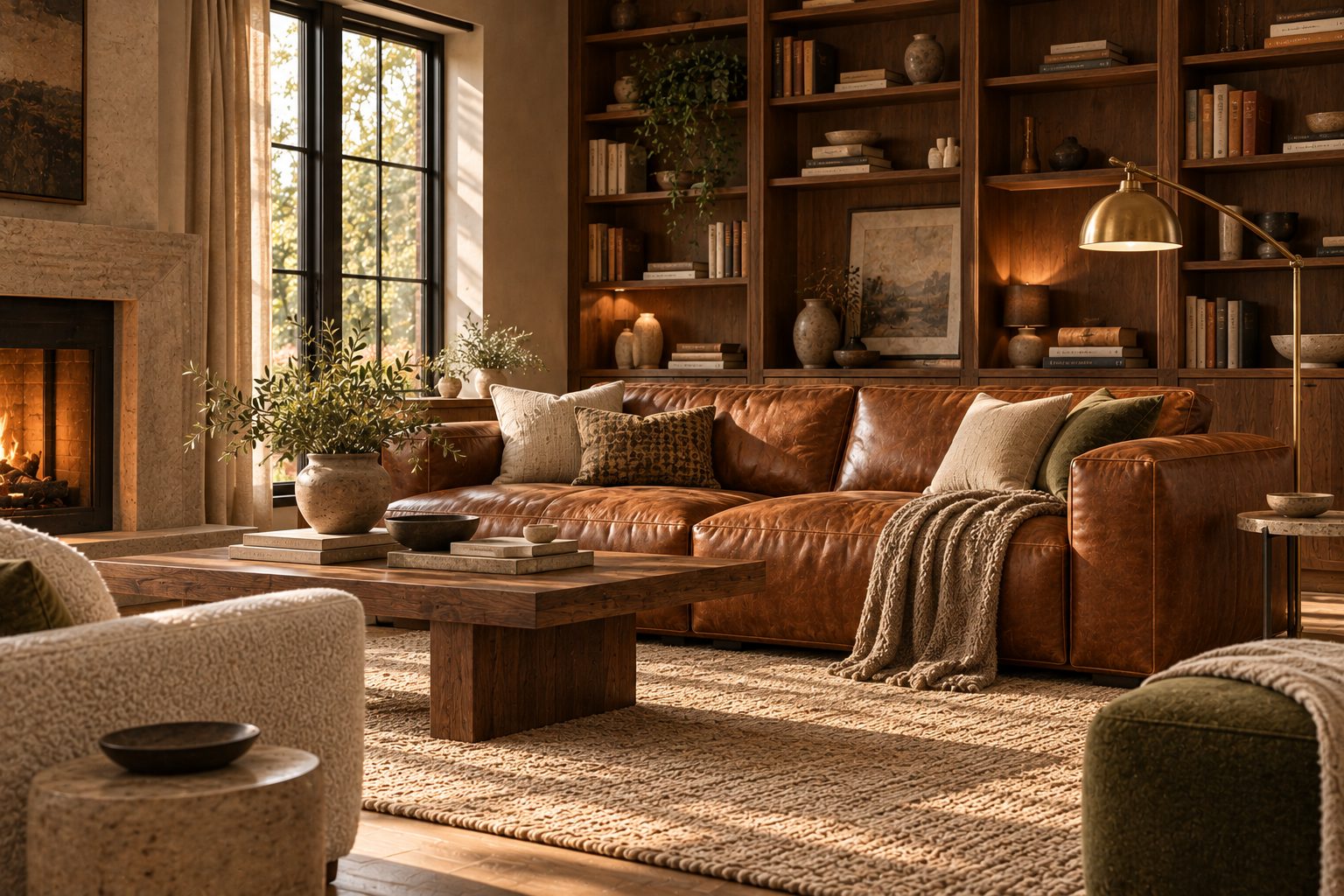
Key takeaways
- Buy full-grain or top-grain leather on every surface you touch; avoid bonded leather entirely
- Upholstery hides of 1.0–1.4 mm thickness, with semi-aniline or protected finishes, suit most family living rooms
- Typical 2026 US prices run $1,500–6,000 for a leather sofa and $2,500–10,000 for a leather sectional
- Condition leather every 6–12 months and keep it at least 2–3 ft (61–91 cm) from radiators and direct sun
A good leather sofa uses full-grain or top-grain hide, roughly 1.0–1.4 mm thick, on every surface you sit on or touch, over a kiln-dried hardwood frame. Built that way it lasts 15–25 years and looks better with age. Bonded or "leather match" sofas cost less but peel within a few years, so we would not buy them.
Leather is the most durable upholstery for a busy living room, and the most confusing to shop for, because the word covers everything from a thick aniline hide to a shredded-leather composite. Use this guide to decode the grades, then size the piece with our how to choose sofa size guide before you commit to a leather couch or leather sectional.
- Best grade: full-grain (most natural) or top-grain (lightly sanded, most common in quality sofas).
- Hide thickness: 1.0–1.4 mm for most upholstery; 1.4–2.0 mm on heavy-duty and vintage-style pieces.
- Finish: aniline (natural, stains easily), semi-aniline (balanced), protected or pigmented (most stain-resistant).
- Typical cost: $1,500–6,000 for a leather sofa; $2,500–10,000 for a leather sectional (US, 2026).
What are the types of leather used on a leather sofa?
Leather sofas use four main grades: full-grain, top-grain, split or corrected-grain, and bonded, in falling order of quality and price. The grade describes which layer of the hide is used and how much its surface has been altered.
| Grade | What it is | Feel and wear | Typical lifespan | Our view |
|---|---|---|---|---|
| Full-grain | Outer hide layer, surface intact | Breathes, develops patina, shows marks | 20–30 years | Best; buy if you like character |
| Top-grain | Outer layer, lightly sanded and finished | Smooth, even, more stain-resistant | 15–25 years | Best value for family use |
| Split / corrected-grain | Lower layer, embossed and pigmented | Uniform, stiffer, cooler to sit on | 7–12 years | Acceptable on backs and sides only |
| Bonded leather | Shredded leather fibers glued to a backing | Plastic-like, cracks and peels | 2–5 years | Avoid |
Two labels need care. "Leather match" or "touch-leather" means real leather on the seats and arms and vinyl or split on the sides and back; it is fine if priced accordingly, but colors age at different rates. "Genuine leather" is a marketing phrase, not a grade, and often signals split leather.
Aniline, semi-aniline and protected finishes
The finish matters as much as the grade. Aniline leather is dyed through with no protective coat: it is the soft leather couch everyone wants to touch, but it stains and fades. Semi-aniline adds a thin protective layer and suits most homes. Protected or pigmented leather has a surface coat that resists spills, pets and kids, at the cost of some softness. Ask for a sample and test it with a drop of water: aniline darkens instantly, protected leather beads.
How much does a leather sofa cost?
A quality leather sofa typically costs $1,500–6,000 in the US in 2026, and a leather sectional $2,500–10,000; anything below about $1,200 for a full-size leather piece is almost always bonded, split or leather-match. Expect leather to cost 30–80 percent more than the same frame in a good fabric.
- $800–1,500: leather-match or corrected grain; check the sides and back carefully.
- $1,500–3,500: top-grain protected leather on a plywood and hardwood frame; the sweet spot for a 3 seater leather couch.
- $3,500–6,000: top-grain or full-grain semi-aniline, hardwood frame, better cushions.
- $6,000–10,000+: large leather sectional configurations, full-grain aniline, custom sizing or hand-tied springs.
A leather sofa on sale can be a genuine bargain, because leather inventory is expensive to hold; floor models and discontinued colors are often 20–40 percent off. Check the grade on the spec sheet before the discount, not after.
Cost per year is the better way to compare. A $1,000 bonded leather couch that peels after four years costs about $250 a year; a $3,000 top-grain sofa that lasts 20 years costs about $150 a year and can be cleaned, re-dyed and re-cushioned along the way. Re-cushioning a leather sofa typically runs $300–900, far less than replacing it.
Leather sectional sizes and configurations
A leather sectional is usually built as an L shape 95–125 in (241–318 cm) on the long side and 75–100 in (191–254 cm) on the short side, 36–42 in (91–107 cm) deep; a large leather sectional or U shape can exceed 130 in (330 cm) per side. Leather is heavier and less forgiving of tight bends than fabric, so measure the delivery route as well as the room.
L shape leather sofa or leather sectional with chaise?
An L shape leather sofa seats more people at the corner, while a leather sectional with chaise or a leather sofa with chaise gives one person a full stretch-out seat 60–68 in (152–173 cm) long. Choose the chaise in rooms under about 13 ft (396 cm) across, where a full second run would block the walkway. Our chaise sofa guide covers left- and right-facing chaises and reclining versions, and our sectional sofa sizes guide gives full configuration dimensions.
Furniture sectionals in leather benefit from modular construction: separate units with connecting brackets are easier to move up stairs and can be reconfigured. Ask for removable seat cushions with zippers, which let you rotate and flip them to spread wear.
Leather sectional couch frames also need more structural care at the corner. The corner unit carries the most weight and the most flexing, so check that it is built as one rigid box with its own legs rather than two arms bolted together. A leather sectional sofa with a slight gap between units after a few months is usually a sign of weak connecting brackets, not stretching leather.
What color leather sofa is best: brown, cream or black?
Mid-to-dark brown is the most forgiving leather sofa color, cream is the most striking but the most work, and black is practical but can look heavy in small rooms. Leather colors age differently: browns and tans develop a richer patina, cream and white yellow slightly and show dye transfer from jeans, and black shows scuffs as pale marks on corrected-grain leather.
#5A3825#8B5A3C#B88A5E#E8DCC6#2B2522The hex values are approximate references for finished hides; real leather varies within a single sofa. A brown leather sectional couch or brown sectional sofa in cognac or saddle suits warm 2027 palettes of oak, rust and olive, and a couch brown sectional in espresso grounds lighter rooms. For styling, our dark brown couch living room ideas show wall and rug pairings. A cream sectional couch works best in protected or pigmented leather with an adult household; in aniline cream, expect visible wear within a year.
How to choose a leather couch that lasts
A long-lasting leather couch combines top-grain or full-grain leather on all touch surfaces, a hardwood frame and well-built cushions; the leather is only as good as what sits under it. Follow this sequence when shopping:
- Confirm the grade on every surface. Ask whether sides, back and platform are the same leather as the seats.
- Check thickness. 1.0–1.4 mm is standard; under 0.9 mm wrinkles and stretches quickly.
- Choose the finish for your household. Protected for kids and pets, semi-aniline for most adults, aniline only if you love patina.
- Inspect the frame. Kiln-dried hardwood or 15–18 mm plywood, corner-blocked; avoid particleboard.
- Test the cushions. HR foam at 35 kg/m³ or denser; leather seats can feel slippery on very soft fills.
- Look at the stitching. Even, tight stitches of 6–8 per inch, with no puckering at the seams.
- Measure the route. Leather sectionals often need 32–36 in (81–91 cm) clear doorways.
Leather vs faux leather vs performance fabric
Real top-grain leather outlasts faux leather by a decade or more and ages better, while performance fabric is softer, warmer and cheaper; faux leather only makes sense on low-use pieces or where animal products are ruled out. The comparison below is the one we walk clients through.
- Top-grain leather: 15–25 years, wipes clean, cool in summer and warms to the body; scratches show but can blend in.
- Polyurethane faux leather: 3–7 years on a sofa, then cracks at seams and fold lines; does not breathe, so it feels sticky in heat.
- Vinyl (PVC): very cleanable and common in contract seating, but stiff and cold; rated by double rubs like fabric, often 100,000+ Wyzenbeek.
- Performance fabric: 8–15 years at 30,000+ Martindale or Wyzenbeek double rubs, stain-resistant finishes, softer hand, lower price.
For the full fabric side of that choice, including rub counts and pilling grades, see our upholstery fabric guide.
What makes a soft leather couch?
A soft leather couch comes from the finish, not the thickness. Aniline and semi-aniline hides with minimal surface coating feel buttery from day one; heavily pigmented, corrected-grain leather feels firm and slightly plastic. Tumbled or milled leather, softened in a rotating drum, adds a relaxed, pebbled hand. Pair it with feather-wrapped seat cushions so the leather drapes rather than stretches tight over foam.
How do you care for a leather sofa?
Dust weekly, wipe spills immediately with a damp cloth, and clean and condition with a pH-balanced leather cleaner and conditioner every 6–12 months. Leather dries out and cracks near heat, so keep a leather sofa 2–3 ft (61–91 cm) from radiators, fireplaces and vents, and out of strong direct sun, which fades aniline hides within a season.
- Weekly: dry microfiber or soft brush attachment; crumbs in seams act like sandpaper.
- Spills: blot, never rub; do not use soap, alcohol, baby wipes or all-purpose sprays.
- Every 6–12 months: clean, then condition; twice a year in dry, heated rooms.
- Humidity: 40–55 percent relative humidity keeps leather supple.
- Scratches: on aniline leather, rub lightly with a clean fingertip; the oils often blend them out.
Leather living room sets: mistakes we see
The mistake we see most is a matching leather living room set, sofa, loveseat and chair in the same hide, which turns a room into a wall of shine and feels dated quickly. A leather living room looks better with one leather piece and fabric or wool on the others. A brown living room set works in leather on the sofa, a textured wool or tight chenille on the chairs and a flatweave rug underneath.
Our second warning is bonded leather; no amount of conditioner prevents it from peeling. The third is cream aniline in a family room. Our verdict: buy one excellent top-grain sofa in a mid-brown or tan, and let it age. Size the rug under it with our rug size calculator.
Sourcing leather sofas or sectionals for a hospitality or multi-unit project? Send your sizes and leather spec to our furniture sourcing desk for factory quotes with hide grade, thickness and lead time confirmed.
Free toolCurtain Size CalculatorRod length, panel size, ready-made match and yardage.Shop & source the look
Buy it today — or have it made
Retail links are affiliate links: we may earn a commission at no extra cost to you (disclosure). “Get it made” sends the item to our sourcing desk for factory quotes in custom sizes and finishes.
Frequently asked questions
What is the best type of leather for a sofa?
Full-grain and top-grain leather are the best types for a sofa. Full-grain keeps the natural hide surface and develops a patina; top-grain is lightly sanded and finished, making it smoother and more stain-resistant. Both last 15–25 years or more. Avoid bonded leather, which is shredded fibers glued to a backing and peels within a few years.
How long does a leather sofa last?
A top-grain or full-grain leather sofa on a hardwood frame typically lasts 15–25 years, often longer than a fabric sofa. Corrected-grain leather lasts about 7–12 years and bonded leather only 2–5 years. Regular dusting, conditioning every 6–12 months and keeping it away from heat and direct sun all extend its life.
Is a leather couch good with pets?
A protected or pigmented top-grain leather couch is one of the better choices with pets, because hair wipes off and spills bead on the surface. Claws will leave scratches, which show less on distressed or mid-brown leather. Avoid aniline leather and bonded leather, which scratch and stain or tear more easily.
How do you clean a leather sofa?
Clean a leather sofa by dusting weekly with a soft cloth, blotting spills immediately with a damp cloth, and using a pH-balanced leather cleaner followed by conditioner every 6–12 months. Never use soap, alcohol, baby wipes or all-purpose sprays, which strip oils and finish. Test any product on a hidden area first.
Is leather or fabric better for a sectional?
Leather is better for a sectional if you want durability, easy cleaning and a piece that ages well; fabric is better for warmth, softness and lower cost. A top-grain leather sectional usually costs 30–80 percent more than a comparable fabric one but can last 15–25 years. Fabric with removable covers suits households that prefer washing.
Some links may be affiliate links. Regulations and specifications change — always confirm with suppliers and qualified professionals.